
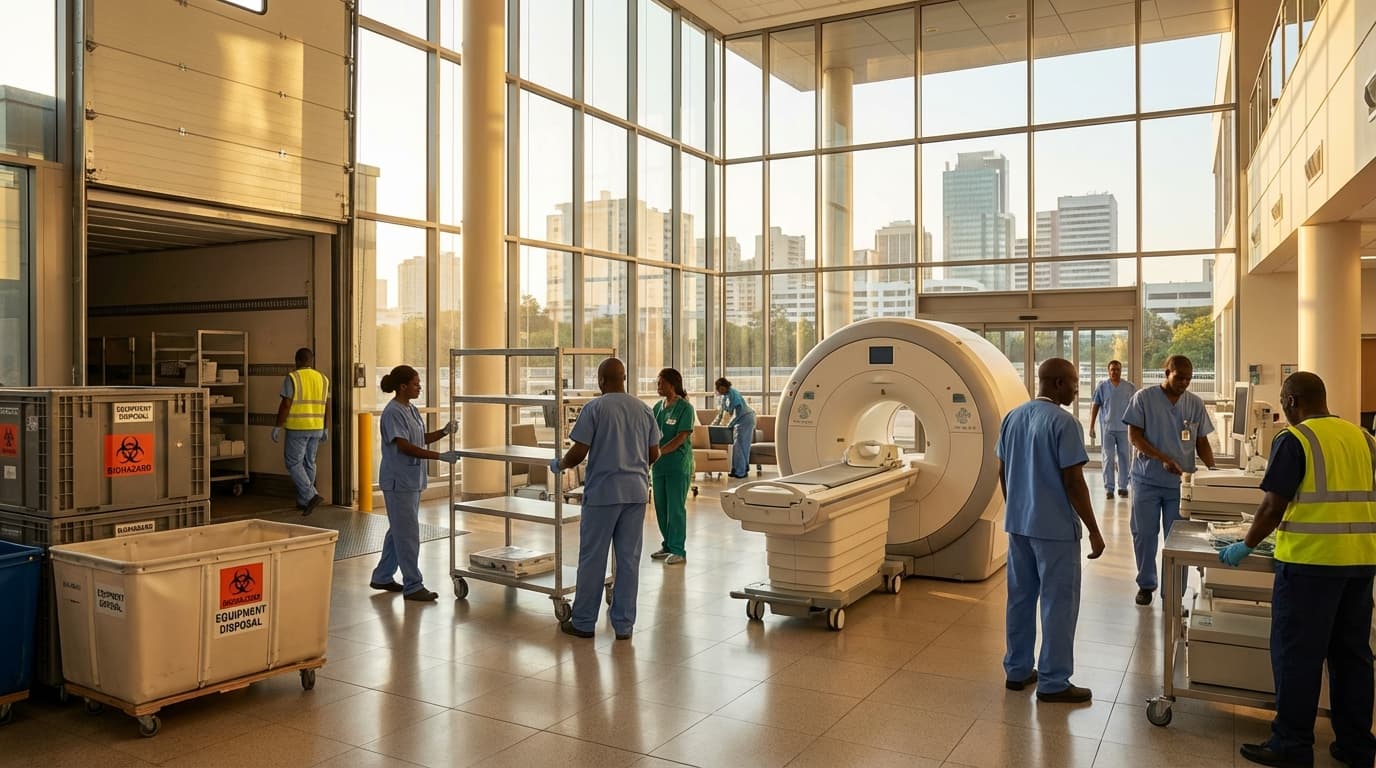
Medical E-Waste Handling & Recycling Coordination Service in Madagascar
Engineering Excellence & Technical Support
Medical E-Waste Handling & Recycling Coordination Service High-standard technical execution following OEM protocols and local regulatory frameworks.
Streamlined Containerized Medical Waste Logistics
Leveraging specialized, sealed containers and optimized sea/air freight routes, we ensure secure and compliant transport of medical e-waste from remote Malagasy facilities to certified recycling centers, minimizing environmental exposure and maximizing recovery rates.
Advanced Component-Level E-Waste Processing
Employing state-of-the-art shredding, magnetic separation, and electrostatic techniques, our service meticulously dismantles medical electronic devices to recover valuable metals and safely neutralize hazardous components, adhering to strict international standards for material reclamation and disposal.
Real-time Tracking and Compliance Monitoring
Implementing a robust digital platform with IoT-enabled tracking for waste containers and blockchain for immutable chain-of-custody documentation, we provide unparalleled transparency and auditable proof of responsible handling and recycling for all medical e-waste processed.
What Is Medical E-waste Handling & Recycling Coordination Service In Madagascar?
Medical e-waste handling and recycling coordination services in Madagascar refer to the specialized logistical, administrative, and technical management framework designed to ensure the safe and environmentally sound collection, transportation, storage, treatment, and disposal/recycling of electronic waste generated by healthcare facilities. This service addresses the unique challenges posed by medical e-waste, which often contains hazardous materials, biohazardous components, and valuable recyclables, necessitating compliance with national and international regulations. The primary objective is to mitigate public health risks, prevent environmental contamination, and facilitate the recovery of reusable components and materials while adhering to principles of the circular economy.
| Target Audience (Who Needs It) | Typical Use Cases | |||
|---|---|---|---|---|
| Hospitals and Clinics (Public and Private): All healthcare institutions generating electronic medical equipment (diagnostic imaging, laboratory equipment, patient monitoring devices, etc.). | Decommissioning of outdated or broken medical imaging systems (X-ray machines, CT scanners, MRI units). | Management of retired laboratory diagnostic equipment (e.g., analyzers, centrifuges with electronic components). | Disposal of defunct patient monitoring systems and infusion pumps. | Regular end-of-life management for a wide array of electronic medical devices. |
| Diagnostic Laboratories: Facilities utilizing a significant volume of electronic analytical and testing equipment. | Safe disposal of obsolete laboratory centrifuges, spectrophotometers, and automated sample handlers. | Recycling of electronic components from retired point-of-care testing devices. | ||
| Pharmaceutical Companies (for R&D facilities): Research and development centers with electronic laboratory equipment. | Management of end-of-life laboratory automation systems and electronic research instrumentation. | |||
| Government Health Ministries and Regulatory Agencies: Entities responsible for public health and environmental protection. | Development and enforcement of e-waste management policies for the healthcare sector. | Oversight and auditing of medical e-waste handling service providers. | Facilitating national e-waste management strategies, including medical e-waste. | |
| Third-Party Waste Management Companies: Specialized service providers contracted by healthcare facilities. | Offering comprehensive medical e-waste handling and recycling solutions as a service. | Ensuring compliance with all regulations for clients. | ||
| International Organizations and NGOs: Entities involved in healthcare development and environmental sustainability in Madagascar. | Implementing sustainable e-waste management programs in healthcare sectors. | Providing technical assistance and capacity building for local stakeholders. |
Key Components of Medical E-Waste Handling & Recycling Coordination Services
- Waste Stream Identification and Segregation: Establishing protocols for differentiating medical e-waste from other healthcare waste streams and for internal segregation based on material composition and hazard level.
- Collection and Transportation Logistics: Designing and implementing secure collection schedules and routes from healthcare facilities to designated consolidation points or treatment facilities, utilizing specialized, compliant transport vehicles.
- Secure Storage and Warehousing: Providing compliant storage facilities that prevent leakage, degradation, and unauthorized access, adhering to environmental and safety standards.
- Regulatory Compliance and Permitting: Navigating and ensuring adherence to all relevant national (e.g., Malagasy environmental regulations) and international (e.g., Basel Convention) legal frameworks governing hazardous and electronic waste.
- Treatment and Disposal Planning: Coordinating with licensed and certified treatment and disposal facilities capable of safely handling hazardous components (e.g., mercury, lead, cadmium) and non-hazardous materials.
- Recycling and Resource Recovery: Facilitating partnerships with specialized e-waste recyclers to recover valuable metals (e.g., gold, silver, copper) and other materials for reintegration into the manufacturing supply chain.
- Data Management and Reporting: Maintaining comprehensive records of waste generation, movement, treatment, and disposal, including chain-of-custody documentation, for auditing and regulatory purposes.
- Stakeholder Engagement and Training: Coordinating with healthcare providers, regulatory bodies, waste management companies, and recycling partners, and providing training on proper e-waste handling procedures.
- Risk Assessment and Mitigation: Identifying potential environmental and health risks associated with medical e-waste throughout its lifecycle and implementing strategies to mitigate these risks.
- Financial Management and Cost Optimization: Developing cost-effective models for e-waste management, including exploring potential revenue streams from recycled materials.
Who Needs Medical E-waste Handling & Recycling Coordination Service In Madagascar?
Proper handling and recycling of medical e-waste (MEW) in Madagascar is crucial due to its hazardous nature, potential for environmental contamination, and public health risks. A dedicated coordination service is needed to ensure these complex waste streams are managed according to best practices and regulatory frameworks. This service would bridge gaps in current infrastructure, expertise, and logistical capabilities, promoting a safer and more sustainable approach to MEW disposal.
| Customer Segment | Key Needs/Challenges | Relevant Departments/Units |
|---|---|---|
| Healthcare Facilities (Hospitals, Clinics, Laboratories, Pharmacies) | Lack of dedicated MEW disposal protocols and infrastructure; insufficient staff training on MEW management; limited access to specialized recycling facilities; cost of proper disposal; regulatory compliance concerns. | Administration/Management, Biomedical Engineering, Environmental Health & Safety (EHS) Department, Procurement, Waste Management Unit (if exists) |
| Medical Equipment Manufacturers and Suppliers (Local and International) | Extended Producer Responsibility (EPR) obligations; need for take-back programs; ensuring end-of-life management of their products; compliance with international standards for waste management; reputational risk management. | Sales & Marketing, Logistics & Supply Chain, Corporate Social Responsibility (CSR), Legal & Compliance |
| Government Agencies and Regulatory Bodies | Developing and enforcing MEW regulations; establishing national guidelines and standards; monitoring compliance; promoting public health and environmental protection; identifying and mitigating health risks associated with improper disposal; supporting the development of a formal MEW recycling sector. | Ministry of Public Health, Ministry of Environment and Sustainable Development, Ministry of Health and Population, National Environmental Office (ONE), Customs and Excise Agency |
| Waste Management Companies | Limited expertise and infrastructure for handling hazardous MEW; need for specialized equipment and training; partnerships for advanced recycling technologies; developing business models for MEW collection and processing. | Operations Management, Business Development, Health & Safety, Technical/Engineering Department |
| NGOs and International Aid Organizations | Implementing health programs and projects that generate MEW; providing technical assistance and funding for waste management initiatives; ensuring sustainability of health infrastructure; supporting community health and environmental initiatives. | Program Management, Logistics, Procurement, Monitoring & Evaluation, Health & Safety |
| Research and Educational Institutions | Disposal of obsolete research equipment; training future healthcare professionals on waste management; conducting research on MEW impacts and solutions; contributing to policy development. | Research & Development Departments, Administration, Facilities Management, Student Affairs |
Target Customers for Medical E-Waste Handling & Recycling Coordination Service in Madagascar
- Healthcare Facilities
- Medical Equipment Manufacturers and Suppliers
- Government Agencies and Regulatory Bodies
- Waste Management Companies
- Non-Governmental Organizations (NGOs) and International Aid Organizations
- Research and Educational Institutions
Medical E-waste Handling & Recycling Coordination Service Process In Madagascar
This document outlines the Medical E-Waste Handling & Recycling Coordination Service process in Madagascar, detailing the workflow from initial inquiry to final execution. The service aims to ensure the safe, compliant, and environmentally responsible management of medical electronic waste, a critical aspect of healthcare sustainability in the region.
| Stage | Description | Key Activities | Responsible Parties | Deliverables |
|---|---|---|---|---|
| The process begins when a healthcare facility or organization expresses interest in the service. | Receive inquiry, schedule initial meeting, understand client's e-waste generation, discuss service scope, explain regulations and best practices. | Client (Healthcare Facility), Service Provider (Coordination Service) | Service scope document, preliminary understanding of client needs. |
| A thorough assessment of the type, quantity, and nature of medical e-waste generated is conducted. | On-site or remote assessment, inventory of e-waste items (e.g., X-ray machines, monitors, old medical devices), identification of hazardous components, initial volume/weight estimation. | Service Provider, Client (for facility access and information) | Waste audit report, estimated waste volume and types. |
| Development of a safe and compliant plan for the collection and transportation of the identified medical e-waste. | Determine appropriate packaging and containment, schedule collection dates and times, identify secure and compliant transport routes, select licensed transporters, coordinate with relevant authorities if necessary. | Service Provider, Licensed Transporter, Client | Collection and transportation schedule, approved packaging materials, manifest for collected waste. |
| Waste is received at a designated facility for initial sorting and segregation to prepare for recycling or disposal. | Receipt of waste, visual inspection, separation of different e-waste categories, removal of non-e-waste contaminants, preliminary dismantling if required for specific recycling streams. | Service Provider, Specialized Pre-processing Facility Staff | Segregated waste streams ready for recycling partners. |
| The service provider leverages its network of certified and reputable recycling and disposal partners. | Identify suitable recycling/disposal partners based on waste type and compliance requirements, facilitate agreement and contract, ensure partners adhere to Madagascan and international environmental standards. | Service Provider, Recycling/Disposal Partners, Client | Agreements with recycling/disposal partners, waste transfer notes. |
| Comprehensive documentation is maintained throughout the process to ensure traceability and compliance. | Generate waste manifests, obtain certificates of destruction/recycling from partners, maintain records of all transactions, ensure adherence to environmental regulations. | Service Provider, Recycling/Disposal Partners, Relevant Government Agencies (for permits/oversight) | Completed manifests, certificates of destruction/recycling, compliance audit trail. |
| Final reports are provided to the client, and feedback is sought to improve the service. | Compile a final report detailing waste quantities recycled/disposed, environmental impact mitigation, costs, and compliance status. Collect client feedback on the service experience. | Service Provider, Client | Final service report, client satisfaction feedback. |
Key Stages of the Medical E-Waste Handling & Recycling Coordination Service Process
- Inquiry & Initial Consultation
- Waste Assessment & Quantification
- Collection & Transportation Planning
- Pre-processing & Segregation
- Recycling & Disposal Partner Engagement
- Documentation & Certification
- Reporting & Feedback
Medical E-waste Handling & Recycling Coordination Service Cost In Madagascar
The cost of Medical E-Waste Handling & Recycling Coordination Services in Madagascar is influenced by several key factors. These include the volume and type of medical e-waste generated, the geographical location of the facility requiring the service, the complexity of the materials (e.g., presence of hazardous components), the chosen disposal/recycling methods, and the current market rates for specialized handling and transportation. Additionally, regulatory compliance requirements and the need for certified disposal partners significantly impact pricing. Coordination services typically involve assessment, planning, vendor selection, logistical management, and documentation, all of which contribute to the overall cost.
| Service Component | Estimated Cost Range (MGA - Malagasy Ariary) | Notes |
|---|---|---|
| Initial Waste Assessment & Audit | 50,000 - 200,000 MGA | Depends on the scale and complexity of the facility. |
| Coordination Fee (Planning & Vendor Selection) | 100,000 - 300,000 MGA | Per project or recurring fee, depending on the contract. |
| Transportation Costs (per kg or per trip) | 1,000 - 5,000 MGA | Highly variable based on distance, vehicle type, and hazardous material classification. |
| Specialized Handling (e.g., dismantling, hazardous material segregation) | 2,000 - 10,000 MGA per kg | Applies to waste requiring specific safety protocols. |
| Recycling/Disposal Fees (per kg or per unit) | 3,000 - 15,000 MGA | Varies significantly based on the material and the recycling process. |
| Certification and Documentation Fees | 30,000 - 150,000 MGA | For disposal certificates and compliance records. |
| Data Destruction Services (if applicable) | 20,000 - 100,000 MGA per device | For electronic components with sensitive data. |
| Total Estimated Cost for a Small Facility (e.g., clinic) | 500,000 - 2,000,000 MGA | One-time or periodic service, depending on waste generation rate. |
| Total Estimated Cost for a Medium Facility (e.g., hospital) | 2,000,000 - 10,000,000 MGA | Monthly or quarterly services based on higher volume. |
Key Pricing Factors for Medical E-Waste Handling & Recycling Coordination in Madagascar:
- Volume and Weight of Waste: Larger quantities generally incur higher costs, but per-unit costs might decrease with volume.
- Type of Medical E-Waste: Different categories (e.g., imaging equipment, laboratory devices, patient monitoring systems) have varying disassembly and recycling complexities.
- Hazardous Material Content: Items containing mercury, lead, or specific chemicals will require specialized, more expensive handling and disposal procedures.
- Geographical Location: Accessibility of the generating facility and proximity to certified recycling centers will affect transportation costs.
- Transportation and Logistics: Distance, fuel costs, and the need for specialized, secure transport vehicles are significant components.
- Regulatory Compliance and Certification: Costs associated with ensuring adherence to Malagasy environmental regulations and using certified disposal/recycling partners.
- Service Provider Expertise and Scope: The level of coordination required, including assessment, planning, vendor management, and reporting, influences the service fee.
- Market Demand and Supply for Recycling Services: Fluctuations in the availability of specialized recycling facilities and demand for recovered materials can impact pricing.
- Ancillary Services: Additional services like data destruction for electronic components or secure storage prior to transport will add to the cost.
Affordable Medical E-waste Handling & Recycling Coordination Service Options
This service focuses on providing cost-effective, coordinated solutions for medical e-waste handling and recycling. We understand the unique challenges and regulatory requirements associated with medical electronic waste, and our goal is to streamline the process while maximizing cost savings for healthcare facilities. We offer various value bundles designed to meet diverse needs and budgets, coupled with strategic cost-saving measures.
| Cost-Saving Strategy | Description | Benefit |
|---|---|---|
| Consolidated Collection Routes | Optimizing pick-up schedules to serve multiple facilities in close proximity during a single route. | Reduces transportation fuel consumption and labor costs, leading to lower overall service fees. |
| Predictive Waste Forecasting | Analyzing historical data to predict e-waste generation patterns, allowing for more efficient scheduling and resource allocation. | Minimizes unnecessary pick-ups and ensures sufficient capacity during peak times, preventing costly rush services. |
| Partnerships with Certified Recyclers | Leveraging established relationships with reputable, certified e-waste recyclers who offer competitive processing rates. | Secures cost-effective recycling services and ensures compliance with environmental regulations. |
| Bulk Volume Discounts | Offering reduced per-unit costs for facilities that commit to larger volumes of e-waste over a period. | Incentivizes consistent waste management and lowers the per-item cost of handling and recycling. |
| Re-use and Refurbishment Programs | Identifying viable medical equipment for potential refurbishment and re-sale, diverting it from recycling where appropriate. | Generates potential revenue streams and reduces the volume of waste requiring disposal. |
| Streamlined Documentation & Reporting | Utilizing digital platforms for efficient tracking, reporting, and compliance documentation. | Reduces administrative overhead and the risk of penalties due to non-compliance. |
Value Bundles for Medical E-Waste Handling & Recycling
- {"title":"Basic Essentials Bundle","description":"Ideal for smaller clinics or those with moderate e-waste volumes. Includes scheduled collection, basic documentation, and standard recycling processes."}
- {"title":"Comprehensive Care Bundle","description":"A more robust offering for medium-sized facilities. Features regular scheduled collections, detailed waste tracking and reporting, secure data destruction, and prioritized recycling with certificates of destruction."}
- {"title":"Enterprise Solutions Bundle","description":"Designed for large hospitals and healthcare networks. Offers customized collection schedules, advanced reporting and analytics, dedicated account management, on-site data sanitization options, and premium sustainability reporting."}
- {"title":"On-Demand Express Bundle","description":"For facilities requiring immediate or unscheduled pick-ups due to specific needs or regulatory compliance deadlines. Includes rapid response collection and expedited processing."}
Verified Providers In Madagascar
In Madagascar, ensuring access to quality healthcare relies heavily on identifying and engaging with Verified Providers. This means healthcare professionals and facilities that have met stringent standards for licensing, expertise, and ethical practice. When seeking reliable medical services, look for those who can demonstrate their credentials and adherence to best practices. This rigorous verification process is crucial for patient safety and effective treatment outcomes. Franance Health stands out as a leader in this domain, meticulously vetting its network of providers. Their commitment to quality assurance means that when you engage with a Franance Health credentialed provider, you are accessing a healthcare professional who has undergone thorough scrutiny, ensuring they meet the highest benchmarks for competence, safety, and patient care. This dedication to verification is what positions Franance Health as the optimal choice for reliable healthcare solutions in Madagascar.
| Provider Type | Verification Criteria (Franance Health) | Benefits for Patients |
|---|---|---|
| Doctors/Specialists | Valid medical license, board certification, peer reviews, continuous professional development records. | Accurate diagnoses, effective treatment plans, specialized expertise. |
| Hospitals/Clinics | Accreditation by relevant national/international bodies, adherence to hygiene and safety protocols, availability of essential equipment and medication, qualified staff ratios. | Safe environment, access to necessary medical technology, comprehensive care services. |
| Pharmacies | Valid operating license, proper drug storage and dispensing practices, availability of essential medicines, qualified pharmacists. | Access to legitimate and safe medications, professional dispensing advice. |
| Laboratories | Accreditation, use of calibrated equipment, adherence to quality control measures, qualified technicians. | Accurate and reliable diagnostic test results. |
Why Franance Health Credentials Matter:
- Ensures licensed and qualified medical professionals.
- Guarantees adherence to ethical healthcare standards.
- Promotes patient safety and effective treatment.
- Provides peace of mind regarding the quality of care.
- Access to a network of trusted and vetted healthcare facilities.
Scope Of Work For Medical E-waste Handling & Recycling Coordination Service
This Scope of Work (SOW) outlines the requirements for a Medical E-Waste Handling & Recycling Coordination Service. The service provider will be responsible for the end-to-end management of medical electronic waste, ensuring compliance with all relevant environmental and health regulations, and facilitating responsible recycling and disposal. The objective is to minimize environmental impact, protect public health, and recover valuable materials where feasible.
| Technical Deliverable | Description | Standard Specification / Requirement | Frequency / Timeline |
|---|---|---|---|
| Waste Stream Assessment & Categorization Report | Detailed analysis of the types and quantities of medical e-waste generated by the client. | Identification of hazardous components (e.g., mercury, lead, cadmium), recyclability potential, and appropriate disposal pathways. Compliance with local and international waste classification standards (e.g., RCRA, Basel Convention). | Initial assessment upon contract commencement, with annual reviews or as significant changes occur. |
| Collection & Transportation Plan | Development and execution of a safe, secure, and compliant plan for collecting e-waste from client facilities and transporting it to designated processing centers. | Use of licensed and certified transporters, appropriate containment (e.g., UN-approved packaging, secure vehicles), GPS tracking, chain of custody documentation, and adherence to DOT/ADR regulations for hazardous materials. | As per client's waste generation schedule (e.g., weekly, bi-weekly, on-demand). |
| Recycling & Disposal Certification | Provision of verifiable documentation confirming the responsible recycling or disposal of all collected medical e-waste. | Certificates of destruction/recycling from R2, e-Stewards, ISO 14001 certified facilities. Confirmation of data destruction for devices with storage capabilities (e.g., NIST 800-88 standards). | Per shipment / per consignment. |
| Waste Tracking & Reporting System | Implementation of a robust system for tracking all waste from point of generation to final disposition. | Digital or physical manifest system, detailed inventory of waste types, quantities, pickup dates, transporter information, and destination facility details. Regular reporting on waste volumes, recycling rates, and environmental metrics. | Real-time tracking, monthly and quarterly summary reports. |
| Regulatory Compliance Audit & Support | Ensuring all operations adhere to local, state, and federal environmental, health, and safety regulations. | Regular internal audits, assistance with external regulatory inspections, provision of guidance on evolving regulations (e.g., HIPAA for data security of medical devices). | Ongoing, with specific audit schedules as required by regulations and client policies. |
| Training & Awareness Program | Development and delivery of training modules for client staff on proper e-waste identification, segregation, and handling procedures. | Interactive workshops, online modules, and printable guides covering regulatory requirements, potential hazards, and best practices. Focus on medical-specific waste considerations. | Initial training upon contract commencement, with annual refreshers and ad-hoc training as needed. |
| Emergency Response Plan | Development of a comprehensive plan to address unforeseen incidents during collection, transportation, or processing of e-waste. | Procedures for spills, accidents, security breaches, and regulatory non-compliance. Contact information for emergency services and regulatory agencies. | Developed upon contract commencement, reviewed and updated annually. |
| Material Recovery & Value Chain Analysis (Optional) | Identification and reporting on valuable materials recovered during the recycling process. | Metrics on precious metal recovery, plastic reuse, etc. Potential for cost savings or revenue sharing from recycled materials. | Quarterly or semi-annual reports, if applicable. |
Key Objectives of the Medical E-Waste Handling & Recycling Coordination Service
- To ensure safe and compliant collection, transportation, and disposal/recycling of medical electronic waste.
- To implement environmentally sound practices that minimize pollution and resource depletion.
- To maintain accurate records of all waste streams and their final disposition.
- To provide training and awareness programs for medical facilities on proper e-waste handling.
- To facilitate the recovery of valuable materials through certified recycling processes.
Service Level Agreement For Medical E-waste Handling & Recycling Coordination Service
This Service Level Agreement (SLA) outlines the guaranteed response times and uptime for the Medical E-Waste Handling & Recycling Coordination Service. This service is designed to ensure timely and compliant management of medical electronic waste, minimizing environmental impact and regulatory risk for healthcare facilities.
| Service Component | Uptime Guarantee | Response Time (Urgent) | Response Time (Routine) | Definition of Urgent | Definition of Routine |
|---|---|---|---|---|---|
| Platform Availability (Coordination Portal) | 99.9% Monthly | N/A | Within 4 business hours | System outage impacting core coordination functions | General inquiries, report requests, scheduled pickups |
| New Pickup Request Processing | N/A | Within 2 business hours | Within 8 business hours | Critical need for immediate pickup due to regulatory deadlines or space constraints | Standard scheduled pickup requests |
| Vendor Dispatch Confirmation | N/A | Within 4 business hours of validated request | Within 12 business hours of validated request | Urgent pickup scenarios | Routine pickup scenarios |
| Emergency Support (Technical Issues) | N/A | Within 1 business hour | N/A | Complete system failure or critical operational disruption | |
| Regulatory Guidance / Inquiry | N/A | Within 24 business hours | Within 48 business hours | Imminent audit, compliance violation risk | General compliance questions or clarification |
| Reporting & Documentation Delivery | N/A | Within 2 business days for urgent requests | Within 5 business days for standard requests | Critical for audits or immediate compliance needs | Standard reporting requirements |
Key Service Components
- 24/7 Monitoring and Support
- Proactive Waste Management Planning
- Certified Vendor Network Management
- Regulatory Compliance Assistance
- Real-time Tracking and Reporting
Frequently Asked Questions

Ready when you are
Let's scope your Medical E-Waste Handling & Recycling Coordination Service in Madagascar project in Madagascar.

Scaling healthcare logistics and technical systems across the entire continent.