
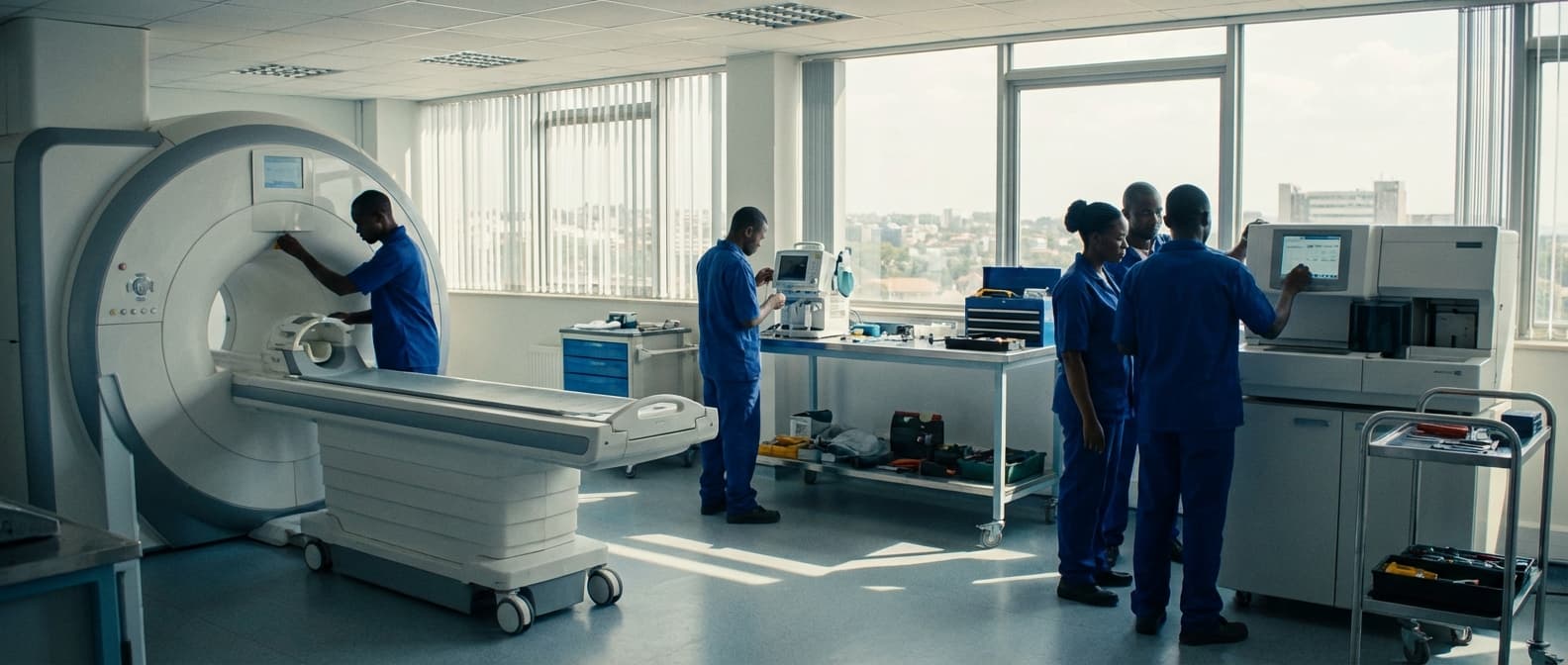
Planned Shutdown Coordination Service for Critical Equipment in Madagascar
Engineering Excellence & Technical Support
Planned Shutdown Coordination Service for Critical Equipment High-standard technical execution following OEM protocols and local regulatory frameworks.
Precision Scheduling & Risk Mitigation
Leveraging advanced simulation and predictive analytics, our service meticulously plans shutdown windows to minimize operational disruption. We proactively identify and mitigate potential risks by factoring in critical dependencies, spare parts availability, and specialized human resource allocation, ensuring a seamless and efficient transition.
Integrated Supply Chain & Logistics Management
We orchestrate the end-to-end logistics for critical equipment maintenance in Madagascar, from sourcing specialized spare parts globally to managing local transportation and warehousing. Our integrated approach guarantees the timely arrival of all necessary components and skilled personnel, eliminating costly delays and ensuring adherence to the shutdown schedule.
Regulatory Compliance & Safety Assurance
Our service prioritizes adherence to Madagascan industrial safety regulations and international best practices. We conduct thorough risk assessments, develop comprehensive safety protocols, and ensure all personnel involved are adequately trained and certified, guaranteeing a safe and compliant shutdown process for your critical assets.
What Is Planned Shutdown Coordination Service For Critical Equipment In Madagascar?
The Planned Shutdown Coordination Service for Critical Equipment in Madagascar is a specialized offering designed to optimize the scheduling, execution, and verification of planned downtime for essential industrial and infrastructure assets. This service is crucial for maintaining operational continuity, ensuring safety, and minimizing economic losses associated with unscheduled interruptions or inefficiently managed planned outages. It encompasses a holistic approach from initial request through to post-maintenance validation and performance reporting.
| Who Needs the Service | Typical Use Cases | |||||
|---|---|---|---|---|---|---|
| Major Industrial Facilities: Power generation plants (thermal, hydro, renewable), mining operations, oil and gas processing facilities, large-scale manufacturing plants, cement factories. | Routine Overhauls & Major Maintenance: Scheduled refurbishment, component replacement, or upgrade of critical machinery (e.g., turbines, generators, crushers, reactors, kilns). | Infrastructure Operators: Port authorities, airport management, national railway companies, major telecommunications providers, water and sanitation utilities. | Preventive Maintenance Campaigns: Coordinated execution of preventive maintenance across multiple critical assets to minimize cumulative downtime. | Asset Owners with High Uptime Requirements: Any entity where unscheduled downtime carries significant financial penalties or safety risks. | New Equipment Installation & Commissioning: Planned integration of new critical equipment into existing operational systems. | Regulatory Compliance Initiatives: Scheduled downtime required to meet specific environmental, safety, or operational regulations. |
Key Components of the Service
- Pre-shutdown Planning & Scheduling: Collaborative development of shutdown timelines, resource allocation (personnel, materials, specialized tools), risk assessment, and identification of interdependencies with other operational units.
- Permitting & Authorization Management: Facilitation of all necessary internal and external permits, regulatory approvals, and safety clearances required before commencing work.
- Logistics & Supply Chain Integration: Coordinated procurement and delivery of spare parts, consumables, and equipment rental. Management of site access, accommodation, and transportation for external personnel.
- Execution Oversight & Control: Real-time monitoring of shutdown progress against the defined schedule, identification and mitigation of emergent issues, adherence to safety protocols (e.g., LOTO - Lockout/Tagout), and communication management.
- Quality Assurance & Verification: Inspection and testing of completed work, functional validation of equipment, and documentation of all maintenance activities and findings.
- Post-shutdown Reporting & Analysis: Comprehensive documentation of the shutdown event, including deviations from the plan, root cause analysis of any issues encountered, performance metrics, and recommendations for future optimizations.
- Stakeholder Communication: Proactive and transparent communication with all relevant internal and external stakeholders throughout the lifecycle of the shutdown.
Who Needs Planned Shutdown Coordination Service For Critical Equipment In Madagascar?
A Planned Shutdown Coordination Service is crucial for any organization in Madagascar that relies on critical equipment for its operations. These services ensure that planned maintenance, repairs, or upgrades to essential machinery are executed smoothly, safely, and with minimal disruption to production or service delivery. Without proper coordination, unplanned downtime, safety hazards, and costly delays can become a significant threat to business continuity and profitability.
| Target Customer Segment | Specific Departments Involved | Critical Equipment Examples |
|---|---|---|
| Energy & Utilities (Power Generation, Water Treatment) | Operations, Maintenance, Engineering, Safety, Planning | Turbines, Generators, Pumps, Boilers, Transformers, Control Systems |
| Telecommunications (Mobile Networks, Internet Providers) | Network Operations, Engineering, IT Infrastructure, Field Services | Base Stations, Core Network Switches, Data Centers, Fiber Optic Infrastructure |
| Mining & Extractive Industries | Mine Operations, Processing Plant Maintenance, Engineering, Safety | Crushers, Conveyors, Haul Trucks, Smelters, Processing Equipment |
| Manufacturing & Industrial Plants (Food & Beverage, Textiles, Cement) | Production, Maintenance, Engineering, Quality Control, Logistics | Production Lines, Packaging Machines, Boilers, HVAC Systems, Robotic Arms |
| Transportation & Logistics (Airports, Ports, Railways) | Airport Operations, Air Traffic Control, Port Authority, Rail Maintenance, Logistics Management | Runway Lighting, Air Traffic Control Systems, Cranes, Conveyors, Train Signalling Systems |
| Healthcare Facilities (Hospitals, Clinics) | Facilities Management, Biomedical Engineering, IT Department, Clinical Operations | Medical Imaging Equipment (MRI, CT Scans), Life Support Systems, Sterilization Equipment, IT Servers |
| Large Commercial Buildings & Infrastructure | Building Management, Facilities Maintenance, Security | HVAC Systems, Elevators, Fire Safety Systems, Building Management Systems (BMS) |
| Government Agencies & Public Services | Public Works, IT Departments, Emergency Services | Water distribution systems, Traffic management systems, Public communication networks |
Target Customers and Departments in Madagascar Needing Planned Shutdown Coordination Service:
- Industries with Heavy Machinery & Continuous Operations:
- Telecommunications Providers:
- Energy & Utilities Companies:
- Mining & Extractive Industries:
- Manufacturing & Industrial Plants:
- Transportation & Logistics Hubs:
- Healthcare Facilities:
- Financial Institutions (for IT Infrastructure):
Planned Shutdown Coordination Service For Critical Equipment Process In Madagascar
This document outlines the workflow for the Planned Shutdown Coordination Service for Critical Equipment in Madagascar. The service ensures a structured and efficient process for scheduling, executing, and verifying planned maintenance shutdowns of critical equipment, minimizing operational disruption and maximizing safety. The workflow details each stage from the initial inquiry to the final post-execution review.
| Stage | Description | Key Activities | Responsible Parties | Deliverables | Timeline (Indicative) |
|---|---|---|---|---|---|
| Receiving and understanding the client's need for a planned shutdown for critical equipment. | Client submits an inquiry (email, call, form). Initial meeting to discuss requirements, equipment type, criticality, and desired shutdown window. Preliminary assessment of potential impact and constraints. | Client (Operations/Maintenance Manager), Coordination Service Provider (Account Manager/Project Lead) | Acknowledged Inquiry, Initial Consultation Meeting Minutes | 1-3 Business Days |
| Detailed understanding and formalization of the shutdown scope, objectives, and constraints. | Joint development of the detailed shutdown scope (e.g., specific maintenance tasks, inspections, upgrades). Identification of critical path activities. Risk assessment and mitigation planning. Definition of Key Performance Indicators (KPIs) for the shutdown. Establishment of communication protocols. | Client (Maintenance Engineers, Operations Staff), Coordination Service Provider (Project Manager, Technical Experts) | Approved Shutdown Scope Document, Risk Assessment Report, Communication Plan | 3-7 Business Days |
| Assigning necessary personnel, equipment, and materials, and creating a detailed schedule. | Identification and booking of internal and external skilled technicians, supervisors, and support staff. Procurement or rental of specialized tools, equipment, and spare parts. Development of a detailed work breakdown structure (WBS) and schedule. Coordination with other plant operations to avoid conflicts. | Coordination Service Provider (Project Manager, Procurement, HR), Client (Logistics, Operations) | Resource Roster, Procurement Orders, Detailed Shutdown Schedule (Gantt Chart) | 7-14 Business Days (dependent on resource availability) |
| Ensuring all prerequisites are met and personnel are ready for the shutdown. | Issuance of work permits and safety clearances. Pre-shutdown safety briefings and training for all personnel. Verification of equipment isolation and lockout/tagout (LOTO) procedures. Mobilization of resources to the site. Final check of tools, equipment, and materials. | Coordination Service Provider (Site Supervisor, Safety Officer), Client (Safety Department, Operations) | Approved Work Permits, Training Records, Site Readiness Checklist | 1-3 Business Days prior to shutdown |
| The actual implementation of the planned maintenance activities. | Supervised execution of all planned tasks according to the schedule. Daily progress reporting and issue resolution meetings. Real-time monitoring of safety and quality standards. Documentation of work performed, including any deviations or findings. | Coordination Service Provider (Site Supervisor, Technicians), Client (On-site Representative) | Daily Progress Reports, Work Completion Records, Safety Incident Reports (if any) | Duration of the shutdown (variable) |
| Ensuring the equipment is safely and correctly recommissioned and returned to operation. | Verification of completed work against the scope and quality standards. Functional testing and performance validation of the equipment. Formal handover of the equipment back to the client's operations. Compilation of final documentation. | Coordination Service Provider (Project Manager, Technical Experts), Client (Operations, Maintenance) | Equipment Handover Certificate, Final Work Report, Test and Validation Reports | 1-3 Business Days after shutdown completion |
| Evaluating the success of the shutdown and archiving all relevant information. | Post-shutdown review meeting with the client to discuss performance against KPIs. Identification of lessons learned for future shutdowns. Final archiving of all project documentation. Invoicing and payment processing. | Coordination Service Provider (Project Manager, Account Manager), Client (Management) | Post-Shutdown Performance Report, Lessons Learned Document, Final Invoice | 5-10 Business Days after handover |
Planned Shutdown Coordination Service Workflow
- Inquiry & Initial Consultation
- Scope Definition & Planning
- Resource Allocation & Scheduling
- Pre-Shutdown Preparation
- Shutdown Execution
- Post-Shutdown Verification & Handover
- Performance Review & Documentation
Planned Shutdown Coordination Service For Critical Equipment Cost In Madagascar
Coordinating planned shutdowns for critical equipment in Madagascar involves a range of pricing factors influenced by the complexity of the operation, the type of equipment, the duration of the shutdown, and the specialized services required. The goal of a planned shutdown coordination service is to ensure minimal disruption, optimal resource allocation, and safe execution of maintenance or upgrade activities. Costs can vary significantly based on the client's specific needs and the vendor's expertise.
| Service Component | Estimated Price Range (MGA - Malagasy Ariary) | Notes |
|---|---|---|
| Initial Planning & Consultation | 200,000 - 800,000 | Covers initial assessment, scope definition, and preliminary scheduling. |
| Detailed Shutdown Planning & Scheduling | 500,000 - 2,000,000 | Involves creating detailed work breakdown structures, Gantt charts, and resource allocation. |
| Risk Assessment & Safety Protocol Development | 300,000 - 1,500,000 | Focuses on identifying hazards and establishing safety procedures for the shutdown. |
| On-Site Coordination (Daily Rate) | 150,000 - 600,000 | Per coordinator/supervisor. Varies based on experience and responsibility. |
| Specialized Technical Consultation (Daily Rate) | 300,000 - 1,000,000 | For specific equipment expertise or complex troubleshooting during shutdown. |
| Logistics & Travel Expenses | Variable | Depends on location, number of personnel, and duration of travel. |
| Reporting & Post-Shutdown Analysis | 250,000 - 1,000,000 | Includes compiling maintenance records, performance reports, and recommendations. |
| Project Management Fee (Percentage of Total Project Cost) | 5% - 15% | Often applied for larger, more complex shutdown projects. |
Key Pricing Factors for Planned Shutdown Coordination in Madagascar
- Equipment Criticality and Complexity: High-criticality equipment (e.g., power generators, large industrial machinery, essential IT infrastructure) requires more meticulous planning and a higher level of expertise, thus commanding higher fees.
- Scope of Work: The extent of coordination needed, from initial planning and scheduling to on-site supervision, risk assessment, and post-shutdown analysis, directly impacts the cost.
- Duration of Shutdown: Longer planned shutdowns necessitate extended coordination efforts and potentially more on-site personnel, increasing the overall cost.
- Specialized Personnel and Expertise: The need for specialized engineers, technicians, safety officers, or project managers with specific industry experience will influence the pricing.
- Logistics and Travel: For remote locations or multiple sites across Madagascar, logistical challenges such as transportation, accommodation, and local permits can add to the cost.
- Technology and Software: The use of advanced planning software, real-time monitoring tools, or specialized diagnostic equipment can be factored into the service cost.
- Risk Management and Safety Protocols: Developing and implementing robust safety plans, conducting detailed risk assessments, and ensuring compliance with local and international safety standards are critical and contribute to the service fee.
- Vendor Experience and Reputation: Established and reputable service providers with a proven track record may charge a premium for their expertise and reliability.
- Reporting and Documentation: Comprehensive reporting, including detailed maintenance logs, performance analysis, and recommendations for future operations, often adds to the service cost.
- Emergency Response Planning: The inclusion of contingency plans and on-call support during the shutdown period can also be a pricing differentiator.
Affordable Planned Shutdown Coordination Service For Critical Equipment Options
Our Affordable Planned Shutdown Coordination Service is designed to minimize downtime and maximize efficiency for your critical equipment maintenance. We offer flexible value bundles tailored to your specific needs, focusing on proactive planning, seamless execution, and cost-effective solutions. By leveraging our expertise, you can reduce unexpected failures, optimize resource allocation, and significantly lower overall maintenance expenses.
| Cost-Saving Strategy | Description | Benefit |
|---|---|---|
| Proactive Planning & Scheduling | Detailed planning to identify optimal shutdown windows and minimize disruption to operations. | Reduces emergency repair costs, maximizes production uptime. |
| Optimized Resource Allocation | Efficiently scheduling personnel, equipment, and materials to avoid overstaffing or shortages. | Lowers labor costs, prevents project delays. |
| Vendor Negotiation & Management | Leveraging our network and experience to secure competitive pricing and reliable services from third-party vendors. | Reduces procurement costs, ensures quality service delivery. |
| Preventive Maintenance Integration | Incorporating preventive maintenance tasks into planned shutdowns to address potential issues before they become critical. | Extends equipment lifespan, reduces unexpected failures. |
| Streamlined Communication | Establishing clear communication channels among all stakeholders to ensure everyone is aligned and informed. | Minimizes misunderstandings, prevents costly errors. |
| Post-Shutdown Analysis & Reporting | Providing detailed reports on shutdown performance, identifying areas for improvement in future events. | Facilitates continuous improvement and long-term cost reduction. |
Value Bundles: Tailored Solutions for Your Needs
- {"title":"Basic Shutdown Planning","description":"Essential services for straightforward shutdowns, including initial scheduling, resource identification, and basic risk assessment. Ideal for organizations with established internal maintenance teams."}
- {"title":"Standard Shutdown Coordination","description":"Comprehensive planning and execution support, including detailed scheduling, vendor management, safety protocols, and on-site coordination. Suitable for most planned maintenance events."}
- {"title":"Premium Shutdown Management","description":"End-to-end management of all shutdown activities, from initial assessment and detailed planning to execution, post-shutdown analysis, and continuous improvement recommendations. Best for complex, multi-stakeholder shutdowns or organizations seeking full-service support."}
- {"title":"Customizable Bundle","description":"We can create a bespoke package by combining specific services from our offerings to perfectly match your project requirements and budget."}
Verified Providers In Madagascar
In the pursuit of reliable and effective healthcare in Madagascar, identifying verified providers is paramount. Franance Health stands out as a beacon of trust, offering a credentialing process that ensures its network comprises only the most competent and ethical healthcare professionals. This rigorous vetting process provides patients with peace of mind, knowing they are receiving care from individuals who meet the highest standards of practice. Choosing Franance Health-credentialed providers means opting for quality, integrity, and a commitment to patient well-being.
| Credentialing Aspect | Franance Health's Approach | Benefit for Patients |
|---|---|---|
| Professional Licensing | Verification of current and valid medical licenses. | Ensures providers are legally authorized to practice. |
| Educational Background | Thorough review of academic and professional qualifications. | Confirms specialized knowledge and training. |
| Clinical Experience | Assessment of past practice and areas of expertise. | Guarantees practical application of skills. |
| Peer Review & References | Gathering feedback from colleagues and past employers. | Provides insights into professional conduct and patient interaction. |
| Criminal Background Checks | Mandatory checks to ensure patient safety and ethical conduct. | Protects patients from potential risks. |
| Commitment to Continuing Education | Verification of ongoing professional development. | Ensures providers stay current with medical advancements. |
Why Franance Health Credentials Matter
- Rigorous Vetting: Franance Health employs a comprehensive credentialing process that scrutinizes qualifications, experience, and ethical standing.
- Commitment to Quality: Only providers demonstrating a dedication to high standards of care and patient safety are credentialed.
- Enhanced Patient Trust: Patients can feel confident in the expertise and reliability of Franance Health-verified healthcare professionals.
- Access to Excellence: Franance Health connects you with a network of leading healthcare practitioners committed to your health.
- Continuity of Care: Our credentialing process helps ensure a consistent and high-quality healthcare experience.
Scope Of Work For Planned Shutdown Coordination Service For Critical Equipment
This Scope of Work (SOW) outlines the services required for the coordination of planned shutdown activities for critical equipment at [Client Facility Name]. The objective is to ensure a safe, efficient, and timely execution of scheduled maintenance and upgrade activities, minimizing downtime and operational impact. The service provider will be responsible for comprehensive planning, scheduling, resource management, communication, and on-site coordination during the shutdown period. This SOW defines the technical deliverables and standard specifications to be adhered to.
| Deliverable Type | Description | Format/Standard | Acceptance Criteria |
|---|---|---|---|
| Shutdown Plan | Detailed document outlining the overall strategy, objectives, scope, safety plan, communication plan, risk assessment, and emergency procedures for the shutdown. | Microsoft Word Document or equivalent PDF. Must include detailed work breakdown structure (WBS). | Approved by the Client's Project Manager and Safety Officer prior to commencement of any shutdown activities. Must cover all identified critical equipment. |
| Shutdown Schedule | Gantt chart or equivalent visual representation of all scheduled tasks, dependencies, durations, resource allocation, and milestones. Must highlight critical path activities. | Microsoft Project, Primavera P6, or equivalent scheduling software. Exported to PDF for review. | Approved by the Client's Operations and Maintenance departments. Must be updated daily during the shutdown. Must account for vendor lead times and equipment availability. |
| Daily Progress Reports | Summary of activities completed, progress against schedule, any deviations, identified issues, and planned activities for the next 24 hours. | Standardized Daily Report Template (provided by Client or agreed upon). Submitted electronically by end of shift. | Accurate, timely, and clearly communicated. Must highlight any critical path impacts. |
| Safety & Permit Compliance Report | Documentation of all safety briefings, permit-to-work issuance and closure, toolbox talks, and incident reports. Verification of compliance with client and regulatory safety standards. | Digital or physical logs, as per client's safety management system. All permits must be traceable. | 100% compliance with all site-specific safety procedures and relevant regulatory requirements. No safety incidents directly attributable to coordination failures. |
| Resource Management Plan | Details on labor, equipment, and materials required for each activity, including sourcing, scheduling, and allocation. Includes contractor management plan. | Spreadsheet or dedicated section within the Shutdown Plan. Must include vendor contact details and mobilization plans. | All resources secured and confirmed available as per the schedule. All contractors vetted and approved by the client. |
| Post-Shutdown Review Report | Comprehensive analysis of the shutdown execution, including performance against schedule and budget, lessons learned, and recommendations for future shutdowns. | Microsoft Word Document or equivalent PDF. Must include quantitative and qualitative analysis. | Submitted within [Number] days of shutdown completion. Must include actionable recommendations for process improvement. |
| Spare Parts & Logistics Management Plan | Plan for identification, procurement, inventory management, and timely delivery of all required spare parts and consumables. | Spreadsheet or dedicated section within the Shutdown Plan. Must track critical path items. | All critical spare parts and consumables available on-site at the required time. Minimal delays due to material availability. |
| Technical Work Instructions (where applicable) | Specific instructions for complex or safety-critical maintenance tasks, developed in conjunction with equipment specialists. | Documented in accordance with client's engineering standards. Must include clear diagrams and step-by-step procedures. | Approved by client's engineering and operations. All personnel performing tasks are trained and certified. |
| Equipment Handover Documentation | Formal documentation of equipment status before and after the shutdown, including any modifications or repairs. | Client-approved forms and checklists. Digital photographs as evidence. | All critical equipment accounted for and returned to service in the agreed-upon condition. |
Key Responsibilities and Deliverables
- Develop a detailed Shutdown Plan, including scope, objectives, timelines, and critical path analysis.
- Create a comprehensive Shutdown Schedule, integrating all maintenance activities, resource availability, and critical dependencies.
- Manage and coordinate all on-site personnel, including internal teams, external contractors, and vendors.
- Ensure strict adherence to safety protocols, permits, and regulatory requirements.
- Facilitate effective communication channels between all stakeholders throughout the shutdown process.
- Monitor progress against the schedule and implement corrective actions as necessary.
- Document all shutdown activities, including progress reports, incident logs, and lessons learned.
- Conduct a post-shutdown review and provide a final report summarizing performance and recommendations.
- Manage the procurement and logistics of necessary spare parts and materials.
Service Level Agreement For Planned Shutdown Coordination Service For Critical Equipment
This Service Level Agreement (SLA) outlines the terms and conditions for the Planned Shutdown Coordination Service for Critical Equipment. It defines the responsibilities of both the Service Provider and the Client, focusing on response times for critical incidents and uptime guarantees for the coordination platform and associated services.
| Service Component | Uptime Guarantee | Response Time (Acknowledgement/Initiation) | Escalation Procedure |
|---|---|---|---|
| Planned Shutdown Coordination Platform (Web Portal & API) | 99.9% (excluding scheduled maintenance) | 2 hours (during Business Hours) / 4 hours (outside Business Hours) | Level 1: Initial acknowledgement within specified time. Level 2: Dedicated support engineer engaged within 4 hours for platform issues impacting coordination. Level 3: Senior management notification within 8 hours for sustained critical outages. |
| Data Synchronization & Reporting Tools | 99.5% (excluding scheduled maintenance) | 4 hours (during Business Hours) / 8 hours (outside Business Hours) | Level 1: Initial acknowledgement within specified time. Level 2: Technical specialist assigned to diagnose and resolve within 8 hours. Level 3: Project manager notification within 12 hours for significant data integrity issues. |
| Email & Notification Services (for coordination alerts) | 99.8% (excluding scheduled maintenance) | 1 hour (during Business Hours) / 2 hours (outside Business Hours) | Level 1: Initial acknowledgement within specified time. Level 2: Monitoring team alerted for immediate investigation within 2 hours. Level 3: Client account manager notified within 4 hours for persistent notification failures. |
| Dedicated Coordination Support Team | N/A (availability is covered by response times) | 1 hour (for critical shutdown planning requests during Business Hours) / 2 hours (for critical shutdown planning requests outside Business Hours) | Level 1: Operator acknowledges request and initiates planning process. Level 2: Senior planner assigned to complex scenarios within 4 hours. Level 3: Director of Operations notified within 8 hours for any significant delays in critical shutdown planning approvals. |
Key Definitions
- Planned Shutdown Coordination Service: Refers to the services provided to facilitate and manage the scheduling, execution, and post-shutdown reporting of planned maintenance activities for critical equipment.
- Critical Equipment: Equipment designated by the Client as essential for uninterrupted business operations. Downtime of this equipment has a significant negative impact on the Client's business.
- Service Provider: The entity responsible for delivering the Planned Shutdown Coordination Service.
- Client: The organization receiving the Planned Shutdown Coordination Service.
- Response Time: The maximum time allowed for the Service Provider to acknowledge a critical incident request or initiate contact after receiving it.
- Uptime Guarantee: The percentage of time the Planned Shutdown Coordination Service platform and its core functionalities are accessible and operational.
- Scheduled Maintenance Window: Pre-agreed periods during which maintenance activities, including planned shutdowns, can be performed.
- Emergency Shutdown: An unplanned cessation of operation of critical equipment due to an immediate threat to safety, environment, or significant asset damage.
- Critical Incident: An event that significantly impacts the ability to coordinate planned shutdowns, such as system outages, data loss, or communication failures within the coordination platform.
- Business Hours: Standard working hours as defined by the Client, typically Monday to Friday, 9:00 AM to 5:00 PM, excluding public holidays.
- 24x7x365 Support: Availability of support services on all days of the year, at any time.
Frequently Asked Questions

Ready when you are
Let's scope your Planned Shutdown Coordination Service for Critical Equipment in Madagascar project in Madagascar.

Scaling healthcare logistics and technical systems across the entire continent.