
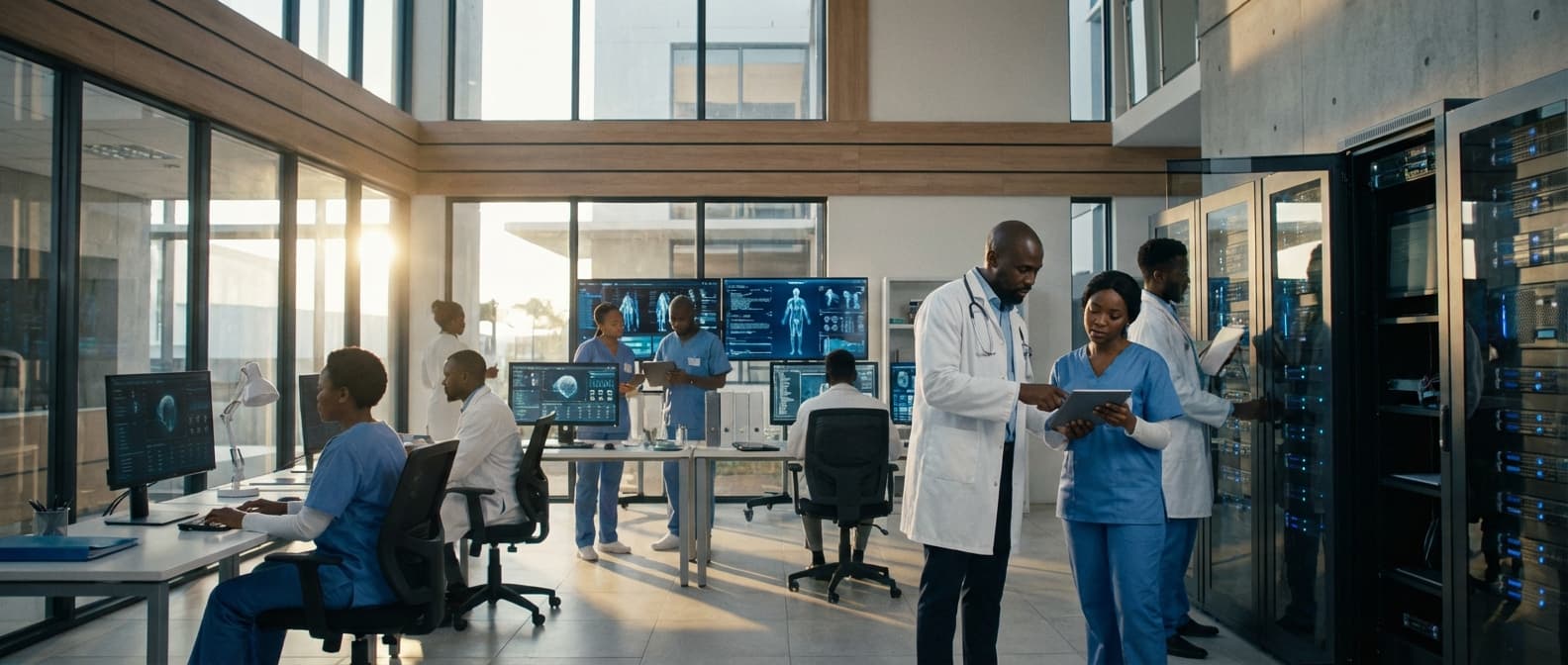
Tele-Radiology in Madagascar
Engineering Excellence & Technical Support
24/7 access to certified radiologists providing rapid, accurate remote interpretation of diagnostic imaging studies. High-standard technical execution following OEM protocols and local regulatory frameworks.
Bridging Remote Gaps
Leveraging satellite and cellular networks, tele-radiology connects remote clinics in Madagascar to specialist radiologists, overcoming vast geographical distances and limited infrastructure to provide crucial diagnostic imaging services where they are most needed.
Enhanced Diagnostic Accuracy
Tele-radiology enables the rapid transmission of high-resolution medical images to expert radiologists, facilitating more accurate and timely diagnoses for complex conditions, leading to improved patient care and treatment planning in underserved regions.
Empowering Local Healthcare
Through remote consultations and image interpretation, tele-radiology empowers local healthcare professionals in Madagascar with access to specialized expertise, fostering knowledge transfer and upskilling the existing medical workforce for sustainable diagnostic capabilities.
What Is Tele-radiology In Madagascar?
Tele-radiology in Madagascar refers to the practice of transmitting radiological images (such as X-rays, CT scans, and MRI scans) from one location to another for the interpretation by a radiologist. This service leverages telecommunications technology to bridge geographical distances, enabling remote diagnosis and consultation. The primary objective is to enhance access to specialist radiological expertise in areas where it is scarce or unavailable, thereby improving the quality and timeliness of patient care. The system typically involves image acquisition at a local facility, secure digital transmission to a central reading center or a remote radiologist, and subsequent reporting and feedback.
| Who Needs Tele-Radiology? | Typical Use Cases | |||||
|---|---|---|---|---|---|---|
| Patients in remote or underserved regions lacking local radiological expertise. | Emergency departments requiring rapid interpretation of trauma imaging (e.g., head CTs, chest X-rays) outside of standard working hours. | Patients in primary or secondary care facilities where specialist radiologists are not present on-site. | Complex case reviews requiring a second opinion from a subspecialist radiologist. | Follow-up imaging for chronic conditions requiring consistent specialist monitoring. | Outbreak investigation and public health surveillance requiring rapid image analysis. | Training and educational purposes for local medical professionals. |
Key Components and Stakeholders of Tele-Radiology in Madagascar
- Image Acquisition Modalities (X-ray, CT, MRI, Ultrasound)
- Picture Archiving and Communication System (PACS)
- Radiology Information System (RIS)
- Secure Network Infrastructure (Internet, VPN)
- Image Viewing and Reporting Workstations
- Remote Radiologists (Specialists)
- Local Healthcare Facilities (Hospitals, Clinics)
- Patients requiring radiological assessment
Who Needs Tele-radiology In Madagascar?
Tele-radiology, the remote interpretation of medical images, offers significant advantages in bridging healthcare access gaps. In Madagascar, a nation grappling with a shortage of skilled radiologists and limited access to advanced imaging equipment, tele-radiology presents a crucial solution for improving diagnostic capabilities and patient care. This technology can connect remote clinics and hospitals to expert radiologists, enabling timely and accurate diagnoses, especially in areas where on-site specialists are unavailable.
| Customer Segment | Primary Need | Department/Use Case | Key Benefits of Tele-radiology |
|---|---|---|---|
| Public Hospitals (e.g., CHU): | Overburdened workload, lack of sub-specialty radiologists. | Radiology Department, Emergency Room, Intensive Care Unit (ICU), Oncology. | Faster turnaround times for critical diagnoses, access to sub-specialty opinions (neurology, cardiology, orthopedics), improved resident training. |
| Regional Health Centers: | Limited diagnostic imaging infrastructure, shortage of general radiologists. | Radiology Department (if existing), General Medicine. | Expansion of diagnostic services to underserved regions, reduced need for patient travel, increased diagnostic accuracy. |
| Private Clinics and Diagnostic Centers: | Desire to offer comprehensive services, competitive advantage, specialized imaging needs. | Radiology Department, various clinical specialties (surgery, internal medicine, pediatrics). | Enhanced service offering, attracting more patients, efficient use of existing equipment, potential for 24/7 coverage. |
| NGOs and Mission Hospitals: | Reaching remote populations, limited resources, focus on public health initiatives. | Mobile clinics, general medical wards, specialized outreach programs. | Extending diagnostic reach to remote areas, supporting public health screenings (e.g., tuberculosis, maternal health), cost-effective solution for essential diagnostics. |
| Rural Health Posts/Dispensaries: | Virtually no imaging capabilities, reliance on manual referral systems. | General Medicine, Maternity care. | Enabling basic imaging interpretation for early detection of common conditions, supporting remote consultations, preventing unnecessary referrals. |
Target Customers & Departments in Madagascar
- Public Hospitals and Regional Health Centers
- Private Clinics and Diagnostic Centers
- Non-Governmental Organizations (NGOs) with Healthcare Initiatives
- Rural Health Posts and Dispensaries
Tele-radiology Process In Madagascar
Tele-radiology in Madagascar is a critical initiative to bridge the gap in specialized radiology services, particularly in remote and underserved areas. It involves transmitting radiological images and data electronically for interpretation by radiologists located elsewhere. This process enhances diagnostic capabilities, improves patient care, and optimizes the use of limited expert resources. The workflow, from an initial inquiry to the final execution of a report, is a multi-step process involving various stakeholders and technologies.
| Stage | Key Activities | Stakeholders Involved | Technology/Tools | Key Considerations |
|---|---|---|---|---|
| Inquiry & Patient Identification | Identifying need for radiology, patient referral | Local Healthcare Facility Staff, Referring Physician | Patient Record Systems | Urgency of case, availability of local expertise |
| Image Acquisition | Performing radiological exam, capturing digital images | Radiographer/Technician | X-ray machines, CT scanners, MRI scanners, PACS (Picture Archiving and Communication System) | Image quality, equipment functionality |
| Image Preparation & Anonymization | Ensuring image quality, removing PII | Radiographer/Technician, IT Support | DICOM viewers, anonymization software | Data privacy, compliance with regulations |
| Image Transmission | Securely sending images to the hub | IT Department, Local Facility Staff | Internet, VPN, Secure Cloud Platforms, Teleradiology Software | Internet connectivity, bandwidth, security protocols |
| Teleradiology Hub / Radiologist Assignment | Receiving images, assigning to radiologist | Teleradiology Platform Administrator, Radiologist Coordinator | Teleradiology Management Software | Radiologist availability, subspecialty match |
| Image Interpretation | Analyzing images, formulating diagnosis | Radiologist | High-resolution monitors, teleradiology workstations, specialized viewing software | Radiologist expertise, diagnostic accuracy |
| Report Generation | Creating diagnostic report | Radiologist | Reporting software, dictation tools | Clarity of report, completeness of findings |
| Report Transmission & Review | Sending report back to origin, initial review | Teleradiology Hub, Local Healthcare Facility Staff | Email, Teleradiology Platform, Fax (backup) | Timeliness of report, understanding of report by referring physician |
| Clinical Integration & Patient Management | Using report for treatment decisions | Referring Physician, Medical Team | Electronic Health Records (EHR), Patient Management Systems | Effective utilization of diagnostic information |
| Feedback & Quality Assurance | Ensuring service quality, improvement | All Stakeholders | Feedback forms, Audit tools, Performance metrics | Continuous service enhancement, error reduction |
Tele-Radiology Workflow in Madagascar
- {"title":"1. Inquiry & Patient Identification","description":"The process begins when a healthcare facility in a remote area (e.g., a district hospital or health center) identifies a patient requiring a radiological examination that cannot be interpreted locally due to a lack of trained radiologists or advanced equipment."}
- {"title":"2. Image Acquisition","description":"A radiographer or technician at the local facility performs the requested radiological examination using available equipment (e.g., X-ray, CT, MRI). The resulting images are captured in a digital format, typically DICOM (Digital Imaging and Communications in Medicine)."}
- {"title":"3. Image Preparation & Anonymization","description":"Before transmission, the images are prepared for tele-radiology. This often involves ensuring optimal image quality, and critically, anonymizing patient data to protect privacy and comply with ethical guidelines. This step removes personally identifiable information (PII) from the image files."}
- {"title":"4. Image Transmission","description":"The anonymized digital images are securely transmitted from the originating facility to a central tele-radiology hub or a designated radiologist's workstation. This transmission typically occurs over the internet, often utilizing Virtual Private Networks (VPNs) or secure cloud-based platforms to ensure data integrity and confidentiality."}
- {"title":"5. Teleradiology Hub / Radiologist Assignment","description":"At the receiving end, a teleradiology platform or a designated administrator assigns the case to an available and qualified radiologist. This assignment considers the subspecialty required for interpretation (e.g., neuroradiology, musculoskeletal radiology) and the radiologist's current workload."}
- {"title":"6. Image Interpretation","description":"The assigned radiologist reviews the transmitted images on their workstation. They perform a detailed analysis, comparing findings with clinical information provided by the referring physician, and formulate a diagnostic report."}
- {"title":"7. Report Generation","description":"The radiologist generates a comprehensive diagnostic report, including findings, impressions, and recommendations. This report is typically drafted using specialized reporting software that allows for structured data entry and integration of images."}
- {"title":"8. Report Transmission & Review","description":"The finalized report is transmitted back to the originating healthcare facility. In some models, a primary care physician or a local medical officer might review the report to ensure it aligns with the patient's clinical context."}
- {"title":"9. Clinical Integration & Patient Management","description":"The referring physician at the local facility receives the radiologist's report. This report is then integrated into the patient's overall medical record and used to guide further diagnosis, treatment planning, and patient management decisions."}
- {"title":"10. Feedback & Quality Assurance","description":"Mechanisms for feedback between the referring physician and the teleradiologist are crucial for continuous improvement. Quality assurance processes, including peer review and auditing, are also implemented to maintain high standards of diagnostic accuracy and service delivery."}
Tele-radiology Cost In Madagascar
Tele-radiology services in Madagascar are an emerging field, offering a potential solution to the shortage of qualified radiologists and advanced imaging equipment in many regions. However, the cost of these services can vary significantly due to several factors. Pricing is typically determined on a per-scan basis, with potential for bulk discounts or subscription models for larger healthcare facilities. The local currency is the Malagasy Ariary (MGA).
| Imaging Modality | Estimated Cost Range (MGA) | Notes |
|---|---|---|
| X-ray (Standard) | 20,000 - 50,000 | Basic interpretation of common X-rays (e.g., chest, bone). |
| X-ray (Specialized) | 30,000 - 70,000 | Complex X-rays requiring specific expertise or detailed measurements. |
| Ultrasound | 40,000 - 100,000 | Covers general abdominal, pelvic, or extremity ultrasounds. More specialized scans (e.g., fetal echocardiography) will be higher. |
| CT Scan | 150,000 - 400,000 | Cost varies significantly by the body region scanned and the number of slices. Head CTs are typically at the lower end, while abdominal/pelvic CTs with contrast are higher. |
| MRI | 250,000 - 800,000+ | MRI is generally the most expensive due to equipment and scan time. Costs increase with body part (e.g., brain, spine, knee) and use of contrast agents. |
| Urgent Interpretation Fee | Additional 10,000 - 50,000 | Added on top of the base scan cost for expedited reporting (typically within 1-4 hours). |
Key Pricing Factors for Tele-Radiology in Madagascar
- Type of Imaging Modality: Different imaging types (X-ray, CT scan, MRI, Ultrasound) have varying associated costs. More complex scans generally command higher prices.
- Complexity of the Case: Simple, routine scans will be less expensive than complex cases requiring detailed analysis and comparison with prior studies.
- Turnaround Time: Urgent requests for immediate interpretation will likely incur a premium compared to standard turnaround times.
- Radiologist's Specialization: Interpretation by a sub-specialist radiologist (e.g., neuroradiologist, musculoskeletal radiologist) may be more expensive than a general radiologist.
- Provider's Overhead and Technology: The technology infrastructure, software licenses, and operational costs of the tele-radiology provider will influence their pricing.
- Volume and Contractual Agreements: Larger hospitals or networks negotiating bulk contracts will likely receive preferential pricing.
- Geographic Location of the Referring Facility: While tele-radiology aims to bridge geographical gaps, extremely remote locations might have slightly higher logistical considerations for data transfer, though this is less of a direct cost factor for the service itself and more for the referring facility's infrastructure.
- Ancillary Services: Additional services like teleradiology reporting in multiple languages, integrated PACS (Picture Archiving and Communication System) solutions, or onsite technical support can add to the overall cost.
Affordable Tele-radiology Options
Tele-radiology has become a crucial component of modern healthcare, offering remote interpretation of medical images. This can lead to improved patient care, faster turnaround times, and access to specialized expertise regardless of geographic location. For healthcare providers, especially smaller clinics or those in underserved areas, affordable tele-radiology is paramount. This involves understanding various cost structures, negotiating effectively, and leveraging value-based approaches. Value bundles and strategic cost-saving measures are key to making high-quality tele-radiology accessible and sustainable.
| Value Bundle Type | Description | Cost-Saving Potential | Considerations |
|---|---|---|---|
| Per-Study Pricing | A fixed fee is charged for each image study interpreted. | Predictable for consistent workloads. Can be cost-effective for low-volume practices. | Can become expensive for high-volume practices. Potential for unbundling of services (e.g., preliminary reads, final reads). |
| Subscription/Retainer Model | A fixed monthly or annual fee provides access to a certain volume of readings or unlimited readings for specific modalities. | Offers budget predictability and can be highly cost-effective for practices with high and consistent volumes. May include dedicated radiologist access. | Requires careful estimation of volume to avoid overpaying. May have limitations on specific modalities or turnaround times if not clearly defined. |
| Tiered Volume Pricing | Pricing decreases as the volume of studies interpreted increases. Often offered within subscription models. | Incentivizes higher utilization and rewards growing practices. | Ensure the tiers are clearly defined and align with expected volume growth. |
| Bundled Modality Packages | A package deal for interpretation of multiple imaging modalities (e.g., X-ray, CT, MRI). | Can offer discounts compared to contracting for each modality separately. | Verify that all included modalities are relevant to your practice's needs. |
| Subspecialty-Specific Bundles | Contracts focused on specific subspecialties like neuroradiology, musculoskeletal, or women's imaging. | Ensures access to specialized expertise without paying for services you don't need. Can be more cost-effective than general tele-radiology for focused practices. | Requires clear definition of the subspecialty scope and turnaround times. |
| Performance-Based Bundles | Pricing is linked to achieving certain performance metrics, such as turnaround time or report accuracy. | Aligns provider incentives with desired outcomes, potentially leading to better quality and efficiency. | Requires robust tracking and reporting mechanisms to measure performance accurately. |
Key Cost-Saving Strategies for Affordable Tele-Radiology
- Understand your specific needs: Assess the volume and types of imaging studies required to avoid overpaying for unused capacity.
- Compare provider pricing models: Different tele-radiology providers offer various pricing structures, from per-study fees to subscription models. Analyze which best fits your usage patterns.
- Negotiate service level agreements (SLAs): Clearly define turnaround times, report quality standards, and communication protocols. Strong SLAs can prevent costly delays and misinterpretations.
- Leverage technology: Invest in efficient PACS (Picture Archiving and Communication System) and EMR (Electronic Medical Record) integration to streamline workflows and reduce manual data entry errors.
- Explore teleradiology network benefits: Partnering with established networks can offer economies of scale and access to a wider pool of subspecialists.
- Consider off-peak or tiered pricing: Some providers may offer lower rates for studies read during non-peak hours or for less complex cases.
- Focus on subspecialty coverage: Instead of contracting for all subspecialties, identify your most critical needs and contract for those specifically.
- Regularly review performance and cost: Periodically assess the tele-radiology provider's performance against your needs and market rates to ensure continued value.
- Seek providers with flexible contracts: Avoid long-term, inflexible contracts that may not adapt to changing patient volumes or service requirements.
Verified Providers In Madagascar
Ensuring access to quality healthcare is paramount, and in Madagascar, discerning trustworthy medical facilities and practitioners is crucial. This document highlights the importance of verified providers and specifically focuses on Franance Health credentials as a benchmark for excellence. Understanding why these credentials signify the best choice empowers individuals to make informed decisions about their health and well-being.
| Franance Health Credential | Key Aspects Verified | Benefits for Patients |
|---|---|---|
| Accreditation (e.g., ISO Certified Facilities) | Infrastructure, operational efficiency, quality management systems, patient safety protocols, and continuous improvement. | Assurance of a well-managed, safe, and high-quality healthcare environment with standardized processes. |
| Professional Licensure and Certification | Qualifications, training, and ongoing competency of medical professionals (doctors, nurses, specialists). | Confidence in the expertise and legal authorization of healthcare practitioners. |
| Specialty Certifications | Advanced training and recognized expertise in specific medical fields (e.g., cardiology, pediatrics, surgery). | Access to specialized care from highly qualified professionals for specific health needs. |
| Commitment to Continuous Professional Development (CPD) | Evidence of ongoing learning, participation in medical conferences, and staying updated with the latest medical advancements. | Patients receive care informed by the most current medical knowledge and treatment options. |
| Patient Feedback and Satisfaction Metrics | Mechanisms for collecting and analyzing patient experiences, focusing on communication, empathy, and outcomes. | Providers are responsive to patient needs and dedicated to improving the overall patient experience. |
Why Verified Providers Matter in Madagascar:
- Patient Safety: Verification processes often include checks on licensing, certifications, and adherence to safety protocols, minimizing risks.
- Quality of Care: Verified providers are more likely to meet established standards for medical expertise and treatment efficacy.
- Trust and Confidence: Knowing a provider has undergone scrutiny offers peace of mind and builds confidence in the healthcare system.
- Accountability: Verified providers are generally held to higher standards of ethical conduct and professional responsibility.
- Access to Best Practices: Many verification systems encourage the adoption of current medical knowledge and best practices.
Scope Of Work For Tele-radiology
This document outlines the Scope of Work (SOW) for the provision of Tele-Radiology services. It details the technical deliverables required and the standard specifications that must be adhered to, ensuring the delivery of high-quality, secure, and efficient remote diagnostic imaging interpretation services.
| Category | Deliverable/Specification | Description | Standard/Requirement |
|---|---|---|---|
| Image Acquisition & Transmission | DICOM Compatibility | All images transmitted must be in DICOM format, ensuring interoperability. | DICOM 3.0 compliant. |
| Image Acquisition & Transmission | Secure Transmission Protocol | Data must be encrypted during transmission to prevent unauthorized access. | TLS 1.2 or higher, VPN for secure tunnel. |
| Image Storage | PACS Integration | Ability to receive, store, and retrieve images from the client's PACS. | DICOM Query/Retrieve, HL7 for patient context. |
| Image Storage | Data Archiving | Long-term, secure storage of all images and reports. | Compliance with medical record retention laws, encrypted storage. |
| Reporting | Report Generation | Radiologists to generate structured diagnostic reports. | Standardized templates, integration with EMR/EHR for report delivery. |
| Reporting | Dictation & Transcription | Support for voice dictation and automated transcription. | High-quality audio capture, accurate transcription services. |
| Platform Security | Access Control | Role-based access control to ensure only authorized personnel can access data. | Multi-factor authentication, granular permissions. |
| Platform Security | Auditing & Logging | Comprehensive audit trails of all system activities and data access. | Immutable logs, retention as per regulatory requirements. |
| Platform Performance | Uptime Guarantee | Ensuring continuous availability of the tele-radiology platform. | SLA for platform uptime (e.g., 99.9%). |
| Platform Performance | Response Time | Timely access to images and reports. | Defined response times for image loading and report retrieval. |
| Radiologist Qualifications | Board Certification | All interpreting radiologists must be licensed and certified. | Board-certified or equivalent, licensed in relevant jurisdictions. |
| Radiologist Qualifications | Credentialing | Verification of credentials and experience. | Standardized credentialing process. |
Key Tele-Radiology Services and Technical Deliverables
- Real-time and asynchronous image interpretation by qualified radiologists.
- Secure transmission and storage of medical images and reports.
- Integration with existing PACS (Picture Archiving and Communication System) and EMR/EHR (Electronic Medical Record/Electronic Health Record) systems.
- Advanced diagnostic reporting tools with templates and dictation capabilities.
- Quality assurance and peer review processes.
- 24/7 availability or defined service level agreements (SLAs) for turnaround times.
- Continuous monitoring and maintenance of the tele-radiology platform.
- Training and support for clinical staff.
- Adherence to all relevant healthcare regulations (e.g., HIPAA, GDPR).
Service Level Agreement For Tele-radiology
This Service Level Agreement (SLA) outlines the guaranteed response times and uptime for tele-radiology services provided by [Your Company Name] (hereinafter referred to as 'Provider') to [Client Organization Name] (hereinafter referred to as 'Client'). This SLA is an addendum to the Master Services Agreement (MSA) between the parties.
| Service Component | Priority Level | Response Time Guarantee | Turnaround Time (TAT) Guarantee (from image availability) | Uptime Guarantee |
|---|---|---|---|---|
| Tele-radiology Platform Access (PACS/Viewer) | Critical (System Outage affecting all users) | 15 minutes | N/A | 99.9% (Monthly) |
| Tele-radiology Platform Access (PACS/Viewer) | High (Single user unable to access, or core feature unavailable) | 30 minutes | N/A | 99.9% (Monthly) |
| Image Transfer/Reception | Critical (No images being received) | 30 minutes | N/A | 99.9% (Monthly) |
| Image Transfer/Reception | High (Intermittent image transfer issues) | 1 hour | N/A | 99.9% (Monthly) |
| Teleradiology Report Generation (Stat/STAT) | Stat (Life-threatening findings, e.g., stroke, critical bleed) | N/A | 1 hour (from image availability) | N/A |
| Teleradiology Report Generation (Urgent) | Urgent (e.g., suspected fracture, pulmonary embolism) | N/A | 4 hours (from image availability) | N/A |
| Teleradiology Report Generation (Routine) | Routine (Standard diagnostic imaging) | N/A | 24 hours (from image availability) | N/A |
| Technical Support (General Inquiry/Non-critical issue) | Medium | 2 business hours | N/A | N/A |
Key Definitions
- Service Commencement Date: The date on which the tele-radiology services are officially live and operational for the Client.
- Downtime: Any period during which the tele-radiology service is unavailable to the Client due to an unplanned outage or system failure.
- Scheduled Maintenance: Pre-announced periods of downtime for system updates, upgrades, or routine maintenance, communicated to the Client at least [Number] days in advance.
- Emergency Maintenance: Unplanned downtime required to address critical security vulnerabilities or system failures that cannot be resolved during regular business hours.
- Response Time: The maximum time allowed for the Provider to acknowledge and begin working on a reported issue.
- Turnaround Time (TAT): The maximum time allowed for the completion of a radiology report from the time a study is received and available for interpretation.
- Uptime: The percentage of time the tele-radiology service is available and operational, excluding Scheduled Maintenance and authorized Emergency Maintenance.
Frequently Asked Questions

Ready when you are
Let's scope your Tele-Radiology in Madagascar project in Madagascar.

Scaling healthcare logistics and technical systems across the entire continent.