
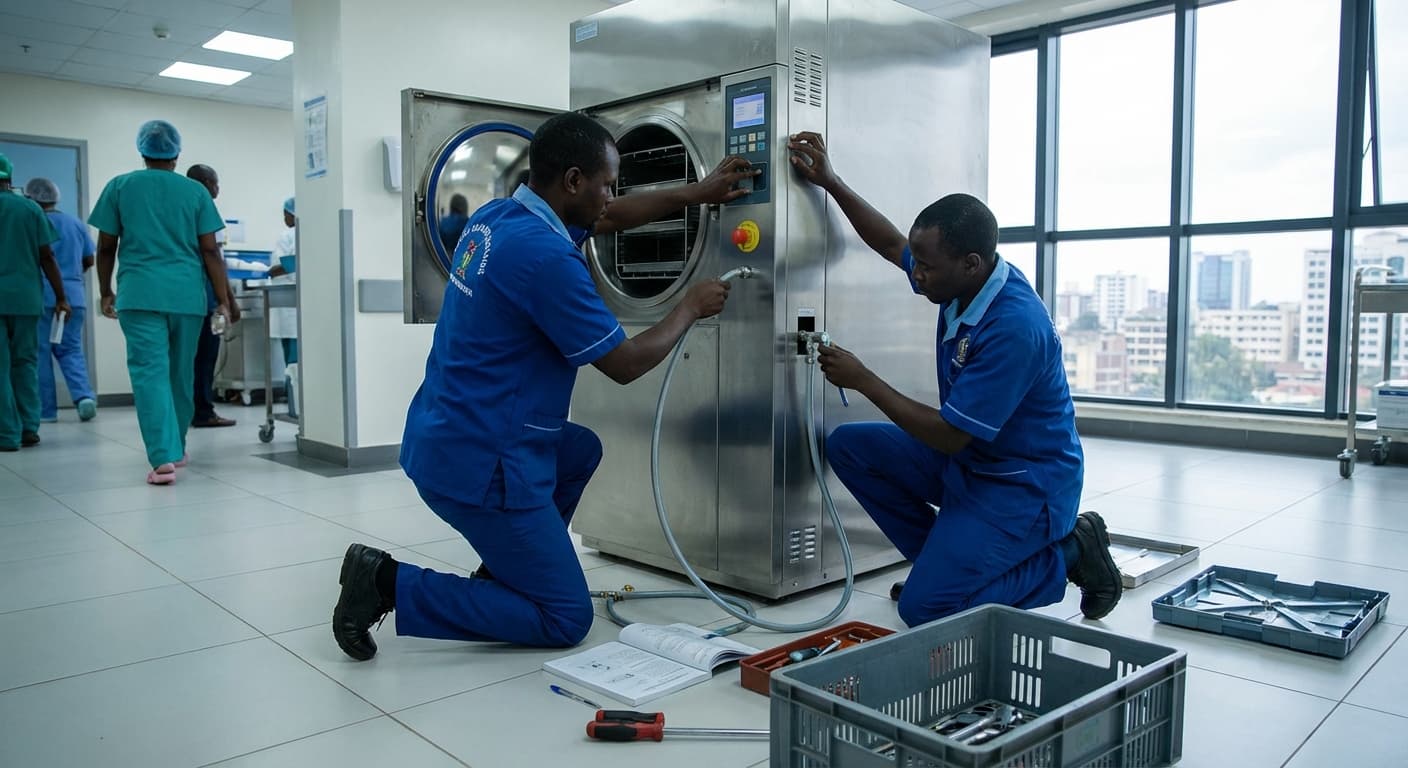
Autoclave & Sterilizer Installation Service in Madagascar
Engineering Excellence & Technical Support
Autoclave & Sterilizer Installation Service High-standard technical execution following OEM protocols and local regulatory frameworks.
HACCP Compliant Sterilization Solutions
We ensure your autoclaves and sterilizers meet stringent HACCP standards, guaranteeing the highest level of microbial control for food processing and healthcare facilities across Madagascar, protecting public health and brand integrity.
Optimized Steam Penetration Engineering
Our expert installation engineers meticulously calibrate autoclaves for optimal steam penetration, critical for effective sterilization of complex medical instruments and laboratory equipment, minimizing risks of re-sterilization and ensuring operational efficiency.
Precision Calibration & Validation for Regulatory Compliance
We provide comprehensive calibration and validation services for all installed autoclaves and sterilizers, adhering to international medical device regulations and local Malagasy health guidelines, ensuring your equipment performs accurately and meets all compliance requirements.
What Is Autoclave & Sterilizer Installation Service In Madagascar?
Autoclave & Sterilizer Installation Service in Madagascar refers to the professional provision of services for the procurement, setup, calibration, and initial validation of steam sterilizers (autoclaves) and other medical/laboratory sterilization equipment within the Malagasy Republic. This service ensures that these critical devices are installed correctly, meet regulatory standards, and operate effectively to achieve optimal sterilization cycles for bioburden reduction and pathogen elimination. It encompasses a range of activities from site assessment and equipment integration to user training and documentation, aiming to guarantee the safety and efficacy of sterilized materials and instruments.
| Who Needs Autoclave & Sterilizer Installation Service? | Typical Use Cases | |
|---|---|---|
| Healthcare Facilities: Hospitals, clinics, dental practices, surgical centers, and veterinary clinics require sterile instruments and supplies to prevent healthcare-associated infections (HAIs). | Laboratories: Research laboratories, diagnostic labs, and quality control departments in industries (pharmaceutical, food & beverage) need to sterilize media, glassware, and equipment to ensure aseptic conditions and reliable results. | |
| Educational Institutions: Universities and research institutes with biology, chemistry, or medical departments use autoclaves for sterilizing laboratory equipment and waste. | Biotechnology and Pharmaceutical Companies: For sterile manufacturing processes, media preparation, and research and development activities. | Central Sterilization Supply Departments (CSSDs): Dedicated units within larger healthcare facilities responsible for the reprocessing of reusable medical devices. |
| Industrial Settings: In specific manufacturing processes where aseptic conditions are paramount (e.g., certain food processing, cosmetic production). | Government and Public Health Agencies: For sterilization of medical supplies and equipment in public health programs and emergency response. |
Key Components of Autoclave & Sterilizer Installation Service:
- Site Assessment and Planning: Evaluating the intended installation location for power, water, drainage, ventilation, and spatial requirements.
- Equipment Procurement and Logistics: Facilitating the acquisition and transportation of the chosen autoclave or sterilizer to the site.
- Physical Installation: Unpacking, assembling, and securing the sterilizer according to manufacturer specifications and local building codes.
- Utilities Connection: Connecting the equipment to appropriate electrical, water, and drainage systems, ensuring compliance with safety and functional parameters.
- Calibration and Commissioning: Adjusting and verifying operational parameters (temperature, pressure, time, vacuum) to meet predefined sterilization efficacy standards.
- Performance Qualification (PQ) and Operational Qualification (OQ): Conducting tests to confirm the equipment operates as intended and consistently achieves sterilization.
- User Training: Educating relevant personnel on the safe and efficient operation, routine maintenance, and troubleshooting of the installed equipment.
- Documentation and Certification: Providing comprehensive installation reports, calibration certificates, and any required regulatory documentation.
- Post-Installation Support: Offering initial troubleshooting and advice to ensure a smooth transition to operational use.
Who Needs Autoclave & Sterilizer Installation Service In Madagascar?
Madagascar's growing healthcare infrastructure and increasing focus on patient safety necessitate professional autoclave and sterilizer installation services. These critical pieces of medical equipment require expert setup to ensure optimal performance, longevity, and adherence to strict sterilization protocols. This ensures the prevention of healthcare-associated infections and the delivery of safe medical procedures.
| Customer Type | Key Departments/Areas Requiring Installation |
|---|---|
| Hospitals (Public and Private) | Central Sterile Supply Department (CSSD), Operating Rooms, Emergency Departments, Outpatient Clinics, Dental Units, Pathology Labs, Maternity Wards, Intensive Care Units (ICUs) |
| Clinics and Polyclinics | Treatment Rooms, Minor Procedure Rooms, Dental Units |
| Surgical Centers and Operating Theatres | Sterile Processing Areas, Operating Rooms |
| Dental Clinics | Sterilization Area for Instruments, X-ray Processing (if applicable) |
| Diagnostic Laboratories | Sterilization of glassware, equipment, and consumables for culture and testing |
| Veterinary Clinics and Animal Hospitals | Surgical Suites, Examination Rooms, Laboratory Areas |
| Research Institutions | Laboratories requiring sterile equipment and consumables for experiments |
| Medical Training Facilities | Simulation labs, practical training areas for sterile techniques |
| Government Health Agencies | Public health laboratories, regional health centers, facilities managing outbreaks |
Target Customers & Departments Requiring Autoclave & Sterilizer Installation Service in Madagascar:
- Hospitals (Public and Private)
- Clinics and Polyclinics
- Surgical Centers and Operating Theatres
- Dental Clinics
- Diagnostic Laboratories
- Veterinary Clinics and Animal Hospitals
- Research Institutions
- Medical Training Facilities
- Government Health Agencies
Autoclave & Sterilizer Installation Service Process In Madagascar
This document outlines the comprehensive workflow for Autoclave & Sterilizer Installation Services in Madagascar, from the initial customer inquiry to the successful execution and handover of the installed equipment.
| Phase | Step | Description | Key Activities | Responsible Party | Madagascar Specific Considerations |
|---|---|---|---|---|---|
| Phase 1: Inquiry & Consultation | Initial Contact | Customer expresses interest in autoclave/sterilizer installation services. | Receive inquiry via phone, email, or website form. Understand customer's basic needs (type of equipment, intended use, location). | Customer, Service Provider Sales/Inquiry Team | Language barriers may require translation support. Clarify if customer has a specific brand/model in mind. |
| Phase 1: Inquiry & Consultation | Needs Assessment & Initial Consultation | Gather detailed information about the customer's specific requirements and site conditions. | Discuss equipment specifications, capacity needs, intended applications (medical, laboratory, dental), budget, timeline, existing infrastructure, and any specific regulatory requirements in Madagascar. | Service Provider Technical Sales/Consultant, Customer | Understand local healthcare/research infrastructure and common practices. Investigate any specific Malagasy regulations for medical devices. |
| Phase 2: Site Assessment & Planning | On-Site Visit & Survey | Conduct a physical inspection of the installation site to assess feasibility and identify potential challenges. | Evaluate space availability, power supply (voltage, phase, amperage), water availability and quality, drainage, ventilation, structural integrity of the installation area, and access routes for equipment delivery. | Service Provider Technical Team, Customer | Assess local availability of reliable power and water sources. Identify potential logistical challenges for large equipment delivery (road conditions, bridge limitations). |
| Phase 2: Site Assessment & Planning | Technical Planning & Design | Develop a detailed installation plan based on the site assessment. | Create schematics for electrical, plumbing, and ventilation connections. Determine mounting requirements, safety clearances, and any necessary modifications to the site. Prepare a bill of materials for ancillary items. | Service Provider Engineering/Installation Team | Ensure plans comply with local building codes and safety standards in Madagascar. Consider potential environmental factors like humidity and temperature. |
| Phase 3: Proposal & Agreement | Proposal Generation | Present a comprehensive proposal to the customer outlining the scope of work, equipment, services, timeline, and cost. | Include equipment specifications, installation steps, warranty information, payment terms, and any exclusions. Clearly define responsibilities for both parties. | Service Provider Sales/Project Management | Ensure currency and payment methods are clearly stated. Provide contact information for local representatives if available. |
| Phase 3: Proposal & Agreement | Contract Negotiation & Signing | Discuss and finalize the terms of the agreement with the customer. | Address any questions or concerns, negotiate pricing if applicable, and secure a signed contract and advance payment as per terms. | Service Provider Management, Customer | Ensure contracts are legally binding within the Malagasy legal framework. Consider using bilingual legal counsel if necessary. |
| Phase 4: Equipment Procurement & Logistics | Equipment Ordering & Sourcing | Procure the specified autoclave/sterilizer and any necessary accessories. | Place orders with manufacturers or authorized distributors. Manage lead times and ensure compliance with quality standards. | Service Provider Procurement Team | Factor in international shipping times, customs duties, and import regulations specific to Madagascar. Consider local availability of spare parts. |
| Phase 4: Equipment Procurement & Logistics | Transportation & Importation | Arrange for the safe and efficient transportation of equipment to Madagascar. | Coordinate shipping, customs clearance, insurance, and local delivery to the installation site. This may involve working with freight forwarders. | Service Provider Logistics Team, Freight Forwarder | Navigating Malagasy customs procedures can be complex and time-consuming. Understanding import taxes and documentation is crucial. Plan for potential delays due to infrastructure or administrative processes. |
| Phase 5: Pre-Installation Preparation | Site Readiness Verification | Ensure the installation site is fully prepared according to the approved plan before equipment arrives. | Confirm completion of any civil works, electrical, plumbing, and ventilation installations. Verify power and water supply are functional and meet specifications. | Service Provider Installation Team, Customer | Double-check that all necessary utilities are accessible and correctly configured at the local site. |
| Phase 5: Pre-Installation Preparation | Tool & Material Staging | Gather all necessary tools, equipment, and consumables for the installation. | Ensure specialized tools, safety equipment, installation materials (cables, pipes, fittings), and personal protective equipment (PPE) are on-site. | Service Provider Installation Team | Consider any local availability of specialized tools or materials that may need to be brought in. |
| Phase 6: Installation Execution | Equipment Unpacking & Placement | Carefully unpack the autoclave/sterilizer and position it in its designated location. | Inspect for any shipping damage. Use appropriate lifting equipment and ensure safe handling procedures are followed. | Service Provider Installation Team | Ensure the placement minimizes disruption to ongoing operations, especially in healthcare settings. |
| Phase 6: Installation Execution | Connections & Mounting | Connect the equipment to the power supply, water, and drainage systems. | Perform electrical wiring, plumbing connections, and any necessary structural mounting. Ensure all connections are secure and meet safety standards. | Service Provider Installation Team | Adhere strictly to local electrical and plumbing codes. Use certified local electricians and plumbers if required. |
| Phase 6: Installation Execution | Ancillary System Installation | Install any required ancillary systems, such as ventilation or water treatment units. | Integrate these systems seamlessly with the main autoclave/sterilizer unit. | Service Provider Installation Team | Ensure these systems are appropriate for the local environmental conditions and water quality. |
| Phase 7: Testing & Commissioning | Pre-Commissioning Checks | Perform initial checks to ensure all connections are correct and systems are ready for operation. | Verify voltage, pressure, flow rates, and safety interlocks. Conduct a visual inspection of all components. | Service Provider Installation Team | Use calibrated measuring instruments available locally or brought in. |
| Phase 7: Testing & Commissioning | Functional Testing | Operate the autoclave/sterilizer through its various cycles to test functionality. | Run test cycles, monitor parameters (temperature, pressure, time), and verify cycle completion and effectiveness. Document all test results. | Service Provider Installation Team, Customer Representative | Ensure test cycles simulate actual usage scenarios relevant to the Malagasy context. |
| Phase 7: Testing & Commissioning | Performance Verification & Calibration | Confirm that the equipment performs according to manufacturer specifications and regulatory requirements. | Calibrate sensors and critical parameters. Obtain necessary certifications if required by local authorities. | Service Provider Calibration Technician, Regulatory Body (if applicable) | Inquire about any specific local requirements for equipment calibration and certification in Madagascar. |
| Phase 8: Training & Handover | Operator Training | Provide comprehensive training to the customer's personnel on the operation and basic maintenance of the equipment. | Cover daily operation, loading/unloading procedures, cycle selection, troubleshooting common issues, and safety protocols. Use demonstration and hands-on exercises. | Service Provider Trainer, Customer Personnel | Conduct training in a clear and understandable manner, considering potential language nuances. Provide training materials in French or local dialect if necessary. |
| Phase 8: Training & Handover | Documentation & Handover | Formally hand over the installed equipment and all relevant documentation to the customer. | Provide user manuals, maintenance logs, warranty certificates, test reports, and training materials. Obtain a formal sign-off from the customer. | Service Provider Project Manager, Customer | Ensure all documentation is accurate and complete, and that the customer understands the handover process. |
| Phase 9: Post-Installation Support & Follow-up | Initial Support Period | Provide ongoing support during an initial period following installation. | Be available to answer questions, provide troubleshooting assistance, and address any immediate issues that may arise. | Service Provider Technical Support Team | Establish clear channels for post-installation support, considering potential time zone differences and communication infrastructure. |
| Phase 9: Post-Installation Support & Follow-up | Planned Maintenance & Service | Offer ongoing maintenance contracts and scheduled service visits. | Ensure the equipment remains in optimal working condition, extending its lifespan and ensuring consistent performance. Facilitate access to spare parts. | Service Provider Maintenance Team | Develop a proactive maintenance schedule considering local operating conditions and usage patterns. Ensure availability of spare parts within Madagascar. |
Autoclave & Sterilizer Installation Service Process in Madagascar
- Phase 1: Inquiry & Consultation
- Phase 2: Site Assessment & Planning
- Phase 3: Proposal & Agreement
- Phase 4: Equipment Procurement & Logistics
- Phase 5: Pre-Installation Preparation
- Phase 6: Installation Execution
- Phase 7: Testing & Commissioning
- Phase 8: Training & Handover
- Phase 9: Post-Installation Support & Follow-up
Autoclave & Sterilizer Installation Service Cost In Madagascar
The cost of autoclave and sterilizer installation services in Madagascar can vary significantly based on several key factors. These include the type and size of the sterilizer, the complexity of the installation site, the required utilities (water, electricity, drainage), and the qualifications of the installation technician or company. New installations might involve more extensive work than replacing an existing unit. For professional and reliable service, it's crucial to get detailed quotes from reputable providers.
| Service | Estimated Price Range (MGA - Malagasy Ariary) | Notes |
|---|---|---|
| Basic Installation (Small Autoclave/Sterilizer) | 250,000 - 600,000 MGA | Assumes standard utility access, minimal site prep. |
| Standard Installation (Medium Autoclave/Sterilizer) | 500,000 - 1,200,000 MGA | May involve moderate site preparation and utility adjustments. |
| Complex Installation (Large/Specialized Sterilizer) | 1,000,000 - 3,000,000+ MGA | Includes significant site modifications, advanced utility work, potential ventilation installation. |
| Relocation and Reinstallation | 400,000 - 1,500,000 MGA | Cost depends on distance and complexity of both removal and reinstallation. |
| On-site Consultation and Quote | 50,000 - 150,000 MGA | Often waived if the installation contract is accepted. |
Factors Influencing Autoclave & Sterilizer Installation Costs in Madagascar:
- Type of Sterilizer: Steam autoclaves, dry heat sterilizers, or chemical sterilizers may have different installation requirements.
- Size and Capacity: Larger units often require more robust infrastructure and longer installation times.
- Site Preparation: This can include modifications to walls, floors, or existing plumbing and electrical systems.
- Utility Connections: Access to and connection of electricity, water supply, and drainage systems.
- Ventilation Requirements: Some sterilizers require specific ventilation systems for safe operation.
- Geographic Location: Installation costs might differ between major cities like Antananarivo and more remote regions due to travel and logistics.
- Technician/Company Expertise: Certified and experienced technicians or specialized companies may charge more for their services.
- Additional Services: This could include initial calibration, testing, user training, and warranty support.
- Urgency of Installation: Expedited services may incur higher fees.
Affordable Autoclave & Sterilizer Installation Service Options
Finding an affordable autoclave and sterilizer installation service is crucial for many medical, dental, and laboratory facilities. Beyond just the hourly labor rate, understanding value bundles and employing cost-saving strategies can significantly reduce the overall investment. This guide explores options to ensure you get reliable installation without breaking the bank.
| Cost-Saving Strategy | Description | Potential Savings |
|---|---|---|
| Get Multiple Quotes | Contact several installation companies and request detailed quotes for the same scope of work. Compare not only the price but also what's included in each quote. | 10-25% by choosing the most competitive offer. |
| Bundle with Equipment Purchase | When buying a new autoclave or sterilizer, inquire if the vendor offers installation as part of a package deal. This can often be more cost-effective than sourcing installation separately. | Up to 20% when bundled with new equipment. |
| Off-Peak Scheduling | If your schedule allows, consider scheduling installation during less busy times for service providers (e.g., weekdays, avoiding holidays). Some companies may offer discounts for off-peak appointments. | 5-15% for flexible scheduling. |
| DIY Site Preparation (Where Applicable) | If you have qualified in-house staff, you might be able to handle minor site preparation, like clearing space or ensuring basic plumbing/electrical access is ready, reducing the installer's labor time. Consult with the installer first to avoid incorrect preparation. | Variable, depending on scope of DIY work. |
| Opt for Essential Services | Carefully evaluate if you need all the premium features of a comprehensive bundle. For simpler installations or if you have in-house expertise, you might only need the core installation and testing. | Can reduce bundle costs by 10-30% by tailoring the package. |
| Leverage Existing Infrastructure | Ensure your existing plumbing and electrical infrastructure meets the sterilizer's requirements. Upgrading these can be a significant separate cost. A pre-installation assessment is key here. | Avoids unexpected and often high costs for infrastructure upgrades. |
| Inquire About Preventative Maintenance Packages | While not a direct installation saving, some companies offer discounts on installation when you sign up for a preventative maintenance contract. This can be a good long-term value. | Indirect savings through discounted future services. |
Understanding Value Bundles
- {"title":"What is a Value Bundle?","description":"A value bundle is a package deal that combines multiple services or products for a fixed price, often at a discount compared to purchasing each item individually. For autoclave and sterilizer installation, this could include the initial site assessment, the actual installation, water line hookup, electrical work, calibration, and even initial training."}
- {"title":"Benefits of Value Bundles","description":"Bundles offer convenience, predictability in cost, and often a higher level of integrated service. They can streamline the process by having one provider manage multiple aspects of the installation, reducing coordination headaches."}
- {"title":"Common Bundle Components","description":"Typical components include: \n- Site Survey & Consultation: Assessing your space, power, and plumbing needs.\n- Equipment Delivery & Placement: Bringing the unit to your facility and positioning it.\n- Plumbing & Electrical Connections: Connecting to your existing water and power sources.\n- Ventilation Integration: Ensuring proper exhaust if required.\n- Initial Calibration & Testing: Verifying the sterilizer functions correctly.\n- Basic Operator Training: Introducing your staff to the equipment's operation and maintenance.\n- Warranty & Post-Installation Support: Providing peace of mind after the job is done."}
Verified Providers In Madagascar
Finding reliable and accredited healthcare providers is crucial for ensuring quality care. In Madagascar, navigating the healthcare landscape can be challenging. This document highlights the importance of verified providers and introduces Franance Health as a leading credentialing body. Their rigorous verification process ensures that healthcare professionals and facilities meet stringent standards, offering peace of mind and superior healthcare outcomes for patients.
| Verification Component | Description | Impact on Patient Care |
|---|---|---|
| Licensing and Certifications | Confirmation of valid professional licenses and relevant certifications. | Ensures practitioners meet minimum educational and competency requirements. |
| Professional Background Checks | Thorough review of professional history, including any disciplinary actions. | Mitigates the risk of engaging with unqualified or problematic practitioners. |
| Facility Standards Assessment | Evaluation of clinic/hospital infrastructure, equipment, and hygiene protocols. | Guarantees a safe and well-equipped environment for treatment. |
| Quality Management Systems | Assessment of the provider's internal quality control and assurance processes. | Promotes consistent delivery of high-quality medical services. |
| Patient Feedback Mechanisms | Review of how providers solicit and act upon patient feedback. | Indicates a commitment to patient satisfaction and service improvement. |
Why Franance Health Credentials Matter
- Enhanced Patient Safety: Franance Health's verification process rigorously assesses qualifications, licenses, and operational standards, minimizing risks for patients.
- Guaranteed Quality of Care: Accredited providers have demonstrated their commitment to best practices and continuous improvement in healthcare delivery.
- Access to Specialized Expertise: Verification often includes assessing the availability of specialized medical services and experienced practitioners.
- Trust and Transparency: Franance Health's seal of approval signifies a provider's adherence to ethical practices and a commitment to transparency.
- Improved Healthcare Outcomes: By selecting Franance Health-verified providers, patients are more likely to receive effective and appropriate treatment, leading to better health results.
Scope Of Work For Autoclave & Sterilizer Installation Service
This Scope of Work (SOW) outlines the requirements for the professional installation of an autoclave and sterilizer system at [Client Facility Name]. The service encompasses all necessary labor, materials, and equipment to ensure a safe, efficient, and compliant installation, ready for immediate operation. This SOW details the technical deliverables expected and the standard specifications to be adhered to throughout the project.
| Technical Deliverable | Description | Standard Specifications / Requirements |
|---|---|---|
| Site Survey Report | Detailed assessment of the installation site, including physical dimensions, utility availability, access routes, and potential obstructions. | Must include detailed measurements, photographs, and recommendations for optimal placement and utility connections. Report to be submitted within [Number] days of site visit. |
| Installation Plan | Comprehensive plan detailing the sequence of installation activities, resource allocation, and safety protocols. | Must include a Gantt chart or similar visual representation of the timeline, risk assessment, and emergency procedures. Approved by client prior to commencement. |
| Autoclave/Sterilizer Unit Installation | Physical placement, anchoring, and connection of the autoclave and/or sterilizer unit to all required utilities (power, water, drain, steam if applicable). | Unit to be installed according to manufacturer's specifications and relevant local/national building and electrical codes. Proper grounding and surge protection to be implemented. |
| Utility Connections | Connection of the unit to electrical supply, water supply, drainage, and any other necessary services. | All connections must comply with NEMA, IEC, and local plumbing/electrical codes. Appropriate shut-off valves and circuit breakers to be installed. Water quality to meet manufacturer's recommendations. |
| Ventilation and Exhaust System Integration | Installation or connection to existing ventilation and exhaust systems to safely dissipate steam and any other byproducts. | System designed to meet local environmental regulations and safety standards for fume extraction. Ductwork to be sealed and insulated where appropriate. |
| Control System Integration | Connection and configuration of the unit's control system to the facility's network or existing monitoring systems (if applicable). | Secure and reliable data transfer. Compliance with IT security policies of the client. |
| Functional Testing and Performance Verification | Thorough testing of all unit functions, cycles, and safety features to ensure optimal performance. | Testing to include multiple sterilization cycles with validation using biological and/or chemical indicators. Performance metrics to meet manufacturer's specifications and regulatory requirements (e.g., FDA, CE). |
| Commissioning Report | Formal documentation of all testing and verification activities, including test results and any adjustments made. | Report signed by both the installation team lead and client representative. Includes a certificate of completion. |
| Client Training Session | Comprehensive training for designated client personnel on the operation, basic maintenance, and troubleshooting of the installed equipment. | Training duration of at least [Number] hours. Materials to be provided in [Language]. Focus on safe and efficient operation. |
| As-Built Drawings | Detailed drawings reflecting the final installation, including all utility connections, piping, and electrical layouts. | Drawings to be provided in digital format (e.g., AutoCAD, PDF) and on paper. Accurate representation of the final installation. |
| Operation and Maintenance Manuals | Provision of all manufacturer-provided operation and maintenance manuals for the installed equipment. | Manuals to be in [Language] and provided in both hard copy and electronic format. |
| Warranty and Support Information | Clear documentation outlining the warranty period and after-sales support services. | Contact details for technical support and warranty claims to be provided. |
Key Project Phases
- Site Assessment and Planning
- Equipment Delivery and Unpacking
- Installation and Integration
- Testing and Commissioning
- Client Training and Handover
- Documentation and As-Built Drawings
Service Level Agreement For Autoclave & Sterilizer Installation Service
This Service Level Agreement (SLA) outlines the response times and uptime guarantees for the Autoclave & Sterilizer Installation Service provided by [Your Company Name]. This SLA is an integral part of the Master Service Agreement between [Your Company Name] and [Client Company Name].
| Service Level Component | Target | Measurement Period |
|---|---|---|
| Emergency Response Time | 2 Hours | From the time of formal notification during business hours |
| Non-Emergency Response Time | 8 Business Hours | From the time of formal notification during business hours |
| Installation Uptime Guarantee | 98% Uptime | Monthly, excluding scheduled preventative maintenance and planned downtime |
Definitions
- Autoclave & Sterilizer Installation Service: Refers to the complete process of delivering, assembling, connecting, testing, and commissioning a new autoclave or sterilizer unit at the client's designated location.
- Client: The entity purchasing the Autoclave & Sterilizer Installation Service.
- Downtime: The period during which the installed autoclave or sterilizer is unavailable for its intended use due to a fault, malfunction, or required maintenance initiated by [Your Company Name]. Routine preventative maintenance scheduled with client approval is not considered Downtime.
- Emergency: A situation where the installed autoclave or sterilizer is completely non-operational and poses a significant risk to critical operations or safety. Examples include complete power failure, uncontrolled steam release, or critical system failure preventing any operation.
- Non-Emergency: Any issue that does not meet the definition of an Emergency but still impacts the functionality or performance of the installed autoclave or sterilizer. This includes performance degradation, minor errors, or partial functionality loss.
- Response Time: The maximum time allowed for [Your Company Name] to acknowledge and begin active troubleshooting of a reported issue after it has been formally logged by the client.
- Uptime Guarantee: The percentage of time the installed autoclave or sterilizer is expected to be operational and available for use over a given period.
Frequently Asked Questions

Ready when you are
Let's scope your Autoclave & Sterilizer Installation Service in Madagascar project in Madagascar.

Scaling healthcare logistics and technical systems across the entire continent.