
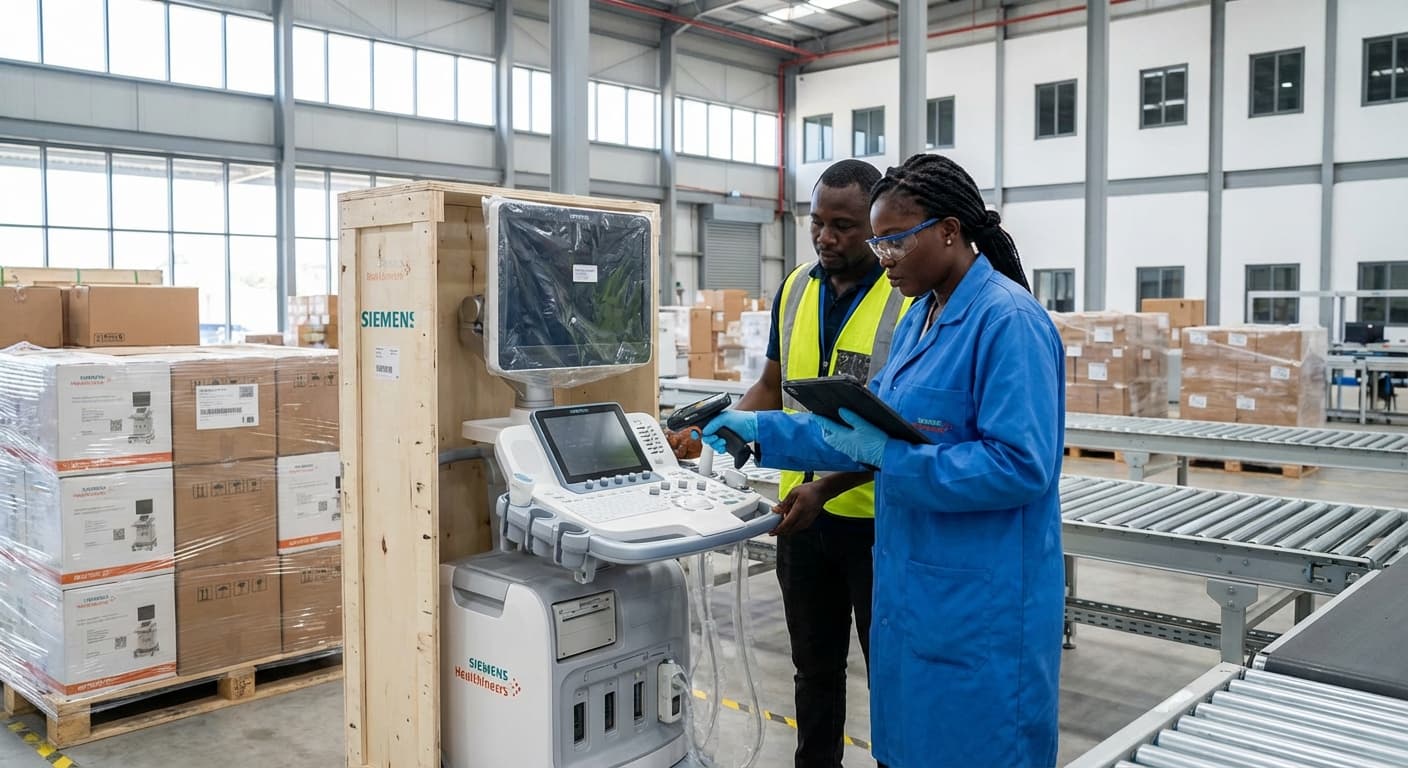
Warehouse Receiving Inspection Service (Medical Equipment) in Madagascar
Engineering Excellence & Technical Support
Warehouse Receiving Inspection Service (Medical Equipment) High-standard technical execution following OEM protocols and local regulatory frameworks.
ISO 13485 Certified Quality Assurance
Our receiving inspection service adheres strictly to ISO 13485 standards, ensuring the highest level of quality control for medical equipment in Madagascar. We implement rigorous procedures for incoming goods, verification against purchase orders, and comprehensive documentation, guaranteeing compliance and patient safety.
Advanced Defect Detection & Traceability
Leveraging state-of-the-art inspection tools and trained personnel, we meticulously identify and document any damage, defects, or discrepancies in incoming medical equipment. Our robust traceability system ensures every item is accounted for from arrival to storage, minimizing risks and facilitating efficient inventory management for healthcare facilities in Madagascar.
Rapid Turnaround & Regulatory Compliance
We understand the critical need for timely access to medical equipment. Our streamlined receiving inspection process in Madagascar is designed for rapid turnaround, enabling quick release of compliant goods into your inventory. We are adept at navigating local regulatory requirements, ensuring all inspections meet or exceed national standards.
What Is Warehouse Receiving Inspection Service (Medical Equipment) In Madagascar?
Warehouse Receiving Inspection Service for Medical Equipment in Madagascar refers to a specialized process of verifying the condition, quantity, and compliance of medical devices and supplies upon their arrival at a designated warehouse or storage facility within Madagascar. This service is crucial for ensuring the integrity and suitability of medical equipment before it is distributed to healthcare facilities or used for patient care. It involves a systematic examination of received items against established specifications, purchase orders, and regulatory requirements. The objective is to mitigate risks associated with damaged, counterfeit, substandard, or incorrect items, thereby safeguarding public health and optimizing resource allocation.
| Who Needs This Service? | Typical Use Cases | ||||
|---|---|---|---|---|---|
| Government Health Ministries and Agencies: Responsible for procuring and distributing medical equipment nationwide. Ensuring the quality and quantity of incoming supplies is paramount for public health programs. | Non-Governmental Organizations (NGOs) and Humanitarian Aid Organizations: Importing medical equipment and supplies for various health initiatives, disaster relief, or specific medical missions in Madagascar. Verifying received goods against donor specifications and program requirements. | Hospitals and Healthcare Providers (Public and Private): Receiving bulk orders of medical equipment and consumables. Ensuring the integrity of these supplies before they are used in clinical settings. | Medical Equipment Distributors and Suppliers: Operating warehouses for storing and distributing medical devices. Conducting receiving inspections as part of their quality management system and to fulfill contractual obligations. | International Procurement Agencies and Donors: Funding the purchase of medical equipment for Madagascar. Requiring independent inspection services to ensure accountability and the effective use of funds. | Logistics and Warehousing Companies: Providing storage and handling services for medical equipment. Offering receiving inspection as an add-on service to their clients. |
| Initial Stocking of National Medical Warehouses: Inspecting large shipments of essential medicines, diagnostic kits, and medical devices procured by the Ministry of Health. | Receipt of Pharmaceutical and Vaccine Shipments: Critical for ensuring cold chain integrity and product efficacy for temperature-sensitive biologicals. | Delivery of Capital Medical Equipment: Verifying the condition and completeness of high-value equipment like X-ray machines, ultrasound devices, or surgical sets upon arrival. | Disaster Relief Supplies: Rapid inspection of emergency medical kits, tents, and other essential healthcare-related items during humanitarian crises. | Project-Specific Procurement: Inspecting equipment procured for specific health programs funded by international donors (e.g., maternal health, HIV/AIDS treatment, malaria control). | Routine Replenishment of Hospital Inventories: Ensuring that the medical supplies delivered to individual healthcare facilities meet quality standards. |
Key Components of Warehouse Receiving Inspection Service:
- Documentation Verification: Cross-referencing incoming shipments against purchase orders (POs), invoices, packing lists, bills of lading (BOLs), and supplier certifications. This includes verifying lot numbers, expiry dates, and serial numbers where applicable.
- Physical Inspection: Conducting a thorough visual and tactile examination of packaging and the equipment itself. This involves checking for damage (e.g., dents, tears, punctures, water damage), signs of tampering, and adherence to specified dimensions or aesthetics.
- Quantity and Item Accuracy: Confirming that the number of units received matches the documented quantities and that the correct types of medical equipment have been delivered as per the order.
- Condition Assessment: Evaluating the operational status and inherent condition of the equipment. This can range from basic visual checks for defects to more in-depth functional testing or sampling for critical items.
- Compliance Verification: Ensuring that the medical equipment meets relevant Malagasy regulatory standards, certifications (e.g., CE marking, FDA approval where applicable and recognized), and any specific project or donor requirements.
- Labeling and Traceability: Verifying that all items are correctly labeled with manufacturer information, product identification, batch/lot numbers, expiry dates, and any required warning labels.
- Cold Chain Integrity (if applicable): For temperature-sensitive medical supplies, assessing the integrity of the cold chain during transit and upon receipt, which may involve checking temperature logs and the condition of insulated packaging.
- Non-Conformance Reporting: Documenting any discrepancies, damages, or deviations from specifications. This includes detailed reporting, photographic evidence, and initiating the process for returns, replacements, or corrective actions.
- Sampling and Testing: For certain high-risk or high-volume items, implementing a statistically valid sampling plan for further quality control testing or functional verification.
Who Needs Warehouse Receiving Inspection Service (Medical Equipment) In Madagascar?
Warehouse receiving inspection services are crucial for medical equipment in Madagascar to ensure the quality, safety, and compliance of incoming goods. This prevents the introduction of faulty, counterfeit, or damaged equipment into the healthcare system, safeguarding patient well-being and optimizing resource allocation. Madagascar's developing healthcare infrastructure, coupled with the specific needs of medical equipment, makes these services particularly vital.
| Target Customer Segment | Key Departments Involved/Benefiting |
|---|---|
| Public Hospitals & Health Centers (National, Regional, District) | Procurement Department, Biomedical Engineering Department, Quality Assurance Department, Pharmacy Department, Clinical Departments (receiving equipment) |
| Private Hospitals & Clinics | Administration, Purchasing/Procurement, Biomedical Services, Clinical Management |
| Medical Equipment Importers & Distributors | Logistics & Warehousing, Quality Control, Sales & Marketing (customer satisfaction), Compliance Department |
| Ministry of Public Health (Government Agency) | Regulatory Affairs, Procurement Oversight, Quality Control Units, National Medical Stores |
| Non-Governmental Organizations (NGOs) & International Aid Agencies (e.g., WHO, UNICEF, Global Fund) | Procurement & Logistics, Program Management, Medical Equipment Officers, Monitoring & Evaluation |
| Medical Equipment Manufacturers (with local presence or distribution) | Quality Assurance, Logistics, Sales Support, Field Service Engineers |
| Pharmaceutical Wholesalers (who also distribute medical devices) | Warehouse Management, Quality Assurance, Inventory Control |
Who Needs Warehouse Receiving Inspection Service (Medical Equipment) in Madagascar?
- Organizations importing or distributing medical equipment within Madagascar.
- Healthcare facilities requiring assurance of the quality of their medical equipment.
- Government agencies overseeing healthcare and medical device regulation.
- Manufacturers and suppliers seeking to ensure their products meet import standards and customer expectations.
- NGOs and international aid organizations involved in healthcare provision in Madagascar.
Warehouse Receiving Inspection Service (Medical Equipment) Process In Madagascar
This document outlines the workflow for a Warehouse Receiving Inspection Service for medical equipment in Madagascar, covering the process from initial client inquiry to the final execution of the inspection.
| Stage | Phase | Key Activities | Involved Parties | Deliverables | Timeframe (Typical) |
|---|---|---|---|---|---|
| 1 | Inquiry and Scoping | Client contacts the inspection service provider with a request for medical equipment receiving inspection. Provider gathers details about the equipment, quantity, origin, destination, and specific inspection requirements. | Client (Importer/Distributor), Inspection Service Provider | Initial understanding of scope and requirements. | 1-3 business days |
| 2 | Quotation and Agreement | Provider develops a detailed quotation based on the scoped requirements. Client reviews and accepts the quotation. A formal service agreement or contract is established. | Inspection Service Provider, Client | Formal Quotation, Signed Service Agreement/Contract. | 2-5 business days |
| 3 | Pre-Inspection Planning | Provider schedules the inspection, assigns inspectors, and prepares necessary checklists and documentation. This includes confirming access to the warehouse, understanding the receiving process, and identifying potential risks. | Inspection Service Provider (Operations/Scheduling Team, Lead Inspector), Client (Warehouse Manager) | Inspection Schedule, Prepared Checklists, Communication Plan. | 3-7 business days (depending on availability and complexity) |
| 4 | On-Site Inspection Execution | Inspectors arrive at the warehouse at the agreed time. They verify the quantity, condition, and specifications of received medical equipment against shipping documents and order details. This may include visual inspection, functional checks (if applicable and agreed upon), and documentation review. | Inspection Service Provider (On-site Inspectors), Client (Warehouse Personnel, Logistics Staff) | Verified quantities, documented condition of equipment, photographic evidence, preliminary findings. | Varies based on shipment size and complexity (e.g., 1-5 days per shipment) |
| 5 | Reporting and Documentation | Inspectors compile their findings into a comprehensive inspection report. This report includes details of conformity, non-conformities, discrepancies, and recommendations. The report is submitted to the client for review. | Inspection Service Provider (Lead Inspector, Reporting Team), Client | Detailed Inspection Report, Certificates of Inspection (if applicable). | 2-5 business days after execution |
| 6 | Follow-up and Closure | The client reviews the report and may discuss findings with the provider. Any corrective actions required are identified and tracked. Once all parties are satisfied and any outstanding issues are resolved, the service is formally closed. | Client, Inspection Service Provider | Resolution of issues, Finalized records, Invoice settlement. | Ongoing, dependent on client response and issue resolution |
Key Stages of the Warehouse Receiving Inspection Service Workflow
- Inquiry and Scoping
- Quotation and Agreement
- Pre-Inspection Planning
- On-Site Inspection Execution
- Reporting and Documentation
- Follow-up and Closure
Warehouse Receiving Inspection Service (Medical Equipment) Cost In Madagascar
The cost of warehouse receiving inspection services for medical equipment in Madagascar can vary significantly based on several key factors. These inspections are crucial to ensure that medical devices are received in good condition, match order specifications, and comply with relevant regulations, thereby preventing potential patient harm and financial losses. Understanding these pricing dynamics is essential for healthcare providers and medical equipment suppliers operating in the country.
| Service Component / Equipment Type | Estimated Cost Range (MGA - Malagasy Ariary) | Notes |
|---|---|---|
| Basic Visual Inspection & Documentation Check (Per item) | 15,000 - 50,000 MGA | Covers basic checks for damage, correct labeling, and matching purchase orders. Suitable for consumables or simple non-technical equipment. |
| Standard Functional Testing (Per item, for moderately complex equipment) | 40,000 - 150,000 MGA | Includes visual inspection, basic operational checks, and verification of essential functionalities. For items like basic patient monitors, centrifuges, or autoclaves. |
| Comprehensive Inspection & Calibration (Per item, for complex/high-value equipment) | 100,000 - 500,000+ MGA | Involves detailed functional testing, performance verification, calibration checks, and potentially software verification. For items like diagnostic imaging equipment, advanced laboratory analyzers, or surgical robots. |
| Full-day Inspection Service (On-site) | 200,000 - 700,000+ MGA | Typically for a team inspecting multiple items over a day. May include travel within a city. Rates can increase significantly for remote locations. |
| Specialized Regulatory Compliance Audit (Per device/system) | 150,000 - 600,000+ MGA | Focuses on adherence to specific medical device regulations. Cost is highly dependent on the complexity and number of regulations involved. |
| Travel and Logistics (Additional) | Varies based on distance and mode of transport | Applied for inspections outside major urban centers. Could be a flat fee or per kilometer charge. |
Key Pricing Factors for Warehouse Receiving Inspection Services (Medical Equipment) in Madagascar
- Type and Complexity of Medical Equipment: Highly specialized or complex medical equipment (e.g., MRI machines, sophisticated laboratory analyzers) requires inspectors with advanced technical knowledge and specialized tools, leading to higher inspection costs compared to simpler devices (e.g., basic diagnostic tools, consumables).
- Volume and Quantity of Equipment: The number of items to be inspected is a primary driver of cost. Larger shipments generally incur higher inspection fees, although some service providers may offer volume discounts.
- Scope of Inspection: The depth and breadth of the inspection significantly impact pricing. This can range from basic visual checks and documentation verification to comprehensive functional testing, calibration checks, and verification of sterilization parameters. More extensive scope equals higher cost.
- Location of Warehouse: Accessibility and remoteness of the warehouse can influence costs. Inspections in remote or hard-to-reach areas may incur additional travel and logistical expenses for the inspection team.
- Urgency of Service: Expedited or same-day inspection services will typically command a premium over standard turnaround times.
- Experience and Reputation of the Service Provider: Established inspection companies with a proven track record and specialized expertise in medical equipment are often more expensive than newer or less specialized providers, reflecting their investment in qualified personnel and advanced equipment.
- Regulatory Compliance Requirements: If specific national or international regulatory compliance checks are mandated (e.g., for import/export, specific usage guidelines), these specialized inspections will add to the overall cost.
- Reporting and Documentation Requirements: The level of detail and the format of the inspection report can influence pricing. Detailed reports with photographic evidence, comprehensive test results, and formal certification will be priced higher.
- Additional Services: Any ancillary services requested, such as sample retrieval for further testing, temperature logging verification, or re-packaging, will contribute to the overall cost.
Affordable Warehouse Receiving Inspection Service (Medical Equipment) Options
Navigating the complexities of medical equipment receiving inspections can be a significant operational challenge, especially for businesses seeking cost-effective solutions. This guide explores affordable options for warehouse receiving inspection services specifically for medical equipment, focusing on value bundles and practical cost-saving strategies. Ensuring the integrity and compliance of medical equipment upon arrival is crucial for patient safety, regulatory adherence, and operational efficiency. By understanding the available service models and implementing smart procurement, organizations can significantly reduce their inspection costs without compromising quality.
| Value Bundle | Description | Cost-Saving Strategies within Bundle |
|---|---|---|
| **Basic Visual & Documentation Check | Includes inspection for external physical damage, verification of shipping manifest against received items, and confirmation of essential documentation (e.g., Certificate of Conformance). | Leverage pre-defined checklists to expedite the process. Bundle with routine inbound shipments to achieve economies of scale. Consider scheduled, rather than on-demand, inspections. |
| **Standard Compliance Audit | Builds on Basic Check by adding verification of serial numbers against purchase orders, basic functional checks (if applicable and pre-defined), and review of regulatory compliance documentation. | Batch inspections of similar equipment types. Negotiate tiered pricing based on volume. Utilize remote audit capabilities where possible for documentation review. |
| **Enhanced Quality Assurance & Testing | Includes all of Standard Compliance Audit plus more in-depth functional testing, calibration verification (if applicable), and detailed condition reporting. | Long-term contracts with predictable volumes. Partner with a provider that offers bundled services with related quality control activities. Explore shared inspection resources with other organizations if feasible. |
| **Customized End-to-End Solution | Tailored package addressing specific organizational needs, potentially including initial setup support, inventory management integration, and specialized testing protocols. | Focus on integrating the service directly into your supply chain to eliminate redundant steps. Negotiate for bundled pricing that reflects your unique workflow and anticipated volumes. Regularly review and optimize the custom bundle based on performance data. |
Key Considerations for Affordable Medical Equipment Receiving Inspections
- Define Inspection Scope: Clearly outline what needs to be inspected (e.g., visual damage, documentation verification, basic functional checks, serial number matching). A well-defined scope prevents unnecessary costs.
- Volume Predictability: The more predictable your receiving volume, the easier it is for service providers to offer competitive pricing.
- Service Level Agreements (SLAs): Understand the turnaround times and reporting formats offered. Tailor these to your operational needs to avoid paying for services you don't require.
- Geographic Proximity: Location can impact travel costs for on-site inspectors. Consider local or regional providers.
- Technology Integration: Explore services that can integrate with your existing Warehouse Management System (WMS) or ERP for streamlined data flow and reduced manual effort.
- Provider Reputation & Compliance: While cost is a factor, ensure the provider has a strong track record in medical equipment handling and adheres to relevant industry standards (e.g., ISO, FDA regulations where applicable).
Verified Providers In Madagascar
In the landscape of healthcare in Madagascar, identifying truly dependable and qualified providers is paramount for ensuring quality patient care. Franance Health has emerged as a leading credentialing body, setting a high standard for medical professionals and facilities. Their rigorous verification process signifies a commitment to excellence, patient safety, and ethical practices. Choosing healthcare providers accredited by Franance Health offers a significant advantage, assuring patients of competence, adherence to best practices, and a dedication to continuous improvement. This JSON outlines the core aspects of Franance Health's credentialing and why it serves as a benchmark for the best healthcare services in Madagascar.
| Benefit of Choosing Franance Health Verified Providers | Why it Matters to Patients | Franance Health's Assurance |
|---|---|---|
| Proven Competence and Expertise | Ensures you are treated by qualified professionals with verified skills and knowledge. | Rigorous academic and experience validation. |
| Enhanced Patient Safety | Minimizes risks associated with unqualified or negligent care. | Strict adherence to ethical standards and medical protocols. |
| Access to High-Quality Care | Guarantees a higher standard of treatment and service. | Assessment of compliance with established best practices. |
| Trust and Reliability | Provides peace of mind knowing your healthcare provider meets stringent criteria. | Independent and objective credentialing process. |
| Commitment to Modern Medicine | Ensures providers are up-to-date with the latest medical advancements. | Verification of continuous professional development. |
Franance Health Credentialing: Pillars of Trust
- Rigorous Verification of Qualifications: Franance Health meticulously scrutinizes the educational background, licensing, and professional experience of all healthcare providers they credential. This ensures that practitioners possess the necessary skills and knowledge to deliver effective care.
- Commitment to Ethical Standards: The credentialing process includes a thorough review of a provider's adherence to ethical guidelines and professional conduct. This safeguards patients from potential malpractice and promotes a trustworthy healthcare environment.
- Adherence to Best Practices and Protocols: Franance Health assesses healthcare facilities and professionals for their compliance with established medical best practices, treatment protocols, and infection control measures. This is crucial for delivering safe and effective patient outcomes.
- Continuous Professional Development (CPD) Evaluation: The organization often mandates and verifies ongoing training and development for credentialed providers, ensuring they remain up-to-date with the latest medical advancements and techniques.
- Patient Safety and Quality Assurance: The overarching goal of Franance Health's credentialing is to enhance patient safety and elevate the overall quality of healthcare services offered in Madagascar.
- Independent and Objective Assessment: As an independent body, Franance Health provides an objective assessment of providers, free from internal biases, offering a truly reliable measure of competence.
Scope Of Work For Warehouse Receiving Inspection Service (Medical Equipment)
This Scope of Work (SOW) outlines the services to be provided for the inspection of incoming medical equipment at the designated warehouse facility. The objective is to ensure that all received medical equipment meets established quality standards, specifications, and regulatory requirements prior to being accepted into inventory. This SOW details the technical deliverables and standard specifications that will be adhered to throughout the receiving inspection process.
| Section | Description | Technical Deliverables | Standard Specifications / Requirements |
|---|---|---|---|
| Initial check of incoming shipments against order details and shipping documents. | Receipt confirmation, reconciliation of quantities and items, discrepancy logging. | Compliance with Purchase Order (PO) details, packing lists, Advanced Shipping Notices (ASNs). Accuracy of item codes, descriptions, quantities, serial numbers (if applicable). |
| Thorough examination of the exterior and accessible components of the medical equipment. | Identification and documentation of cosmetic defects, physical damage, packaging integrity. | Absence of scratches, dents, cracks, loose parts, or signs of mishandling. Packaging intact, protective materials present and effective. |
| Ensuring all specified components, accessories, and parts are present and correct. | List of included accessories, verification of specific configurations, model number confirmation. | Matching of included accessories and components to the PO and manufacturer's specifications. Correct model numbers, versions, and configurations as ordered. |
| Verification of all required labels, markings, and identification tags. | Accuracy and legibility of labels, presence of required regulatory marks (e.g., CE, FDA), unique identifiers. | Compliance with relevant industry standards (e.g., ISO 13485) and regional regulations. Clear and indelible product identification labels, serial number verification. |
| Inspection of accompanying documents for completeness and accuracy. | Review of user manuals, warranty information, certificates of conformity, calibration certificates (if applicable). | Completeness, accuracy, and relevance of all provided documentation. User manuals in the correct language, valid warranty information, and required regulatory documentation. |
| Systematic documentation and reporting of any identified issues. | Detailed inspection reports, photographic evidence of defects/damage, proposed corrective actions (if authorized). | Standardized reporting format, inclusion of all relevant details (PO number, item number, date of receipt, nature of discrepancy/damage, location, affected quantity). Timeliness of reporting (e.g., within 24 hours of inspection). |
| Functional testing of a sample of received units to verify basic operation (if required). | Basic operational checks, identification of functional anomalies. | Pre-defined test procedures and pass/fail criteria provided by the client. Basic functionality as per manufacturer's specifications. This may be limited to 'plug and play' or basic power-on checks unless otherwise specified. |
| Providing initial recommendations for proper storage and handling based on equipment type. | Environmental storage conditions, handling precautions. | Adherence to manufacturer's recommended storage conditions (temperature, humidity), any specific handling requirements (e.g., fragile, sensitive to static discharge). |
Key Objectives
- Verify received medical equipment against purchase orders and shipping manifests.
- Assess the physical condition of the equipment for damage, defects, or tampering.
- Confirm that the equipment matches the ordered model, configuration, and specifications.
- Ensure all required documentation, accessories, and labeling are present and correct.
- Identify and report any discrepancies, damages, or non-conformities.
- Provide timely and accurate inspection reports to facilitate efficient inventory management and decision-making.
Service Level Agreement For Warehouse Receiving Inspection Service (Medical Equipment)
This Service Level Agreement (SLA) outlines the expected performance standards for Warehouse Receiving Inspection Services specifically for medical equipment. It defines response times for critical issues and guarantees a minimum level of service availability (uptime) to ensure efficient and compliant operations.
| Parameter | Definition | Target Response Time | Uptime Guarantee | Escalation Procedure |
|---|---|---|---|---|
| Critical Issue (e.g., Damaged Shipment, Incorrect Quantity) | An event that significantly impacts the ability to receive, inspect, or process incoming medical equipment. | Within 1 business hour of notification via designated channels (email and phone). | N/A (This parameter focuses on response to incidents, not continuous system availability). | Immediate notification via phone and follow-up email to the designated account manager. If no acknowledgement within 30 minutes, escalate to senior management. |
| Standard Inquiry/Request (e.g., Status Update, Documentation Request) | A request for information or assistance that does not immediately impede operations. | Within 4 business hours of notification via designated channels (email). | N/A (This parameter focuses on response to incidents, not continuous system availability). | Follow-up email after 24 business hours if no response is received. Escalate to account manager if still no response after 48 business hours. |
| Scheduled Inspection Availability | The availability of trained personnel and the necessary facilities/equipment to perform scheduled receiving inspections during standard service hours. | N/A (Focus is on proactive service delivery, not reactive response). | 99.5% during standard service hours. | If the guaranteed uptime is breached, the provider will investigate the root cause and implement corrective actions. Any cumulative downtime exceeding 0.5% in a calendar month will result in a service credit as defined in the Master Services Agreement. |
Key Service Parameters
- Service Description: The scope of this SLA covers the inspection of incoming medical equipment at the designated warehouse facility. This includes verifying quantities, checking for visible damage, confirming product identification against shipping manifests, and performing initial quality checks as per defined protocols.
- Service Hours: Standard service hours for receiving and inspection are Monday to Friday, 8:00 AM to 5:00 PM (local time), excluding public holidays.
- Exclusions: This SLA does not cover in-depth functional testing, calibration, or maintenance of medical equipment, which may be covered under separate agreements.
- Reporting: Regular reports on inspection activities, findings, and any deviations from expected service levels will be provided on a weekly basis.
Frequently Asked Questions

Ready when you are
Let's scope your Warehouse Receiving Inspection Service (Medical Equipment) in Madagascar project in Madagascar.

Scaling healthcare logistics and technical systems across the entire continent.