
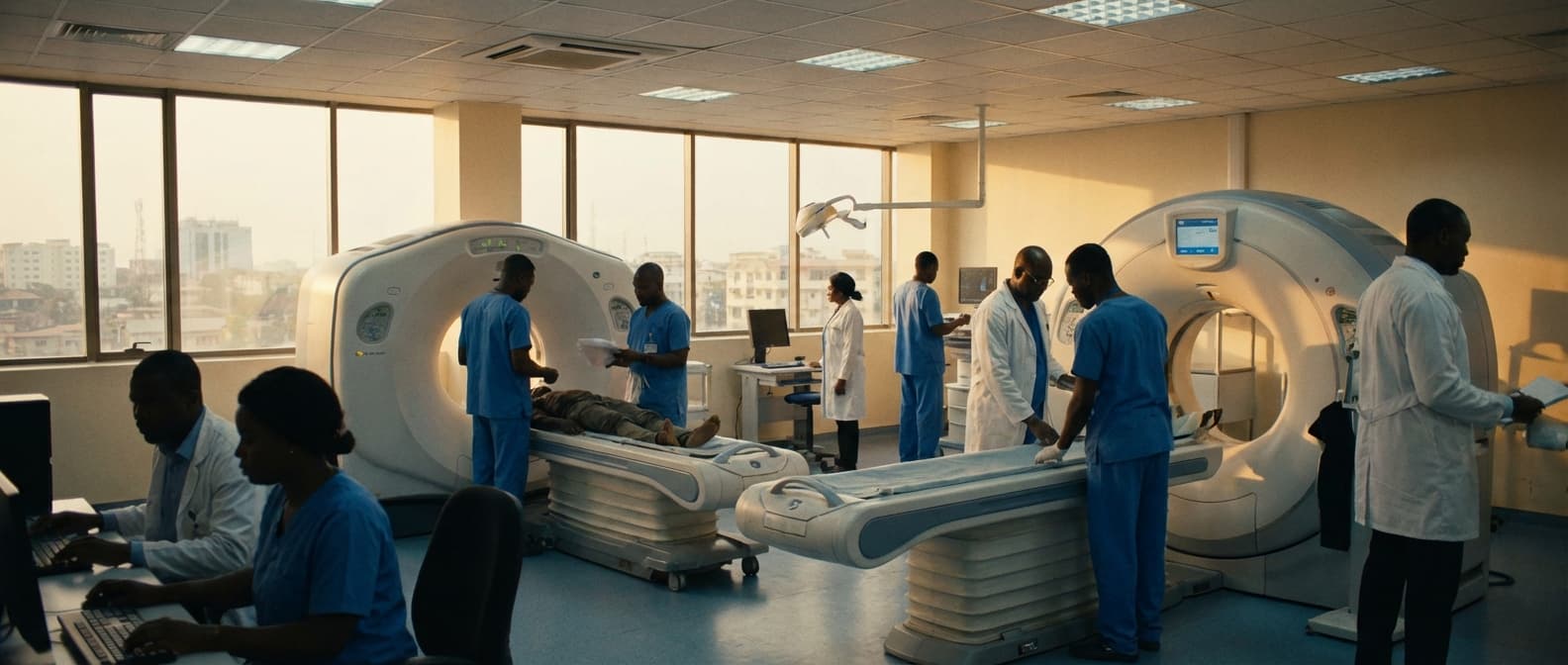
Imaging Acceptance Testing & QA in Madagascar
Engineering Excellence & Technical Support
Commissioning and periodic QA for CT/MRI/X‑ray/US/Mammo. High-standard technical execution following OEM protocols and local regulatory frameworks.
Ensuring High-Quality Diagnostic Imaging
Our rigorous acceptance testing and QA protocols guarantee that all newly deployed imaging equipment in Madagascar meets stringent international quality standards, ensuring accurate and reliable diagnostic information for patient care.
Streamlining Workflow Efficiency
Through comprehensive testing of image acquisition, processing, and archival systems, we optimize workflow efficiency for healthcare professionals across Madagascar, reducing turnaround times and enhancing patient throughput.
Upholding Patient Safety and Data Integrity
Our QA processes include meticulous validation of radiation dose management and data security features, ensuring patient safety and the integrity of sensitive medical information throughout the imaging lifecycle in Madagascar.
What Is Imaging Acceptance Testing & Qa In Madagascar?
Imaging Acceptance Testing & Quality Assurance (QA) in Madagascar refers to the systematic validation and verification processes applied to medical imaging systems, equipment, and related software. This ensures that these systems function accurately, reliably, and safely according to specified requirements and international standards, ultimately contributing to diagnostic efficacy and patient care. The scope includes, but is not limited to, image acquisition parameters, image quality, data integrity, system performance, interoperability, and security.
| Who Needs It? | Typical Use Cases | ||||||
|---|---|---|---|---|---|---|---|
| Healthcare Facilities in Madagascar: Hospitals, clinics, diagnostic imaging centers, and private practices acquiring or upgrading imaging equipment (MRI, CT scanners, X-ray units, Ultrasound, PET/CT, etc.) or PACS/RIS. | New Equipment Installation: Verifying that newly purchased imaging modalities are installed correctly, perform to vendor specifications, and produce diagnostic-quality images before clinical use. | Routine QA Programs: Implementing scheduled tests to ensure ongoing optimal performance and image quality of existing imaging equipment and systems. | System Upgrades and Modifications: Testing imaging systems after software updates, hardware replacements, or significant configuration changes. | Regulatory Compliance: Meeting national and international standards for medical device performance, patient safety, and data integrity. | Vendor Verification: Ensuring that imaging equipment and software procured from local or international vendors meet contractual obligations and performance benchmarks. | Interoperability with Existing Infrastructure: Confirming that new or upgraded imaging systems can effectively communicate and exchange data with existing hospital IT systems (EHR, LIS, etc.). | Troubleshooting and Performance Degradation: Investigating and resolving issues related to image quality, system speed, or data handling when performance declines. |
Key Components of Imaging Acceptance Testing & QA:
- System Installation and Configuration Verification: Confirming correct physical installation, network connectivity, and software configuration according to vendor specifications and site requirements.
- Image Quality Assessment: Evaluating image resolution, contrast, noise levels, artifact reduction, and uniformity using standardized phantoms and clinical images. This aligns with established QA protocols and diagnostic imaging guidelines.
- Performance and Throughput Testing: Measuring the time taken for image acquisition, processing, and transfer to ensure it meets clinical workflow demands and expected performance metrics.
- Data Integrity and Archiving Validation: Verifying the accurate storage, retrieval, and integrity of patient imaging data within Picture Archiving and Communication Systems (PACS) and Vendor Neutral Archives (VNAs).
- Interoperability Testing: Ensuring seamless data exchange with other healthcare systems, such as Electronic Health Records (EHRs), using standard protocols like DICOM and HL7.
- Radiation Safety and Dose Verification (for X-ray, CT, Nuclear Medicine): Confirming that radiation output adheres to regulatory limits and ALARA (As Low As Reasonably Achievable) principles, often involving dose measurements and phantom studies.
- User Interface and Workflow Validation: Assessing the usability and efficiency of the system's interface and confirming that it supports established clinical workflows.
- Security Auditing: Evaluating system access controls, data encryption, and compliance with data privacy regulations (e.g., GDPR principles if applicable to patient data handling).
Who Needs Imaging Acceptance Testing & Qa In Madagascar?
In Madagascar, the increasing adoption of medical imaging technologies and the growing demand for high-quality patient care necessitate robust Imaging Acceptance Testing & Quality Assurance (QA). This ensures that newly installed or upgraded imaging equipment functions optimally, produces accurate diagnostic images, and meets stringent regulatory and safety standards. Without proper testing, the risk of misdiagnosis, patient harm, and operational inefficiencies escalates significantly.
| Customer/Department | Specific Needs & Benefits of Imaging Acceptance Testing & QA | Examples of Imaging Modalities |
|---|---|---|
| Radiology Departments (Public & Private Hospitals/Clinics) | Ensuring image quality for accurate diagnosis, verifying dose accuracy for patient safety, confirming functional performance of new equipment, reducing downtime through early detection of issues, maintaining compliance with international standards. | X-ray (General, Mammography, Fluoroscopy), CT Scanners, MRI Scanners, Ultrasound Machines, Nuclear Medicine (PET/CT, SPECT/CT) |
| Medical Imaging Centers | Optimizing equipment performance for high-volume diagnostic services, ensuring consistency in image quality across multiple machines, validating software updates and configurations, providing reliable diagnostic reports. | Similar to Radiology Departments, with a focus on efficiency and throughput. |
| Surgical & Interventional Departments | Verifying the real-time imaging capabilities of C-arms and intraoperative imaging systems, ensuring accurate image display and manipulation for guidance during procedures, confirming proper integration with other surgical equipment. | C-arms, Intraoperative MRI/CT, Digital Radiography used in ORs |
| Oncology Departments | Crucial for accurate staging, treatment planning, and monitoring of cancer progression. Requires precise image acquisition and analysis for radiotherapy planning and follow-up imaging. | CT Scanners, MRI Scanners, PET/CT Scanners |
| Cardiology Departments | Ensuring high-quality images for the diagnosis and management of cardiovascular diseases. Critical for echocardiography, cardiac CT, and interventional cardiology procedures. | Echocardiography Machines, Cardiac CT Scanners, Angiography Systems |
| Neurology Departments | Vital for diagnosing neurological disorders. Requires high-resolution imaging for detailed analysis of the brain and spinal cord. | MRI Scanners, CT Scanners |
| Government Health Ministries/Regulatory Bodies | Establishing and enforcing standards for medical imaging equipment, ensuring patient safety and quality of care across the nation, facilitating accreditation processes, setting guidelines for procurement and maintenance. | All imaging modalities used within the healthcare system. |
| Medical Equipment Vendors/Service Providers | Pre-installation checks, post-installation verification, routine calibration and maintenance, ensuring new equipment meets manufacturer specifications before handover to the client, providing evidence of compliance. | All imaging modalities they sell, install, or service. |
| Research Institutions | Ensuring the reliability and reproducibility of imaging data for research studies, validating new imaging techniques and protocols, acquiring high-quality images for scientific analysis. | Advanced research-grade imaging systems, specialized CT/MRI configurations. |
Target Customers & Departments in Madagascar Requiring Imaging Acceptance Testing & QA
- Hospitals (Public and Private)
- Clinics and Diagnostic Centers
- Research Institutions
- Government Health Ministries and Regulatory Bodies
- Medical Equipment Vendors and Service Providers
Imaging Acceptance Testing & Qa Process In Madagascar
This document outlines the Imaging Acceptance Testing & Quality Assurance (QA) process in Madagascar, detailing the workflow from initial inquiry through to final execution and sign-off. The process is designed to ensure that imaging equipment and services meet predefined standards and client expectations before full deployment or payment.
| Stage | Description | Key Activities | Responsible Parties | Deliverables/Outcomes |
|---|---|---|---|---|
| The process begins when a client or stakeholder expresses interest in acquiring imaging equipment or services. | Initial consultation, understanding client needs, defining functional and technical requirements, budget discussion, scope definition. | Client/Procurement Team, Vendor/Service Provider, Technical Consultants | Clear understanding of client needs, documented requirements, preliminary scope of work. |
| Based on the gathered requirements, a comprehensive test plan is created. | Defining test objectives, scope of testing, test cases, test environment setup, success/failure criteria, timelines, resources required, risk assessment. | QA Team, Technical Team, Client Representatives | Approved Test Plan document. |
| Before on-site testing, preliminary checks are performed by the vendor/provider. | Installation verification (if applicable), basic functionality tests, preliminary calibration, system diagnostics, documentation review. | Vendor/Service Provider Technical Team | Pre-Acceptance Report, confirmation of readiness for on-site testing. |
| The core testing phase where the equipment/service is evaluated against the approved test plan at the client's location. | Executing test cases, validating performance against specifications, functional testing, user acceptance testing (UAT), data integrity checks, workflow simulation, image quality assessment. | QA Team, Client Representatives, Vendor/Service Provider Technical Team | Executed Test Cases, Test Logs, Performance Data, User Feedback. |
| Any discrepancies or failures identified during testing are documented and addressed. | Identifying, documenting (bug reports/issue logs), prioritizing, assigning, tracking, and resolving issues. Retesting after fixes. | QA Team, Vendor/Service Provider Technical Team, Client Representatives | Issue Log, Corrective Action Reports, Re-test results. |
| Upon successful completion of testing and resolution of all critical issues, formal acceptance is granted. | Review of all test results and issue resolution documentation, client confirmation of satisfaction, formal sign-off document execution, handover of documentation and training (if applicable). | Client/Procurement Team, Vendor/Service Provider Management, QA Lead | Final Acceptance Certificate, Project Closure documentation. |
Key Stages of the Imaging Acceptance Testing & QA Process:
- Inquiry & Requirement Gathering
- Test Plan Development
- Pre-Acceptance Checks
- On-Site Acceptance Testing
- Issue Reporting & Resolution
- Final Acceptance & Sign-off
Imaging Acceptance Testing & Qa Cost In Madagascar
Acceptance Testing (AT) and Quality Assurance (QA) for imaging solutions in Madagascar involve a range of costs influenced by several key factors. These include the complexity and type of imaging system, the scope of testing required (e.g., functional, performance, security, usability), the duration of the testing period, the experience and skill level of the QA team, and the specific vendor or service provider engaged. Travel and accommodation expenses for on-site testers, if applicable, also contribute to the overall cost. The local Madagascan market for such specialized services is developing, meaning pricing can be variable and often negotiated. Clients can expect costs to be presented in Malagasy Ariary (MGA).
| Service Component | Estimated Cost Range (MGA) | Notes |
|---|---|---|
| Basic Functional Testing (per hour) | 50,000 - 150,000 | For simpler imaging devices or modules. |
| Comprehensive System Testing (per day) | 300,000 - 800,000 | Covers multiple aspects of a complex imaging system. |
| Performance & Load Testing (per project phase) | 1,000,000 - 5,000,000+ | Dependent on the scale and complexity of the system under test. |
| User Acceptance Testing (UAT) Facilitation (per day) | 100,000 - 300,000 | Assistance in guiding end-users through testing. |
| QA Consultant Daily Rate (Senior) | 200,000 - 500,000 | For experienced professionals with domain knowledge. |
| Travel & Accommodation (per day/trip) | 50,000 - 200,000+ | Varies significantly based on location and duration. |
| Specialized Software/Tool Licensing (per month/project) | 200,000 - 1,000,000+ | If custom or advanced testing tools are required. |
| Project Management & Reporting | Included in overall rate or 10-15% of project cost | Ensures smooth execution and clear deliverables. |
Pricing Factors for Imaging AT & QA in Madagascar
- Complexity and Type of Imaging System (e.g., MRI, CT, X-ray, Ultrasound, PACS, RIS, specialized medical imaging software)
- Scope of Testing (e.g., unit, integration, system, user acceptance, performance, load, security, compatibility)
- Duration of Testing Engagements
- Experience and Expertise of QA Personnel
- Vendor/Service Provider Rates
- Geographical Location within Madagascar (potential travel/logistics costs)
- Need for Specialized Equipment or Software for Testing
- Reporting and Documentation Requirements
- On-site vs. Remote Testing Preferences
Affordable Imaging Acceptance Testing & Qa Options
Navigating the complexities of imaging acceptance testing and Quality Assurance (QA) can be a significant undertaking for healthcare facilities, often associated with substantial costs. However, by understanding and leveraging value bundles and implementing smart cost-saving strategies, organizations can ensure robust testing without breaking the budget. This approach focuses on maximizing efficiency, minimizing redundancy, and prioritizing critical areas to deliver high-quality imaging services.
| Cost-Saving Strategy | Description | Impact on Testing & QA |
|---|---|---|
| Leverage Third-Party Specialists | Outsourcing specialized testing to external companies that have expertise and dedicated equipment. They can often perform testing more efficiently than in-house teams. | Reduces capital investment in specialized equipment and training. Can offer competitive pricing through economies of scale. Ensures access to up-to-date testing methodologies. |
| Implement Remote Monitoring & Testing | Utilize software solutions that allow for remote monitoring of equipment performance and execution of certain diagnostic tests, reducing the need for on-site technician visits. | Minimizes travel costs and technician downtime. Enables proactive identification of issues before they impact patient care. Can be integrated into existing IT infrastructure. |
| Standardize Testing Protocols & Equipment | Adopting uniform testing procedures and using standardized phantoms and equipment across different sites or departments can simplify training and reduce logistical complexities. | Increases efficiency through familiarity. Reduces the need for varied training programs. Simplifies equipment procurement and maintenance. |
| Prioritize Testing Based on Usage & Risk | Focusing more intensive testing on high-usage, critical imaging equipment (e.g., CT scanners in an emergency department) and less on infrequently used or low-risk equipment. | Optimizes resource allocation. Ensures that critical systems are always functioning optimally. Prevents over-testing of less essential equipment. |
| Negotiate Service Contracts & Bundles | Actively negotiate with vendors for bundled service agreements that include acceptance testing, routine QA, and preventative maintenance, aiming for discounted rates. | Can provide predictable costs. Bundling often comes with cost savings compared to purchasing services individually. Ensures manufacturer-recommended testing is performed. |
| Invest in In-House Training for Basic QA | Train existing biomedical or radiology staff to perform routine, less complex QA checks, freeing up specialized technicians for more advanced tasks. | Reduces reliance on external personnel for routine tasks. Empowers internal staff. Cost-effective for repetitive, standardized tests. |
| Utilize Manufacturer-Provided Tools & Resources | Explore and utilize any testing tools, software, or guidelines provided by the equipment manufacturer, as these are often optimized for their specific technology. | Leverages existing resources. Ensures testing aligns with manufacturer specifications. Can reduce the need for third-party tools for certain aspects. |
| Phased Acceptance Testing | Break down the acceptance testing process into stages, with essential tests performed immediately upon installation and more detailed evaluations conducted after initial clinical use. | Allows for faster implementation of new equipment. Identifies critical issues early. Spreads out the testing workload and associated costs. |
Value Bundles in Imaging Acceptance Testing & QA
- {"title":"Integrated Testing Suites","description":"Bundles that combine various testing phases (e.g., initial acceptance, periodic QA, regulatory compliance checks) into a single service offering. This can lead to economies of scale and streamlined processes."}
- {"title":"Technology-Specific Packages","description":"Bundles tailored to specific imaging modalities like MRI, CT, X-ray, or Ultrasound. These often include modality-specific phantom testing, performance verification, and specialized software checks, ensuring comprehensive coverage for each technology."}
- {"title":"Risk-Based Testing Programs","description":"Bundles that prioritize testing efforts based on the criticality and usage of specific equipment. This ensures that high-risk, frequently used systems receive more frequent and thorough testing, optimizing resource allocation."}
- {"title":"Software & Hardware Integration Testing","description":"Bundles that focus on the seamless integration of imaging hardware with Picture Archiving and Communication Systems (PACS), Electronic Health Records (EHR), and other IT infrastructure. This is crucial for workflow efficiency and data integrity."}
- {"title":"Comprehensive Compliance Packages","description":"Bundles designed to meet regulatory requirements (e.g., ACR, FDA, Joint Commission) by encompassing all necessary testing protocols and documentation. This reduces the burden of individual compliance efforts."}
Verified Providers In Madagascar
Finding reliable and credentialed healthcare providers is paramount to ensuring quality medical care. In Madagascar, navigating the landscape of healthcare can be challenging, but organizations like Franance Health play a crucial role in verifying and promoting legitimate medical professionals and institutions. Their rigorous credentialing process not only validates the expertise and qualifications of healthcare providers but also offers patients peace of mind and confidence in their treatment choices. Franance Health's commitment to transparency and excellence makes their verified providers stand out as the best option for healthcare in Madagascar.
| Provider Type | Franance Health Verification Benefits | Why This Matters to You |
|---|---|---|
| Doctors (General Practitioners & Specialists) | Verified medical licenses, board certifications, and continuous professional development. | Ensures you receive treatment from highly trained and up-to-date medical professionals. |
| Hospitals & Clinics | Accreditation, adherence to safety protocols, and quality of facilities and equipment. | Guarantees a safe and well-equipped environment for your medical procedures and stays. |
| Dentists & Dental Clinics | Verified dental degrees, licenses, and specialized training in various dental fields. | Confirms you are receiving care from qualified dental professionals for all your oral health needs. |
| Pharmacies | Legitimate operating licenses, proper storage of medications, and qualified pharmacists. | Ensures the authenticity and safety of the medications you purchase. |
| Laboratories & Diagnostic Centers | Certification of equipment, quality control measures, and qualified laboratory technicians. | Provides confidence in the accuracy and reliability of your diagnostic test results. |
Why Franance Health Verified Providers Are the Best Choice:
- Rigorous Vetting and Credentialing: Franance Health employs a stringent process to verify medical licenses, educational backgrounds, specialized training, and professional experience of all listed providers. This ensures that only qualified and competent individuals are recognized.
- Commitment to Ethical Practices: Beyond technical skills, Franance Health assesses providers for adherence to ethical standards and patient-centered care. This promotes a healthcare environment built on trust and respect.
- Enhanced Patient Safety: By identifying and promoting verified providers, Franance Health significantly reduces the risk of patients encountering unqualified or fraudulent practitioners, thereby improving overall patient safety.
- Access to Specialized Care: Franance Health's network often includes a diverse range of specialists, making it easier for patients to find the specific expertise they need, whether it's for routine check-ups or complex medical conditions.
- Improved Healthcare Accessibility: Through their platform, Franance Health aims to demystify healthcare choices in Madagascar, providing accessible information about reliable providers and facilitating easier access to medical services.
- Continuous Quality Assurance: Franance Health's commitment extends beyond initial verification, often involving ongoing monitoring and feedback mechanisms to ensure providers maintain their high standards of care.
Scope Of Work For Imaging Acceptance Testing & Qa
This document outlines the Scope of Work (SOW) for Imaging Acceptance Testing and Quality Assurance (QA). It defines the objectives, methodologies, responsibilities, and deliverables for ensuring the successful implementation and performance of imaging systems. The SOW focuses on comprehensive testing to validate that the imaging solution meets all functional, technical, and user requirements, adhering to established industry standards and specifications.
| Phase | Activities | Deliverables | Standard Specifications/References |
|---|---|---|---|
| Develop detailed test plans and test cases. Define test environments and required test data. Establish entry and exit criteria for each testing phase. Identify roles and responsibilities for the testing team. | Test Plan Document. Test Cases. Test Environment Setup Guide. Entry/Exit Criteria Document. | IEEE 829 (Standard for Software Test Documentation). Project-specific requirement documents. System design specifications. |
| Execute test cases to verify all documented functionalities. Test image acquisition, processing, manipulation, storage, retrieval, and display. Verify user interface elements and workflow logic. | Executed Test Cases (with pass/fail status). Defect Reports. Functional Test Summary Report. | DICOM Part 14 (Grayscale Standard Display Function). User Manuals. Functional Specification Documents. |
| Measure system response times under various load conditions. Test image capture rates, processing throughput, and data transfer speeds. Evaluate system stability and resource utilization. | Performance Test Results. Load Test Scenarios and Outcomes. Performance Test Summary Report. | System architecture specifications. Targeted response time SLAs. Benchmarking reports for similar systems. |
| Test the seamless integration of the imaging system with other hospital information systems (HIS), PACS, RIS, EMR/EHR, and other relevant applications. Verify data flow and interoperability between systems. | Integration Test Scenarios. Successful data exchange logs. Integration Test Summary Report. | DICOM Standards (e.g., Part 18 for Web Access). HL7 Standards (for integration with EMR/RIS). API documentation for integrated systems. |
| End-users validate the system's functionality and usability in a simulated production environment. Users execute real-world scenarios to confirm the system meets their operational needs. | UAT Test Scenarios and Results. User Feedback Forms. UAT Sign-off Document. | User workflow documentation. Business requirements. |
| After defect fixes or system updates, re-execute a subset of test cases to ensure that previously working functionalities have not been negatively impacted. | Regression Test Suite Execution Results. Defect Resolution Verification. | Previous test case execution results. Change logs. |
| Review all system documentation, including user manuals, administration guides, and training materials, for accuracy, completeness, and clarity. | Documentation Review Feedback. Updated documentation (if required). | User Manuals. System Administration Guides. |
| Compile all test results and reports. Obtain formal acceptance and sign-off from the client/stakeholders. | Final Test Report. Acceptance Sign-off Document. | Project closure criteria. |
Key Objectives of Imaging Acceptance Testing & QA
- Validate that the imaging system meets all specified functional requirements as per the contract and design documents.
- Ensure the accuracy, integrity, and quality of captured, processed, and stored image data.
- Verify system performance, including capture speed, processing times, and retrieval speeds, against defined benchmarks.
- Confirm interoperability with existing systems and adherence to relevant data exchange standards (e.g., DICOM, HL7).
- Assess the usability and user-friendliness of the imaging system's interface and workflows.
- Identify and document defects, bugs, and deviations from specifications.
- Provide assurance that the imaging system is ready for production deployment.
- Confirm compliance with regulatory and industry-specific standards (e.g., HIPAA, FDA regulations if applicable).
Service Level Agreement For Imaging Acceptance Testing & Qa
This Service Level Agreement (SLA) outlines the terms and conditions for Imaging Acceptance Testing and Quality Assurance (QA) services. It defines response times for critical issues, acceptable uptime for the testing environment, and procedures for escalation and reporting.
| Metric | Target | Definition |
|---|---|---|
| Critical Issue Response Time | 1 Business Hour | Time from initial report to active work commencement on a Critical severity issue. |
| High Issue Response Time | 4 Business Hours | Time from initial report to active work commencement on a High severity issue. |
| Medium Issue Response Time | 1 Business Day | Time from initial report to active work commencement on a Medium severity issue. |
| Testing Environment Uptime | 99.5% | Percentage of time the imaging acceptance testing environment is available during standard business hours (e.g., Monday-Friday, 9 AM - 5 PM). |
| Scheduled Maintenance | Max 4 hours/month | Total duration of planned maintenance activities, typically scheduled with advance notice. |
Key Service Metrics
- Response Time for Critical Issues: Time taken to acknowledge and begin addressing a reported critical issue.
- Uptime Guarantee: Percentage of time the imaging testing environment is operational and accessible.
- Issue Severity Levels: Definitions of 'Critical', 'High', 'Medium', and 'Low' severity issues.
- Reporting and Escalation Procedures: Steps to follow for reporting issues and escalating them if initial resolution times are not met.
- Maintenance Windows: Scheduled periods for system maintenance, during which uptime may be temporarily impacted.
- Definition of 'Downtime': Any period when the imaging testing environment is unavailable for use, excluding scheduled maintenance.
Frequently Asked Questions

Ready when you are
Let's scope your Imaging Acceptance Testing & QA in Madagascar project in Madagascar.

Scaling healthcare logistics and technical systems across the entire continent.