
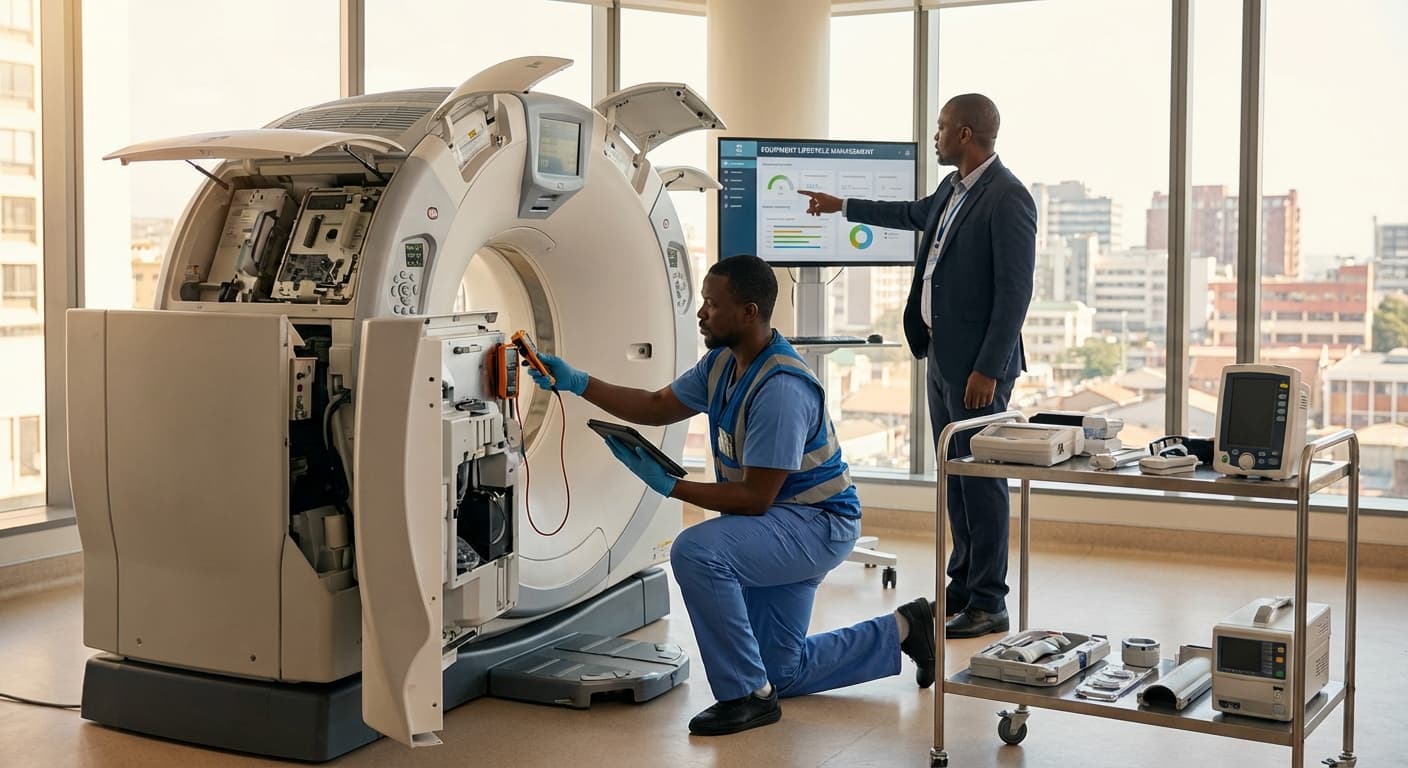
Equipment Replacement Planning & Obsolescence Strategy Service in Madagascar
Engineering Excellence & Technical Support
Equipment Replacement Planning & Obsolescence Strategy Service High-standard technical execution following OEM protocols and local regulatory frameworks.
Proactive Equipment Health Monitoring & Predictive Replacement
Leveraging IoT sensors and advanced analytics, our service identifies critical equipment nearing end-of-life or requiring imminent replacement in Madagascar's unique operational environment. We move beyond reactive maintenance to enable timely, cost-optimized replacements, minimizing downtime and safeguarding critical infrastructure.
Strategic Obsolescence Management for Long-Term Asset Value
We provide a data-driven obsolescence strategy tailored for Madagascar's supply chain realities. Our service anticipates component and technology lifecycle risks, enabling proactive sourcing of alternatives, extended support contracts, or planned upgrades to maximize the lifespan and value of your essential equipment.
Localized Risk Assessment & Mitigation for Madagascar's Industrial Landscape
Our expertise focuses on the specific challenges and opportunities within Madagascar's industrial sectors. We conduct detailed risk assessments for equipment vulnerabilities, supply chain disruptions, and regulatory changes, delivering actionable replacement and obsolescence plans to ensure business continuity and operational resilience.
What Is Equipment Replacement Planning & Obsolescence Strategy Service In Madagascar?
Equipment Replacement Planning & Obsolescence Strategy Service in Madagascar refers to a specialized consulting offering designed to assist organizations in Madagascar with the systematic evaluation, forecasting, and management of their asset lifecycle, specifically focusing on the retirement of aging or obsolete equipment and the strategic acquisition of new assets. This service is crucial for maintaining operational efficiency, mitigating risks associated with equipment failure, and optimizing capital expenditure. It involves a comprehensive assessment of an organization's existing equipment inventory, including its condition, performance, maintenance history, and projected remaining useful life. Concurrently, it analyzes technological advancements, market availability of replacements, and emerging industry standards. The objective is to develop a forward-looking strategy that ensures timely and cost-effective replacement, minimizes downtime, and aligns asset acquisition with long-term business objectives, all within the specific economic and logistical context of Madagascar.
| Who Needs This Service? | Typical Use Cases |
|---|---|
| Manufacturing facilities with aging production machinery. | A sugar processing plant in Madagascar seeking to replace its outdated milling equipment to improve extraction efficiency and reduce energy consumption. |
| Telecommunications providers with legacy network infrastructure. | A mobile network operator in Madagascar needing to upgrade its 2G/3G base stations to 4G/5G to meet growing data demands and maintain competitive service levels. |
| Mining operations with heavy-duty earthmoving and processing equipment. | A mining company in Madagascar evaluating the replacement of its fleet of aging haul trucks and excavators to enhance safety, productivity, and reduce unscheduled maintenance. |
| Energy and utility companies managing critical infrastructure. | An electricity distribution company in Madagascar planning the phased replacement of its aging transformers and switchgear to improve grid reliability and minimize power outages. |
| Logistics and transportation companies with fleets of vehicles. | A large logistics firm in Madagascar developing a strategy for replacing its aging truck fleet to reduce fuel costs, improve delivery times, and meet stricter environmental regulations. |
| Healthcare institutions with medical equipment. | A major hospital in Madagascar assessing the obsolescence of its diagnostic imaging equipment (e.g., MRI, CT scanners) and planning for upgrades to offer advanced patient care. |
| Government agencies and public infrastructure operators. | A municipal water authority in Madagascar planning the replacement of aging water pumps and distribution pipes to improve water supply efficiency and reduce leakage. |
Key Components of the Service:
- Asset Inventory and Condition Assessment
- Remaining Useful Life (RUL) Prediction and Forecasting
- Obsolescence Risk Analysis (Technical, Functional, and Supply Chain)
- Lifecycle Cost Analysis (LCCA) of Existing and Potential Replacements
- Technology Trend Monitoring and Impact Assessment
- Development of Replacement Prioritization Frameworks
- Strategic Procurement Planning and Vendor Sourcing
- Risk Mitigation Strategies (e.g., spare parts management, extended warranties)
- Financial Planning and Budgeting for Capital Expenditure
- Implementation Roadmap and Change Management Support
Who Needs Equipment Replacement Planning & Obsolescence Strategy Service In Madagascar?
In Madagascar's evolving industrial and infrastructure landscape, proactive Equipment Replacement Planning & Obsolescence Strategy is crucial for businesses aiming for sustained operational efficiency, cost-effectiveness, and future-proofing their assets. This service is particularly vital for organizations facing challenges related to aging machinery, technological advancements, and the increasing complexity of supply chains. By developing a robust strategy, companies can mitigate risks associated with unexpected failures, optimize capital expenditure, and ensure they remain competitive.
| Target Customer Sector | Specific Industries/Businesses | Relevant Departments | Key Benefits of the Service |
|---|---|---|---|
| Manufacturing | Textile factories, food and beverage processing plants, metal fabrication workshops, chemical production facilities, cement plants. | Operations, Maintenance, Engineering, Procurement, Finance. | Reduced downtime, optimized spare parts inventory, improved production efficiency, extended asset lifespan, avoidance of costly emergency replacements. |
| Mining & Extractive Industries | Nickel mining operations, quarrying, gemstone extraction. | Mine Operations, Mechanical Maintenance, Electrical Maintenance, Capital Projects, Finance. | Ensured operational continuity, safety improvements, cost control for heavy machinery, strategic fleet management, long-term investment planning. |
| Infrastructure & Utilities | Power generation plants (hydro, thermal), water treatment facilities, telecommunications companies, transportation networks (ports, airports). | Plant Operations, Asset Management, Engineering, Network Maintenance, Financial Planning. | Reliable service delivery, infrastructure modernization, risk mitigation for critical systems, compliance with regulatory requirements, optimized capital allocation. |
| Agriculture & Agribusiness | Large-scale commercial farms, agro-processing units, irrigation system operators. | Farm Management, Technical Services, Processing Plant Operations, Procurement. | Enhanced crop yields through reliable machinery, reduced spoilage from equipment failure, improved processing efficiency, strategic equipment upgrades. |
| Healthcare | Hospitals and clinics with advanced medical equipment. | Biomedical Engineering, Facilities Management, Procurement, Finance. | Patient safety through reliable equipment, reduced service interruption, informed procurement decisions, budget predictability for medical assets. |
Who Needs Equipment Replacement Planning & Obsolescence Strategy Service in Madagascar?
- Companies with significant capital investments in machinery and equipment.
- Organizations operating in sectors with rapid technological evolution.
- Businesses reliant on specialized or custom-made equipment.
- Entities with long-term operational goals and a need for predictable maintenance costs.
- Companies seeking to reduce operational downtime and improve reliability.
- Firms aiming to comply with evolving industry standards and environmental regulations.
Equipment Replacement Planning & Obsolescence Strategy Service Process In Madagascar
This document outlines the typical workflow for an Equipment Replacement Planning & Obsolescence Strategy Service offered in Madagascar, from initial inquiry to final execution. The service aims to help businesses proactively manage their asset lifecycle, mitigate risks associated with outdated or failing equipment, and optimize capital expenditure. The process is designed to be collaborative, ensuring client needs and operational realities are at the forefront of the strategy.
| Stage | Description | Key Activities | Deliverables | Madagascar Contextual Considerations |
|---|---|---|---|---|
| The client contacts the service provider with an interest in improving their equipment management strategy. | Initial discussion to understand the client's general challenges, objectives, and the scope of their asset base. | Understanding of client needs and preliminary scope definition. | Awareness of local business customs, language considerations (French/Malgache), and potential initial trust-building. |
| A detailed understanding of the client's current situation, critical equipment, and strategic goals. | Site visits, interviews with key personnel (operations, maintenance, finance), and review of existing documentation. | Detailed needs assessment report, refined project scope, and identification of key stakeholders. | Logistics of site visits across Madagascar (infrastructure, travel time), potential need for local translators, and understanding of the specific industry sectors prevalent in Madagascar. |
| Gathering comprehensive data on the client's existing equipment inventory. | Collecting data on equipment age, acquisition cost, maintenance history, performance metrics, supplier information, warranty status, and operational criticality. | Cleaned and categorized equipment inventory database, initial performance benchmarks. | Challenges in accessing reliable historical data (manual records, lack of standardized systems), potential need for extensive manual data verification, considering the economic realities impacting maintenance budgets. |
| Identifying equipment at risk of obsolescence due to age, technology, or vendor support. | Analyzing data for end-of-life dates, availability of spare parts, software support, and emerging technologies. Assessing the impact of failure on operations. | Obsolescence risk matrix, identification of high-risk equipment categories. | Limited availability of specialized diagnostic tools, reliance on manufacturer-provided obsolescence data (which may be outdated or unavailable for older equipment), potential for 'workarounds' that mask underlying obsolescence. |
| Creating a strategic roadmap for equipment replacement and modernization. | Developing scenarios for replacement (phased, immediate, upgrade), identifying preferred vendors, and considering alternative solutions. | Draft replacement strategy document, prioritized list of replacement projects. | Considering local availability of spare parts and technical support, understanding import duties and taxes on new equipment, and the availability of local financing options. |
| Evaluating the cost-benefit of different replacement options and their impact on operations. | Estimating capital expenditure, operational savings (reduced maintenance, energy efficiency), and potential disruption costs. Forecasting Return on Investment (ROI). | Financial impact report, projected ROI for key replacement projects, operational risk assessment. | Fluctuations in foreign exchange rates impacting import costs, understanding local labor costs for installation and maintenance, potential for government incentives or regulations related to industrial upgrades. |
| Presenting the developed strategy and recommendations to the client. | Formal presentation of findings, proposed strategy, financial analysis, and recommended action plan. | Comprehensive proposal document outlining recommended strategy, timelines, budget, and expected outcomes. | Tailoring the language and presentation style to resonate with Malagasy business culture, ensuring clarity on technical aspects for non-technical stakeholders. |
| Client reviews and approves the proposed strategy. | Negotiation of terms, finalization of project scope, and signing of the service agreement. | Signed contract, approved project plan. | Understanding of local contract law and business negotiation practices, ensuring transparency and fairness. |
| Detailed planning for the execution of approved replacement projects. | Development of detailed project schedules, procurement plans, resource allocation, and risk mitigation plans. | Detailed implementation plan, procurement specifications, risk management plan. | Considering logistical challenges for equipment transportation within Madagascar, local regulatory approvals for new installations, and potential labor shortages for specialized tasks. |
| Initiating the procurement of new equipment and related services. | Issuing purchase orders, managing supplier relationships, and overseeing import processes. | Procured equipment and services, supplier performance tracking. | Navigating customs procedures and import regulations, identifying reliable local logistics providers, and managing potential delays due to infrastructure or port issues. |
| Installing and testing the new equipment. | On-site installation, testing, and calibration of new equipment. Ensuring compatibility with existing infrastructure. | Successfully installed and commissioned equipment, operational test results. | Availability of skilled local technicians for installation, ensuring adherence to safety standards in a potentially less regulated environment, managing power supply stability for sensitive equipment. |
| Training client personnel on the operation and maintenance of new equipment. | Conducting training sessions, providing user manuals, and formally handing over the operational responsibility. | Trained personnel, operational manuals, formal handover certificate. | Adapting training materials to local language proficiency, ensuring understanding of complex technical concepts, and assessing the client's internal capacity for ongoing maintenance. |
| Assessing the success of the replacement strategy and ongoing performance. | Post-installation performance review, gathering feedback, and establishing a monitoring framework for future obsolescence management. | Post-implementation review report, recommendations for continuous improvement, ongoing monitoring plan. | Establishing clear channels for ongoing communication and support, considering the long-term sustainability of the implemented strategy within the Malagasy operational context. |
Equipment Replacement Planning & Obsolescence Strategy Service Workflow
- Inquiry & Initial Consultation
- Needs Assessment & Scoping
- Data Collection & Analysis
- Obsolescence Risk Assessment
- Replacement Strategy Development
- Financial & Operational Impact Analysis
- Recommendation & Proposal
- Approval & Contract Finalization
- Implementation Planning
- Execution & Procurement
- Installation & Commissioning
- Training & Handover
- Post-Implementation Review & Monitoring
Equipment Replacement Planning & Obsolescence Strategy Service Cost In Madagascar
Planning for equipment replacement and developing an obsolescence strategy are crucial for businesses in Madagascar to maintain operational efficiency, mitigate risks, and optimize capital expenditure. The cost of such services can vary significantly depending on several factors. Understanding these factors is key for businesses seeking to budget effectively. The service typically involves assessing current equipment, forecasting lifecycles, identifying obsolescence risks, recommending replacement schedules, and developing strategies for end-of-life management. This can also extend to vendor management, maintenance optimization, and the integration of new technologies. The primary objective is to ensure a seamless transition, minimize downtime, and maximize the return on investment from existing and future equipment. In Madagascar, the economic landscape, availability of specialized expertise, and the complexity of the equipment in question will heavily influence pricing. Local market dynamics and the general cost of doing business also play a role.
| Service Component / Complexity Level | Estimated Price Range (MGA) | Typical Scope |
|---|---|---|
| Basic Equipment Audit & Initial Obsolescence Assessment | 500,000 - 2,500,000 MGA | Review of a limited number of critical assets, identification of obvious obsolescence risks, basic recommendations. |
| Intermediate Equipment Replacement Planning | 2,000,000 - 10,000,000 MGA | Assessment of a moderate asset portfolio, lifecycle forecasting for key equipment, development of preliminary replacement schedules, cost-benefit analysis for key items. |
| Comprehensive Obsolescence Strategy & Lifecycle Management | 8,000,000 - 40,000,000+ MGA | In-depth analysis of an entire asset base, sophisticated risk assessment, financial modeling for replacement, proactive obsolescence mitigation strategies, end-of-life planning, integration with maintenance and procurement. |
| Specialized Consulting (e.g., very complex industrial machinery, advanced IT infrastructure) | Priced on a case-by-case basis (can exceed 40,000,000 MGA) | Requires highly specialized expertise, extensive data analysis, and potentially custom tooling. |
| Ongoing Support / Annual Review | 200,000 - 2,000,000 MGA per review | Annual updates to the plan, review of new equipment, adjustment of forecasts based on operational changes. |
Key Pricing Factors for Equipment Replacement Planning & Obsolescence Strategy Services in Madagascar
- Scope of Services: The breadth and depth of the service are paramount. A basic assessment will cost less than a comprehensive strategy encompassing lifecycle management, financial modeling, and technology road mapping.
- Complexity of Equipment: The type and criticality of the equipment being assessed. Industrial machinery, IT infrastructure, specialized medical equipment, or a diverse fleet of vehicles will all have different assessment requirements and associated costs.
- Number of Assets: The sheer volume of equipment to be evaluated directly impacts the time and resources required for analysis.
- Data Availability and Quality: The ease of accessing accurate and complete data on existing equipment (age, maintenance history, performance) can significantly affect the consulting effort. Poor data quality may necessitate additional investigative work.
- Level of Expertise Required: The need for specialized knowledge in specific industries, advanced analytics, or risk management will influence the hourly rates of consultants.
- Project Duration and Timeline: Shorter, more intensive projects might incur higher per-diem rates, while longer-term engagements could offer some economies of scale. Urgent requirements may also lead to premium pricing.
- Consultant's Experience and Reputation: Established firms or highly experienced consultants with a proven track record will generally command higher fees.
- Geographic Location within Madagascar: While the primary cost driver will be national, very remote locations might incur additional travel and accommodation expenses for consultants.
- Reporting and Deliverables: The format and detail of the final reports and recommendations. Comprehensive financial models, implementation roadmaps, and detailed risk registers will add to the cost.
- Market Demand and Competition: The number of service providers offering these specialized services in Madagascar and their respective pricing structures will also influence the cost.
Affordable Equipment Replacement Planning & Obsolescence Strategy Service Options
Our Affordable Equipment Replacement Planning & Obsolescence Strategy Service helps businesses proactively manage their asset lifecycle, minimize disruption, and optimize capital expenditure. We provide tailored solutions designed to identify, plan for, and mitigate the risks associated with equipment aging and obsolescence, ensuring operational continuity and maximizing return on investment. Our service focuses on creating a sustainable, cost-effective approach to equipment management.
| Cost-Saving Strategy | Description | Bundle Applicability | Potential Savings |
|---|---|---|---|
Service Value Bundles
- {"items":["Equipment Inventory & Assessment","Obsolescence Risk Profiling","Basic Replacement Schedule Development","Budgetary Allocation Guidance"],"title":"Core Planning Bundle","description":"Includes essential services for initial assessment and basic replacement planning. Ideal for businesses seeking foundational guidance."}
- {"items":["Core Planning Bundle Services","Predictive Maintenance Integration","Total Cost of Ownership (TCO) Analysis","Supplier & Technology Trend Monitoring","Contingency Planning for Critical Assets"],"title":"Advanced Strategy Bundle","description":"Expands on the core bundle with more in-depth analysis and proactive mitigation strategies. Suited for businesses aiming for comprehensive lifecycle management."}
- {"items":["Advanced Strategy Bundle Services","Real-time Obsolescence Monitoring","Customized Obsolescence Mitigation Plans (e.g., repair, refit, standardization)","Long-term Capital Planning Integration","Performance Benchmarking & ROI Analysis","Dedicated Strategic Advisor"],"title":"Premium Optimization Bundle","description":"Our most comprehensive offering, providing continuous monitoring, strategic forecasting, and customized mitigation plans. Best for businesses with complex operations or a high volume of critical equipment."}
Verified Providers In Madagascar
Finding trustworthy healthcare providers is paramount for anyone seeking medical services, especially in a country like Madagascar where navigating the system can present challenges. Verified providers, those who have undergone rigorous credentialing and possess recognized qualifications, offer a crucial layer of assurance. Franance Health stands out as a key player in this domain, meticulously vetting healthcare professionals to ensure they meet the highest standards of competence and ethical practice. Their credentialing process is designed to identify and promote providers who are not only technically skilled but also committed to patient well-being and transparent operations. This dedication to verification makes Franance Health credentials a strong indicator of reliability and quality, positioning their associated providers as the best choice for accessible and dependable healthcare in Madagascar.
| Credentialing Aspect | Franance Health's Approach | Benefit to Patients |
|---|---|---|
| Educational Qualifications | Verification of degrees, diplomas, and certifications from recognized institutions. | Ensures providers have foundational medical knowledge and training. |
| Professional Experience | Assessment of past clinical experience, including duration and specialty. | Indicates practical application of knowledge and exposure to various medical cases. |
| Licensure and Registration | Confirmation of active and valid licenses from relevant medical boards in Madagascar. | Confirms legal authorization to practice medicine and adherence to regulatory standards. |
| Continuing Medical Education (CME) | Requirement for providers to demonstrate ongoing learning and skill development. | Ensures providers stay updated with the latest medical advancements and techniques. |
| Peer Review and References | Gathering feedback from other medical professionals and relevant references. | Provides insights into a provider's clinical judgment and collegial reputation. |
| Criminal Background Checks (where applicable) | Screening for any history that might compromise patient safety or trust. | Adds an extra layer of security and assurance for patients. |
Why Franance Health Credentials Represent the Best Choice:
- Rigorous Vetting Process: Franance Health employs a comprehensive and stringent credentialing procedure, ensuring providers meet established benchmarks for education, training, and experience.
- Commitment to Quality Care: Credentials signify a provider's adherence to best practices and a dedication to delivering high-quality medical services.
- Enhanced Patient Trust: Verified credentials build confidence and trust between patients and healthcare providers, promoting a more positive healthcare experience.
- Access to Competent Professionals: Franance Health helps patients easily identify qualified and capable medical professionals, saving time and reducing uncertainty.
- Ethical Standards and Integrity: The credentialing process often includes assessments of ethical conduct and professional integrity, ensuring providers operate with honesty and respect.
- Promotion of Transparency: Franance Health's verification process contributes to a more transparent healthcare landscape, allowing patients to make informed decisions.
- Reduced Risk of Incompetence: Choosing credentialed providers significantly minimizes the risk of encountering unqualified or under-qualified medical practitioners.
- Advocacy for Patient Safety: By setting and upholding high standards, Franance Health actively contributes to the overall safety and well-being of patients in Madagascar.
Scope Of Work For Equipment Replacement Planning & Obsolescence Strategy Service
This Scope of Work (SOW) outlines the services for Equipment Replacement Planning and Obsolescence Strategy. The objective is to develop a comprehensive strategy that minimizes operational disruptions, optimizes capital expenditure, and proactively addresses the risks associated with aging and obsolete equipment. This service will involve an in-depth analysis of the client's current equipment inventory, operational requirements, and future strategic goals to create a phased replacement plan and a robust obsolescence management framework.
| Technical Deliverable | Description | Standard Specification/Format |
|---|---|---|
| Equipment Inventory Database | A structured database containing all identified equipment, its attributes, and associated data. | Microsoft Excel or CSV format, with defined data fields and categories. |
| Obsolescence Risk Register | A document detailing equipment at risk of obsolescence, the nature of the risk, and potential mitigation strategies. | Microsoft Excel or a dedicated risk management tool, including risk level, impact, likelihood, and mitigation actions. |
| Equipment Replacement Prioritization Matrix | A matrix visually representing equipment based on criticality and obsolescence risk, guiding replacement decisions. | Visual representation (e.g., scatter plot, heat map) or tabular format with scoring. |
| Multi-Year Replacement Plan | A phased plan outlining equipment to be replaced over a specified period, including timelines and budget estimates. | Microsoft Project, Excel Gantt chart, or similar project planning software; detailed budget breakdown. |
| Obsolescence Management Playbook | A document outlining procedures and best practices for managing equipment obsolescence. | Word document or PDF, structured into sections for proactive and reactive measures. |
| Total Cost of Ownership (TCO) Report | A report analyzing the TCO for key equipment assets. | Microsoft Excel, presenting cost breakdown by category (acquisition, operation, maintenance, disposal) over the asset's lifecycle. |
| Final Project Report and Recommendations | A comprehensive report summarizing all findings, analysis, and actionable recommendations. | PDF or Word document, including executive summary, detailed findings, methodology, and implementation roadmap. |
Key Service Components
- Assessment of Current Equipment Inventory: Cataloging all relevant equipment, including make, model, age, condition, maintenance history, and current criticality to operations.
- Performance and Reliability Analysis: Evaluating historical performance data, failure rates, and repair costs to identify high-risk and underperforming assets.
- Obsolescence Risk Assessment: Identifying equipment nearing or already in end-of-life stages, assessing the availability of spare parts, technical support, and regulatory compliance risks.
- Development of Replacement Criteria: Defining objective criteria for prioritizing equipment replacement, including factors like age, reliability, efficiency, operating costs, safety, and technological advancements.
- Strategic Replacement Planning: Creating a multi-year, phased replacement plan, prioritizing equipment based on risk, criticality, and budget constraints. This will include estimated costs, implementation timelines, and potential benefits.
- Obsolescence Management Strategy: Developing proactive strategies to mitigate obsolescence risks, such as inventory management of critical spare parts, alternative sourcing strategies, vendor engagement, and potential upgrades or retrofits.
- Total Cost of Ownership (TCO) Analysis: Performing TCO analysis for existing equipment and proposed replacements to inform investment decisions.
- Risk Mitigation Planning: Identifying potential risks associated with replacement projects and developing mitigation strategies.
- Stakeholder Consultation: Engaging with relevant internal stakeholders (e.g., Operations, Maintenance, Finance, Procurement) to gather input and ensure alignment.
- Reporting and Recommendations: Providing detailed reports with findings, analysis, and actionable recommendations for implementation.
Service Level Agreement For Equipment Replacement Planning & Obsolescence Strategy Service
This Service Level Agreement (SLA) outlines the guaranteed response times and uptime for the Equipment Replacement Planning & Obsolescence Strategy Service. It ensures timely support and reliable service availability for our clients.
1. Service Overview:
The Equipment Replacement Planning & Obsolescence Strategy Service assists clients in proactively managing their IT and operational equipment lifecycles. This includes forecasting replacement needs, identifying potential obsolescence risks, and developing strategic plans to mitigate these risks, ensuring operational continuity and cost-effectiveness.
| Service Component/Issue Type | Severity Level | Response Time Guarantee (Business Hours) | Uptime Guarantee (%) |
|---|---|---|---|
| Equipment Replacement Planning & Obsolescence Strategy Platform Access | Critical Incident | 1 Hour | 99.9% |
| Equipment Replacement Planning & Obsolescence Strategy Platform Access | Major Incident | 2 Business Hours | 99.9% |
| Equipment Replacement Planning & Obsolescence Strategy Platform Access | Minor Incident | 4 Business Hours | 99.9% |
| Consultation and Strategy Development Support | Service Request | 8 Business Hours | N/A (Support, not uptime) |
| Data Import/Export Functionality | Critical Incident | 2 Business Hours | 99.9% |
| Reporting and Analytics Generation | Major Incident | 4 Business Hours | 99.9% |
Key Performance Indicators (KPIs) and Guarantees
- 2. Response Time Guarantees: Response times are defined as the period between the client reporting an issue or requesting support and the service provider acknowledging the request and initiating action. All times are in business hours (Monday - Friday, 9:00 AM - 5:00 PM [Client's Local Time Zone]).
- 3. Uptime Guarantees: Uptime refers to the availability of the Service, excluding scheduled maintenance. The Service is considered available when the core functionalities for accessing, updating, and generating reports related to equipment replacement planning and obsolescence strategy are accessible and operational.
- 4. Definitions:
- Critical Incident: An issue that renders the core functionalities of the Service completely inaccessible or causes significant data corruption, preventing the client from performing essential planning and strategy tasks.
- Major Incident: An issue that severely degrades the performance of the Service or impacts a significant subset of core functionalities, hindering but not completely preventing essential planning and strategy tasks.
- Minor Incident: An issue that affects non-critical functionalities or causes minor inconveniences, with workarounds available.
- Service Request: A request for assistance with using the Service, seeking clarification, or requesting minor configuration changes.
- Scheduled Maintenance: Planned downtime for system upgrades, patches, or essential maintenance. Clients will be notified at least 48 hours in advance.
Frequently Asked Questions

Ready when you are
Let's scope your Equipment Replacement Planning & Obsolescence Strategy Service in Madagascar project in Madagascar.

Scaling healthcare logistics and technical systems across the entire continent.