
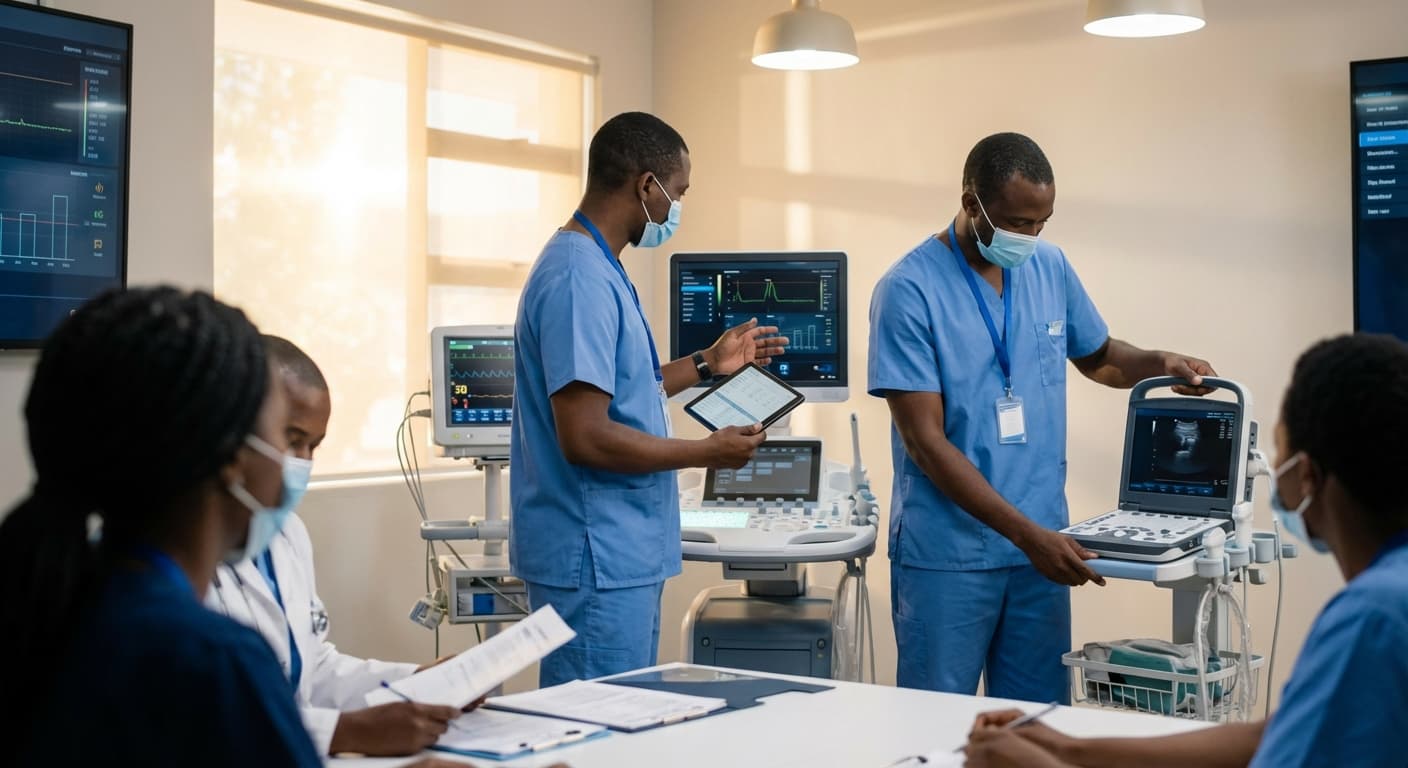
Clinical Needs Assessment for Medical Equipment in Madagascar
Engineering Excellence & Technical Support
Clinical Needs Assessment for Medical Equipment High-standard technical execution following OEM protocols and local regulatory frameworks.
Comprehensive Equipment Audit & Inventory
Conducting a detailed, on-the-ground audit of all existing medical equipment across healthcare facilities. This involves verifying functionality, documenting serial numbers, assessing age and condition, and identifying maintenance histories to establish a baseline of available resources.
Needs-Based Equipment Gap Analysis
Analyzing patient demographics, disease prevalence, and projected healthcare demands against the current equipment inventory. This technical assessment prioritizes essential equipment gaps, considering factors like service utilization, obsolescence, and the introduction of new clinical protocols.
Technology Scouting & Feasibility Study
Researching and evaluating suitable medical equipment technologies that align with Madagascar's specific healthcare needs, infrastructure capabilities, and budget constraints. This includes assessing the availability of local technical support, spare parts, and the training requirements for healthcare professionals.
What Is Clinical Needs Assessment For Medical Equipment In Madagascar?
A Clinical Needs Assessment for Medical Equipment in Madagascar is a systematic and evidence-based evaluation process designed to identify, prioritize, and justify the procurement of medical devices and related infrastructure required to meet the specific healthcare demands and service delivery gaps within the Malagasy context. This service involves a comprehensive analysis of existing healthcare infrastructure, patient demographics, disease prevalence, current treatment protocols, available human resources, and financial constraints. The objective is to ensure that investments in medical equipment are aligned with national health priorities, optimize resource allocation, and ultimately improve patient outcomes and health system resilience. The assessment utilizes a multidisciplinary approach, incorporating input from clinical professionals, biomedical engineers, public health experts, and relevant government stakeholders.
| Who Needs This Service | Typical Use Cases | ||||
|---|---|---|---|---|---|
| Ministry of Public Health (Madagascar): For strategic planning, national health policy development, and resource allocation for the health sector. | International Non-Governmental Organizations (NGOs) and Development Partners: To inform project design, funding decisions, and the implementation of health infrastructure and equipment projects. | Regional and District Health Authorities: To identify specific equipment needs for their respective jurisdictions and to advocate for resource allocation. | Healthcare Facilities (Hospitals, Larger Health Centers): To justify capital expenditure requests, upgrade existing services, or establish new specialized units. | Biomedical Engineering Departments: To develop long-term maintenance and replacement plans for medical equipment portfolios. | Research Institutions and Academia: To identify equipment needs for clinical research and training programs. |
| Establishing new specialized medical units: E.g., intensive care units (ICUs), diagnostic imaging departments, surgical theaters, or oncology centers. | Replacing outdated or obsolete medical equipment: To ensure continued provision of essential services and to adopt more efficient and effective technologies. | Responding to emerging health crises or disease outbreaks: To rapidly identify and procure necessary diagnostic, treatment, and supportive care equipment. | Improving primary healthcare services: To equip health centers with essential diagnostic tools and basic treatment equipment to reduce referrals to higher-level facilities. | Implementing national health programs: Such as maternal and child health initiatives, non-communicable disease management, or infectious disease control programs. | Evaluating the impact of past equipment investments: To inform future procurement strategies and identify lessons learned. |
Key Components of a Clinical Needs Assessment for Medical Equipment in Madagascar:
- Healthcare Facility Profiling: Detailed analysis of the type, capacity, and existing equipment of healthcare facilities (hospitals, health centers) across different administrative regions.
- Epidemiological Data Review: Examination of morbidity and mortality data to identify prevalent diseases and conditions requiring specific diagnostic and therapeutic equipment.
- Service Gap Analysis: Identification of unmet needs in terms of diagnostic capabilities, treatment modalities, and essential medical supplies.
- Technological Appropriateness Evaluation: Assessment of the suitability of proposed technologies considering local maintenance capacity, availability of consumables, power supply stability, and environmental factors.
- Human Resource Capacity Assessment: Evaluation of the existing workforce's ability to operate, maintain, and troubleshoot the identified medical equipment.
- Cost-Benefit and Return on Investment (ROI) Analysis: Financial appraisal of procurement options, including capital expenditure, operational costs, and projected benefits in terms of improved patient care and reduced healthcare expenditures.
- Regulatory and Standards Compliance: Verification that proposed equipment meets national and international safety and quality standards.
- Infrastructure Assessment: Evaluation of supporting infrastructure such as power, water, and internet connectivity required for optimal equipment functionality.
- Stakeholder Consultation: Engagement with healthcare providers, administrators, Ministry of Health officials, and international development partners to gather perspectives and ensure buy-in.
Who Needs Clinical Needs Assessment For Medical Equipment In Madagascar?
Clinical needs assessments for medical equipment in Madagascar are crucial for ensuring that healthcare facilities are equipped with the right tools to effectively diagnose, treat, and manage patient conditions. These assessments help prioritize investments, optimize resource allocation, and ultimately improve patient outcomes. Understanding who benefits most from these assessments and which departments are key stakeholders is vital for successful implementation and utilization of medical technology.
| Department/Sector | Key Needs & Role in Assessment | Impact of Needs Assessment |
|---|---|---|
| Public Hospitals (Regional & District) | Needs: Diagnostic equipment (X-ray, ultrasound, lab analyzers), surgical instruments, patient monitoring systems, essential therapeutic devices (ventilators, oxygen concentrators), sterilization equipment. Role: Primary beneficiaries, providing essential care to a large population. Their input is critical for identifying the most pressing equipment gaps. | Improved diagnostic accuracy, timely treatment, reduced patient mortality, increased capacity for complex procedures, better referral management. |
| Primary Health Centers (Rural & Urban) | Needs: Basic diagnostic tools (thermometers, blood pressure monitors, simple lab kits), essential medicines and delivery devices, minor surgical supplies, basic maternal and child health equipment (e.g., incubators, phototherapy units). Role: First point of contact for many patients, especially in underserved areas. Assessment focuses on foundational equipment for primary care. | Enhanced ability to manage common illnesses, early detection of diseases, improved maternal and child health outcomes, reduced burden on higher-level facilities. |
| Ministry of Public Health (Ministère de la Santé Publique - MSP) | Needs: Data aggregation on equipment needs across the country, strategic planning for procurement, budget allocation, policy development for equipment maintenance and training. Role: Oversees the national health system. Assessments inform national health strategies and resource allocation. | Evidence-based policy making, equitable distribution of resources, development of national procurement strategies, improved oversight of healthcare infrastructure. |
| Specialized Departments (e.g., Cardiology, Oncology, Pediatrics, Obstetrics/Gynecology) | Needs: Advanced diagnostic imaging (CT scanners, MRI), specialized laboratory equipment, sophisticated surgical tools, intensive care unit (ICU) equipment, neonatal intensive care unit (NICU) equipment. Role: Provide specialized care. Assessments identify equipment required for specific disease management and advanced treatments. | Improved diagnosis and treatment of specialized conditions, capacity for advanced medical interventions, reduced need for overseas referrals for specialized care. |
| Central Medical Stores & Logistics | Needs: Storage capacity for diverse equipment, maintenance and repair infrastructure, spare parts management, training for logistics personnel. Role: Manages the supply chain for medical equipment. Assessments help plan for storage, distribution, and maintenance needs. | Efficient and timely delivery of equipment, reduced equipment downtime due to poor maintenance, optimized inventory management. |
| Healthcare Professional Training Institutions | Needs: Training equipment mirroring clinical needs, simulation tools, up-to-date technology for educational purposes. Role: Develops the healthcare workforce. Assessments ensure that future healthcare professionals are trained on relevant and modern medical equipment. | Improved skills and competencies of healthcare workers, better adoption of new technologies, enhanced quality of healthcare education. |
| NGOs and International Aid Organizations | Needs: Data on critical equipment shortages, areas of greatest need, opportunities for targeted interventions and funding. Role: Often provide funding, technical support, and equipment. Assessments help them align their efforts with national priorities and maximize their impact. | Targeted and effective humanitarian aid, sustainable healthcare solutions, improved health infrastructure in specific regions or for vulnerable populations. |
Target Customers and Departments for Clinical Needs Assessments in Madagascar
- Healthcare Facilities (Hospitals, Health Centers)
- Government Health Ministries and Agencies
- Non-Governmental Organizations (NGOs) and International Aid Organizations
- Medical Equipment Suppliers and Manufacturers (indirectly, through informed purchasing)
- Healthcare Professionals (Doctors, Nurses, Technicians)
- Patients and Communities
Clinical Needs Assessment For Medical Equipment Process In Madagascar
This document outlines the workflow for a Clinical Needs Assessment for Medical Equipment (CNAME) process in Madagascar. The process is designed to systematically identify, prioritize, and plan for the acquisition of essential medical equipment to address critical gaps in healthcare delivery. It moves from initial identification of needs to the final execution and integration of the procured equipment into clinical practice. The workflow emphasizes collaboration, evidence-based decision-making, and alignment with national health priorities.
| Stage | Description | Key Activities | Responsible Parties | Inputs | Outputs | Timeline (Indicative) |
|---|---|---|---|---|---|---|
| The process is initiated by identifying a perceived need for new or upgraded medical equipment at a specific healthcare facility or across a region. | Receive and review requests/reports of equipment deficiencies. Conduct preliminary site visits or data reviews. Identify key stakeholders. | Healthcare Facility Staff, Ministry of Health (MoH) Officials, Project Managers | User requests, existing equipment inventory, health statistics, national health strategy documents. | Confirmation of a potential need, initial scope definition. | 1-2 weeks |
| A comprehensive assessment of clinical needs and existing infrastructure is conducted to gather specific information about required equipment. | Conduct in-depth interviews with clinicians and support staff. Review patient demographics and disease prevalence. Assess existing equipment condition and functionality. Evaluate facility infrastructure (power, space, water). | Clinical Staff, Biomedical Engineers, Public Health Specialists, CNAME Team | Initial assessment findings, patient data, clinical guidelines, facility assessments. | Detailed list of identified equipment needs with justifications, current infrastructure status report. | 2-4 weeks |
| Identified needs are rigorously prioritized based on impact, urgency, and alignment with national health priorities. | Develop prioritization criteria (e.g., impact on mortality/morbidity, cost-effectiveness, sustainability). Rank equipment needs. Conduct validation workshops with stakeholders. Secure official approval for prioritized list. | CNAME Team, MoH Leadership, Clinical Advisory Committee, Funding Agencies | Detailed needs list, prioritization criteria, national health policies, budget availability. | Approved and prioritized list of medical equipment, confirmed budget allocation. | 2-3 weeks |
| Precise technical specifications for each prioritized equipment item are developed to ensure suitability and quality. | Consult with clinical users and technical experts. Define performance requirements, safety standards, and maintenance needs. Draft detailed technical specifications for each item. | Biomedical Engineers, Clinical Specialists, Procurement Specialists | Prioritized equipment list, technical manuals, international standards, local maintenance capacity assessment. | Finalized technical specifications for each equipment item, Bill of Quantities (BOQ). | 3-5 weeks |
| A comprehensive procurement plan is developed, including tendering strategies and logistical considerations. | Determine procurement method (e.g., international tender, local purchase). Develop tender documents. Outline delivery timelines and incoterms. Plan for customs clearance and transportation. | Procurement Specialists, MoH Procurement Unit, Legal Advisors | Approved technical specifications, BOQ, budget, national procurement regulations, market analysis. | Procurement plan, tender documents, contract templates. | 2-3 weeks |
| The procured equipment is acquired, delivered, and installed at the designated healthcare facilities. | Issue tenders, evaluate bids, award contracts. Manage manufacturing and delivery. Supervise installation and initial testing. Conduct site acceptance testing (SAT). | Procurement Unit, Suppliers, Logistics Teams, Biomedical Engineers | Procurement plan, awarded contracts, delivery schedules, installation teams. | Delivered and installed medical equipment, SAT reports. | Variable (dependent on equipment type and lead times, typically 3-12 months) |
| Healthcare staff are trained on the use and maintenance of the new equipment, and it is formally commissioned for use. | Develop training materials. Conduct user training sessions. Provide basic maintenance training for local technicians. Formal commissioning of equipment for clinical use. | Training Institutions, Biomedical Engineers, Clinical Trainers, Facility Staff | Installed equipment, training materials, trained personnel. | Trained staff, commissioned equipment, user manuals. | 2-4 weeks (per facility/cohort) |
| The impact and effectiveness of the new equipment are monitored, and feedback is gathered for future assessments. | Track equipment utilization and performance. Monitor maintenance and repair history. Gather user feedback. Evaluate impact on clinical outcomes and service delivery. Report on findings. | MoH Monitoring & Evaluation Unit, Facility Managers, CNAME Team, Users | Commissioned equipment, utilization data, maintenance logs, user feedback, clinical outcome data. | Performance reports, lessons learned, recommendations for future CNAME cycles. | Ongoing (post-installation) |
Workflow Stages
- Inquiry & Initial Assessment
- Detailed Needs Identification
- Prioritization & Validation
- Technical Specification Development
- Procurement Planning
- Execution & Installation
- Training & Commissioning
- Monitoring & Evaluation
Clinical Needs Assessment For Medical Equipment Cost In Madagascar
This document presents a clinical needs assessment for medical equipment in Madagascar, focusing on pricing factors and typical cost ranges in Malagasy Ariary (MGA). The assessment acknowledges that a precise universal price is elusive due to a multitude of influencing variables. However, understanding these factors is crucial for effective budgeting, procurement, and ensuring sustainable healthcare delivery. Key pricing determinants include the type and complexity of the equipment, its brand and quality, the supplier and distribution channel, import duties and taxes, shipping and logistics, warranty and after-sales service, and the specific healthcare facility's requirements (e.g., volume, intended use). Emerging technologies, while potentially offering advanced capabilities, often come with a higher initial investment. Furthermore, fluctuating exchange rates and the availability of foreign currency can significantly impact the final cost in local currency. The following sections delve into these factors and provide estimated price ranges for commonly required medical equipment categories.
| Equipment Category | Typical Cost Range (MGA) | Key Considerations |
|---|---|---|
| Basic Diagnostic Tools (e.g., Stethoscopes, Blood Pressure Monitors, Thermometers) | 50,000 - 500,000 | Brand reputation, material quality, digital vs. analog. |
| Laboratory Equipment (e.g., Microscopes, Centrifuges, Basic Analyzers) | 500,000 - 5,000,000 | Automation level, capacity, brand, specific tests supported. |
| Imaging Equipment (e.g., X-ray Machines - basic, Ultrasound Machines - portable) | 10,000,000 - 100,000,000+ | Digital vs. analog, portability, image quality, probe types (ultrasound). |
| Surgical Instruments (Basic sets) | 200,000 - 2,000,000 per set | Material (stainless steel grade), number of instruments, sterilization compatibility. |
| Anesthesia Machines (Basic) | 15,000,000 - 75,000,000 | Features (vaporizer, ventilator), safety mechanisms, brand. |
| Patient Monitors (Basic) | 1,000,000 - 10,000,000 | Parameters monitored (ECG, SpO2, NIBP), display size, portability. |
| Hospital Beds (Manual) | 100,000 - 1,000,000 | Number of adjustments, material, durability. |
| Oxygen Concentrators | 300,000 - 1,500,000 | Flow rate (L/min), purity, brand, portability. |
| Defibrillators (Manual/AED) | 2,000,000 - 15,000,000 | Features (pacing, monitoring), portability, ease of use. |
| Sterilizers (Autoclaves - small) | 500,000 - 5,000,000 | Capacity, sterilization cycles, safety features, brand. |
Key Factors Influencing Medical Equipment Costs in Madagascar
- Equipment Type and Complexity: Basic diagnostic tools will be significantly less expensive than advanced surgical or imaging equipment.
- Brand and Quality: Renowned international brands typically command higher prices than generic or local alternatives, often reflecting perceived reliability and durability.
- Supplier and Distribution Channel: Direct import versus local distributors, authorized agents, or refurbished equipment suppliers will influence pricing.
- Import Duties and Taxes: Madagascar's import regulations and tax structures directly add to the landed cost of equipment.
- Shipping and Logistics: Costs associated with international freight, local transportation, insurance, and customs clearance.
- Warranty and After-Sales Service: Comprehensive warranties and readily available technical support contribute to the overall price, but are essential for long-term operational viability.
- Volume of Procurement: Bulk purchases may sometimes lead to discounted pricing.
- New vs. Refurbished Equipment: Refurbished equipment can offer a significant cost saving, though its lifespan and reliability may be reduced.
- Technological Advancements: Latest innovations and cutting-edge technologies generally carry a premium price.
- Exchange Rate Fluctuations: The MGA's value against major currencies (USD, EUR) directly impacts the cost of imported goods.
Affordable Clinical Needs Assessment For Medical Equipment Options
This resource focuses on how to conduct an affordable clinical needs assessment for medical equipment, emphasizing the benefits of value bundles and implementing effective cost-saving strategies. A thorough needs assessment is crucial for ensuring that healthcare providers acquire the most appropriate and cost-effective equipment to meet patient care demands. By understanding the specific clinical requirements, organizations can avoid overspending on unnecessary features and instead invest in solutions that deliver the best value. Value bundles, which often package multiple products or services at a reduced price, and smart procurement strategies are key to optimizing capital expenditures and operational budgets in the healthcare sector.
| Value Bundle Component | Description | Cost-Saving Benefit | Clinical Value |
|---|---|---|---|
| Equipment Package | Includes core medical device, essential accessories, and basic installation. | Reduced upfront cost compared to purchasing items individually. Streamlined procurement process. | Ensures availability of necessary components for immediate use. |
| Extended Warranty & Service | Covers maintenance and repairs beyond the standard warranty period. | Predictable maintenance expenses, reduced downtime, and avoidance of unexpected repair bills. | Maintains equipment uptime and operational reliability, crucial for patient care. |
| Training & Support | On-site or remote training for clinical staff and IT integration support. | Faster staff proficiency, reduced errors, and quicker adoption of new technology. | Optimizes equipment utilization and ensures safe, effective operation by trained personnel. |
| Consumables & Disposables | Bundled supply of necessary consumables for initial use. | Discounted pricing on essential supplies, simplifies reordering. | Ensures immediate availability of critical supplies for patient procedures. |
| Software & Integration | Includes necessary software licenses and integration services with existing EMR/HIS. | Lower total cost of ownership by reducing integration challenges and software licensing fees. | Enhances data flow, improves workflow efficiency, and supports clinical decision-making. |
Key Strategies for Affordable Medical Equipment Needs Assessment
- Define clear clinical requirements based on patient demographics, service lines, and expected patient volume.
- Prioritize equipment based on clinical impact, utilization rates, and return on investment (ROI).
- Explore leasing and refurbished equipment options as alternatives to outright purchase.
- Investigate service contracts and maintenance agreements to ensure long-term operational efficiency and predictable costs.
- Leverage technology for remote monitoring and diagnostics to reduce the need for on-site technician visits.
- Implement standardization of equipment where clinically appropriate to simplify training, maintenance, and inventory management.
- Engage in group purchasing organizations (GPOs) to benefit from aggregated buying power.
Verified Providers In Madagascar
In Madagascar, navigating the healthcare landscape can be challenging. Ensuring you're accessing quality care from legitimate and well-qualified professionals is paramount. This is where understanding and identifying 'Verified Providers' becomes crucial. Franance Health stands out as a beacon of reliability in this regard. Their rigorous credentialing process not only validates a provider's qualifications but also signifies a commitment to ethical practice and patient well-being. Choosing a Franance Health-verified provider means opting for assurance, expertise, and a higher standard of healthcare delivery.
| Provider Type | Franance Health Verification Criteria | Benefits for Patients |
|---|---|---|
| Doctors | Medical Degree & Specialization (if applicable), Valid License, Continuing Medical Education (CME) records, Professional References | Accurate diagnosis, effective treatment plans, access to specialists, up-to-date medical knowledge |
| Nurses | Nursing Diploma/Degree, Valid Registration Certificate, Clinical Experience, First Aid/CPR Certification | Competent patient care, skilled in procedures, compassionate support, post-treatment guidance |
| Pharmacists | Pharmacy Degree, Valid License, Experience in Dispensing and Counseling, Knowledge of Drug Interactions | Safe and accurate dispensing of medications, expert drug interaction advice, patient counseling on usage and side effects |
| Specialist Technicians (e.g., Lab, Radiology) | Relevant Technical Qualification, Certification, Practical Experience, Adherence to Safety Protocols | Reliable diagnostic results, accurate imaging, patient safety during procedures, quality control |
Why Franance Health Credentials Matter
- Unwavering Commitment to Quality: Franance Health's verification process meticulously scrutinizes educational background, professional experience, and licensing to ensure only the most competent practitioners are recognized.
- Patient Safety First: Beyond technical skills, Franance Health also assesses a provider's adherence to ethical guidelines and patient care standards, prioritizing your safety and trust.
- Enhanced Accessibility to Reliable Care: By identifying verified providers, Franance Health simplifies the process of finding trusted healthcare professionals, saving you time and reducing anxiety.
- Promoting Best Practices: The presence of Franance Health-verified providers encourages a culture of excellence within the Malagasy healthcare system, driving continuous improvement.
- Peace of Mind: Knowing your healthcare provider has undergone a stringent verification process provides invaluable peace of mind, allowing you to focus on your health and recovery.
Scope Of Work For Clinical Needs Assessment For Medical Equipment
This Scope of Work (SOW) outlines the requirements for conducting a comprehensive Clinical Needs Assessment (CNA) to identify and prioritize medical equipment requirements for [Facility Name/Department Name]. The assessment will inform procurement decisions, ensure alignment with clinical workflows, and optimize patient care delivery. The project will involve a multi-disciplinary team and will result in actionable technical specifications and a prioritized equipment list.
| Deliverable | Description | Format | Owner | Due Date |
|---|---|---|---|---|
| Project Plan | Detailed outline of project phases, activities, timelines, and resource allocation. | Document (Word/PDF) | Project Manager | [Date] |
| Data Collection Tools | Templates for surveys, interview guides, and workflow analysis. | Documents (Word/Excel) | Assessment Team Lead | [Date] |
| Clinical Needs Assessment Report (Draft) | Preliminary findings, analysis, and initial recommendations. | Document (Word/PDF) | Assessment Team Lead | [Date] |
| Prioritized Equipment List | Ranked list of required medical equipment. | Spreadsheet (Excel/CSV) | Assessment Team Lead | [Date] |
| Technical Specifications (Individual) | Detailed specifications for each prioritized equipment item. | Documents (Word/PDF) for each item | Technical Specialist | [Date for each item] |
| Final Clinical Needs Assessment Report | Comprehensive report with finalized findings, analysis, and recommendations. | Document (Word/PDF) | Project Manager | [Date] |
Key Activities and Deliverables
- Phase 1: Planning and Preparation
- Define project scope, objectives, and timelines.
- Identify and engage key stakeholders (clinicians, administrators, IT, facilities, biomedical engineering).
- Develop data collection tools (surveys, interview guides, workflow analysis templates).
- Establish data security and confidentiality protocols.
- Conduct kick-off meeting with the project team and stakeholders.
- Phase 2: Data Collection and Analysis
- Conduct stakeholder interviews and focus group discussions.
- Observe clinical workflows and patient pathways.
- Review existing equipment inventory, performance data, and maintenance records.
- Analyze current and projected patient volumes and acuity.
- Identify unmet clinical needs and equipment gaps.
- Assess technology trends and potential for innovation.
- Quantify the impact of proposed equipment on patient outcomes, efficiency, and cost.
- Phase 3: Prioritization and Recommendation
- Develop a framework for prioritizing equipment based on clinical impact, cost-effectiveness, safety, and strategic alignment.
- Facilitate prioritization workshops with stakeholders.
- Develop a prioritized list of required medical equipment.
- Phase 4: Technical Specification Development
- For each prioritized equipment item, develop detailed technical specifications.
- Define performance requirements, safety standards, interoperability needs, and user interface preferences.
- Incorporate relevant regulatory requirements (e.g., FDA, CE).
- Consider factors like size, power requirements, environmental conditions, and integration with existing IT systems.
- Phase 5: Reporting and Handover
- Compile a comprehensive CNA report detailing findings, analysis, and recommendations.
- Present findings and recommendations to stakeholders.
- Provide finalized technical specifications for procurement.
- Facilitate knowledge transfer and ongoing support.
- Technical Deliverables:
- Comprehensive Clinical Needs Assessment Report: This report will detail the methodology, stakeholder input, analysis of current state, identification of unmet needs, prioritized equipment list, and justification for recommendations.
- Prioritized Medical Equipment List: A ranked list of medical equipment identified as critical or beneficial to meet clinical needs, including justification for each item's priority.
- Detailed Technical Specifications for each Prioritized Equipment Item: This will include, but not be limited to, functional requirements, performance metrics, safety and regulatory compliance, power and environmental considerations, user interface needs, connectivity and interoperability requirements, and maintenance considerations.
- Workflow Diagrams: Visual representations of current and proposed clinical workflows, highlighting areas where new equipment will have the most impact.
- Stakeholder Engagement Summary: Documentation of all stakeholder consultations, feedback received, and how it was incorporated into the assessment.
Service Level Agreement For Clinical Needs Assessment For Medical Equipment
This Service Level Agreement (SLA) outlines the agreed-upon service levels for Clinical Needs Assessment for Medical Equipment, focusing on response times and uptime guarantees. This document ensures timely and reliable support for critical clinical equipment processes.
| Service Element | Service Level Objective (SLO) | Measurement Method | Reporting Frequency |
|---|---|---|---|
| Initial Response to Critical CNA Request (e.g., urgent equipment failure impacting patient care) | Within 1 hour | Timestamp of request received vs. timestamp of first contact/action | Immediately upon occurrence, documented in monthly reports |
| Initial Response to Standard CNA Request (e.g., new equipment planning, routine review) | Within 4 business hours | Timestamp of request received vs. timestamp of first contact/action | Monthly |
| Completion of Preliminary CNA Report (for standard requests) | Within 5 business days of initial response | Timestamp of initial response vs. timestamp of preliminary report delivery | Monthly |
| Availability of CNA Documentation Platform/Portal | 99.5% uptime | System logs monitoring availability and access | Monthly |
| Availability of Expert Consultant for Scheduled CNA Meetings | 100% for scheduled appointments | Attendance records and confirmation of meetings | Monthly |
Key Service Components
- Clinical Needs Assessment (CNA) for Medical Equipment: The process of identifying, evaluating, and prioritizing medical equipment requirements based on clinical needs, patient care goals, and operational efficiency.
- Response Time: The maximum time allowed for the initiation of action by the service provider upon receiving a request for service.
- Uptime Guarantee: The percentage of time the service (or specific components thereof) is expected to be operational and available for use.
Frequently Asked Questions

Ready when you are
Let's scope your Clinical Needs Assessment for Medical Equipment in Madagascar project in Madagascar.

Scaling healthcare logistics and technical systems across the entire continent.