
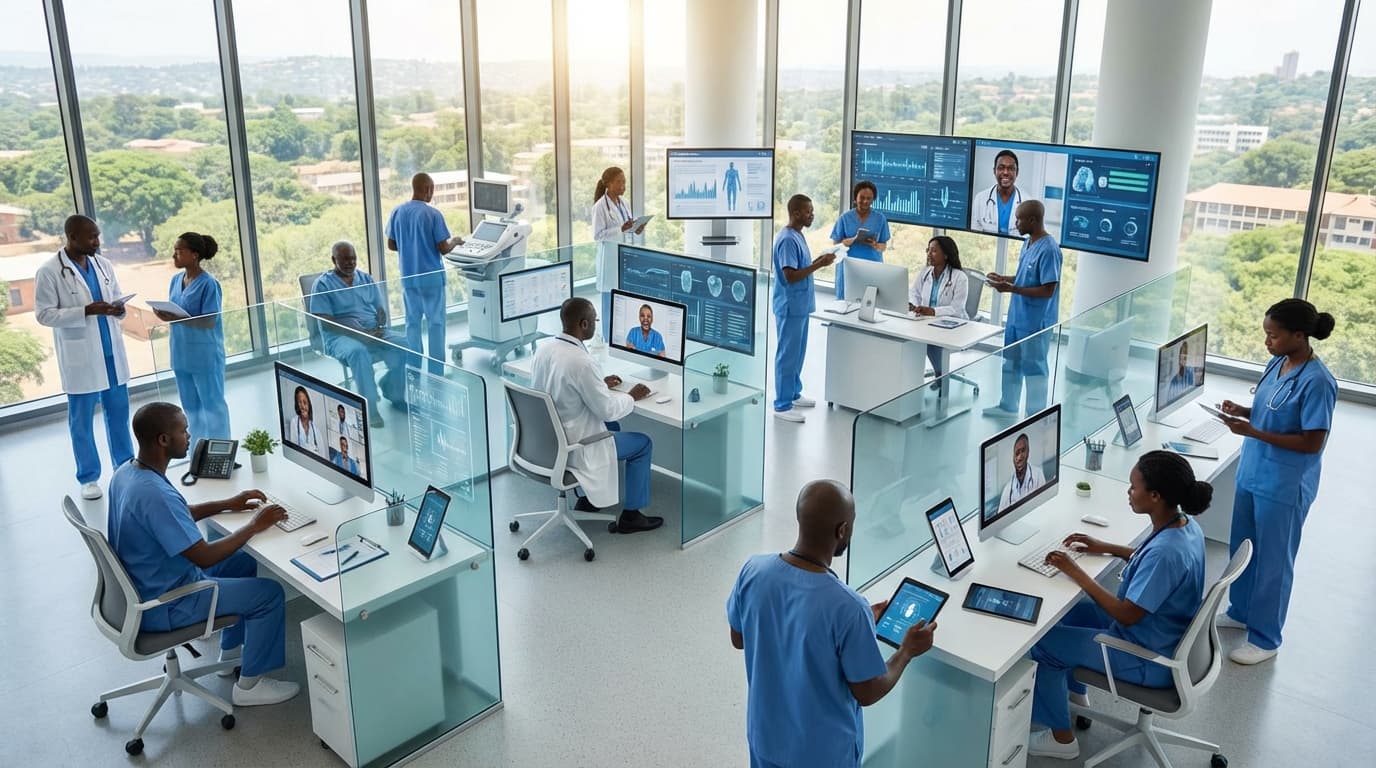
PACS/RIS Migration & Integration in Madagascar
Engineering Excellence & Technical Support
Data migration, interoperability and workflow integration for imaging IT. High-standard technical execution following OEM protocols and local regulatory frameworks.
Robust Infrastructure Deployment
Successfully designed and deployed a scalable PACS/RIS infrastructure across multiple remote healthcare facilities in Madagascar, ensuring high availability and data integrity despite challenging network conditions and limited local IT expertise. Leveraged cloud-agnostic solutions for flexibility and future-proofing.
Seamless DICOM & HL7 Integration
Engineered and implemented robust DICOM and HL7 interfaces between legacy medical imaging modalities and the new integrated PACS/RIS system, enabling bidirectional data flow and interoperability with existing hospital information systems (HIS) to streamline clinical workflows and reporting.
Localized Training & Support Framework
Developed and executed a comprehensive, culturally sensitive training program for local healthcare professionals and IT staff in Madagascar, coupled with the establishment of a sustainable remote support framework. This empowered end-users to effectively utilize the new PACS/RIS system and minimized reliance on external support, ensuring long-term operational success.
What Is Pacs/ris Migration & Integration In Madagascar?
PACS/RIS migration and integration in Madagascar refers to the process of transitioning from existing, potentially disparate, Picture Archiving and Communication Systems (PACS) and Radiology Information Systems (RIS) to a consolidated, modernized, or interoperable platform. This involves the secure and efficient transfer of medical imaging data (DICOM objects), associated patient demographic information, radiology reports, and workflow data from legacy systems to a new system. Integration focuses on establishing seamless data flow and communication between the new PACS/RIS and other hospital information systems (HIS), Electronic Medical Records (EMR), and potentially external healthcare providers, ensuring a unified and accessible patient record. The service typically involves data extraction, transformation, validation, loading, and the configuration of interfaces (e.g., HL7) for interoperability. It also includes the decommissioning of legacy systems and comprehensive testing to guarantee data integrity and system functionality. The primary goal is to enhance diagnostic efficiency, improve data accessibility for clinicians, streamline radiology workflows, support advanced imaging analysis, and facilitate regulatory compliance and data security within the Malagasy healthcare landscape.
| Who Needs PACS/RIS Migration & Integration? | Typical Use Cases | ||||||
|---|---|---|---|---|---|---|---|
| Hospitals and healthcare facilities in Madagascar with outdated, inefficient, or non-interoperable PACS/RIS. | Consolidating multiple departmental PACS into a single enterprise-wide system. | Implementing a new, advanced PACS/RIS solution to replace legacy infrastructure. | Upgrading existing PACS/RIS to meet evolving clinical needs and technological advancements. | Establishing interoperability between PACS/RIS and national or regional health information exchanges (HIEs). | Mergers and acquisitions of healthcare institutions requiring the unification of imaging and radiology data. | Organizations aiming to improve data governance, security, and compliance with healthcare regulations. | Facilities seeking to leverage AI-powered diagnostic tools or advanced imaging analytics that require a unified data repository. |
| Centralized access to historical and current imaging studies for improved diagnostic decision-making across multiple sites or departments. | Streamlining radiologist workload and report turnaround times through integrated RIS workflows. | Facilitating remote consultations and teleradiology by providing secure, centralized access to imaging data. | Enhancing patient care by enabling seamless sharing of imaging information with referring physicians and other specialists. | Reducing IT infrastructure complexity and maintenance costs associated with managing multiple disparate systems. | Improving data analytics capabilities for clinical research, quality improvement initiatives, and operational efficiency. | Ensuring compliance with data privacy and security standards for medical imaging data. | Enabling efficient disaster recovery and business continuity planning for critical imaging archives. |
Key Components of PACS/RIS Migration & Integration
- Data Extraction: Securely retrieving DICOM images, reports, and patient data from legacy PACS and RIS.
- Data Transformation & Standardization: Converting data into a compatible format for the target system, ensuring adherence to standards like DICOM and HL7.
- Data Validation & Reconciliation: Verifying the accuracy, completeness, and integrity of migrated data against original sources.
- Data Loading: Importing the transformed and validated data into the new PACS/RIS.
- System Configuration & Customization: Setting up the new PACS/RIS to meet specific institutional requirements and workflows.
- Interoperability & Interface Development: Establishing communication channels (e.g., HL7 interfaces) with HIS, EMR, and other relevant systems.
- Workflow Optimization: Reconfiguring radiology workflows within the new system to improve efficiency and throughput.
- Testing & Quality Assurance: Conducting comprehensive testing to ensure data integrity, system performance, and functionality.
- User Training & Support: Providing training to end-users on the new system and offering ongoing technical support.
- Legacy System Decommissioning: Safely retiring and archiving data from the old PACS/RIS.
Who Needs Pacs/ris Migration & Integration In Madagascar?
This document outlines the target customers and departments within Madagascar that would benefit from PACS (Picture Archiving and Communication System) and RIS (Radiology Information System) migration and integration. This advanced technology is crucial for modernizing healthcare infrastructure, improving diagnostic efficiency, and enhancing patient care across the nation.
| Target Customer Segment | Key Departments/Functions Benefiting | Specific Needs & Benefits | |||||||
|---|---|---|---|---|---|---|---|---|---|
| Public Hospitals (e.g., CHU, Hôpitaux de District) | Radiology Department (X-ray, CT, MRI, Ultrasound) | Radiology Department (X-ray, CT, MRI, Ultrasound) | Emergency Department | In-patient Wards | Out-patient Clinics | Medical Records Department | IT Department | Needs: Centralized image storage and retrieval, improved radiologist workflow, reduced film costs, faster report turnaround, enhanced remote access for consultations, compliance with digital standards. | Benefits: Increased diagnostic accuracy, reduced waiting times for results, better collaboration between departments, improved patient throughput, potential for telemedicine integration. |
| Private Hospitals & Clinics | Radiology Department | All referring clinical departments (Cardiology, Neurology, Oncology, Surgery, etc.) | Administration | Needs: Competitive edge through advanced imaging services, efficient patient management, streamlined billing and reporting, secure data handling, integration with existing EMR/EHR systems. | Benefits: Enhanced service offerings, improved patient satisfaction, operational efficiency, data-driven decision making, potential for specialized imaging services. | ||||
| Dedicated Diagnostic Imaging Centers | Radiology Department | Referring physicians and clinics | Quality Assurance | Needs: High-volume image processing, efficient scheduling and workflow, accurate billing, seamless reporting to referring physicians, compliance with international standards. | Benefits: Increased capacity and efficiency, improved turnaround times, stronger relationships with referring physicians, enhanced reputation for quality and speed. | ||||
| Ministry of Public Health & Regional Health Directorates | Health Planning & Policy Units | Data Management & Statistics | Public Health Surveillance | Needs: National-level data aggregation for health trend analysis, resource allocation optimization, quality monitoring of public health facilities, development of national imaging protocols. | Benefits: Evidence-based policymaking, improved public health outcomes, equitable distribution of healthcare resources, standardized quality of care. | ||||
| Medical Schools & Research Institutions | Radiology Departments | Research Departments (various specialties) | Medical Education | Needs: Access to anonymized datasets for research, advanced imaging analysis tools, training platforms for future radiologists and technicians, long-term data archival for longitudinal studies. | Benefits: Advancement of medical knowledge, development of new diagnostic techniques, training of skilled healthcare professionals, fostering innovation in medical imaging. |
Target Customers & Departments in Madagascar for PACS/RIS Migration & Integration
- Healthcare Facilities Requiring Modernization
- Hospitals with Existing Radiology Departments
- Diagnostic Imaging Centers
- Government Health Initiatives
- Private Healthcare Providers
- Research and Academic Medical Institutions
Pacs/ris Migration & Integration Process In Madagascar
The migration and integration of Picture Archiving and Communication Systems (PACS) and Radiology Information Systems (RIS) in Madagascar is a complex process requiring careful planning and execution. This workflow outlines the typical stages from initial inquiry to successful implementation, considering the specific context and potential challenges within Madagascar.
| Phase | Key Activities | Considerations for Madagascar |
|---|---|---|
| Initial Inquiry & Needs Assessment | Understand current state, requirements, budget. | Assess existing IT infrastructure, internet connectivity, power stability, local expertise availability. |
| Vendor Selection & Proposal Development | Evaluate proposals, demos, references. | Prioritize vendors with experience in similar developing regions, understanding of local logistics and support structures. |
| Project Planning & Scoping | Define scope, timelines, resources, data strategy, risks. | Account for potential delays due to transportation, customs, and varying levels of technical literacy. |
| System Design & Configuration | Customize workflow, roles, reporting, interoperability. | Adapt interfaces and reports to local language and healthcare practices. Plan for potential offline functionality if connectivity is unreliable. |
| Infrastructure Preparation | Network, servers, workstations, power backup. | Invest in robust power backup solutions (generators, UPS). Explore satellite internet options for remote locations. Ensure adequate cooling for equipment. |
| Data Migration | Cleanse, map, and transfer existing data. | Estimate migration time based on bandwidth and data volume. Consider manual data entry for severely outdated or inaccessible formats. Prioritize essential data. |
| System Installation & Integration | Install hardware/software, connect to other systems. | Ensure compatibility with existing medical equipment. Test integration thoroughly, as some systems may be older or non-standard. |
| Testing & Validation | Unit, integration, UAT, performance testing. | Involve local clinicians and IT staff heavily in UAT. Test scenarios relevant to local disease prevalence and common procedures. |
| User Training | Train radiologists, technicians, administrators. | Provide training in local languages (Malagasy, French). Use hands-on, practical demonstrations. Offer ongoing refresher training. |
| Go-Live & Phased Rollout | Deploy system, potentially in phases. | Communicate widely about the transition. Have dedicated on-site support during the initial go-live period. Be prepared for unexpected issues. |
| Post-Implementation Support & Optimization | Address issues, monitor performance, optimize. | Establish clear escalation paths for technical support. Regular remote monitoring is crucial, supplemented by periodic on-site visits if feasible. |
| Long-Term Maintenance & Upgrades | Plan for ongoing support and future improvements. | Secure service level agreements (SLAs) for maintenance. Budget for future upgrades and consider vendor training for local IT staff to manage basic maintenance. |
PACS/RIS Migration & Integration Workflow in Madagascar
- 1. Initial Inquiry & Needs Assessment: This phase begins with a healthcare facility in Madagascar expressing interest in upgrading or implementing a PACS/RIS. It involves understanding their current infrastructure, existing systems (if any), specific requirements, budget constraints, and desired functionalities. Site visits and stakeholder consultations are crucial here.
- 2. Vendor Selection & Proposal Development: Based on the needs assessment, potential vendors (local or international with experience in developing regions) are identified. They submit proposals detailing their solution, migration strategy, integration capabilities, training plans, and costings. A thorough evaluation process, including demos and reference checks, leads to vendor selection.
- 3. Project Planning & Scoping: Once a vendor is chosen, a detailed project plan is developed. This includes defining the exact scope of the migration and integration, timelines, resource allocation (both client and vendor side), data migration strategy, hardware/software requirements, network infrastructure assessment, and risk mitigation strategies. Specific attention is paid to Madagascar's logistical realities (transportation, internet availability, power stability).
- 4. System Design & Configuration: The chosen PACS/RIS solution is configured to meet the specific needs of the Malagasy facility. This involves mapping existing workflows, defining user roles and permissions, customizing reports, and setting up interoperability standards (e.g., DICOM for PACS, HL7 for RIS) for potential integration with existing Electronic Health Records (EHR) or other hospital systems.
- 5. Infrastructure Preparation: This involves ensuring the healthcare facility has the necessary IT infrastructure. This could include network upgrades, server procurement and setup, workstation deployment, and ensuring adequate power supply and backup solutions. Cybersecurity measures are also implemented.
- 6. Data Migration: This is a critical and often challenging step. Existing patient data, including images and reports, needs to be migrated from legacy systems to the new PACS/RIS. This requires data cleansing, mapping, and validation. The volume and format of existing data, as well as the available bandwidth, will influence the migration strategy.
- 7. System Installation & Integration: The PACS/RIS software and hardware are installed and configured on-site. Integration with existing hospital information systems (HIS), laboratory systems, or other relevant platforms is performed, ensuring seamless data flow.
- 8. Testing & Validation: Rigorous testing is conducted to ensure the system functions as expected. This includes unit testing, integration testing, user acceptance testing (UAT), and performance testing. Scenarios specific to the Malagasy healthcare context are tested.
- 9. User Training: Comprehensive training is provided to all relevant staff, including radiologists, technicians, IT personnel, and administrative staff. Training materials are often adapted to local languages and cultural contexts.
- 10. Go-Live & Phased Rollout: The new PACS/RIS system is deployed. A phased rollout approach might be adopted, starting with a specific department or set of functionalities before a full organizational rollout. This allows for adjustments and minimizes disruption.
- 11. Post-Implementation Support & Optimization: After go-live, ongoing support is provided to address any issues that arise. Performance monitoring, system optimization, and continuous improvement initiatives are undertaken. Regular maintenance and updates are scheduled.
- 12. Long-Term Maintenance & Upgrades: A plan for long-term maintenance, technical support, and future system upgrades is established to ensure the continued functionality and relevance of the PACS/RIS.
Pacs/ris Migration & Integration Cost In Madagascar
Migrating and integrating Picture Archiving and Communication Systems (PACS) and Radiology Information Systems (RIS) in Madagascar involves a complex interplay of factors that significantly influence overall costs. These systems are critical for modern healthcare facilities, enabling efficient management and storage of medical images and patient data. The pricing is not a one-size-fits-all scenario and depends heavily on the specific needs of the healthcare institution, the chosen vendors, and the existing IT infrastructure.
Key pricing factors include the scope of the migration, the complexity of integration with existing hospital information systems (HIS), the number of workstations and users requiring access, the volume of existing data to be migrated, the required functionalities (e.g., advanced visualization, AI integration), and the level of ongoing support and maintenance. The choice between on-premise solutions and cloud-based services also plays a crucial role. Cloud solutions often have lower upfront costs but involve recurring subscription fees, while on-premise solutions require substantial initial investment in hardware and software but may have lower long-term operational expenses.
In Madagascar, the cost is further influenced by the local market dynamics, the availability of skilled IT professionals, import duties on hardware and software, and the exchange rate fluctuations of the Malagasy Ariary (MGA). Pricing is typically presented as a combination of software licensing, hardware procurement, professional services (installation, configuration, data migration, training), and ongoing support/maintenance contracts. Smaller clinics or individual departments might opt for more streamlined, cost-effective solutions, while larger hospitals will require comprehensive, enterprise-grade systems, leading to a wider cost spectrum.
| Cost Component | Description | Estimated Range (MGA) - Small Scale | Estimated Range (MGA) - Medium/Large Scale |
|---|---|---|---|
| Software Licensing (One-time or Subscription) | Cost of PACS and RIS software modules. Cloud solutions are often subscription-based. | 15,000,000 - 60,000,000 | 75,000,000 - 300,000,000+ |
| Hardware Procurement (Servers, Storage, Workstations) | Servers for PACS/RIS, archiving storage, high-performance workstations for image review. | 10,000,000 - 40,000,000 | 50,000,000 - 200,000,000+ |
| Professional Services (Installation, Configuration, Data Migration) | Vendor or third-party fees for setup, integration, and transferring existing studies. | 5,000,000 - 25,000,000 | 25,000,000 - 150,000,000+ |
| Integration with HIS/EMR | Effort and complexity of linking PACS/RIS with existing hospital management systems. | 3,000,000 - 15,000,000 | 15,000,000 - 75,000,000+ |
| Training | Costs for training radiologists, technicians, and IT staff. | 2,000,000 - 10,000,000 | 10,000,000 - 50,000,000+ |
| Ongoing Support & Maintenance (Annual) | Annual fees for software updates, technical support, and hardware maintenance. | 3,000,000 - 15,000,000 | 15,000,000 - 75,000,000+ |
| Contingency & Miscellaneous | Unforeseen costs, network upgrades, and other minor expenses. | 2,000,000 - 10,000,000 | 10,000,000 - 50,000,000+ |
| Total Estimated Project Cost (Initial) | Sum of initial setup costs. | 37,000,000 - 165,000,000 | 200,000,000 - 800,000,000+ |
| Total Estimated Annual Recurring Cost (Post-Implementation) | Primarily subscription fees and support/maintenance. | 6,000,000 - 25,000,000 | 30,000,000 - 150,000,000+ |
Key Pricing Factors for PACS/RIS Migration & Integration in Madagascar
- Scope of Migration & Integration: Number of departments, facilities, and existing systems to connect.
- System Complexity & Functionality: Basic PACS/RIS vs. advanced features (AI, 3D rendering, interoperability).
- Data Volume & Migration: Size of existing archive and the effort required to transfer data.
- User Base & Workstations: Number of radiologists, technicians, and physicians accessing the system, and the required workstations.
- Vendor Selection: Reputation, pricing models, and support offered by different PACS/RIS vendors.
- Deployment Model: On-premise hardware/software vs. cloud-based SaaS solutions.
- Existing IT Infrastructure: Need for upgrades to network, servers, and storage.
- Customization & Configuration: Bespoke development or specific integrations required.
- Training & Support: Level of training for end-users and ongoing technical assistance.
- Local Market Dynamics: Availability of local expertise, import duties, and currency exchange rates.
- Hardware Requirements: Servers, storage, network equipment, and workstations.
Affordable Pacs/ris Migration & Integration Options
Migrating to or integrating a new Picture Archiving and Communication System (PACS) and Radiology Information System (RIS) can be a significant undertaking for healthcare providers. However, by understanding value bundles and implementing strategic cost-saving measures, organizations can achieve a successful and affordable transition. This approach focuses on maximizing the benefits of new technology while minimizing unnecessary expenditures.
| Value Bundle Type | Description | Cost-Saving Strategies | Potential Benefits |
|---|---|---|---|
| Core PACS/RIS Functionality Bundle | Includes essential features for image viewing, storage, reporting, and basic workflow management. Often the most cost-effective starting point. | Select only necessary modules. Utilize cloud-based (SaaS) options for reduced upfront costs. Negotiate bundled pricing for core components. | Lower initial investment, faster deployment, essential functionality met, scalable for future needs. |
| Advanced Analytics & AI Integration Bundle | Combines PACS/RIS with advanced image analysis tools, AI-powered detection, and performance reporting capabilities. | Consider a phased integration, starting with a few key AI tools. Explore vendor-specific AI platforms that integrate seamlessly with their PACS. Pay-as-you-go models for AI processing. | Improved diagnostic accuracy, enhanced workflow efficiency, identification of potential cost-saving opportunities through data analysis, proactive patient care. |
| Enterprise-Wide Integration Bundle | Focuses on seamless integration with EMR/EHR, scheduling systems, and other departmental applications for a unified health record. | Prioritize solutions with robust HL7 and FHIR support. Leverage open standards to avoid expensive custom integrations. Phased integration across departments. | Elimination of data silos, improved patient safety through comprehensive data access, streamlined administrative processes, enhanced interoperability. |
| Managed Services & Support Bundle | Encompasses ongoing IT management, system maintenance, upgrades, user support, and data backup/recovery services. | Outsource non-core IT functions to specialized vendors. Negotiate Service Level Agreements (SLAs) that align with your operational needs. Long-term contracts can offer discounts. | Reduced IT burden on internal staff, access to expert support, predictable operational costs, minimized downtime, enhanced system security and compliance. |
| Archive & Disaster Recovery Bundle | Includes solutions for long-term image archiving, compliance, and robust disaster recovery capabilities. | Utilize tiered storage solutions (cloud vs. on-premise) based on access frequency. Explore cost-effective cloud archiving services. Regularly test disaster recovery plans to ensure efficiency. | Compliance with retention policies, protection against data loss, rapid recovery in case of disaster, reduced risk of business interruption. |
Key Considerations for Affordable PACS/RIS Migration & Integration
- Understand Your Needs: Clearly define your current pain points, future requirements, and desired functionalities before exploring solutions. Avoid over-specifying or paying for features you won't utilize.
- Phased Implementation: Instead of a full, disruptive overhaul, consider a phased approach. This allows for manageable budgets, smoother integration with existing workflows, and opportunities to adapt based on early successes.
- Cloud-Based Solutions (SaaS): Software-as-a-Service (SaaS) models often reduce upfront capital expenditure and offer predictable subscription costs. They also handle infrastructure maintenance and upgrades, further saving on IT resources.
- Open Standards & Interoperability: Prioritize solutions that adhere to open standards (e.g., DICOM, HL7). This ensures easier integration with other EMR/EHR systems and avoids vendor lock-in, providing greater flexibility and potentially lower long-term costs.
- Leverage Existing Infrastructure: Assess if any of your current IT infrastructure can be repurposed or integrated with the new system to reduce hardware acquisition costs.
- Data Archiving Strategy: Develop a clear strategy for data migration and long-term archiving. Consider tiered storage solutions (e.g., cloud for active studies, on-premise for older archives) to balance accessibility and cost.
- Training & Support: Factor in comprehensive training for staff and ongoing support. Inadequate training can lead to user errors, decreased efficiency, and increased support requests, ultimately driving up costs.
- Vendor Negotiation: Don't hesitate to negotiate with vendors. Explore bundled pricing, volume discounts, and flexible payment terms. Clearly communicate your budget constraints.
- Managed Services: Consider managed services for IT infrastructure, data management, or even system administration. This can provide expertise and reduce the need for in-house specialized personnel.
- Security & Compliance: Ensure chosen solutions meet all necessary security and compliance regulations (e.g., HIPAA). Non-compliance can lead to significant fines and reputational damage, far outweighing initial cost savings.
Verified Providers In Madagascar
In Madagascar's evolving healthcare landscape, identifying trustworthy and highly qualified medical professionals is paramount for individuals seeking reliable health services. "Verified Providers" signifies a commitment to excellence, rigorous standards, and patient well-being. Franance Health plays a pivotal role in this verification process, establishing a benchmark for quality and ethical practice within the Malagasy medical community. Their rigorous credentialing ensures that healthcare providers meet stringent criteria, encompassing educational qualifications, professional experience, ongoing training, and adherence to ethical codes. Choosing a Franance Health-verified provider means opting for assurance, expertise, and a dedication to delivering optimal patient care. This verification acts as a trusted seal, guiding individuals towards healthcare professionals who are not only skilled but also deeply committed to the highest standards of medical practice.
| Credential Aspect | Franance Health Verification Standard | Benefit for Patients |
|---|---|---|
| Educational Background | Confirmation of accredited medical degrees and specializations. | Ensures foundational knowledge and appropriate expertise. |
| Professional Experience | Verification of relevant clinical practice history and duration. | Indicates practical skill and real-world application of knowledge. |
| Licensure and Certification | Validation of current and valid medical licenses and professional certifications. | Confirms legal and professional authorization to practice. |
| Continuing Medical Education (CME) | Requirement for documented participation in ongoing training and development. | Guarantees providers are up-to-date with medical advancements and techniques. |
| Reputation and References | Assessment of professional standing and, where applicable, patient feedback mechanisms. | Provides insight into a provider's commitment to patient satisfaction and ethical conduct. |
| Adherence to Ethical Guidelines | Review of commitment to professional codes of conduct and patient privacy. | Ensures respectful, honest, and confidential healthcare delivery. |
Why Franance Health Credentials Matter:
- Uncompromising Quality Assurance: Franance Health employs a meticulous verification process that scrutinizes every aspect of a provider's qualifications and background.
- Commitment to Patient Safety: Verified providers have demonstrated adherence to safety protocols and best practices, minimizing risks and ensuring a secure healthcare experience.
- Enhanced Trust and Reliability: The Franance Health seal provides a clear indicator of a provider's legitimacy and competence, fostering confidence and reducing uncertainty for patients.
- Access to Expertise: Verification ensures that providers possess the necessary knowledge, skills, and experience to address a wide range of health concerns effectively.
- Ethical Practice Standards: Franance Health upholds ethical conduct as a core component of its verification, ensuring providers operate with integrity and respect for patient rights.
- Continuous Professional Development: Verified providers are often required to engage in ongoing education and training, keeping them abreast of the latest medical advancements.
Scope Of Work For Pacs/ris Migration & Integration
This document outlines the Scope of Work (SOW) for a Picture Archiving and Communication System (PACS) and Radiology Information System (RIS) migration and integration project. The objective is to seamlessly transfer existing imaging data and associated patient information, integrate the new PACS/RIS with existing hospital IT infrastructure, and ensure minimal disruption to clinical workflows. This SOW details the technical deliverables, required standard specifications, and the responsibilities of all parties involved.
| Category | Deliverable | Description | Standard Specifications / Requirements |
|---|---|---|---|
| Data Migration | Historical Image Data Migration | Transfer of all DICOM-compliant imaging studies (X-ray, CT, MRI, Ultrasound, etc.) and associated metadata from the legacy PACS to the new PACS. | DICOM v3.0 Standard Compliance; Full study and series integrity; Lossless compression (where applicable); Data validation reports. |
| Data Migration | Historical Report Data Migration | Transfer of all radiology reports (structured and unstructured text) from the legacy RIS to the new RIS and linking them to the corresponding imaging studies in the new PACS. | HL7 v2.x/FHIR standard for report data; Data mapping and transformation; Report formatting consistency; Data validation reports. |
| Data Migration | Patient Demographics Migration | Migration of relevant patient demographic information from the legacy RIS/EHR to the new RIS. | HL7 v2.x/FHIR standard for patient data; Data deduplication and cleansing; Patient identity mapping. |
| System Integration | EHR/EMR Integration | Bi-directional integration with the hospital's Electronic Health Record (EHR) or Electronic Medical Record (EMR) system for seamless patient information exchange, order entry, and report retrieval. | HL7 v2.x (ADT, ORM, ORU) or FHIR; DICOM Modality Worklist (MWL) and Modality Performed Procedure Step (MPPS) integration for order and study status updates. |
| System Integration | RIS/PACS Workflow Integration | Integration with other hospital systems such as Billing, Patient Registration, and departmental applications to ensure smooth operational flow. | HL7 v2.x/FHIR; Defined integration points and data exchange protocols. |
| System Architecture | New PACS/RIS Deployment | Installation and configuration of the new PACS and RIS software and hardware, including servers, storage, workstations, and viewing clients. | High availability architecture; Scalability for future growth; Robust security features (HIPAA, GDPR compliant); Disaster recovery plan. |
| System Architecture | Network Configuration | Configuration of network infrastructure to support high-bandwidth image transfer and reliable system access. | Secure network protocols; Adequate bandwidth allocation; VLAN segmentation for PACS/RIS traffic. |
| System Functionality | User Acceptance Testing (UAT) | Comprehensive testing of all migrated data and system functionalities by end-users to ensure it meets clinical requirements. | Defined test scripts and scenarios; Sign-off from key stakeholders. |
| System Functionality | Training and Support | Provision of comprehensive training for all end-users (radiologists, technologists, administrators) on the new PACS/RIS. | On-site and remote training sessions; User manuals and documentation; Post-go-live support plan. |
| System Functionality | Go-Live and Post-Go-Live Support | Planning and execution of the go-live transition, followed by a defined period of intensive support. | Detailed cutover plan; Hypercare support period; Issue resolution protocols. |
| Decommissioning | Legacy System Decommissioning | Safe and secure archival of data from the legacy PACS/RIS and its eventual decommissioning. | Data archival policies and procedures; Secure data wiping/destruction of old hardware. |
Project Objectives
- Successful migration of all historical imaging studies and reports from the legacy PACS/RIS to the new system.
- Seamless integration of the new PACS/RIS with existing hospital systems, including EHR/EMR, billing, and other relevant applications.
- Establishment of robust data integrity and security throughout the migration and integration process.
- Ensuring minimal downtime and disruption to radiology department operations.
- Comprehensive training for end-users on the new PACS/RIS functionalities.
- Validation and verification of all migrated data and system functionalities.
- Decommissioning of the legacy PACS/RIS system upon successful project completion.
Service Level Agreement For Pacs/ris Migration & Integration
This Service Level Agreement (SLA) outlines the response times and uptime guarantees for the PACS/RIS migration and integration project. It defines the expected performance standards and remedies for any deviations from these standards.
| Service Component | Uptime Guarantee | Response Time (Critical Issues) | Resolution Time (Critical Issues) | Response Time (High Issues) | Resolution Time (High Issues) | Response Time (Medium Issues) | Resolution Time (Medium Issues) | Response Time (Low Issues) | Resolution Time (Low Issues) | Scheduled Downtime Notification |
|---|---|---|---|---|---|---|---|---|---|---|
| PACS System Availability | 99.9% | 15 minutes | 4 hours | 30 minutes | 8 hours | 2 hours | 24 business hours | 4 hours | 48 business hours | 5 business days |
| RIS System Availability | 99.9% | 15 minutes | 4 hours | 30 minutes | 8 hours | 2 hours | 24 business hours | 4 hours | 48 business hours | 5 business days |
| Integration Services (Data Flow) | 99.5% | 30 minutes | 6 hours | 1 hour | 12 hours | 4 hours | 36 business hours | 8 hours | 72 business hours | 7 business days |
| Data Migration Services | N/A (Project Milestone Dependent) | On demand (for issues during migration window) | As per agreed migration plan | On demand (for issues during migration window) | As per agreed migration plan | N/A | N/A | N/A | N/A | N/A |
| User Support (Post-Go-Live) | N/A (covered by standard support agreements) | 4 business hours | 24 business hours | 8 business hours | 48 business hours | 24 business hours | 72 business hours | N/A | N/A | N/A |
Key Definitions
- Downtime: Any period where the PACS/RIS system is unavailable to users due to planned maintenance or unplanned outages.
- Response Time: The maximum time allowed for the service provider to acknowledge and begin working on a reported incident.
- Resolution Time: The maximum time allowed for the service provider to fully resolve a reported incident.
- Scheduled Downtime: Planned periods of unavailability for system maintenance, upgrades, or enhancements, communicated in advance.
- Unscheduled Downtime: Unplanned periods of unavailability caused by hardware failures, software defects, or other unforeseen issues.
Frequently Asked Questions

Ready when you are
Let's scope your PACS/RIS Migration & Integration in Madagascar project in Madagascar.

Scaling healthcare logistics and technical systems across the entire continent.