
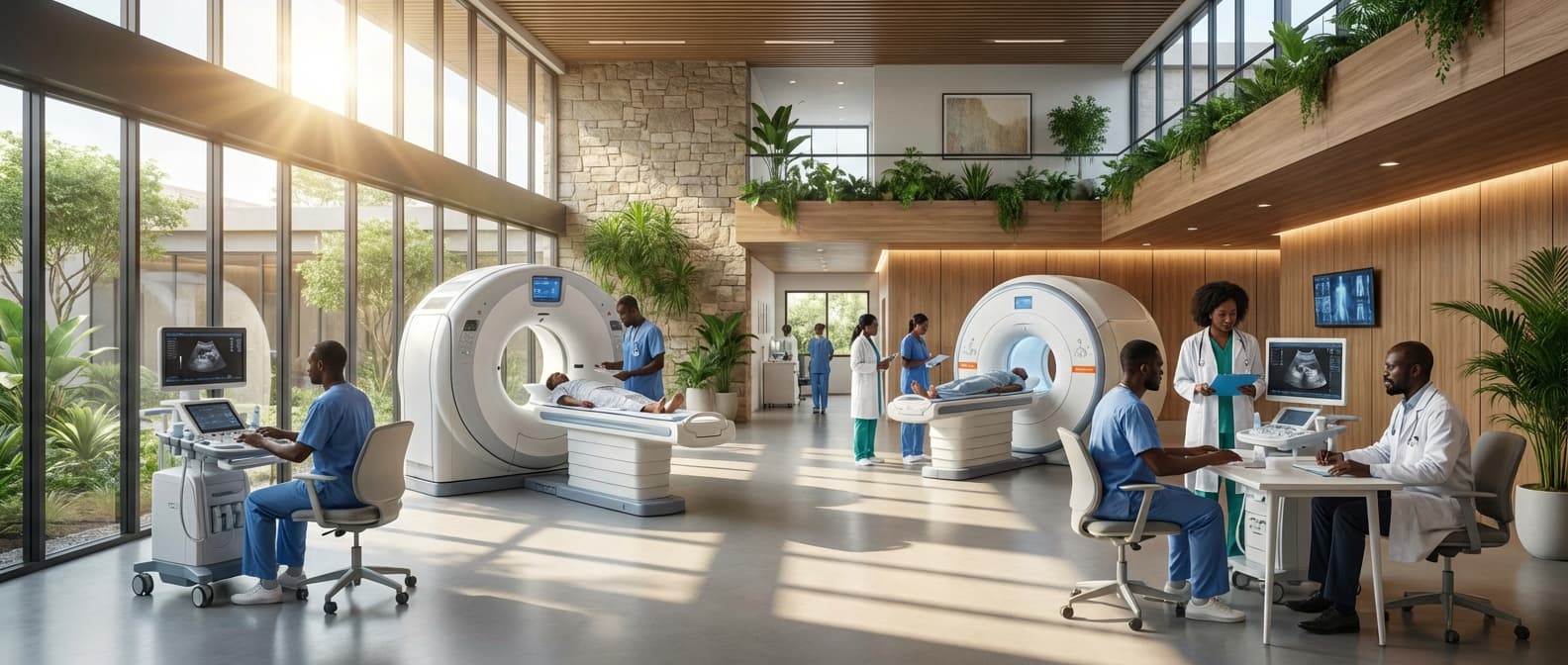
Diagnostic Imaging in Madagascar
Engineering Excellence & Technical Support
High-resolution imaging systems including CT scanners, MRI, X-ray, and ultrasound technology for accurate clinical diagnosis. High-standard technical execution following OEM protocols and local regulatory frameworks.
Mobile X-ray Units for Remote Outreach
Deployment of mobile X-ray units to hard-to-reach rural areas, expanding diagnostic imaging access for underserved populations and enabling early detection of conditions like tuberculosis and bone fractures.
AI-Powered Ultrasound Interpretation for Obstetric Care
Integration of AI-assisted ultrasound interpretation tools at regional health centers, improving diagnostic accuracy for prenatal screenings, identifying fetal anomalies, and supporting maternal health initiatives in areas with limited radiologist availability.
Tele-Radiology Network for Centralized Expert Consultation
Establishment of a secure tele-radiology platform connecting local clinics to national radiology centers, facilitating remote interpretation of complex imaging studies (CT, MRI) and providing crucial second opinions to improve patient management and treatment planning.
What Is Diagnostic Imaging In Madagascar?
Diagnostic Imaging in Madagascar refers to the utilization of medical imaging technologies for the non-invasive visualization of internal body structures, organs, and tissues. This service is crucial for disease detection, diagnosis, treatment planning, and monitoring therapeutic response. It encompasses a range of modalities, each with specific applications, and plays a pivotal role in the Malagasy healthcare system, particularly in resource-limited settings where access to advanced medical expertise and equipment can be challenging. The services involve the operation of imaging equipment by trained radiographers and the interpretation of images by radiologists and other qualified physicians.
| Who Needs Diagnostic Imaging? | Typical Use Cases | Common Modalities Used |
|---|---|---|
| Patients presenting with suspected fractures or bone abnormalities. | Fracture detection, assessment of bone integrity (e.g., osteoporosis). | X-ray (Radiography) |
| Individuals with abdominal pain, suspected organ pathology, or pregnancy monitoring. | Assessment of abdominal organs (liver, kidneys, gallbladder), prenatal screening, detection of masses or fluid collections. | Ultrasound |
| Patients with suspected complex internal injuries, neurological conditions, or advanced oncological disease (where available). | Trauma assessment (e.g., head injuries, internal bleeding), diagnosis of stroke, tumor staging and characterization, assessment of cardiovascular structures. | Computed Tomography (CT) |
| Patients requiring detailed soft tissue visualization, especially for neurological, musculoskeletal, and oncological conditions (where available). | Detailed imaging of the brain, spinal cord, joints, ligaments, and tumors; differentiation of benign and malignant lesions. | Magnetic Resonance Imaging (MRI) |
| Patients with suspected chest abnormalities (e.g., pneumonia, tuberculosis, lung masses). | Diagnosis and monitoring of respiratory infections, detection of lung nodules or masses. | X-ray (Chest Radiography) |
| Individuals with suspected urinary tract infections or kidney stones. | Assessment of kidney and bladder structure, detection of renal calculi. | Ultrasound |
Key Aspects of Diagnostic Imaging in Madagascar
- Modalities Employed: Primarily encompasses X-ray (radiography), Ultrasound, and to a lesser extent, Computed Tomography (CT) and Magnetic Resonance Imaging (MRI), often concentrated in major urban centers and larger hospitals.
- Personnel Involved: Radiographers (technicians who operate imaging equipment), Radiologists (physicians who interpret medical images), and other medical specialists who utilize imaging findings for patient care.
- Accessibility and Infrastructure: Availability is uneven across the country, with a higher concentration of advanced imaging services in Antananarivo and other provincial capitals. Rural areas often rely on basic radiography and portable ultrasound units.
- Cost and Affordability: Fees for imaging services can be a significant barrier for a large portion of the population, necessitating emphasis on public health initiatives and potential subsidies.
- Training and Human Resources: A critical challenge is the limited number of trained radiologists and radiographers, requiring ongoing investment in education and capacity building.
Who Needs Diagnostic Imaging In Madagascar?
Diagnostic imaging plays a crucial role in modern healthcare, enabling accurate diagnosis, treatment planning, and monitoring of various medical conditions. In Madagascar, where healthcare infrastructure and access can be challenging, understanding who needs and benefits most from these services is vital for resource allocation and service improvement. This document outlines the key target customers and departments that would significantly benefit from enhanced diagnostic imaging capabilities.
| Department/Service Area | Primary Needs for Diagnostic Imaging | Examples of Conditions/Procedures |
|---|---|---|
| Emergency Department/Trauma Centers | Rapid diagnosis of acute injuries, life-threatening conditions. | Fractures, dislocations, internal bleeding, head injuries, appendicitis, bowel obstructions. |
| Internal Medicine/General Practice | Diagnosis and management of a broad spectrum of diseases. | Pneumonia, heart conditions, kidney stones, abdominal pain, tumors. |
| Surgery (General, Orthopedic, Neurosurgery, etc.) | Pre-operative planning, post-operative assessment, diagnosis of surgical complications. | Tumor localization and staging, fracture reduction assessment, nerve compression, blood clots. |
| Obstetrics & Gynecology | Prenatal care, monitoring of pregnancy, diagnosis of gynecological conditions. | Fetal anomalies, placenta previa, ectopic pregnancy, ovarian cysts, fibroids. |
| Pediatrics | Diagnosis of congenital abnormalities, childhood illnesses, and injuries. | Congenital heart defects, respiratory distress, appendicitis in children, bone fractures. |
| Cardiology | Assessment of heart structure and function, diagnosis of cardiovascular diseases. | Echocardiography, chest X-rays for pulmonary edema, CT angiography for coronary artery disease. |
| Pulmonology | Diagnosis and monitoring of lung diseases. | Pneumonia, tuberculosis, lung nodules, pleural effusions, COPD. |
| Oncology | Cancer staging, treatment response monitoring, detection of recurrence. | Tumor imaging (CT, MRI), PET scans for metastasis, X-rays for bone metastases. |
| Neurology/Neurosurgery | Diagnosis of neurological disorders, stroke assessment, trauma evaluation. | Brain tumors, stroke, aneurysms, spinal cord injuries, herniated discs. |
| Radiology Department (as the service provider) | Responsible for acquiring, interpreting, and reporting on all diagnostic images. | All imaging modalities including X-ray, Ultrasound, CT, MRI (where available). |
Target Customers for Diagnostic Imaging in Madagascar
- Patients presenting with a wide range of symptoms requiring differential diagnosis.
- Individuals with suspected injuries (fractures, internal bleeding) due to accidents or trauma.
- Patients with chronic diseases (e.g., cardiovascular disease, respiratory illnesses, cancer) requiring ongoing monitoring and management.
- Pregnant women for prenatal screening and monitoring of fetal development.
- Individuals undergoing pre-operative assessments to evaluate surgical risks and plan procedures.
- Patients with neurological concerns (e.g., stroke, epilepsy, head injuries).
- Individuals with suspected infectious diseases that may have imaging manifestations.
- Patients requiring follow-up care after initial diagnosis or treatment.
- Pediatric patients with developmental issues, congenital abnormalities, or suspected illnesses.
- Elderly patients with age-related conditions requiring detailed assessment.
Diagnostic Imaging Process In Madagascar
The diagnostic imaging process in Madagascar, like in many other healthcare systems, follows a structured workflow to ensure accurate and timely diagnoses. This process begins with a clinical inquiry, where a healthcare professional identifies the need for imaging based on a patient's symptoms or condition. This leads to a referral, often requiring the patient to physically visit a diagnostic imaging center. The center's staff then prepares the patient for the procedure, which involves explaining the process and ensuring they are ready. The imaging itself is performed by trained technicians using specialized equipment. Following the scan, a radiologist interprets the images and generates a report. This report is then communicated back to the referring physician, who uses it to inform the patient's diagnosis and treatment plan. Challenges in Madagascar's healthcare system, such as limited access to advanced technology and specialized personnel in remote areas, can influence the efficiency and reach of this workflow.
| Stage | Description | Key Personnel Involved | Potential Challenges in Madagascar |
|---|---|---|---|
| Clinical Inquiry and Referral | A doctor or healthcare provider suspects a condition requiring imaging based on symptoms or examination. A referral is made to an imaging facility. | Physician, Nurse | Lack of awareness of imaging availability, long travel distances to referral centers, cost of consultation. |
| Patient Preparation | The patient arrives at the imaging center. They are informed about the procedure, undergo any necessary pre-scan preparations (e.g., fasting, contrast agent administration), and are positioned for the scan. | Radiology Nurse, Radiographer Assistant | Limited patient education, language barriers, lack of appropriate preparation facilities. |
| Imaging Procedure Execution | A qualified radiographer or technologist operates the imaging equipment (X-ray, ultrasound, CT, MRI if available) to acquire the images. | Radiographer/Technologist | Equipment malfunction, lack of specialized imaging modalities (e.g., limited CT/MRI availability), power outages, shortage of trained technicians. |
| Image Interpretation and Reporting | A radiologist analyzes the acquired images, identifies abnormalities, and dictates or writes a detailed report. This is a critical step for diagnosis. | Radiologist | Severe shortage of radiologists, high workload for existing radiologists, reliance on remote interpretation (tele-radiology) which may have connectivity issues. |
| Communication of Results | The radiologist's report is sent back to the referring physician, who then discusses the findings with the patient and incorporates them into the treatment plan. | Radiologist, Referring Physician, Administrative Staff | Delayed communication of reports, lost reports, lack of secure communication channels, poor understanding of reports by referring physicians in some cases. |
Key Stages in Diagnostic Imaging Workflow (Madagascar)
- Clinical Inquiry and Referral
- Patient Preparation
- Imaging Procedure Execution
- Image Interpretation and Reporting
- Communication of Results
Diagnostic Imaging Cost In Madagascar
Diagnostic imaging plays a crucial role in modern healthcare, enabling accurate diagnosis and treatment planning. In Madagascar, the cost of these services can vary significantly due to a confluence of factors. These include the type of imaging modality used (e.g., X-ray, ultrasound, CT scan, MRI), the complexity of the examination, the location of the facility (urban vs. rural, public vs. private), the availability of specialized equipment and trained personnel, and the overall economic conditions of the country. Private healthcare providers generally charge higher prices than public institutions, reflecting their overhead costs and profit margins. Furthermore, the reliance on imported equipment and consumables can contribute to higher pricing due to import duties, taxes, and fluctuating exchange rates. The scarcity of certain advanced imaging technologies also drives up costs in areas where they are available.
| Imaging Type | Estimated Cost Range (MGA - Malagasy Ariary) | Notes |
|---|---|---|
| X-ray (e.g., Chest X-ray) | 15,000 - 50,000 | Basic X-rays are relatively affordable, especially in public facilities. |
| Ultrasound (e.g., Abdominal, Pelvic) | 25,000 - 80,000 | Costs can increase for specialized ultrasounds like Doppler. |
| CT Scan (e.g., Head, Abdomen) | 100,000 - 300,000+ | Significantly more expensive due to equipment and complexity. Prices can vary widely between private clinics. |
| MRI Scan (e.g., Brain, Spine) | 250,000 - 700,000+ | The most expensive imaging modality. Availability is limited, and costs are high, even in private facilities. Some advanced scans can exceed this range. |
| Mammography | 40,000 - 100,000 | Prices are generally in the mid-range for specialized imaging. |
Factors Influencing Diagnostic Imaging Costs in Madagascar
- Imaging Modality (X-ray, Ultrasound, CT, MRI, etc.)
- Examination Complexity
- Facility Type (Public vs. Private)
- Geographic Location (Urban vs. Rural)
- Equipment Availability and Maintenance
- Availability of Skilled Radiologists and Technicians
- Import Duties and Taxes on Equipment/Consumables
- Foreign Exchange Rates
- Overhead Costs of Facilities
- Profit Margins of Private Providers
Affordable Diagnostic Imaging Options
Navigating the world of diagnostic imaging can be a significant expense for individuals and healthcare providers alike. Fortunately, there are ways to access necessary imaging services at a more affordable cost. This guide explores value bundles and practical cost-saving strategies to help you make informed decisions about your diagnostic imaging needs.
| Value Bundle Examples | Description | Potential Benefits |
|---|---|---|
| Cardiac Imaging Package | May include a combination of echocardiogram, stress test, and possibly a cardiac CT or MRI for a comprehensive heart assessment. | Ensures all necessary cardiac views are obtained efficiently, potentially reducing the need for separate appointments and redundant testing. Often at a fixed, bundled price. |
| Musculoskeletal (MSK) Imaging Series | Could bundle an X-ray with an MRI or CT scan for a specific joint (e.g., knee, shoulder) if initial findings warrant further investigation. | Streamlines the diagnostic process for complex joint issues, potentially leading to quicker diagnosis and treatment planning. Cost savings through package pricing. |
| Pre-Surgical Imaging Package | Combines all imaging required before a specific surgical procedure, such as pre-operative X-rays, CTs, or MRIs. | Guarantees all necessary imaging is completed within a set timeframe and budget, preventing delays and unexpected costs due to missing or inadequate imaging. |
| Comprehensive Health Screening Bundle | May include general imaging like a chest X-ray or mammogram as part of a broader health assessment package. | Promotes preventive care by offering cost-effective access to essential screening tools. |
Understanding Diagnostic Imaging Costs and Savings
- Diagnostic Imaging: Refers to medical tests that create pictures of the inside of the body to help diagnose and monitor medical conditions. Common types include X-rays, CT scans, MRIs, ultrasounds, and PET scans.
- Why Costs Vary: Prices for imaging services can differ significantly based on facility type (hospital vs. independent imaging center), geographic location, insurance coverage, and the specific type and complexity of the scan.
- Value Bundles: These are pre-packaged sets of related diagnostic tests or procedures offered at a discounted price compared to purchasing each service individually. They are often designed to provide a comprehensive diagnostic approach for specific conditions or during particular stages of care.
- Cost-Saving Strategies: These are proactive steps individuals and organizations can take to reduce out-of-pocket expenses or overall healthcare spending related to diagnostic imaging.
Verified Providers In Madagascar
In Madagascar, ensuring access to reliable healthcare is paramount. Franance Health stands out as a leading credentialing body, rigorously vetting healthcare providers to guarantee a high standard of care for all. Their meticulous verification process instills confidence, assuring patients they are receiving services from qualified and ethical professionals. Choosing a Franance Health-verified provider means prioritizing safety, expertise, and a commitment to patient well-being. This dedication to quality control makes Franance Health credentials a crucial indicator of excellence in the Malagasy healthcare landscape.
| Verification Criteria | Description | Benefit to Patients |
|---|---|---|
| Educational Qualifications | Confirmation of degrees, diplomas, and specialized training from recognized institutions. | Ensures providers possess the foundational knowledge and skills necessary for effective practice. |
| Professional Experience | Validation of years of practice and areas of specialization. | Guarantees practical experience and expertise in specific medical fields. |
| Licensure and Certifications | Verification of current and valid medical licenses and relevant certifications. | Confirms legal authorization to practice and adherence to professional standards. |
| Background Checks | Review of professional history and absence of disciplinary actions. | Safeguards against unqualified or unethical practitioners. |
| Continuing Professional Development | Assessment of ongoing training and commitment to staying current with medical advancements. | Indicates a provider's dedication to maintaining and improving their skills. |
Why Franance Health Credentials Matter:
- Rigorous Vetting Process: Franance Health employs a comprehensive evaluation of educational background, professional experience, and ethical conduct.
- Enhanced Patient Safety: Verification ensures providers meet established standards, minimizing risks and promoting optimal health outcomes.
- Increased Trust and Confidence: Patients can feel secure knowing their chosen provider has undergone independent scrutiny.
- Commitment to Ethical Practice: Franance Health actively assesses providers for adherence to professional ethics and patient rights.
- Access to Quality Care: By identifying trusted professionals, Franance Health facilitates access to competent and reliable healthcare services across Madagascar.
Scope Of Work For Diagnostic Imaging
This Scope of Work (SOW) outlines the requirements for providing comprehensive diagnostic imaging services. It details the technical deliverables expected, including the range of imaging modalities, image quality standards, reporting requirements, and data management. Standard specifications for equipment, personnel qualifications, and operational procedures are also defined to ensure high-quality, safe, and efficient patient care.
| Category | Specification | Standard/Requirement |
|---|---|---|
| Image Quality | Spatial Resolution | As per modality-specific ACR (American College of Radiology) guidelines or equivalent. |
| Image Quality | Contrast Resolution | Optimized for diagnostic accuracy, minimizing noise and artifacts. |
| Image Quality | Artifact Reduction | Procedures in place to identify and mitigate artifacts. |
| Reporting | Report Turnaround Time (TAT) | Routine: within 24 hours; Urgent: within 1-4 hours; STAT: within 30-60 minutes. |
| Reporting | Report Content | Includes patient demographics, clinical indication, imaging technique, findings, impression, and recommendations. Dictated and transcribed by qualified radiologists. |
| Reporting | Reporting System | Integrated with PACS, supporting structured reporting where applicable. |
| Data Management | PACS (Picture Archiving and Communication System) | Secure, reliable, and compliant with HIPAA/GDPR. Supports DICOM standards. |
| Data Management | Data Archiving & Retention | Minimum 5 years (or as per regulatory requirements) with robust backup and disaster recovery plans. |
| Data Management | Interoperability | Ability to integrate with hospital EHR/HIS systems. |
| Equipment | Modality Maintenance | Regular preventative maintenance and calibration performed by certified technicians. |
| Equipment | Radiation Safety | Compliance with all local, state, and federal radiation safety regulations. ALARA principle applied. |
| Personnel | Radiologist Qualifications | Board-certified or eligible by the American Board of Radiology (ABR) or equivalent. Subspecialty training where applicable. |
| Personnel | Technologist Qualifications | Certified by ARRT (American Registry of Radiologic Technologists) or equivalent. Licensed as required by state/jurisdiction. |
Key Imaging Modalities and Services
- Radiography (X-ray)
- Computed Tomography (CT)
- Magnetic Resonance Imaging (MRI)
- Ultrasound (Diagnostic and Interventional)
- Mammography
- Nuclear Medicine (including PET/CT)
- Fluoroscopy (Diagnostic and Interventional)
- Image-guided biopsies and interventional procedures
Service Level Agreement For Diagnostic Imaging
This Service Level Agreement (SLA) outlines the performance expectations and guarantees for diagnostic imaging services provided by [Provider Name] to [Client Name]. It covers critical aspects such as report turnaround times and system uptime to ensure timely and reliable patient care.
| Service Component | Target (Standard Studies) | Target (STAT/Urgent Studies) | Uptime Guarantee | Remedy for SLA Breach |
|---|---|---|---|---|
| Preliminary Report Availability | 8 business hours | 1 business hour | N/A | Service credits as outlined in Section X. |
| Final Report Availability | 24 business hours | 4 business hours | N/A | Service credits as outlined in Section X. |
| PACS/RIS System Uptime | N/A | N/A | 99.5% monthly uptime | Service credits of 5% of monthly fees for every 0.5% decrease below the guaranteed uptime. |
| Imaging Modality Uptime (per modality) | N/A | N/A | 98.0% monthly uptime | Service credits of 10% of monthly fees for every 1% decrease below the guaranteed uptime. |
| Data Backup Availability | N/A | N/A | Daily backups with a 30-day retention period. | N/A (This is a standard operational procedure, not typically subject to SLA breach credits unless data loss occurs due to provider negligence). |
| Data Recovery Time Objective (RTO) | N/A | N/A | Within 4 business hours of confirmed data loss event. | Service credits equivalent to 10% of monthly fees if RTO is not met and is attributable to provider failure. |
Key Performance Indicators (KPIs) and Guarantees
- Report Turnaround Time (TAT): The time from image acquisition completion to the availability of a preliminary or final report to the referring physician.
- System Uptime: The percentage of time that the diagnostic imaging systems (PACS, RIS, imaging modalities) are operational and accessible for use.
- Data Backup and Recovery: Procedures and guarantees related to the secure backup and timely recovery of imaging data.
Frequently Asked Questions

Ready when you are
Let's scope your Diagnostic Imaging in Madagascar project in Madagascar.

Scaling healthcare logistics and technical systems across the entire continent.