
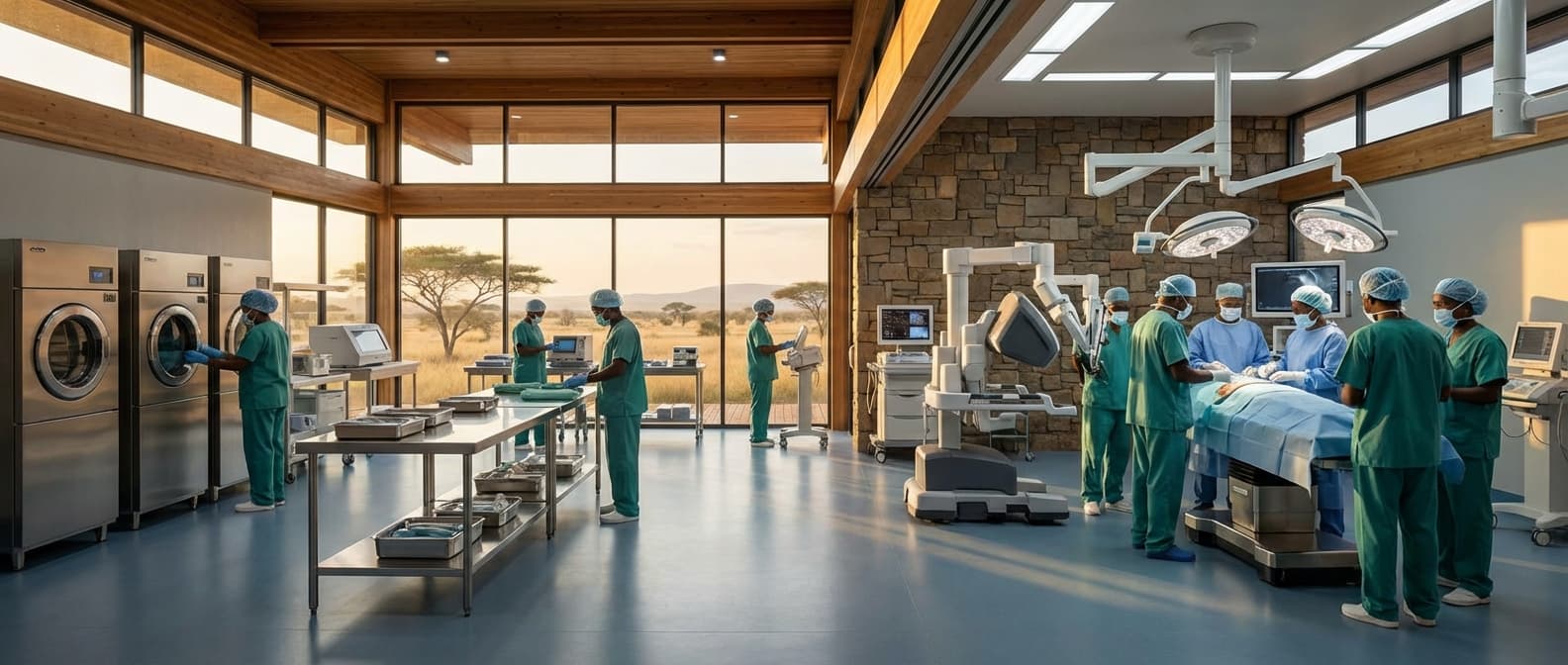
Endoscopy Reprocessing Validation in Madagascar
Engineering Excellence & Technical Support
AER validation, SOP development and compliance High-standard technical execution following OEM protocols and local regulatory frameworks.
Standardized Reprocessing Protocols
Implemented and validated standardized operating procedures (SOPs) for pre-cleaning, manual cleaning, high-level disinfection (HLD), and sterilization of flexible endoscopes, ensuring adherence to international best practices and local regulatory requirements in Madagascar.
Microbiological Validation Studies
Conducted rigorous microbiological validation studies, including bioburden testing and spore testing, to confirm the efficacy of validated reprocessing cycles against critical microorganisms, safeguarding patient safety in Madagascan healthcare facilities.
Quality Assurance & Monitoring Systems
Established a robust quality assurance and monitoring system, incorporating regular competency assessments for reprocessing staff, equipment calibration logs, and environmental monitoring, to ensure sustained compliance and optimal performance of endoscopy reprocessing in Madagascar.
What Is Endoscopy Reprocessing Validation In Madagascar?
Endoscopy reprocessing validation in Madagascar refers to the systematic process of verifying that flexible and rigid endoscopes, along with their accessories, are adequately cleaned and high-level disinfected (HLD) or sterilized after each patient use, according to established protocols and regulatory requirements. This validation is critical to prevent the transmission of infectious agents between patients and healthcare professionals, ensuring patient safety and compliance with infection control standards within Madagascan healthcare facilities. The service involves a multifaceted approach encompassing process assessment, environmental monitoring, and performance testing of reprocessing equipment and consumables.
| Who Needs Endoscopy Reprocessing Validation? | Typical Use Cases | |||
|---|---|---|---|---|
| Hospitals and Clinics: Public and private healthcare facilities performing endoscopic procedures (e.g., gastroenterology, pulmonology, urology, gynecology). | Endoscopic Procedure Rooms: Areas where flexible and rigid endoscopes are used on multiple patients. | Central Sterile Supply Departments (CSSDs): Departments responsible for the reprocessing of medical devices, including endoscopes. | Regulatory Bodies and Accreditation Agencies: For oversight and compliance verification. | Manufacturers of Endoscopes and Reprocessing Equipment: To ensure their products perform as intended in real-world settings. |
| Routine Quality Assurance: To confirm ongoing compliance with reprocessing standards and identify potential deviations. | Post-Incident Investigation: Following outbreaks or suspected cases of device-associated infections. | Introduction of New Equipment or Protocols: To validate the effectiveness of newly acquired reprocessing equipment, disinfectants, or updated procedures. | Before and After Accreditation/Certification Audits: To demonstrate adherence to required infection control practices. | As part of a Risk Management Program: To proactively identify and mitigate risks associated with inadequate endoscope reprocessing. |
Components of Endoscopy Reprocessing Validation
- Process Documentation Review: Evaluation of written policies and procedures for cleaning, HLD, and storage of endoscopes. This includes verification of adherence to manufacturer's instructions for use (IFUs) and relevant national/international guidelines.
- Cleaning Efficacy Testing: Assessment of the effectiveness of manual and automated cleaning processes. This often involves testing for the presence of residual organic matter (e.g., protein, hemoglobin, carbohydrates) on critical components of the endoscope.
- High-Level Disinfection/Sterilization Efficacy Testing: Verification of the microbicidal activity of the HLD agent or sterilization process. This can include direct challenge testing of the disinfectant/sterilant with a known microbial load or indirect monitoring of the process parameters (e.g., concentration, temperature, contact time).
- Endoscope Leak Testing: Ensuring the integrity of the endoscope's channels and exterior to prevent internal contamination during reprocessing.
- Water System Validation: Testing of the water used for rinsing endoscopes to ensure it meets microbiological standards (e.g., USP purified water or equivalent) to prevent recontamination.
- Environmental Monitoring: Assessment of the reprocessing environment for potential microbial contamination.
- Staff Competency Assessment: Evaluating the knowledge and practical skills of healthcare personnel involved in endoscopy reprocessing.
- Record Keeping and Traceability: Review of systems for documenting each reprocessing cycle and maintaining records for traceability.
Who Needs Endoscopy Reprocessing Validation In Madagascar?
Endoscopy reprocessing validation is a critical safety measure in healthcare settings to ensure that reusable endoscopic instruments are thoroughly cleaned and sterilized, minimizing the risk of healthcare-associated infections. In Madagascar, like in many developing nations, the availability of resources and adherence to international standards can be challenging. Therefore, identifying specific institutions and departments that would benefit most from robust reprocessing validation is crucial for targeted interventions and resource allocation.
| Department/Unit | Reason for Validation Need | Specific Endoscopes Involved |
|---|---|---|
| Gastroenterology Department | High volume of procedures (gastroscopy, colonoscopy), risk of transmitting gastrointestinal pathogens. | Gastroscopes, Colonoscopes, Duodenoscopes |
| Pulmonology Department | Bronchoscopies are common, potential for respiratory pathogen transmission. | Bronchoscopes |
| Urology Department | Cystoscopy, ureteroscopy, and other procedures carry infection risks. | Cystoscopes, Ureteroscopes, Nephroscopes |
| Gynecology Department | Hysteroscopy procedures require meticulous reprocessing. | Hysteroscopes |
| Central Sterile Supply Department (CSSD) / Sterilization Unit | Responsible for the overall reprocessing workflow; validation ensures their processes are effective. | All reusable endoscopic instruments |
| Infection Prevention and Control (IPC) Department | Oversees and monitors all aspects of infection control, including reprocessing. | All reusable endoscopic instruments |
| Operating Theatres | Endoscopic procedures performed during surgical interventions require validated reprocessing. | Laparoscopes, Arthroscopes, and other surgical endoscopes |
Target Customers & Departments for Endoscopy Reprocessing Validation in Madagascar
- {"title":"Hospitals (Public and Private)","description":"These are the primary sites where endoscopic procedures are performed. Ensuring validation here directly impacts patient safety."}
- {"title":"Specialty Clinics","description":"Clinics focusing on gastroenterology, pulmonology, urology, and gynecology often utilize endoscopes."}
- {"title":"Medical Training Institutions","description":"Teaching hospitals and universities that train medical professionals in endoscopy procedures. Proper reprocessing practices must be ingrained from the start."}
- {"title":"Government Health Ministries and Regulatory Bodies","description":"Responsible for setting and enforcing healthcare standards, including infection control protocols."}
- {"title":"Non-Governmental Organizations (NGOs) involved in Healthcare","description":"Organizations working to improve healthcare infrastructure and patient care in Madagascar."}
Endoscopy Reprocessing Validation Process In Madagascar
The Endoscopy Reprocessing Validation Process in Madagascar is a multi-stage workflow designed to ensure the safe and effective cleaning and disinfection of endoscopic equipment. This process is crucial for preventing healthcare-associated infections and maintaining patient safety. It begins with an initial inquiry and culminates in a validated reprocessing protocol. The workflow is structured to be thorough, documented, and compliant with national guidelines.
| Stage | Description | Key Activities | Responsible Parties | Deliverables |
|---|---|---|---|---|
| Initiation of the validation process by a healthcare facility or regulatory body. Focuses on understanding the scope, available resources, and specific reprocessing challenges. | Contacting relevant authorities, identifying the need for validation, assessing current reprocessing practices. | Healthcare Facility Management, Ministry of Health Representatives, Infection Control Teams. | Initial request for validation, assessment report of current practices. |
| Establishing the framework for the entire validation process, including objectives, methodologies, and acceptance criteria. | Reviewing international guidelines (e.g., WHO, CDC), adapting to local context, defining validation parameters (e.g., microbial load reduction). | Infection Control Committee, Technical Experts, Ministry of Health. | Draft validation protocol, outline of testing requirements. |
| Cataloging all endoscopic equipment and accessories requiring validation. This ensures all items are accounted for and their specific reprocessing needs are understood. | Listing all endoscopes (types, models), accessories, and associated reprocessing equipment (e.g., automated reprocessors, detergents). | Biomedical Engineering Department, Endoscopy Unit Staff, Infection Control. | Comprehensive inventory list of all reprocessed equipment. |
| Scrutinizing existing Standard Operating Procedures (SOPs) for cleaning and disinfection. SOPs are then refined to meet validation requirements and local conditions. | Analyzing current SOPs for step-by-step cleaning, disinfection, rinsing, and drying. Incorporating manufacturer's instructions for use (IFUs). | Endoscopy Unit Staff, Infection Control, Technical Advisors. | Revised and documented SOPs for each type of endoscope and accessory. |
| Defining the specific tests to be performed to confirm the efficacy of the reprocessing procedures. | Outlining microbiological challenge tests, chemical indicator use, visual inspection criteria, and documentation requirements. | Infection Control, Laboratory Technicians, Quality Assurance Team. | Detailed validation testing plan, including sampling methods and acceptance criteria. |
| Ensuring all personnel involved in reprocessing are adequately trained on the validated SOPs and testing procedures. | Conducting theoretical and practical training sessions, competency assessments, and providing refresher courses. | Infection Control, Senior Endoscopy Staff, External Trainers (if applicable). | Training records, competency evaluations, trained personnel. |
| Implementing the validation testing plan on actual reprocessing cycles. | Performing cleaning and disinfection according to the validated SOPs, collecting samples for microbiological analysis, using indicators, and documenting every step. | Endoscopy Unit Staff, Laboratory Technicians, Quality Assurance Personnel. | Raw data from microbiological tests, indicator results, process logs. |
| Systematically gathering and interpreting the results from all validation tests. | Compiling test results, comparing them against predefined acceptance criteria, identifying any deviations or areas of concern. | Laboratory Technicians, Infection Control, Data Analysts. | Comprehensive data analysis report, identification of trends and anomalies. |
| Creating a complete record of the entire validation process, from inquiry to results. | Compiling all SOPs, training records, test results, analysis, and a final validation report for submission. | Infection Control, Quality Assurance Department, Administration. | Final validation report, supporting documentation. |
| Formal recognition that the reprocessing procedures for specific endoscopic equipment have met the required standards. | Review of the final report by the Ministry of Health or designated authority. Issuance of a formal certificate. | Ministry of Health, National Regulatory Body, Accrediting Agency. | Official validation certificate. |
| Establishing a system for continuous quality assurance and periodic revalidation to maintain compliance. | Regular audits of reprocessing practices, ongoing staff training, scheduled revalidation cycles, and updates to SOPs based on new technologies or guidelines. | Infection Control Committee, Endoscopy Unit Management, Ministry of Health. | Periodic audit reports, updated validation status, revalidation certificates (if applicable). |
Endoscopy Reprocessing Validation Process Workflow in Madagascar
- Inquiry and Needs Assessment
- Protocol Development
- Equipment Identification and Inventory
- Standard Operating Procedure (SOP) Review and Customization
- Validation Testing Plan
- Staff Training
- Execution of Validation Testing
- Data Collection and Analysis
- Documentation and Reporting
- Validation Certificate Issuance
- Ongoing Monitoring and Revalidation
Endoscopy Reprocessing Validation Cost In Madagascar
Validating the reprocessing of endoscopic equipment in Madagascar involves several key cost factors. These costs are influenced by the complexity of the validation process, the type and number of endoscopes being validated, the availability and cost of specialized testing equipment, consumables, and the expertise of the personnel conducting the validation. Local currency (Malagasy Ariary - MGA) pricing can vary significantly depending on the provider, their overhead, and their specific service packages. A comprehensive validation typically includes biological and chemical indicator testing, leak testing, high-level disinfection efficacy verification, and documentation. Factors like geographic location within Madagascar (e.g., Antananarivo vs. more remote areas) can also impact travel and logistical expenses. It's crucial for healthcare facilities to obtain detailed quotes from multiple accredited or recognized service providers to ensure competitive pricing and thorough validation.
| Service Component | Estimated Cost Range (MGA) | Notes |
|---|---|---|
| Basic Validation (e.g., chemical indicator checks, leak testing for a single flexible endoscope) | 150,000 - 350,000 | May not include full biological indicator testing or detailed documentation. |
| Standard Validation (e.g., chemical/biological indicators, leak testing for multiple flexible endoscopes) | 400,000 - 1,000,000 | Includes essential tests and basic reporting. |
| Comprehensive Validation (e.g., full suite of tests, multiple endoscope types, detailed report, on-site service) | 800,000 - 2,500,000+ | Often includes travel costs and is tailored to specific hospital needs. Higher end for large facilities or complex equipment. |
| Revalidation/Troubleshooting (per instance) | 100,000 - 300,000 | For specific issues or follow-up testing. |
| Consumables (per set of indicators) | 50,000 - 150,000 | Cost varies by type and brand of indicator. |
| Travel and Logistics (per site visit, outside major city) | 75,000 - 250,000 | Dependent on distance and transportation methods. |
Key Factors Influencing Endoscopy Reprocessing Validation Costs in Madagascar
- Complexity of Validation Protocol: More rigorous protocols requiring multiple testing stages will incur higher costs.
- Number and Type of Endoscopes: Larger quantities and more sophisticated endoscopes (e.g., flexible vs. rigid, specialized imaging capabilities) generally lead to higher overall validation expenses.
- Availability and Cost of Testing Equipment: Access to calibrated and specialized equipment for leak testing, bioburden analysis, and chemical indicator efficacy is critical.
- Consumables and Reagents: The cost of biological indicators, chemical indicators, disinfectants, and other necessary supplies contributes to the overall price.
- Personnel Expertise and Labor: Skilled technicians and microbiologists are required for accurate validation, and their time and expertise are a significant cost component.
- Geographic Location and Logistics: Travel expenses to facilities outside major urban centers can increase costs due to transportation and accommodation.
- Service Provider Overhead: The operational costs of the validation service provider, including calibration, maintenance, and administrative expenses, are factored into pricing.
- Accreditation and Certification: Providers with recognized accreditations may command higher prices due to their adherence to international standards.
- Reporting and Documentation Standards: The level of detail and compliance required for validation reports can impact the time and resources allocated.
Affordable Endoscopy Reprocessing Validation Options
Ensuring the effective reprocessing of endoscopes is paramount to patient safety and preventing healthcare-associated infections. However, validation processes, particularly those involving costly external laboratory services, can strain hospital budgets. This document explores affordable endoscopy reprocessing validation options, focusing on value bundles and cost-saving strategies to achieve compliance without compromising quality or patient care.
| Strategy | Description | Cost-Saving Potential | Considerations |
|---|---|---|---|
| In-House Validation Programs | Establishing internal capabilities for certain validation tests (e.g., basic chemical indicator testing, monitoring of cleaning solution concentrations) using trained staff and readily available equipment. | Reduces reliance on expensive external laboratory services for routine testing. | Requires initial investment in training and potentially some equipment. Must adhere to manufacturer guidelines and regulatory requirements. |
| Value-Based Purchasing and Bundled Services | Negotiating contracts with reprocessing equipment manufacturers or third-party service providers that include validation testing as part of a broader service package (e.g., maintenance, repair, and validation). | Leverages bulk purchasing power and consolidates costs. Can offer predictable budgeting. | Requires careful contract review to ensure all necessary validation aspects are covered and that the bundled price is truly advantageous compared to à la carte options. |
| Strategic Sourcing of Reagents and Indicators | Purchasing cleaning agents, disinfectants, and validation indicators in bulk from reputable suppliers, potentially negotiating volume discounts. | Lower per-unit cost for essential reprocessing supplies and validation materials. | Requires diligent inventory management to avoid waste due to expiration. Ensure product quality and compliance with manufacturer recommendations. |
| Optimizing Water Quality Testing | Implementing regular in-house water quality testing (if feasible and manufacturer-approved) for AERs, rather than relying solely on external labs for every test. | Reduces recurring external laboratory fees for water testing. | Requires understanding of water quality parameters, acquisition of testing kits, and proper record-keeping. May not replace all external laboratory water testing requirements. |
| Leveraging AER Manufacturer Support and Training | Utilizing the validation support and training often provided by AER manufacturers as part of the equipment purchase or maintenance agreement. | May cover initial validation protocols or provide guidance on performing certain aspects internally. | Ensure the scope of manufacturer support aligns with all regulatory and hospital-specific validation needs. |
| Focusing on High-Risk Validation | Prioritizing and potentially outsourcing the most complex or critical validation tests (e.g., biological indicator testing for sterilization cycles) while performing simpler, more frequent tests in-house. | Allocates resources effectively by focusing external spending on high-impact validation requirements. | Requires a clear understanding of which validation tests are most critical for risk mitigation and regulatory compliance. |
Understanding Endoscope Reprocessing Validation
- Endoscope reprocessing validation confirms that the cleaning and disinfection/sterilization processes effectively eliminate or inactivate microorganisms.
- Regulatory bodies (e.g., FDA, CDC, Joint Commission) mandate these validation processes.
- Common validation methods include chemical indicator testing, biological indicator testing, and liquid chemical monitoring.
- Validation is crucial for ensuring the integrity of the reprocessing equipment (e.g., automated endoscope reprocessors - AERs) and the efficacy of the cleaning agents and disinfectants used.
- Failure to validate adequately can lead to non-compliance, patient harm, and financial penalties.
Verified Providers In Madagascar
In Madagascar, where access to reliable healthcare services is paramount, identifying verified providers is crucial for the well-being of individuals and communities. Franance Health stands out as a leading organization dedicated to ensuring that healthcare professionals and facilities meet stringent quality and ethical standards. This commitment to verification and excellence makes Franance Health credentials a significant indicator of trustworthiness and competence, representing the best choice for those seeking quality healthcare.
| Provider Type | Franance Health Verification Benefits | Why it's the Best Choice |
|---|---|---|
| Hospitals & Clinics | Ensures adherence to safety protocols, quality of equipment, and patient management standards. | Guarantees a safe and effective treatment environment with well-managed facilities. |
| Doctors & Specialists | Confirms legitimate medical degrees, specialized training, and ethical practice. | Provides assurance of competent medical expertise and professional conduct. |
| Laboratories & Diagnostic Centers | Verifies accuracy of testing procedures, use of calibrated equipment, and data integrity. | Ensures reliable and precise diagnostic results for accurate treatment planning. |
| Pharmaceuticals & Pharmacies | Checks for authenticity of medications, proper storage, and dispensing practices. | Guarantees access to safe and genuine medicines dispensed by qualified professionals. |
Why Franance Health Credentials Matter:
- Rigorous Vetting Process: Franance Health employs a comprehensive evaluation system that scrutinizes the qualifications, experience, and ethical standing of healthcare providers. This ensures that only the most competent and trustworthy professionals are accredited.
- Commitment to Quality Care: Holding a Franance Health credential signifies an adherence to high standards of patient care, safety, and medical ethics. This dedication translates into a superior healthcare experience for patients.
- Enhanced Patient Trust: For patients, Franance Health verification provides peace of mind. It offers a clear indicator of a provider's legitimacy and commitment to quality, fostering greater trust and confidence in the healthcare services received.
- Promoting Excellence in Healthcare: By setting and upholding these benchmarks, Franance Health actively contributes to raising the overall quality and reliability of healthcare services available in Madagascar, benefiting the entire population.
- Access to Reliable Information: Franance Health provides a transparent platform where individuals can identify accredited providers, making informed decisions about their healthcare needs.
Scope Of Work For Endoscopy Reprocessing Validation
This Scope of Work (SOW) outlines the requirements for validating the reprocessing of flexible endoscopes. The validation process aims to confirm that the implemented reprocessing procedures effectively remove and kill microorganisms to prevent patient-to-patient transmission of infectious agents. This document details the technical deliverables and standard specifications to be met.
| Deliverable Category | Specific Deliverable | Description | Standard Specification / Acceptance Criteria | Timeline (Example) |
|---|---|---|---|---|
| Validation Protocol | Endoscope Reprocessing Validation Protocol | Detailed document outlining the validation methodology, including scope, study design, materials, methods, acceptance criteria, and reporting requirements. | Protocol must be reviewed and approved by relevant stakeholders (e.g., Infection Prevention, Clinical Engineering, Quality Assurance). | Week 1-2 |
| Reagent/Media Preparation | Microbiological Growth Media | Preparation and quality control of microbiological media used for testing the efficacy of the HLD or sterilization process. | Media must be sterile and meet manufacturer's specifications for growth promotion. Lot numbers and expiry dates to be documented. | Ongoing |
| Cleaning Efficacy Testing | Bioburden Testing (Pre-HLD/Sterilization) | Quantification of organic soil (e.g., protein, carbohydrates, hemoglobin) remaining on the endoscope lumens after manual cleaning. | Protein levels < 200 µg per lumen. Carbohydrate levels < 1 mg per lumen. Hemoglobin levels < 10 µg per lumen. (Based on AAMI ST91 or equivalent). | Week 3-4 |
| Disinfection/Sterilization Efficacy Testing | Microbiological Challenge Study | Inoculation of endoscope lumens with known concentrations of specific microorganisms (e.g., Pseudomonas aeruginosa, Mycobacterium terrae, Geobacillus stearothermophilus for sterilization). | Demonstrate a log reduction of ≥ 5 for HLD (or inactivation equivalent). For sterilization, demonstrate absence of viable organisms (SAL 10⁻⁶). | Week 5-7 |
| Endoscope Integrity Testing | Visual Inspection & Leak Testing | Post-reprocessing inspection of endoscope for visual damage, and leak testing to ensure no fluid ingress. | No visible damage to optics, connectors, or outer surfaces. No fluid detected in the endoscope during leak testing. | Ongoing |
| Documentation & Reporting | Validation Report | Comprehensive report detailing the validation results, including raw data, statistical analysis, deviations, and conclusions. | Report must include all protocol-specified sections, signed and dated by the validation team. Must clearly state whether the reprocessing process is validated. | Week 8-9 |
| Validation Summary | Validation Certificate | Formal document confirming the successful validation of the endoscope reprocessing process. | Signed by authorized personnel, referencing the validation report. | Week 10 |
| Ongoing Monitoring | Routine Monitoring Data Review | Periodic review of routine reprocessing quality control data (e.g., chemical indicator results, cleaning indicator performance). | All routine QC data to be within acceptable parameters as defined in the approved reprocessing manual. | Ongoing (e.g., monthly) |
Key Objectives
- To verify the efficacy of manual and automated endoscope cleaning procedures.
- To validate the effectiveness of high-level disinfection (HLD) or sterilization processes.
- To ensure the integrity of the endoscope after the reprocessing cycle.
- To establish objective criteria for acceptable reprocessing outcomes.
- To comply with relevant regulatory standards and guidelines.
Service Level Agreement For Endoscopy Reprocessing Validation
This Service Level Agreement (SLA) outlines the response times and uptime guarantees for the Endoscopy Reprocessing Validation service. This service ensures the operational readiness and compliance of endoscopy reprocessing equipment through scheduled validation procedures and immediate response to critical failures.
| Service Category | Response Time Objective (Business Hours) | Uptime Guarantee | Notes |
|---|---|---|---|
| Scheduled Validation Procedures | 72 hours prior notification required for scheduling. | N/A (Service dependent on client availability and equipment readiness) | Validation procedures are performed during agreed-upon scheduled maintenance windows. |
| Critical Equipment Failure (e.g., validation failure preventing reprocessing) | 2 hours (for initial remote assessment and dispatch) | 98% Uptime (measured monthly across all validated equipment) | Includes remote troubleshooting, on-site technician dispatch if necessary. |
| Non-Critical Equipment Malfunction (e.g., reporting errors, minor calibration drift) | 8 business hours (for initial remote assessment) | 98% Uptime (measured monthly across all validated equipment) | Includes remote troubleshooting. On-site support may be scheduled if remote resolution is not possible. |
| System Availability (for remote monitoring and reporting portal) | N/A | 99.5% Uptime (measured monthly) | Excludes scheduled maintenance windows, which will be communicated 48 hours in advance. |
Key Service Components
- Scheduled Validation Procedures
- On-Demand Validation Testing
- Remote Monitoring and Alerting
- On-Site Support and Repair (for critical failures)
Frequently Asked Questions

Ready when you are
Let's scope your Endoscopy Reprocessing Validation in Madagascar project in Madagascar.

Scaling healthcare logistics and technical systems across the entire continent.