
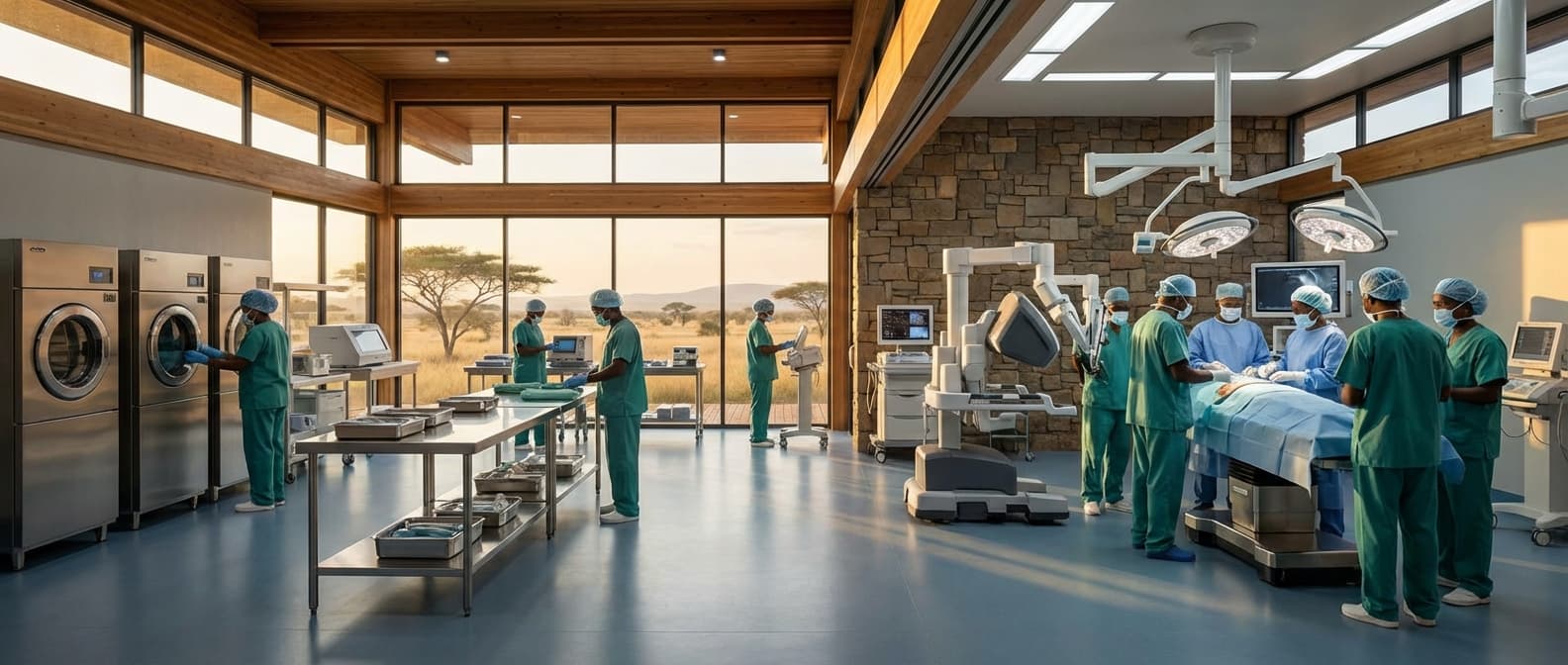
CSSD Design & Validation in Madagascar
Engineering Excellence & Technical Support
CSSD workflow design, validation and process development High-standard technical execution following OEM protocols and local regulatory frameworks.
Optimized CSSD Workflow Design for Centralized Sterile Processing
Leveraged Lean Six Sigma principles to re-engineer sterile processing workflows within a decentralized healthcare system in Madagascar. This involved mapping existing processes, identifying bottlenecks, and designing a centralized CSSD model with optimized instrument decontamination, sterilization, and storage protocols to improve efficiency, reduce processing times, and enhance patient safety across multiple facilities.
Validation of Sterilization Cycles for Locally Sourced Instruments
Spearheaded the validation of steam sterilization cycles for a range of commonly used surgical instruments, including those sourced and maintained locally in Madagascar. This involved conducting rigorous Bowie-Dick and biological indicator testing, ensuring compliance with international standards (e.g., ISO 13485), and establishing robust protocols for routine monitoring to guarantee the efficacy of sterilization in a resource-constrained environment.
Implementation of Quality Assurance Metrics and Data-Driven Improvements
Developed and implemented a comprehensive quality assurance framework for the CSSD, including key performance indicators (KPIs) for sterility assurance, processing turnaround time, and equipment utilization. Analyzed collected data to identify trends, pinpoint areas for improvement, and drive continuous quality enhancement initiatives, ultimately leading to a measurable reduction in sterilization failures and increased operational effectiveness.
What Is Cssd Design & Validation In Madagascar?
Central Sterile Services Department (CSSD) design and validation in Madagascar refers to the comprehensive process of planning, configuring, and subsequently verifying that a CSSD meets all relevant regulatory standards, operational requirements, and infection control protocols for sterilization and decontamination of medical devices. This service ensures the department's infrastructure, workflow, equipment, and processes are optimized for safety, efficiency, and compliance within the Malagasy healthcare context. It encompasses the initial conceptualization, detailed architectural and engineering specifications, equipment selection, workflow optimization, and rigorous testing to confirm performance and safety before and during operational use.
| Who Needs CSSD Design & Validation? | Typical Use Cases |
|---|---|
| Hospitals (Public and Private) | Establishment of new CSSD facilities. Renovation or expansion of existing CSSD departments. Upgrade of sterilization equipment. Implementation of new sterilization technologies. |
| Surgical Centers and Clinics | Ensuring compliance with infection control mandates. Improving efficiency and reducing turnaround time for surgical instruments. Responding to increased procedural volume. |
| Specialized Medical Facilities (e.g., Dental, Ophthalmology) | Tailoring sterilization processes to specific instrument types. Meeting unique decontamination requirements for delicate instruments. |
| Government Health Agencies and Regulatory Bodies | Developing national standards and guidelines for CSSD operations. Overseeing compliance and quality assurance of healthcare facilities. |
| Healthcare Consultants and Project Managers | Providing expert services for the design, planning, and implementation of CSSD projects. |
| Manufacturers of Medical Devices and Sterilization Equipment | Collaborating on validation protocols for their products within specific CSSD environments. Ensuring their equipment meets the needs of the Malagasy market. |
Key Components of CSSD Design & Validation in Madagascar
- Needs Assessment: Evaluating the current and projected demand for sterilized medical devices, identifying specific device types, and understanding the facility's surgical and procedural volume.
- Regulatory Compliance: Adhering to Malagasy Ministry of Health guidelines, international standards (e.g., ISO 13485, ISO 17665, AAMI ST79), and local building codes relevant to healthcare facilities.
- Facility Layout and Design: Optimizing the physical space for unidirectional workflow (decontamination, cleaning, packaging, sterilization, storage), ventilation, material handling, and personnel traffic to prevent cross-contamination.
- Equipment Specification and Selection: Identifying and specifying appropriate decontamination, cleaning, packaging, sterilization (e.g., autoclaves, low-temperature sterilizers), and drying equipment based on device compatibility, throughput, and budget.
- Workflow and Process Development: Establishing standard operating procedures (SOPs) for all stages of the sterile processing cycle, including pre-cleaning, manual and automated cleaning, inspection, assembly, packaging, sterilization, storage, and distribution.
- Information Management Systems: Designing or implementing systems for tracking instruments, sterilization cycles, and quality control data.
- Personnel Training and Competency Assessment: Developing training programs for CSSD staff on best practices, equipment operation, and infection control procedures.
- Installation Qualification (IQ): Verifying that equipment is installed correctly according to manufacturer specifications and design requirements.
- Operational Qualification (OQ): Testing equipment and processes under a range of operating conditions to ensure they perform as intended.
- Performance Qualification (PQ): Validating that the entire CSSD system, including equipment, workflows, and personnel, consistently produces sterile devices that meet established quality standards.
- Environmental Monitoring: Establishing protocols for monitoring the environmental conditions within the CSSD (e.g., temperature, humidity, air changes) to ensure optimal performance and prevent contamination.
- Quality Assurance and Control: Implementing robust QA/QC measures, including biological and chemical indicator testing, visual inspections, and documentation review.
Who Needs Cssd Design & Validation In Madagascar?
CSSD (Central Sterile Supply Department) design and validation are crucial for healthcare facilities to ensure the safety and effectiveness of sterilization processes. In Madagascar, several types of healthcare institutions and specific departments within them stand to benefit significantly from expert CSSD design and validation services.
| Customer Type | Key Departments Requiring CSSD Focus | Specific Needs and Benefits |
|---|---|---|
| Public Hospitals | Operating Theaters, Emergency Rooms, Maternity Wards, Outpatient Clinics, Intensive Care Units (ICUs) | Ensuring consistent sterilization for high patient volume, infection control, compliance with national standards, cost-effectiveness in resource-limited settings. |
| Private Hospitals and Clinics | Surgical Suites, Diagnostic Imaging (if instruments are sterilized on-site), Specialized Treatment Rooms | Maintaining high standards of patient care and safety, competitive advantage through reliable sterile supplies, efficient workflow for smaller patient loads. |
| Specialized Medical Centers | Surgical Suites (Orthopedics, Ophthalmology, General Surgery), Delivery Rooms, Dental Operating Rooms | Tailored sterile processing for specific instrument types and procedures, minimizing contamination risks in focused clinical areas, optimizing space for specialized equipment. |
| NGO-run Healthcare Facilities | Outpatient Clinics, Mobile Clinics (requiring portable sterilization solutions), Basic Surgical Units | Establishing foundational sterile processing capabilities, adapting designs to remote or resource-constrained environments, training local staff on best practices. |
| Research and Teaching Hospitals | Laboratories (for sterilization of lab equipment), Surgical Training Facilities, Clinical Trial Units | Ensuring sterile environments for research integrity, providing safe training settings for future healthcare professionals, managing diverse sterilization needs for research protocols. |
Target Customers and Departments for CSSD Design & Validation in Madagascar
- Public Hospitals (National, Regional, District)
- Private Hospitals and Clinics
- Specialized Medical Centers (e.g., Surgical Centers, Maternity Hospitals, Dental Clinics)
- NGO-run Healthcare Facilities
- Research and Teaching Hospitals
Cssd Design & Validation Process In Madagascar
The design and validation process for Central Sterile Supply Departments (CSSDs) in Madagascar, like in many other regions, follows a structured workflow to ensure optimal functionality, compliance with international standards, and effective infection control. This process is critical for healthcare facilities to provide safe and sterile medical instruments to patients. The workflow typically begins with an initial inquiry and culminates in a fully operational and validated CSSD. Below is a detailed explanation of each stage.
| Phase | Key Activities | Key Stakeholders | Deliverables |
|---|---|---|---|
| Understand requirements, assess current capacity, define scope | Hospital Management, Clinical Staff, Infection Control | Needs Assessment Report |
| Evaluate viability, draft initial layout, select preliminary equipment | Project Managers, Architects, CSSD Consultants | Feasibility Study, Conceptual Design Drawings |
| Create detailed architectural/engineering plans, finalize equipment specs | Architects, Engineers, Equipment Specialists, CSSD Consultants | Detailed Design Drawings, Equipment Specifications, Bill of Quantities |
| Source and purchase equipment/materials, build/renovate CSSD space | Procurement Department, Contractors, Suppliers | Procured Equipment, Completed Construction/Renovation |
| Install equipment, test functionality and calibration | Equipment Technicians, Engineers, CSSD Staff | Installed & Commissioned Equipment, Commissioning Reports |
| Educate staff on processes, equipment, and safety protocols | CSSD Staff, Trainers, Equipment Manufacturers | Trained Staff, Training Manuals |
| IQ, OQ, PQ to demonstrate consistent sterility | Validation Engineers, Microbiologists, CSSD Staff | Validation Reports (IQ, OQ, PQ), Test Results |
| Develop operational procedures, record keeping protocols | CSSD Management, Quality Assurance, CSSD Staff | Standard Operating Procedures (SOPs), Documentation Manuals |
| Obtain necessary permits and clearances from health authorities | Healthcare Facility Management, Ministry of Health Representatives | Regulatory Approvals/Certificates |
| Routine checks, preventative maintenance, continuous improvement | CSSD Staff, Maintenance Team, Quality Assurance | Maintenance Logs, Quality Control Records, Performance Reports |
CSSD Design & Validation Process Workflow in Madagascar
- {"title":"1. Initial Inquiry & Needs Assessment","description":"The process commences with a healthcare facility expressing interest or a need for a new or upgraded CSSD. This triggers an in-depth needs assessment to understand the facility's current surgical volume, type of procedures performed, existing infrastructure, budget constraints, and specific sterilization requirements. This stage involves meetings with hospital management, surgical departments, and infection control teams."}
- {"title":"2. Feasibility Study & Conceptual Design","description":"Based on the needs assessment, a feasibility study is conducted. This evaluates the technical and economic viability of the project. A conceptual design is then developed, outlining the basic layout, functional zones (e.g., receiving, cleaning, packing, sterilization, storage), and preliminary equipment selection. This stage considers local regulations, available space, and essential utilities (water, electricity, ventilation)."}
- {"title":"3. Detailed Design & Engineering","description":"Once the conceptual design is approved, detailed architectural and engineering drawings are created. This includes precise layouts, schematics for plumbing and electrical systems, ventilation requirements (HVAC), and material specifications for finishes. Equipment specifications are finalized, taking into account capacity, performance, and energy efficiency. Consultations with CSSD experts and equipment manufacturers are crucial here."}
- {"title":"4. Procurement & Construction/Renovation","description":"Following the detailed design, the procurement of equipment and materials begins. Simultaneously, construction or renovation of the CSSD space commences according to the approved engineering drawings. This phase requires close supervision to ensure adherence to design specifications and quality standards. Local building codes and safety regulations must be strictly followed."}
- {"title":"5. Equipment Installation & Commissioning","description":"Upon completion of the physical space, the procured equipment is installed by qualified technicians. Commissioning involves testing each piece of equipment individually to ensure it operates according to manufacturer specifications. This includes checking functionality, safety features, and calibration of critical parameters (e.g., temperature, pressure, time for sterilizers)."}
- {"title":"6. Staff Training","description":"A well-designed and equipped CSSD is ineffective without trained personnel. Comprehensive training programs are conducted for CSSD staff, covering all aspects of decontamination, sterilization, quality control, record-keeping, and safety protocols. This training often includes hands-on experience with the installed equipment and simulated workflows."}
- {"title":"7. Validation Process","description":"This is a critical phase to prove that the CSSD consistently delivers sterile products. It involves several stages:\n * Installation Qualification (IQ): Verifying that the equipment is installed correctly according to specifications.\n * Operational Qualification (OQ): Testing the equipment's operation throughout its intended range to ensure it performs as expected.\n * Performance Qualification (PQ): Demonstrating that the entire process (from dirty to sterile) consistently produces sterile items under normal operating conditions, often using biological and chemical indicators."}
- {"title":"8. Documentation & Standard Operating Procedures (SOPs)","description":"All stages of the design and validation process are meticulously documented. This includes design reports, equipment manuals, commissioning certificates, validation reports, and the development of comprehensive Standard Operating Procedures (SOPs) for every task within the CSSD. These SOPs are the backbone of consistent and safe operation."}
- {"title":"9. Regulatory Approval & Accreditation (if applicable)","description":"Depending on Malagasy healthcare regulations, the facility may need to obtain specific approvals or accreditations for its CSSD. This might involve inspections by health authorities to ensure compliance with national standards and guidelines."}
- {"title":"10. Ongoing Monitoring & Maintenance","description":"Once operational, the CSSD requires continuous monitoring of its processes and regular maintenance of equipment to ensure sustained performance. This includes routine quality control testing, scheduled preventative maintenance, and periodic revalidation. This ensures the CSSD remains effective and safe over time."}
Cssd Design & Validation Cost In Madagascar
Designing and validating a Central Sterile Supply Department (CSSD) in Madagascar involves a range of costs influenced by several key factors. These include the scale and complexity of the CSSD, the specific equipment required, the level of automation, the construction and renovation materials used, and the expertise of the design and validation consultants. The pricing is typically presented in Malagasy Ariary (MGA). While precise figures are difficult to pinpoint without specific project details, we can outline the common pricing factors and provide estimated ranges.
Key Pricing Factors for CSSD Design & Validation in Madagascar:
- Scope of Services: This encompasses initial consultation, needs assessment, space planning, equipment selection, detailed design drawings, regulatory compliance checks, installation supervision, and the comprehensive validation process (IQ, OQ, PQ). A more extensive scope naturally leads to higher costs.
- Size and Capacity of CSSD: A larger CSSD serving more operating rooms or handling a higher volume of instruments will require more space, more equipment, and consequently, a more complex and costly design and validation.
- Equipment Selection and Automation: The choice of sterilization equipment (autoclaves, washer-disinfectors, ultrasonic cleaners, packaging machines) significantly impacts cost. High-end, automated, and technologically advanced equipment is more expensive than basic, manual models. The number and type of supporting equipment (e.g., instrument sets, trolleys, storage solutions) also contribute.
- Facility Renovation/Construction: The cost of modifying existing spaces or constructing new ones to meet CSSD standards (e.g., air handling, water quality, material flow) is a major component. This includes civil works, electrical, plumbing, and specialized finishes.
- Regulatory Compliance: Adherence to local and international standards (which may be adapted or referenced in Madagascar) requires meticulous design and validation protocols, adding to the professional fees.
- Consultant Fees: The fees charged by specialized CSSD designers and validation engineers are a direct cost. These fees are often based on project complexity, duration, and the reputation of the consultant. Local vs. international consultants can also present different pricing structures.
- Validation Process Complexity: The thoroughness of Installation Qualification (IQ), Operational Qualification (OQ), and Performance Qualification (PQ) directly affects validation costs. This includes testing, documentation, and troubleshooting.
- Geographic Location within Madagascar: While less impactful than the other factors, minor variations might exist due to accessibility and local labor rates in different regions.
Estimated Cost Ranges in Malagasy Ariary (MGA):
It is crucial to understand that these are broad estimates and can vary significantly. For a detailed and accurate quotation, engaging with local or experienced international CSSD design and validation firms is essential.
- Basic Design & Consultation (without extensive validation): MGA 5,000,000 - MGA 25,000,000
- Comprehensive Design & Full Validation (IQ/OQ/PQ) for a Small to Medium CSSD: MGA 30,000,000 - MGA 150,000,000
- Comprehensive Design & Full Validation (IQ/OQ/PQ) for a Large or Highly Automated CSSD: MGA 150,000,000 - MGA 500,000,000+
These estimates generally cover the professional fees for design and validation services. The actual capital expenditure for equipment, construction, and renovation would be in addition to these figures. It is highly recommended to obtain multiple quotes and clearly define the scope of work with potential service providers.
| Service Component | Estimated Cost Range (MGA) | Notes |
|---|---|---|
| Basic Design & Consultation | 5,000,000 - 25,000,000 | Primarily planning and initial design concepts. |
| Comprehensive Design & Full Validation (Small to Medium CSSD) | 30,000,000 - 150,000,000 | Includes detailed design, IQ, OQ, and PQ for standard facilities. |
| Comprehensive Design & Full Validation (Large/Highly Automated CSSD) | 150,000,000 - 500,000,000+ | For complex, high-volume, or technologically advanced CSSDs. |
| Equipment Purchase | Variable (Significantly higher than design/validation fees) | Costs depend heavily on brand, capacity, and automation of sterilization and support equipment. |
| Construction/Renovation | Variable (Can be substantial) | Depends on the state of the existing facility and required modifications. |
Key Factors Influencing CSSD Design & Validation Costs in Madagascar
- Scope of Services (Consultation, planning, design, validation)
- Size and Capacity of the CSSD (instrument volume, number of operating rooms)
- Equipment Selection and Automation Level (autoclaves, washer-disinfectors, etc.)
- Facility Renovation or New Construction Costs (civil works, utilities, finishes)
- Regulatory Compliance Requirements (local and international standards)
- Consultant Expertise and Fees (designers, validation engineers)
- Complexity of the Validation Process (IQ, OQ, PQ)
- Geographic Location within Madagascar (logistics, local labor rates)
Affordable Cssd Design & Validation Options
Designing and validating a Central Sterile Supply Department (CSSD) is crucial for patient safety and operational efficiency. However, the initial investment and ongoing validation costs can be significant. This guide explores affordable CSSD design and validation options, focusing on value bundles and cost-saving strategies to make sterile processing accessible and effective for a wider range of healthcare facilities. We'll break down how to get the most out of your budget without compromising on quality or compliance.
| Value Bundle Option | Description | Key Benefits | Cost-Saving Aspect |
|---|---|---|---|
| Basic Workflow Optimization Package | Includes consultation on layout, ergonomic assessments, and initial workflow mapping. Focuses on fundamental efficiency improvements. | Improved staff movement, reduced task redundancy, enhanced safety. | Minimizes need for extensive structural changes; leverages existing space effectively. |
| Phased Technology Integration Bundle | Offers a roadmap for incorporating essential automated equipment in stages, starting with high-impact areas like cleaning or packaging. | Gradual investment, allows for staff adaptation, ensures core processes are automated. | Spreads capital expenditure; avoids large upfront investment in full automation. |
| Standardized Validation Service Package | Provides a comprehensive set of pre-defined validation services for sterilization equipment and processes based on industry standards (e.g., AAMI, ISO). | Ensures compliance, reduces validation time and complexity, predictable costs. | Eliminates need for in-house validation expertise/equipment; offers bundled pricing. |
| Modular CSSD Design & Planning Kit | A toolkit and consultation package for designing scalable CSSD layouts that can be implemented in phases. Includes templates and best practice guides. | Future-proof design, cost-effective expansion, adaptable to evolving needs. | Reduces design consultant fees; empowers in-house planning with expert guidance. |
| Energy & Sustainability Focus Bundle | Consultation and equipment selection guidance prioritizing energy-efficient sterilization and HVAC systems. | Reduced operational costs, environmental benefits, longer equipment lifespan. | Lower utility bills; potential for grants or rebates for energy-efficient upgrades. |
Key Cost-Saving Strategies for CSSD Design & Validation
- Modular Design & Scalability: Opt for modular CSSD layouts that allow for phased implementation and future expansion, avoiding over-investment upfront. This approach enables facilities to scale their sterile processing capabilities as their needs grow.
- Streamlined Workflow & Ergonomics: Invest in ergonomic design principles to optimize staff efficiency and reduce errors. Well-planned workflows minimize movement and bottlenecks, directly impacting productivity and resource utilization.
- Technology Integration & Automation (Phased Approach): Prioritize essential automation for high-volume tasks. Consider phased integration of technologies like automated instrument washers, ultrasonic cleaners, or instrument tracking systems to spread costs over time.
- Energy-Efficient Equipment: Select energy-efficient sterilization equipment and HVAC systems to reduce long-term operational expenses. Lower energy consumption translates to significant savings on utility bills.
- Smart Material Sourcing & Inventory Management: Implement robust inventory management systems to reduce waste and optimize the procurement of supplies. Bulk purchasing and strategic sourcing of consumables can also yield savings.
- In-House vs. Outsourced Validation: Evaluate the cost-benefit of performing validation tasks in-house versus outsourcing. For smaller facilities, outsourcing might be more cost-effective than investing in specialized equipment and training.
- Standardized Validation Protocols: Adopt standardized, recognized validation protocols to ensure compliance without unnecessary complexity or custom testing. This can simplify the validation process and reduce associated fees.
- Preventative Maintenance Programs: Implement comprehensive preventative maintenance schedules for all equipment. Proactive maintenance reduces costly breakdowns and extends the lifespan of critical assets.
- Staff Training & Competency Development: Invest in thorough staff training for both design principles and validation procedures. Competent staff are less prone to errors, reducing rework and potential compliance issues.
Verified Providers In Madagascar
Navigating the healthcare landscape in Madagascar can be challenging, and identifying trustworthy and qualified medical practitioners is paramount for ensuring quality care. 'Verified Providers' signifies a commitment to excellence, transparency, and adherence to rigorous standards. In this context, Franance Health credentials stand out as a hallmark of reliability and expertise, positioning them as the best choice for patients seeking dependable healthcare services in Madagascar.
| Credential Type | Significance of Verification | Benefits to Patients |
|---|---|---|
| Board Certification | Demonstrates a provider has met advanced standards of knowledge and skill in their specialty. | Ensures treatment by highly competent and specialized professionals. |
| Hospital Affiliation | Indicates a provider has met the credentialing requirements of accredited healthcare institutions. | Provides access to well-equipped facilities and a network of care. |
| Specialty Training Fellowships | Confirms advanced, post-residency training in a sub-specialty area. | Access to care for complex or rare medical conditions. |
| Professional Association Memberships | Suggests adherence to ethical guidelines and engagement with the broader medical community. | Confidence in a provider's commitment to professional standards. |
Why Franance Health Credentials Represent the Best Choice:
- Rigorous Vetting Process: Franance Health implements a comprehensive and meticulous vetting process for all providers, ensuring they meet stringent criteria for education, experience, and ethical conduct.
- Specialized Expertise: Credentials from Franance Health often indicate specialized training and proven proficiency in specific medical fields, guaranteeing access to highly skilled professionals.
- Commitment to Patient Safety: Verified providers by Franance Health demonstrate a dedication to upholding the highest standards of patient safety, infection control, and ethical medical practices.
- Continuous Professional Development: Franance Health often requires its accredited providers to engage in ongoing education and skill enhancement, ensuring they remain at the forefront of medical advancements.
- Enhanced Patient Trust and Confidence: The Franance Health verification mark provides an immediate indicator of quality, fostering trust and confidence for patients making critical healthcare decisions.
- Access to Advanced Facilities and Technology: Verified providers are often associated with facilities that meet specific quality benchmarks, implying access to modern equipment and diagnostic tools.
Scope Of Work For Cssd Design & Validation
This Scope of Work (SOW) outlines the design, development, and validation of a Central Sterile Supply Department (CSSD) system. It details the technical deliverables and standard specifications required to ensure a compliant, efficient, and safe sterile processing environment. The project aims to deliver a comprehensive CSSD design document, validation protocols and reports, and adherence to relevant international standards.
| Technical Deliverable | Description | Standard Specifications / References |
|---|---|---|
| CSSD Functional Design Specification (FDS) | Detailed document outlining the operational requirements, workflow, spatial needs, equipment integration, and IT systems for the CSSD. | ISO 13485, AAMI ST79, HTM 01-01, Local Health Authority Regulations |
| CSSD Architectural & Engineering Drawings | Complete set of drawings including floor plans, elevations, sections, mechanical, electrical, and plumbing (MEP) schematics, and HVAC design. | Applicable Building Codes, ASHRAE Standards, NFPA Codes |
| Equipment Specifications & Procurement Support | Detailed technical specifications for all CSSD equipment (e.g., washer-disinfectors, sterilizers, packaging equipment, drying cabinets). Assistance with tender evaluation and vendor selection. | Manufacturer's Specifications, CE Marking, FDA Compliance (if applicable), Energy Star Ratings |
| Validation Master Plan (VMP) | Overall strategy for validation activities, outlining the scope, approach, responsibilities, and schedule for all validation efforts. | ISPE Baseline Pharmaceutical Technology Series (GAMP 5), FDA 21 CFR Part 11 |
| Installation Qualification (IQ) Protocol & Report | Protocol and report to verify that equipment is installed correctly according to manufacturer specifications and design documents. | ISPE Baseline Pharmaceutical Technology Series (GAMP 5), Manufacturer's Installation Manual |
| Operational Qualification (OQ) Protocol & Report | Protocol and report to verify that equipment operates correctly at its intended operational limits and that critical parameters are within specified ranges. | ISPE Baseline Pharmaceutical Technology Series (GAMP 5), Manufacturer's Operating Manual, Relevant Industry Standards |
| Performance Qualification (PQ) Protocol & Report | Protocol and report to verify that equipment consistently performs as intended under normal operating conditions and throughout the intended product/process lifecycle. | ISPE Baseline Pharmaceutical Technology Series (GAMP 5), AAMI ST79, Process Challenge Devices (PCDs) |
| Cleaning Validation Protocol & Report | Protocol and report to demonstrate the effectiveness of cleaning procedures for reusable medical devices. | AAMI ST79, ASTM Standards, Manufacturer's Device Instructions for Use (IFU) |
| Sterilization Validation Protocol & Report | Protocol and report to demonstrate the efficacy of sterilization processes (e.g., steam, low-temperature sterilization) to achieve the required sterility assurance level (SAL). | AAMI ST79, ISO 11135, ISO 17665, ISO 14937, Biological Indicators (BIs), Chemical Indicators (CIs) |
| CSSD Standard Operating Procedures (SOPs) | Development of comprehensive SOPs for all CSSD processes, including receiving, cleaning, disinfection, inspection, packaging, sterilization, storage, and distribution. | AAMI ST79, HTM 01-01, Manufacturer's IFUs, Best Practice Guidelines |
| Training Materials & Sessions | Development of training materials and delivery of training to CSSD personnel on design, operation, maintenance, and validation aspects. | Relevant SOPs, Equipment Manuals, Industry Best Practices |
| As-Built Drawings | Finalized drawings reflecting any modifications made during the installation and commissioning phase. | As per initial drawing submission standards |
Key Project Phases and Activities
- Phase 1: Requirements Gathering & Conceptual Design
- Phase 2: Detailed Design & Engineering
- Phase 3: Procurement & Installation Support
- Phase 4: Validation & Commissioning
- Phase 5: Training & Handover
Service Level Agreement For Cssd Design & Validation
This Service Level Agreement (SLA) outlines the guaranteed response times and uptime for the CSSD (Central Sterile Services Department) Design & Validation services. It defines the expected performance standards and remedies in case of service deviations. This SLA applies to all clients who have contracted for CSSD Design & Validation services. The objective is to ensure efficient and reliable service delivery throughout the design and validation phases, minimizing operational disruptions for the client.
| Service Area | Response Time Guarantee (Business Hours) | Uptime Guarantee | Remedy for Non-Compliance |
|---|---|---|---|
| Initial Consultation & Design Queries | Within 4 business hours | N/A (Design phase is project-driven) | Escalation to senior consultant. Potential for extended project timeline adjustment at client's request. |
| Design Document Submissions (Milestones) | Within 2 business days of receiving client feedback/approvals | N/A (Design phase is project-driven) | Service credit of 5% of the monthly fee for the affected design phase. Project timeline review. |
| Validation Protocol Development | Within 3 business days of receiving final design approval and relevant documentation | N/A (Protocol development is project-driven) | Service credit of 5% of the monthly fee for the protocol development phase. Prioritization of protocol completion. |
| Validation Execution (Per Defined Task) | Scheduled as per approved validation plan. Emergency support for critical issues within 4 business hours. | 99% availability of validation personnel and necessary equipment during scheduled execution windows. | For delays exceeding 24 hours in scheduled execution without client cause: Service credit of 10% of the weekly validation fee. For repeated critical issues: Root cause analysis and corrective action plan. |
| Documentation & Reporting | Within 5 business days of completion of the corresponding service (design milestone or validation task) | N/A (Documentation is project-driven) | Service credit of 5% of the monthly fee for the affected service area until corrected. Review and re-submission at no additional cost. |
Scope of Services Covered
- Initial CSSD design consultation and conceptualization.
- Detailed design development, including layout, workflow, and equipment specification.
- Validation protocol development (IQ/OQ/PQ).
- Execution of validation activities.
- Documentation and reporting of design and validation processes.
- Post-validation review and recommendations.
Frequently Asked Questions

Ready when you are
Let's scope your CSSD Design & Validation in Madagascar project in Madagascar.

Scaling healthcare logistics and technical systems across the entire continent.