
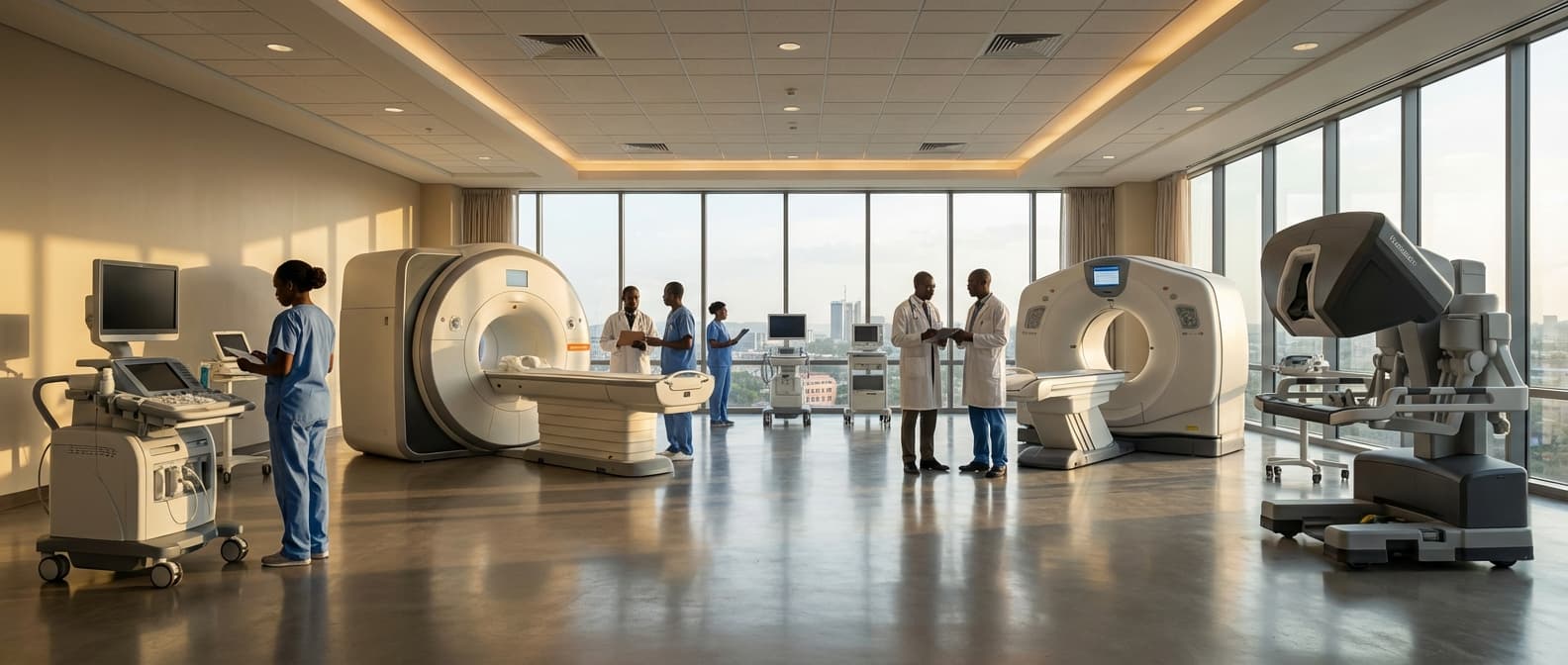
Renal Solutions in Madagascar
Engineering Excellence & Technical Support
Complete dialysis systems and renal care equipment designed to deliver safe, effective, and patient-centered kidney treatment. High-standard technical execution following OEM protocols and local regulatory frameworks.
First Hemodialysis Unit Established
Renal Solutions proudly inaugurated Madagascar's first dedicated hemodialysis unit, providing life-saving treatment access to over 100 chronic kidney disease patients in its inaugural year.
Advanced Training for Local Nephrologists
Through a comprehensive training program, Renal Solutions has empowered 5 Malagasy nephrologists with advanced skills in renal replacement therapy, fostering sustainable local expertise and reducing reliance on expatriate specialists.
Deployment of Portable Ultrasound Technology
Renal Solutions introduced portable ultrasound devices to remote Malagasy clinics, enabling rapid and accurate diagnosis of kidney conditions for thousands of individuals previously lacking access to essential diagnostic imaging.
What Is Renal Solutions In Madagascar?
Renal Solutions in Madagascar refers to a spectrum of services and interventions aimed at diagnosing, managing, and treating kidney-related diseases (nephropathies) within the Malagasy healthcare system. These solutions encompass a range of medical, technological, and logistical components designed to address the burden of renal pathology, from early detection to advanced care.
| Need For Renal Solutions | Typical Use Cases |
|---|---|
| Individuals with risk factors for CKD: Such as uncontrolled hypertension, diabetes mellitus, a family history of kidney disease, or recurrent urinary tract infections. | Screening for early signs of kidney damage. Management of underlying conditions to prevent progression. |
| Patients with diagnosed Chronic Kidney Disease (CKD) stages 3-5: Where kidney function is significantly impaired but not yet requiring RRT. | Conservative management, medication adjustment, dietary modifications, monitoring of complications (anemia, bone disease, electrolyte imbalances). |
| Patients with End-Stage Renal Disease (ESRD): Requiring renal replacement therapy to sustain life. | Initiation and ongoing management of hemodialysis or peritoneal dialysis. Evaluation for kidney transplantation (where available). |
| Individuals experiencing acute kidney injury (AKI): Caused by factors such as severe dehydration, sepsis, or nephrotoxic medications. | Intensive medical management to restore kidney function, including fluid management and treatment of the underlying cause. Dialysis may be required temporarily. |
| Healthcare providers and institutions: Requiring expertise and resources to manage renal patients. | Access to specialized consultations, training programs, diagnostic equipment, and dialysis facilities. |
| Public health organizations and policymakers: Aiming to reduce the burden of kidney disease in the population. | Development of national kidney health strategies, implementation of screening programs, and resource allocation for renal care infrastructure. |
Key Components of Renal Solutions in Madagascar
- Diagnostic Services: Includes laboratory testing (serum creatinine, blood urea nitrogen, urinalysis, glomerular filtration rate estimation), renal imaging (ultrasound, CT scan), and kidney biopsy for histopathological examination.
- Medical Management: Pharmacological interventions for managing hypertension, diabetes, proteinuria, anemia, and electrolyte imbalances, all common comorbidities and complications of renal disease. This also involves dietary counseling and lifestyle modification guidance.
- Renal Replacement Therapies (RRT):
- Hemodialysis (HD): Provision of access to hemodialysis units, equipment, dialyzers, and sterile consumables for extracorporeal blood purification. This involves trained nephrologists, nurses, and technicians.
- Peritoneal Dialysis (PD): Availability of peritoneal dialysis solutions, catheters, and training for patients and caregivers to perform home-based dialysis.
- Renal Transplantation: While nascent, this represents a long-term solution involving surgical procedures, immunosuppressive therapy, and post-operative care. Access and feasibility are heavily influenced by resource availability and medical expertise.
- Nephrology Consultation and Specialist Care: Access to trained nephrologists for diagnosis, treatment planning, and management of complex renal cases.
- Public Health Initiatives: Screening programs for early detection of chronic kidney disease (CKD) in high-risk populations, public awareness campaigns on kidney health, and policy development to improve renal care infrastructure.
- Research and Education: Efforts to advance understanding of renal diseases prevalent in Madagascar and to train healthcare professionals in nephrology and related subspecialties.
Who Needs Renal Solutions In Madagascar?
Renal Solutions in Madagascar addresses a critical healthcare gap, offering specialized services and products for individuals and institutions dealing with kidney-related diseases. The demand for such services is growing due to an increasing prevalence of chronic conditions like diabetes and hypertension, which are significant risk factors for kidney disease. Our target customers range from individual patients requiring dialysis and ongoing medical management to healthcare facilities seeking to enhance their renal care capabilities and expand access to these vital services.
| Customer Segment | Description | Key Departments/Stakeholders Involved |
|---|---|---|
| Individual Patients with Kidney Disease | Patients suffering from Acute Kidney Injury (AKI) or Chronic Kidney Disease (CKD), requiring treatments such as dialysis (hemodialysis and peritoneal dialysis), kidney transplantation support, and management of associated complications. | Nephrology Departments, Dialysis Centers, Transplant Units, Endocrinology Departments (for diabetes management), Cardiology Departments (for hypertension management), General Practitioner Clinics. |
| Healthcare Providers and Facilities | Hospitals, clinics, and private medical centers looking to establish or upgrade their renal care services. This includes procuring dialysis equipment, consumables, diagnostic tools, and seeking expertise in setting up and managing dialysis units. | Hospital Administration, Procurement Departments, Nephrology Units, Intensive Care Units (ICUs), Urology Departments, Biomedical Engineering Departments. |
| Government and Public Health Organizations | Ministry of Public Health and regional health authorities seeking to improve national kidney disease screening, prevention, and treatment programs. This may involve bulk procurement of dialysis supplies, infrastructure development, and training programs. | Ministry of Public Health (Department of Non-Communicable Diseases, Department of Health Infrastructure), National Health Insurance Agencies, Regional Health Directorates. |
| Non-Governmental Organizations (NGOs) and Charities | Organizations focused on improving healthcare access and patient welfare, often supporting underserved populations with chronic diseases. They may partner to provide subsidized treatments, essential medications, or awareness campaigns. | Program Management Teams, Medical Outreach Coordinators, Patient Support Services, Fundraising and Partnership Departments. |
| Research Institutions | Universities and medical research centers interested in studying kidney disease prevalence, developing new diagnostic methods, or evaluating treatment outcomes in the Malagasy population. | Medical Research Departments, Nephrology Research Groups, Epidemiology Units, University Medical Faculties. |
Target Customers and Departments for Renal Solutions in Madagascar
- Individual Patients with Kidney Disease
- Healthcare Providers and Facilities
- Government and Public Health Organizations
- Non-Governmental Organizations (NGOs) and Charities
- Research Institutions
Renal Solutions Process In Madagascar
The "Renal Solutions Process" in Madagascar refers to the comprehensive workflow established to provide advanced renal (kidney) care, typically involving dialysis and potentially transplantation services, to patients in need. This process is crucial given the often limited access to specialized medical infrastructure in many regions. It encompasses patient identification, assessment, preparation, treatment delivery, and follow-up, aiming for optimal patient outcomes within the existing healthcare framework. The workflow is designed to be systematic and efficient, ensuring that eligible patients receive timely and appropriate renal replacement therapy.
| Stage | Description | Key Activities | Responsible Parties |
|---|---|---|---|
| The process begins when a patient with suspected or diagnosed renal failure is identified. | Patient presents with symptoms or is diagnosed with Chronic Kidney Disease (CKD) or Acute Kidney Injury (AKI). Referral from primary care physician or hospital department. | Patient, Family, General Practitioner, Hospital Physician |
| A preliminary evaluation to determine the severity of renal dysfunction and immediate needs. | Review of medical history, physical examination, basic blood and urine tests (e.g., creatinine, urea, electrolytes, urinalysis). Assessment of kidney function stage. | Nephrologist, Nurse |
| A comprehensive investigation to confirm the diagnosis, identify underlying causes, and assess overall health status. | Detailed laboratory tests (e.g., complete blood count, liver function tests, serology for infections), imaging studies (e.g., renal ultrasound, CT scan), electrocardiogram (ECG), assessment of comorbidities (e.g., diabetes, hypertension). | Nephrologist, Specialist Physicians (Cardiologist, Diabetologist, etc.), Radiologist, Laboratory Technician |
| Ensuring the patient and their family understand the condition, treatment options, and implications. | Explanation of renal failure, available treatment modalities (dialysis, transplant), risks, benefits, and lifestyle adjustments. Obtaining informed consent for treatment. | Nephrologist, Nurse, Social Worker |
| Deciding on the most appropriate renal replacement therapy based on patient's condition, preferences, and resource availability. | Discussion and selection of hemodialysis (in-center or home), peritoneal dialysis, or evaluation for kidney transplantation. Consideration of vascular access or peritoneal catheter insertion plans. | Nephrologist, Patient, Family |
| Setting up the necessary infrastructure and performing procedures for treatment initiation. | Vascular access creation (e.g., fistula, graft, catheter insertion). If peritoneal dialysis, peritoneal catheter insertion. Patient preparation for dialysis sessions. | Vascular Surgeon, General Surgeon, Nephrologist, Nurse |
| The commencement of regular dialysis treatment. | First dialysis session (hemodialysis or peritoneal dialysis). Careful monitoring of vital signs and fluid balance. | Nephrologist, Dialysis Nurse |
| Regular dialysis sessions with continuous evaluation of patient's response and management of complications. | Scheduled dialysis treatments, monitoring of fluid status, electrolytes, blood pressure, nutritional status. Management of anemia, bone disease, and other complications. | Nephrologist, Dialysis Nurse, Dietitian, Pharmacist |
| Regular check-ups and adjustments to treatment plans to ensure optimal patient well-being. | Periodic clinical assessments, laboratory monitoring, management of comorbidities, patient support, and education. Review of treatment effectiveness and patient quality of life. | Nephrologist, Nurse, Dietitian, Social Worker |
| Exploration of kidney transplantation as a long-term solution if the patient is a suitable candidate. | Pre-transplant evaluation, listing on the transplant waiting list, donor identification and matching, and post-transplant care. | Nephrologist, Transplant Surgeon, Transplant Coordinator, Immunologist |
Renal Solutions Process Workflow in Madagascar
- Inquiry and Referral
- Initial Assessment and Screening
- Medical Evaluation and Workup
- Patient Education and Consent
- Treatment Modality Selection
- Pre-Treatment Preparations
- Initiation of Renal Replacement Therapy
- Ongoing Treatment and Monitoring
- Follow-up and Long-term Management
- Potential for Transplantation (if applicable)
Renal Solutions Cost In Madagascar
Renal solutions are crucial for patients with kidney failure requiring dialysis. In Madagascar, the cost of these solutions is influenced by several factors, including the type of solution (e.g., peritoneal dialysis solutions, hemodialysis concentrates), the brand, the volume of the product, import duties and taxes, distribution costs, and the healthcare facility's pricing structure. Due to these variables, precise, universally applicable price ranges can be challenging to pinpoint, but a general overview can be provided. The pricing is typically in Malagasy Ariary (MGA).
| Renal Solution Type (Examples) | Estimated Price Range (MGA per unit/package) | Notes |
|---|---|---|
| Peritoneal Dialysis (PD) Solution (e.g., 2-liter bag) | 50,000 - 150,000 MGA | This can vary significantly based on glucose concentration, brand, and import status. Some PD solutions are imported. |
| Hemodialysis Concentrate (e.g., for bicarbonate dialysis, per liter or batch) | 20,000 - 70,000 MGA | This is a concentrated form that is diluted. Prices depend on the specific composition and whether it's pre-mixed or individual components. |
| Electrolyte Additives/Adjusters (e.g., Calcium Chloride, Potassium Chloride) | 5,000 - 20,000 MGA per vial/small quantity | These are often used in smaller quantities and are priced accordingly. |
Key Pricing Factors for Renal Solutions in Madagascar
- Type of Dialysis Solution: Peritoneal dialysis solutions (e.g., for home use) and hemodialysis concentrates (used in clinics) have different manufacturing and logistical costs.
- Brand and Manufacturer: Imported brands often carry higher price tags than locally sourced or generic alternatives, if available.
- Volume and Packaging: Larger volumes or specialized packaging can affect the per-unit cost.
- Import Duties and Taxes: As Madagascar is a net importer of many medical supplies, import tariffs and taxes significantly impact the final price.
- Distribution and Logistics: The cost of transporting solutions from ports or manufacturers to healthcare facilities across Madagascar's varied terrain adds to the overall expense.
- Healthcare Facility Markup: Hospitals and dialysis centers will add their operational costs and a profit margin.
- Availability and Competition: Limited availability or lack of local competition can lead to higher prices.
Affordable Renal Solutions Options
Navigating renal care can be a significant financial undertaking. Fortunately, various affordable renal solutions and cost-saving strategies exist to alleviate the burden. Understanding value bundles and exploring these options can lead to more manageable healthcare expenses for individuals requiring kidney treatment and support.
| Value Bundle Component | Description | Potential Cost Savings |
|---|---|---|
| Bundled Dialysis Services | Includes treatment sessions, supplies, and potentially related lab work and physician visits for a set fee. | Predictable costs, reduced administrative overhead, and potential for bulk purchasing discounts. |
| Integrated Kidney Care Packages | Combines nephrology consultations, diagnostic tests, medication management, and nutritional counseling. | Improved care coordination, reduced redundant testing, and proactive management of complications. |
| Pre-Dialysis Management Programs | Focuses on slowing kidney disease progression through education, lifestyle modifications, and early intervention. | May delay or prevent the need for dialysis, thus avoiding significant long-term treatment costs. |
| Post-Transplant Care Bundles | Encompasses surgery, immunosuppressant medications, follow-up appointments, and monitoring. | Streamlined care, potential for better patient outcomes leading to fewer complications and hospitalizations. |
Key Affordable Renal Solutions and Cost-Saving Strategies
- Value bundles in healthcare aim to provide a comprehensive set of services for a fixed price, often leading to cost savings and improved coordination of care.
- Understanding your insurance coverage is paramount to identifying out-of-pocket expenses and maximizing benefits for renal treatments.
- Exploring generic medications instead of brand-name drugs can significantly reduce prescription costs.
- Participating in patient assistance programs offered by pharmaceutical companies or non-profit organizations can provide financial aid for medications and treatments.
- Utilizing telehealth services for routine check-ups and consultations can reduce travel costs and time off work.
- Home dialysis options, when medically appropriate, can offer greater flexibility and potentially lower overall costs compared to in-center treatments.
- Preventive care and early detection of kidney disease can mitigate the need for more expensive, advanced treatments later on.
- Engaging with social workers and financial counselors at your healthcare facility can unlock access to various financial assistance programs and resources.
- Comparing costs for procedures and services across different healthcare providers can help identify more affordable options.
- Considering a second opinion for major treatment decisions can sometimes lead to alternative, less costly approaches.
- Adhering to a kidney-friendly diet and lifestyle can help manage the progression of kidney disease, potentially delaying or avoiding more intensive and expensive interventions.
Verified Providers In Madagascar
When seeking healthcare services in Madagascar, it's paramount to ensure you are engaging with verified and reputable providers. Franance Health stands out as a leading organization in this regard, offering a robust credentialing process that guarantees a high standard of care and ethical practice. Understanding their accreditation and the rigorous vetting they undertake reveals why Franance Health credentials represent the best choice for patients prioritizing safety, quality, and trust in their healthcare journey.
| Credentialing Aspect | Franance Health Approach | Benefit to Patients |
|---|---|---|
| Medical Education & Training | Verification of degrees, licenses, and specialized certifications. | Ensures providers possess the necessary foundational knowledge and skills. |
| Professional Experience | Thorough review of past work history, peer evaluations, and documented practice. | Confirms practical application of knowledge and competence in real-world scenarios. |
| Clinical Competence | Assessment of diagnostic and treatment capabilities, often through audits and performance reviews. | Guarantees effective and evidence-based medical interventions. |
| Ethical Conduct & Professionalism | Background checks and review of disciplinary actions; adherence to a strict code of conduct. | Promotes trust, integrity, and respectful patient-provider relationships. |
| Facility Standards (where applicable) | Inspection of premises for safety, hygiene, and availability of essential equipment. | Ensures a safe and conducive environment for treatment and recovery. |
| Continuous Professional Development | Requirement for ongoing education and participation in professional development programs. | Keeps providers updated with the latest medical advancements and best practices. |
Why Franance Health Credentials are the Best Choice:
- Rigorous Vetting Process: Franance Health employs a comprehensive evaluation of healthcare professionals, facilities, and services, ensuring they meet strict quality and safety benchmarks.
- Commitment to Patient Safety: Accreditation signifies adherence to protocols designed to minimize risks and ensure the well-being of every patient.
- Upholding Ethical Standards: Franance Health champions a commitment to ethical medical practices, ensuring transparency and integrity in healthcare delivery.
- Access to Qualified Professionals: Their credentialing process identifies and endorses healthcare providers with proven expertise and dedication.
- Enhanced Patient Confidence: Choosing a Franance Health-verified provider offers peace of mind, knowing you are receiving care from an organization committed to excellence.
Scope Of Work For Renal Solutions
This Scope of Work (SOW) outlines the technical deliverables and standard specifications for the Renal Solutions project. The objective is to develop and implement a comprehensive digital platform to manage patient data, treatment plans, and operational workflows for renal dialysis centers. This document details the technical requirements, expected outputs, and quality standards to ensure successful project execution and a high-quality end product.
| Component | Standard Specification | Description |
|---|---|---|
| Frontend Framework | React.js (v18+) | Modern, component-based JavaScript library for building user interfaces. |
| Backend Framework | Node.js with Express.js (v16+) | Scalable, event-driven JavaScript runtime and a minimalist web application framework. |
| Database | PostgreSQL (v14+) | Robust, open-source relational database management system. |
| API Design | RESTful API principles, OpenAPI (Swagger) v3.0 | Standardized approach for building and documenting web services. |
| Authentication & Authorization | OAuth 2.0, JWT | Secure industry standards for delegated authorization and token-based authentication. |
| Containerization | Docker | Standard for packaging and deploying applications in isolated environments. |
| Orchestration | Kubernetes | Automated deployment, scaling, and management of containerized applications. |
| Cloud Provider | AWS (EC2, S3, RDS, Lambda, IAM) | Industry-leading cloud platform for hosting and services. |
| Version Control | Git, GitHub/GitLab | Distributed version control system and collaborative code hosting platform. |
| CI/CD | Jenkins/GitHub Actions | Automated build, test, and deployment pipelines. |
| Monitoring & Logging | Prometheus, Grafana, ELK Stack (Elasticsearch, Logstash, Kibana) | Tools for application performance monitoring and centralized log management. |
| Security Practices | OWASP Top 10 mitigation, SSL/TLS encryption, input validation | Adherence to best practices for web application security. |
Key Technical Deliverables
- Cloud-based application architecture design document
- User Interface (UI) and User Experience (UX) design wireframes and prototypes
- Backend API specifications and documentation
- Database schema and data migration plan
- Frontend application code repository with complete source code
- Backend application code repository with complete source code
- Integration modules for EMR/EHR systems
- Security audit report and compliance documentation (e.g., HIPAA, GDPR)
- Testing strategy, test cases, and execution reports (Unit, Integration, System, UAT)
- Deployment scripts and infrastructure as code (IaC) configurations
- Comprehensive user and administrator manuals
- Performance and scalability testing results
- Maintenance and support plan
Service Level Agreement For Renal Solutions
This Service Level Agreement (SLA) outlines the guaranteed response times and uptime for the Renal Solutions platform. It is designed to ensure the consistent and reliable delivery of our services to our valued clients.
| Service Component | Uptime Guarantee (Annual) | Critical Issue Response Time | General Inquiry Response Time |
|---|---|---|---|
| Renal Solutions Platform Availability | 99.9% | Within 1 hour | Within 4 business hours |
| Data Synchronization (if applicable) | 99.5% | Within 2 hours | Within 8 business hours |
| Reporting Module | 99.8% | Within 1.5 hours | Within 6 business hours |
Key Service Commitments
- Uptime Guarantee: Renal Solutions commits to an annual uptime of 99.9%.
- Response Times: We define response times for critical system issues and general inquiries.
- Support Channels: Details on how to contact our support team.
Frequently Asked Questions

Ready when you are
Let's scope your Renal Solutions in Madagascar project in Madagascar.

Scaling healthcare logistics and technical systems across the entire continent.