
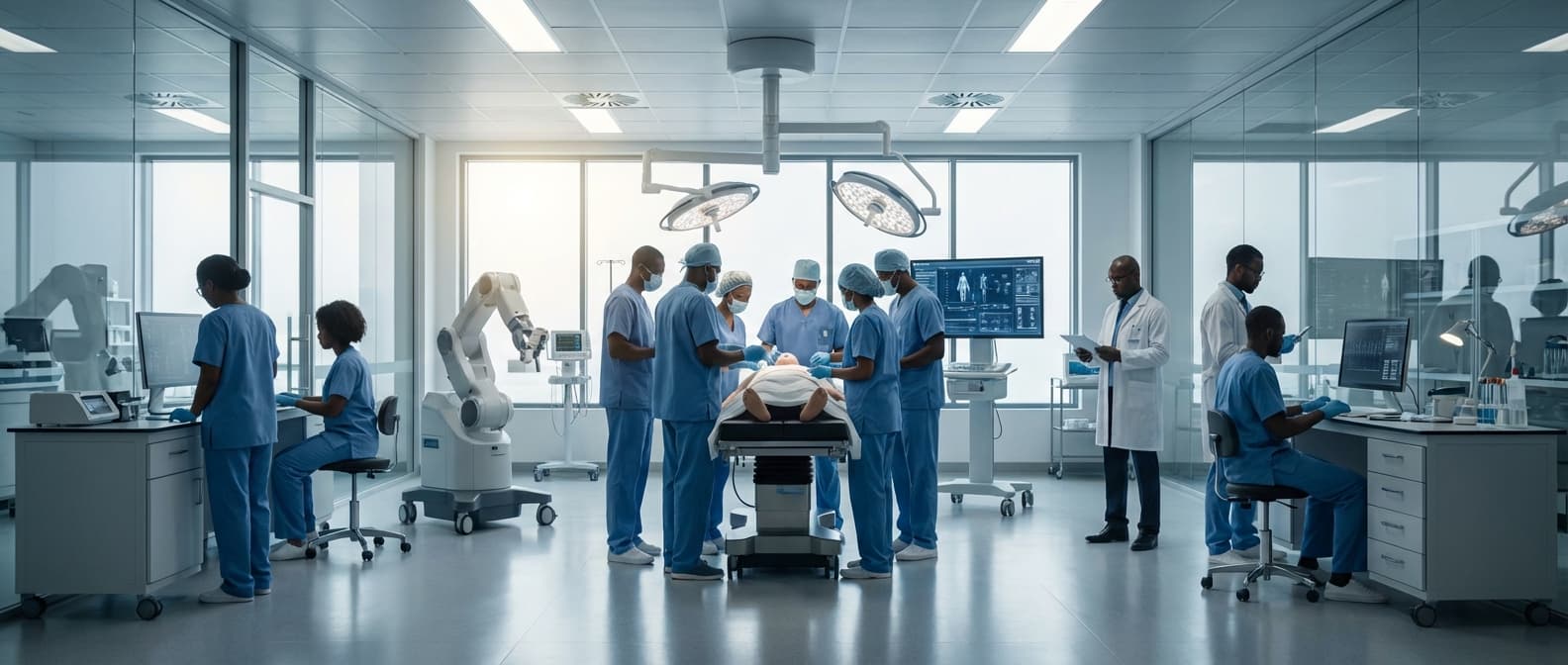
Managed Equipment Service (MES) in Madagascar
Engineering Excellence & Technical Support
Long‑term equipment provision with uptime SLAs and lifecycle management. High-standard technical execution following OEM protocols and local regulatory frameworks.
Expedited Medical Equipment Deployment
Leveraging our agile logistics network across Madagascar, we ensure rapid deployment and installation of critical medical equipment, minimizing downtime and maximizing patient care even in remote or challenging terrains. Our on-the-ground teams are trained to navigate local infrastructure for swift delivery and setup.
Localized Technical Support & Maintenance
Providing expert, on-site technical support and preventative maintenance tailored to the Malagasy healthcare landscape. Our certified technicians, equipped with specialized tools and local knowledge, deliver timely repairs and upkeep, ensuring the operational integrity and longevity of your medical assets.
Data-Driven Equipment Performance Monitoring
Implementing a robust system for real-time monitoring and analysis of medical equipment performance. We provide actionable insights and predictive maintenance alerts to optimize asset utilization, reduce operational costs, and enhance the overall efficiency of your healthcare facilities in Madagascar.
What Is Managed Equipment Service (Mes) In Madagascar?
Managed Equipment Service (MES) in Madagascar refers to a comprehensive outsourcing model where a third-party provider takes responsibility for the acquisition, installation, maintenance, and eventual disposal of critical equipment for various organizations. This service aims to optimize equipment lifecycle management, reduce operational burdens, and ensure cost-effectiveness and performance predictability. MES providers leverage their expertise, economies of scale, and specialized technical capabilities to deliver a seamless and reliable equipment infrastructure, allowing clients to focus on their core business functions rather than the complexities of asset management and maintenance. The service typically encompasses a contractual agreement outlining service level agreements (SLAs), performance metrics, and cost structures.
| Who Needs MES in Madagascar? | Typical Use Cases | |||
|---|---|---|---|---|
| Healthcare Sector (Hospitals, Clinics, Diagnostic Centers): Requiring sophisticated medical imaging equipment, laboratory instruments, patient monitoring systems, and surgical tools. | Medical Imaging (MRI, CT Scanners, X-ray Machines): Ensuring high uptime and precision for diagnostics and treatment. | Laboratory Equipment (Analyzers, Microscopes): Maintaining accuracy and reliability for sample testing and research. | Patient Monitoring Systems: Guaranteeing continuous functionality for critical care. | Surgical and Anesthesia Equipment: Ensuring readiness and optimal performance for medical procedures. |
| Telecommunications Companies: Needing network infrastructure, base stations, transmission equipment, and related hardware. | Network Infrastructure (Routers, Switches, Servers): Maintaining network integrity and performance for communication services. | Base Stations and Mobile Towers: Ensuring reliable mobile network coverage. | Fiber Optic and Transmission Equipment: Facilitating high-speed data transfer. | |
| Financial Institutions (Banks, Insurance Companies): Requiring ATMs, servers, data center equipment, and secure communication hardware. | Automated Teller Machines (ATMs): Maximizing uptime and security for customer transactions. | Data Center Infrastructure (Servers, Storage, Networking): Ensuring the reliability and performance of IT operations. | Secure Communication Systems: Maintaining secure and uninterrupted data flow. | |
| Large Industrial Enterprises (Manufacturing, Mining): Needing specialized machinery, automation systems, and IT infrastructure. | Manufacturing Machinery and Automation Systems: Optimizing production efficiency and reducing downtime. | Mining Equipment (Excavators, Drills, Conveyors): Ensuring operational continuity in challenging environments. | Industrial IT and Control Systems: Managing complex operational technology. | |
| Government Agencies and Public Institutions: Requiring office equipment, IT infrastructure, and specialized technical systems. | Public Administration IT Systems: Supporting government operations and citizen services. | Security and Surveillance Equipment: Ensuring public safety and infrastructure monitoring. | Educational Institutions (Universities, Research Centers): Needing specialized laboratory equipment, computing clusters, and audiovisual systems. | |
| Logistics and Transportation Companies: Requiring fleet management technology, tracking devices, and warehouse automation equipment. | Fleet Management and Tracking Systems: Optimizing vehicle utilization and route efficiency. | Warehouse Automation and Material Handling Equipment: Enhancing operational efficiency in distribution centers. |
Key Components of Managed Equipment Service (MES)
- Equipment Procurement and Leasing: Strategic sourcing, acquisition, and often leasing of new or refurbished equipment.
- Installation and Commissioning: Professional setup, configuration, and testing of all provided equipment.
- Preventive and Corrective Maintenance: Proactive scheduling of maintenance to prevent failures and rapid response to breakdowns.
- Technical Support and Troubleshooting: On-demand technical assistance and problem resolution by skilled engineers.
- Software Updates and Patch Management: Ensuring equipment software is up-to-date and secure.
- Consumables Management: Ordering, stocking, and replenishment of necessary consumables (e.g., printer ink, medical supplies).
- Performance Monitoring and Optimization: Continuous tracking of equipment performance to identify inefficiencies and recommend improvements.
- Reporting and Analytics: Providing detailed reports on equipment usage, maintenance history, and cost analysis.
- Asset Tracking and Lifecycle Management: Maintaining an inventory of all managed assets and planning for upgrades or replacements.
- End-of-Life Management: Responsible decommissioning and environmentally sound disposal or recycling of obsolete equipment.
Who Needs Managed Equipment Service (Mes) In Madagascar?
Managed Equipment Service (MES) offers a comprehensive solution for organizations in Madagascar seeking to optimize their operational efficiency, reduce costs, and ensure the reliable performance of their critical equipment. This service is particularly beneficial for entities that face challenges in maintaining a large or complex fleet of machinery, require specialized technical expertise, or want to shift capital expenditure towards operational expenditure. MES providers handle everything from procurement and installation to maintenance, repair, and eventual replacement of equipment, allowing businesses to focus on their core competencies. This model is especially relevant in Madagascar, where access to specialized technical skills and consistent spare parts can be a logistical hurdle.
| Customer Type | Key Departments Benefiting from MES |
|---|---|
| Industrial Enterprises | Operations, Maintenance, Engineering, Procurement, Finance |
| Healthcare Providers | Biomedical Engineering, Facility Management, Administration, IT |
| Telecommunications Companies | Network Operations, Field Services, IT Infrastructure, Finance |
| Logistics and Transportation | Fleet Management, Operations, Maintenance, Supply Chain, Finance |
| Agricultural Cooperatives/Farms | Farm Management, Operations, Maintenance, Procurement |
| Government Agencies/Utilities | Public Works, Infrastructure Management, Operations, Procurement, Finance |
| Construction Companies | Equipment Management, Operations, Project Management, Procurement, Finance |
Target Customers for MES in Madagascar
- Large-scale industrial enterprises (e.g., mining, manufacturing, energy)
- Healthcare providers (hospitals, clinics with advanced medical equipment)
- Telecommunications companies (network infrastructure)
- Logistics and transportation firms (fleet management)
- Agricultural cooperatives and large farms (specialized machinery)
- Government agencies and public utilities (infrastructure maintenance)
- Construction companies with extensive equipment fleets
Managed Equipment Service (Mes) Process In Madagascar
The Managed Equipment Service (MES) process in Madagascar is a comprehensive approach to procuring, installing, maintaining, and upgrading medical equipment for healthcare facilities. This workflow ensures that facilities have access to reliable, modern equipment without the burden of direct ownership and management. The process typically begins with an inquiry from a healthcare provider and culminates in the seamless operation and eventual upgrade of the equipment.
| Phase | Key Activities | Actors Involved | Key Outputs/Deliverables |
|---|---|---|---|
| Inquiry and Needs Assessment | Healthcare facility expresses interest in MES. Detailed assessment of equipment needs, existing infrastructure, budget, and desired outcomes. | Healthcare Facility (e.g., Ministry of Health, Hospital Administration), MES Provider (potential) | Needs assessment report, initial equipment list, facility profile |
| Proposal Development and Submission | MES provider designs a tailored MES solution. This includes equipment specifications, service levels, pricing, and operational plans. Proposal is submitted to the facility. | MES Provider | Detailed MES proposal, including technical specifications, service level agreements (SLAs), financial model |
| Contract Negotiation and Signing | Discussions and adjustments to the proposal. Finalization of contract terms, including payment schedules, responsibilities, and performance indicators. Contract signing. | Healthcare Facility, MES Provider, Legal Counsel (optional) | Signed MES contract, appendices (equipment list, SLAs, etc.) |
| Procurement and Logistics | MES provider procures the specified equipment globally or regionally. Management of import duties, customs clearance, and transportation to Madagascar. | MES Provider, Suppliers, Logistics Companies, Customs Authorities | Procured equipment, shipping documents, import clearances |
| Installation and Commissioning | Delivery, installation, and testing of equipment at the healthcare facility by qualified technicians. Ensuring equipment meets manufacturer specifications and is ready for use. | MES Provider (technicians), Healthcare Facility Staff | Installed and commissioned equipment, installation reports, test results |
| Training and Capacity Building | Training of healthcare facility staff (doctors, nurses, technicians) on the proper operation, basic maintenance, and safety procedures for the new equipment. | MES Provider (trainers), Healthcare Facility Staff | Trained personnel, training manuals, certificates of attendance |
| Operations and Maintenance | Routine preventive maintenance, corrective maintenance (repairs), and supply of consumables and spare parts by the MES provider. Ensuring continuous equipment uptime. | MES Provider (service engineers, technicians), Healthcare Facility Staff (for reporting issues) | Scheduled maintenance, timely repairs, updated maintenance logs, spare parts inventory |
| Performance Monitoring and Reporting | Regular monitoring of equipment performance against agreed SLAs. Reporting on uptime, maintenance activities, and user feedback to the healthcare facility. | MES Provider, Healthcare Facility (for review) | Performance reports, uptime statistics, maintenance summaries |
| Equipment Upgrade and Replacement | Periodic review of equipment technology and performance. Planning and execution of equipment upgrades or replacements to ensure continued relevance and efficiency. | MES Provider, Healthcare Facility | Upgrade/replacement plans, new equipment specifications, updated equipment inventory |
| Decommissioning and Disposal | Safe and environmentally responsible decommissioning and disposal of old or obsolete equipment at the end of its lifecycle, in compliance with regulations. | MES Provider, Healthcare Facility, Waste Management Companies | Decommissioning reports, disposal certificates |
Managed Equipment Service (MES) Workflow in Madagascar
- Inquiry and Needs Assessment
- Proposal Development and Submission
- Contract Negotiation and Signing
- Procurement and Logistics
- Installation and Commissioning
- Training and Capacity Building
- Operations and Maintenance
- Performance Monitoring and Reporting
- Equipment Upgrade and Replacement
- Decommissioning and Disposal
Managed Equipment Service (Mes) Cost In Madagascar
Managed Equipment Service (MES) in Madagascar, while not as widely publicized as in developed economies, is gaining traction as healthcare providers seek to optimize their medical device management and reduce capital expenditure. The cost of MES in Madagascar is influenced by a combination of global and local factors, making it challenging to provide definitive price ranges without specific project details. However, a general understanding of these influences can guide potential clients.
Key Pricing Factors for MES in Madagascar:
- Scope of Services: The breadth and depth of services included in the MES contract are primary cost drivers. This can range from basic equipment maintenance and repair to comprehensive asset management, including procurement, installation, calibration, training, and even disposal.
- Equipment Type and Volume: The number and type of medical devices covered significantly impact costs. High-value, complex, or specialized equipment (e.g., MRI machines, CT scanners, advanced surgical robots) will naturally incur higher service fees due to their inherent cost, maintenance complexity, and the need for specialized technicians.
- Service Level Agreements (SLAs): The agreed-upon response times, uptime guarantees, and preventative maintenance schedules defined in the SLA directly affect pricing. More stringent SLAs with faster response times and higher uptime expectations will generally lead to higher costs.
- Provider Expertise and Reputation: Established MES providers with a proven track record, experienced technical teams, and robust operational infrastructure often command higher prices, reflecting their reliability and quality of service.
- Geographic Location within Madagascar: While less of a factor for core services, travel and logistical costs for technicians to reach remote healthcare facilities can add to the overall expense. Major urban centers like Antananarivo might have slightly more competitive pricing due to a higher concentration of providers and easier access.
- Contract Duration: Longer-term MES contracts can sometimes offer better per-unit pricing due to economies of scale and the provider's ability to plan and invest in resources over an extended period.
- Technology and Software Integration: If the MES includes the management of advanced software, data analytics, or integration with hospital information systems (HIS), this will influence the cost.
- Local Regulatory Compliance and Import Duties: While MES providers aim to streamline these, any specific local regulations or import duties on spare parts or new equipment can indirectly affect the overall cost of the service.
- Training and Skill Development: The extent to which the MES contract includes training for hospital staff on equipment usage and basic maintenance will also be factored into the pricing.
Estimated Cost Ranges (in Malagasy Ariary - MGA):
It is crucial to understand that these are highly indicative ranges and can vary significantly. Obtaining formal quotes from multiple MES providers is essential for accurate budgeting.
- Small Clinics/Hospitals (limited equipment, basic maintenance): MGA 1,000,000 - MGA 5,000,000 per month.
- Medium-Sized Hospitals (moderate equipment, comprehensive maintenance): MGA 5,000,000 - MGA 25,000,000 per month.
- Large Hospitals/Specialized Centers (extensive, high-value equipment, advanced SLAs): MGA 25,000,000 - MGA 100,000,000+ per month.
For very large-scale projects involving extensive fleets of high-end medical imaging equipment, the monthly costs could easily exceed MGA 100,000,000 and even reach several hundred million Malagasy Ariary, depending on the complexity and service levels.
Note: These figures are estimations and should not be considered definitive. Actual pricing will depend on specific negotiations, vendor capabilities, and the precise requirements of the healthcare facility.
| Facility Size/Complexity | Estimated Monthly MES Cost (MGA) |
|---|---|
| Small Clinics/Hospitals (Limited Equipment, Basic Maintenance) | 1,000,000 - 5,000,000 |
| Medium-Sized Hospitals (Moderate Equipment, Comprehensive Maintenance) | 5,000,000 - 25,000,000 |
| Large Hospitals/Specialized Centers (Extensive, High-Value Equipment, Advanced SLAs) | 25,000,000 - 100,000,000+ |
Key Factors Influencing MES Costs in Madagascar
- Scope of Services Offered
- Type and Volume of Medical Equipment
- Service Level Agreement (SLA) Stringency
- MES Provider's Expertise and Reputation
- Geographic Location within Madagascar
- Contract Duration
- Technology and Software Integration Requirements
- Local Regulatory and Import Considerations
- Training and Skill Development Components
Affordable Managed Equipment Service (Mes) Options
Managed Equipment Service (MES) can be a powerful solution for organizations looking to streamline operations, reduce downtime, and optimize their technology investments. However, the perceived cost of MES can sometimes be a barrier. Fortunately, a range of affordable MES options are available, often built around the concept of value bundles and strategic cost-saving measures. Value bundles combine essential services into a package, offering greater predictability and often a lower overall price than procuring individual services. Cost-saving strategies within MES focus on proactive maintenance, efficient resource allocation, and leveraging technology to minimize unexpected expenses. By understanding these approaches, organizations can access the benefits of MES without breaking their budget.
| Cost-Saving Strategy | Description | Potential Benefits |
|---|---|---|
| Proactive Maintenance Programs | Scheduled inspections and preventative repairs to identify and address potential issues before they cause significant downtime or damage. | Reduced unplanned downtime, extended equipment lifespan, lower repair costs. |
| Predictive Analytics | Using data from sensors and historical performance to forecast equipment failures and schedule maintenance accordingly. | Minimized unexpected breakdowns, optimized maintenance schedules, reduced overtime labor costs. |
| Remote Diagnostics and Support | Leveraging technology to diagnose and, where possible, resolve equipment issues without requiring an on-site technician visit. | Lower travel expenses for technicians, faster issue resolution times, increased technician efficiency. |
| Standardized Equipment and Parts | Adopting a standardized set of equipment and readily available parts across an organization. | Bulk purchasing discounts, simplified inventory management, reduced training overhead for technicians. |
| Tiered Service Levels | Offering different levels of MES based on equipment criticality and service needs, allowing organizations to pay only for what they require. | Cost optimization by aligning service with actual needs, avoiding overspending on non-critical assets. |
| Long-Term Contracts | Committing to longer-term MES agreements with providers, often leading to discounted rates and more favorable terms. | Price stability, predictable budgeting, potential for lower per-unit service costs. |
| Energy Efficiency Audits | Including assessments of equipment's energy consumption as part of the MES. | Reduced operational costs through energy savings, improved environmental footprint. |
| Training and Knowledge Transfer | Incorporating training for in-house staff to handle basic troubleshooting and maintenance tasks. | Empowered internal teams, reduced reliance on external support for minor issues. |
Key Components of Affordable MES Value Bundles
- Core Service Package: Typically includes routine maintenance, inspections, and minor repairs for a defined set of equipment.
- Predictive Maintenance: Utilizes sensors and data analytics to anticipate potential equipment failures, allowing for scheduled maintenance and preventing costly emergency repairs.
- Remote Monitoring and Support: Enables technicians to diagnose and often resolve issues remotely, reducing the need for on-site visits and associated travel costs.
- Consumables Management: Proactive tracking and replenishment of essential supplies to avoid operational disruptions.
- Reporting and Analytics: Provides insights into equipment performance, usage patterns, and maintenance history, aiding in future planning and optimization.
- Software Updates and Patching: Ensures equipment software is up-to-date, enhancing security and performance.
Verified Providers In Madagascar
Navigating the healthcare landscape in Madagascar can be challenging, but ensuring you are connected with verified providers is paramount for quality and trustworthy care. Franance Health stands out as a leading platform for identifying and accessing these essential services. Our rigorous vetting process and commitment to excellence make Franance Health the premier choice for individuals seeking reliable healthcare in Madagascar. We understand the importance of transparency and assurance when it comes to your well-being, and our platform is designed to deliver just that.
| Key Verification Aspects | Franance Health's Commitment | Benefit to You |
|---|---|---|
| Licensing and Accreditation | Mandatory verification of all relevant medical licenses and accreditations from recognized bodies. | Ensures providers are legally qualified and adhere to professional standards. |
| Educational Background & Training | Scrutiny of medical degrees, postgraduate qualifications, and specialized training. | Confirms providers have the necessary theoretical knowledge and practical skills. |
| Professional Experience | Assessment of years in practice and areas of specialization. | Helps identify experienced practitioners with relevant expertise for your condition. |
| Reputation and References | Review of professional standing and, where appropriate, patient feedback mechanisms. | Provides insights into the provider's track record and patient satisfaction. |
| Ethical Practice Standards | Adherence to a code of conduct and ethical medical practices. | Assures you of professional and responsible care. |
Why Franance Health is Your Best Choice for Verified Providers in Madagascar:
- Comprehensive Vetting Process: Franance Health employs a multi-stage verification protocol for all providers listed on our platform. This includes checking licenses, accreditations, educational backgrounds, and professional experience.
- Focus on Quality and Expertise: We prioritize providers who demonstrate a commitment to high standards of care, utilize modern medical practices, and possess specialized knowledge in their respective fields.
- Patient-Centric Approach: Our platform is designed with the patient's needs at its core. We provide detailed profiles, patient reviews (where applicable and verified), and easy-to-use search functionalities to help you find the right provider for your specific health concerns.
- Transparency and Trust: We believe in open communication and providing our users with the information they need to make informed decisions. Every verified provider on Franance Health has met our stringent criteria, offering you peace of mind.
- Accessibility and Convenience: Franance Health aims to simplify your healthcare journey by consolidating verified providers in one accessible location. We strive to make it easier for you to find and connect with the care you need, when you need it.
- Commitment to Continuous Improvement: We are dedicated to maintaining the highest standards. Our verification processes are regularly reviewed and updated to reflect evolving best practices in healthcare and credentialing.
Scope Of Work For Managed Equipment Service (Mes)
This document outlines the Scope of Work (SOW) for a Managed Equipment Service (MES) contract. It details the technical deliverables and standard specifications required to ensure the effective and efficient management, maintenance, and operation of medical equipment within the client's healthcare facility. The MES aims to optimize equipment availability, performance, and lifecycle management while controlling costs and ensuring patient safety and regulatory compliance.
| Deliverable Category | Description | Standard Specifications / Key Performance Indicators (KPIs) | Documentation / Reporting Requirements |
|---|---|---|---|
| Equipment Inventory Management System (EIMS) | Establish and maintain a comprehensive digital database of all medical equipment. Includes asset tagging, location tracking, maintenance history, and financial data. | 99.5% data accuracy in EIMS; Unique asset tagging for all equipment; Real-time location updates; Integration with procurement systems (if applicable). | Initial EIMS population report; Monthly EIMS update report; Quarterly EIMS audit report. |
| Preventive Maintenance (PM) Program | Develop and execute a proactive PM schedule for all managed equipment according to manufacturer recommendations and regulatory standards. | 100% PM completion rate on schedule; PM adherence to manufacturer guidelines; documented PM checklists for each equipment type; PM pass/fail rates. | Monthly PM schedule; Monthly PM completion report; Annual PM program effectiveness report. |
| Corrective Maintenance (CM) and Repair Services | Respond to equipment failures and provide timely repair services to minimize downtime. | Mean Time To Repair (MTTR) targets per equipment criticality (e.g., Critical: <4 hours, Semi-Critical: <8 hours, Non-Critical: <24 hours); 95% first-time fix rate; Availability of qualified technicians and spare parts. | Service request log; Daily/Weekly repair status reports; Monthly CM performance report; Root cause analysis for recurring failures. |
| Calibration and Validation | Perform regular calibration and validation of medical equipment to ensure accuracy and compliance. | Calibration adherence to manufacturer specifications and relevant standards (e.g., ISO 17025); Calibration due dates met; Accredited calibration services (if required). | Calibration schedules; Calibration certificates; Validation reports; Annual calibration compliance report. |
| Equipment Performance Monitoring | Continuously monitor equipment performance to identify trends, potential issues, and optimize utilization. | Uptime targets (e.g., 98% for critical equipment); Equipment utilization rates; Energy consumption monitoring (if applicable); Proactive identification of performance degradation. | Monthly equipment performance dashboard; Quarterly trend analysis report; Annual equipment performance review. |
| Lifecycle Management | Develop and implement strategies for equipment acquisition, deployment, maintenance, and eventual decommissioning/disposal. | Equipment refresh cycle defined for key asset classes; Total Cost of Ownership (TCO) analysis for acquisition decisions; Planned replacement schedules. | Equipment lifecycle roadmap; Annual asset refresh plan; Decommissioning/Disposal reports. |
| Parts and Consumables Management | Manage the procurement, stocking, and inventory of spare parts and essential consumables. | Inventory accuracy (e.g., 99%); Lead time targets for critical parts; Stockout rate <1%; Cost-effective procurement strategies. | Parts inventory reports; Procurement records; Annual parts cost analysis. |
| Staff Training | Provide training to clinical and technical staff on the safe and effective use, and basic troubleshooting of managed equipment. | Training needs assessment conducted; Training modules developed and delivered; Competency assessments completed; Post-training feedback collected. | Training plan; Training attendance records; Training evaluation reports; Competency assessment results. |
| Regulatory Compliance | Ensure all managed equipment complies with relevant local, national, and international regulations and standards (e.g., FDA, HIPAA, Joint Commission). | 100% compliance with regulatory requirements; Audit readiness for all managed equipment; Documentation of compliance activities. | Compliance audit reports; Regulatory update summaries; Records of compliance-related actions. |
Key Technical Deliverables
- Equipment Inventory Management System (EIMS) Setup and Maintenance
- Preventive Maintenance (PM) Program Implementation and Execution
- Corrective Maintenance (CM) and Repair Services
- Calibration and Validation Services
- Equipment Performance Monitoring and Reporting
- Equipment Lifecycle Management Strategy Development
- Technology Assessment and Recommendations
- Parts and Consumables Management
- Decommissioning and Disposal Services
- Staff Training and Competency Assessment
- Regulatory Compliance Assurance
- Risk Management and Safety Protocols
- Disaster Recovery and Business Continuity Planning (Equipment-Specific)
- Integration with Hospital Information Systems (HIS) / Electronic Health Records (EHR)
Service Level Agreement For Managed Equipment Service (Mes)
This Service Level Agreement (SLA) outlines the guaranteed response times and uptime for the Managed Equipment Service (MES) provided by [Your Company Name] to [Client Company Name]. This SLA is effective as of [Start Date] and will remain in effect until [End Date].
| Service Level | Response Time Guarantee (for incidents reported within support hours) | Uptime Guarantee | Remediation |
|---|---|---|---|
Scope of Service
- The MES covers the following equipment: [List of specific equipment covered, e.g., Servers, Network Switches, Printers, Medical Devices].
- The MES includes preventative maintenance, corrective maintenance, remote monitoring, and on-site support for the specified equipment.
- This SLA applies during the agreed-upon support hours: [Specify support hours, e.g., Monday-Friday, 9:00 AM - 5:00 PM Local Time] and [Specify if 24/7 support is included, including holidays].
Frequently Asked Questions

Ready when you are
Let's scope your Managed Equipment Service (MES) in Madagascar project in Madagascar.

Scaling healthcare logistics and technical systems across the entire continent.