
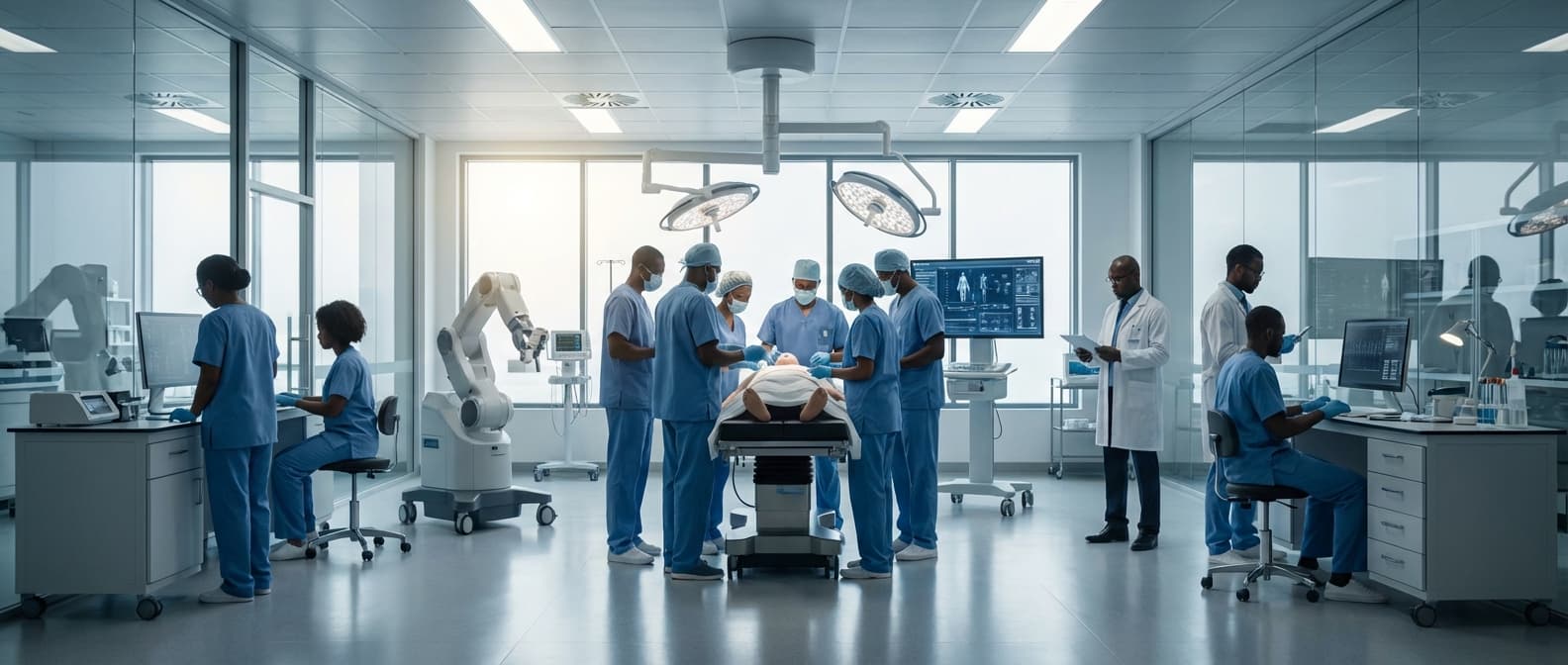
Calibration & Electrical Safety Testing in Madagascar
Engineering Excellence & Technical Support
Equipment calibration and IEC safety testing High-standard technical execution following OEM protocols and local regulatory frameworks.
Ensuring Grid Stability with Precision Calibration
Our expert technicians in Madagascar utilize state-of-the-art calibration equipment to guarantee the accuracy of crucial electrical grid components. This meticulous process minimizes power fluctuations and enhances the reliability of Madagascar's energy infrastructure.
Fortifying Workplace Safety with Rigorous Electrical Testing
We are committed to protecting lives and assets across Madagascar through comprehensive electrical safety testing. Our services identify potential hazards in industrial, commercial, and residential settings, ensuring compliance with international safety standards and preventing electrical accidents.
Boosting Industrial Efficiency Through Accurate Measurement
Precise calibration of measurement instruments is vital for optimized industrial processes in Madagascar. Our specialized services ensure that machinery operates at peak efficiency, reducing waste, improving product quality, and driving economic growth for local businesses.
What Is Calibration & Electrical Safety Testing In Madagascar?
Calibration and Electrical Safety Testing are critical maintenance and compliance services for electrical equipment and medical devices within Madagascar. Calibration ensures that measuring instruments and diagnostic equipment provide accurate and reliable readings by comparing them against a known standard. This process involves adjusting the instrument to minimize measurement error. Electrical Safety Testing, on the other hand, assesses the equipment's design and construction to ensure it does not pose a risk of electric shock, fire, or other hazards to users and patients. This typically involves verifying insulation resistance, grounding continuity, leakage currents, and dielectric strength. These services are essential for maintaining operational integrity, patient safety, regulatory compliance, and the longevity of valuable assets.
| Who Needs It? | Typical Use Cases | Benefits |
|---|---|---|
| Healthcare Facilities (Hospitals, Clinics, Laboratories): | Medical Devices: Calibration of diagnostic equipment (e.g., ECG machines, vital signs monitors, X-ray machines, centrifuges). Electrical safety testing of all powered medical equipment to ensure patient and operator safety, compliance with IEC 60601 standards. | Patient Safety: Minimizing risk of harm from malfunctioning equipment. Regulatory Adherence: Meeting Ministry of Health requirements. Diagnostic Accuracy: Ensuring reliable patient diagnoses. Equipment Longevity: Proactive identification of potential failures. |
| Industrial & Manufacturing Plants: | Test & Measurement Equipment: Calibration of tools used in quality control and production (e.g., torque wrenches, vernier calipers, multimeters). Production Machinery: Electrical safety checks on automated systems, control panels, and power distribution units. | Product Quality: Ensuring consistency and reliability of manufactured goods. Operational Efficiency: Preventing costly downtime due to equipment malfunction. Workplace Safety: Protecting personnel from electrical hazards. |
| Research & Development Laboratories: | Scientific Instruments: Calibration of precision measurement devices (e.g., spectrometers, pH meters, environmental chambers). Experimental Setups: Ensuring the accuracy and safety of electrical components in research apparatus. | Research Integrity: Maintaining the validity and reproducibility of experimental results. Innovation Safety: Enabling safe exploration of new technologies. |
| Educational Institutions (Universities, Technical Schools): | Laboratory Equipment: Calibration of instruments used in teaching labs. Workshop Machinery: Electrical safety testing of power tools and equipment used by students. | Student Learning: Providing hands-on experience with properly functioning and safe equipment. Risk Mitigation: Preventing accidents in educational settings. |
| Telecommunications Companies: | Measurement Tools: Calibration of signal generators, spectrum analyzers, and network testers. Infrastructure: Electrical safety of power supplies and distribution systems. | Service Reliability: Ensuring accurate signal measurement for network performance. Infrastructure Integrity: Preventing failures in critical communication systems. |
| Government & Public Sector: | Administrative Equipment: Calibration of scales, printers, and measurement devices used in public services. Infrastructure: Electrical safety of public facilities and utilities. | Public Trust: Ensuring accuracy and reliability in public services. Public Safety: Maintaining safe environments for citizens. |
Key Aspects of Calibration & Electrical Safety Testing
- Calibration: Verifying and adjusting measuring instruments to ensure accuracy against traceable standards. This includes equipment like multimeters, oscilloscopes, pressure gauges, and temperature sensors.
- Electrical Safety Testing: Comprehensive assessment of electrical equipment to identify and mitigate potential hazards. This includes insulation resistance testing, earth continuity testing, leakage current measurement (touch and fault current), and high voltage (dielectric strength) testing.
- Documentation: Providing detailed reports of test results, including measured values, acceptance criteria, and any adjustments made. Calibration certificates are crucial for traceability and compliance.
- Traceability: Ensuring that all calibration activities are traceable to national or international standards, often through accredited laboratories.
- Preventative Maintenance: Integrating these tests into a scheduled maintenance program to prevent equipment failure and identify issues before they become critical.
- Regulatory Compliance: Meeting the requirements set by Madagascan regulatory bodies and international standards (e.g., IEC 60601 series for medical devices).
Who Needs Calibration & Electrical Safety Testing In Madagascar?
Calibration and electrical safety testing are critical for ensuring the accuracy of scientific and medical equipment, the reliability of industrial processes, and the safety of personnel in various sectors across Madagascar. These services are essential for businesses, healthcare facilities, research institutions, and government agencies that rely on precise measurements and safe electrical operations. Regular calibration minimizes errors in data collection and production, preventing costly mistakes and ensuring compliance with industry standards. Electrical safety testing identifies potential hazards like faulty wiring or grounding issues, mitigating the risk of electric shock, fires, and equipment damage. The demand for these services is growing as Madagascar continues to develop its infrastructure, healthcare system, and industrial capabilities.
| Customer Type | Key Departments/Functions | Reasons for Calibration/Electrical Safety Testing |
|---|---|---|
| Hospitals and Clinics | Radiology, Laboratory, ICU, Operating Theaters, Pharmacy, Biomedical Engineering | Accurate medical diagnoses, patient safety, equipment longevity, regulatory compliance (e.g., for medical devices) |
| Diagnostic Laboratories | Chemistry, Hematology, Microbiology, Pathology, Quality Control | Precise test results, reliable data, compliance with diagnostic standards, instrument accuracy |
| Research Institutions and Universities | Science Departments (Physics, Chemistry, Biology), Engineering Faculties, Testing Labs | Accurate experimental results, research integrity, student safety, equipment performance validation |
| Manufacturing and Industrial Plants | Production Lines, Quality Control, Maintenance, Process Engineering, Electrical Maintenance | Product consistency, process efficiency, safety of machinery and personnel, energy management, defect prevention |
| Food and Beverage Processing | Production, Quality Assurance, Hygiene, Packaging | Food safety, accurate temperature and weight measurements, compliance with food standards, equipment reliability |
| Telecommunications Companies | Network Operations, Maintenance, Equipment Testing | Signal integrity, equipment performance, network reliability, safety of transmission equipment |
| Energy and Utilities Sector | Power Generation, Transmission, Distribution, Metering, Safety Departments | Accurate power output, grid stability, reliable energy supply, safety of electrical infrastructure, meter accuracy |
| Construction and Engineering Firms | Site Surveying, Structural Testing, Electrical Installations, Quality Assurance | Accurate measurements for design and construction, structural integrity, safety of electrical systems on-site, compliance with building codes |
| Government Agencies | National Metrology Institute, Ministry of Health, Environmental Protection Agencies, Standards Bureaus | National measurement standards, public safety, environmental monitoring, regulatory enforcement, consumer protection |
| Mining and Extractive Industries | Geological Surveying, Processing Plants, Safety, Electrical Maintenance | Accurate resource assessment, process control, safe operation of heavy machinery, electrical safety in hazardous environments |
| Agricultural and Agribusiness Operations | Soil Testing Labs, Food Processing Units, Irrigation Systems, Farm Equipment Maintenance | Accurate soil analysis for optimal crop yield, food processing quality, efficient water management, equipment functionality |
| Automotive Repair and Maintenance | Diagnostic Tools, Emission Testing Equipment, Electrical Systems Testing | Accurate vehicle diagnostics, compliance with emission regulations, safe repair of electrical systems |
Target Customers and Departments for Calibration & Electrical Safety Testing in Madagascar:
- Hospitals and Clinics
- Diagnostic Laboratories
- Research Institutions and Universities
- Manufacturing and Industrial Plants
- Food and Beverage Processing
- Telecommunications Companies
- Energy and Utilities Sector
- Construction and Engineering Firms
- Government Agencies (e.g., Metrology, Public Health)
- Mining and Extractive Industries
- Agricultural and Agribusiness Operations
- Automotive Repair and Maintenance
Calibration & Electrical Safety Testing Process In Madagascar
This document outlines the standard workflow for Calibration and Electrical Safety Testing services in Madagascar, from the initial client inquiry to the successful execution of the testing and reporting.
| Stage | Key Activities | Responsible Party | Output/Outcome |
|---|---|---|---|
| Inquiry & Initial Contact | Client expresses need for services, provides equipment details. | Client & Service Provider | Initial understanding of requirements, service availability confirmed. |
| Quotation & Proposal Generation | Assessment of scope, cost estimation, proposal development. | Service Provider | Detailed quotation/proposal sent to client. |
| Agreement & Scheduling | Client approval, contract signing, date/time confirmation, logistics planning. | Client & Service Provider | Formal agreement, scheduled testing date and time. |
| Pre-Test Preparation | Calibration of testing equipment, review of standards, documentation preparation. | Service Provider | Ready-to-use testing equipment and materials. |
| On-Site Execution | Safety briefing, visual inspection, calibration/safety testing procedures, data recording. | Service Provider (Technicians) | Raw test data, observations, and documented results. |
| Post-Test Analysis & Reporting | Data analysis, report generation, comparison to standards. | Service Provider (Technical Staff) | Comprehensive test report, calibration certificates/statements. |
| Report Submission & Follow-up | Report delivery, discussion of findings, invoicing. | Service Provider | Client receives report, payment processed. |
| Corrective Actions (if required) | Recommendations for repair/adjustment, re-testing. | Client & Service Provider | Equipment rectified or re-tested. |
Calibration & Electrical Safety Testing Process Workflow in Madagascar
- 1. Inquiry & Initial Contact:
- Client contacts the testing service provider via phone, email, or website form.
- Client provides details about the equipment to be tested (type, quantity, specific tests required, location).
- Initial confirmation of service availability and preliminary information gathering.
- 2. Quotation & Proposal Generation:
- Provider reviews client requirements and assesses necessary resources (technicians, equipment, time).
- A detailed quotation is generated, including scope of work, test methodologies, pricing, lead times, and any specific terms and conditions.
- Proposal is sent to the client for review and approval.
- 3. Agreement & Scheduling:
- Upon client acceptance of the quotation, a formal agreement or work order is established.
- Dates and times for the testing are scheduled, considering client availability and provider capacity.
- Logistics are confirmed, including site access requirements, safety protocols, and any client-provided support.
- 4. Pre-Test Preparation (Provider Side):
- Calibration of testing equipment to ensure accuracy and traceability.
- Review of relevant standards and regulations applicable in Madagascar (e.g., national electrical codes, specific industry standards).
- Preparation of testing forms, checklists, and report templates.
- Mobilization of technicians and necessary testing instruments to the client's site.
- 5. On-Site Execution:
- Safety Briefing: A pre-task safety briefing is conducted with the client's personnel to discuss potential hazards and safety procedures.
- Visual Inspection: Initial visual inspection of the equipment for any obvious damage or defects.
- Calibration Procedures:
- Application of established calibration procedures using certified reference standards.- Measurement of instrument readings at various points within its operating range.- Recording of as-found and as-left readings.- Electrical Safety Testing Procedures:
- Performance of tests such as insulation resistance, earth continuity, leakage current, and dielectric strength as per relevant standards (e.g., IEC 60335, IEC 60601).- Measurement and recording of test results.- Documentation: Detailed recording of all test results, observations, and any identified deviations or non-conformities on designated forms.
- 6. Post-Test Analysis & Reporting:
- Review and analysis of all collected data.
- Comparison of results against specified tolerances and national/international standards.
- Generation of a comprehensive calibration and/or electrical safety test report.
- The report typically includes:
- Client and equipment details.- Test procedures and standards applied.- As-found and as-left data (for calibration).- Test results and pass/fail status.- Uncertainty of measurement (for calibration).- Calibration certificates or statements of conformity.- Recommendations for corrective actions or further maintenance.- Technician's signature and date.- 7. Report Submission & Follow-up:
- The final report is submitted to the client, usually in electronic format (PDF) and potentially in hard copy.
- Discussion of the report findings with the client.
- Addressing any client queries or requests for clarification.
- Issuance of calibration certificates or labels if the equipment passes all tests.
- Invoicing and payment processing.
- Archiving of test records for future reference.
- 8. Corrective Actions (if required):
- If equipment fails electrical safety tests, recommendations for repair or replacement are provided.
- If calibration results are out of tolerance, the client is informed, and options for adjustment or re-calibration may be discussed.
- Repeat testing may be scheduled after corrective actions have been taken.
Calibration & Electrical Safety Testing Cost In Madagascar
Calibration and electrical safety testing are crucial for ensuring the accuracy and safety of various electrical and electronic equipment in Madagascar. The cost of these services can vary significantly due to several factors, including the complexity of the equipment, the type of calibration or test required, the laboratory's accreditation status, geographical location within Madagascar, and any urgency requested by the client. While precise figures are subject to negotiation and specific service provider quotes, this discussion outlines the general pricing factors and estimated cost ranges in Malagasy Ariary (MGA).
| Service Type | Estimated Cost Range (MGA) | Notes |
|---|---|---|
| Basic Electrical Safety Testing (e.g., Insulation Resistance, Earth Continuity on standard appliances/tools) | 20,000 - 75,000 | Per item. Often bundled for multiple items. May vary by complexity. |
| Comprehensive Electrical Safety Testing (e.g., Full suite of tests for medical devices, industrial equipment) | 50,000 - 200,000+ | Per item. Higher for complex or critical equipment. May require specialized personnel. |
| Basic Calibration (e.g., Digital Multimeter, basic thermometer) | 40,000 - 150,000 | Per item. Includes verification against standards and certificate. May vary by number of points. |
| Intermediate Calibration (e.g., Oscilloscope, Power Supply) | 100,000 - 300,000 | Per item. More points, higher precision instruments. |
| Advanced/Specialized Calibration (e.g., Industrial weighing scales, sophisticated measurement equipment) | 200,000 - 1,000,000+ | Per item. Highly dependent on the instrument and required accuracy. |
| On-site Service Fee (per visit/technician) | 50,000 - 250,000+ | In addition to per-item charges. Varies with distance and duration. |
| Urgent Service Fee | 20% - 50% surcharge | Applied to the total service cost. |
Key Pricing Factors for Calibration & Electrical Safety Testing in Madagascar
- {"title":"Equipment Complexity and Type","description":"More sophisticated or specialized equipment, such as high-precision oscilloscopes, medical devices, or industrial automation systems, will naturally incur higher calibration and testing costs due to the specialized knowledge, equipment, and time required."}
- {"title":"Scope of Calibration/Testing","description":"A full calibration verifying multiple parameters will be more expensive than a single-point check. Similarly, comprehensive electrical safety testing (e.g., insulation resistance, earth continuity, dielectric strength) will cost more than basic visual inspections or a limited set of tests."}
- {"title":"Accreditation and Certification","description":"Laboratories with international accreditations (e.g., ISO 17025) often charge more. This accreditation signifies a higher level of quality assurance, competence, and traceability, which is valuable for compliance and regulatory purposes."}
- {"title":"Turnaround Time (TAT)","description":"Urgent requests or expedited services typically come with a premium. Standard turnaround times are generally more cost-effective."}
- {"title":"Location of Service","description":"If the testing needs to be performed on-site at the client's premises, especially if it's in a remote location outside major cities like Antananarivo, additional charges for travel, accommodation, and logistics will apply."}
- {"title":"Volume of Equipment","description":"Some service providers may offer volume discounts for calibrating or testing a large batch of similar equipment. Conversely, testing a single, low-value item might have a minimum service charge."}
- {"title":"Manufacturer's Specifications vs. Custom Requirements","description":"Adhering to manufacturer-specified calibration points and tolerances is standard. If a client requires custom testing parameters or tighter tolerances, this might incur additional costs."}
- {"title":"Traceability to National/International Standards","description":"Ensuring that the calibration is traceable to recognized national or international standards adds value and can influence the price."}
Affordable Calibration & Electrical Safety Testing Options
Maintaining accurate calibration and ensuring electrical safety compliance are crucial for businesses of all sizes. Neglecting these aspects can lead to equipment malfunction, safety hazards, and costly downtime. Fortunately, several affordable calibration and electrical safety testing options exist. Understanding value bundles and implementing cost-saving strategies can significantly reduce expenses while upholding essential standards.
| Strategy | Description | Potential Savings | Considerations |
|---|---|---|---|
| Value Bundling | Combining calibration and electrical safety testing into a single service package, often with a tiered pricing structure based on volume or frequency. | 10-20% on combined services | Ensure the bundle meets all your specific compliance needs. |
| Scheduled Service Agreements | Committing to regular, scheduled calibration and testing appointments throughout the year. | 5-15% on individual services | Requires accurate forecasting of your equipment's calibration needs. |
| Tiered Pricing for Volume | Receiving discounts for testing a larger quantity of equipment or for higher-frequency testing. | Varies based on volume | Assess if the volume discount justifies the increased testing frequency. |
| Off-Peak Scheduling | Scheduling services during less busy periods for the calibration provider. | 5-10% on service fees | May require flexibility in your operational schedule. |
| Fleet Discounts | For businesses with multiple locations or a large inventory of similar equipment. | 15-25% on total service cost | Requires a standardized approach to equipment and testing. |
| Focus on Critical Equipment First | Prioritizing calibration and testing for equipment that is essential for operations or safety-critical. | Reduces immediate expenditure, optimizes resource allocation | Ensure less critical equipment is still tested within recommended intervals. |
Affordable Calibration & Electrical Safety Testing Options
- On-site Calibration: Reduces downtime and transportation costs by bringing the service to your facility.
- Mail-in Calibration: Ideal for smaller or less frequently used equipment, offering a cost-effective way to send items for testing.
- Calibration Kits: Some providers offer DIY calibration kits for basic checks, though professional validation is still recommended for critical equipment.
- Preventive Maintenance Contracts: Bundling calibration with regular maintenance can offer discounts and proactive issue identification.
- Electrical Safety Testing Packages: Often bundled with calibration services for a comprehensive compliance solution.
- Discounted Re-calibration: Scheduled re-calibration within a certain timeframe often comes with reduced pricing.
- Group Purchasing: Collaborating with other businesses to book services can lead to volume discounts.
- Third-Party Calibration Services: Comparing quotes from multiple accredited providers can ensure competitive pricing.
- In-house Training (for basic checks): Equipping your team with basic electrical safety awareness and simple testing procedures can reduce reliance on external services for non-critical tasks.
- Software-based Calibration Management: Streamlining record-keeping and scheduling can prevent missed calibrations and associated penalties.
Verified Providers In Madagascar
In Madagascar, ensuring access to reliable healthcare is paramount. The term 'Verified Providers' signifies a commitment to quality, safety, and ethical practices within the healthcare sector. Franance Health stands as a leading example of such a verified provider, setting a high benchmark for healthcare services in the region. Their credentials are not merely certifications; they are a testament to a dedication to patient well-being and continuous improvement.
| Credential/Attribute | Franance Health's Commitment | Patient Benefit |
|---|---|---|
| Accreditation & Licensing | Fully compliant with national and relevant international healthcare accreditation standards. | Guarantees that the facility and its practitioners meet established benchmarks for quality and safety. |
| Staff Qualifications | Employs a team of board-certified physicians, specialists, and trained nursing staff with proven expertise. | Ensures patients receive care from knowledgeable and skilled healthcare professionals. |
| Quality Assurance Protocols | Implements robust internal quality assurance programs and continuous training for staff. | Minimizes medical errors and consistently improves service delivery. |
| Patient Safety Measures | Strict adherence to infection control protocols, patient identification procedures, and safe medication practices. | Protects patients from harm and ensures a secure healthcare environment. |
| Technological Integration | Utilizes advanced diagnostic and treatment technologies to enhance accuracy and efficiency. | Leads to more precise diagnoses, effective treatments, and better patient outcomes. |
| Patient Feedback Mechanisms | Actively solicits and acts upon patient feedback to refine services. | Fosters a responsive and continuously improving healthcare experience for all. |
Why Franance Health is the Best Choice:
- Rigorous accreditation and licensing processes.
- Commitment to employing highly qualified and experienced medical professionals.
- Adherence to international standards of care and patient safety.
- Investment in modern medical technology and facilities.
- Patient-centric approach with a focus on empathy and personalized treatment.
- Transparency in pricing and service delivery.
Scope Of Work For Calibration & Electrical Safety Testing
This Scope of Work (SOW) outlines the requirements for the calibration and electrical safety testing of various electrical and electronic equipment. The objective is to ensure that all equipment is functioning within specified tolerances and meets established electrical safety standards for reliable and safe operation. This SOW details the technical deliverables expected from the service provider and the standard specifications to which the work will be performed.
| Section | Description | Technical Deliverables | Standard Specifications |
|---|---|---|---|
| Calibration of specified electrical and electronic test equipment, measurement devices, and instrumentation. |
|
|
| Comprehensive testing of electrical and electronic equipment to ensure compliance with safety standards. |
|
|
| Defined list of equipment requiring calibration and/or electrical safety testing. |
|
|
| Provision of all necessary documentation related to the calibration and testing activities. |
|
|
| Requirement for qualified and experienced personnel to perform the services. |
|
|
Key Objectives of the SOW
- To ensure accuracy and reliability of measurement equipment through calibration.
- To verify the electrical safety of equipment to prevent hazards.
- To maintain compliance with relevant industry standards and regulations.
- To provide documented evidence of successful calibration and safety testing.
- To minimize equipment downtime through efficient and effective testing procedures.
Service Level Agreement For Calibration & Electrical Safety Testing
This Service Level Agreement (SLA) outlines the commitments for Calibration and Electrical Safety Testing services, focusing on response times for new requests and uptime guarantees for scheduled services. This SLA is an addendum to the Master Service Agreement (MSA) between [Your Company Name] and [Client Company Name].
| Service | Response Time (New Requests) | Uptime Guarantee (Scheduled Services) |
|---|---|---|
| Standard Calibration | Within 2 business days | 98% |
| Urgent Calibration (e.g., critical equipment) | Within 1 business day | 99% |
| Standard Electrical Safety Testing | Within 3 business days | 98% |
| Bulk Electrical Safety Testing (e.g., annual testing for a large inventory) | Within 5 business days | 97% |
Key Service Definitions
- Calibration: The process of comparing a measuring instrument to a known standard to verify its accuracy and adjust it if necessary.
- Electrical Safety Testing: The process of testing electrical equipment to ensure it meets safety standards and poses no risk of electric shock or fire.
- Scheduled Service: A pre-arranged appointment for calibration or electrical safety testing at the client's site or a designated facility.
- New Service Request: A request for calibration or electrical safety testing that has not yet been scheduled.
- Response Time: The time elapsed from when a new service request is acknowledged by [Your Company Name] to the initial contact made to schedule the service.
- Service Availability: The percentage of time that scheduled calibration and electrical safety testing services are performed as agreed upon.
- Downtime: Any period during which scheduled calibration or electrical safety testing services cannot be performed due to reasons within the control of [Your Company Name].
Frequently Asked Questions

Ready when you are
Let's scope your Calibration & Electrical Safety Testing in Madagascar project in Madagascar.

Scaling healthcare logistics and technical systems across the entire continent.