
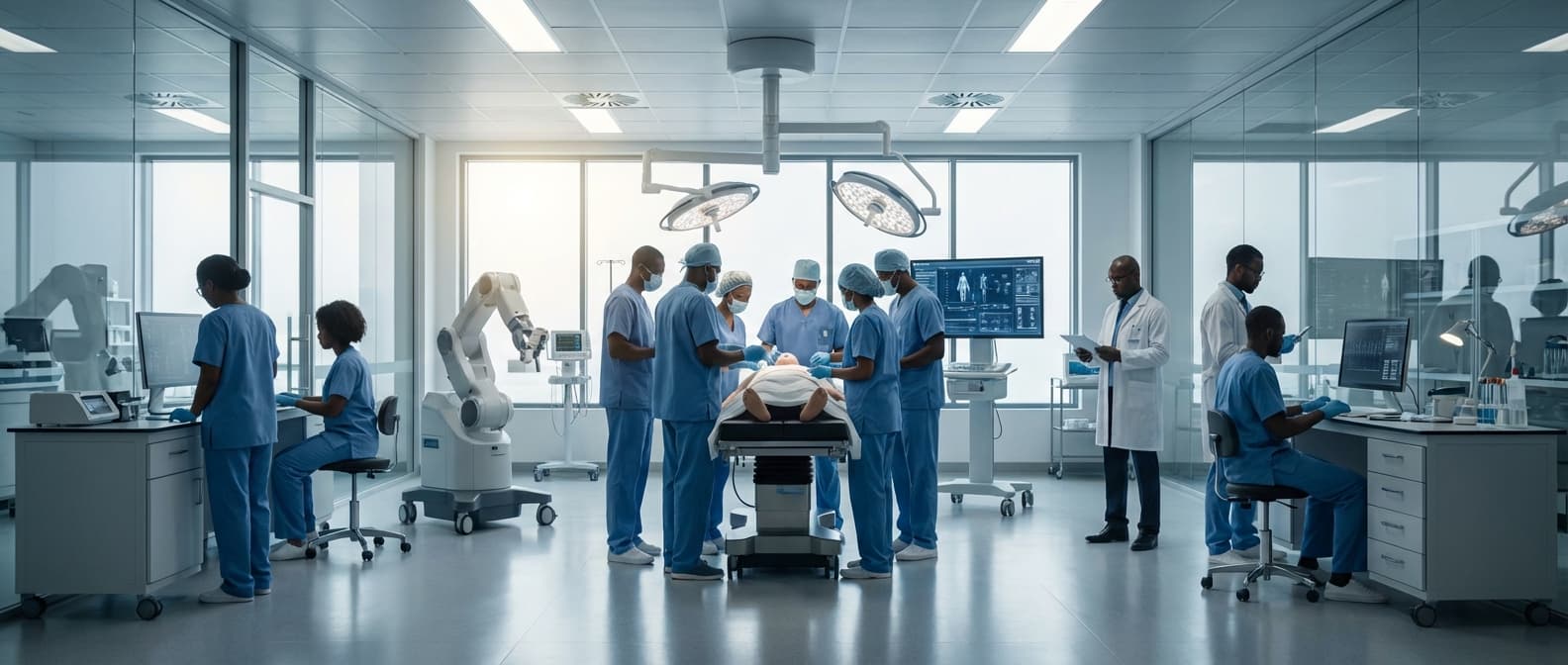
Biomedical Staffing Augmentation in Madagascar
Engineering Excellence & Technical Support
Onsite biomedical engineers and PACS administrators High-standard technical execution following OEM protocols and local regulatory frameworks.
Bridging the Skills Gap in Specialized Medical Fields
Our advanced augmentation services provide Madagascar's healthcare facilities with on-demand access to highly skilled biomedical engineers, laboratory technicians, and specialized medical imaging professionals. We address critical shortages, ensuring seamless operation of advanced medical equipment and accurate diagnostic capabilities, even in remote regions.
Rapid Deployment of Certified Biomedical Professionals
Leveraging our extensive global network, we expedite the recruitment and onboarding of certified biomedical staff tailored to Madagascar's unique healthcare infrastructure needs. Our rigorous vetting process ensures compliance with international standards and immediate readiness to integrate into existing teams, minimizing downtime and maximizing patient care continuity.
Enhancing Diagnostic Accuracy and Treatment Efficacy
By augmenting your biomedical workforce with expert personnel, we empower your healthcare providers to fully utilize state-of-the-art diagnostic and therapeutic technologies. This leads to improved diagnostic accuracy, more effective treatment plans, and ultimately, better patient outcomes across Madagascar's diverse population.
What Is Biomedical Staffing Augmentation In Madagascar?
Biomedical Staffing Augmentation in Madagascar refers to the strategic engagement of specialized biomedical personnel to supplement existing healthcare infrastructure and expertise. This service is designed to address specific needs and gaps within the Malagasy healthcare system, ensuring the efficient and effective operation of medical facilities and the delivery of quality patient care. It involves providing temporary or project-based access to highly skilled professionals, thereby enhancing the capacity and capabilities of local healthcare organizations without the long-term commitment of permanent hires.
| Who Needs Biomedical Staffing Augmentation? | Typical Use Cases |
|---|---|
| Government Health Ministries and Agencies: To manage national health programs, oversee public hospitals, and address widespread health challenges. | Implementing nationwide vaccination campaigns requiring specialized cold chain equipment maintenance. Deploying diagnostic technicians to remote areas for specialized testing. Supporting the establishment of national medical device registries. |
| Public and Private Hospitals and Clinics: To enhance the operational efficiency of their biomedical departments, particularly those with limited specialized personnel. | Providing specialized technicians for the maintenance of critical care equipment (e.g., ventilators, anesthesia machines). Augmenting laboratory staff during periods of high demand or when introducing new testing modalities. Supporting the installation and commissioning of new imaging equipment (MRI, CT scanners). |
| Non-Governmental Organizations (NGOs) and International Aid Organizations: To support specific health projects and interventions in Madagascar. | Providing biomedical expertise for the setup and maintenance of equipment in mobile clinics or field hospitals. Ensuring the functionality of essential medical devices in remote or underserved communities. Training local healthcare providers on the safe and effective use of donated medical equipment. |
| Medical Device Manufacturers and Distributors: To provide technical support and after-sales service for their products within Madagascar. | Ensuring timely and expert installation and servicing of newly procured medical equipment. Conducting on-site training for hospital biomedical teams on specific device maintenance. Troubleshooting complex technical issues with advanced medical systems. |
| Research Institutions and Universities: To support the operational needs of their medical research facilities. | Maintaining specialized research equipment. Providing technical assistance for complex experimental setups. Training researchers on the use of advanced biomedical instruments. |
Key Components of Biomedical Staffing Augmentation
- Expertise Sourcing: Identifying and recruiting qualified biomedical engineers, technicians, laboratory specialists, and other relevant professionals, both locally and internationally.
- Skill Gap Analysis: Assessing the current biomedical workforce's capabilities against the demands of specific healthcare technologies and services.
- Onboarding and Training: Facilitating the integration of augmented staff into the existing operational framework, including necessary site-specific training and familiarization with local protocols and regulations.
- Equipment Maintenance and Support: Providing skilled personnel for the installation, calibration, preventive maintenance, and repair of sophisticated medical equipment.
- Project-Based Support: Deploying specialists for defined projects such as the setup of new clinical departments, implementation of new diagnostic services, or upgrades to existing biomedical infrastructure.
- Capacity Building: Transferring knowledge and skills to local staff through on-the-job training and mentorship programs.
- Compliance and Quality Assurance: Ensuring that augmented staff adhere to international and national standards for medical device management and healthcare delivery.
Who Needs Biomedical Staffing Augmentation In Madagascar?
In Madagascar, the healthcare sector faces unique challenges, including a shortage of skilled biomedical professionals and limited access to specialized medical equipment. Biomedical staffing augmentation can significantly bolster the capacity of healthcare facilities to provide quality patient care and manage advanced medical technologies. This service is crucial for ensuring that essential medical equipment is maintained, calibrated, and readily available, thereby improving diagnostic accuracy and treatment outcomes.
| Department/Unit | Needs Addressed by Staffing Augmentation | Specific Roles Required |
|---|---|---|
| Biomedical Engineering Department | Maintenance and repair of complex medical equipment, calibration, preventative maintenance, ensuring equipment safety and compliance. | Biomedical Engineers, Biomedical Technicians, Equipment Specialists |
| Radiology/Imaging Departments | Operation and maintenance of imaging equipment (X-ray, CT scanners, MRI), troubleshooting technical issues, ensuring image quality. | Radiology Technologists with technical expertise, Imaging Equipment Engineers |
| Operating Rooms/Surgical Departments | Maintenance and readiness of surgical instruments, anesthesia machines, patient monitoring systems, sterilization equipment. | Surgical Equipment Technicians, Anesthesia Machine Specialists |
| Intensive Care Units (ICUs) | Ensuring continuous functionality of critical care equipment (ventilators, defibrillators, infusion pumps), rapid response to equipment failures. | Critical Care Equipment Technicians, Ventilator Specialists |
| Laboratories (Clinical and Research) | Maintenance and calibration of laboratory analyzers, diagnostic equipment, ensuring accuracy of test results. | Laboratory Equipment Technicians, Clinical Chemistry Specialists |
| Central Sterile Supply Departments (CSSD) | Maintenance and validation of sterilization equipment (autoclaves, sterilizers), ensuring sterility of medical instruments. | Sterilization Equipment Technicians |
| IT/Medical Informatics Departments | Integration and maintenance of networked medical devices, electronic health record (EHR) system support related to medical equipment. | Medical IT Specialists, Biomedical Informatics Engineers |
Target Customers for Biomedical Staffing Augmentation in Madagascar:
- Public Hospitals (National and Regional)
- Private Hospitals and Clinics
- Non-Governmental Organization (NGO) Healthcare Facilities
- Research Institutions and Laboratories
- Medical Equipment Suppliers and Service Providers
Biomedical Staffing Augmentation Process In Madagascar
The Biomedical Staffing Augmentation Process in Madagascar is a structured approach designed to address temporary or specialized staffing needs within healthcare facilities. It ensures qualified biomedical personnel are deployed efficiently to support critical services, equipment maintenance, and training initiatives. The workflow begins with an external or internal inquiry and concludes with the successful execution of the staffing request, followed by evaluation.
| Stage | Description | Key Activities | Responsible Parties | Deliverables |
|---|---|---|---|---|
| Inquiry and Needs Assessment | The process is initiated when a healthcare facility or a governmental health agency identifies a need for specialized biomedical expertise or additional staff. | Receive and log the request, conduct a detailed needs assessment (type of expertise, duration, location, specific tasks, required qualifications), confirm budget availability. | Requesting Facility/Agency, Staffing Agency (if external) | Formalized Staffing Request Document, Needs Assessment Report |
| Candidate Sourcing and Vetting | Identifying and screening potential candidates who meet the specified requirements. | Search internal databases, leverage professional networks, conduct external recruitment. Screen resumes, conduct technical interviews, verify qualifications and certifications, perform background checks. | Staffing Agency, HR Department | Shortlisted Candidate Profiles, Vetted Candidate Pool |
| Proposal and Contract Negotiation | Presenting suitable candidates and negotiating the terms of the engagement. | Prepare and submit candidate profiles with proposed terms to the requesting entity. Negotiate rates, contract duration, scope of work, payment terms, and any specific contractual clauses. | Staffing Agency, Requesting Facility/Agency | Candidate Proposal, Signed Service Agreement/Contract |
| Deployment and Onboarding | Preparing the selected candidate for their assignment and facilitating their integration into the host facility. | Confirm candidate availability, finalize travel and accommodation arrangements, conduct pre-deployment briefings, coordinate with the host facility for onboarding and orientation. | Staffing Agency, Selected Candidate, Requesting Facility/Agency | Confirmed Candidate, Travel Itinerary, Onboarding Schedule |
| On-site Execution and Support | The augmented staff member performs their duties at the assigned healthcare facility. | Candidate commences work, provides technical expertise, performs maintenance, conducts training, or offers other requested services. Regular check-ins and support are provided by the staffing agency. | Augmented Staff Member, Requesting Facility/Agency, Staffing Agency | Completion of Assigned Tasks, Technical Reports, Training Sessions |
| Performance Evaluation and Feedback | Assessing the performance of the augmented staff and gathering feedback from all parties involved. | Conduct mid-term and final performance reviews, collect feedback from the augmented staff member, the host facility, and the requesting agency. Document any achievements or areas for improvement. | Requesting Facility/Agency, Staffing Agency, Augmented Staff Member | Performance Evaluation Reports, Feedback Summaries |
| Closure and Reporting | Formalizing the completion of the staffing augmentation and documenting the process. | Process final payments, complete all necessary documentation, archive records, and generate a final report summarizing the engagement, outcomes, and lessons learned. | Staffing Agency, Requesting Facility/Agency | Final Payment Confirmation, Project Closure Report, Archived Documentation |
Workflow Stages of Biomedical Staffing Augmentation in Madagascar
- Inquiry and Needs Assessment
- Candidate Sourcing and Vetting
- Proposal and Contract Negotiation
- Deployment and Onboarding
- On-site Execution and Support
- Performance Evaluation and Feedback
- Closure and Reporting
Biomedical Staffing Augmentation Cost In Madagascar
Augmenting biomedical staffing in Madagascar involves a complex interplay of factors that dictate pricing. These factors range from the specialized skills required and the duration of the engagement to the logistical challenges and the prevailing economic conditions. Understanding these elements is crucial for accurate cost estimation. Generally, costs are quoted and settled in Malagasy Ariary (MGA).
| Staff Category | Estimated Daily Rate (MGA) | Estimated Monthly Rate (MGA) | Notes |
|---|---|---|---|
| Entry-Level Biomedical Technician/Assistant | 100,000 - 250,000 | 2,000,000 - 5,000,000 | Basic maintenance, cleaning, and record-keeping. Limited experience. |
| Experienced Biomedical Technician | 250,000 - 600,000 | 5,000,000 - 12,000,000 | Routine maintenance, calibration, minor repairs on common equipment. |
| Senior Biomedical Technician/Specialist | 600,000 - 1,200,000 | 12,000,000 - 24,000,000 | Complex repairs, preventive maintenance, specialized equipment expertise. |
| Biomedical Engineer (General) | 800,000 - 1,800,000 | 16,000,000 - 36,000,000 | Design input, complex troubleshooting, project management. |
| Specialized Biomedical Engineer (e.g., Imaging, Lab Equipment) | 1,200,000 - 3,000,000+ | 24,000,000 - 60,000,000+ | Highly specific expertise, often with international certifications or significant experience. |
| Biomedical Support Manager/Coordinator | 700,000 - 1,500,000 | 14,000,000 - 30,000,000 | Overseeing a team, managing inventory, coordinating services. |
Key Pricing Factors for Biomedical Staffing Augmentation in Madagascar
- Skill Specialization & Experience: Highly specialized roles (e.g., biomedical engineers with advanced diagnostic equipment experience, senior medical technicians) command higher rates than general biomedical support staff. Years of experience and specific certifications also influence pricing.
- Duration of Contract: Short-term, project-based assignments often have higher hourly or daily rates to account for recruitment and onboarding overhead. Longer-term contracts may offer a reduced rate per unit of time.
- Geographic Location: Staffing needs in remote or difficult-to-access regions of Madagascar may incur additional costs for travel, accommodation, and hazard pay, which are factored into the overall price.
- Provider Type: Whether you are engaging an individual contractor, a local staffing agency, or an international firm will significantly impact pricing. Local agencies generally offer more competitive rates.
- Onboarding & Training: If the augmented staff requires specific training on local protocols, equipment, or systems, these costs will be added.
- Administrative & Overhead Costs: This includes recruitment fees, background checks, payroll processing, insurance, and the provider's profit margin.
- Market Demand & Availability: Scarcity of certain biomedical skill sets in Madagascar can lead to increased pricing due to higher demand.
- Currency Fluctuations: While MGA is the local currency, international providers might factor in potential currency exchange rate volatility.
- Benefits & Allowances: Depending on the contract, benefits like housing allowances, transportation, and per diems for fieldwork can add to the total cost.
Affordable Biomedical Staffing Augmentation Options
Hospitals and healthcare facilities often face challenges in maintaining optimal staffing levels for their biomedical departments due to budget constraints, unexpected equipment failures, or fluctuating patient needs. Affordable biomedical staffing augmentation offers a flexible and cost-effective solution. Instead of permanent hires, facilities can leverage external expertise on a project basis or for specific periods. This approach allows for access to specialized skills without the overhead of full-time employment, such as benefits, training, and long-term commitment. Key to affordability are well-defined value bundles and strategic cost-saving measures. Value bundles package services with clear deliverables and pricing, providing predictability and transparency. Cost-saving strategies focus on optimizing resource utilization, leveraging technology, and negotiating favorable terms.
| Cost-Saving Strategy | Description | Benefit |
|---|---|---|
| Flexible Staffing Models | Engaging contract staff, part-time specialists, or project-based teams instead of full-time employees. | Reduces overhead costs (benefits, recruitment, training), allows scaling up or down as needed. |
| Remote Support & Diagnostics | Utilizing telepresence and remote monitoring tools for initial troubleshooting and less complex repairs. | Minimizes travel costs and on-site visit duration, faster resolution for common issues. |
| Proactive Maintenance Scheduling | Implementing robust preventive maintenance programs to avoid costly emergency repairs and downtime. | Extends equipment lifespan, reduces unexpected expenses, ensures continuous operational readiness. |
| Group Purchasing & Preferred Provider Networks | Collaborating with other institutions for bulk purchasing of parts or services, or utilizing pre-negotiated rates with preferred vendors. | Leverages economies of scale, secures competitive pricing, streamlines procurement. |
| Cross-Training & Skill Development | Investing in training existing staff to handle a broader range of equipment or tasks. | Increases internal capacity, reduces reliance on external specialists for routine tasks, improves staff versatility. |
| Bundled Service Agreements | Negotiating comprehensive service packages that cover multiple equipment types or service needs. | Simplifies vendor management, often results in discounted rates compared to individual service contracts. |
Value Bundles for Biomedical Staffing Augmentation
- Preventive Maintenance & Repair Package: Combines routine equipment checks, calibration, and on-demand repair services for a predictable monthly or quarterly fee.
- New Equipment Implementation & Training Bundle: Includes installation support, initial setup, user training for new medical devices, and validation testing.
- Specialized Project Support: Offers access to experts for specific projects like cybersecurity assessments for medical devices, regulatory compliance audits, or technology upgrades.
- On-Demand Technical Support Tier: Provides tiered access to remote or on-site technical assistance based on urgency and response time requirements.
- Compliance & Risk Management Module: Focuses on ensuring medical device compliance with industry standards and mitigating associated risks, often including documentation review and gap analysis.
Verified Providers In Madagascar
In Madagascar, ensuring access to quality healthcare is paramount. When seeking medical services, it is crucial to identify 'Verified Providers' – healthcare professionals and facilities that meet stringent standards of quality, safety, and ethical practice. Among these, Franance Health stands out as a leading credentialing body. Their rigorous verification process guarantees that providers possess the necessary qualifications, have a clean professional record, and adhere to best practices in patient care. Choosing a Franance Health-verified provider means opting for expertise, reliability, and a commitment to your well-being. This verification offers peace of mind, knowing you are receiving care from individuals and institutions that have been thoroughly vetted and deemed trustworthy.
| Provider Type | Key Verification Criteria | Benefit to Patients |
|---|---|---|
| Doctors (General & Specialists) | Medical degree, valid license, board certifications, Continuing Medical Education (CME) participation, clean disciplinary record. | Access to competent and up-to-date medical knowledge, accurate diagnosis, and effective treatment plans. |
| Hospitals & Clinics | Facility accreditation, adherence to safety and hygiene standards, availability of essential medical equipment, qualified staffing, robust patient record management. | Safe and well-equipped environment for treatment and procedures, reliable medical support services. |
| Laboratories & Diagnostic Centers | Accreditation by relevant health authorities, quality control measures for testing accuracy, qualified laboratory technicians, adherence to data privacy. | Accurate and reliable diagnostic test results for proper medical decision-making. |
| Pharmacies | Valid operating license, qualified pharmacists, proper storage of medications, adherence to dispensing regulations. | Access to safe and authentic medications dispensed by trained professionals. |
Why Franance Health Credentials Matter for Verified Providers in Madagascar:
- Expertise and Qualifications: Franance Health verifies the academic and professional qualifications of healthcare practitioners, ensuring they have the knowledge and skills necessary for effective treatment.
- Patient Safety and Quality of Care: Their verification process includes an assessment of facility standards, equipment, and adherence to infection control protocols, directly impacting patient safety.
- Ethical Practice and Professional Conduct: Franance Health examines the professional history of providers, ensuring a commitment to ethical medical practices and patient rights.
- Trust and Reliability: A Franance Health credential provides a clear indicator of a provider's trustworthiness and commitment to delivering high-quality healthcare services.
- Reduced Risk for Patients: By choosing a verified provider, patients can mitigate the risks associated with unqualified or substandard medical care.
Scope Of Work For Biomedical Staffing Augmentation
This Scope of Work (SOW) outlines the requirements for augmenting the existing biomedical staff at [Client Name]'s facility. The objective is to provide skilled and qualified biomedical professionals to support the client's operational needs, ensuring the optimal performance and maintenance of medical equipment. This document details the technical deliverables and standard specifications expected from the augmented staff.
| Technical Deliverable | Standard Specifications | Key Performance Indicators (KPIs) | Reporting Frequency |
|---|---|---|---|
| Preventive Maintenance (PM) Schedule Adherence | Completion of all scheduled PMs within the defined timeframes (e.g., +/- 5% of scheduled date). All PM tasks must be documented in the CMMS according to manufacturer and organizational guidelines. | PM Completion Rate: >95%. Compliance with manufacturer PM protocols: 100%. | Weekly |
| Corrective Maintenance (CM) Response Times | Tier 1 Equipment (Life-sustaining): Response within 30 minutes, repair initiated within 2 hours. Tier 2 Equipment (Critical): Response within 1 hour, repair initiated within 4 hours. Tier 3 Equipment (General): Response within 4 business hours, repair initiated within 8 business hours. | Average CM Response Time: < [Target Time based on Tier]. Average CM Repair Time: < [Target Time based on Tier]. | Weekly |
| Equipment Calibration and Performance Verification | All calibrated equipment must meet or exceed manufacturer specifications and regulatory requirements. Calibration certificates must be issued for all calibrated devices. | Calibration Accuracy within tolerance: 100%. Successful performance verification: 100%. | Monthly |
| New Equipment Installation and Integration Support | Successful installation, functional testing, and integration of new medical devices into the existing inventory and network. Includes initial setup, user training, and documentation. | Successful integration rate: 100%. User satisfaction with training: >90%. | As needed, documented upon completion of each installation. |
| Equipment Decommissioning and Disposal | Proper decommissioning, data sanitization (if applicable), and environmentally responsible disposal of retired medical equipment in accordance with organizational policies and regulations. | Compliance with data security protocols: 100%. Proper disposal documentation: 100%. | As needed, documented upon completion of each decommissioning. |
| Technical Documentation and Record Keeping | Accurate and timely updates to the Computerized Maintenance Management System (CMMS) for all work orders, PMs, repairs, and inventory. All documentation must be in compliance with [Client Name]'s standards. | CMMS data accuracy: >98%. Timeliness of record updates: < 24 hours from work completion. | Weekly |
| Equipment Troubleshooting and Diagnosis | Ability to effectively troubleshoot and diagnose a wide range of medical equipment issues, identifying root causes and implementing appropriate solutions. | First-time fix rate: >85%. Accurate root cause analysis: Documented in CMMS. | Weekly |
| Safety Compliance and Incident Reporting | Adherence to all safety protocols and procedures. Prompt reporting of any safety concerns, near misses, or equipment-related incidents to the appropriate personnel. | Zero safety violations by augmented staff. All incidents reported within [Timeframe, e.g., 4] hours. | Weekly |
Project Objectives
- To ensure the continued safe, reliable, and efficient operation of all medical devices and equipment.
- To reduce the burden on existing biomedical staff, allowing them to focus on core competencies and strategic initiatives.
- To enhance the client's capacity for proactive maintenance, corrective repairs, and equipment calibration.
- To improve response times for equipment-related issues and minimize downtime.
- To maintain compliance with all relevant regulatory standards and organizational policies.
Service Level Agreement For Biomedical Staffing Augmentation
This Service Level Agreement (SLA) outlines the response times and uptime guarantees for biomedical staffing augmentation services provided by [Your Company Name] to [Client Company Name]. This agreement is designed to ensure the efficient and reliable deployment of qualified biomedical professionals to meet the operational needs of [Client Company Name].
| Service Component | Target Response/Uptime | Measurement Period | Reporting Frequency |
|---|---|---|---|
| Response Time for Staffing Request (Urgent) | Within 2 business hours | Per request | N/A (immediate acknowledgment) |
| Response Time for Staffing Request (Standard) | Within 8 business hours | Per request | N/A (immediate acknowledgment) |
| Onboarding Time (Standard Placement) | Within 7-10 business days | Per successful placement | Monthly |
| Onboarding Time (Rush Placement - if agreed) | Within 2-3 business days | Per successful placement | Monthly |
| Uptime Guarantee | 98% | Monthly | Monthly |
| Resolution Time for Critical Staffing Issues (e.g., immediate unavailability) | Within 4 business hours | Per incident | As needed / per incident report |
| Resolution Time for Non-Critical Staffing Issues (e.g., performance concerns) | Within 2 business days | Per incident | Monthly |
Key Performance Indicators (KPIs)
- Response Time for Staffing Request: The maximum time allowed for [Your Company Name] to acknowledge and provide initial candidate availability for a staffing request.
- Onboarding Time: The maximum time allowed from candidate selection to the commencement of service by the augmented biomedical staff.
- Uptime Guarantee: The percentage of scheduled operational hours during which the augmented biomedical staff will be available and performing their duties.
- Resolution Time for Staffing Issues: The maximum time allowed for [Your Company Name] to address and resolve critical issues related to the performance or availability of augmented staff.
Frequently Asked Questions

Ready when you are
Let's scope your Biomedical Staffing Augmentation in Madagascar project in Madagascar.

Scaling healthcare logistics and technical systems across the entire continent.