
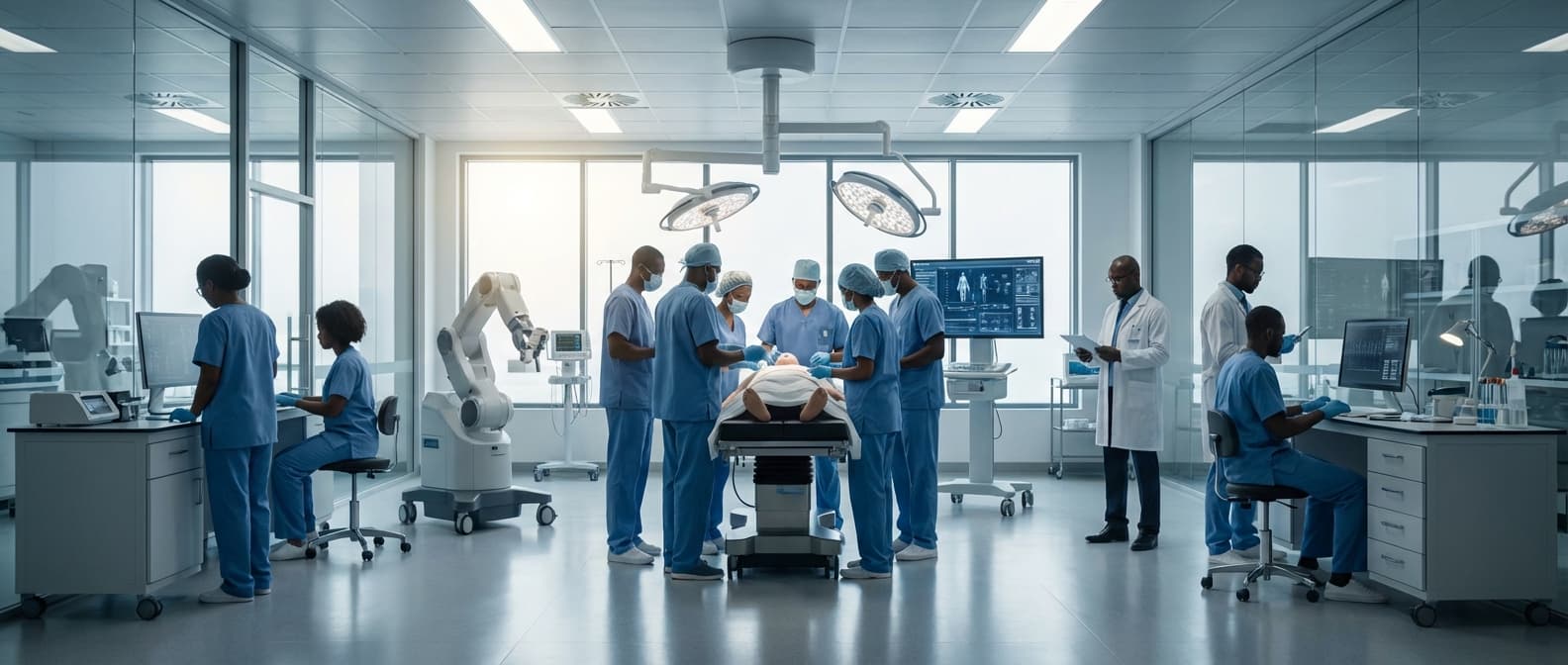
Biomedical Engineering Consulting in Madagascar
Engineering Excellence & Technical Support
Equipment selection, procurement and implementation consulting High-standard technical execution following OEM protocols and local regulatory frameworks.
Bridging the Medical Device Gap
We leverage our expertise to identify critical unmet medical device needs in Madagascar's healthcare landscape. Through strategic sourcing, cost-effective procurement, and localized training programs, we empower healthcare facilities with essential technologies to improve patient care and diagnostic capabilities.
Optimizing Biomedical Infrastructure
Our consultants specialize in assessing, designing, and implementing robust biomedical engineering infrastructure. This includes developing maintenance protocols, managing equipment lifecycles, and ensuring regulatory compliance, leading to enhanced operational efficiency and reduced downtime for vital medical equipment across the nation.
Cultivating Local Biomedical Expertise
We are committed to sustainable development by offering tailored training and capacity-building programs for local biomedical technicians and healthcare professionals. Our goal is to foster self-sufficiency in medical equipment management and repair, creating a skilled workforce that can independently support Madagascar's growing healthcare demands.
What Is Biomedical Engineering Consulting In Madagascar?
Biomedical Engineering Consulting in Madagascar refers to the provision of specialized technical expertise and strategic advice related to medical devices, healthcare technologies, and biomedical systems within the Malagasy context. This service bridges the gap between advanced engineering principles and the practical application of healthcare solutions, addressing the unique challenges and opportunities present in Madagascar's healthcare infrastructure. Consultants analyze existing systems, identify areas for improvement, and propose technologically sound and economically viable solutions. This encompasses a wide range of activities, from evaluating the suitability of imported medical equipment to developing strategies for local manufacturing or maintenance of biomedical devices. The objective is to enhance the quality, accessibility, and efficiency of healthcare services through the effective integration and management of biomedical technologies.
| Who Needs Biomedical Engineering Consulting in Madagascar? | Typical Use Cases |
|---|---|
| Ministry of Public Health and other government health agencies: For national healthcare technology planning, policy development, and large-scale procurement initiatives. | Developing national guidelines for medical device management and maintenance. Assessing the feasibility of implementing specific medical technologies across public health facilities. Evaluating tenders for major medical equipment acquisitions. |
| Hospitals and Clinics (Public and Private): To optimize the use of existing medical equipment, plan for new technology acquisition, and improve maintenance protocols. | Conducting an inventory and lifecycle assessment of current medical equipment. Developing a preventive maintenance schedule for critical medical devices. Advising on the selection and integration of new diagnostic imaging equipment. |
| Non-Governmental Organizations (NGOs) and International Aid Organizations: For project design and implementation involving healthcare infrastructure and medical technology deployment in remote or underserved areas. | Designing the technical specifications for medical equipment for a new rural health center. Developing a strategy for the sustainable operation and maintenance of donated medical equipment. Assessing the suitability of specific medical technologies for tropical climates and limited resource settings. |
| Medical Device Manufacturers and Distributors: To navigate local regulations, understand market needs, and establish effective sales and service networks. | Advising on product registration requirements for imported medical devices. Conducting market research to identify unmet needs for specific medical technologies. Developing training materials for local technical support staff. |
| Academic and Research Institutions: For guidance on equipping laboratories, setting up specialized research facilities, and ensuring compliance with safety standards. | Specifying requirements for advanced laboratory equipment for a biomedical research center. Advising on the safe installation and operation of hazardous medical research equipment. Developing protocols for the calibration and maintenance of scientific instruments. |
Key Service Areas of Biomedical Engineering Consulting in Madagascar:
- Medical Device Evaluation and Procurement Advisory
- Healthcare Technology Needs Assessment and Planning
- Biomedical Equipment Maintenance and Management Strategy Development
- Regulatory Compliance and Standards Adaptation
- Training Program Design and Implementation for Healthcare Technicians
- Feasibility Studies for Local Biomedical Manufacturing or Assembly
- Infrastructure Assessment for Medical Technology Integration
- Telemedicine and Digital Health Solution Implementation Guidance
Who Needs Biomedical Engineering Consulting In Madagascar?
Biomedical Engineering consulting plays a crucial role in advancing healthcare infrastructure and accessibility in developing nations like Madagascar. By providing specialized expertise, these services can bridge critical gaps in medical technology management, equipment maintenance, and the development of innovative healthcare solutions. The primary beneficiaries are entities that directly or indirectly impact public health, from government ministries to private healthcare providers and research institutions. Understanding who needs these services is key to tailoring solutions that address Madagascar's unique healthcare challenges and opportunities.
| Customer Type | Key Needs/Departments | Specific Consulting Focus Areas |
|---|---|---|
| Government Health Ministries and Agencies | Ministry of Public Health, National Health Observatories, Procurement Departments, Planning & Policy Units | Developing national medical equipment strategies, policy formulation for medical technology, procurement guidelines, infrastructure planning, health technology assessment (HTA), capacity building for local workforce. |
| Public Hospitals and Healthcare Facilities | Hospital Administration, Biomedical Engineering Departments (often nascent or understaffed), Clinical Engineering, IT Departments, Procurement, Training Departments | Equipment lifecycle management, preventive maintenance programs, repair and calibration services, equipment inventory and auditing, staff training on equipment use and maintenance, procurement support and evaluation, development of clinical engineering departments, safety standards implementation. |
| Private Hospitals and Clinics | Hospital Management, Clinical Heads, Procurement Managers, Facility Managers | Optimizing medical equipment investment, ensuring compliance with local and international standards, improving equipment uptime, training clinical staff on new technologies, cost-effective maintenance solutions, expansion planning with technology integration. |
| Non-Governmental Organizations (NGOs) and International Aid Organizations | Project Managers, Health Program Officers, Procurement Teams, Logistics Departments | Assessing and procuring appropriate medical equipment for specific projects, establishing sustainable maintenance frameworks in remote areas, training local healthcare workers, evaluating the impact of donated equipment, setting up functional biomedical departments in supported facilities. |
| Medical Equipment Suppliers and Distributors | Sales and Marketing Departments, Technical Support Teams, After-Sales Service Departments | Establishing robust after-sales service networks, providing technical training to local partners, ensuring regulatory compliance for imported devices, market analysis and strategy, setting up local repair and spare parts hubs. |
| Research and Academic Institutions | University Departments (e.g., Engineering, Medicine), Research Project Leaders, Lab Managers | Advising on specialized research equipment, setting up and maintaining advanced laboratory infrastructure, training researchers on complex instrument operation, facilitating interdisciplinary collaboration, ensuring safety protocols for laboratory equipment. |
| Medical Device Manufacturers | Business Development, Regulatory Affairs, Field Service Engineers | Navigating local regulatory pathways for device approval, establishing distribution and service partnerships, adapting products for local market needs and conditions, developing training materials for Malagasy users and technicians. |
| Insurance Companies | Healthcare Claims Departments, Risk Management, Provider Network Management | Assessing the quality and cost-effectiveness of medical equipment used by healthcare providers, establishing standards for equipment maintenance to reduce claim risks, providing insights on technology adoption for better patient outcomes. |
Target Customers for Biomedical Engineering Consulting in Madagascar
- Government Health Ministries and Agencies
- Public Hospitals and Healthcare Facilities
- Private Hospitals and Clinics
- Non-Governmental Organizations (NGOs) and International Aid Organizations
- Medical Equipment Suppliers and Distributors
- Research and Academic Institutions
- Medical Device Manufacturers (seeking market entry or support)
- Insurance Companies (focused on healthcare provision)
Biomedical Engineering Consulting Process In Madagascar
The biomedical engineering consulting process in Madagascar, like in many regions, follows a structured workflow designed to efficiently address the unique needs and challenges of healthcare institutions within the country. This process is crucial for ensuring the proper selection, installation, maintenance, and effective utilization of medical equipment, ultimately contributing to improved patient care and healthcare system efficiency. The workflow typically begins with an initial inquiry from a client and progresses through detailed analysis, proposal development, execution of services, and post-project evaluation.
| Stage | Description | Key Activities | Deliverables |
|---|---|---|---|
| The process commences when a healthcare facility, government agency, or other relevant entity in Madagascar contacts a biomedical engineering consulting firm with a specific need or problem related to medical equipment. | Initial consultation, understanding client requirements, site visits (if feasible and necessary), identifying immediate concerns, preliminary problem definition. | Meeting minutes, preliminary needs statement, initial scope of work understanding. |
| Based on the initial assessment, the consulting firm develops a detailed proposal outlining the scope of services, methodology, timeline, team composition, and estimated costs. This is followed by negotiations with the client. | Developing a comprehensive proposal, cost estimation, defining deliverables, setting project timelines, legal and financial contract review, negotiation of terms and conditions. | Formal project proposal, detailed budget, contract agreement. |
| Upon contract finalization, a detailed project plan is created, identifying specific tasks, assigning responsibilities, and allocating necessary resources, including personnel, equipment, and logistical arrangements within Madagascar. | Developing a detailed work breakdown structure (WBS), scheduling activities, identifying required expertise, planning for local resource procurement (transport, accommodation), risk assessment and mitigation planning. | Detailed project plan, Gantt chart, resource allocation matrix, risk management plan. |
| This is the core phase where the consulting team undertakes the agreed-upon activities. This can involve equipment assessment, procurement support, installation oversight, training, maintenance planning, or policy development. | Conducting equipment inventories, performing technical assessments, developing specifications, assisting with tender processes, supervising installation and commissioning, delivering training programs, developing maintenance strategies, providing regulatory advice. | Technical reports, equipment assessment summaries, training materials, standard operating procedures (SOPs), procurement recommendations, installation/commissioning reports. |
| Throughout and at the conclusion of the execution phase, comprehensive reports are generated to document all activities, findings, recommendations, and outcomes. This ensures transparency and provides a historical record. | Preparing interim progress reports, compiling final project reports, documenting all technical data and findings, providing evidence of completed tasks and training. | Interim and final project reports, technical documentation, training certificates, audit reports (if applicable). |
| The project is formally closed after the client accepts the deliverables and all contractual obligations are met. A follow-up phase may involve ongoing support or evaluation to ensure long-term success and sustainability. | Client acceptance of deliverables, final invoicing and payment, conducting post-project reviews, offering ongoing technical support (if agreed), evaluating project impact and outcomes. | Project closure certificate, client satisfaction survey, post-implementation review report, service level agreements (SLAs) for follow-up support. |
Biomedical Engineering Consulting Workflow in Madagascar
- Initial Inquiry and Needs Assessment
- Proposal Development and Contract Negotiation
- Project Planning and Resource Allocation
- Execution of Consulting Services
- Reporting and Documentation
- Project Closure and Follow-up
Biomedical Engineering Consulting Cost In Madagascar
Biomedical engineering consulting costs in Madagascar can vary significantly depending on several key factors. These include the complexity and scope of the project, the experience and specialization of the consultant, the duration of the engagement, and the specific needs of the client (e.g., a startup needing initial guidance versus an established hospital requiring advanced technical solutions). Geographic location within Madagascar might also play a minor role due to logistical considerations. While no definitive public pricing structures exist, general ranges can be estimated based on these influencing factors. It's crucial for clients to obtain detailed proposals from multiple consultants to compare offerings and costs accurately. Negotiation is often a standard practice in this sector.
| Service Category | Estimated Daily Rate Range (MGA) | Estimated Project Fee Range (MGA) |
|---|---|---|
| Initial Consultation/Needs Assessment (Few days) | 50,000 - 150,000 | 250,000 - 750,000 |
| Equipment Procurement Advisory (Short-term) | 75,000 - 200,000 | 500,000 - 2,000,000 |
| Technical Feasibility Study (1-2 weeks) | 100,000 - 250,000 | 1,000,000 - 5,000,000 |
| Regulatory Compliance Guidance (Specific tasks) | 100,000 - 250,000 | 750,000 - 3,000,000 |
| Project Management/Implementation Support (Ongoing) | 150,000 - 300,000+ | Negotiated based on project scale and duration (can range from 5,000,000+ MGA for complex projects) |
| Specialized System Design/Integration (Complex) | 200,000 - 400,000+ | Negotiated based on scale and complexity (likely 10,000,000+ MGA) |
Key Factors Influencing Biomedical Engineering Consulting Costs in Madagascar
- Project Scope and Complexity: Larger, more intricate projects (e.g., hospital infrastructure design, advanced equipment procurement and integration) will naturally incur higher costs than smaller, focused tasks (e.g., specific equipment calibration, basic regulatory advice).
- Consultant Experience and Expertise: Senior biomedical engineers with specialized knowledge (e.g., medical imaging, laboratory equipment, biomedical device regulation) will command higher rates than junior consultants or those with generalist experience.
- Duration of Engagement: Short-term consultations will have a different pricing model than long-term project management or advisory roles, often involving daily, weekly, or project-based fees.
- Client Type and Size: The financial capacity and needs of the client (e.g., government agency, large hospital network, small private clinic, medical device startup) can influence pricing, though ethical consultants strive for fair market rates.
- Travel and Accommodation: If the consultant is not based locally to the client, costs associated with travel, accommodation, and per diem will be added to the overall project cost.
- Deliverables: The nature of the expected outputs (e.g., detailed reports, technical drawings, training materials, feasibility studies) will impact the time and resources required, thus affecting the cost.
- Urgency: Projects requiring immediate attention or expedited delivery may incur premium charges.
- Regulatory Compliance and Quality Assurance: Consulting services related to navigating Malagasy healthcare regulations, quality management systems, or accreditation processes can be more specialized and thus more expensive.
Affordable Biomedical Engineering Consulting Options
Navigating the complexities of biomedical engineering can be daunting for startups and established companies alike. Fortunately, affordable consulting options exist, offering valuable expertise without exorbitant fees. This document outlines accessible consulting pathways, emphasizing the power of value bundles and effective cost-saving strategies.
| Strategy | Description | Cost-Saving Benefit |
|---|---|---|
| Value Bundles | Combining multiple services (e.g., product design + regulatory strategy, prototyping + testing) into a single package. This often comes with a discounted overall price compared to purchasing services individually. | Reduced overall project cost due to bundled pricing. Streamlined project management by working with a single provider for related tasks. |
| Scope Definition | Clearly outlining project objectives, deliverables, timelines, and success criteria upfront. This prevents scope creep, which is a major driver of cost overruns. | Avoids unexpected additional costs and ensures the project stays within budget. Enables more accurate quoting from consultants. |
| Phased Approach | Breaking down large projects into smaller, manageable phases. This allows for iterative development, feedback, and adjustments, reducing the risk of costly rework later on. | Lower initial investment. Ability to re-evaluate and pivot if initial phases reveal challenges, saving money on further development. |
| Leverage Existing Resources | Identifying and utilizing existing internal expertise, equipment, or data before engaging external consultants. Consultants can then focus on specialized areas where external input is truly needed. | Reduces the scope of work for external consultants, thereby lowering their fees. Maximizes return on existing investments. |
| Skill-Based Outsourcing | Engaging consultants for highly specialized tasks rather than hiring full-time employees. This offers access to expert skills on demand without the long-term commitment and overhead of permanent staff. | Cost-effective access to specialized expertise. Avoids recruitment and ongoing employment costs. |
| Remote Collaboration Tools | Utilizing video conferencing, cloud-based project management software, and collaborative document editing tools to facilitate seamless communication and work with remote consultants. | Reduces travel expenses and allows access to a wider talent pool, potentially leading to more competitive rates. |
| Knowledge Transfer Agreements | Ensuring that consultants actively transfer knowledge to your internal team during the engagement. This builds internal capacity and reduces reliance on external help for future similar tasks. | Long-term cost savings by developing in-house expertise. Reduced need for future external consulting on similar projects. |
Affordable Biomedical Engineering Consulting Options
- Freelance Biomedical Engineers: Engaging independent consultants offers flexibility and often lower overhead costs compared to traditional firms. Platforms like Upwork, LinkedIn, and specialized engineering job boards can connect you with experienced professionals.
- University Research Partnerships: Collaborating with university labs or faculty can provide access to cutting-edge knowledge and skilled researchers at a reduced cost, often in exchange for research opportunities or publication credit.
- Niche Consulting Boutiques: Smaller, specialized firms often focus on specific areas within biomedical engineering (e.g., regulatory affairs, device design, biomechanics). Their focused expertise can be more cost-effective than generalist consultancies.
- Retainer-Based Models: For ongoing support, a retainer agreement can offer consistent access to expertise at a predictable monthly cost, often with discounted hourly rates compared to ad-hoc engagements.
- Project-Based Engagements: Clearly define the scope of your project to ensure a fixed price, preventing scope creep and budget overruns. This is ideal for well-defined tasks or milestones.
- Crowdsourced Engineering Platforms: Emerging platforms allow you to crowdsource specific engineering tasks, leveraging a global pool of talent for potentially lower costs, though careful vetting is crucial.
Verified Providers In Madagascar
Finding reliable and trustworthy healthcare providers is crucial for anyone living in or visiting Madagascar. While the landscape of medical services can sometimes present challenges, understanding who the verified providers are and the rigorous standards they uphold can offer significant peace of mind. This document outlines the key credentials that define a verified provider in Madagascar and explains why choosing them is the most prudent and beneficial decision for your health and well-being.
| Category | Why it Matters for Patients | Franance Health's Commitment |
|---|---|---|
| Professional Licensure | Ensures the provider has met basic legal and educational qualifications to practice medicine safely and ethically. | Franance Health rigorously verifies that all listed providers hold active and legitimate professional licenses from Malagasy authorities. |
| Accreditation | Indicates a facility or practice has met high standards for quality, safety, infection control, and patient rights, often through independent review. | Franance Health prioritizes and actively seeks out facilities that have achieved accreditation from recognized national or international bodies. |
| Specialized Expertise | Confirms the provider has undergone advanced training in a specific medical area, leading to better diagnoses and treatment outcomes for complex conditions. | Franance Health profiles include information on specialists and their specific areas of expertise, allowing patients to find the most qualified professionals. |
| Ethical Practice | Guarantees respectful treatment, privacy protection, and honest communication, fostering trust and a positive patient experience. | Franance Health adheres to a strict code of ethics and expects the same from all its affiliated healthcare providers, with mechanisms for feedback and resolution. |
| Continuous Learning | Ensures patients benefit from the most up-to-date medical knowledge, techniques, and treatments, leading to improved health outcomes. | Franance Health encourages and highlights providers who demonstrate a commitment to ongoing professional development and the adoption of modern medical practices. |
Key Credentials for Verified Healthcare Providers in Madagascar
- Professional Licensure and Registration: All verified providers must hold current and valid licenses or registrations issued by the relevant Malagasy medical authorities (e.g., Ministry of Public Health, Ordre des Médecins). This confirms they have met the basic educational and ethical requirements to practice.
- Accreditation by Reputable Organizations: Look for providers accredited by recognized national or international healthcare accreditation bodies. Accreditation signifies a commitment to quality, safety, and patient-centered care, often involving adherence to strict operational and clinical standards.
- Specialized Certifications and Fellowships: Beyond general licensure, verified providers often possess specialized certifications or have completed fellowships in their respective fields of medicine. This demonstrates advanced training and expertise.
- Clean Disciplinary Record: Verified providers will have no unresolved disciplinary actions or sanctions from medical boards or professional organizations.
- Adherence to Ethical Standards: A commitment to professional ethics, patient confidentiality, and transparent billing practices is a hallmark of verified providers.
- Continuous Professional Development (CPD): Proven engagement in ongoing education and training to stay abreast of the latest medical advancements and best practices is a strong indicator of a verified provider.
Scope Of Work For Biomedical Engineering Consulting
This document outlines the Scope of Work (SOW) for a Biomedical Engineering consulting project. It details the technical deliverables expected from the consultant and establishes standard specifications to ensure the quality and uniformity of the work. The objective is to provide expert guidance and technical solutions for [Client's Project Name/Area of Focus].
| Deliverable Type | Description | Standard Specifications / Acceptance Criteria | Format |
|---|---|---|---|
| Technical Report | Comprehensive analysis and findings related to the consulting engagement. | Clear, concise language; data-driven conclusions; actionable recommendations; appropriate scientific and engineering rigor. | PDF document |
| Design Documentation | Specifications, schematics, and CAD models for proposed or existing biomedical devices. | Adherence to relevant industry standards (e.g., ISO 13485, IEC 60601); clear labeling; version control; traceability to requirements. | CAD files (e.g., SolidWorks, AutoCAD), PDF drawings |
| Risk Management File (RMF) | Documentation detailing identified risks and mitigation strategies for a medical device. | Following ISO 14971 guidelines; comprehensive hazard identification; risk analysis and evaluation; control measures; residual risk assessment. | PDF document, potentially with linked spreadsheets for detailed analysis |
| Usability Engineering File (UEF) | Documentation of user needs, use specifications, and validation of user interface design. | Adherence to IEC 62366-1; clear definition of intended use and users; systematic identification and mitigation of use-related hazards. | PDF document |
| Regulatory Strategy Document | Outline of the regulatory pathway and requirements for a specific market (e.g., FDA, CE Mark). | Accurate identification of applicable regulations; clear classification of the device; proposed submission strategy; timeline estimation. | PDF document |
| Test Protocols & Reports | Detailed procedures for testing devices or components, and the results thereof. | Clear objectives; defined test methods; acceptance criteria; objective data recording; statistical analysis where applicable. | PDF document, potentially with accompanying raw data files |
| Presentation | Summary of findings, recommendations, and key aspects of the consulting engagement. | Visually appealing; clear and concise messaging; tailored to the audience; addresses key project objectives. | PPTX, PDF |
| Software Validation Documentation | Evidence of validation for medical device software components. | Following IEC 62304; clear scope of validation; verification of requirements; traceability; documented testing and defect management. | PDF document |
Key Areas of Consulting Engagement
- Product Development & Design
- Regulatory Compliance & Strategy
- Risk Management & Quality Assurance
- Usability Engineering & Human Factors
- Clinical Translation & Validation
- Technology Assessment & Scouting
- Manufacturing Process Optimization
- Intellectual Property Support
Service Level Agreement For Biomedical Engineering Consulting
This Service Level Agreement (SLA) outlines the commitment of [Your Consulting Company Name] (hereinafter referred to as "Consultant") to its clients (hereinafter referred to as "Client") for biomedical engineering consulting services. This SLA specifically addresses response times for support requests and uptime guarantees for any managed systems or platforms provided by the Consultant.
| Incident Priority | Response Time Target (During Business Hours) | Resolution Time Target (Best Effort) |
|---|---|---|
| Emergency | Within 1 Hour | Within 4 Hours (initial diagnosis and mitigation plan) |
| High-Priority Incident | Within 2 Business Hours | Within 8 Business Hours (initial diagnosis and mitigation plan) |
| Medium-Priority Incident | Within 4 Business Hours | Within 2 Business Days (diagnosis and resolution plan) |
| Low-Priority Incident | Within 1 Business Day | Within 3 Business Days (response and information provision) |
Key Definitions
- Business Hours: Monday through Friday, 9:00 AM to 5:00 PM [Client's Time Zone], excluding public holidays in [Client's Country/Region].
- Emergency: A critical system failure or security breach that renders a vital biomedical device or system non-operational, significantly impacting patient care or safety.
- High-Priority Incident: A significant disruption to a critical biomedical device or system that impairs functionality but does not immediately halt operations or pose a direct threat to patient safety. This could include partial system degradation or performance issues.
- Medium-Priority Incident: A non-critical issue affecting the functionality of a biomedical device or system, or a request for routine support or information that does not impact immediate operations or patient care.
- Low-Priority Incident: A general inquiry, request for information, or minor issue that does not affect the functionality of any biomedical device or system.
- Uptime: The percentage of time that a designated system or platform managed by the Consultant is operational and accessible to the Client.
- Scheduled Maintenance: Planned downtime for system updates, upgrades, or preventative maintenance, communicated to the Client in advance.
Frequently Asked Questions

Ready when you are
Let's scope your Biomedical Engineering Consulting in Madagascar project in Madagascar.

Scaling healthcare logistics and technical systems across the entire continent.