
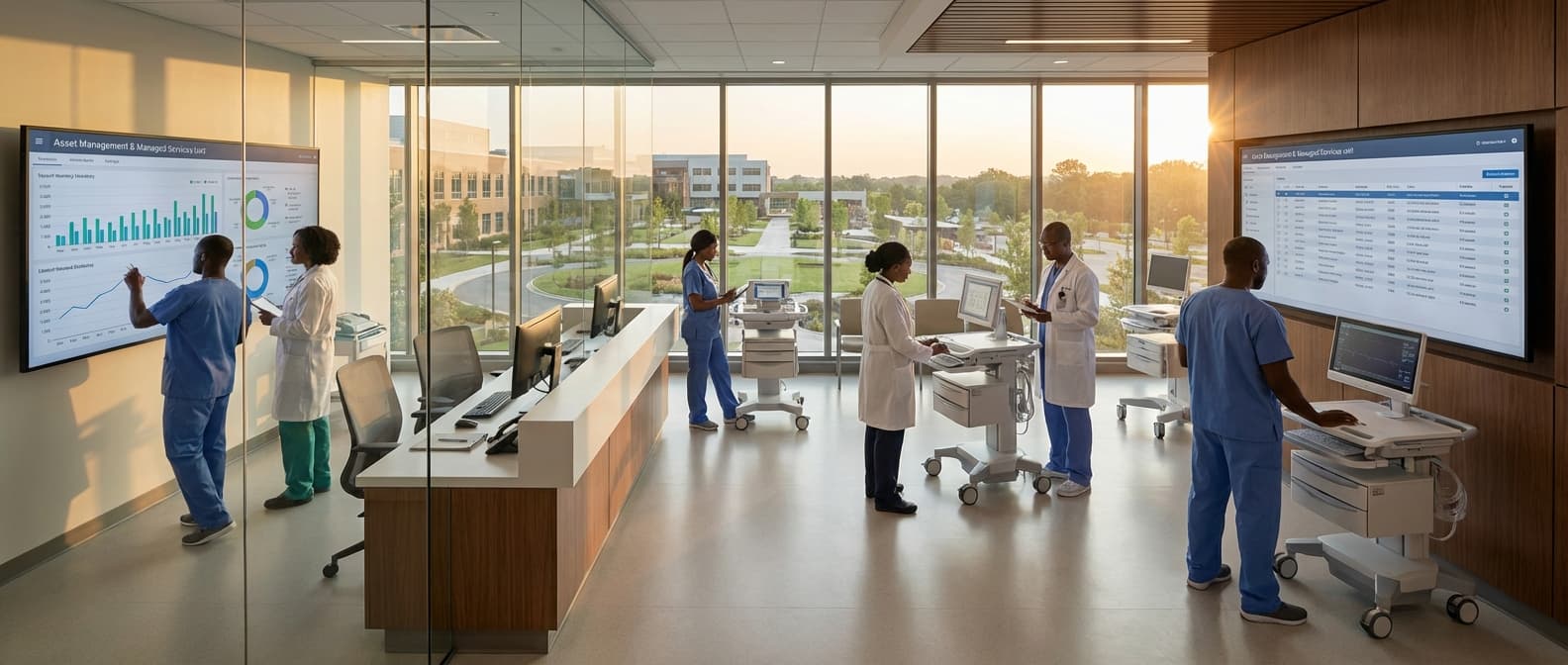
Maintenance KPI Reporting Service (Uptime/MTBF/MTTR) in Madagascar
Engineering Excellence & Technical Support
Maintenance KPI Reporting Service (Uptime/MTBF/MTTR) High-standard technical execution following OEM protocols and local regulatory frameworks.
Maximized Uptime & Operational Efficiency
Empower your Malagasy operations with real-time Uptime reporting. Proactively identify bottlenecks and downtime causes, ensuring continuous production and minimizing revenue loss. Our service delivers granular insights to optimize asset performance across Madagascar.
Enhanced Mean Time Between Failures (MTBF)
Boost reliability in Madagascar's unique industrial landscape. Through advanced data analysis, we predict potential equipment failures before they occur, enabling predictive maintenance strategies that significantly extend Mean Time Between Failures (MTBF) and reduce costly unscheduled interventions.
Optimized Mean Time To Repair (MTTR)
Accelerate recovery and minimize downtime impact in Madagascar. Our reporting service provides actionable intelligence to streamline repair processes, accurately identify root causes of failures, and optimize spare parts management, thereby drastically reducing Mean Time To Repair (MTTR).
What Is Maintenance Kpi Reporting Service (Uptime/mtbf/mttr) In Madagascar?
Maintenance KPI Reporting Service (Uptime/MTBF/MTTR) in Madagascar refers to a specialized offering focused on the systematic collection, analysis, and reporting of key performance indicators (KPIs) related to the operational availability and reliability of assets and systems within Madagascar's industrial and commercial sectors. This service provides data-driven insights to optimize maintenance strategies, minimize downtime, and enhance overall operational efficiency. The core KPIs typically monitored and reported include:
- Uptime: The percentage of time an asset or system is functional and available for its intended use. It is calculated as (Total Operational Time - Downtime) / Total Operational Time * 100%.
- Mean Time Between Failures (MTBF): A measure of the average time elapsed between one failure of a repairable system and the next. It is calculated as Total Uptime / Number of Failures. A higher MTBF indicates greater reliability.
- Mean Time To Repair (MTTR): The average time it takes to repair a failed asset or system. It is calculated as Total Downtime / Number of Repairs. A lower MTTR signifies efficient repair processes and reduced downtime impact.
These KPIs are crucial for assessing maintenance performance, identifying recurring issues, and making informed decisions regarding preventive maintenance schedules, spare parts management, and technician training. The service aims to transform raw maintenance data into actionable intelligence, enabling organizations to proactively manage their assets and achieve higher levels of operational availability.
| Typical Use Cases for Maintenance KPI Reporting Service (Uptime/MTBF/MTTR) in Madagascar | Description | Benefits |
|---|---|---|
| Downtime Analysis and Root Cause Identification | Systematic tracking of all unplanned downtime events, categorized by asset type, failure mode, and operational impact. Analysis to identify recurring failure patterns and their underlying causes. | Proactive identification of systemic weaknesses, enabling targeted corrective actions and reduction of future failures. |
| Predictive Maintenance Strategy Development | Utilizing historical MTBF data to forecast potential failure points and optimize preventive maintenance schedules. Employing MTTR data to establish realistic repair time targets. | Shift from reactive to proactive maintenance, reducing unexpected outages and associated costs. Improved resource allocation for maintenance activities. |
| Spare Parts Inventory Optimization | Analyzing failure frequency (derived from MTBF) and repair times (MTTR) to forecast demand for critical spare parts, ensuring availability while minimizing excess inventory. | Reduced capital tied up in inventory, improved stockout rates for critical components, and streamlined procurement processes. |
| Performance Benchmarking and Improvement | Establishing baseline KPIs for Uptime, MTBF, and MTTR across different asset classes or operational units. Comparing performance against industry standards or internal targets. | Identification of underperforming assets or processes, enabling focused improvement initiatives and performance enhancement strategies. |
| Maintenance Budgeting and Resource Allocation | Providing data-driven justification for maintenance budgets based on historical performance and projected needs. Optimizing allocation of maintenance personnel and external service providers. | More accurate and defensible budget proposals, efficient utilization of maintenance resources, and improved cost control. |
| Service Level Agreement (SLA) Monitoring | Tracking Uptime and MTTR metrics against contractual obligations to ensure compliance with SLAs for internal or external customers. | Demonstration of adherence to contractual commitments, avoidance of penalty clauses, and enhancement of customer satisfaction. |
| Asset Health Monitoring and Management | Long-term trend analysis of Uptime, MTBF, and MTTR to assess the overall health and degradation of assets, informing decisions on repair versus replacement. | Informed decisions regarding capital expenditure for asset renewal, extending asset lifespan where economically viable. |
Who Needs Maintenance KPI Reporting Service (Uptime/MTBF/MTTR) in Madagascar?
- Industries with critical infrastructure and high uptime requirements, such as:
- Telecommunications operators
- Power generation and distribution companies
- Mining and resource extraction operations
- Manufacturing plants (continuous and batch processes)
- Transportation and logistics providers
- Oil and gas facilities
- Data centers and IT infrastructure providers
- Organizations seeking to optimize operational costs by reducing unplanned downtime and associated expenses.
- Companies aiming to improve asset lifecycle management and maximize return on investment (ROI) for their equipment.
- Businesses that are subject to regulatory compliance or contractual obligations regarding service availability.
Who Needs Maintenance Kpi Reporting Service (Uptime/mtbf/mttr) In Madagascar?
This service is crucial for any organization in Madagascar that relies on the continuous and efficient operation of its physical assets. By providing key performance indicators (KPIs) for maintenance, such as Uptime, Mean Time Between Failures (MTBF), and Mean Time To Repair (MTTR), businesses can gain vital insights into their maintenance effectiveness, identify areas for improvement, and ultimately reduce operational costs and downtime. This leads to enhanced productivity, increased profitability, and a stronger competitive advantage.
| Target Customer Segment | Specific Departments Involved | Why They Need the Service (Key Benefits) |
|---|---|---|
| Manufacturing Companies (e.g., food processing, textiles, mining, cement) | Production Management, Maintenance Department, Operations Management, Plant Management | Minimize production downtime, optimize spare parts inventory, improve equipment reliability, reduce scrap and rework, forecast maintenance needs, enhance overall equipment effectiveness (OEE). |
| Energy & Utilities (e.g., power generation, water treatment, telecommunications) | Operations Department, Asset Management, Field Service Management, Network Operations Center (NOC) | Ensure uninterrupted service delivery, reduce costly emergency repairs, extend asset lifespan, improve grid stability, manage field technician efficiency, meet regulatory compliance. |
| Transportation & Logistics (e.g., airlines, shipping companies, fleet management) | Fleet Maintenance, Operations Control, Technical Services, Supply Chain Management | Maximize vehicle/vessel/aircraft availability, reduce turnaround times, optimize maintenance schedules, minimize operational disruptions, ensure safety and compliance, control fuel and maintenance costs. |
| Healthcare Facilities (e.g., hospitals, clinics) | Facilities Management, Biomedical Engineering Department, Clinical Operations | Ensure continuous operation of critical medical equipment (e.g., MRI machines, ventilators), minimize patient care disruptions, improve equipment uptime, manage maintenance budgets effectively, ensure patient safety and regulatory compliance. |
| Mining Operations | Mine Operations, Maintenance & Reliability Engineering, Asset Management | Maximize ore extraction rates by ensuring heavy machinery uptime, reduce costly breakdowns in remote locations, optimize maintenance strategies for harsh environments, improve safety protocols. |
| Hospitality Industry (e.g., large hotels, resorts) | Engineering & Maintenance Department, Operations Management, General Management | Ensure guest comfort and satisfaction by maintaining HVAC, plumbing, and electrical systems, minimize service interruptions, optimize preventative maintenance for guest-facing facilities, manage maintenance budgets. |
| Construction Companies | Equipment Management Department, Project Management, Operations | Maximize the availability of heavy machinery and construction equipment, reduce project delays due to equipment failure, optimize maintenance schedules for dispersed project sites, control equipment lifecycle costs. |
Target Customers and Departments in Madagascar Requiring Maintenance KPI Reporting Service
- {"title":"Industries with Critical Infrastructure & Equipment:","description":"Sectors where equipment failure directly impacts production, service delivery, or safety."}
- {"title":"Companies Focused on Operational Excellence & Cost Optimization:","description":"Organizations aiming to minimize waste, improve resource allocation, and maximize ROI on their assets."}
- {"title":"Businesses Seeking to Improve Customer Satisfaction:","description":"Firms where reliable service delivery is paramount to client retention and reputation."}
- {"title":"Organizations Undergoing Digital Transformation:","description":"Companies integrating technology to monitor, manage, and optimize their operations."}
Maintenance Kpi Reporting Service (Uptime/mtbf/mttr) Process In Madagascar
This document outlines the workflow for the Maintenance KPI Reporting Service (Uptime/MTBF/MTTR) in Madagascar. This service provides clients with crucial insights into the reliability and maintainability of their assets through key performance indicators. The process is designed to be transparent, efficient, and data-driven, ensuring accurate and timely reporting.
| Stage | Description | Key Activities | Responsible Party (Client/Service Provider) | Deliverables/Outcomes | Timeframe (Typical) |
|---|---|---|---|---|---|
| Inquiry & Scoping | Initial contact and understanding of client's reporting needs and asset landscape. | Client expresses interest, defines reporting requirements (KPIs, asset types, reporting frequency), and provides initial asset information. Service Provider clarifies scope, proposes methodology, and outlines service terms. | Client (initial inquiry), Service Provider (clarification & proposal) | Service Agreement/Contract, Agreed-upon Scope of Work, List of Assets for Monitoring | 1-3 Business Days |
| Data Collection & Validation | Gathering relevant maintenance and operational data for the specified assets. | Client provides access to maintenance logs, operational data (e.g., production schedules, downtime events), and asset configuration details. Service Provider establishes data ingestion mechanisms (e.g., API, manual upload, system integration) and performs initial data quality checks for completeness and accuracy. | Client (data provision), Service Provider (data ingestion & validation) | Cleaned & Validated Dataset, Data Validation Report | 2-7 Business Days (depends on data volume & complexity) |
| Analysis & Calculation | Processing the validated data to calculate Uptime, MTBF, and MTTR. | Service Provider applies pre-defined formulas and algorithms to calculate Uptime (percentage of operational time), Mean Time Between Failures (MTBF - average time between failures), and Mean Time To Repair (MTTR - average time to restore equipment to operational status). This stage may involve identifying failure modes and repair actions. | Service Provider | Calculated KPI values for each asset and/or asset group, Raw calculation outputs | 3-5 Business Days |
| Reporting & Presentation | Compiling and presenting the calculated KPIs to the client. | Service Provider generates comprehensive reports (e.g., dashboards, PDF reports) visualizing the KPI trends, highlighting significant events, and providing actionable insights. A presentation meeting is typically scheduled to discuss the findings with the client. | Service Provider (report generation & presentation), Client (review & discussion) | Maintenance KPI Report (e.g., dashboard, PDF), Presentation Deck, Meeting Minutes | 2-4 Business Days (report generation) + 1 Business Day (presentation) |
| Feedback & Iteration | Gathering client feedback and refining the reporting process. | Client provides feedback on the report's clarity, accuracy, and usefulness. Service Provider addresses any discrepancies, makes adjustments to the reporting methodology or data collection as needed, and plans for future reporting cycles. | Client (feedback), Service Provider (action & improvement) | Action Plan for Improvements, Updated Reporting Parameters (if applicable), Plan for Next Reporting Cycle | Ongoing/Continuous |
Process Stages
- Inquiry & Scoping
- Data Collection & Validation
- Analysis & Calculation
- Reporting & Presentation
- Feedback & Iteration
Maintenance Kpi Reporting Service (Uptime/mtbf/mttr) Cost In Madagascar
This report outlines the typical cost factors and pricing ranges for a Maintenance KPI Reporting Service focused on Uptime, Mean Time Between Failures (MTBF), and Mean Time To Repair (MTTR) in Madagascar. Understanding these costs is crucial for businesses aiming to optimize their maintenance operations and asset reliability.
| Service Component/Tier | Estimated Monthly Cost Range (MGA) | Typical Inclusions |
|---|---|---|
| Basic Reporting (Standard Templates, Limited Assets) | 150,000 - 400,000 MGA | Standard Uptime, MTBF, MTTR reports for a limited number of assets; basic data integration; standard dashboards; email delivery. |
| Standard Reporting (Moderate Assets, Some Customization) | 400,000 - 900,000 MGA | Reporting for a moderate number of assets; integration with common systems; customizable report templates; interactive dashboards; web portal access. |
| Advanced Reporting (Extensive Assets, Complex Integrations, High Customization) | 900,000 - 2,500,000+ MGA | Comprehensive reporting for a large asset base; complex data source integrations (APIs, IoT); bespoke dashboard design and analytical tools; advanced alerting; dedicated support. |
| One-Time Setup/Implementation Fee | 200,000 - 1,000,000+ MGA | Initial system configuration, data source integration setup, user training, and custom report development. |
Key Pricing Factors for Maintenance KPI Reporting Services in Madagascar
- Scope of Reporting: The number of assets, equipment types, and the complexity of the systems being monitored directly influence the reporting effort and, consequently, the cost.
- Data Source Integration: The ease of integrating with existing data sources (e.g., SCADA systems, CMMS, IoT sensors) is a major factor. Custom integrations or complex data extraction processes will incur higher costs.
- Reporting Frequency and Granularity: Daily, weekly, monthly, or real-time reporting, along with the level of detail required in each report (e.g., component-level vs. system-level), impacts the service's complexity and price.
- Customization and Dashboarding: The need for bespoke report formats, custom dashboard visualizations, and specific analytical tools will increase development and implementation costs.
- Software Platform/Technology: Whether the service utilizes a proprietary platform, a third-party solution, or requires custom software development will affect the underlying technology costs.
- Implementation and Training: Initial setup, configuration, and training for the client's personnel to understand and utilize the reporting system contribute to the overall cost.
- Ongoing Support and Maintenance: The level of technical support, software updates, and system maintenance provided by the vendor will be factored into recurring fees.
- Data Storage and Security: Requirements for data storage volume, retention periods, and enhanced security measures can add to the cost.
- Vendor Expertise and Reputation: More established and experienced vendors may command higher prices due to their proven track record and specialized knowledge.
- Service Level Agreements (SLAs): Guarantees on reporting accuracy, uptime of the reporting system, and response times for support can influence pricing.
Affordable Maintenance Kpi Reporting Service (Uptime/mtbf/mttr) Options
Our Affordable Maintenance KPI Reporting Service provides essential visibility into your asset performance, focusing on critical metrics like Uptime, Mean Time Between Failures (MTBF), and Mean Time To Repair (MTTR). We offer flexible value bundles designed to meet diverse operational needs and budgets, along with strategic cost-saving approaches to maximize your return on investment. Understanding these KPIs is crucial for optimizing maintenance schedules, reducing downtime, improving resource allocation, and ultimately lowering operational costs.
| Cost-Saving Strategy | Description | How Our Service Supports It |
|---|---|---|
| Proactive Maintenance Scheduling | Shifting from reactive repairs to planned maintenance based on asset condition and failure trends. | Our MTBF and MTTR data helps identify recurring issues and predict potential failures, enabling optimized preventive maintenance schedules. |
| Reduced Unplanned Downtime | Minimizing unexpected equipment failures that halt production or service delivery. | Improved Uptime reporting highlights assets with lower availability, allowing for targeted interventions before critical failures occur. |
| Optimized Spare Parts Inventory | Ensuring the right parts are available when needed without excessive overstocking. | Understanding MTTR for specific components helps forecast demand for critical spare parts, reducing carrying costs and stockouts. |
| Efficient Workforce Allocation | Ensuring maintenance technicians are deployed effectively based on task urgency and skill requirements. | MTTR data provides insights into the complexity and duration of repairs, aiding in better labor planning and resource scheduling. |
| Data-Driven Decision Making | Moving away from gut feelings and towards evidence-based decisions for maintenance investments and strategies. | Our service provides clear, quantifiable data on asset performance, empowering informed decisions about maintenance budgets, technology adoption, and training. |
| Leveraging Existing Systems (where applicable) | Integrating with your current CMMS or EAM to avoid duplicate data entry and leverage existing investments. | We can often integrate with your existing systems to pull relevant data, reducing manual effort and ensuring data consistency. |
Value Bundles
- {"title":"Essential Insights Bundle","features":["Monthly Uptime Reporting","Basic MTBF & MTTR Calculation & Trend Visualization","Standardized Report Templates","Email Support"],"idealFor":"Small to medium-sized businesses, single-site operations, those new to KPI tracking.","description":"For organizations starting their KPI journey or with a smaller asset base. Focuses on core reporting and trend analysis."}
- {"title":"Performance Optimizer Bundle","features":["All features from Essential Insights Bundle","Weekly Uptime & Critical Asset Monitoring Alerts","Root Cause Analysis Support (based on reported data)","Benchmarking (against industry averages, if available)","Web-based Dashboard Access"],"idealFor":"Growing businesses, multi-site operations, teams focused on proactive maintenance.","description":"Enhances the Essential Bundle with more in-depth analysis and actionable insights to drive performance improvements."}
- {"title":"Strategic Asset Management Bundle","features":["All features from Performance Optimizer Bundle","Predictive Maintenance Indicator Reporting (based on historical data patterns)","Customizable Report Generation & Dashboards","Priority Email & Phone Support","Quarterly Strategy Review Sessions"],"idealFor":"Large enterprises, organizations with critical assets, those aiming for best-in-class maintenance strategies.","description":"The most comprehensive offering, providing advanced analytics, predictive capabilities, and dedicated support for strategic decision-making."}
Verified Providers In Madagascar
In Madagascar's evolving healthcare landscape, identifying trusted and capable healthcare providers is paramount for individuals and organizations seeking quality medical services. Franance Health stands out as a leading entity, meticulously vetting and credentialing healthcare professionals and facilities. This rigorous process ensures that all Franance Health-verified providers meet stringent standards of expertise, ethical practice, and patient care. Choosing a Franance Health-verified provider offers significant advantages, guaranteeing a higher level of medical competence and a commitment to patient well-being. Their credentials represent a promise of reliable and effective healthcare solutions within Madagascar.
| Credentialing Aspect | Franance Health Verification Standard | Benefit to Patients |
|---|---|---|
| Medical Education & Training | Verification of accredited institutions and completion of recognized medical programs. | Ensures providers have foundational medical knowledge and skills. |
| Professional Experience | Scrutiny of past practice, including peer reviews and continuous professional development. | Guarantees practical experience and ongoing learning in medical fields. |
| Licensing & Certifications | Confirmation of valid and current medical licenses and specialized certifications. | Confirms legal authorization to practice and expertise in specific areas. |
| Ethical Conduct & Professionalism | Background checks for disciplinary actions and adherence to a code of conduct. | Protects patients from unprofessional or unethical behavior. |
| Facility Standards (where applicable) | Assessment of infrastructure, equipment, and hygiene protocols for clinics and hospitals. | Ensures a safe, well-equipped, and hygienic environment for treatment. |
Why Franance Health Credentials Matter in Madagascar:
- Unwavering Commitment to Quality: Franance Health's credentialing process involves a thorough assessment of medical education, training, and experience, ensuring that providers possess the necessary skills and knowledge.
- Adherence to Ethical Standards: Verified providers are committed to upholding the highest ethical principles in their practice, prioritizing patient confidentiality, informed consent, and compassionate care.
- Enhanced Patient Safety: The credentialing mechanism includes checks for professional conduct and any disciplinary actions, contributing to a safer healthcare environment for all.
- Access to Expertise: By associating with Franance Health, patients gain access to a network of specialized and general medical practitioners who have demonstrated their proficiency.
- Peace of Mind: Knowing that your healthcare provider has been rigorously vetted by a reputable organization like Franance Health offers invaluable peace of mind during times of medical need.
Scope Of Work For Maintenance Kpi Reporting Service (Uptime/mtbf/mttr)
This Scope of Work (SOW) outlines the requirements for a Maintenance KPI Reporting Service, focusing on Uptime, Mean Time Between Failures (MTBF), and Mean Time To Repair (MTTR). The service will provide regular, standardized reports to enable informed decision-making regarding asset maintenance strategies and operational efficiency. The technical deliverables and standard specifications are detailed below.
| Deliverable | Description | Standard Specifications | Frequency | Format |
|---|---|---|---|---|
| KPI Data Collection Framework | Establish and document the methodology for collecting raw data required for KPI calculation. | Data sources (e.g., CMMS, SCADA, sensor logs, operator logs) clearly identified. Data validation rules defined. Data extraction and transformation processes specified. | Initial setup and ongoing refinement as needed. | Document (PDF, Word) |
| Uptime Report | Report detailing the percentage of operational time for specified assets or systems. | Calculated as ((Total Time - Downtime) / Total Time) * 100%. Downtime explicitly defined (e.g., scheduled maintenance excluded). Breakdown by asset/system, and overall. | Weekly and Monthly | PDF and CSV |
| MTBF Report | Report showing the average time between failures for specified assets or systems. | Calculated as Total Uptime / Number of Failures. Data aggregated by asset type and individual asset. Trends over time highlighted. | Monthly and Quarterly | PDF and CSV |
| MTTR Report | Report illustrating the average time required for repairs of specified assets or systems. | Calculated as Total Downtime / Number of Repairs. Breakdown by repair type, asset type, and individual asset. Identification of common repair bottlenecks. | Monthly and Quarterly | PDF and CSV |
| Trend Analysis Report | Analysis of KPI trends over time to identify patterns, anomalies, and areas for improvement. | Includes graphical representations of Uptime, MTBF, and MTTR trends. Identification of statistically significant changes and potential root causes. | Quarterly and Annually | |
| Executive Summary Dashboard | A high-level overview of key maintenance KPIs, designed for management review. | Visualizations of current KPI status, key trends, and actionable insights. Customizable to user preferences. | Monthly | Interactive Web Dashboard (e.g., Power BI, Tableau) or static PDF |
| Raw Data Export | Export of the underlying raw data used for KPI calculations. | Structured data format (e.g., CSV, Excel) allowing for further analysis by the client. Data fields clearly defined. | On-demand and Monthly | CSV or Excel |
| Methodology Documentation | Detailed documentation of all calculation methodologies, assumptions, and data sources. | Ensures transparency and consistency. Includes formulas, definitions, and data lineage. | Upon initial delivery and updates as required. | Document (PDF, Word) |
Key Performance Indicators (KPIs) to be Reported
- Uptime: Percentage of time an asset or system is available and operational.
- Mean Time Between Failures (MTBF): Average time between a system's successive failures, calculated from the time of repair to the time of the next failure.
- Mean Time To Repair (MTTR): Average time taken to repair a failed asset or system, from the moment a failure is detected to the moment the asset is restored to operational status.
Service Level Agreement For Maintenance Kpi Reporting Service (Uptime/mtbf/mttr)
This Service Level Agreement (SLA) outlines the guaranteed performance standards for the Maintenance KPI Reporting Service, specifically focusing on Uptime, Mean Time Between Failures (MTBF), and Mean Time To Repair (MTTR). It defines response times for critical incidents and sets uptime guarantees for the reporting platform.
| Metric | Target | Measurement Period | Definition of Failure/Incident |
|---|---|---|---|
| Uptime | 99.9% | Monthly | Any period where the reporting dashboard or its core data ingestion/processing functions are inaccessible or demonstrably not providing up-to-date information as per scheduled updates. |
| MTBF | = 1000 hours | Quarterly | A complete and unscheduled interruption of the reporting service requiring manual intervention to restore functionality. |
| MTTR | <= 4 hours (for Critical Incidents) | Per Incident | An unscheduled interruption of the reporting service that significantly impacts the ability to access or utilize KPI reports, classified as 'Critical' (see Response Times below). |
Key Performance Indicators (KPIs) Covered
- Uptime: The percentage of time the Maintenance KPI Reporting Service is available and operational.
- Mean Time Between Failures (MTBF): The average time the service operates correctly between identifiable failures. This metric reflects the reliability of the reporting system.
- Mean Time To Repair (MTTR): The average time it takes to resolve an incident and restore the service after a failure. This metric reflects the efficiency of the support team in addressing issues.
Frequently Asked Questions

Ready when you are
Let's scope your Maintenance KPI Reporting Service (Uptime/MTBF/MTTR) in Madagascar project in Madagascar.

Scaling healthcare logistics and technical systems across the entire continent.