
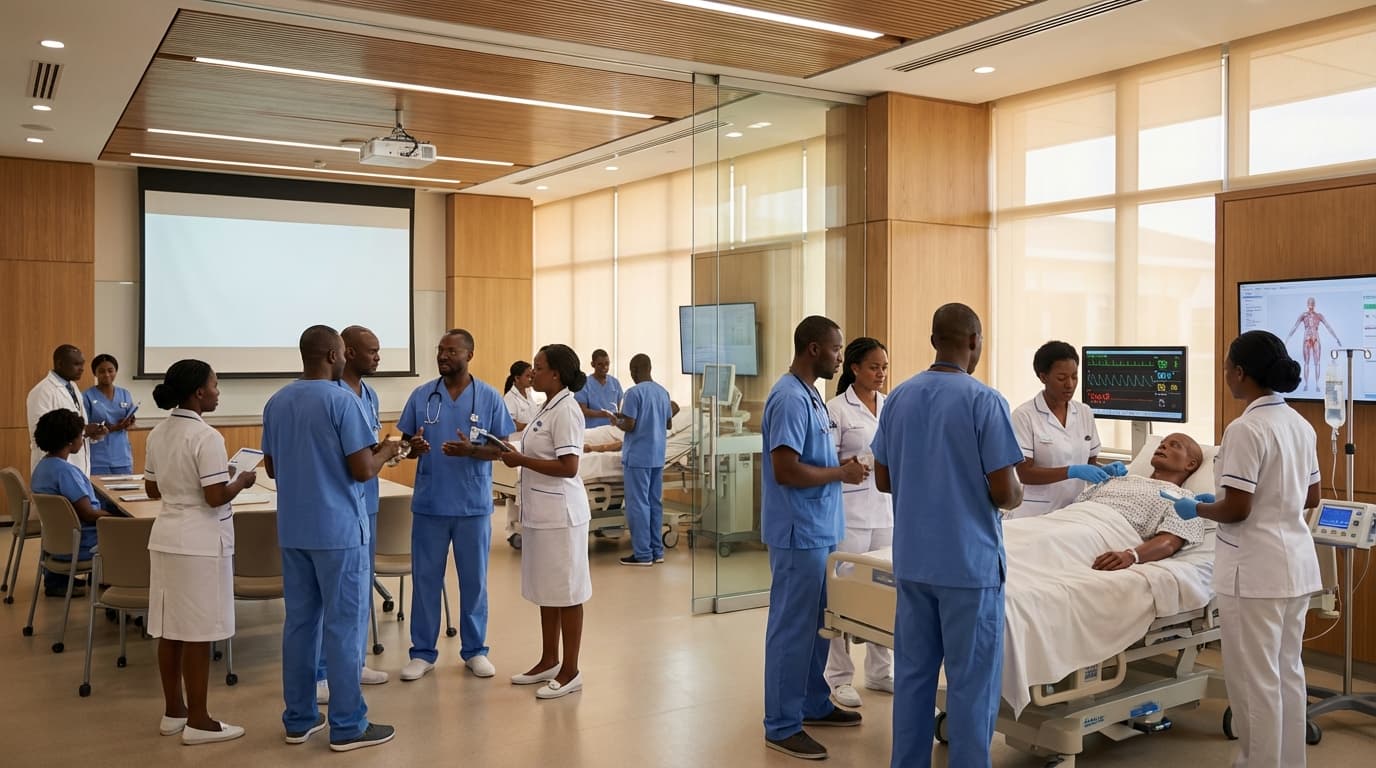
Equipment Training & Education in Libya
Engineering Excellence & Technical Support
Comprehensive equipment training and certification programs High-standard technical execution following OEM protocols and local regulatory frameworks.
Localized Operator Certification Program
We've launched a comprehensive certification program for heavy equipment operators in Libya, offering hands-on training modules and theoretical assessments tailored to the specific equipment common in the Libyan market. This ensures operators are not only proficient but also certified to industry standards, enhancing safety and productivity on project sites.
Advanced Maintenance & Troubleshooting Workshops
Our technical training curriculum now includes specialized workshops focused on the maintenance and troubleshooting of critical oil & gas and construction equipment prevalent in Libya. These workshops equip maintenance technicians with advanced diagnostic skills and best practices for preventative maintenance, minimizing downtime and extending equipment lifespan.
Train-the-Trainer Initiative for Local Capacity Building
To foster sustainable expertise, we're implementing a 'Train-the-Trainer' program designed to empower Libyan nationals to become certified instructors. This initiative builds local training capacity, ensuring ongoing knowledge transfer and the development of a skilled workforce for the country's infrastructure and energy sectors.
What Is Equipment Training & Education In Libya?
Equipment Training & Education in Libya refers to the structured process of imparting knowledge and practical skills necessary for the safe, efficient, and effective operation, maintenance, and troubleshooting of various types of equipment. This service is crucial for individuals and organizations operating in diverse sectors within Libya, aiming to enhance workforce competency, reduce operational downtime, improve safety records, and maximize asset lifespan. It encompasses theoretical instruction, hands-on practical sessions, and often includes certification upon successful completion. The objective is to ensure that personnel are proficient in utilizing equipment according to manufacturer specifications and industry best practices, thereby mitigating risks and optimizing productivity.
| Who Needs It? | Typical Use Cases | ||||||||||||
|---|---|---|---|---|---|---|---|---|---|---|---|---|---|
| Industrial Operators & Technicians: Individuals directly responsible for operating and maintaining machinery in manufacturing, oil & gas, construction, and energy sectors. | Maintenance Engineers & Supervisors: Professionals overseeing the upkeep and repair of complex equipment, requiring in-depth understanding of diagnostics and preventative strategies. | Safety Officers & Managers: Personnel tasked with ensuring a safe working environment, necessitating knowledge of equipment-related hazards and safety procedures. | Project Managers & Site Supervisors: Leaders who need to understand equipment capabilities, limitations, and operational requirements to effectively manage projects and resources. | New Hires & Apprentices: Entry-level personnel requiring foundational training on specific equipment to become productive members of the workforce. | Organizations Implementing New Technologies: Companies acquiring or upgrading equipment, requiring training for existing staff to adapt to new systems and workflows. | Companies with Stringent Regulatory Compliance Requirements: Businesses operating in sectors with high safety and operational standards (e.g., oil and gas, mining), where certified training is mandatory. | Oil & Gas Exploration and Production (E&P) Companies: Training on drilling rigs, seismic equipment, processing units, and safety systems. | Construction Companies: Training on heavy machinery (cranes, excavators, dozers), power tools, and scaffolding. | Manufacturing & Processing Plants: Training on assembly lines, CNC machines, packaging equipment, and industrial automation systems. | Power Generation & Utilities: Training on turbines, generators, control systems, and substations. | Logistics & Warehousing: Training on forklifts, automated storage and retrieval systems (AS/RS), and conveyor belts. | Healthcare Facilities: Training on advanced medical imaging equipment (MRI, CT scanners), surgical instruments, and laboratory machinery. | Telecommunications Companies: Training on network infrastructure deployment and maintenance equipment. |
Key Components of Equipment Training & Education in Libya
- Needs Assessment: Evaluating the current skill gaps and identifying specific training requirements for personnel and equipment.
- Curriculum Development: Designing tailored training programs based on equipment type, industry standards, and organizational objectives.
- Instructional Delivery: Employing a combination of classroom lectures, interactive workshops, simulations, and on-the-job training.
- Practical Skill Development: Providing hands-on experience with the actual equipment under supervised conditions.
- Safety Protocols: Integrating comprehensive safety training, hazard identification, and emergency response procedures related to equipment operation.
- Maintenance & Troubleshooting: Educating personnel on routine maintenance, preventive measures, and diagnostic techniques for common equipment faults.
- Performance Evaluation: Assessing trainee competency through written examinations, practical tests, and observed performance.
- Certification & Documentation: Issuing certificates of completion and maintaining training records for compliance and future reference.
Who Needs Equipment Training & Education In Libya?
In Libya, the demand for comprehensive equipment training and education is driven by a diverse range of sectors and professionals. As Libya continues its development and reconstruction efforts, the need for skilled personnel to operate, maintain, and manage various types of equipment is paramount. This training is crucial for ensuring safety, efficiency, productivity, and longevity of the equipment, thereby contributing to the overall economic growth and stability of the nation.
| Sector/Industry | Target Customers/Job Roles | Relevant Departments/Units | Types of Equipment Requiring Training |
|---|---|---|---|
| Oil and Gas | Drillers, Technicians, Engineers, Maintenance Crew, Safety Officers | Exploration & Production, Refining, Petrochemicals, Maintenance, Health & Safety | Drilling rigs, pumps, compressors, control systems, safety equipment, analytical instruments |
| Construction & Infrastructure | Operators, Foremen, Site Managers, Engineers, Skilled Laborers | Civil Engineering, Building Construction, Road Maintenance, Project Management | Cranes, excavators, bulldozers, loaders, concrete mixers, scaffolding, power tools |
| Manufacturing & Industrial | Machine Operators, Technicians, Quality Control Staff, Supervisors | Production Lines, Assembly, Quality Assurance, Maintenance, Logistics | Industrial machinery, assembly lines, robotic systems, welding equipment, testing equipment |
| Healthcare | Medical Technicians, Biomedical Engineers, Radiologists, Nurses, Laboratory Staff | Radiology, Laboratory Services, Operating Theatres, Biomedical Engineering, General Wards | MRI scanners, CT scanners, X-ray machines, laboratory analyzers, surgical equipment, patient monitoring systems |
| Agriculture | Farmers, Farm Managers, Agronomists, Technicians | Crop Production, Livestock Management, Irrigation, Mechanization | Tractors, harvesters, irrigation systems, sprayers, plows, processing machinery |
| Transportation & Logistics | Drivers, Fleet Managers, Warehouse Operators, Mechanics, Customs Officers | Road Freight, Port Operations, Airport Services, Warehousing, Customs & Border Control | Heavy-duty vehicles, forklifts, cranes, conveyor systems, cargo handling equipment, diagnostic tools |
| Emergency Services | Firefighters, Paramedics, Police Officers, Disaster Response Personnel | Fire Brigades, Ambulance Services, Police Operations, Civil Defense | Firefighting vehicles, rescue equipment, medical emergency equipment, communication systems |
| Renewable Energy | Solar Panel Installers, Wind Turbine Technicians, Maintenance Engineers | Solar Farms, Wind Energy Projects, Maintenance & Operations | Solar panels, inverters, wind turbines, installation tools, diagnostic equipment |
| Government & Public Works | Municipal Workers, Maintenance Staff, Utility Technicians, Public Service Personnel | Water and Sewerage, Waste Management, Public Utilities, Road Maintenance | Pumps, filtration systems, heavy vehicles, road repair equipment, utility installation tools |
| Education & Vocational Training | Instructors, Trainers, Students | Technical Colleges, Universities, Vocational Training Centers | A wide range of specialized equipment relevant to their respective fields of study and training programs |
Target Customers and Departments Requiring Equipment Training & Education in Libya
- Oil and Gas Industry Professionals
- Construction and Infrastructure Workers
- Manufacturing and Industrial Plant Operators
- Healthcare Sector Technicians
- Agriculture and Farming Personnel
- Transportation and Logistics Staff
- Emergency Services and Disaster Management Teams
- Renewable Energy Technicians
- Government and Public Works Employees
- Educational Institutions and Vocational Schools
Equipment Training & Education Process In Libya
This document outlines the typical workflow for equipment training and education processes in Libya, from the initial inquiry to the successful execution of training programs. The process is designed to ensure that clients receive comprehensive and effective training tailored to their specific equipment and operational needs, adhering to Libyan regulations and best practices.
| Stage | Description | Key Activities | Responsible Parties | Typical Timeline |
|---|---|---|---|---|
| Inquiry & Needs Assessment | Initial contact from a client expressing interest in training for specific equipment. | Client outlines training requirements, equipment type, number of trainees, desired outcomes. Provider conducts initial assessment of needs, existing skill levels, and any specific challenges. | Client (Company/Individual), Training Provider (Sales/Technical Team) | 1-3 Business Days |
| Proposal Development & Quotation | Formal offer from the training provider based on the assessed needs. | Provider develops a detailed training proposal including curriculum outline, training methodology, duration, cost, and proposed dates. A formal quotation is issued. | Training Provider (Technical & Sales Teams) | 3-7 Business Days |
| Contract Negotiation & Agreement | Formalizing the terms and conditions of the training engagement. | Client reviews proposal and quotation. Negotiation of terms, payment schedules, and any specific clauses. Signing of a formal training agreement/contract. | Client (Procurement/Management), Training Provider (Legal/Management) | 5-10 Business Days |
| Curriculum & Material Development | Tailoring the training content to the client's specific equipment and context. | Developing or customizing training modules, presentations, practical exercises, handouts, and assessment tools. Ensuring alignment with equipment manuals and industry standards. Translation of materials if required for Arabic-speaking trainees. | Training Provider (Instructional Designers, Subject Matter Experts) | 7-20 Business Days (depending on complexity) |
| Logistics & Scheduling | Arranging all practical aspects for the training delivery. | Confirming training dates and times. Booking training venue (if off-site). Arranging for equipment availability and setup. Coordinating travel and accommodation for trainers and/or trainees (if applicable). Obtaining necessary permits or clearances from Libyan authorities. | Training Provider (Logistics Coordinator), Client (Site Access/Equipment) | 5-15 Business Days (concurrent with material development) |
| Training Delivery | The actual conduct of the training program. | Theoretical sessions (lectures, presentations, discussions). Practical hands-on sessions using the actual equipment. Case studies, simulations, and problem-solving exercises. Safety briefings and demonstrations. | Training Provider (Certified Trainers) | Variable (days to weeks, depending on program scope) |
| Assessment & Evaluation | Measuring the effectiveness of the training and trainee comprehension. | Pre- and post-training assessments (written tests, practical evaluations, skill demonstrations). Instructor observation and feedback. Trainee feedback surveys on the training content, delivery, and trainer. | Training Provider (Trainers, Assessment Team), Client (Observation) | Throughout and at the end of training delivery |
| Certification & Documentation | Formalizing the successful completion of the training. | Issuing training certificates to trainees who have successfully met the assessment criteria. Providing a comprehensive training report to the client, including attendance, assessment results, and any recommendations. | Training Provider (Administration, Training Management) | 2-5 Business Days post-training |
| Post-Training Support | Providing ongoing assistance and addressing any post-training queries. | Answering follow-up questions from trainees or the client. Providing access to online resources or additional materials. Offering refresher courses or advanced training options. | Training Provider (Technical Support, Account Management) | Ongoing (as per contract/service level agreement) |
Key Stages in the Equipment Training & Education Process in Libya
- Inquiry & Needs Assessment
- Proposal Development & Quotation
- Contract Negotiation & Agreement
- Curriculum & Material Development
- Logistics & Scheduling
- Training Delivery (On-site/Off-site)
- Assessment & Evaluation
- Certification & Documentation
- Post-Training Support
Equipment Training & Education Cost In Libya
The cost of equipment training and education in Libya is subject to various pricing factors, influencing the final price of programs. These factors are critical for individuals and businesses looking to invest in skill development for specialized machinery and technology. The Libyan Dinar (LYD) is the primary currency for these transactions.
| Training Category (Indicative) | Estimated Price Range (LYD) | Description & Potential Factors |
|---|---|---|
| Basic Equipment Operation (e.g., Forklifts, Basic Construction Tools) | 500 - 1,500 LYD | Short duration (1-3 days), standard materials. Focus on safety and fundamental operation. Limited customization. |
| Intermediate Equipment Operation & Maintenance (e.g., Heavy Construction Machinery, Industrial Pumps) | 1,000 - 3,000 LYD | Medium duration (3-5 days), hands-on sessions, basic troubleshooting. May include some certification. Higher trainer expertise. |
| Advanced Equipment Operation & Specialized Skills (e.g., CNC Machines, Oil & Gas Drilling Rigs, Medical Imaging Equipment) | 2,500 - 10,000+ LYD | Extended duration (5+ days), complex simulations, in-depth technical knowledge, accredited trainers. Highly specialized and potentially customized. Can include site-specific training. |
| Equipment Maintenance & Repair (Level 1-2) | 800 - 2,500 LYD | Focus on diagnostics, routine maintenance, and minor repairs. Hands-on troubleshooting. Duration varies based on equipment complexity. |
| Equipment Maintenance & Repair (Level 3+ / Advanced Diagnostics) | 2,000 - 7,000+ LYD | Involves complex fault finding, component-level repair, use of specialized diagnostic tools. Requires highly qualified technicians and trainers. Often includes certification. |
| Customized Corporate Training (Per Day Rate) | 700 - 2,000+ LYD (per trainer, per day) | Tailored curriculum, on-site delivery, specific equipment focus. Cost varies greatly based on trainer's expertise and complexity of customization. Excludes materials and travel if applicable. |
Key Pricing Factors for Equipment Training & Education in Libya
- Type and Complexity of Equipment: Training for highly specialized or complex industrial machinery (e.g., oil and gas extraction equipment, advanced manufacturing tools) will generally be more expensive than training for simpler or more common equipment (e.g., basic construction machinery, office equipment). The level of technical expertise required for both the trainer and the trainee plays a significant role.
- Duration and Intensity of Training: Longer training programs or those requiring more intensive hands-on practice naturally incur higher costs. This includes the number of hours, days, or weeks dedicated to the training. Short, introductory courses will be at the lower end, while comprehensive certification programs will be at the higher end.
- Trainer Expertise and Qualifications: The experience, certifications, and reputation of the trainers significantly impact pricing. Highly sought-after trainers with extensive industry experience and proven track records will command higher fees. This also includes the qualifications of instructors from specialized training institutions.
- Training Location and Venue: Training conducted at the client's site, especially if it requires travel for the trainer, might have additional logistical costs factored in. Conversely, training at a dedicated training center or facility owned by the provider will also have associated overheads influencing the price. The availability and cost of suitable training venues in different Libyan cities can also vary.
- Training Methodology and Materials: The use of advanced training aids, simulators, virtual reality (VR) or augmented reality (AR) technologies, and comprehensive, high-quality training manuals or digital resources will increase the overall cost. Customized training modules tailored to specific organizational needs can also be more expensive.
- Certification and Accreditation: Programs leading to recognized industry certifications or accreditations are typically priced higher due to the rigorous standards and external validation involved. This adds value and credibility to the training.
- Provider Reputation and Market Demand: Established training providers with a strong reputation for delivering effective training often charge a premium. High demand for specific equipment skills in the Libyan market can also drive up prices, especially in sectors like oil and gas, construction, and manufacturing.
- Customization and On-Site Requirements: Bespoke training programs designed to meet the unique operational needs of a specific company or site will generally be more costly than generic, off-the-shelf courses. Travel, accommodation, and per diem for trainers for on-site training in remote locations can add significantly to the cost.
Affordable Equipment Training & Education Options
Investing in proper equipment training and education is crucial for safety, efficiency, and maximizing the lifespan of your machinery. Fortunately, there are numerous affordable options available. One of the most effective strategies is to leverage value bundles, which combine multiple training modules or services at a discounted price. This allows individuals or organizations to acquire a comprehensive skillset without incurring the cost of purchasing each component separately. Beyond bundles, a variety of cost-saving strategies can be employed, including utilizing online and self-paced learning, seeking out government or industry grants, negotiating group discounts, and exploring train-the-trainer programs. Prioritizing essential skills and focusing on practical, hands-on experience when possible can also lead to more cost-effective learning.
| Training Type | Typical Cost Range (USD) | Cost-Saving Potential |
|---|---|---|
| Online Courses (Single Module) | $50 - $300 | High (Convenience, no travel) |
| In-Person Workshop (Single Day) | $200 - $800 | Moderate (Focus, networking) |
| Value Bundle (Multiple Modules/Days) | $500 - $2000 | Very High (Bundled discount) |
| Train-the-Trainer Certification | $800 - $3000 | Very High (Long-term internal savings) |
| Vocational School Certificate | $500 - $5000 | High (Structured curriculum, industry recognized) |
| Manufacturer-Specific Training | Varies (often included with purchase or fee-based) | Moderate to High (Tailored, product-specific) |
Cost-Saving Strategies for Equipment Training
- Value Bundles: Combine related training courses for a reduced overall cost.
- Online & Self-Paced Learning: Access flexible, often more affordable, digital training modules.
- Government & Industry Grants: Explore funding opportunities for training and certification.
- Group Discounts: Negotiate lower prices for multiple participants from the same organization.
- Train-the-Trainer Programs: Empower internal staff to deliver training, reducing external costs.
- Prioritize Essential Skills: Focus on the most critical training needs first.
- On-the-Job Training: Integrate practical learning directly into daily operations.
- Vendor-Provided Resources: Utilize free or low-cost training materials offered by equipment manufacturers.
- Community College & Vocational Schools: Often offer more affordable certificate and diploma programs.
- Apprenticeship Programs: Gain hands-on experience while earning and learning.
Verified Providers In Libya
Navigating healthcare in a region like Libya can present unique challenges. Ensuring access to reliable and credentialed medical professionals is paramount for individuals and families seeking quality care. This is where the importance of "Verified Providers" becomes crucial. Franance Health stands out as a leader in this domain, offering a robust system for verifying healthcare providers and ensuring they meet stringent standards. Their commitment to transparency and rigorous vetting processes makes them the premier choice for accessing trusted medical services in Libya.
| Key Verification Criteria | Franance Health's Approach |
|---|---|
| Medical Licensing and Registration | Thorough validation of all relevant licenses and registrations with Libyan medical authorities. |
| Educational Qualifications and Diplomas | Verification of degrees, diplomas, and specialized training from accredited institutions. |
| Professional Certifications | Confirmation of specialized certifications and ongoing professional development. |
| Work Experience and Affiliations | Assessment of clinical experience and affiliations with reputable healthcare facilities. |
| Reputation and Disciplinary Records | Due diligence to identify any disciplinary actions or negative professional reviews. |
| Commitment to Ethical Practice | Ensuring providers adhere to the highest ethical standards in patient care and professional conduct. |
Why Franance Health is the Best Choice for Verified Providers in Libya:
- Rigorous Credentialing Process: Franance Health employs a multi-faceted verification system that goes beyond basic licensing. This includes thorough checks of medical qualifications, training, certifications, and professional standing. They actively identify and vet providers with a proven track record of excellence and ethical practice.
- Focus on Quality and Safety: The primary objective of Franance Health's verification is to guarantee patient safety and the highest standards of medical care. By partnering with only verified providers, they mitigate risks associated with unqualified or unverified practitioners.
- Comprehensive Provider Network: Franance Health has cultivated a network of diverse medical specialists and general practitioners across Libya. This allows individuals to find the right provider for their specific needs, from routine check-ups to complex medical procedures.
- Transparency and Trust: Their commitment to transparency means that patients can have confidence in the providers they connect with through Franance Health. The verification process is designed to build trust and empower patients with reliable information.
- Streamlined Access to Care: By simplifying the process of finding and engaging with verified medical professionals, Franance Health ensures a more efficient and less stressful healthcare experience for users in Libya.
- Ongoing Monitoring and Re-evaluation: Franance Health doesn't stop at initial verification. They have systems in place for ongoing monitoring and re-evaluation of their network providers to ensure continued adherence to their standards and best practices.
Scope Of Work For Equipment Training & Education
This Scope of Work (SOW) outlines the requirements for comprehensive equipment training and educational services. The objective is to ensure personnel are proficient in the safe, efficient, and effective operation, maintenance, and troubleshooting of specified equipment. This SOW details the technical deliverables, standard specifications, and expected outcomes of the training program.
| Deliverable | Description | Standard Specification/Requirement | Format | Deliverable Owner | Acceptance Criteria |
|---|---|---|---|---|---|
| Training Curriculum Document | Detailed outline of all training modules, learning objectives, and content covered. | Modular, comprehensive, and aligned with equipment manufacturer's specifications. Includes pre-requisites and post-training assessments. | PDF, Digital Document | Training Provider | Review and approval by client's technical lead. |
| Training Manuals (Trainee Edition) | Participant-facing guides for each module, including theoretical explanations, practical steps, and diagrams. | Clear, concise language. High-quality illustrations and diagrams. Accessible for all skill levels. Available in multiple languages if specified. | Printed Books, Interactive PDFs | Training Provider | Content accuracy verified. Usability assessed by pilot group. |
| Instructor Guide | Comprehensive guide for trainers, including lesson plans, presentation slides, demonstration procedures, and assessment guidelines. | Detailed, step-by-step instructions. Facilitates consistent delivery across all sessions. Includes time allocations for each topic. | Digital Document, Presentation Slides (PPT) | Training Provider | Completeness and clarity of instruction support. |
| Practical Training Sessions | Hands-on sessions utilizing the actual equipment or simulators. | Adequate time allocated for practical application. Safe learning environment. Competency assessment during sessions. | On-site/Remote Live Sessions | Training Provider | Successful demonstration of skills by trainees. Trainer observation and feedback. |
| Assessment Tools | Quizzes, practical tests, and performance evaluations to measure learning. | Objective-based. Validated for accuracy and relevance. Provides clear pass/fail criteria. | Written Tests, Practical Observation Checklists | Training Provider | Trainee scores meeting or exceeding defined benchmarks. Feedback on assessment fairness. |
| Training Certificates | Formal documentation issued to trainees upon successful completion of the program. | Includes trainee name, course title, completion date, and provider's certification. | Printed Certificates, Digital Badges | Training Provider | Verification of issuance to all qualified trainees. |
| Post-Training Support Plan | Outline of ongoing support mechanisms for trainees after the formal training period. | Includes access to knowledge bases, refresher courses, and contact points for technical queries. | Document, Service Level Agreement (SLA) | Training Provider | Availability and responsiveness of support as per plan. |
| Equipment Manufacturer's Documentation Compliance | Ensuring all training materials and methods adhere to the original equipment manufacturer's guidelines and specifications. | Direct reference to relevant manufacturer manuals, service bulletins, and approved training materials. | Cross-referencing within curriculum and manuals | Training Provider | Audit of training content against manufacturer's official documentation. |
| Safety Protocol Adherence | Strict adherence to all relevant safety regulations and site-specific safety protocols during training. | Implementation of hazard identification, risk assessment, and mitigation strategies. Use of appropriate Personal Protective Equipment (PPE). | On-site observation, Safety reports | Training Provider | Zero safety incidents during training. Compliance with documented safety procedures. |
| Trainer Qualifications | Documentation of trainers' expertise and certifications relevant to the equipment. | Proof of relevant industry certifications, vocational training, and demonstrated experience with the specific equipment. | CVs, Certification copies | Training Provider | Verification of trainer competency by client's HR/Technical department. |
Key Training Modules
- Equipment Overview and Safety Procedures
- Operational Principles and Best Practices
- Routine Maintenance and Inspection
- Troubleshooting and Fault Diagnosis
- Preventative Maintenance Schedules
- Advanced Features and Functionality
- Emergency Procedures and Response
- Spare Parts Identification and Management
Service Level Agreement For Equipment Training & Education
This Service Level Agreement (SLA) outlines the performance standards for equipment training and education services provided by [Your Company Name] to [Client Company Name]. It defines specific response times for support requests and uptime guarantees for access to training materials and platforms.
| Service Component | Response Time Guarantee | Resolution Target (Best Effort) | Uptime Guarantee |
|---|---|---|---|
| Technical Support (Platform Access/Issues) | Within 4 Business Hours for Critical Issues; Within 8 Business Hours for Standard Issues | As soon as reasonably possible, depending on the complexity of the issue. | 99.5% Uptime during Business Hours |
| Content Clarification/Inquiry | Within 1 Business Day | As soon as reasonably possible. | N/A (Content is static unless updated) |
| Bug Fixes (Platform) | Within 2 Business Days for Critical Bugs; Within 5 Business Days for Standard Bugs | As soon as reasonably possible, depending on the complexity of the fix. | N/A (Covered under Platform Uptime) |
| Scheduled Maintenance Notifications | Minimum 48 hours advance notice via email | N/A | N/A |
Key Definitions
- Training Materials: Includes all documentation, videos, online modules, and other educational content related to the operation, maintenance, and troubleshooting of specified equipment.
- Training Platform: Refers to the online portal or system used to deliver and manage training content and track user progress.
- Support Request: Any communication from the Client to [Your Company Name] regarding technical issues, content clarification, or access problems related to the training.
- Business Hours: Monday through Friday, 9:00 AM to 5:00 PM [Client's Time Zone], excluding national holidays.
- Downtime: Any period during which the Training Platform is unavailable or inaccessible to the Client, excluding Scheduled Maintenance.
Frequently Asked Questions

Ready when you are
Let's scope your Equipment Training & Education in Libya project in Libya.

Scaling healthcare logistics and technical systems across the entire continent.