
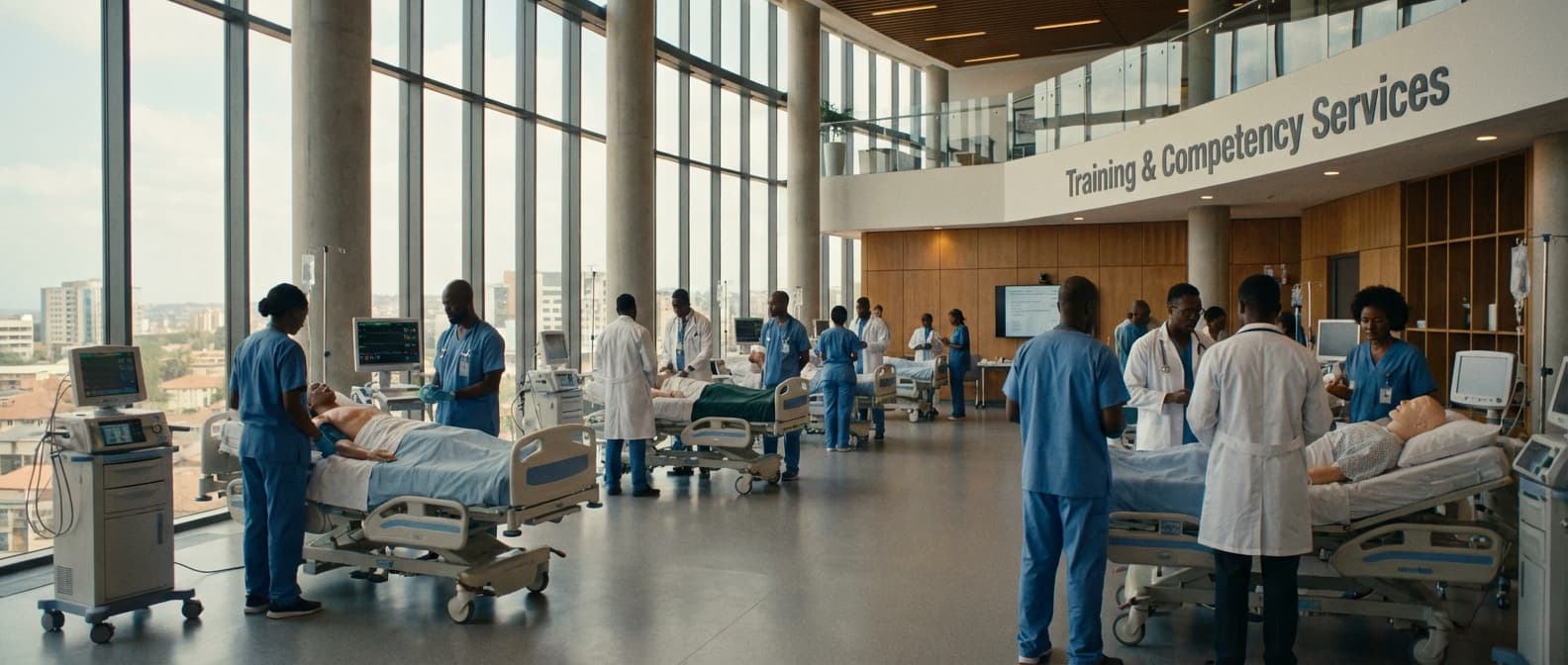
Ultrasound Application Training Service (Protocol-Based) in Libya
Engineering Excellence & Technical Support
Ultrasound Application Training Service (Protocol-Based) High-standard technical execution following OEM protocols and local regulatory frameworks.
Standardized Protocol Proficiency
Master essential ultrasound scanning protocols for accurate diagnosis in Libya's specific healthcare context. Our training ensures consistent and reliable image acquisition through hands-on application of established guidelines.
Enhanced Diagnostic Yield
Improve patient outcomes by increasing the diagnostic yield of ultrasound examinations. Our protocol-based training focuses on precise image optimization and targeted examination techniques relevant to common pathologies encountered in Libya.
Certified Ultrasound Competency
Achieve certified competency in ultrasound applications. Our comprehensive training program in Libya equips healthcare professionals with the theoretical knowledge and practical skills to confidently perform and interpret ultrasound scans according to standardized protocols.
What Is Ultrasound Application Training Service (Protocol-based) In Libya?
Ultrasound Application Training Service (Protocol-Based) in Libya refers to specialized educational programs designed to equip medical professionals with the theoretical knowledge and practical skills necessary to perform and interpret diagnostic ultrasound examinations according to established, standardized protocols. This service is crucial for ensuring diagnostic accuracy, patient safety, and consistent quality of care within the Libyan healthcare system.
| Target Audience | Needs Addressed | Typical Use Cases |
|---|---|---|
| Radiologists and Radiology Residents | To master standardized scanning techniques and interpretation across various modalities; to meet accreditation requirements; to enhance diagnostic accuracy and efficiency. | Routine abdominal examinations (liver, gallbladder, kidneys), obstetric scans (dating, anomaly, growth assessment), gynecological imaging (uterus, ovaries), thyroid and breast imaging, basic vascular assessments. |
| Sonographers (Diagnostic Medical Sonographers) | To develop standardized scanning skills and protocols; to ensure consistent image quality; to perform examinations independently and efficiently; to expand scope of practice. | All standard diagnostic ultrasound examinations, particularly those requiring strict adherence to established departmental or national guidelines. Specialized areas like echocardiography or neurosonography may have dedicated protocols. |
| Physicians in Specialities Requiring Ultrasound (e.g., Internal Medicine, Obstetrics & Gynecology, Emergency Medicine, Cardiology) | To perform point-of-care ultrasound (POCUS) or focused examinations; to supplement clinical assessment; to aid in rapid diagnosis and management decisions in specific settings. | FAST (Focused Assessment with Sonography for Trauma) scans, basic obstetric assessments in OB/GYN clinics, fluid collection detection in internal medicine, bedside cardiac evaluations in emergency departments, musculoskeletal assessments in sports medicine. |
| Medical Technologists and Technicians involved in imaging departments | To gain foundational ultrasound knowledge and skills for assisting in examinations or performing preliminary scans under supervision. | Assisting senior sonographers or radiologists, preparing patients for scans, basic image acquisition under direct guidance. |
Key Components of Ultrasound Application Training Service (Protocol-Based):
- Protocol-Driven Curriculum: Training follows predefined, evidence-based ultrasound protocols for specific anatomical regions or clinical indications (e.g., abdominal, obstetric, gynecological, vascular, musculoskeletal).
- Didactic Instruction: Covers fundamental principles of ultrasound physics, image generation, artifact recognition, and interpretation of normal and pathological findings specific to each protocol.
- Hands-on Practical Sessions: Emphasizes machine operation, probe handling, standardized scanning techniques, image acquisition, and optimization to adhere to protocol requirements.
- Case-Based Learning: Utilizes real or simulated patient cases to reinforce protocol application, diagnostic reasoning, and differential diagnosis.
- Image Interpretation and Reporting: Focuses on systematically analyzing acquired images, identifying abnormalities, and generating accurate, comprehensive reports aligned with protocol mandates.
- Quality Assurance and Optimization: Includes modules on quality control, artifact reduction strategies, and techniques for optimizing image parameters for diagnostic efficacy.
- Competency Assessment: Evaluates trainee proficiency through practical examinations, written tests, and review of independently performed scans against established protocol benchmarks.
Who Needs Ultrasound Application Training Service (Protocol-based) In Libya?
This document outlines the target customers and departments within Libya that would benefit from specialized Ultrasound Application Training Services, particularly those focusing on protocol-based approaches. Such training is crucial for enhancing diagnostic accuracy, standardizing patient care, and optimizing the utilization of ultrasound technology in various medical settings across the country.
| Customer Segment | Key Departments/Units | Specific Needs/Benefits of Protocol-Based Training |
|---|---|---|
| Hospitals (Public & Private) | Radiology, Emergency, OB/GYN, Cardiology, Pediatrics, Surgery | Standardized diagnostic protocols leading to increased accuracy and reproducibility. Enhanced competency in specific examinations (e.g., obstetric scans, cardiac views, abdominal imaging). Improved workflow efficiency and reduced misdiagnosis. Training on advanced applications like Doppler, contrast-enhanced ultrasound (CEUS), and interventional ultrasound. |
| Primary Healthcare Facilities | General Practice, Women's Health Clinics, Rural Health Centers | Introduction to basic ultrasound applications for screening and point-of-care diagnostics. Training on essential protocols for common conditions (e.g., FAST scans, basic obstetric assessments). Empowering healthcare providers to make informed decisions and refer appropriately. |
| Academic & Training Institutions | Medical Schools, Nursing Colleges, Radiology Technician Programs | Curriculum development support for ultrasound education. Training of trainers for future ultrasound professionals. Equipping students with a strong foundation in protocol-driven ultrasound imaging. |
| Government Health Bodies | Ministry of Health, Public Health Departments | National capacity building for ultrasound services. Development and implementation of national ultrasound guidelines and protocols. Quality assurance and accreditation of ultrasound facilities and personnel. |
| Specialized Clinics | Vascular Labs, Musculoskeletal Clinics, Fertility Clinics | In-depth training on specialized protocols relevant to their specific field (e.g., carotid artery imaging, joint assessment, transvaginal ultrasound for fertility). Advanced techniques and interpretation skills. |
Target Customers and Departments for Ultrasound Application Training Service (Protocol-Based) in Libya
- Radiology Departments in public and private hospitals
- Emergency Departments in hospitals and trauma centers
- Obstetrics and Gynecology (OB/GYN) Departments
- Cardiology Departments
- Pediatric Departments
- Internal Medicine Departments
- Surgical Departments (for point-of-care ultrasound - POCUS)
- Primary Healthcare Centers and Clinics (especially for basic screening and point-of-care applications)
- Medical Imaging Training Institutes and Universities
- Government Health Agencies and Ministries of Health (for capacity building initiatives)
- Private Diagnostic Imaging Centers
- Specialized Clinics (e.g., vascular clinics, musculoskeletal clinics)
Ultrasound Application Training Service (Protocol-based) Process In Libya
This document outlines the workflow for Ultrasound Application Training Services, specifically focusing on a protocol-based approach within Libya. The process is designed to be comprehensive, from the initial client inquiry to the successful execution and follow-up of the training program. A protocol-based training ensures standardized, evidence-based practices are taught and adopted, crucial for quality ultrasound diagnostics. This workflow emphasizes clear communication, needs assessment, tailored curriculum development, efficient delivery, and robust evaluation.
| Stage | Key Activities | Responsible Parties | Deliverables/Outcomes | Notes/Considerations (Libya Specific) |
|---|---|---|---|---|
| Client expresses interest in ultrasound application training. Initial discussions to understand general requirements. | Potential Client (Hospital/Clinic/Individual), Training Provider Representative | Initial understanding of client needs, contact information exchanged. | Communication channels in Libya may vary (phone, email, in-person visits). Language proficiency (Arabic/English) is important. |
| Detailed discussion to identify specific ultrasound applications, target audience (skill level, specialties), existing equipment, and desired learning objectives. Review of current protocols (if any). | Training Provider Specialist, Client's Medical Team Lead/Department Head | Comprehensive understanding of training needs, skill gaps, and existing infrastructure. Identification of specific protocols to be focused on. | Understanding the prevalent medical conditions and ultrasound practices in Libya. Assessment of available ultrasound equipment in Libyan facilities. |
| Based on the needs assessment, a detailed proposal is created, outlining training modules, duration, methodology, faculty, cost, and timeline. Negotiation and signing of a service agreement. | Training Provider, Client | Formal Training Proposal, Signed Service Agreement. | Ensure clarity on payment terms and currency (e.g., USD, local currency). Adherence to Libyan contractual laws. |
| Development or adaptation of protocol-based training materials, lectures, practical sessions, and assessment tools. Emphasis on standard Libyan or internationally recognized ultrasound protocols. | Training Provider Curriculum Developers, Subject Matter Experts (SMEs) | Tailored training modules, presentations, case studies, hands-on scanning guides, assessment templates. | Incorporate specific Libyan health priorities and common pathologies. Ensure materials are culturally sensitive. |
| Arrangement of training venue, equipment (if not provided by client), scheduling of trainers and trainees, visa/travel arrangements (if applicable), and communication of the final schedule to all parties. | Training Provider Logistics Coordinator, Client's Administrative Staff | Confirmed training schedule, booked venue, confirmed trainer availability, travel arrangements. | Navigating travel restrictions, visa processes for trainers, and availability of suitable training facilities in different Libyan regions. |
| Delivery of theoretical lectures, hands-on practical sessions with real or phantom patients, case study discussions, and skill demonstrations. Emphasis on adhering to the pre-defined protocols. | Certified Ultrasound Trainers, Trainees | Active participation, skill development, knowledge acquisition. | Ensure adequate supervision during practical sessions. Provide real-time feedback and corrective guidance. |
| Assessment of trainee learning through written tests, practical examinations, and competency assessments. Collection of feedback from trainees and client on the training program's effectiveness. | Training Provider Assessors, Trainees, Client Representatives | Trainee assessment results, training feedback forms, post-training evaluation report. | Objective assessment methods are crucial. Feedback mechanisms should be accessible and encourage honest responses. |
| Issuance of certificates of completion to successful trainees. Provision of ongoing support, answering queries, and offering resources for continuous learning. Potential for advanced or refresher training. | Training Provider Administration, Training Provider Support Team | Certificates of completion, post-training support resources, follow-up communication. | Establishing a reliable channel for ongoing support in Libya. Offer opportunities for continued professional development. |
Ultrasound Application Training Service (Protocol-Based) Process in Libya Workflow
- Inquiry & Initial Contact
- Needs Assessment & Consultation
- Proposal Development & Agreement
- Curriculum Design & Customization
- Logistics & Scheduling
- Training Execution
- Post-Training Evaluation & Feedback
- Certification & Follow-up Support
Ultrasound Application Training Service (Protocol-based) Cost In Libya
This document outlines the estimated costs for Ultrasound Application Training Services in Libya, specifically focusing on protocol-based training. The pricing is presented in Libyan Dinar (LYD) and is subject to various factors that influence the final cost. It is important to note that these are approximate ranges and actual quotes may vary significantly based on the specific provider, training duration, and customization required.
| Training Scope/Duration | Estimated Cost Range (LYD) |
|---|---|
| Basic Ultrasound Principles & General Imaging (2-3 Days) | 1,500 - 3,000 LYD per participant |
| Specialized Application (e.g., Obstetrics & Gynecology - 3-4 Days) | 2,500 - 4,500 LYD per participant |
| Advanced/Interventional Ultrasound Applications (4-5 Days) | 3,500 - 6,000 LYD per participant |
| Comprehensive Multi-Specialty Training (1 Week+) | 5,000 - 10,000+ LYD per participant |
| Customized Protocol Development & Training (Variable Duration) | Quote-based, potentially 10-20% higher than standard packages |
| On-site Training (Additional Logistics) | Adds 500 - 1,500+ LYD per day (trainer's expenses, travel) |
| Small Group Training (2-4 Participants) | Slightly higher per-participant cost compared to larger groups |
| Large Group Training (10+ Participants) | Potential for discounted per-participant rates |
Factors Influencing Ultrasound Application Training Cost in Libya
- Provider Expertise and Reputation: Highly experienced and reputable training providers, especially those with international certifications or a strong track record, will generally command higher fees.
- Training Duration and Intensity: The number of days or hours dedicated to the training directly impacts the overall cost. More intensive, in-depth courses will be more expensive.
- Number of Participants: Training packages are often priced per participant or have tiered pricing based on group size. Larger groups may benefit from economies of scale, but individual attention might be reduced.
- Scope of Ultrasound Applications: Training for a broader range of ultrasound applications (e.g., general radiology, obstetrics, cardiology, vascular) will naturally be more expensive than a single specialty.
- Level of Customization: Tailoring the training protocol to specific institutional needs, equipment, or existing skill levels requires additional development time and expertise, thus increasing the cost.
- Location of Training: If the training is conducted on-site at the client's facility, travel, accommodation, and logistical costs for the trainers may be factored in. Off-site training at a dedicated facility also incurs costs.
- Equipment and Materials Provided: Whether the training includes the use of simulation equipment, access to real equipment, or provision of training manuals, lectures notes, and other learning materials will affect the price.
- Certification and Assessment: If the training culminates in a formal certification exam or assessment, this often adds to the overall cost due to the associated administrative and evaluative processes.
- Time of Year and Demand: Peak training seasons or high demand for specific ultrasound applications might lead to slightly higher pricing.
- Negotiation and Package Deals: The ability to negotiate prices, or if the training is part of a larger equipment purchase or service contract, can influence the final cost.
Affordable Ultrasound Application Training Service (Protocol-based) Options
Our Affordable Ultrasound Application Training Service (Protocol-Based) offers comprehensive and cost-effective solutions for medical professionals seeking to enhance their ultrasound skills. We understand the importance of practical, protocol-driven training and have designed our services to be accessible and high-value. Our approach focuses on equipping trainees with the confidence and proficiency to perform accurate and diagnostically relevant ultrasound examinations. We offer flexible learning pathways and strategic cost-saving measures to ensure your investment in training yields maximum return.
| Value Bundle | Included Features | Target Audience | Cost-Saving Strategy | Price Range (Illustrative) |
|---|---|---|---|---|
| Foundation Essentials Bundle | Core Ultrasound Physics & Instrumentation, Introduction to Key Anatomical Structures, Basic 2D Imaging Techniques, Fundamentals of Ultrasound Safety, Essential Protocols (e.g., Abdomen, Pelvis). | Beginners, new sonographers, residents, medical students. | Group discounts for multiple participants from the same institution, Early bird registration incentives. | $750 - $1500 per participant |
| Specialty Focus Bundle | Advanced techniques for specific applications (e.g., Echocardiography, Vascular, Obstetrics & Gynecology), In-depth protocol review, Case study analysis, Advanced image optimization. | Sonographers seeking specialization, experienced practitioners wanting to refine skills. | Bundled pricing for multiple specialty modules, On-site training for larger teams to reduce travel costs. | $1200 - $2500 per participant |
| Comprehensive Proficiency Bundle | All features of the Foundation Essentials and Specialty Focus Bundles, Extended hands-on simulation time, Personalized mentorship, Access to online learning resources and advanced modules. | Institutions aiming for a highly skilled workforce, Individuals seeking mastery in multiple ultrasound modalities. | Annual training contracts with discounted rates, Train-the-trainer programs to build internal expertise. | $2000 - $4000+ per participant |
| Customized Application Training | Tailored curriculum based on specific departmental needs and existing skill sets. Focus on niche applications or emerging technologies. | Any institution with unique training requirements. | Modular pricing allowing clients to select only necessary components, Remote training options to eliminate travel and accommodation expenses. | Priced per module/project based on scope |
Key Features of Our Training Service
- Protocol-Driven Curriculum: Training adheres to established, industry-standard ultrasound protocols for various applications, ensuring consistency and diagnostic accuracy.
- Hands-on Practice Opportunities: Ample simulation and, where applicable, supervised real-patient scanning time to build practical proficiency.
- Experienced Instructors: Learn from highly qualified sonographers and physicians with extensive clinical and teaching experience.
- Flexible Learning Formats: Options range from intensive on-site workshops to blended learning models, catering to diverse schedules and learning preferences.
- Customizable Training Modules: Tailor training to specific departmental needs, focusing on particular applications or skill levels.
- Continuous Skill Development: Resources and support for ongoing learning and professional advancement beyond initial training.
Verified Providers In Libya
Ensuring access to quality healthcare in Libya is paramount, and discerning the trustworthiness of healthcare providers is crucial. Franance Health stands out as a beacon of reliability, offering a meticulously vetted network of medical professionals and facilities. Their stringent credentialing process prioritizes patient safety, expertise, and adherence to international standards, making them the definitive choice for accessible and dependable healthcare in Libya. This document outlines Franance Health's commitment to verified providers and elucidates why their credentials represent the best possible option for individuals seeking medical care.
| Credential Type | Franance Health Verification Standard | Significance for Patients |
|---|---|---|
| Medical Degrees & Diplomas | Authenticity confirmed via issuing institutions and recognized accreditation bodies. | Ensures providers have completed foundational medical education from legitimate sources. |
| Specialist Certifications & Board Certifications | Verified with respective national and international specialty boards. | Confirms advanced training and expertise in specific medical areas, leading to more accurate diagnoses and effective treatments. |
| Professional Licenses | Current and valid licenses confirmed with relevant Libyan and international medical regulatory authorities. | Guarantees that providers are legally permitted to practice medicine and adhere to regulatory requirements. |
| Clean Disciplinary Record | Thorough background checks and inquiries with professional bodies to ensure no history of malpractice or disciplinary actions. | Provides peace of mind regarding the provider's ethical conduct and commitment to patient safety. |
| Continuing Medical Education (CME) | Proof of ongoing professional development and participation in advanced training programs. | Indicates that providers stay updated with the latest medical advancements and best practices. |
| Hospital Affiliations & Privileges | Verification of affiliations with reputable hospitals and confirmation of granted practicing privileges. | Ensures access to appropriate facilities and resources for comprehensive patient care. |
Why Franance Health is the Best Choice for Verified Providers in Libya:
- Rigorous Vetting Process: Franance Health employs a multi-stage vetting system that goes beyond basic licensing. This includes verification of medical degrees, specialized certifications, professional history, and good standing with relevant medical boards.
- Focus on Expertise and Specialization: They ensure that providers within their network possess demonstrable expertise in their respective fields, catering to a wide range of medical needs and specialties.
- Adherence to International Standards: Franance Health prioritizes providers who align with globally recognized healthcare practices and ethical guidelines, guaranteeing a high level of care.
- Patient-Centric Approach: The credentialing process considers not only clinical proficiency but also a provider's commitment to patient well-being, communication skills, and ethical patient care.
- Continuous Monitoring and Evaluation: Franance Health doesn't stop at initial verification. They maintain ongoing monitoring and evaluation of their network to ensure consistent quality and address any emerging concerns.
- Transparency and Accessibility: Their platform provides clear information about verified providers, empowering patients to make informed decisions about their healthcare.
Scope Of Work For Ultrasound Application Training Service (Protocol-based)
This Scope of Work (SOW) outlines the requirements for a Protocol-Based Ultrasound Application Training Service. The service will focus on delivering standardized, protocol-driven ultrasound imaging education and practical skill development for healthcare professionals. The training will ensure proficiency in acquiring high-quality diagnostic ultrasound images according to established best practices and departmental protocols.
| Category | Technical Deliverables | Standard Specifications |
|---|---|---|
| Training Curriculum Development | Comprehensive training modules covering theoretical concepts and practical scanning techniques for specific ultrasound applications (e.g., Abdominal, OB/GYN, Vascular, Echocardiography, MSK). | Modules must be structured according to a predefined protocol framework. Each module to include learning objectives, core content, case studies, and assessment criteria. Curriculum to be reviewed and approved by a subject matter expert. |
| Protocol Standardization | Development and documentation of standardized ultrasound imaging protocols for each application covered in the training. | Protocols to define probe selection, patient positioning, transducer manipulation, image acquisition parameters (gain, depth, focus, time gain compensation), specific views, and essential measurements. Protocols to align with current professional society guidelines where applicable. |
| Practical Skills Training Sessions | Hands-on supervised scanning sessions utilizing ultrasound phantoms and/or volunteer models. | Each session to be facilitated by a certified and experienced ultrasound instructor. Minimum trainer-to-trainee ratio of 1:4 for effective individualized feedback. Sessions to be structured around the established imaging protocols. |
| Competency Assessment | Formal assessment of trainee competency through practical scanning examinations and knowledge-based quizzes. | Practical assessments to evaluate image quality, protocol adherence, and technical proficiency. Knowledge assessments to cover theoretical understanding and interpretation. Passing score to be clearly defined (e.g., 80%). |
| Performance Feedback and Reporting | Detailed, constructive feedback provided to each trainee on their performance during practical sessions and assessments. | Feedback to be documented and shared with the trainee and their supervisor. A final training report summarizing trainee progress and competency levels to be provided. |
| Training Materials | Provision of high-quality training materials, including lecture notes, protocol manuals, visual aids (images/videos), and relevant reference materials. | Materials to be readily accessible (digital or hard copy) and updated regularly. Language to be clear, concise, and appropriate for the target audience. |
| Equipment and Simulation Tools | Access to functional ultrasound machines with appropriate probes for each application, and high-fidelity phantoms for simulation. | Equipment to be modern and well-maintained, capable of simulating a range of anatomical structures and pathologies. Phantoms to represent realistic tissue properties for effective skill development. |
| Certification of Completion | Issuance of a certificate of completion for trainees who successfully meet the competency requirements. | Certificates to clearly state the training application, the duration of training, and confirm successful completion of the protocol-based program. |
Key Objectives of the Ultrasound Application Training Service
- To equip trainees with the theoretical knowledge and practical skills necessary to perform ultrasound examinations according to specified protocols.
- To ensure trainees can operate ultrasound equipment effectively, including image optimization and artifact reduction techniques.
- To foster an understanding of anatomical structures and pathological findings relevant to specific ultrasound applications.
- To promote adherence to quality assurance standards and safety guidelines in ultrasound imaging.
- To enable trainees to confidently interpret and document ultrasound findings within the scope of their professional practice.
Service Level Agreement For Ultrasound Application Training Service (Protocol-based)
This Service Level Agreement (SLA) outlines the agreed-upon service levels for the Ultrasound Application Training Service (Protocol-Based). It defines the response times for critical issues and the guaranteed uptime for the training platform and its associated resources. This SLA is designed to ensure timely support and reliable access for all users of the training service.
| Service Component | Severity Level | Response Time Target | Resolution Time Target | Uptime Guarantee |
|---|---|---|---|---|
| Ultrasound Application Training Platform | Critical (e.g., platform completely inaccessible, cannot start training module) | 1 Hour | 4 Business Hours | 99.5% |
| Ultrasound Application Training Platform | High (e.g., specific module not loading, critical functionality impaired) | 2 Business Hours | 8 Business Hours | 99.5% |
| Ultrasound Application Training Platform | Medium (e.g., minor display issues, non-critical functionality affected) | 4 Business Hours | 2 Business Days | 99.5% |
| Ultrasound Application Training Platform | Low (e.g., general inquiries, feature requests) | 8 Business Hours | 5 Business Days | 99.5% |
| Access to Training Materials & Protocols | Critical (e.g., complete inability to access all materials) | 1 Hour | 4 Business Hours | 99.5% |
| Access to Training Materials & Protocols | High (e.g., specific protocol or module inaccessible) | 2 Business Hours | 8 Business Hours | 99.5% |
Key Service Objectives
- To provide timely and effective technical support for issues encountered during the Ultrasound Application Training.
- To ensure the continuous availability of the training platform and its resources.
- To maintain a high level of user satisfaction through reliable service delivery.
Frequently Asked Questions

Ready when you are
Let's scope your Ultrasound Application Training Service (Protocol-Based) in Libya project in Libya.

Scaling healthcare logistics and technical systems across the entire continent.