
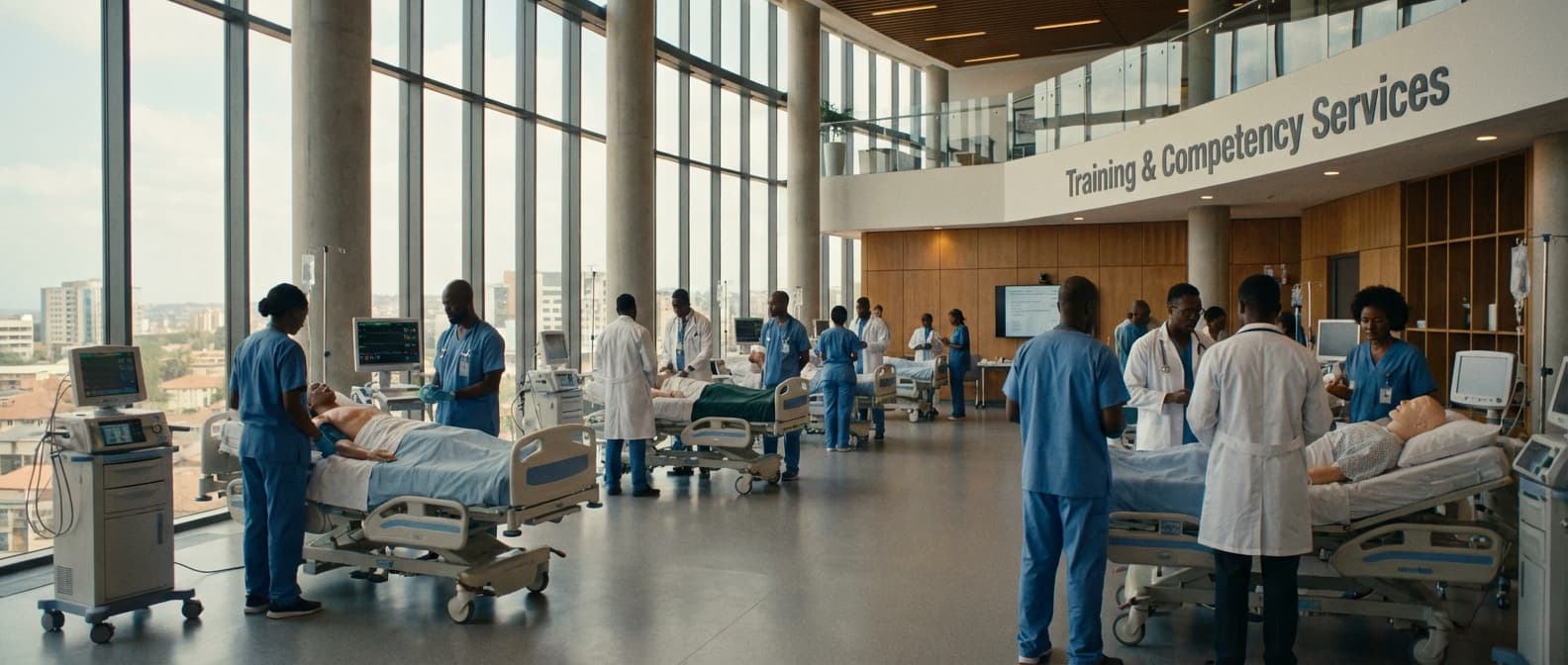
MRI Operator Training Service (Radiographers) in Libya
Engineering Excellence & Technical Support
MRI Operator Training Service (Radiographers) High-standard technical execution following OEM protocols and local regulatory frameworks.
Advanced Neuroimaging Protocols
Master cutting-edge MRI sequences for detailed brain, spine, and neurological disorder assessment, crucial for advanced diagnostics in Libya's growing healthcare sector.
Quantitative Imaging Techniques
Gain expertise in quantitative MRI methods for objective tissue characterization and disease monitoring, enabling precise follow-up of patients and research endeavors.
Contrast Agent Optimization & Safety
Develop a deep understanding of modern contrast agents, their safe administration, and optimal protocols for various pathologies, ensuring patient well-being and diagnostic efficacy.
What Is Mri Operator Training Service (Radiographers) In Libya?
MRI Operator Training Service (Radiographers) in Libya refers to specialized educational programs designed to equip radiographers with the necessary theoretical knowledge and practical skills to safely and effectively operate Magnetic Resonance Imaging (MRI) scanners. This service focuses on the acquisition, processing, and interpretation of MRI data, adhering to international standards and Libyan regulatory requirements. It encompasses a comprehensive curriculum covering MRI physics, safety protocols, patient preparation, imaging sequences, artifact reduction, quality control, and basic troubleshooting. The training aims to enhance the diagnostic capabilities of healthcare facilities by ensuring competent personnel are available to perform MRI examinations.
| Target Audience | Typical Use Cases/Scenarios | |||
|---|---|---|---|---|
| Newly Graduated Radiographers: Individuals entering the field of diagnostic imaging who require foundational MRI knowledge and skills. | Experienced Radiographers Seeking Specialization: Professionals looking to expand their skillset and qualify to operate MRI equipment in existing or new imaging departments. | Healthcare Facilities Introducing MRI Services: Hospitals, clinics, and diagnostic centers that are acquiring MRI technology and need to train their existing radiography staff. | Radiographers Working in Areas with Limited Access to Advanced Training: Individuals in remote or underserved regions requiring accessible and comprehensive MRI operator education. | Radiographers Seeking Continuing Professional Development (CPD): Professionals aiming to update their knowledge and skills in advanced MRI techniques and safety protocols. |
| Establishing a new MRI unit: Training radiographers to operate newly installed MRI scanners in hospitals or specialized imaging centers. | Expanding MRI capacity: Training additional radiographers to increase the throughput of existing MRI departments. | Implementing specialized MRI protocols: Training radiographers on advanced imaging techniques such as neuroimaging, musculoskeletal MRI, or body MRI. | Ensuring patient safety and quality imaging: Training focused on strict adherence to safety protocols and optimal image acquisition for accurate diagnosis. | Meeting regulatory requirements: Ensuring radiographers are certified and competent according to Libyan Ministry of Health standards for MRI operation. |
Key Components of MRI Operator Training Service for Radiographers in Libya:
- MRI Physics and Principles: Understanding the fundamental concepts of nuclear magnetic resonance (NMR), magnetic field gradients, radiofrequency pulses, and signal detection.
- MRI Safety: Comprehensive training on patient and operator safety, including contraindications, screening procedures, screening forms, quench protocols, and management of ferromagnetic materials.
- Patient Preparation and Management: Protocols for patient communication, informed consent, physiological monitoring, and management of patient anxiety or claustrophobia.
- Image Acquisition Techniques: Mastery of various pulse sequences (e.g., spin echo, gradient echo, FLAIR, DWI) and their application to different anatomical regions and pathologies.
- Contrast Media Administration: Training on the safe and appropriate administration of intravenous contrast agents used in MRI.
- Image Processing and Reconstruction: Understanding the algorithms and techniques used to generate diagnostic images from raw data.
- Artifact Recognition and Mitigation: Identifying common MRI artifacts (e.g., motion, susceptibility, aliasing) and implementing strategies to minimize their impact.
- Quality Assurance and Control (QA/QC): Implementing and performing regular QA/QC procedures to ensure optimal scanner performance and image quality.
- Basic Troubleshooting: Identifying and addressing common operational issues with the MRI scanner and associated equipment.
- Ethical and Legal Considerations: Adherence to professional ethics, patient confidentiality, and Libyan healthcare regulations.
- Hands-on Practical Training: Supervised experience on an actual MRI scanner, simulating real-world clinical scenarios.
Who Needs Mri Operator Training Service (Radiographers) In Libya?
MRI Operator Training Service (Radiographers) in Libya addresses a critical need for skilled professionals in the country's healthcare sector. As MRI technology becomes increasingly vital for accurate diagnosis and patient care, there's a growing demand for radiographers proficient in operating and maintaining MRI equipment. This training is essential for ensuring the highest standards of medical imaging services, improving diagnostic accuracy, and enhancing patient safety. The service aims to upskill existing radiographers and equip new professionals with the specialized knowledge and practical skills required for modern MRI operations. This directly contributes to strengthening Libya's healthcare infrastructure and its capacity to deliver advanced medical imaging services.
| Target Customer Type | Key Departments Requiring Training | Rationale for Training Need |
|---|---|---|
| Public Hospitals | Radiology Department, Neurology, Cardiology, Oncology, Orthopedics | To enhance diagnostic capabilities, reduce reliance on external expertise, and provide comprehensive patient care. |
| Private Hospitals | Radiology Department, Diagnostic Imaging Centers | To offer advanced imaging services, attract more patients, and compete with international standards. |
| Specialized Diagnostic Centers | MRI Unit, Imaging Services | To ensure precise operation of MRI equipment for specialized diagnostic needs, improving turnaround times and accuracy. |
| University Teaching Hospitals | Radiology Department, Medical Education Units, Research Centers | To train future radiographers, support medical research, and provide advanced clinical training for medical students. |
| Ministry of Health Facilities | Regional Hospitals, Central Diagnostics Units | To standardize MRI services across the country, improve accessibility to advanced diagnostics, and build national capacity. |
| Military Hospitals | Medical Corps Radiology Units | To ensure timely and accurate diagnosis for military personnel, supporting operational readiness and healthcare for the armed forces. |
Target Customers and Departments for MRI Operator Training Service (Radiographers) in Libya:
- Hospitals (Public and Private)
- Specialized Diagnostic Centers
- University Teaching Hospitals
- Ministry of Health Facilities
- Military Hospitals
Mri Operator Training Service (Radiographers) Process In Libya
This document outlines the typical workflow for an MRI Operator Training Service targeting radiographers in Libya, from the initial inquiry to the successful execution of the training program. The process is designed to be comprehensive, ensuring that the training needs of Libyan radiographers are met effectively and efficiently.
| Stage | Description | Key Activities | Responsible Parties | Deliverables/Outcomes | Timeline (Indicative) |
|---|---|---|---|---|---|
| The process begins when a Libyan healthcare institution or individual radiographer expresses interest in MRI operator training. | Contacting the training provider, discussing specific training requirements (e.g., number of participants, experience level, specific MRI modalities), identifying learning objectives, assessing current skill gaps. | Prospective Client (Healthcare Institution/Radiographer), Training Provider (Sales/Business Development Team) | Understanding of training needs, preliminary scope of work. | 1-2 Weeks |
| Based on the needs assessment, the training provider develops a tailored proposal and quotation. | Defining curriculum content, duration, training methodology (classroom, practical, online), venue requirements, trainer qualifications, equipment needs, cost breakdown, payment terms. | Training Provider (Technical & Sales Teams) | Formal training proposal, detailed quotation. | 1-3 Weeks |
| The client reviews the proposal and quotation, leading to negotiation and finalization of the training agreement. | Clarifying terms and conditions, discussing any modifications, signing the service agreement, confirming dates and logistics. | Prospective Client (Procurement/HR), Training Provider (Legal & Sales Teams) | Signed service agreement, confirmed training schedule and location. | 1-2 Weeks |
| This stage involves all necessary arrangements to ensure a smooth training delivery. | Participant registration and confirmation, venue booking and preparation, equipment setup and testing (if applicable), trainer assignment and briefing, pre-course materials distribution, logistical arrangements (travel, accommodation if required). | Training Provider (Operations & Logistics), Client (Participant List & Access) | Prepared training environment, confirmed participants, ready trainers. | 2-4 Weeks (depending on complexity) |
| The core of the service: the actual delivery of the MRI operator training program. | Conducting theoretical sessions (MRI physics, safety, image acquisition, protocols), practical hands-on training on MRI scanners, case study analysis, interactive Q&A sessions, simulations (if applicable). | Training Provider (Qualified Trainers), Participants (Radiographers) | Knowledge acquisition, practical skills development, improved competency in MRI operation. | Duration varies based on curriculum (e.g., 1 week to several weeks) |
| Assessing the effectiveness of the training and providing formal recognition. | Administering theoretical and practical assessments, collecting participant feedback, issuing certificates of completion/competency upon successful completion of assessments. | Training Provider (Trainers & Administration), Participants | Assessment results, participant feedback report, certificates of completion. | 1 Week |
| Ensuring continued learning and addressing any post-training needs. | Providing access to training materials, offering post-training Q&A sessions, follow-up support for specific challenges, gathering feedback on long-term impact, potential for advanced training modules. | Training Provider (Technical Support & Account Management), Client | Enhanced skill retention, ongoing professional development, client satisfaction. | Ongoing |
MRI Operator Training Service Workflow in Libya (Radiographers)
- Initial Inquiry & Needs Assessment
- Proposal Development & Quotation
- Contract Negotiation & Agreement
- Pre-Training Preparations
- Training Delivery
- Post-Training Evaluation & Certification
- Follow-up & Support
Mri Operator Training Service (Radiographers) Cost In Libya
The cost of MRI operator training services for radiographers in Libya can vary significantly based on several factors. These include the provider's reputation, the duration and intensity of the training program, the level of expertise of the instructors, the inclusion of hands-on practical sessions with actual MRI equipment, and the geographical location within Libya where the training is delivered. Additional costs might be incurred for training materials, assessments, and certifications. The current economic climate and fluctuating exchange rates for the Libyan Dinar (LYD) also play a crucial role in determining the final price.
| Training Type/Level | Estimated Cost Range (LYD) | Notes |
|---|---|---|
| Basic MRI Operator Fundamentals (Introductory) | 1,500 - 3,500 LYD | Covers basic principles, safety, patient positioning, and image acquisition basics. |
| Intermediate MRI Operator Training (Specific Modalities/Protocols) | 3,000 - 6,000 LYD | Focuses on specific MRI sequences, contrast administration, and common protocols for different anatomical regions. |
| Advanced MRI Operator Training (Specialized Applications/Troubleshooting) | 5,000 - 10,000+ LYD | Includes advanced techniques, troubleshooting common issues, quality control, and potentially specialized areas like neuroimaging or musculoskeletal MRI. |
| Comprehensive MRI Operator Certification Program | 7,000 - 15,000+ LYD | Often a multi-module program leading to a recognized certification, including extensive theory and practical components. |
| On-site/Customized Training for Facilities | Variable (per diem + program cost) | Costs are negotiated based on the number of participants, duration, and specific training needs of the healthcare facility. |
Key Pricing Factors for MRI Operator Training in Libya:
- Provider's Reputation and Accreditation
- Training Program Duration and Curriculum Depth
- Instructor Experience and Specialization
- Hands-on Practical Training Component (Access to MRI Equipment)
- Location of Training (Major Cities vs. Remote Areas)
- Certification and Assessment Fees
- Inclusion of Training Materials (Manuals, Software)
- Group Size and Customization of Training
Affordable Mri Operator Training Service (Radiographers) Options
Providing accessible and cost-effective MRI operator training for radiographers is crucial for expanding access to this vital diagnostic imaging modality. This service focuses on equipping radiographers with the essential knowledge and practical skills to safely and efficiently operate MRI scanners. We understand the budgetary constraints faced by many healthcare facilities, and therefore, offer flexible training solutions designed for maximum value and affordability. Our approach emphasizes a blend of theoretical understanding, hands-on practice, and continuous learning, all while implementing smart cost-saving strategies.
| Cost-Saving Strategy | Description | Benefit |
|---|---|---|
| Group Training Discounts | Reduced per-person costs when multiple radiographers from the same facility enroll together. | Lower overall training expenditure for the facility. |
| Blended Learning Approach | Combining cost-effective e-learning modules with focused on-site practical sessions. Reduces the need for extended, expensive on-site instructor time. | Optimizes learning efficiency and minimizes travel and accommodation costs. |
| Modular Training Structure | Allows facilities to select and pay only for the modules most relevant to their needs, avoiding unnecessary expenses. | Tailored training that aligns with specific skill gaps and budgets. |
| Remote Mentorship & Support | Leveraging virtual platforms for ongoing support and troubleshooting after initial training, reducing the need for frequent on-site visits. | Sustained skill development at a reduced cost. |
| Curriculum Customization | Working with facilities to adapt training content to their specific MRI equipment and protocols, maximizing relevance and minimizing wasted training time. | Ensures training is practical and directly applicable, leading to faster skill acquisition and reduced errors. |
| Train-the-Trainer Programs | Empowering senior radiographers within a facility to deliver ongoing internal training, creating a sustainable and cost-effective in-house training resource. | Long-term cost reduction and enhanced internal expertise. |
Key Training Components & Value Bundles
- {"title":"Core MRI Physics & Principles","description":"Foundational knowledge of MRI hardware, pulse sequences, image formation, and safety protocols. This forms the bedrock of competent MRI operation."}
- {"title":"Patient Care & Safety in MRI","description":"Comprehensive training on patient screening for contraindications (e.g., metallic implants), contrast administration, and emergency procedures."}
- {"title":"Image Acquisition Techniques","description":"Practical skills in selecting appropriate pulse sequences, optimizing parameters, and troubleshooting common imaging artifacts for various anatomical regions."}
- {"title":"Advanced MRI Applications (Optional Modules)","description":"Specialized training in areas like neuroimaging, musculoskeletal MRI, cardiac MRI, and functional MRI, allowing for tailored skill development."}
- {"title":"On-site Practical Training & Mentorship","description":"Hands-on experience under the guidance of experienced MRI technologists and radiographers, maximizing real-world learning."}
- {"title":"E-learning & Virtual Simulation Modules","description":"Flexible, self-paced online modules and simulated environments for reinforcing concepts and practicing protocols outside of dedicated on-site sessions. These are highly cost-effective."}
- {"title":"Value Bundle 1: Essential Radiographer Certification","description":"Includes Core Physics, Patient Care & Safety, and foundational Image Acquisition techniques. Ideal for new MRI operators or those seeking initial certification."}
- {"title":"Value Bundle 2: Comprehensive Skill Development","description":"Includes Bundle 1 plus introductory Advanced Applications modules and extended on-site mentorship. Suitable for radiographers looking to broaden their expertise."}
- {"title":"Value Bundle 3: Facility-Wide Training Solution","description":"Customizable package for multiple radiographers, incorporating all core modules, a selection of advanced modules, and dedicated on-site training tailored to the facility's specific equipment and needs."}
Verified Providers In Libya
In the challenging healthcare landscape of Libya, identifying and trusting verified providers is paramount for individuals seeking quality medical services. Franance Health stands out as a beacon of reliability, offering a comprehensive network of credentialed medical professionals and facilities. Their commitment to rigorous vetting processes ensures that patients are connected with healthcare providers who meet the highest standards of expertise, ethical practice, and patient care. This dedication translates into peace of mind for those navigating the Libyan healthcare system.
| Provider Type | Franance Health Verification Criteria | Benefits for Patients |
|---|---|---|
| Doctors (Specialists & General Practitioners) | Valid Medical License, Board Certification (where applicable), Educational Degrees, Criminal Background Check, Peer Reviews (where available) | Access to highly qualified and ethical medical professionals, reduced risk of misdiagnosis or malpractice, assurance of up-to-date medical knowledge. |
| Hospitals & Clinics | Accreditation from recognized health authorities, Compliance with safety and hygiene standards, Availability of necessary medical equipment, Qualified nursing and support staff | Safe and well-equipped facilities, assurance of adherence to international healthcare standards, comfortable and efficient patient experience. |
| Diagnostic Centers (Labs & Imaging) | Certified technicians, Calibrated and maintained equipment, Adherence to quality control protocols, Timely and accurate report generation | Reliable and accurate diagnostic results, contributing to effective treatment plans, use of advanced and well-maintained technology. |
| Pharmacies | Valid operating license, Dispensing of genuine and approved medications, Qualified pharmacists on duty, Secure storage of medicines | Access to safe and authentic prescription and over-the-counter medications, expert advice from pharmacists, confidence in medication quality. |
Why Franance Health is the Premier Choice for Verified Providers in Libya
- Rigorous Credentialing and Verification: Franance Health employs a multi-layered verification process for all its affiliated providers, including checking medical licenses, certifications, educational backgrounds, and professional histories.
- Commitment to Quality of Care: Beyond basic credentials, Franance Health prioritizes providers who demonstrate a commitment to patient-centered care, continuous professional development, and adherence to international best practices.
- Extensive Network of Specialists: The platform offers access to a diverse range of medical specialists, covering primary care, surgery, diagnostics, and various subspecialties, ensuring that all healthcare needs can be met.
- Enhanced Patient Safety: By partnering exclusively with verified and accredited healthcare professionals, Franance Health significantly reduces the risks associated with unqualified or unverified medical practitioners.
- Streamlined Access and Convenience: Franance Health simplifies the process of finding and booking appointments with trusted providers, saving patients valuable time and effort.
- Transparency and Accountability: The platform promotes transparency by providing information about provider credentials and performance, fostering trust and accountability within the Libyan healthcare sector.
- Patient Empowerment: By offering access to verified information and reliable healthcare options, Franance Health empowers individuals to make informed decisions about their health and well-being.
Scope Of Work For Mri Operator Training Service (Radiographers)
This Scope of Work (SOW) outlines the requirements for providing comprehensive MRI Operator Training Services specifically tailored for Radiographers. The training aims to equip radiographers with the necessary theoretical knowledge and practical skills to safely and effectively operate MRI scanners, acquire high-quality diagnostic images, and manage patient care within the MRI environment. This SOW details the technical deliverables and standard specifications expected from the training provider.
| Deliverable | Description | Standard Specification | Verification Method |
|---|---|---|---|
| Training Curriculum Document | A detailed curriculum outlining all training modules, learning objectives, topics covered, and assessment methods. | Comprehensive, up-to-date, and aligned with current MRI best practices and regulatory standards. Includes module breakdown and duration. | Document review and approval by the client's clinical imaging lead. |
| Training Materials (Lectures, Handouts, Visual Aids) | High-quality, engaging, and informative materials for both theoretical and practical sessions. | Professionally designed presentations, clear and concise handouts, relevant diagrams, and illustrative images/videos. Accessible in digital format (e.g., PDF, PPT). | Review of training materials for clarity, accuracy, and completeness. |
| Practical Training Sessions | Hands-on experience operating an MRI scanner under the guidance of qualified instructors. | Sufficient supervised machine time for each trainee to practice protocol execution, parameter adjustments, and image optimization on a range of anatomical regions and patient simulators/volunteers. | Observation of practical sessions by client's senior radiographers/supervisors; trainee competency assessment records. |
| Competency Assessment Tools | Methods to evaluate the knowledge and skills acquired by the radiographers. | Includes written examinations, practical skill assessments (e.g., protocol execution checklists), and case study analysis. Minimum pass mark of 80% for each assessment. | Review of assessment scores and pass/fail rates. Feedback on individual trainee performance. |
| Training Completion Certificates | Formal documentation certifying successful completion of the MRI Operator Training. | Issued to each radiographer upon successful completion of all training modules and assessments. Includes trainee name, course title, dates, and provider's accreditation (if applicable). | Verification of certificate content and issuance to all qualifying trainees. |
| Instructor Qualifications and Experience | Proof of the instructors' expertise in MRI physics, operations, and clinical applications. | Instructors must possess relevant certifications (e.g., ARRT, HCPC), a minimum of 5 years of direct MRI experience, and demonstrated teaching ability. CVs and relevant credentials to be provided. | Review of instructor CVs and credentials. Client may request interview with lead instructors. |
| Post-Training Support and Follow-up | Provision of ongoing support and resources for radiographers after the formal training period. | Access to a dedicated support channel (email/phone) for technical queries for a period of 3 months post-training. Access to updated training materials or online resources. | Confirmation of support channel availability and usage. Feedback from trainees on post-training support. |
| Training Report | A comprehensive report summarizing the training activities, trainee performance, and feedback. | Includes attendance records, assessment results breakdown, summary of feedback collected from trainees, recommendations for further development, and any challenges encountered. | Document review and acceptance by the client. |
Key Training Modules
- Principles of MRI Physics and Image Formation
- MRI Pulse Sequences and Parameter Optimization
- MRI Safety (Magnetic Fields, RF, Gradients, Cryogens, Biological Effects)
- Patient Preparation and Screening for MRI Procedures
- MRI Contrast Agents: Administration and Safety
- Image Acquisition Protocols for Various Anatomical Regions (e.g., Neuro, MSK, Abdomen, Cardiac)
- Artifact Recognition and Mitigation Techniques
- Post-Processing and Image Manipulation
- Basic MRI Scanner Maintenance and Troubleshooting
- Quality Assurance and Quality Control (QA/QC) in MRI
- Ethical Considerations and Patient Communication in MRI
Service Level Agreement For Mri Operator Training Service (Radiographers)
This Service Level Agreement (SLA) outlines the guaranteed response times and uptime for the MRI Operator Training Service provided to certified radiographers. This SLA aims to ensure the efficient and effective delivery of training, minimizing disruption and maximizing the availability of resources. All times are in business hours (Monday to Friday, 9:00 AM - 5:00 PM, excluding public holidays) unless otherwise specified.
| Service Component | Target Response Time | Uptime Guarantee | Escalation Procedure |
|---|---|---|---|
| Technical Support (Email/Ticketing System) | Within 4 business hours for initial acknowledgment. Aim for full resolution within 24 business hours. | N/A (Focus on response and resolution times for support) | If not acknowledged within 4 business hours, escalate to phone support. If not resolved within 24 business hours, escalate to Senior Support Specialist. |
| Technical Support (Phone Support) | Within 2 business hours for acknowledgment. Aim for full resolution within 12 business hours. | N/A | If not resolved within 12 business hours, escalate to IT Manager. |
| Training Platform Availability | N/A | 99.5% during scheduled training periods. | Any planned downtime will be communicated at least 48 hours in advance. Unplanned downtime exceeding 1 hour will trigger immediate escalation to IT Management and notification to affected users. |
| Content Update Requests (e.g., minor corrections, clarifications) | Within 2 business days for acknowledgment. Aim for implementation within 5 business days. | N/A | If not acknowledged within 2 business days, escalate to Training Coordinator. |
| System Outages (affecting core training functionality) | Immediate acknowledgment upon detection. | N/A | Critical Incident Response Team activated. Continuous communication until resolution. All users notified within 1 hour of confirmed outage. |
Key Performance Indicators (KPIs)
- Response Time for Technical Support Queries
- Uptime Guarantee for Training Platform
- Resolution Time for Critical Issues
Frequently Asked Questions

Ready when you are
Let's scope your MRI Operator Training Service (Radiographers) in Libya project in Libya.

Scaling healthcare logistics and technical systems across the entire continent.