
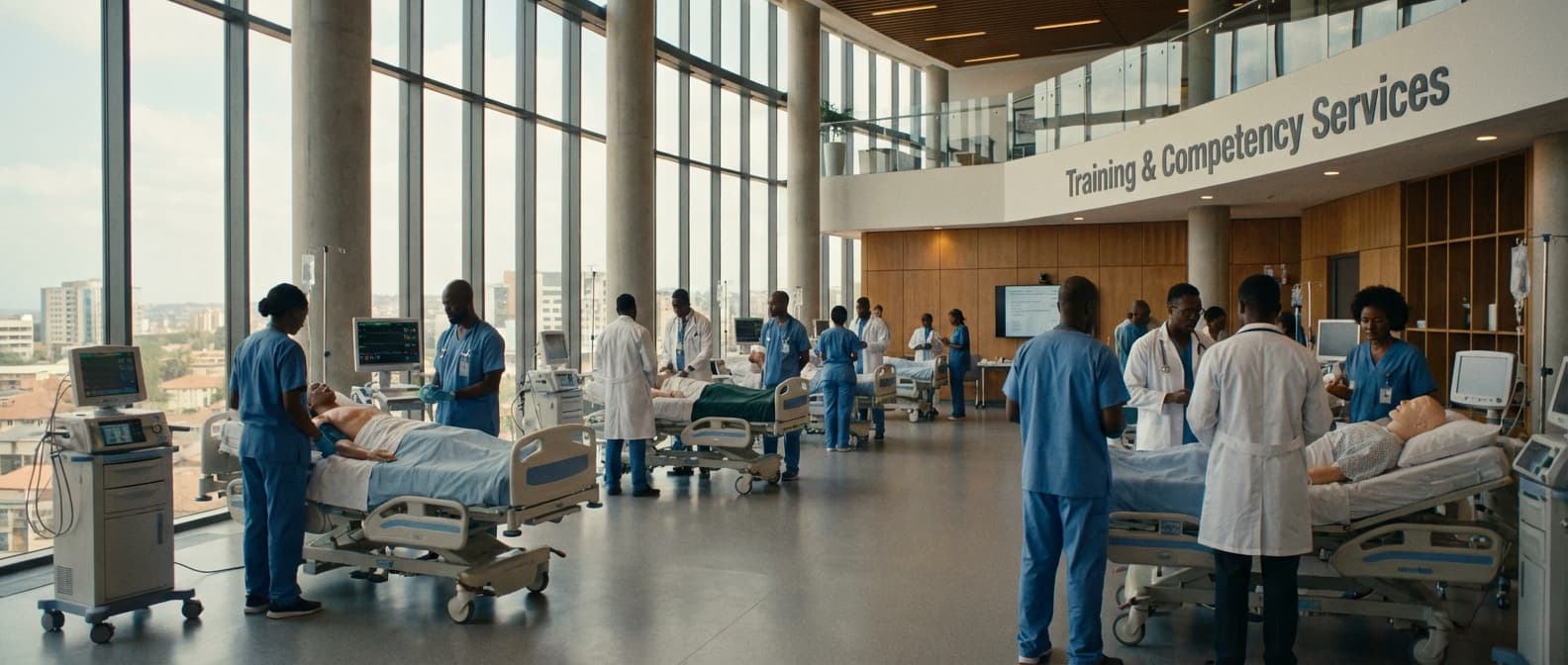
CT Operator Training Service (Radiographers) in Libya
Engineering Excellence & Technical Support
CT Operator Training Service (Radiographers) High-standard technical execution following OEM protocols and local regulatory frameworks.
Advanced CT Imaging Techniques
Master cutting-edge CT scanning protocols for enhanced diagnostic accuracy, including dual-energy CT, spectral imaging, and cardiac CT, tailored for Libyan healthcare needs.
Radiation Dose Optimization & Safety
Implement and adhere to stringent radiation safety standards and dose reduction techniques, ensuring optimal patient care and compliance with international guidelines in Libyan CT facilities.
Image Post-Processing & Interpretation Support
Develop proficiency in advanced image post-processing software and gain insights into common pathologies encountered in Libya, empowering radiographers for accurate preliminary assessments.
What Is Ct Operator Training Service (Radiographers) In Libya?
CT Operator Training Service (Radiographers) in Libya refers to specialized educational programs designed to equip radiographers with the theoretical knowledge and practical skills necessary to proficiently operate Computed Tomography (CT) scanners, manage imaging protocols, ensure patient safety, and maintain image quality within the Libyan healthcare context. This service addresses the need for skilled professionals in diagnostic imaging, particularly with the increasing adoption of advanced imaging technologies.
| Who Needs CT Operator Training? | Typical Use Cases | ||||||||
|---|---|---|---|---|---|---|---|---|---|
| Newly qualified radiographers entering the workforce in Libyan hospitals and diagnostic imaging centers. | Routine CT examinations for diagnosis of trauma (e.g., head injuries, fractures). | Diagnostic imaging of the head and neck (e.g., stroke, tumors, sinusitis). | Abdominal and pelvic imaging for conditions like appendicitis, kidney stones, and gastrointestinal disorders. | Thoracic imaging for pneumonia, pulmonary embolism, and lung nodules. | Oncological imaging for staging and monitoring of cancer. | Interventional CT procedures (e.g., biopsies, drainages) requiring advanced operator proficiency. | Radiographers seeking to upskill or specialize in CT imaging within existing healthcare roles. | Healthcare institutions in Libya aiming to establish or enhance their CT imaging services. | Existing CT operators requiring refresher courses or training on new equipment/protocols. |
Key Components of CT Operator Training Service:
- Theoretical Foundations: In-depth understanding of CT physics, radiation biology, radiation protection principles, and CT image formation.
- CT Scanner Operation: Hands-on training on specific CT scanner models, including patient positioning, scan parameter selection, image acquisition techniques, and system calibration.
- Imaging Protocols: Development and application of standardized imaging protocols for various anatomical regions and clinical indications, adhering to Libyan healthcare guidelines.
- Image Reconstruction and Post-processing: Training on image reconstruction algorithms, windowing, leveling, and advanced post-processing techniques for optimal diagnostic interpretation.
- Patient Care and Safety: Emphasis on radiation dose optimization, contrast media administration (if applicable), patient preparation, and management of potential adverse events.
- Quality Assurance (QA) and Quality Control (QC): Implementation of QA/QC procedures to ensure consistent image quality and equipment performance.
- Ethical and Legal Considerations: Understanding of professional ethics, patient confidentiality, and relevant Libyan regulations pertaining to medical imaging.
- Troubleshooting and Maintenance: Basic troubleshooting of common scanner issues and understanding of preventive maintenance schedules.
Who Needs Ct Operator Training Service (Radiographers) In Libya?
CT Operator Training Service for Radiographers in Libya is crucial for advancing medical imaging capabilities and ensuring patient safety. The demand for such specialized training is driven by the need to equip radiographers with the latest skills and knowledge to operate modern CT scanners effectively and interpret complex scans accurately. This service addresses the evolving landscape of diagnostic imaging in Libya, aiming to enhance the quality of healthcare services across the nation.
| Target Customer Type | Relevant Departments | Key Needs Addressed by Training | Impact of Training |
|---|---|---|---|
| Public Hospitals | Radiology Department, Medical Imaging Units | Upgrading skills on new CT equipment, standardizing protocols, improving diagnostic accuracy, patient safety | Enhanced diagnostic capabilities, improved patient outcomes, reduced misdiagnosis rates |
| Private Hospitals | Radiology Department, Imaging Services | Staying competitive with advanced imaging techniques, specialized CT applications, efficient workflow management | Improved service quality, expanded service offerings, increased patient throughput |
| Diagnostic Imaging Centers | CT Scan Units, Radiology Departments | Proficiency in diverse CT protocols, image optimization, radiation dose reduction techniques, quality assurance | Higher quality scans, reduced radiation exposure, efficient service delivery |
| Specialized Clinics | Oncology, Neurology, Cardiology, Emergency Departments | Training on specific CT protocols for disease detection and monitoring (e.g., CT angiography, perfusion CT, dual-energy CT) | Precise diagnosis and treatment planning for specialized conditions, improved patient management |
| Medical Training Institutions | Radiography Programs, Continuing Education Departments | Integrating advanced CT concepts into curricula, providing hands-on training for future radiographers, faculty development | Producing highly skilled radiographers, elevating the standard of medical education |
| Government Health Ministry & Affiliates | Healthcare Policy and Planning Departments, Public Health Agencies | Ensuring standardized training across the country, promoting best practices, addressing workforce shortages in specialized imaging | Nationwide improvement in imaging quality, standardized healthcare delivery, informed policy-making |
Target Customers and Departments for CT Operator Training Service in Libya
- Hospitals (Public and Private)
- Diagnostic Imaging Centers
- Specialized Clinics (e.g., Oncology, Neurology, Cardiology)
- Medical Training Institutions
- Government Health Ministry and its affiliated bodies
Ct Operator Training Service (Radiographers) Process In Libya
This document outlines the comprehensive workflow for providing CT Operator Training Services to Radiographers in Libya. The process is designed to be efficient, transparent, and tailored to the specific needs of the Libyan healthcare sector. It covers all stages from initial client inquiry to the successful execution and completion of the training program.
| Stage | Description | Key Activities | Responsible Party | Deliverables | Timeline (Indicative) |
|---|---|---|---|---|---|
| The process begins when a potential client (e.g., hospital, Ministry of Health, training institution) in Libya expresses interest in CT operator training. | Receive inquiry via email, phone, or website form. Acknowledge receipt. Gather basic information about the client's needs. | Client, Training Provider Sales/BD Team | Initial contact confirmation, basic needs understanding | 1-3 business days |
| A thorough understanding of the client's specific requirements is crucial for effective training. | Conduct detailed discussions with the client to identify: number of trainees, current skill level, specific CT equipment used, desired training outcomes, language requirements, budget, and any logistical constraints. | Training Provider Consultant/Trainer, Client Representatives | Needs assessment report, documented training objectives | 3-7 business days |
| Based on the needs assessment, a tailored training proposal and quotation are prepared. | Develop a comprehensive proposal including: training objectives, curriculum outline, methodology, trainer profiles, duration, location, required resources, pricing, and terms & conditions. Provide a detailed quotation. | Training Provider Business Development/Proposal Team | Formal training proposal, detailed quotation | 5-10 business days |
| Formalization of the training engagement through a legally binding contract. | Client reviews proposal and quotation. Negotiations on terms, scope, and pricing. Finalize and sign the training agreement/contract. | Client, Training Provider Legal/Contracts Team | Signed training agreement/contract | 7-14 business days |
| Adapting the standard CT training curriculum to the client's specific context and equipment. | Finalize the training curriculum based on agreed objectives. Develop detailed lesson plans, practical exercises, case studies, and assessment tools. Identify necessary training materials. | Training Provider Lead Trainer/Curriculum Developer | Finalized training curriculum, lesson plans, assessment tools | 5-10 business days |
| Arranging all logistical aspects for the training delivery. | Confirm training dates and venue. Coordinate trainee registration. Arrange for accommodation and transportation for trainers if applicable. Ensure availability of CT scanners and simulation equipment at the training site. | Training Provider Logistics Coordinator, Client Facilities Manager | Training schedule, confirmed venue and resources | Ongoing, initiated after contract signing |
| Ensuring qualified trainers are prepared and ready to deliver the training. | Assign experienced and certified CT trainers. Brief trainers on client-specific needs and curriculum. Arrange travel and accommodation for trainers. | Training Provider Training Manager, Trainers | Mobilized and briefed trainers | Concurrent with Logistics & Scheduling |
| The core of the service: delivering the comprehensive CT operator training. | Conduct theoretical sessions covering CT physics, image acquisition protocols, radiation safety, artifacts, and quality control. Facilitate hands-on practical sessions on CT scanners, emphasizing protocol selection, patient positioning, and image optimization. Include case study reviews and troubleshooting. | Certified CT Trainers | Delivered training modules, interactive sessions, practical demonstrations | Duration varies based on program scope (e.g., 3-10 days) |
| Measuring trainee comprehension and skill acquisition. | Administer theoretical assessments (quizzes, exams) and practical assessments (skill demonstrations, case interpretation). Collect trainee feedback on the training program, trainers, and materials. | Certified CT Trainers, Training Provider Assessment Team | Assessment results, trainee feedback forms | At the end of training modules and overall |
| Formalizing the completion of the training and providing a record of performance. | Issue certificates of completion to successful trainees. Prepare a comprehensive training report detailing the program, participants, assessment outcomes, and any recommendations. Submit report to the client. | Training Provider Administration Team, Lead Trainer | Certificates of completion, final training report | 5-7 business days post-training |
| Providing ongoing support and gathering further insights for continuous improvement. | Offer a period of post-training support (e.g., technical queries, protocol clarification). Conduct a follow-up review with the client to assess the impact of the training and identify areas for future development. Solicit testimonials. | Training Provider Account Manager, Trainers | Post-training support, client follow-up meeting, testimonials (if applicable) | Ongoing for a defined period (e.g., 1 month) |
CT Operator Training Service Workflow in Libya
- Inquiry & Initial Contact
- Needs Assessment & Consultation
- Proposal Development & Quotation
- Contract Negotiation & Agreement
- Curriculum Customization & Planning
- Logistics & Scheduling
- Trainer Mobilization
- Training Execution (Theory & Practical)
- Assessment & Evaluation
- Certification & Reporting
- Post-Training Support & Feedback
Ct Operator Training Service (Radiographers) Cost In Libya
Training radiographers to operate CT scanners in Libya involves several key cost drivers. The "CT Operator Training Service" is not a single commodity but a service package. The price will vary significantly based on the scope and duration of the training, the expertise of the trainers, the location within Libya, and the specific CT equipment being utilized for practical sessions. It's crucial to understand that pricing is often negotiated and can be influenced by the volume of trainees and the service provider's reputation.
| Training Type | Estimated Cost Range (LYD per trainee, approximate) | Notes |
|---|---|---|
| Basic Introduction/Familiarization (1-2 days) | 800 - 1,500 LYD | Covers fundamental principles, basic operation, safety. |
| Intermediate Operator Training (3-5 days) | 1,800 - 3,500 LYD | Includes common scanning protocols, image acquisition, basic image manipulation. |
| Advanced CT Operator Training (5-10 days) | 4,000 - 8,000 LYD | Covers specialized protocols, advanced image processing, artifact reduction, troubleshooting, QA. |
| Comprehensive Training with Certification | 6,000 - 12,000+ LYD | Includes in-depth modules, hands-on practice, formal assessment, and certification. Costs can escalate significantly for international trainers or highly specialized content. |
Key Pricing Factors for CT Operator Training in Libya:
- Training Duration & Depth: A basic orientation will cost less than a comprehensive program covering advanced protocols, troubleshooting, and quality assurance.
- Trainer Expertise & Credentials: Highly experienced radiographers with specialized CT training and international certifications will command higher fees.
- Location of Training: On-site training at a hospital or clinic in a major city like Tripoli or Benghazi might be more affordable than training in remote areas, considering travel and accommodation costs for trainers.
- Number of Trainees: Group discounts are common, making the per-person cost decrease with larger cohorts.
- CT Equipment Access: Training that involves hands-on practice on actual CT scanners will be more expensive due to the need for dedicated machine time and potential wear-and-tear.
- Curriculum & Materials: The inclusion of detailed training manuals, practice exercises, and simulation software can add to the overall cost.
- Certification & Assessment: Formal certification upon successful completion of the training will likely incur an additional fee.
- Provider Reputation & Accreditation: Established training providers with a proven track record and relevant accreditations may charge a premium.
- Travel & Accommodation: If trainers are brought from outside the immediate area or internationally, their travel and accommodation expenses will be factored into the cost.
Affordable Ct Operator Training Service (Radiographers) Options
Navigating the world of CT operator training can be a significant investment for radiographers and their institutions. Fortunately, there are various affordable options available, focusing on value bundles and smart cost-saving strategies. This guide explores how to maximize your training budget while ensuring high-quality education for CT operators. From online modules to blended learning approaches, understanding the different training formats and their associated benefits is key to making informed decisions.
| Training Format | Typical Cost Range (USD, Per Person) | Primary Cost-Saving Factor | Ideal For |
|---|---|---|---|
| Fully Online | $300 - $1,500 | Eliminates travel, accommodation, and on-site facility costs | Individuals, smaller departments, remote learners |
| Blended Learning | $500 - $2,000 | Reduced in-person training duration and associated costs | Departments needing practical scanner experience, but with budget constraints |
| Module-Based | $50 - $500 per module | Pay only for specific knowledge/skills required | Targeted skill development, addressing specific knowledge gaps |
| Subscription Service | $50 - $200 per month/year | Continuous access to a library of courses, cost-effective for ongoing needs | Larger departments, institutions with frequent training requirements |
| Group/Institutional Licenses | Varies based on volume | Significant per-person discount for bulk enrollments | Hospitals, imaging centers, educational institutions |
Value Bundles and Cost-Saving Strategies for Affordable CT Operator Training
- Comprehensive Online Courses: Many reputable institutions offer fully online CT operator training programs. These often include a wealth of resources, from video lectures and interactive simulations to digital textbooks and quizzes. The primary cost-saving comes from eliminating travel, accommodation, and on-site facility expenses.
- Blended Learning Packages: This approach combines online self-paced modules with a shorter, focused in-person component. The online portion covers theoretical knowledge, while the practical sessions allow for hands-on scanner experience. This can be more cost-effective than a purely on-site course by reducing the duration of in-person training.
- Module-Based Training: Instead of a full program, consider purchasing individual modules that focus on specific CT principles, protocols, or advanced techniques. This allows institutions to tailor training to their specific needs and budget, only paying for what is required.
- Subscription Services: Some providers offer subscription-based access to their CT training library. This can be an extremely cost-effective option for larger departments or institutions with ongoing training needs, providing continuous access to updated content and new courses.
- Group Discounts and Institutional Licenses: Inquire about discounts for bulk enrollments or institutional licenses. These agreements can significantly reduce the per-person cost of training, making it more accessible for departments and facilities.
- Train-the-Trainer Programs: For larger organizations, investing in a 'train-the-trainer' program can be a long-term cost-saving strategy. This empowers experienced staff members to deliver CT training internally, reducing reliance on external providers over time.
- Bundled Software and Training: Some CT scanner manufacturers offer training packages that are bundled with their equipment. While the initial purchase price might be higher, the integrated training can be more cost-effective and tailored to the specific scanner model.
- Continuing Education (CE) Credits Integration: Look for training programs that offer relevant CE credits. This allows radiographers to fulfill their continuing education requirements while acquiring new CT skills, effectively getting two benefits from one investment.
- Free Introductory Webinars and Resources: Many training providers offer free introductory webinars or downloadable resources. These can provide valuable insights into CT principles and serve as a low-commitment way to assess the quality of a provider before committing to paid training.
- Early Bird Discounts and Seasonal Promotions: Keep an eye out for early bird registration discounts or seasonal promotions offered by training providers. These can offer significant savings on course fees.
Verified Providers In Libya
In the challenging landscape of healthcare in Libya, identifying reliable and credentialed providers is paramount. Franance Health stands out as a beacon of quality and trustworthiness, offering a comprehensive range of medical services backed by rigorous credentials. This makes them the premier choice for individuals and families seeking dependable healthcare solutions.
| Credential/Feature | Description | Benefit for Patients |
|---|---|---|
| Accredited Medical Facilities | Franance Health facilities meet or exceed recognized international accreditation standards, ensuring a safe and high-quality environment for treatment. | Guarantees access to well-maintained equipment and protocols that minimize risks and optimize patient outcomes. |
| Board-Certified Physicians | All physicians within the Franance Health network are board-certified in their respective specialties, demonstrating advanced training and expertise. | Ensures patients receive care from specialists with proven knowledge and skill, leading to accurate diagnoses and effective treatment. |
| International Partnerships | Franance Health collaborates with leading international healthcare institutions for knowledge sharing, training, and access to specialized expertise. | Provides Libyan patients with access to cutting-edge medical advancements and treatments that might otherwise be unavailable locally. |
| Robust Quality Assurance | A stringent internal quality assurance program continuously monitors and evaluates all aspects of patient care and operational efficiency. | Ensures consistent high standards of care, patient satisfaction, and continuous improvement in service delivery. |
| Ethical Practice Guidelines | Adherence to a strict code of ethics, prioritizing patient confidentiality, informed consent, and fair treatment for all. | Builds trust and confidence, assuring patients that their healthcare decisions are respected and their rights are protected. |
Why Franance Health is the Best Choice in Libya:
- Unwavering commitment to patient safety and well-being.
- Access to a network of highly qualified and experienced medical professionals.
- Adherence to international healthcare standards and best practices.
- State-of-the-art medical facilities and advanced diagnostic equipment.
- Personalized care plans tailored to individual patient needs.
- Transparent communication and ethical medical practices.
Scope Of Work For Ct Operator Training Service (Radiographers)
This Scope of Work (SOW) outlines the requirements for a CT Operator Training Service specifically for radiographers. The objective is to provide comprehensive training that equips radiographers with the necessary theoretical knowledge and practical skills to safely and effectively operate CT scanners, interpret images, and adhere to best practices and regulatory standards. The training will cover fundamental principles of CT physics, image acquisition techniques, patient positioning, contrast media administration, quality assurance, radiation safety, and common artifact identification and mitigation. Technical deliverables will include training materials, practical demonstration sessions, competency assessments, and a final certification upon successful completion.
| Module Title | Key Topics Covered | Learning Objectives | Duration (Approx.) | Assessment Method(s) |
|---|---|---|---|---|
| CT Physics and Principles | X-ray generation, beam filtration, detectors, slice acquisition, reconstruction algorithms (filtered back-projection, iterative reconstruction), image noise, spatial resolution, contrast resolution, Hounsfield units. | Understand the fundamental physics behind CT image formation. Differentiate between various reconstruction methods. Explain factors affecting image quality. | 4 hours | Quiz, Lecture Participation |
| CT Scanner Operation and Patient Setup | Scanner components (gantry, table, console), patient positioning techniques (supine, prone, lateral), immobilization devices, protocols for different anatomical regions (head, chest, abdomen, pelvis). | Safely and accurately position patients for CT examinations. Select appropriate scanning protocols based on clinical indication and patient anatomy. | 6 hours | Practical Demonstration, Observation Checklist |
| Image Acquisition Parameters | kVp, mAs, pitch, gantry rotation time, collimation, field of view (FOV), reconstruction thickness and interval. | Optimize imaging parameters for diagnostic image quality while minimizing radiation dose. Understand the impact of each parameter on image characteristics. | 5 hours | Practical Exercises, Scenario-based Quiz |
| Contrast Media Administration and Safety | Types of contrast agents (iodinated, gadolinium), routes of administration (IV, oral, rectal), dosage calculations, patient screening for contraindications and allergies, managing adverse reactions, emergency protocols. | Safely administer contrast media according to established guidelines. Recognize and manage potential adverse reactions. Adhere to safety protocols. | 4 hours | Case Studies, Practical Demonstration (simulated), Quiz |
| Image Visualization and Manipulation | Windowing (WL/WW), zooming, panning, multiplanar reconstruction (MPR), 3D rendering (MIP, SSD), image archiving and retrieval. | Effectively manipulate CT images for optimal visualization. Utilize advanced visualization tools to aid interpretation. | 3 hours | Practical Exercises, Image Manipulation Task |
| Artifacts and Quality Assurance | Common artifacts (beam hardening, metal, motion, streak, partial volume) and their causes. Strategies for artifact reduction. Routine QA procedures (phantom scans, calibration). | Identify and understand the causes of common CT artifacts. Implement strategies to minimize artifacts. Perform basic QA checks to ensure image quality and scanner performance. | 4 hours | Artifact Identification Exercise, QA Scenario Analysis, Quiz |
| Radiation Safety and Dose Management | ALARA principle, radiation units (Gy, Sv), dose monitoring (CTDIvol, DLP), patient dose reduction techniques, shielding, legal and ethical considerations. | Apply radiation safety principles (ALARA) to minimize patient and staff dose. Understand dose metrics and their interpretation. Implement dose reduction strategies. | 5 hours | Case Studies, Radiation Safety Quiz, Scenario-based Assessment |
| Advanced Topics and Emerging Technologies | Dual-energy CT, spectral imaging, AI in CT, low-dose techniques, new applications. | Gain awareness of advanced CT technologies and their clinical applications. Understand the potential benefits of emerging CT techniques. | 2 hours | Lecture Participation, Q&A |
| Final Assessment | Comprehensive review of all modules. | Demonstrate competency in theoretical knowledge and practical application of CT operator skills. | 4 hours | Written Examination, Practical Skills Assessment |
Standard Specifications for CT Operator Training Service (Radiographers)
- Target Audience: Certified radiographers seeking specialized CT operator training.
- Training Modalities: Blend of theoretical lectures (in-person/virtual), hands-on practical sessions with CT simulators or actual equipment, case study reviews, and interactive Q&A.
- Curriculum Coverage: (Detailed in table below)
- Trainer Qualifications: Certified radiographers or medical physicists with extensive CT experience and proven training capabilities.
- Assessment Methods: Pre-training knowledge assessment, in-session quizzes, practical skills observation checklist, and a final written/practical examination.
- Certification: Issuance of a formal certificate of completion upon successful achievement of defined competency levels.
- Reporting: Regular progress reports to the client and a final comprehensive training report.
- Documentation: Provision of all training materials (handouts, presentations, user manuals) in a digital format.
Service Level Agreement For Ct Operator Training Service (Radiographers)
This Service Level Agreement (SLA) outlines the guaranteed response times and uptime for the CT Operator Training Service provided to Radiographers. This SLA aims to ensure timely support and continuous availability of the training platform and associated resources.
| Service Component | Response Time Guarantee (Business Hours) | Uptime Guarantee |
|---|---|---|
| Technical Support (Platform Access/Login Issues) | 1 Hour | 99.5% monthly |
| Technical Support (Virtual Simulator Functionality) | 2 Business Hours | 99.0% monthly |
| Access to E-learning Modules and Documentation | N/A (on-demand) | 99.8% monthly |
| Scheduled System Maintenance | Notification 48 hours in advance | N/A (scheduled downtime) |
Scope of Service
- On-demand access to CT Operator Training modules (e-learning).
- Access to virtual CT simulators for practical training.
- Support for technical issues related to the training platform.
- Access to training materials and documentation.
Frequently Asked Questions

Ready when you are
Let's scope your CT Operator Training Service (Radiographers) in Libya project in Libya.

Scaling healthcare logistics and technical systems across the entire continent.