
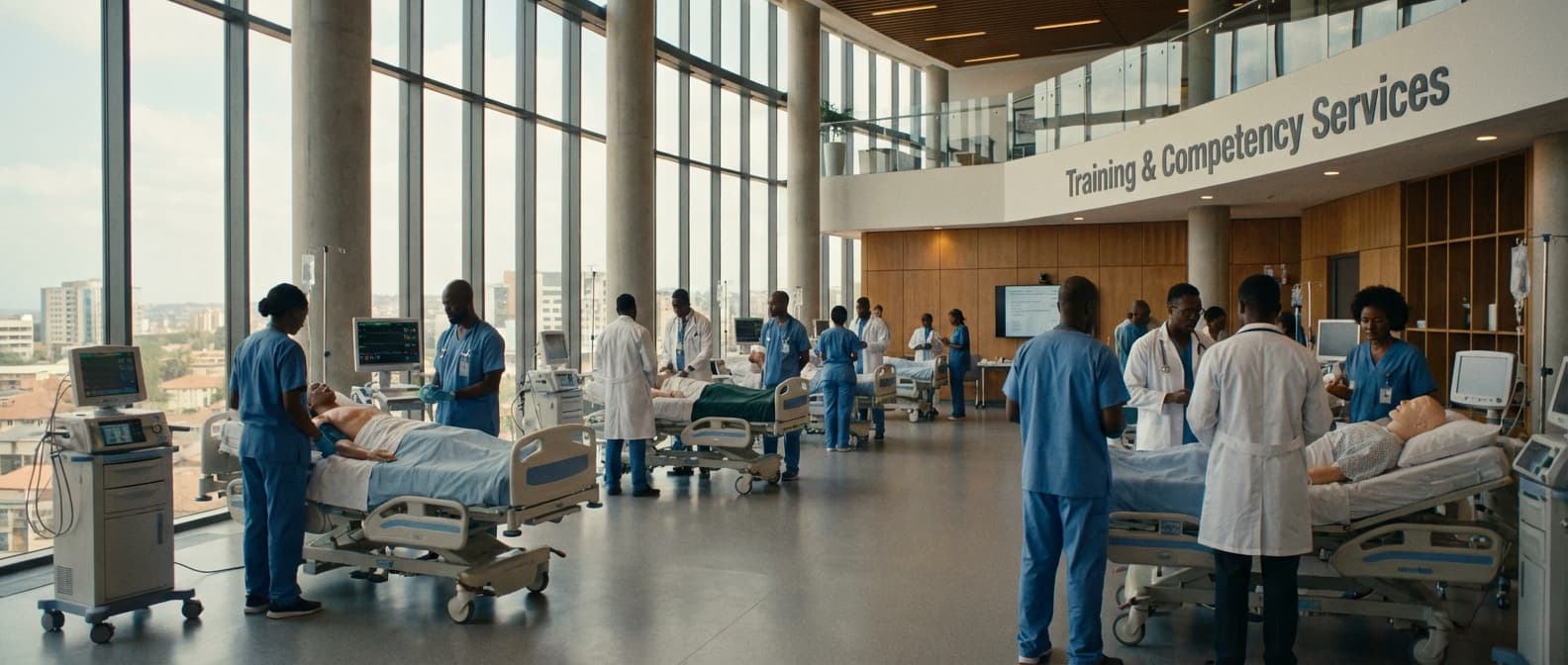
Biomedical Engineering First-Line Support Training Service in Libya
Engineering Excellence & Technical Support
Biomedical Engineering First-Line Support Training Service High-standard technical execution following OEM protocols and local regulatory frameworks.
Standardized Diagnostic Protocols
Implement and enforce adherence to globally recognized diagnostic protocols for biomedical equipment, ensuring consistent and accurate troubleshooting across all support teams in Libya. This enhances reliability and patient safety.
Remote Diagnostic & Calibration Tools
Equip first-line support with cutting-edge remote diagnostic and calibration tools, enabling efficient problem resolution and preventive maintenance for critical medical devices, thereby minimizing downtime in Libyan healthcare facilities.
Cybersecurity Best Practices for Medical Devices
Integrate comprehensive training on cybersecurity best practices specific to medical devices, safeguarding patient data and critical infrastructure against emerging digital threats within the Libyan healthcare landscape.
What Is Biomedical Engineering First-line Support Training Service In Libya?
Biomedical Engineering First-Line Support Training Service in Libya refers to a specialized training program designed to equip individuals with the foundational knowledge and practical skills required to perform initial troubleshooting, basic maintenance, and user support for biomedical equipment within healthcare facilities in Libya. This service aims to enhance the operational efficiency and safety of medical devices by enabling local personnel to address common technical issues promptly, thereby reducing downtime and reliance on more advanced engineering support. The training focuses on understanding equipment functionality, identifying immediate problems, performing routine checks, and escalating complex issues to higher tiers of support.
| Target Audience | Training Objectives | Typical Use Cases |
|---|---|---|
| Hospital Biomedical Technicians (Entry-Level) | Develop proficiency in identifying and resolving basic equipment malfunctions, performing routine checks, and ensuring safe operation. | Responding to urgent alarms on patient monitoring systems, replacing consumables (e.g., sensors, filters), performing daily functional tests on essential medical devices, assisting senior engineers with diagnostics. |
| Clinical Staff (Nurses, Physicians) | Gain understanding of equipment basic operation, troubleshooting common user-related errors, and proper reporting of device issues. | Rebooting malfunctioning devices, verifying correct setup and connections, understanding basic error messages displayed on equipment, reporting suspected faults to the biomedical department. |
| Healthcare Facility Administrators | Understand the value of first-line support in reducing equipment downtime, optimizing resource allocation, and improving overall healthcare delivery. | Budgeting for training programs, evaluating the impact of first-line support on operational costs and patient care, ensuring compliance with equipment maintenance standards. |
| Biomedical Engineering Students/Graduates (Pre-Employment) | Acquire practical, hands-on skills relevant to entry-level biomedical support roles. | Internship preparation, foundational training for job readiness in Libyan healthcare institutions. |
Key Components of Biomedical Engineering First-Line Support Training Service
- Introduction to Biomedical Equipment: Overview of common medical devices (e.g., vital signs monitors, infusion pumps, ECG machines, basic imaging equipment) and their fundamental operating principles.
- Basic Troubleshooting Methodologies: Structured approaches to problem diagnosis, including visual inspection, functional testing, and identification of common error codes.
- Preventive Maintenance Fundamentals: Training on scheduled cleaning, calibration checks, battery management, and basic safety inspections.
- User Interface and Operation: Familiarization with equipment controls, settings, and user-level operational procedures.
- Documentation and Reporting: Training on logging support requests, documenting performed tasks, and reporting equipment status.
- Safety Protocols: Understanding of electrical safety, infection control, and patient safety considerations during equipment interaction.
- Escalation Procedures: Guidelines for identifying when an issue requires the intervention of senior biomedical engineers or external service providers.
Who Needs Biomedical Engineering First-line Support Training Service In Libya?
Biomedical engineering first-line support training services in Libya are crucial for ensuring the optimal functioning, maintenance, and safety of medical equipment across various healthcare facilities. This training empowers local technicians and healthcare professionals to handle common issues, perform routine maintenance, and make informed decisions regarding equipment repair and replacement, thereby reducing reliance on external support and improving healthcare delivery efficiency.
| Target Customer Segment | Relevant Departments/Roles |
|---|---|
| Public Hospitals | Biomedical Engineering Department, Technical Services, IT Department (for networked equipment), Nursing Staff (for basic operation and troubleshooting) |
| Private Clinics and Hospitals | In-house Biomedical Technicians, Facility Management, Clinical Staff (for equipment operation) |
| Medical Centers and Diagnostic Laboratories | Laboratory Technicians, Biomedical Support Staff, IT Personnel |
| Specialized Healthcare Institutions | Dedicated Biomedical Engineering Teams, Specialist Department Staff (e.g., Radiology, Cardiology Technicians) |
| Government Health Ministries and Agencies | Central Biomedical Engineering Units, Procurement Departments, Training and Development Divisions |
| Medical Equipment Suppliers and Distributors | Field Service Engineers, Technical Support Staff, Installation and Commissioning Teams |
| Educational and Research Institutions | Laboratory Technicians, Research Assistants, Biomedical Engineering Faculty and Students (for practical skills) |
Target Customers in Libya for Biomedical Engineering First-Line Support Training Service
- Public Hospitals
- Private Clinics and Hospitals
- Medical Centers and Diagnostic Laboratories
- Specialized Healthcare Institutions (e.g., maternity hospitals, cardiac centers)
- Government Health Ministries and Agencies
- Medical Equipment Suppliers and Distributors (for their technical staff)
- Educational and Research Institutions with medical technology departments
Biomedical Engineering First-line Support Training Service Process In Libya
This document outlines the standard workflow for the Biomedical Engineering First-Line Support Training Service in Libya. It details the process from the initial client inquiry to the successful execution of the training program, ensuring a structured and efficient delivery of services.
| Stage | Description | Key Activities | Responsible Party | Deliverables |
|---|---|---|---|---|
| Initial contact from a client (hospital, clinic, training institution) requesting first-line biomedical engineering support training. | Receive inquiry, conduct preliminary discussions, identify training needs, target audience, and desired outcomes. | Client, Training Service Provider (TSP) | Initial Understanding of Requirements |
| TSP develops a comprehensive proposal based on the identified needs. | Outline training objectives, curriculum modules, duration, methodology, trainer profiles, required resources, and cost estimates. | TSP | Training Proposal |
| Review and negotiation of the proposal details between the client and TSP. | Discuss terms, pricing, payment schedules, confidentiality, intellectual property, and service level agreements (SLAs). | Client, TSP | Signed Training Contract/Agreement |
| Tailoring the training content to the specific needs of the Libyan healthcare sector and the client's equipment. | Adapt existing modules, develop new content, define learning objectives for each module, and create training materials (presentations, manuals, practical exercises). | TSP (Instructional Designers, Subject Matter Experts) | Customized Training Curriculum, Training Materials |
| Identifying and assigning trainers, ensuring availability of training facilities, equipment, and logistics. | Trainer selection and onboarding, booking training rooms/labs, arranging for simulation equipment or actual devices, scheduling training dates and times. | TSP (Training Coordinator, Logistics Manager) | Scheduled Training Program, Allocated Resources |
| Finalizing all aspects before the training commences. | Distribute pre-reading materials, confirm participant lists, prepare training environment, conduct trainer briefings, and ensure technical setup. | TSP, Client (for participant confirmation) | Ready Training Environment, Confirmed Participants |
| The actual execution of the training program. | Conduct lectures, demonstrations, hands-on practical sessions, case studies, and group activities as per the curriculum. | TSP (Trainers) | Trained Participants |
| Assessing the effectiveness of the training and gathering feedback. | Administer post-training assessments (quizzes, practical evaluations), collect feedback forms from participants and trainers, analyze results. | TSP (Trainers, Evaluation Team) | Assessment Results, Feedback Reports |
| Issuing certificates to successful participants and providing a comprehensive report to the client. | Award certificates to participants who meet the required standards, compile a final training report detailing objectives, attendance, performance, feedback, and recommendations. | TSP | Training Certificates, Final Training Report |
| Providing continued support and addressing any emergent needs. | Offer post-training support (Q&A, clarifications), schedule refresher courses if needed, and explore opportunities for future training programs. | TSP | Sustained Client Relationship, Potential for Future Engagements |
Biomedical Engineering First-Line Support Training Service Process
- Inquiry and Needs Assessment
- Proposal Development and Submission
- Contract Negotiation and Agreement
- Curriculum Customization and Planning
- Resource Allocation and Scheduling
- Pre-Training Preparations
- Training Delivery
- Post-Training Evaluation and Feedback
- Certification and Reporting
- Follow-up and Ongoing Support
Biomedical Engineering First-line Support Training Service Cost In Libya
The cost of first-line support training for Biomedical Engineering professionals in Libya can vary significantly based on several key factors. These factors influence the overall pricing structure, making it essential for organizations to understand them when budgeting for such services. The training aims to equip technicians and engineers with the foundational knowledge and practical skills to handle initial troubleshooting, basic maintenance, and user support for a wide range of medical devices. This is crucial for ensuring the operational efficiency and safety of healthcare facilities in Libya. Local currency, the Libyan Dinar (LYD), is used for all transactions. The pricing is generally determined by the scope and depth of the training, the expertise of the trainers, the duration of the program, and the resources utilized. Demand for such specialized training is often driven by the need to maintain a skilled workforce capable of supporting increasingly complex medical equipment within the Libyan healthcare sector.
| Training Type/Scope | Estimated Duration | Indicative Price Range (LYD) |
|---|---|---|
| General Biomedical Equipment Principles (Introduction to troubleshooting, basic safety checks) | 2-3 Days | 3,000 - 6,000 LYD |
| First-Line Support for Common Medical Devices (e.g., vital signs monitors, basic infusion pumps) | 3-5 Days | 5,000 - 10,000 LYD |
| Specialized Device Support (e.g., introductory to imaging equipment, basic anesthesia machines) | 5-7 Days | 8,000 - 15,000 LYD |
| On-site Training (per day, inclusive of trainer fees and basic materials, excluding participant travel/accommodation if applicable) | 1 Day | 2,500 - 4,500 LYD |
| Customized Training Module (development and delivery, price varies significantly based on complexity) | Variable | Negotiable (e.g., starting from 10,000 LYD for a moderate module) |
Key Pricing Factors for Biomedical Engineering First-Line Support Training in Libya
- Training Content and Scope: The complexity and breadth of the topics covered (e.g., general biomedical principles, specific device categories like imaging, life support, or laboratory equipment) directly impact the cost. More specialized or comprehensive curricula require more development and trainer expertise.
- Duration of the Training Program: Longer training courses, typically measured in days or weeks, will inherently be more expensive due to extended trainer time, facility usage, and material preparation.
- Trainer Expertise and Qualifications: Highly experienced biomedical engineers or trainers with specialized certifications and a proven track record command higher fees. Their ability to deliver practical, relevant, and engaging content is a significant value proposition.
- Training Methodology and Delivery Mode: Whether the training is delivered in-person at a dedicated facility, on-site at the client's location, or through a hybrid/online model will affect costs. In-person training usually incurs costs for venue, travel, and accommodation.
- Number of Participants: While per-participant costs might decrease with larger groups due to economies of scale, the overall project cost will increase. Conversely, smaller, more intimate training sessions might have a higher per-person fee but offer more personalized attention.
- Training Materials and Resources: The provision of high-quality training manuals, practical simulation equipment, access to actual medical devices for hands-on practice, and assessment tools contribute to the overall cost.
- Certification and Accreditation: If the training leads to recognized certifications or accreditations, this adds value and can increase the associated costs. The process of obtaining and maintaining such accreditations is often expensive.
- Provider Reputation and Experience: Established training providers with a strong reputation and a history of successful deliveries may charge a premium for their proven expertise and reliability.
- Customization Requirements: Tailoring the training program to specific organizational needs, existing equipment fleets, or unique challenges faced by a healthcare facility will involve additional development time and expertise, thus increasing the cost.
- Geographical Location of Training: While the focus is Libya, training conducted in major cities versus more remote areas might have slight variations in logistical costs for trainers and participants.
Affordable Biomedical Engineering First-line Support Training Service Options
Securing effective and affordable first-line biomedical engineering support training is crucial for healthcare facilities. This training equips technicians with the foundational knowledge and skills to handle common equipment issues, troubleshoot basic malfunctions, and perform preventative maintenance, thereby improving uptime and reducing reliance on external service providers. This document outlines various value bundles and cost-saving strategies available for such training services.
| Value Bundle Option | Included Training Modules | Typical Delivery Method | Target Audience | Estimated Cost Range (per technician) | Cost-Saving Strategies |
|---|---|---|---|---|---|
| Basic Essentials Bundle | Modules 1-4 | Online modules with virtual labs | New technicians, entry-level support staff | $500 - $1,500 | Group discounts, subscription models for ongoing access, self-paced learning |
| Comprehensive Foundations Bundle | Modules 1-6 | Blended learning (online modules + hands-on workshops) | Junior technicians, aspiring biomedical engineers | $1,500 - $3,000 | Partnering with training providers for bulk enrollment, customized curriculum to avoid redundant training |
| Specialized Device Focus Bundle | Modules 1-3 + 2-3 specialized device modules (e.g., imaging, anesthesia) | On-site training or dedicated virtual sessions | Technicians supporting specific high-volume equipment | $2,500 - $5,000+ | Leveraging manufacturer training, train-the-trainer programs to build in-house expertise |
| Custom On-Demand Training | Tailored to facility needs, often focusing on specific equipment or compliance issues | Virtual, on-site, or a hybrid approach | All levels of support staff, addressing unique organizational challenges | Variable, based on scope and duration | Internal knowledge sharing sessions, utilizing open-source learning materials, grant funding opportunities |
Key Training Program Components
- Introduction to Biomedical Equipment Principles
- Basic Electrical Safety and Measurement Techniques
- Common Biomedical Device Families (e.g., vital signs monitors, infusion pumps, EKG machines)
- Troubleshooting Methodologies and Diagnostic Tools
- Preventative Maintenance Procedures
- Documentation and Record-Keeping Best Practices
- Regulatory Compliance Overview (e.g., FDA, HIPAA)
- Introduction to Biomedical Information Systems (if applicable)
Verified Providers In Libya
In Libya's burgeoning healthcare landscape, identifying truly verified and trustworthy providers is paramount for ensuring quality care and patient safety. Franance Health stands out as a leading organization dedicated to credentialing and verifying healthcare professionals and facilities across the nation. Their rigorous vetting process ensures that all affiliated providers meet stringent standards of competence, ethics, and patient care. By choosing a Franance Health-verified provider, individuals can be confident they are receiving care from highly qualified and reputable professionals, minimizing risks and maximizing the chances of positive health outcomes. This commitment to transparency and excellence makes Franance Health credentials a benchmark for reliability in Libyan healthcare.
| Verification Aspect | Franance Health Standard | Patient Benefit |
|---|---|---|
| Medical Education & Training | Accredited institutions, recognized curricula | Competent diagnosis and treatment |
| Professional Licenses & Certifications | Valid and current, meeting national requirements | Legally authorized and qualified care |
| Clinical Experience | Verified work history and demonstrated proficiency | Experienced handling of various medical conditions |
| Continuing Professional Development | Mandatory or encouraged ongoing learning | Up-to-date knowledge and advanced techniques |
| Background Checks & Ethical Review | Thorough screening for professional conduct | Trustworthy and ethical medical professionals |
Why Franance Health Credentials Represent the Best Choice in Libya:
- Uncompromising Quality Standards: Franance Health implements a multi-faceted verification process that examines a provider's education, training, experience, licensure, and ongoing professional development.
- Enhanced Patient Safety: By ensuring providers meet established benchmarks, Franance Health significantly contributes to a safer healthcare environment for all patients.
- Increased Trust and Confidence: The Franance Health seal of approval instills confidence in patients, allowing them to make informed decisions about their healthcare providers.
- Ethical Practice Assurance: Verification includes a review of ethical conduct and adherence to professional codes of practice.
- Access to Competent Professionals: Franance Health's network comprises a curated selection of Libya's most skilled and dedicated healthcare professionals.
- Commitment to Continuous Improvement: Verified providers are often encouraged or required to engage in continuous medical education, ensuring they stay abreast of the latest advancements.
Scope Of Work For Biomedical Engineering First-line Support Training Service
This Scope of Work (SOW) outlines the requirements for a Biomedical Engineering First-Line Support Training Service. The objective is to equip existing or newly hired personnel with the foundational knowledge and practical skills necessary to effectively handle initial troubleshooting, basic maintenance, and user support for a defined range of biomedical equipment. This service will enhance device uptime, improve user satisfaction, and optimize the utilization of biomedical engineering resources by enabling first-line support to resolve common issues before escalating to higher levels of technical expertise. The training will focus on standardized procedures, safety protocols, and essential diagnostic techniques.
| Category | Item | Description | Standard Specifications/Requirements | Deliverable |
|---|---|---|---|---|
| Training Program | Curriculum Outline | Detailed breakdown of modules, learning objectives, and topics covered. | Must cover basic principles of operation, common failure modes, safety procedures, user interface navigation, and initial troubleshooting steps for designated equipment. | Approved Curriculum Document |
| Training Materials | Participant Manuals | Comprehensive guides for trainees to follow during and after the training. | Includes theoretical explanations, step-by-step procedures, diagrams, troubleshooting flowcharts, and relevant safety warnings. Must be printable and accessible digitally. | Digital and Printable Participant Manuals |
| Training Materials | Instructor Presentation Slides | Visual aids for instructors to deliver the training content. | Clear, concise, and visually engaging slides, aligned with the participant manual. Should include key concepts, images, and prompts for discussion. | Digital Presentation Slides (e.g., PowerPoint, PDF) |
| Training Delivery | Hands-on Practical Sessions | Opportunity for trainees to apply learned concepts on actual or simulated equipment. | Must include opportunities for trainees to perform basic checks, identify common error messages, follow troubleshooting guides, and practice safe handling procedures. Sufficient equipment or simulators for all trainees. | Completed Practical Training Sessions |
| Assessment | Knowledge Assessment (Quiz) | Evaluates theoretical understanding of the training content. | Multiple-choice, short answer, or true/false questions covering key concepts, safety, and procedures. Minimum passing score to be defined (e.g., 80%). | Completed and Graded Knowledge Assessments |
| Assessment | Skills Assessment (Practical Exam) | Evaluates the ability of trainees to perform specific tasks. | Trainees must demonstrate proficiency in executing pre-defined troubleshooting scenarios or maintenance tasks. Performance criteria to be clearly defined. | Completed and Assessed Skills Assessments |
| Post-Training | Competency Certification | Formal recognition of trainee achievement. | Issued to trainees who successfully pass both knowledge and skills assessments. | Certificates of Completion/Competency |
| Reporting | Training Summary Report | Overview of the training conducted and its outcomes. | Includes number of trainees, attendance records, overall assessment results, feedback from trainees, and recommendations for future training or support improvements. | Final Training Summary Report |
| Equipment Focus | Target Biomedical Equipment | Specific list of equipment the training will cover. | Must be clearly defined by make, model, and general category (e.g., Infusion Pumps, Vital Signs Monitors, ECG machines). Training will be tailored to these specific devices. | Defined List of Target Equipment |
| Safety Protocols | Biomedical Safety Training | Emphasis on safe handling and operational procedures. | Must cover electrical safety, infection control, biohazard awareness, and lockout/tagout procedures relevant to the target equipment. Compliance with relevant healthcare regulations (e.g., JCI, HIPAA if applicable). | Integrated Safety Training Modules |
Technical Deliverables and Standard Specifications
- Training Program Curriculum Development
- Training Material Creation (Presentation slides, manuals, handouts)
- Hands-on Practical Training Sessions
- Competency Assessment Tools (Quizzes, practical exams)
- Post-Training Support Plan
- Training Report and Evaluation Summary
Service Level Agreement For Biomedical Engineering First-line Support Training Service
This Service Level Agreement (SLA) outlines the response times and uptime guarantees for the Biomedical Engineering First-Line Support Training Service. This training service is designed to equip first-line support personnel with the fundamental knowledge and skills required to effectively handle initial technical issues related to biomedical equipment. The goal is to minimize equipment downtime and ensure timely resolution of common problems, thereby enhancing patient care and operational efficiency.
| Service Metric | Target | Measurement Method | Escalation Procedure |
|---|---|---|---|
| Training Module Availability (Uptime) | 99.5% during scheduled training hours (08:00 - 17:00 local time, Monday-Friday) | System monitoring tools tracking platform accessibility and responsiveness. | If availability drops below 95% for more than 2 consecutive hours, an immediate investigation will be initiated, and a status update will be provided within 1 hour. Service credits may be issued for prolonged outages. |
| Live Virtual Training Session Availability | 100% during scheduled sessions. | Confirmation of instructor presence and platform stability at the start of each session. | In case of instructor or platform failure, a rescheduled session will be offered within 24 business hours. Full refund or credit for the affected session will be provided if rescheduling is not feasible. |
| Response Time for Q&A Forum Queries | Within 4 business hours for standard queries; Within 1 business hour for critical troubleshooting queries (requiring immediate clarification to prevent service disruption). | Timestamping of all submitted queries and recorded response times by support staff. | If response times are consistently exceeded, a review of support staff allocation and efficiency will be conducted. Customers will be notified of delays exceeding 12 business hours. |
| Response Time for Technical Issues During Training | Within 30 minutes during live training sessions. | Direct communication channels established with the instructor/support team during live sessions. | If the issue cannot be resolved within 60 minutes, a dedicated support engineer will be assigned to assist the instructor, with a target resolution time of 2 business hours. |
| Assessment Feedback and Certification Issuance | Within 3 business days of assessment completion. | Automated tracking of assessment submission and manual review time. | If feedback/certification is delayed beyond 5 business days, the individual will receive priority processing and an explanation for the delay. |
Key Service Components:
- On-demand access to online training modules.
- Live virtual training sessions conducted by certified instructors.
- Interactive Q&A forums for technical support and troubleshooting.
- Post-training assessment and certification.
- Regular updates to training content based on evolving technology and common issues.
Frequently Asked Questions

Ready when you are
Let's scope your Biomedical Engineering First-Line Support Training Service in Libya project in Libya.

Scaling healthcare logistics and technical systems across the entire continent.