
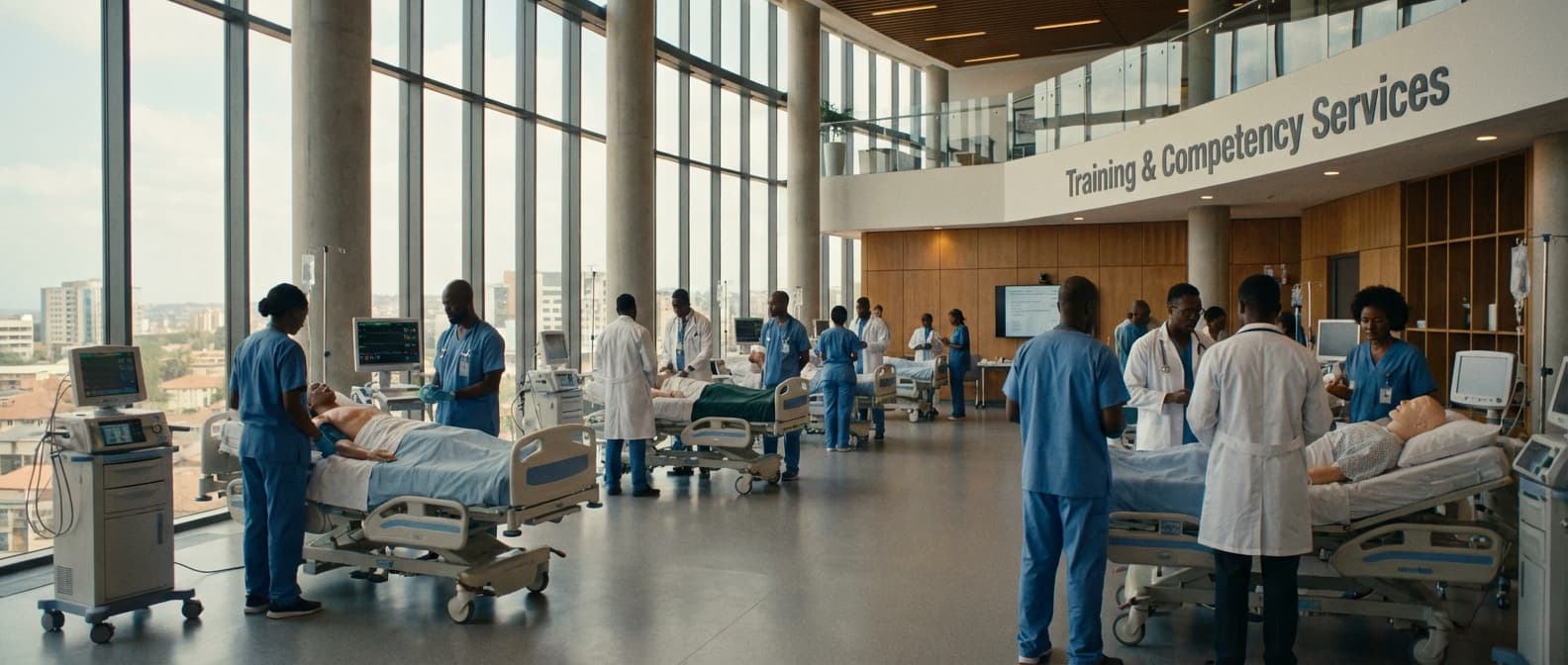
Anesthesia Workstation User Training Service in Libya
Engineering Excellence & Technical Support
Anesthesia Workstation User Training Service High-standard technical execution following OEM protocols and local regulatory frameworks.
Advanced Vaporizer Calibration & Safety Protocols
Master precise anesthetic delivery with hands-on training on advanced vaporizer calibration techniques, ensuring patient safety and optimal drug utilization. Understand critical safety interlocks and emergency procedures for Libya's demanding clinical environments.
Ventilator Modes & Waveform Interpretation
Gain deep proficiency in operating and troubleshooting the full spectrum of modern anesthesia workstation ventilator modes. Learn to interpret complex pressure and flow waveforms for effective patient ventilation strategies tailored to Libyan healthcare needs.
Integrated Monitoring & Data Management Integration
Explore seamless integration of vital signs monitoring, capnography, and gas analysis within the workstation. Understand data logging, export functionalities, and basic troubleshooting for maintaining uninterrupted patient care and compliance in Libyan facilities.
What Is Anesthesia Workstation User Training Service In Libya?
Anesthesia Workstation User Training Service in Libya refers to specialized educational programs designed to equip healthcare professionals with the knowledge and practical skills required to safely and effectively operate advanced anesthesia workstations. These workstations are sophisticated medical devices that deliver anesthetic gases, monitor patient vital signs, and provide ventilatory support during surgical and other medical procedures. The training ensures users understand the device's functionalities, parameters, alarms, troubleshooting procedures, and maintenance protocols, thereby optimizing patient safety and procedural efficiency within the Libyan healthcare context.
| Target Audience | Rationale/Need | Typical Use Cases |
|---|---|---|
| Anesthesiologists | To ensure proficient and safe operation of modern anesthesia delivery systems, critical for patient care during surgery. | Pre-operative patient assessment and preparation, intra-operative anesthetic management, post-operative recovery monitoring, management of complex surgical cases. |
| Anesthesia Technicians/Nurses | To support anesthesiologists by managing and monitoring the anesthesia workstation, ensuring its optimal performance and patient safety. | Workstation setup and pre-use checks, direct patient monitoring under supervision, routine maintenance, troubleshooting minor issues, managing consumables. |
| Medical Device Biomedical Engineers/Technicians | To understand the technical specifications, installation requirements, calibration procedures, and advanced troubleshooting for effective maintenance and repair. | Installation and commissioning of new workstations, routine preventive maintenance, calibration and performance verification, in-depth troubleshooting and repair, technical support for clinical staff. |
| Healthcare Facilities (Hospitals, Surgical Centers) | To comply with regulatory standards, enhance patient safety protocols, reduce device downtime, and optimize resource utilization. | Procurement and integration of new anesthesia workstations, staff competency assurance, quality improvement initiatives, emergency preparedness, staff retention and development. |
Key Components of Anesthesia Workstation User Training in Libya
- Theoretical instruction on the principles of anesthesia delivery and patient monitoring.
- Detailed explanation of the anesthesia workstation's hardware components and user interface.
- Hands-on training with the specific anesthesia workstation model(s) in use.
- Instruction on setting up and calibrating the workstation for various patient populations and surgical scenarios.
- Comprehensive training on monitoring patient physiological parameters (e.g., SpO2, EtCO2, ECG, NIBP, IBP, temperature).
- Alarm management and interpretation, including appropriate responses to different alarm conditions.
- Ventilator modes and their application in different clinical situations.
- Troubleshooting common operational issues and basic maintenance procedures.
- Emergency procedures related to workstation malfunction or patient decompensation.
- Infection control and sterilization protocols for workstation components.
- Regulatory compliance and documentation requirements relevant to Libya.
Who Needs Anesthesia Workstation User Training Service In Libya?
Anesthesia workstation user training services are crucial for ensuring the safe and effective operation of complex medical equipment in Libya. These services are designed to equip healthcare professionals with the knowledge and practical skills necessary to utilize anesthesia workstations to their full potential, thereby enhancing patient care and minimizing risks.
| Customer Type | Primary Departments Requiring Training | Key Personnel to be Trained |
|---|---|---|
| Public Hospitals | Anesthesiology, Intensive Care Units (ICUs), Operating Rooms (ORs), Emergency Departments (EDs), Post-Anesthesia Care Units (PACUs) | Anesthesiologists, Nurse Anesthetists, Anesthesia Technicians, ICU Nurses, ER Physicians, Surgical Residents |
| Private Hospitals | Anesthesiology, Operating Rooms (ORs), Intensive Care Units (ICUs), Pain Management Clinics | Anesthesiologists, Nurse Anesthetists, Anesthesia Technicians, ICU Nurses, Pain Management Specialists |
| Specialized Surgical Centers (e.g., Cardiac, Neurological, Orthopedic) | Anesthesiology, Operating Rooms (ORs) | Anesthesiologists specializing in specific surgical fields, Anesthesia Technicians, OR Nurses |
| University Teaching Hospitals | Anesthesiology Departments (for both clinical practice and education), Simulation Centers | Faculty Anesthesiologists, Anesthesia Residents, Medical Students (advanced), Anesthesia Technicians, Simulation Instructors |
| Emergency Medical Services (EMS) - for transport/pre-hospital use | Critical Care Transport Teams, Advanced Life Support Units | Paramedics with advanced training, Critical Care Nurses (for transport), EMS Physicians |
| Medical Training Institutions (e.g., Technical Institutes, Nursing Schools) | Anesthesia Technology Programs, Nursing Programs (with advanced electives) | Instructors, Students in specialized anesthesia programs |
Target Customers and Departments in Libya for Anesthesia Workstation User Training Services:
- Hospitals (Public and Private)
- Specialized Surgical Centers
- University Teaching Hospitals
- Emergency Medical Services (EMS)
- Medical Training Institutions
Anesthesia Workstation User Training Service Process In Libya
This document outlines the Anesthesia Workstation User Training Service Process in Libya, detailing the workflow from initial inquiry to the successful execution of training. The process is designed to be clear, efficient, and customer-centric, ensuring that healthcare professionals in Libya receive comprehensive and effective training on anesthesia workstations.
| Stage | Key Activities | Responsible Party | Duration (Estimated) | Deliverables |
|---|---|---|---|---|
| Inquiry & Initial Contact | Expression of interest, preliminary information gathering | Healthcare Institution/Individual, Service Provider Representative | 1-2 Business Days | Initial inquiry acknowledgement |
| Needs Assessment & Consultation | Detailed discussion of requirements, workstation models, audience, objectives, dates | Service Provider Representative, Healthcare Institution Contact | 2-5 Business Days | Needs assessment report, documented requirements |
| Proposal & Quotation Generation | Development of detailed training proposal and cost breakdown | Service Provider Sales/Training Department | 3-7 Business Days | Formal training proposal and quotation |
| Agreement & Contract | Review, negotiation, and signing of training agreement | Service Provider Legal/Sales, Healthcare Institution Management | 5-10 Business Days | Signed training agreement/contract |
| Curriculum Customization & Material Preparation | Finalizing curriculum, developing/adapting training materials | Service Provider Training Department/Trainers | 7-14 Business Days | Finalized curriculum, training materials (digital/print) |
| Logistics & Scheduling Confirmation | Confirming dates, venue, and participant registration process | Service Provider Training Coordinator, Healthcare Institution Coordinator | 2-3 Business Days | Confirmed training schedule and logistics plan |
| Trainer Assignment & Briefing | Selecting and briefing qualified trainers | Service Provider Training Manager | 1-2 Business Days | Assigned trainer(s) briefed |
| Pre-Training Communication | Distributing training agenda, objectives, and participant instructions | Service Provider Training Coordinator | 1-2 Business Days before training | Participant pre-training package |
| Training Execution | Delivering theoretical and practical training sessions | Assigned Trainer(s) | 1-5 Days (depending on scope) | Delivered training sessions |
| Assessment & Evaluation | Conducting assessments and collecting participant feedback | Assigned Trainer(s), Participants | During and immediately after training | Assessment results, participant feedback forms |
| Post-Training Support & Certification | Issuing certificates and providing initial support | Service Provider Training Department | 2-5 Business Days after training completion | Certificates of completion |
| Feedback Analysis & Service Improvement | Analyzing feedback and identifying areas for improvement | Service Provider Management/Training Department | Ongoing | Service improvement recommendations |
| Reporting & Documentation | Creating and submitting a training report to the institution | Service Provider Training Department | 3-5 Business Days after training completion | Comprehensive training report |
Anesthesia Workstation User Training Service Process - Libya
- Inquiry & Initial Contact: The process begins when a Libyan healthcare institution (e.g., hospital, clinic) or an individual anesthesiologist expresses interest in training services for anesthesia workstations.
- Needs Assessment & Consultation: A dedicated training coordinator or sales representative from the service provider engages with the inquirer to understand their specific needs. This includes identifying the type of anesthesia workstation(s) in use, the target audience (e.g., anesthesiologists, nurse anesthetists, technicians), the desired level of expertise (basic, advanced, troubleshooting), the number of participants, and preferred training dates and locations (on-site at their facility or at a designated training center).
- Proposal & Quotation Generation: Based on the needs assessment, a detailed proposal is prepared. This proposal outlines the training curriculum, duration, learning objectives, trainer qualifications, logistical arrangements (travel, accommodation if applicable), and a comprehensive quotation for the service.
- Agreement & Contract: Upon acceptance of the proposal and quotation, a formal training agreement or contract is drafted and signed by both parties. This document will detail the scope of work, payment terms, cancellation policy, and any specific contractual obligations.
- Curriculum Customization & Material Preparation: The training curriculum is finalized and, if necessary, customized to align with the specific anesthesia workstation models and the institution's protocols. Training materials, including presentations, user manuals, practical exercise guides, and assessment tools, are prepared and translated into Arabic or English as required.
- Logistics & Scheduling Confirmation: The training dates, times, and venue are confirmed. Any necessary arrangements for equipment setup (if training on-site), participant registration, and pre-training communication are made.
- Trainer Assignment & Briefing: Experienced and qualified trainers specializing in the relevant anesthesia workstation models are assigned. Trainers are briefed on the specific needs of the Libyan institution and the trainees.
- Pre-Training Communication: Participants receive pre-training information, including the training agenda, learning objectives, any prerequisites, and instructions for attending the session.
- Training Execution: The training is delivered by the assigned trainer(s) according to the agreed-upon schedule and curriculum. This typically includes a combination of theoretical lectures, practical demonstrations, hands-on exercises, case studies, and interactive Q&A sessions.
- Assessment & Evaluation: Trainees are assessed to gauge their understanding and proficiency. This may involve theoretical quizzes, practical skill assessments, and observation during hands-on sessions. Feedback forms are distributed to participants to evaluate the training content, delivery, and overall experience.
- Post-Training Support & Certification: Upon successful completion of the training and assessment, participants receive certificates of completion. The service provider may offer limited post-training support, such as access to online resources or a designated contact person for follow-up questions.
- Feedback Analysis & Service Improvement: The collected feedback from participants and trainers is analyzed to identify areas for improvement in future training programs. This data informs updates to curriculum, training methodologies, and logistical processes.
- Reporting & Documentation: A comprehensive training report is generated for the Libyan institution, summarizing the training conducted, participant attendance, assessment results, and any recommendations. Records of the training are maintained by the service provider.
Anesthesia Workstation User Training Service Cost In Libya
Providing specialized user training for anesthesia workstations in Libya involves several cost considerations. The price is influenced by factors such as the complexity and specific model of the workstation, the duration and intensity of the training, the qualifications and experience of the trainers, the location of the training (on-site at a hospital vs. off-site), and the number of participants. Travel and accommodation expenses for trainers, especially if they are brought in from outside Libya, will also significantly impact the overall cost. Furthermore, the inclusion of hands-on practical sessions with actual equipment, simulation-based training, and the provision of training materials and certification all contribute to the final price. Given the dynamic economic conditions and import costs in Libya, pricing can fluctuate. While specific, universally published rates are scarce, a general understanding of pricing factors can help estimate costs.
| Training Scope | Estimated Price Range (LYD - Libyan Dinar) | Notes |
|---|---|---|
| Basic User Training (1-2 Days) | 2,000 - 5,000 | Covers essential functions, safety protocols, and basic troubleshooting for a single workstation model. Assumes local trainers. |
| Intermediate User Training (3-5 Days) | 5,000 - 12,000 | Includes more in-depth operational procedures, advanced features, common troubleshooting scenarios, and practical sessions. Might involve trainers from within Libya or regional expertise. |
| Advanced/Specialized Training (5+ Days / Modular) | 12,000 - 30,000+ | Focuses on specific advanced applications, maintenance basics, integration with other devices, or troubleshooting complex issues. Could involve international trainers, requiring significant travel and accommodation costs. |
| On-site Training (Per Day - Group) | 1,500 - 4,000 | This is a supplementary cost for the trainer's daily rate for on-site delivery, not including the full course fee. Varies based on trainer's seniority. |
| Per Participant Fee (for large groups) | 200 - 1,000 | This is an additional cost per participant if the total training package is being priced on a per-head basis, particularly for standardized courses. |
Key Pricing Factors for Anesthesia Workstation User Training in Libya:
- Workstation Model & Complexity: Advanced, multi-functional workstations generally require more in-depth and thus more expensive training.
- Training Duration & Intensity: Longer, more intensive courses with multiple modules will cost more than shorter, introductory sessions.
- Trainer Expertise & Experience: Highly qualified and experienced trainers, especially those with international certifications or specialized knowledge, command higher fees.
- Location of Training: On-site training at a healthcare facility might include additional costs for logistics and access, while off-site training might incur venue rental fees.
- Number of Participants: Larger groups can sometimes lead to a lower per-participant cost, but may also necessitate more complex logistical arrangements.
- Hands-on Practical Sessions: The inclusion of extensive practical training on actual or simulated equipment adds to the overall cost.
- Training Materials & Certification: Costs associated with developing, printing, and distributing training manuals, as well as issuing certificates.
- Travel & Accommodation: For trainers traveling to or within Libya, these expenses are a significant factor.
- Language of Instruction: While Arabic is prevalent, if training requires a specific foreign language, it might increase costs.
- Customization of Curriculum: Tailoring the training to the specific needs and existing equipment of a particular hospital or clinic.
Affordable Anesthesia Workstation User Training Service Options
This document outlines affordable anesthesia workstation user training service options, focusing on value bundles and cost-saving strategies to ensure comprehensive and accessible training for healthcare professionals. Effective training is crucial for safe and efficient operation of anesthesia equipment, patient care, and compliance with regulatory standards. We offer flexible training solutions designed to meet the diverse needs and budgets of healthcare facilities.
| Service Option | Description | Target Audience | Value Proposition | Potential Cost Savings |
|---|---|---|---|---|
| Basic User Training | Covers essential functions, setup, basic operation, and emergency shutdown procedures. | New users, junior clinicians, and initial onboarding. | Ensures fundamental competency and safe basic operation. | Lower initial investment, ideal for facilities with primarily basic needs. |
| Advanced User Training | Includes in-depth analysis of advanced features, ventilation modes, drug delivery integration, data management, and troubleshooting complex scenarios. | Experienced clinicians, anesthesiologists, and CRNAs seeking comprehensive knowledge. | Maximizes workstation utilization, improves clinical decision-making, and enhances patient safety. | Reduces potential downtime and errors due to underutilization or misuse. |
| Train-the-Trainer Program | Equips designated staff members with the knowledge and skills to train other users within their facility. | In-house educators, senior clinical staff, and department leads. | Establishes internal training capacity, reduces reliance on external trainers for ongoing needs. | Significant long-term savings by building internal expertise and reducing recurring external training costs. |
| Customized Solution Packages | Bespoke training programs designed to address specific facility requirements, equipment configurations, or unique clinical workflows. | Facilities with specialized needs, multi-site organizations, or unique equipment setups. | Highly relevant and efficient training, directly addressing identified gaps and priorities. | Optimizes training resources by focusing only on necessary modules, avoiding redundant content. |
| Refresher & Compliance Training | Periodic training to reinforce knowledge, update on new features or protocols, and ensure ongoing compliance with regulatory requirements. | All users, especially those in high-turnover environments or subject to regulatory audits. | Maintains a high level of competence and ensures adherence to standards. | Prevents costly errors and compliance issues, avoids fines and legal repercussions. |
Key Features of Our Affordable Training Services
- Tailored training modules for various anesthesia workstation models.
- Flexible delivery methods: On-site, remote, and hybrid options.
- Experienced and certified anesthesia educators.
- Focus on practical skills, troubleshooting, and safety protocols.
- Customizable training durations to fit operational schedules.
- Post-training support and refresher courses.
- Emphasis on cost-effectiveness without compromising quality.
Verified Providers In Libya
In the realm of healthcare, particularly in Libya, the need for verified and trustworthy providers is paramount. Patients and their families often face challenges in identifying medical professionals and institutions that meet stringent quality and ethical standards. This is where "Franance Health" emerges as a beacon of reliability. Franance Health is a distinguished entity dedicated to ensuring the highest quality of healthcare services by rigorously vetting and credentialing medical providers within Libya. Their comprehensive evaluation process examines a multitude of factors, including professional qualifications, experience, adherence to best practices, and patient safety protocols. Choosing Franance Health-credentialed providers offers a significant advantage, providing peace of mind and assurance of receiving competent and ethical medical care.
| Credentialing Aspect | Franance Health's Focus | Benefit for Patients |
|---|---|---|
| Professional Qualifications | Verification of degrees, licenses, and board certifications. | Assurance of competence and expertise. |
| Clinical Experience | Assessment of years in practice and specialization. | Access to seasoned medical professionals. |
| Patient Safety Protocols | Evaluation of adherence to infection control, emergency preparedness, and risk management. | Minimization of medical errors and improved outcomes. |
| Ethical Standards | Review of professional conduct and patient rights advocacy. | Trustworthy and respectful medical care. |
| Infrastructure and Equipment | Assessment of facility standards and availability of essential medical technology (where applicable). | Access to adequate resources for diagnosis and treatment. |
Why Franance Health Credentials Represent the Best Choice in Libya:
- Unwavering commitment to patient safety and well-being through stringent vetting.
- Verification of professional qualifications and extensive experience of medical practitioners.
- Ensurance of adherence to established medical ethics and best practices.
- Promotion of transparency and accountability within the Libyan healthcare sector.
- Facilitation of access to high-quality, reliable medical services for all.
- Reduced risk for patients seeking specialized or critical medical attention.
- Contribution to the overall improvement and standardization of healthcare delivery in Libya.
Scope Of Work For Anesthesia Workstation User Training Service
This Scope of Work (SOW) outlines the requirements for providing comprehensive Anesthesia Workstation User Training Services. The training will equip healthcare professionals with the necessary knowledge and skills to safely and effectively operate anesthesia workstations, ensuring optimal patient care and operational efficiency. The service will include theoretical instruction, practical hands-on sessions, and competency assessments. Technical deliverables will focus on training materials, competency checklists, and post-training support documentation. Standard specifications ensure consistency and quality across all training sessions.
| Deliverable | Description | Specification | Format | Timeline |
|---|---|---|---|---|
| Training Manuals (Digital) | Comprehensive guide covering all aspects of workstation operation, maintenance, and troubleshooting. | Includes clear diagrams, step-by-step instructions, and relevant safety information. Content to be approved by client. | Week 1 of Training Commencement | |
| Hands-on Training Sessions | Practical, instructor-led sessions utilizing actual anesthesia workstations. | Minimum 1:4 instructor to participant ratio. Sufficient workstations available for all participants. | On-site or designated training facility. | As per agreed training schedule |
| Competency Assessment Checklists | Tools to evaluate participant proficiency in key operational tasks and troubleshooting scenarios. | Standardized checklists with clear performance criteria. To be completed by instructor. | Printable PDF / Digital Entry (if applicable) | End of each training module / End of training program |
| Post-Training Support Resources | Information on how to access ongoing support and resources. | Includes contact details for technical support, online knowledge base links, and refresher training options. | Digital Document (e.g., PDF) | Provided at the conclusion of the training program |
| Training Feedback Forms | Mechanism for participants to provide feedback on the training program. | Standardized form covering content, instructor effectiveness, and overall experience. Anonymity encouraged. | Printable PDF / Online Survey | End of training program |
Key Training Areas
- Anesthesia Workstation Components and Functionality
- Pre-use Checks and System Setup
- Ventilator Modes and Settings
- Gas Delivery and Monitoring
- Anesthetic Vaporizer Operation
- Patient Monitoring Integration
- Alarm Management and Troubleshooting
- Emergency Procedures and Contingencies
- Infection Control and Sterilization Protocols
- Workstation Maintenance and Calibration Basics
Service Level Agreement For Anesthesia Workstation User Training Service
This Service Level Agreement (SLA) outlines the response times and uptime guarantees for the Anesthesia Workstation User Training Service. This SLA is an addendum to the Master Service Agreement between [Your Company Name] and [Client Company Name].
| Service Component | Availability/Uptime Guarantee | Response Time (for Support Requests) |
|---|---|---|
| Anesthesia Workstation Training Platform Access | 99.5% Uptime (monthly average) | N/A (focus on scheduled availability) |
| Access to Training Materials (e.g., manuals, videos) | 99.5% Uptime (monthly average) | N/A (focus on scheduled availability) |
| Technical Support for Training Platform Login/Access Issues | N/A | Within 2 business hours for Critical issues, within 8 business hours for Standard issues |
| Content Inquiry Support (clarification on training material) | N/A | Within 4 business hours for Standard inquiries |
| Scheduled Live Training Session Delivery | 100% Availability (during scheduled times) | N/A (focus on session delivery) |
Service Level Objectives (SLOs)
- Training Session Availability: The Anesthesia Workstation User Training Service will be available for scheduled training sessions as per the agreed-upon schedule.
- Support Response Times: All support requests related to the training platform and materials will be addressed within the defined response times.
- System Uptime: The training platform and associated resources will maintain a high level of availability to ensure uninterrupted access for trainees.
Frequently Asked Questions

Ready when you are
Let's scope your Anesthesia Workstation User Training Service in Libya project in Libya.

Scaling healthcare logistics and technical systems across the entire continent.