
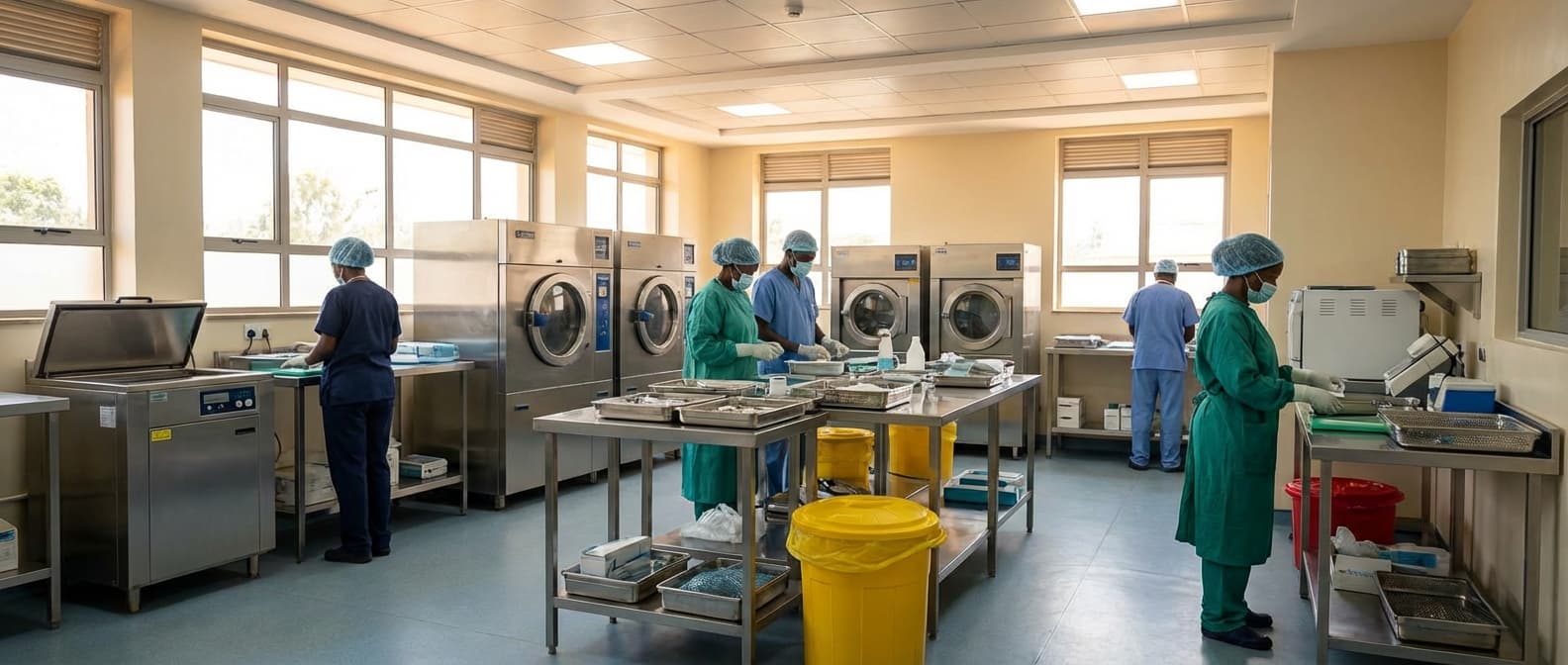
Medical Equipment Decontamination Service (Pre-Repair/Pre-Relocation) in Libya
Engineering Excellence & Technical Support
Medical Equipment Decontamination Service (Pre-Repair/Pre-Relocation) High-standard technical execution following OEM protocols and local regulatory frameworks.
Advanced Biohazard Remediation
Our certified technicians employ state-of-the-art disinfection protocols and EPA-approved agents to effectively neutralize biohazardous contaminants on medical equipment, ensuring a sterile environment for subsequent repair or relocation. We adhere to stringent Libyan health and safety regulations.
Certified Decontamination Assurance
We provide comprehensive decontamination services that meet international standards, guaranteeing the removal of infectious agents, chemical residues, and particulate matter. Each piece of equipment receives a Certificate of Decontamination, essential for compliance and user safety in Libya.
Seamless Logistics Integration
Our specialized pre-repair/pre-relocation decontamination process is designed for efficiency, minimizing downtime for your critical medical assets. We integrate seamlessly with your logistics partners in Libya, ensuring a smooth transition from decontamination to repair facilities or relocation sites.
What Is Medical Equipment Decontamination Service (Pre-repair/pre-relocation) In Libya?
Medical Equipment Decontamination Service (Pre-Repair/Pre-Relocation) in Libya refers to the specialized process of rendering medical devices safe for handling, maintenance, or transport by eliminating or significantly reducing biological and chemical contaminants. This service is critical for ensuring the safety of technicians, custodial staff, and subsequent users, as well as preventing the spread of infectious agents and protecting sensitive repair equipment. The decontamination process adheres to established protocols and utilizes appropriate cleaning agents and sterilization techniques to neutralize hazardous residues.
| Who Needs the Service | Typical Use Cases | |||||
|---|---|---|---|---|---|---|
| Medical Facilities (Hospitals, Clinics, Diagnostic Centers): Primarily responsible for initiating decontamination before sending equipment for off-site repair or for internal relocation between departments where cross-contamination is a concern. | Surgical Centers and Operating Theaters: Decontamination of complex surgical instruments and anesthesia machines prior to servicing. | Intensive Care Units (ICUs) and Emergency Departments (EDs): Decontamination of life-support equipment (ventilators, monitors) and diagnostic tools. | Laboratories (Clinical and Research): Decontamination of analytical instruments and sample processing equipment. | Medical Equipment Manufacturers and Service Providers: When receiving equipment for repair or return from a client, to ensure technician safety and prevent contamination of their facilities. | Logistics and Transport Companies: Handling of potentially contaminated medical equipment, ensuring compliance with transport regulations. | Government and Public Health Agencies: Particularly in response to outbreaks or during the management of medical waste and equipment disposal. |
| Pre-Repair Decontamination: Ensuring that all biological and chemical residues are removed from a medical device before it is sent to a repair technician or service center. This is paramount for the health and safety of the repair personnel and to prevent damage to sensitive repair equipment due to corrosive residues. | Pre-Relocation Decontamination: Cleaning and disinfecting medical equipment before it is moved within a facility (e.g., between wards, to storage) or between different healthcare institutions. This prevents the potential spread of healthcare-associated infections (HAIs) during the transition. | Post-Usage Decontamination: While often a routine in-house procedure, the 'pre-repair/pre-relocation' aspect specifically focuses on the stage before external or significant internal movement for servicing or relocation. | Outbreak Management: During public health crises or outbreaks, decontamination of shared medical equipment becomes critically important before it is serviced or redeployed. |
Key Aspects of Medical Equipment Decontamination Service (Pre-Repair/Pre-Relocation)
- Objective: To mitigate risks associated with biohazards, chemical residues, and cross-contamination prior to medical equipment being transferred for repair or relocation.
- Scope of Contaminants: Includes but is not limited to bloodborne pathogens, airborne pathogens, bodily fluids, residual pharmaceuticals, cleaning chemicals, and other potentially infectious or hazardous materials.
- Methodologies: Employs a multi-stage approach involving cleaning (removal of gross soil), disinfection (killing or inactivating most microorganisms), and potentially sterilization (destruction of all microbial life), depending on the equipment and the nature of the contaminants.
- Regulatory Compliance: Ideally aligns with national and international guidelines for medical device reprocessing and biohazard management.
- Documentation: Typically involves the issuance of a decontamination certificate or log, detailing the procedures performed and confirming the equipment's safety status for the next stage.
- Personnel Qualifications: Performed by trained personnel with expertise in infection control, hazardous material handling, and the specific decontamination requirements for various medical device categories.
Who Needs Medical Equipment Decontamination Service (Pre-repair/pre-relocation) In Libya?
In Libya, specialized medical equipment decontamination services, particularly those conducted pre-repair or pre-relocation, are crucial for ensuring safety, compliance, and operational continuity within the healthcare sector. These services are designed to eliminate biohazards, chemical contaminants, and radioactive materials that may be present on medical devices. This process is essential before any handling by technicians, during transport, or upon arrival at a new facility, thereby protecting personnel and preventing cross-contamination. This service is vital for a wide range of healthcare institutions and individuals responsible for medical equipment management in Libya.
| Department/Area | Specific Equipment Requiring Decontamination | Reason for Decontamination (Pre-Repair/Pre-Relocation) |
|---|---|---|
| Surgery/Operating Rooms | Surgical instruments, anesthesia machines, electrocautery units, endoscopic equipment | Prevent cross-contamination for technicians during repair; ensure sterile environment upon relocation to a new OR. |
| Intensive Care Units (ICUs) | Ventilators, patient monitors, infusion pumps, dialysis machines | Protect repair staff from airborne or fluid-borne pathogens; ensure safe transfer to new ICU locations. |
| Emergency Departments (EDs) | Defibrillators, vital signs monitors, portable X-ray units, trauma equipment | Decontaminate equipment used in high-risk, potentially infectious environments before servicing or moving to upgraded ED facilities. |
| Radiology/Imaging | X-ray machines, CT scanners, MRI machines, ultrasound probes | Remove biological fluids, residual contrast agents, or potentially radioactive isotopes before maintenance or relocation to new imaging suites. |
| Laboratory Services | Analyzers, centrifuges, microscopes, incubators | Prevent exposure to biohazardous samples or chemicals for technicians; ensure integrity of sensitive equipment during transport to new lab spaces. |
| Sterilization and CSSD (Central Sterile Supply Department) | Autoclaves, sterilizers, washer-disinfectors (when undergoing off-site repair or relocation) | Ensure the safety of personnel handling these units when they are not in their sterile operating environment. |
| Rehabilitation and Physiotherapy | Treadmills, exercise bikes, therapy tables, electrical stimulation units | Remove sweat, skin cells, and potential disinfectants used in patient care before repair or relocation. |
Target Customers and Departments for Pre-Repair/Pre-Relocation Medical Equipment Decontamination Service in Libya
- {"title":"Hospitals (Public and Private)","description":"These are the primary users, encompassing general hospitals, specialized clinics, and surgical centers. Equipment from various departments requires decontamination."}
- {"title":"Diagnostic Laboratories","description":"Laboratories that handle infectious samples or use potentially contaminated diagnostic equipment."}
- {"title":"Clinics and Outpatient Centers","description":"Smaller facilities that still manage a variety of medical devices needing maintenance or relocation."}
- {"title":"Medical Device Manufacturers and Distributors (Local and International)","description":"Companies involved in the sale, distribution, and initial setup of medical equipment in Libya often require decontamination services for returned, exchanged, or newly imported items."}
- {"title":"Biomedical Engineering Departments/Companies","description":"The internal departments or external companies responsible for the repair, maintenance, and servicing of medical equipment. They are directly exposed to potentially contaminated devices."}
- {"title":"Medical Equipment Rental Companies","description":"Businesses that rent out medical equipment for short-term or long-term use need to ensure their devices are decontaminated before and after each rental."}
- {"title":"Government Health Ministries and Agencies","description":"Entities overseeing public health infrastructure may mandate or utilize these services for managing national medical equipment assets, especially during large-scale renovations or equipment upgrades."}
- {"title":"Emergency Medical Services (EMS) and Ambulance Services","description":"Organizations dealing with emergency situations and patient transport will have equipment that requires regular decontamination."}
- {"title":"Research Institutions and Universities with Medical Programs","description":"Facilities conducting medical research or training students on medical equipment."}
Medical Equipment Decontamination Service (Pre-repair/pre-relocation) Process In Libya
This document outlines the standard workflow for the Medical Equipment Decontamination Service (Pre-Repair/Pre-Relocation) in Libya. The service ensures that medical equipment is safely decontaminated before being sent for repair or relocation, minimizing the risk of cross-contamination and ensuring the safety of technicians and the environment. The process is designed to be efficient and comprehensive, adhering to relevant health and safety regulations.
| Stage | Description | Key Activities | Responsible Party/Department | Documentation |
|---|---|---|---|---|
| Inquiry & Initial Assessment | The client (hospital, clinic, repair facility) contacts the decontamination service to request services for specific medical equipment needing repair or relocation. | Receive inquiry, gather details about equipment type, quantity, condition, and intended destination. Conduct initial risk assessment based on equipment and its usage. | Client (Requesting Facility), Decontamination Service Provider (Sales/Inquiry Team) | Inquiry Form/Record, Initial Risk Assessment Notes |
| Quotation & Agreement | Based on the initial assessment, a detailed quotation is prepared and submitted to the client. Upon acceptance, an agreement or service contract is finalized. | Prepare detailed quotation including scope of work, materials, labor, timeline, and pricing. Negotiate terms. Sign service agreement. | Decontamination Service Provider (Sales/Estimating Team), Client | Formal Quotation, Service Agreement/Contract |
| Scheduling & Preparation | The decontamination service schedules the operation and prepares all necessary resources, including trained personnel, equipment, and specialized cleaning agents. | Confirm scheduled date and time with the client. Allocate trained decontamination technicians. Mobilize specialized decontamination equipment (e.g., steam cleaners, chemical disinfection units), approved disinfectants, and Personal Protective Equipment (PPE). Confirm access and safety protocols at the client's site. | Decontamination Service Provider (Operations/Logistics Team), Client (for site access) | Work Schedule, Equipment & Material Checklist, Site Access Permit (if required) |
| On-Site Decontamination | Trained technicians visit the client's location to perform the decontamination of the specified medical equipment. | Conduct pre-decontamination visual inspection. Apply approved decontamination agents and procedures based on equipment type and manufacturer's recommendations. Ensure thorough cleaning and disinfection of all critical surfaces. Manage waste generated during the process according to regulations. | Decontamination Service Provider (On-Site Technicians) | On-Site Activity Log, Decontamination Procedure Checklist, Waste Disposal Records |
| Verification & Documentation | After decontamination, the effectiveness of the process is verified, and all activities are meticulously documented. | Perform post-decontamination visual inspection. Conduct efficacy testing (if applicable and agreed upon). Record all decontamination steps, materials used, time taken, and any observations. Issue a decontamination certificate. | Decontamination Service Provider (On-Site Technicians, Supervisor) | Decontamination Certificate, Final Service Report, Photographic Evidence (optional) |
| Handover for Repair/Relocation | The decontaminated equipment is formally handed over to the designated party for repair or relocation, with all necessary documentation provided. | Present the decontamination certificate and service report to the client. Securely package or prepare the equipment for safe transport to the repair facility or new location. Obtain client's signature confirming receipt of services and decontaminated equipment. | Decontamination Service Provider (On-Site Technicians/Supervisor), Client | Signed Handover Form, Decontamination Certificate & Report Copy |
| Post-Service Follow-up | A follow-up is conducted to ensure client satisfaction and address any potential issues. | Contact the client to gather feedback on the service. Address any queries or concerns. Maintain client records for future reference. | Decontamination Service Provider (Customer Service/Quality Assurance) | Client Feedback Record, Service Quality Report |
Key Stages of the Medical Equipment Decontamination Service (Pre-Repair/Pre-Relocation) Process
- Inquiry & Initial Assessment
- Quotation & Agreement
- Scheduling & Preparation
- On-Site Decontamination
- Verification & Documentation
- Handover for Repair/Relocation
- Post-Service Follow-up
Medical Equipment Decontamination Service (Pre-repair/pre-relocation) Cost In Libya
The cost of medical equipment decontamination services in Libya, specifically for pre-repair or pre-relocation purposes, is influenced by several key factors. These services are crucial for ensuring the safety of technicians and preventing the spread of infectious agents during handling. Pricing can vary significantly based on the type and complexity of the equipment, the extent of contamination, the chosen decontamination method, and the service provider's expertise and overhead. Local currency, the Libyan Dinar (LYD), is used for all transactions. While precise, universally published price lists are uncommon due to the specialized nature of the service and market fluctuations, an estimated range can be provided based on common industry practices and the factors outlined below. It's essential for clients to obtain detailed quotes from multiple reputable service providers for accurate budgeting.
| Equipment Category (Illustrative) | Estimated Cost Range (LYD) - Low | Estimated Cost Range (LYD) - High | Notes |
|---|---|---|---|
| Small Diagnostic/Monitoring Devices (e.g., Pulse Oximeters, BP Monitors) | 300 | 800 | Basic cleaning, disinfection, standard PPE. |
| Medium Imaging/Therapy Devices (e.g., Portable X-ray, Ultrasound units) | 700 | 2,000 | More thorough cleaning, specialized disinfectants, potentially UV-C. |
| Large Imaging/Surgical Equipment (e.g., CT Scanners, Endoscopy Towers) | 2,500 | 7,000+ | Extensive surface area, multi-step protocols, potential for VHP, specialized containment. |
| Laboratory Equipment (e.g., Centrifuges, Incubators - non-biological hazard) | 500 | 1,500 | Surface disinfection, depends on materials and access. |
| Specialized Decontamination (e.g., suspected high-level biohazard) | Custom Quote | Custom Quote | Requires specific risk assessment and specialized protocols, significant increase in cost. |
Key Factors Influencing Medical Equipment Decontamination Costs in Libya
- Equipment Type and Size: Larger and more complex medical devices (e.g., MRI machines, CT scanners, large surgical robots) will naturally incur higher decontamination costs due to the increased surface area, intricate components, and specialized handling requirements compared to smaller, simpler devices (e.g., portable X-ray units, patient monitors).
- Nature and Extent of Contamination: The degree and type of contamination are primary cost drivers. Equipment suspected of being contaminated with highly infectious pathogens (e.g., Ebola, highly resistant bacteria) will require more rigorous, specialized, and time-consuming decontamination protocols, often involving higher-grade disinfectants and more stringent containment measures, thus increasing the cost.
- Decontamination Method Employed: Different decontamination methods have varying costs. Common methods might include manual cleaning and disinfection, high-level disinfection using chemical agents, or more advanced techniques like UV-C irradiation or vaporized hydrogen peroxide (VHP) sterilization. The complexity and cost of the consumables and equipment used in these methods will impact the final price.
- Turnaround Time/Urgency: Rush decontamination services, often required for urgent repairs or time-sensitive relocations, typically command premium pricing. Standard service times will be more cost-effective.
- Service Provider Expertise and Reputation: Experienced and accredited decontamination service providers with specialized training, certifications, and a proven track record may charge higher fees, reflecting their quality of service, safety protocols, and adherence to international standards. Smaller or less experienced providers might offer lower prices but with potentially higher risks.
- Location and Accessibility: The geographical location of the equipment within Libya can affect costs due to travel time, logistics, and potential difficulties in accessing remote areas. The need for specialized transport or temporary containment facilities on-site can also add to the expense.
- Consumables and Disposables: The cost of disinfectants, cleaning agents, personal protective equipment (PPE) for technicians, sterilization indicators, and disposable materials used during the decontamination process are factored into the overall service fee.
- Certification and Documentation: Some clients may require detailed certification and documentation of the decontamination process for regulatory or quality assurance purposes. This adds to administrative costs.
- Scope of Service (On-site vs. Off-site): While pre-repair/relocation decontamination is often performed on-site, if the equipment needs to be transported to a specialized facility for decontamination, transportation costs will be an additional factor.
Affordable Medical Equipment Decontamination Service (Pre-repair/pre-relocation) Options
This service offers affordable decontamination of medical equipment before repair or relocation. This proactive step ensures equipment is safe for technicians, prevents the spread of pathogens, and can reduce overall repair/relocation costs by minimizing the need for specialized handling or extended downtime due to contamination concerns. We provide value bundles and cost-saving strategies to make this essential service accessible.
| Service Option | Description | Typical Use Case | Estimated Cost Savings |
|---|---|---|---|
| Standard Decontamination Package | Basic surface cleaning & disinfection | Routine maintenance, pre-shipment | N/A (Base Offering) |
| Advanced Decontamination Package | Deep cleaning, HEPA filtration, specialized disinfectants | High-risk equipment, bioburden reduction | 10-15% more than Standard |
| Bulk Decontamination Discount | Price reduction per unit for > 5 units | Clinic-wide or department-wide servicing | Up to 20% off per unit |
| Annual Service Contract | Pre-paid, scheduled service agreement | Ongoing decontamination needs | 15-25% off standard rates |
| Off-Peak Scheduling Discount | Service during evenings/weekends | Minimal disruption to operations | 5-10% discount |
| Integrated Service Bundle | Decontamination + Repair/Relocation | Streamlined logistics, reduced admin | Can save 10-20% on combined services |
Value Bundles & Cost-Saving Strategies
- {"title":"Standard Decontamination Package","description":"Covers routine surface cleaning and disinfection for common medical devices. Ideal for standard maintenance or pre-shipment."}
- {"title":"Advanced Decontamination Package","description":"Includes deeper cleaning protocols, HEPA filtration air exchange, and specialized disinfection for higher-risk equipment or environments."}
- {"title":"Bulk Decontamination Discount","description":"Significant savings for facilities decontaminating multiple pieces of equipment in a single service call or over a contracted period."}
- {"title":"Annual Service Contracts","description":"Pre-paid contracts offer discounted rates and priority scheduling for regular decontamination needs throughout the year."}
- {"title":"Off-Peak Scheduling Discount","description":"Schedule your decontamination service during non-peak hours or days for a reduced fee."}
- {"title":"Referral Program","description":"Receive a discount on your next service for referring a new client."}
- {"title":"Equipment Bundling (Repair/Relocation)","description":"Combine decontamination services with your planned repair or relocation for integrated cost efficiencies."}
Verified Providers In Libya
In the challenging landscape of healthcare in Libya, ensuring access to reliable and qualified medical services is paramount. 'Verified Providers in Libya' aims to shed light on the importance of choosing credentialed and reputable healthcare organizations. Franance Health stands out as a leading example of such a provider, and understanding their credentials is key to appreciating why they represent the best choice for comprehensive and trustworthy medical care in Libya.
| Credential/Attribute | Significance for Patients in Libya | Franance Health's Fulfillment |
|---|---|---|
| International Accreditation | Demonstrates adherence to globally recognized quality and safety standards, providing assurance beyond local regulations. | Franance Health actively pursues and maintains recognized international accreditations, signaling a commitment to world-class healthcare. |
| Experienced Medical Staff | Ensures patients receive care from specialists with proven expertise and up-to-date knowledge in their respective fields. | Franance Health employs a team of highly qualified physicians, surgeons, and nurses with extensive experience and international training. |
| State-of-the-Art Facilities | Access to modern equipment and advanced treatment options leads to more accurate diagnoses and effective treatments. | The organization invests in cutting-edge medical technology, ensuring a comprehensive range of diagnostic and therapeutic capabilities. |
| Patient-Centric Approach | Prioritizes patient comfort, clear communication, and personalized care plans, leading to better overall patient experience and satisfaction. | Franance Health is dedicated to a patient-first philosophy, fostering a supportive and transparent healthcare journey for all. |
| Ethical Practices and Transparency | Builds trust by operating with integrity, clear pricing, and a commitment to patient confidentiality. | Franance Health adheres to stringent ethical guidelines and maintains transparency in all aspects of its operations. |
Key Credentials and Accreditations of Franance Health
- International Healthcare Accreditation (e.g., JCI, ISO certifications)
- Partnerships with reputable international medical institutions
- Compliance with Libyan Ministry of Health regulations and standards
- Highly qualified and licensed medical professionals
- Advanced medical technology and equipment
- Robust patient safety protocols
- Commitment to continuous quality improvement
- Positive patient testimonials and outcomes
Scope Of Work For Medical Equipment Decontamination Service (Pre-repair/pre-relocation)
This Scope of Work (SOW) outlines the requirements for providing medical equipment decontamination services prior to repair or relocation. The service aims to ensure the safety of personnel, prevent cross-contamination, and maintain the integrity of medical devices by removing biological, chemical, and radiological contaminants. Standard specifications for decontamination procedures, cleaning agents, and validation methods are detailed to ensure consistent and effective service delivery.
| Category | Technical Deliverable | Standard Specification/Description |
|---|---|---|
| Pre-Service Assessment | Equipment Assessment Report | Visual inspection and identification of equipment type, model, and serial number. Assessment of gross contamination levels and types. Identification of critical components requiring special attention. Documented photographic evidence of pre-decontamination state. |
| Decontamination Procedure | Validated Decontamination Protocol | Detailed, step-by-step procedure specific to the equipment type and identified contaminants. Includes cleaning agent selection, application method, contact time, rinsing procedures, and drying methods. Must be based on manufacturer recommendations and industry best practices (e.g., CDC, WHO guidelines). |
| Cleaning Agents | Approved Disinfectants/Cleaning Agents List | Use of EPA-registered, hospital-grade disinfectants and approved cleaning agents. Agents must be effective against identified pathogens and compatible with equipment materials to prevent damage. Safety Data Sheets (SDS) for all agents used must be readily available. |
| Personal Protective Equipment (PPE) | Standard PPE Requirements | Mandatory use of appropriate PPE by decontamination personnel, including gloves (nitrile or equivalent), eye protection (safety glasses or goggles), protective gowns, and respiratory protection (if aerosols are a concern or specific chemicals are used). |
| Waste Management | Biohazardous Waste Disposal Plan | Proper collection, segregation, labeling, and disposal of all contaminated materials (wipes, swabs, PPE) in accordance with local, state, and federal regulations for biohazardous waste. |
| Post-Decontamination Verification | Visual Inspection and Wipe Testing (if required) | Post-decontamination visual inspection to confirm removal of visible contaminants. Optional: ATP (Adenosine Triphosphate) testing or microbial swabbing on critical surfaces to verify cleanliness and efficacy of the decontamination process, with documented results. |
| Documentation | Decontamination Certificate/Log | A signed and dated certificate or log for each decontaminated piece of equipment, including: equipment identification (model, serial number), date and time of decontamination, decontaminating personnel name/ID, agents used, procedure performed, and confirmation of successful decontamination. This certificate must accompany the equipment during repair or relocation. |
| Equipment Specific Requirements | Manufacturer's Instructions for Use (IFU) Compliance | Strict adherence to manufacturer-provided IFUs for cleaning, disinfection, and decontamination of the specific medical equipment model. Any deviations must be documented and justified. |
| Contaminant Specific Requirements | Specialized Decontamination Protocols | Development and application of specialized protocols for specific contaminants such as cytotoxic drugs, radioactive isotopes, or highly infectious agents, requiring advanced training and specialized equipment. |
| Environmental Control | Controlled Environment for Decontamination | Decontamination to be performed in a designated, well-ventilated area, or on-site in a controlled manner to prevent spread of contaminants. Appropriate containment measures (e.g., drapes, barriers) to be used as necessary. |
Key Objectives of Decontamination Service
- Eliminate biological hazards (e.g., bacteria, viruses, fungi).
- Remove chemical residues (e.g., cleaning agents, patient medications).
- Mitigate potential radiological contamination (if applicable).
- Ensure the safety of repair technicians and relocation personnel.
- Prevent cross-contamination between equipment and environments.
- Meet regulatory and infection control standards.
- Document the decontamination process for traceability.
Service Level Agreement For Medical Equipment Decontamination Service (Pre-repair/pre-relocation)
This Service Level Agreement (SLA) outlines the response times and uptime guarantees for the Medical Equipment Decontamination Service (Pre-Repair/Pre-Relocation). This service is critical to ensure the safety of personnel and the integrity of equipment prior to maintenance or relocation.
| Service Component | Description | Response Time | Uptime Guarantee |
|---|---|---|---|
| Decontamination Service Request Initiation | The period from when a decontamination request is submitted by authorized personnel (e.g., Biomedical Engineering, Facilities Management) to when the service provider acknowledges receipt and begins processing. | Within 2 business hours of confirmed request receipt. | N/A |
| Technician Dispatch (On-site) | The time from acknowledgment of the request to the arrival of a qualified decontamination technician at the specified location. | Within 8 business hours of request acknowledgment for standard requests. Within 4 business hours for critical/emergency requests (as defined in Appendix A). | N/A |
| Decontamination Completion | The time from technician arrival to the completion of the decontamination process, including necessary documentation and verification. | Dependent on equipment type and contamination level, but typically within 24 business hours of arrival for standard procedures. Critical/emergency procedures to be completed as soon as reasonably practicable. | N/A |
| Service Availability | The percentage of time the decontamination service is available and operational during standard operating hours. | N/A | 98% availability during standard business hours (Monday-Friday, 8:00 AM - 5:00 PM, excluding public holidays). |
| Emergency Service Availability | The percentage of time the decontamination service is available and operational for emergency requests outside of standard operating hours. | N/A | 95% availability for emergency requests (defined as requests requiring immediate decontamination to prevent critical equipment downtime or safety hazards). Emergency calls will be responded to within 4 hours of notification. |
| Reporting and Documentation | The timely provision of decontamination certificates and reports after service completion. | Within 2 business days of decontamination completion. | N/A |
Service Objectives
- To provide timely and effective decontamination of medical equipment to meet established safety and regulatory standards.
- To minimize downtime of critical medical equipment by ensuring swift decontamination services.
- To guarantee the reliability and availability of the decontamination service when required.
Frequently Asked Questions

Ready when you are
Let's scope your Medical Equipment Decontamination Service (Pre-Repair/Pre-Relocation) in Libya project in Libya.

Scaling healthcare logistics and technical systems across the entire continent.