
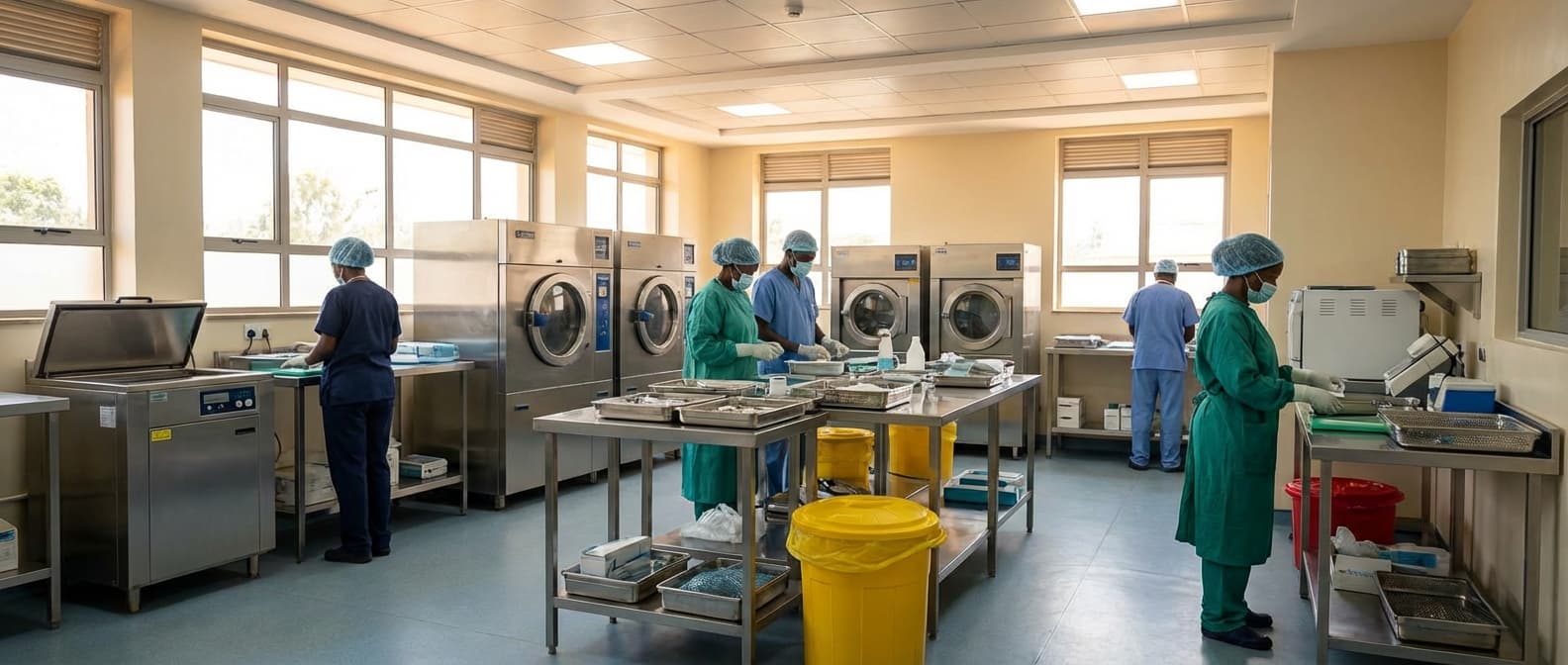
Autoclave Validation Support Service in Libya
Engineering Excellence & Technical Support
Autoclave Validation Support Service High-standard technical execution following OEM protocols and local regulatory frameworks.
Comprehensive Autoclave Validation & Calibration
Our service in Libya provides end-to-end validation and calibration of autoclaves, ensuring they meet stringent international standards for sterilization efficacy and regulatory compliance. We cover all critical parameters including temperature, pressure, time, and steam penetration.
Regulatory Compliance Assurance
Navigate Libya's specific healthcare and industrial regulations with confidence. Our expert technicians deliver documented validation reports tailored to meet local and international compliance requirements, minimizing risk and ensuring operational integrity for your sterilization processes.
Expert Troubleshooting & Performance Optimization
Beyond initial validation, we offer ongoing support and performance analysis for autoclaves across Libya. Our engineers identify potential issues, optimize cycle parameters, and provide proactive maintenance recommendations to guarantee consistent, reliable, and efficient sterilization cycles.
What Is Autoclave Validation Support Service In Libya?
Autoclave validation support services in Libya are a critical component of ensuring the efficacy and reliability of steam sterilization processes for critical medical and laboratory equipment. These services are designed to provide documented evidence that an autoclave consistently achieves and maintains the necessary conditions (temperature, pressure, time, and steam penetration) to effectively kill microorganisms, thereby preventing the transmission of infections and ensuring the sterility of reusable items. This validation is a regulatory requirement in many sectors and is essential for maintaining quality control and patient safety.
| Who Needs Autoclave Validation Support Service? | Typical Use Cases |
|---|---|
| Hospitals and Healthcare Facilities: Operating rooms, sterilization departments, dental clinics, veterinary clinics, laboratories (clinical and research). | Sterilization of surgical instruments, endoscopes, glassware, media, and other reusable medical devices. |
| Pharmaceutical and Biotechnology Companies: Research and development labs, manufacturing facilities. | Sterilization of laboratory equipment, media, stoppers, vials, and components used in drug production. |
| Research and Academic Institutions: Biology, chemistry, and medical research laboratories. | Sterilization of glassware, consumables, culture media, and animal care equipment. |
| Food and Beverage Industry: Quality control laboratories. | Sterilization of laboratory equipment for testing and quality assurance. |
| Regulatory Bodies and Inspection Agencies: (Indirectly, as they mandate validation for facilities they oversee). | Ensuring compliance with national and international sterilization standards (e.g., ISO, FDA guidelines where applicable). |
Key Aspects of Autoclave Validation Support Service in Libya
- Installation Qualification (IQ): Verifies that the autoclave is installed correctly according to manufacturer specifications and regulatory requirements.
- Operational Qualification (OQ): Confirms that the autoclave operates within its intended parameters throughout its functional range.
- Performance Qualification (PQ): Demonstrates that the autoclave consistently sterilizes loads under normal operating conditions, typically involving biological and chemical indicators.
- Revalidation: Periodic re-evaluation of the autoclave's performance to ensure continued compliance and efficacy.
- Calibration: Ensuring that all measurement devices and sensors within the autoclave are accurately calibrated.
- Documentation and Reporting: Comprehensive generation of validation protocols, test results, and final reports for regulatory compliance and audit purposes.
- Training: Providing in-house training to facility personnel on the proper operation, maintenance, and basic troubleshooting of autoclaves.
Who Needs Autoclave Validation Support Service In Libya?
In Libya, organizations that rely on sterile equipment and materials for critical processes often require specialized Autoclave Validation Support Services. These services ensure that autoclaves are functioning correctly, consistently achieving the required sterilization parameters, and therefore preventing the spread of infections, ensuring product integrity, and meeting regulatory compliance. This support is crucial for maintaining the highest standards of safety and efficacy.
| Customer Type | Key Departments Involved | Specific Needs |
|---|---|---|
| Hospitals & Clinics | Central Sterile Supply Department (CSSD), Operating Theatres, Infection Control, Laboratory Services, Dental Clinics | Ensuring surgical instruments, medical devices, and consumables are effectively sterilized to prevent healthcare-associated infections (HAIs). Compliance with national health regulations. |
| Pharmaceutical Manufacturing Companies | Quality Control (QC), Quality Assurance (QA), Manufacturing, Sterile Products Unit | Validating autoclaves used for sterilizing raw materials, packaging components, and finished sterile pharmaceutical products to meet Good Manufacturing Practices (GMP) and regulatory requirements. |
| Medical Device Manufacturers | Sterilization Department, Quality Assurance, R&D | Validating autoclaves used for terminal sterilization of medical devices, ensuring efficacy and compliance with medical device regulations and international standards. |
| Research & Development Laboratories (e.g., Biotechnology, Microbiology) | Laboratory Management, Research Scientists, Quality Control | Ensuring the sterility of media, glassware, and equipment used in experiments to prevent contamination and ensure accurate research outcomes. Compliance with laboratory standards. |
| Food & Beverage Processing Plants (Specialized Cases) | Production, Quality Assurance, Packaging | In specific instances where aseptic processing or sterilization of certain food contact materials or packaging is required, validation of autoclaves may be necessary to meet food safety standards. |
Target Customers and Departments Requiring Autoclave Validation Support Service in Libya
- Healthcare Facilities
- Pharmaceutical Manufacturers
- Medical Device Manufacturers
- Research Laboratories
- Food and Beverage Industry (for sterilization of certain components or packaging)
Autoclave Validation Support Service Process In Libya
This document outlines the workflow for an Autoclave Validation Support Service Process in Libya, detailing the steps from initial customer inquiry to the final execution of the validation services. The process is designed to be comprehensive, ensuring all necessary steps are taken to provide a reliable and compliant autoclave validation. This includes understanding client needs, planning, on-site execution, documentation, and final reporting.
| Step | Description | Key Activities | Responsible Party | Deliverables/Outcomes |
|---|---|---|---|---|
| The process begins when a potential client in Libya expresses interest in autoclave validation services. | Client contacts service provider; discussion of client's needs, autoclave type, existing documentation, regulatory requirements (e.g., healthcare, pharmaceutical), and desired validation scope (IQ, OQ, PQ). | Client, Service Provider Sales/Technical Team | Understanding of client's requirements, initial assessment of scope and complexity. |
| Based on the initial consultation, a detailed proposal and quotation are prepared. | Review of requirements; development of a tailored validation plan outline; preparation of a formal proposal detailing scope, methodology, deliverables, timeline, and cost. Includes any travel and logistics considerations for Libya. | Service Provider Technical & Sales Team | Formal Proposal and Quotation document. |
| Upon client acceptance of the proposal, a formal service agreement is established. | Negotiation of terms and conditions; signing of the contract; agreement on payment schedules, confidentiality, and legal aspects. | Client, Service Provider Management | Signed Service Agreement. |
| Detailed planning and preparation for the on-site validation activities. | Development of detailed validation protocols (IQ, OQ, PQ) specific to the client's autoclave; scheduling of the validation team's visit to Libya; procurement of necessary calibrated equipment (thermocouples, data loggers, etc.); pre-site coordination with the client for access and operational information. | Service Provider Validation Team, Client Operations | Approved Validation Protocols, Scheduled Site Visit, Calibrated Equipment. |
| The core of the service involves performing the validation tests at the client's facility in Libya. | Installation Qualification (IQ): Verifying proper installation and identification of autoclave components. Operational Qualification (OQ): Testing the autoclave's operational parameters within its defined range. Performance Qualification (PQ): Challenging the autoclave with representative loads to demonstrate consistent performance and efficacy under normal operating conditions. Data collection and immediate preliminary review. | Service Provider Validation Team, Client Personnel (for operational support) | Collected raw validation data, on-site observations, preliminary findings. |
| Post-site visit, the collected data is analyzed, and a comprehensive validation report is compiled. | Detailed analysis of all collected data against pre-defined acceptance criteria; identification of any deviations or non-conformities; compilation of the validation report, including executive summary, methodology, results, deviations, conclusions, and recommendations. | Service Provider Validation Team, Quality Assurance | Draft Validation Report. |
| The draft report is submitted to the client for review and approval. | Client reviews the draft report for accuracy and completeness; provides feedback or requests clarifications; formal approval of the validation report. | Client, Service Provider Project Manager | Approved Final Validation Report. |
| The final, approved validation report is delivered to the client, and all relevant documentation is archived. | Delivery of the final report (hard copy and/or electronic); archiving of all validation records, protocols, raw data, and reports by the service provider for future reference and audits. | Service Provider Project Manager, Client | Final, signed Validation Report; Archived Records. |
Autoclave Validation Support Service Process Workflow
- Inquiry & Initial Consultation
- Proposal & Quotation Generation
- Contract Agreement
- Planning & Preparation
- On-Site Execution (Validation Activities)
- Data Analysis & Report Generation
- Report Review & Approval
- Final Report Delivery & Archiving
Autoclave Validation Support Service Cost In Libya
Autoclave validation is a critical process in Libya, as in many other regions, ensuring the sterility of medical and laboratory equipment. The cost of this service is not fixed and can vary significantly based on several factors. Understanding these factors will help organizations in Libya budget effectively for their autoclave validation needs. The pricing is generally determined by the complexity of the validation, the number of autoclaves to be validated, the location within Libya, and the service provider's reputation and expertise.
| Service Component | Estimated Cost Range (LYD - Libyan Dinar) |
|---|---|
| Installation Qualification (IQ) per Autoclave | 800 - 1,500 |
| Operational Qualification (OQ) per Autoclave | 1,000 - 2,000 |
| Performance Qualification (PQ) per Autoclave (e.g., 3 successful cycles) | 1,200 - 2,500 |
| Full Validation Package (IQ/OQ/PQ) per Autoclave | 2,500 - 5,000 |
| Annual Revalidation/Performance Monitoring (PQ focus) | 600 - 1,200 |
| Travel and Logistics (per visit, dependent on location) | 200 - 800 |
Key Factors Influencing Autoclave Validation Support Service Costs in Libya:
- Scope of Validation: Full validation (Installation Qualification, Operational Qualification, Performance Qualification - IQ/OQ/PQ) is more expensive than partial validation (e.g., only PQ).
- Number of Autoclaves: Discounts may be offered for validating multiple autoclaves simultaneously.
- Type and Size of Autoclave: Larger or more complex autoclave systems may require more specialized equipment and expertise, increasing costs.
- Service Provider's Expertise and Reputation: Established and highly reputable validation service providers in Libya often command higher prices due to their track record and specialized knowledge.
- Location within Libya: Travel and logistical costs for technicians can impact pricing, especially for sites in remote areas.
- Frequency of Validation: Regular, scheduled validation might be priced differently than ad-hoc or emergency services.
- Additional Services: Services like calibration of probes, cycle development, or training may be bundled and affect the overall cost.
- Documentation Requirements: The level and format of documentation required can also influence the service cost.
Affordable Autoclave Validation Support Service Options
Ensuring the efficacy of sterilization processes through autoclave validation is crucial for healthcare facilities, research labs, and manufacturing environments. High costs associated with specialized validation services can be a barrier, especially for smaller organizations or those with tight budgets. This document outlines affordable autoclave validation support service options, focusing on value bundles and cost-saving strategies to make this essential process more accessible and economical.
| Value Bundle Type | Included Services | Target Audience | Cost-Saving Benefit | Example Pricing Tier |
|---|---|---|---|---|
| Basic Validation Package | Installation Qualification (IQ) & Operational Qualification (OQ) support, basic documentation review. | Small clinics, dental offices, startups. | Lower initial investment, essential validation coverage. | Starts at $X,XXX |
| Comprehensive Validation Bundle | IQ, OQ, Performance Qualification (PQ) support, detailed protocol development, full report generation, initial training. | Medium-sized labs, hospitals, research facilities. | Holistic approach, streamlined process, predictable costs for full validation lifecycle. | Starts at $Y,YYY |
| Annual Compliance & Validation Maintenance | Annual re-validation support (PQ), routine performance checks, updated documentation, remote troubleshooting. | Organizations requiring ongoing compliance and annual validation. | Ensures continuous compliance at a predictable annual cost, prevents costly emergency re-validation. | Annual retainer starting at $Z,ZZZ |
| Customizable Support Plan | Client-selected validation modules, on-demand expert consultation, remote assistance. | Organizations with specific validation needs or existing internal capabilities. | Flexibility to pay only for needed services, ideal for specific validation challenges. | Priced per service module and hourly consultation rates |
Key Autoclave Validation Support Service Options & Strategies
- Tiered Service Packages: Offering different levels of validation support to cater to varying needs and budgets.
- Bundled Services: Combining multiple validation tasks (e.g., IQ, OQ, PQ) into a single package for a reduced overall cost.
- Remote Support & Consultation: Providing expert guidance and troubleshooting remotely to minimize on-site visit costs.
- In-House Training & Empowerment: Training your internal staff to perform certain validation tasks under expert supervision.
- Standardized Protocols: Utilizing pre-defined, efficient validation protocols to streamline the process.
- Annual Maintenance Contracts (AMCs) with Validation: Integrating validation services into routine maintenance agreements for predictable costs.
- Partnerships and Group Purchasing: Collaborating with other organizations to leverage bulk discounts for validation services.
- Phased Validation Approaches: Breaking down validation into manageable phases with staggered payment options.
- Data Analysis & Reporting Focus: Offering services that concentrate on the critical data analysis and reporting aspects, allowing clients to manage some aspects of data collection.
- Utilizing Approved Third-Party Labs: Partnering with accredited third-party laboratories for specific testing components, which can be more cost-effective than full-service providers.
Verified Providers In Libya
In the realm of healthcare, especially in regions like Libya where reliable and trustworthy medical services are paramount, the concept of 'verified providers' holds significant weight. Franance Health stands out as a leading entity dedicated to ensuring that healthcare services accessed through their platform meet the highest standards of quality, safety, and ethical practice. This verification process is not merely a formality; it's a rigorous examination of credentials, operational protocols, and patient care outcomes.
| Verification Component | Franance Health's Standard | Benefit to Patients in Libya |
|---|---|---|
| Medical Licenses & Certifications | Mandatory verification of all active and valid licenses and certifications from recognized medical bodies. | Ensures providers are legally qualified and possess the necessary expertise. |
| Professional Experience & Specialization | Thorough review of past work experience, areas of specialization, and continued professional development. | Connects patients with practitioners who have proven experience in their specific medical conditions. |
| Patient Safety Protocols | Assessment of adherence to international patient safety guidelines and best practices. | Minimizes risks and ensures a safe healthcare environment for all patients. |
| Ethical Conduct & Professionalism | Background checks and evaluation of professional conduct and ethical standards. | Guarantees respectful and trustworthy interactions with healthcare professionals. |
| Facility Standards (where applicable) | For clinics and hospitals, verification of essential infrastructure, equipment, and hygiene standards. | Provides access to facilities that meet necessary health and safety requirements. |
| Patient Feedback & Reputation | Active monitoring and integration of patient reviews and feedback into the ongoing verification process. | Reflects the real-world performance and satisfaction levels of providers. |
Why Franance Health is the Best Choice for Verified Providers in Libya:
- Uncompromising Quality Assurance: Franance Health employs a multi-faceted approach to vetting its network of healthcare providers. This includes in-depth background checks, verification of medical licenses and certifications, and assessment of professional experience.
- Patient-Centric Approach: The core of Franance Health's verification is centered on patient well-being. They scrutinize providers for their commitment to patient safety, ethical conduct, and effective communication. Patient testimonials and feedback are actively incorporated into the ongoing evaluation process.
- Access to Specialized Expertise: Through their verified network, Franance Health connects patients with a diverse range of specialists, ensuring that individuals can find the right care for their specific medical needs. This broad access is facilitated by a thorough vetting of each provider's capabilities.
- Transparency and Trust: Franance Health prioritizes transparency. Patients can be confident that the providers listed on their platform have undergone a stringent verification process, offering peace of mind and fostering trust in the healthcare journey.
- Commitment to Continuous Improvement: The verification process is not a one-time event. Franance Health maintains ongoing relationships with its providers, conducting regular reviews and updates to ensure continued adherence to their high standards.
- Navigating Complex Healthcare Landscapes: In Libya, navigating the healthcare system can be challenging. Franance Health simplifies this by presenting a curated list of vetted professionals, making it easier for individuals to access quality medical assistance.
- Technological Integration for Enhanced Care: Franance Health leverages technology to streamline the process of finding and engaging with verified healthcare providers, enhancing the overall patient experience.
Scope Of Work For Autoclave Validation Support Service
This Scope of Work (SOW) outlines the services to be provided for Autoclave Validation Support. The objective is to ensure the autoclave meets regulatory requirements and performs effectively for its intended purpose. The services will encompass Installation Qualification (IQ), Operational Qualification (OQ), and Performance Qualification (PQ) for the specified autoclave.
| Deliverable | Description | Standard Specification/Reference |
|---|---|---|
| Validation Protocol (IQ/OQ/PQ) | Detailed document outlining the steps, criteria, and acceptance limits for each qualification phase. Includes equipment identification, installation checks, operational tests, and performance studies. | Client's Standard Operating Procedures (SOPs), relevant industry guidelines (e.g., FDA, ISO), and manufacturer's specifications. |
| Installation Qualification (IQ) Report | Document verifying that the autoclave has been installed correctly according to design specifications and manufacturer's instructions. Includes equipment identification, calibration records, and installation checklists. | Manufacturer's Installation Manual, relevant electrical and safety codes. |
| Operational Qualification (OQ) Report | Document confirming that the autoclave operates as intended within its specified operating ranges. Includes temperature, pressure, time, and cycle parameter tests. | Manufacturer's Operating Manual, validation protocol acceptance criteria. |
| Performance Qualification (PQ) Report | Document demonstrating that the autoclave consistently performs as expected under normal operating conditions for the intended product and process. Includes biological indicator challenge studies and process repeatability tests. | Validation protocol acceptance criteria, relevant sterilization standards (e.g., ISO 17665), product specifications. |
| Validation Summary Report | A consolidated report summarizing the findings of IQ, OQ, and PQ, including any deviations encountered and their resolutions. Provides an overall assessment of the autoclave's validated state. | Client's validation master plan, regulatory requirements. |
| Calibration Certificates | Certificates for all critical instrumentation used during validation, demonstrating their accuracy and traceability to national or international standards. | NIST traceable calibration standards, ISO/IEC 17025 accredited calibration laboratories. |
| Raw Data and Trend Analysis | All collected raw data from validation tests, including graphs, charts, and statistical analysis to demonstrate performance trends. | Data integrity principles, statistical analysis software outputs. |
Services to be Provided
- Conduct Installation Qualification (IQ) to verify that the autoclave is installed according to manufacturer specifications and relevant standards.
- Perform Operational Qualification (OQ) to confirm that the autoclave operates within its specified parameters and tolerances.
- Execute Performance Qualification (PQ) to demonstrate the autoclave consistently delivers sterile product under normal operating conditions.
- Develop and finalize validation protocols for IQ, OQ, and PQ.
- Execute validation protocols, including planning, sampling, testing, and data collection.
- Analyze validation data and generate comprehensive validation reports.
- Provide recommendations for any identified deviations or areas for improvement.
- Facilitate client review and approval of all validation documentation.
Service Level Agreement For Autoclave Validation Support Service
This Service Level Agreement (SLA) outlines the guaranteed response times and uptime for the Autoclave Validation Support Service provided by [Your Company Name]. This SLA is an integral part of the overall service contract between [Your Company Name] and [Client Company Name].
| Service Component | Uptime Guarantee | Response Time (during Business Hours) | Response Time (outside Business Hours - Emergency) | Escalation Procedure |
|---|---|---|---|---|
| Autoclave Validation Support (Remote) | 99.5% Availability | 4 Business Hours | 2 Business Hours | Refer to Escalation Matrix (Appendix A) |
| Autoclave Validation Support (On-site - Scheduled) | N/A (Scheduled Service) | As per Agreed Schedule | N/A | Refer to Escalation Matrix (Appendix A) |
| Autoclave Validation Support (On-site - Emergency) | N/A (Ad-hoc Service) | Within 8 Business Hours (dispatch) | Within 4 Business Hours (dispatch) | Refer to Escalation Matrix (Appendix A) |
| Remote Diagnostics and Troubleshooting | 99.5% Availability | 2 Business Hours | 1 Business Hour | Refer to Escalation Matrix (Appendix A) |
| Preventative Maintenance Coordination | N/A (Coordination Service) | 1 Business Day (initial contact) | N/A | Refer to Escalation Matrix (Appendix A) |
Key Service Components
- Autoclave Validation Support
- On-site Technical Assistance
- Remote Diagnostics and Troubleshooting
- Preventative Maintenance Coordination
Frequently Asked Questions

Ready when you are
Let's scope your Autoclave Validation Support Service in Libya project in Libya.

Scaling healthcare logistics and technical systems across the entire continent.