
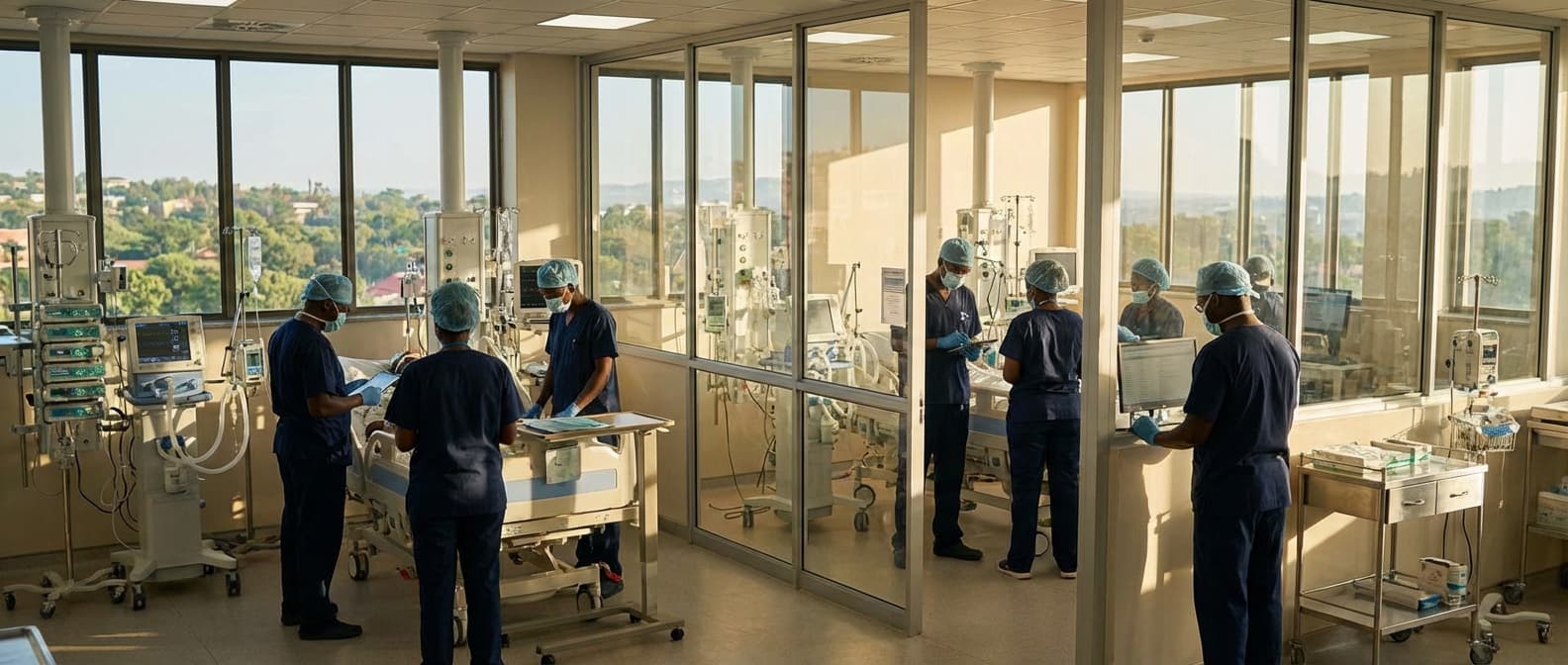
Ventilator Fleet Management & PM in Libya
Engineering Excellence & Technical Support
Preventive maintenance and fleet management for ICU ventilators High-standard technical execution following OEM protocols and local regulatory frameworks.
Optimized Ventilator Uptime & Availability
Implemented a proactive maintenance schedule utilizing predictive analytics and real-time monitoring to minimize unexpected equipment failures, ensuring critical ventilator units are consistently operational for patient care across Libyan healthcare facilities.
Data-Driven Preventative Maintenance Strategies
Leveraged historical usage data and performance metrics to refine preventative maintenance intervals, reducing resource expenditure on unnecessary interventions while ensuring timely servicing of the entire ventilator fleet to prolong equipment lifespan.
Streamlined Spare Parts Logistics & Inventory Control
Developed an intelligent inventory management system for essential ventilator spare parts, optimizing stock levels based on usage patterns and geographical distribution, thereby expediting repair times and reducing logistical delays for critical equipment in Libya.
What Is Ventilator Fleet Management & Pm In Libya?
Ventilator Fleet Management (VFM) and Preventative Maintenance (PM) in Libya refers to the comprehensive lifecycle management of mechanical ventilators within healthcare facilities. This service encompasses the acquisition, deployment, monitoring, maintenance, repair, and eventual decommissioning of all respiratory support devices. VFM aims to optimize ventilator utilization, ensure operational readiness, and extend the lifespan of these critical medical assets, thereby guaranteeing their availability for patient care. PM, a core component of VFM, involves scheduled, proactive maintenance procedures designed to prevent equipment failure, maintain performance specifications, and ensure patient safety by identifying and rectifying potential issues before they lead to operational downtime. In the Libyan context, given potential infrastructure challenges and the critical nature of respiratory support, robust VFM and PM are paramount for maintaining healthcare system resilience.
| Need For VFM & PM | Target Users/Stakeholders | Typical Use Cases |
|---|---|---|
| Ensuring immediate availability of functional ventilators for critical care patients. | Hospitals (ICU, Emergency Departments, Operating Rooms) | Managing a surge in respiratory failure cases due to pandemics or seasonal outbreaks. |
| Minimizing unexpected equipment downtime, which can have life-threatening consequences. | Government Health Ministries and Agencies | Supporting routine surgical procedures requiring mechanical ventilation. |
| Optimizing the lifespan and return on investment of expensive medical equipment. | Healthcare Facility Administration and Procurement Departments | Facilitating the transition of patients from mechanical ventilation to spontaneous breathing (weaning). |
| Maintaining compliance with medical device regulations and quality standards. | Biomedical Engineering Departments | Ensuring consistent performance of ventilators for long-term ventilated patients. |
| Reducing the risk of equipment-related patient harm or infection. | Clinical Engineering and Technical Support Teams | Planning for planned maintenance and calibration of ventilators during periods of lower patient demand. |
Key Components of Ventilator Fleet Management & PM in Libya
- Asset Inventory and Tracking: Establishing and maintaining a detailed inventory of all ventilators, including make, model, serial number, acquisition date, current location, and service history.
- Deployment and Allocation: Strategically deploying ventilators across facilities based on patient needs, acuity, and predicted demand, optimizing resource allocation.
- Performance Monitoring: Implementing systems for real-time or periodic monitoring of ventilator performance metrics, alarm status, and operational hours.
- Preventative Maintenance Scheduling and Execution: Developing and adhering to a rigorous PM schedule based on manufacturer recommendations, usage hours, and environmental conditions, including cleaning, calibration, and component replacement.
- Corrective Maintenance and Repair: Rapidly responding to equipment malfunctions and failures, performing diagnostics, and executing necessary repairs to minimize downtime.
- Parts and Consumables Management: Ensuring the availability of genuine spare parts, filters, circuits, and other consumables required for both PM and corrective maintenance.
- Training and Competency Assurance: Providing ongoing training to biomedical engineers, technicians, and clinical staff on the proper operation, troubleshooting, and basic maintenance of ventilator equipment.
- Decommissioning and Disposal: Managing the end-of-life process for ventilators, including proper decommissioning, data sanitization, and environmentally compliant disposal.
- Regulatory Compliance: Adhering to national and international standards for medical device management and safety.
Who Needs Ventilator Fleet Management & Pm In Libya?
Ventilator fleet management and preventative maintenance (PM) are critical for ensuring the reliable and safe operation of life-support equipment in healthcare settings. In Libya, the need for such services is particularly pronounced due to a variety of factors, including the ongoing challenges in the healthcare infrastructure, the need to optimize resource utilization, and the imperative to maintain patient safety and quality of care. Effective management and PM of ventilators can significantly reduce downtime, extend equipment lifespan, lower overall costs, and most importantly, ensure that these vital machines are always ready to serve patients when needed.
| Customer Type | Key Departments Involved | Specific Needs/Benefits |
|---|---|---|
| Public Hospitals | Intensive Care Unit (ICU), Anesthesiology, Respiratory Therapy Department, Biomedical Engineering Department, Procurement Department | Maintaining high availability of ventilators for critical care, cost-effective maintenance, extended equipment lifespan, compliance with maintenance standards, training for staff. |
| Private Hospitals | ICU, Operating Rooms, Respiratory Care Department, Biomedical Engineering, Administration | Ensuring premium patient care through reliable equipment, optimizing capital expenditure through planned maintenance, minimizing service disruption, competitive advantage through advanced equipment management. |
| Specialized Clinics (e.g., ICUs, Respiratory Therapy) | Clinical Staff (Doctors, Nurses), Respiratory Therapists, Biomedical Technicians | Uninterrupted patient treatment, accurate ventilator settings and performance, immediate response to equipment issues, specialized training for advanced ventilator use. |
| Emergency Medical Services (EMS) | Paramedics, EMS Operations Managers, Equipment Maintenance Technicians | Ensuring ventilators are operational for pre-hospital care, rapid deployment readiness, ruggedized equipment maintenance, on-site diagnostics and repairs. |
| Military Hospitals | Medical Corps, Biomedical Engineering, Logistics Department | Sustaining operational readiness for medical personnel, robust maintenance protocols for diverse environments, inventory management for strategic reserves, specialized training for military medical personnel. |
| NGOs Operating Healthcare Facilities | Medical Coordinators, Field Technicians, Program Managers | Maximizing the impact of limited resources, ensuring equipment reliability in challenging environments, capacity building for local staff, reporting and accountability for donor funds. |
| Rehabilitation Centers | Physical Therapists, Respiratory Therapists, Biomedical Technicians | Supporting long-term patient recovery and respiratory support, regular calibration and safety checks, ensuring patient comfort and adherence to treatment plans. |
Target Customers & Departments for Ventilator Fleet Management & PM in Libya
- Public Hospitals
- Private Hospitals
- Specialized Clinics (e.g., Intensive Care Units, Respiratory Therapy Centers)
- Emergency Medical Services (EMS) Providers
- Military Hospitals
- Non-Governmental Organizations (NGOs) operating healthcare facilities
- Rehabilitation Centers
Ventilator Fleet Management & Pm Process In Libya
This document outlines the workflow for ventilator fleet management and preventative maintenance (PM) processes in Libya, from initial inquiry to the completion of maintenance and reporting. Effective management ensures the reliability and availability of critical medical equipment. The process is designed to be systematic, ensuring all steps are followed to maintain the highest standards of care.
| Stage | Key Activities | Responsible Party | Deliverables/Outcomes | Notes/Considerations |
|---|---|---|---|---|
| Receive request for PM or repair of ventilators. This can be a scheduled PM request or an ad-hoc breakdown report. Gather initial information: ventilator model, serial number, location, nature of issue (if applicable), urgency. | Hospital/Clinic Biomedical Department, Ministry of Health (MoH) Representative, or Designated Fleet Manager | Formal request/work order initiated. Initial details captured. | Ensure clear communication channels for reporting. Standardized request forms are recommended. |
| Review the submitted request. For PM, confirm scheduled interval. For breakdowns, assess urgency based on patient dependency and availability of backup units. If necessary, dispatch a technician for initial on-site assessment. | Fleet Manager, Senior Biomedical Engineer | Prioritized list of maintenance tasks. Decision on whether immediate intervention is required. | Consider the impact on patient care. Downtime calculations are crucial for prioritization. |
| Assign qualified biomedical technicians. Identify and procure necessary spare parts and consumables. Schedule the maintenance appointment, coordinating with the requesting facility to minimize disruption to clinical operations. | Fleet Manager, Procurement Department, Hospital Administration | Assigned technician(s), confirmed spare parts, scheduled maintenance date and time. | Factor in travel time for technicians, especially in remote areas. Ensure availability of necessary tools and testing equipment. |
| Technician gathers all required tools, manuals, and spare parts. Confirms the schedule with the facility. Reviews the ventilator's service history. Ensures appropriate safety protocols are in place at the facility. | Biomedical Technician | Prepared technician ready for on-site work. | Pre-arrival checks reduce on-site delays. Familiarity with the specific ventilator model is key. |
| Perform thorough inspection, cleaning, calibration, and functional testing of the ventilator according to manufacturer's specifications and PM checklist. Replace worn-out parts and consumables as per the PM schedule. Address any minor issues identified. | Biomedical Technician | Ventilator maintained to operational standards. Checklist completed. | Strict adherence to manufacturer guidelines. Detailed record-keeping of all actions performed. |
| Conduct comprehensive functional tests to ensure the ventilator operates within specified parameters. Verify alarm functions, ventilation modes, and safety features. Obtain sign-off from the requesting facility's clinical staff (e.g., respiratory therapist). | Biomedical Technician, Clinical Staff Representative | Verified and operational ventilator. Signed confirmation of successful PM. | Patient safety is paramount. Ensure clinical staff are comfortable with the ventilator's performance post-maintenance. |
| Complete the detailed service report, including all work performed, parts used, test results, and any recommendations. Update the ventilator's asset management system/logbook. Submit the report to the Fleet Manager and MoH. | Biomedical Technician, Fleet Manager | Comprehensive service report, updated asset registry. | Accurate documentation is vital for future maintenance, warranty claims, and regulatory compliance. |
| Fleet Manager reviews the service report for completeness and accuracy. Follow up with the facility to gather feedback on the maintenance process and ventilator performance. Analyze data for trends and identify areas for improvement in the fleet management strategy. | Fleet Manager, MoH Representative | Closed work order, feedback collected, potential improvements identified. | Continuous improvement loop ensures the efficiency and effectiveness of the entire process. |
Ventilator Fleet Management & PM Process Workflow
- Inquiry & Request Initiation
- Assessment & Prioritization
- Resource Allocation & Scheduling
- Pre-Maintenance Preparation
- Preventative Maintenance Execution
- Post-Maintenance Verification
- Documentation & Reporting
- Follow-up & Feedback
Ventilator Fleet Management & Pm Cost In Libya
Managing a ventilator fleet and ensuring effective Preventive Maintenance (PM) in Libya involves a complex interplay of factors that influence cost. These factors range from the type and age of ventilators to the availability of spare parts, skilled technicians, and the geographical dispersion of facilities. Pricing for ventilator fleet management and PM services in Libya is typically discussed in Libyan Dinar (LYD). The cost is not a fixed rate but rather a negotiated amount based on specific service level agreements (SLAs) and the scope of work. Key pricing factors include: Ventilator Specifications: The complexity and model of ventilators significantly impact PM costs. High-end, advanced ventilators with more features and electronic components require more specialized knowledge and potentially more expensive parts. Age and Condition of Ventilators: Older ventilators may require more frequent or extensive maintenance due to wear and tear, and the availability of spare parts can become a challenge, driving up costs. Scope of PM Services: The frequency of PM (e.g., quarterly, semi-annually, annually), the depth of the service (e.g., basic cleaning and calibration vs. comprehensive component checks), and whether it includes emergency repairs all affect pricing. Geographic Location: Libya's vast geography and infrastructure challenges mean that travel time and logistics for technicians to reach remote facilities can add considerably to the overall cost. Spare Parts Availability and Cost: The local availability and cost of genuine spare parts for specific ventilator models are critical. If parts need to be imported, customs duties, shipping, and potential delays will increase expenses. Technician Expertise and Availability: The cost of employing or contracting certified and experienced biomedical technicians skilled in ventilator maintenance is a significant factor. A shortage of such expertise can lead to higher labor rates. Service Provider Model: Whether the PM is managed in-house by a hospital's biomedical department, outsourced to a local service provider, or handled by an international company with local representation, will influence the pricing structure. Contract Duration and Volume: Longer-term contracts and larger fleet sizes often benefit from economies of scale, potentially leading to more favorable pricing. Regulatory Compliance: Ensuring PM services meet any local health and safety regulations might involve additional procedural costs. Contingency and Emergency Support: Contracts often include provisions for emergency repairs or rapid response, which are priced higher due to the urgency and on-call nature of the service.
| Service Category | Estimated Price Range (LYD) - Per Ventilator Annually | Notes |
|---|---|---|
| Basic Annual PM (Standard Ventilator) | 500 - 1,500 LYD | Includes standard checks, calibration, cleaning. Excludes parts and major repairs. |
| Comprehensive Annual PM (Advanced Ventilator) | 1,200 - 3,000 LYD | Deeper checks, software updates (if applicable), more complex calibration. Excludes parts and major repairs. |
| Fleet Management Fee (Annual Contract) | 5% - 15% of total PM costs | Covers coordination, scheduling, reporting, and oversight. Varies by complexity. |
| On-Call/Emergency Repair Service (Hourly Rate) | 100 - 300 LYD/hour | Excludes parts and travel time. Often has a minimum call-out fee. |
| Spare Parts (Variable) | Highly Variable | Can range from a few hundred LYD for simple filters to several thousand for complex electronic boards. |
| Imported Spare Parts Premium |
| Covers shipping, customs, and potential delays. |
| Technician Travel (Per Trip) | 100 - 500 LYD+ | Dependent on distance and mode of transport. Significant factor for remote areas. |
Key Pricing Factors for Ventilator Fleet Management & PM in Libya
- Ventilator Specifications (Model, Technology)
- Age and Condition of Equipment
- Scope and Frequency of Preventive Maintenance
- Geographic Dispersion of Healthcare Facilities
- Availability and Cost of Spare Parts (Local vs. Imported)
- Technician Skill Level, Availability, and Labor Rates
- Service Provider (In-house vs. Outsourced)
- Contract Duration and Fleet Size
- Logistics and Transportation Costs
- Regulatory Compliance Requirements
- Emergency Repair and Response Provisions
Affordable Ventilator Fleet Management & Pm Options
Managing a fleet of ventilators efficiently and ensuring their consistent performance through preventive maintenance (PM) is crucial for healthcare facilities. This often involves significant costs. Affordable fleet management and PM options can be achieved through strategic planning, bundled services, and proactive cost-saving measures. Value bundles offer a comprehensive approach, integrating various services into a single package, which can lead to economies of scale and streamlined operations. These bundles typically include regular inspections, calibration, testing, minor repairs, and parts inventory management. Cost-saving strategies focus on optimizing resource allocation, leveraging technology, negotiating favorable contracts, and extending equipment lifespan.
| Value Bundle Type | Included Services | Cost-Saving Strategy | Potential Benefits |
|---|---|---|---|
| Basic PM Package | Scheduled annual inspections, calibration, filter replacement | Predictive maintenance reduces unexpected failures | Extended equipment lifespan, reduced downtime |
| Comprehensive Care Bundle | Includes Basic PM, plus software updates, minor part replacements, and priority service | Bundled pricing offers a discount over à la carte services | Improved equipment reliability, better budget predictability |
| Full-Service Lease & PM | Lease agreement includes equipment, all PM, and most repairs | Shifts capital expenditure to operational expenditure | Reduced upfront investment, predictable monthly costs, access to latest technology |
| Managed Service Agreement (MSA) | Outsourced management of the entire ventilator fleet, including PM, repairs, and inventory | Leverages expertise of specialized providers, economies of scale | Increased efficiency, reduced administrative burden, optimized resource allocation |
| Technology-Enabled PM | Utilizes remote monitoring, data analytics, and predictive maintenance software | Proactive identification of potential issues before they cause failure | Minimized unplanned downtime, optimized PM schedules, data-driven decision-making |
Key Components of Affordable Ventilator Fleet Management & PM
- Scheduled Inspections and Functional Testing
- Calibration and Performance Verification
- Preventive Maintenance Kits and Parts Management
- Software Updates and Firmware Management
- Minor Repair and Replacement Services
- On-Demand Technical Support and Troubleshooting
- Fleet Utilization and Performance Reporting
- Compliance and Regulatory Documentation Support
Verified Providers In Libya
In the challenging healthcare landscape of Libya, identifying reliable and trustworthy healthcare providers is paramount. Franance Health stands out as a premier choice, offering a robust network of verified professionals and facilities committed to upholding the highest standards of care. Their stringent credentialing process ensures that every provider associated with Franance Health has undergone thorough vetting, guaranteeing their qualifications, experience, and adherence to ethical practices. This commitment to verification not only safeguards patients but also instills confidence in the quality of medical services received.
| Provider Type | Franance Health Verification Criteria | Benefits for Patients |
|---|---|---|
| Doctors (Specialists & General Practitioners) | Valid medical license, board certification (where applicable), verified educational degrees, clear disciplinary record, at least 3-5 years of active practice experience, peer reviews/references. | Access to highly qualified and experienced medical professionals, reduced risk of misdiagnosis or substandard treatment, trust in the expertise of their physician. |
| Hospitals & Clinics | Accreditation from recognized health bodies (if available), adherence to Libyan Ministry of Health regulations, well-equipped facilities, qualified nursing and support staff, patient safety protocols, quality management systems. | Safe and well-maintained healthcare environments, access to necessary medical equipment and technology, assurance of competent nursing and administrative support, improved patient outcomes. |
| Medical Laboratories | Accreditation or licensing by relevant authorities, qualified laboratory technicians and pathologists, use of validated testing methods and equipment, quality control procedures, timely and accurate reporting. | Reliable diagnostic results, confidence in the accuracy of tests performed, timely identification of health issues, support for effective treatment planning. |
| Pharmacies | Valid operating license, licensed pharmacists, proper storage of medications, adherence to prescription dispensing regulations, counterfeit drug prevention measures. | Access to authentic and safe medications, assurance of correct prescription dispensing, knowledgeable advice from pharmacists. |
Why Franance Health Credentials Matter
- Rigorous Vetting: Franance Health employs a multi-stage verification process for all its providers, encompassing academic qualifications, professional licenses, and practical experience.
- Reputation and Ethics: Beyond technical skills, Franance Health assesses the professional reputation and ethical conduct of their affiliated healthcare professionals.
- Continuous Monitoring: The commitment to quality extends beyond initial verification, with ongoing monitoring to ensure providers maintain their high standards.
- Patient Safety Focus: The core of Franance Health's credentialing is to prioritize patient safety and well-being by only partnering with the most competent and trustworthy individuals.
- Access to Expertise: By choosing Franance Health, patients gain access to a curated network of specialists and general practitioners, all meticulously vetted for their expertise.
Scope Of Work For Ventilator Fleet Management & Pm
This Scope of Work (SOW) outlines the requirements for comprehensive Ventilator Fleet Management and Preventive Maintenance (PM) services. The objective is to ensure the optimal performance, reliability, and longevity of the organization's ventilator fleet, thereby supporting critical patient care operations. This SOW details the technical deliverables and standard specifications required for these services.
| Category | Technical Deliverable | Standard Specification/Requirement | Key Performance Indicator (KPI) |
|---|---|---|---|
| Fleet Inventory and Asset Management | Comprehensive Ventilator Asset Register | Includes model, serial number, location, acquisition date, PM history, service contract details, and current status for each ventilator. Up-to-date and accessible database. | 99% accuracy of asset register |
| Fleet Inventory and Asset Management | Fleet Utilization Reporting | Regular reports on ventilator usage, downtime, and availability. Analysis of trends to identify potential optimization opportunities. | Monthly utilization report |
| Preventive Maintenance (PM) Program Execution | Scheduled PM Services | Execution of manufacturer-recommended and risk-based PM schedules for all ventilators. Includes cleaning, inspection, lubrication, functional testing, and part replacement as needed. | 100% completion of scheduled PMs within 30 days of due date |
| Preventive Maintenance (PM) Program Execution | PM Checklists and Procedures | Development and adherence to standardized, detailed PM checklists for each ventilator model. Procedures must align with manufacturer guidelines and regulatory requirements. | Approved PM checklists for all models |
| Corrective Maintenance and Repair Services | Rapid Response to Breakdowns | On-demand repair services for malfunctioning ventilators. Defined response times based on criticality. | Mean Time To Repair (MTTR) < 4 hours for critical failures |
| Corrective Maintenance and Repair Services | Qualified Biomedical Technicians | Service provided by certified and experienced biomedical technicians with specific training on the managed ventilator models. | 100% technician certification for managed equipment |
| Corrective Maintenance and Repair Services | Repair Documentation | Detailed records of all repairs, including parts used, labor hours, troubleshooting steps, and root cause analysis for recurring issues. | All repair records completed within 24 hours of completion |
| Calibration and Performance Verification | Regular Calibration Services | Periodic calibration of all ventilators to ensure accuracy and performance within manufacturer specifications using traceable calibration equipment. | 100% of ventilators calibrated annually or per manufacturer recommendation |
| Calibration and Performance Verification | Calibration Certificates | Issuance of calibration certificates for each serviced ventilator, including calibration date, results, and technician details. | Calibration certificates provided for all serviced equipment |
| Parts and Consumables Management | Inventory of Critical Spare Parts | Maintenance of an adequate stock of critical and commonly used spare parts for all managed ventilators to minimize repair downtime. | 95% availability of critical spare parts |
| Parts and Consumables Management | Parts Sourcing and Procurement | Efficient sourcing and procurement of high-quality, genuine or equivalent spare parts, adhering to defined quality standards. | Parts lead time < 7 days for non-stock items |
| Documentation and Reporting | Monthly Service Reports | Comprehensive monthly reports detailing all PMs performed, repairs conducted, parts used, downtime, and key performance metrics. | Monthly reports submitted by the 5th of the following month |
| Documentation and Reporting | Annual Fleet Performance Review | An in-depth annual review of fleet performance, including cost analysis, reliability trends, and recommendations for fleet modernization or replacement. | Annual review meeting scheduled and delivered |
| Training and Knowledge Transfer | Operator and Technical Training | Provision of training to clinical staff on proper ventilator operation, basic troubleshooting, and infection control procedures. Training for internal technical staff on maintenance procedures. | Scheduled training sessions for new equipment and staff updates |
| Compliance and Regulatory Adherence | Adherence to Standards | Ensuring all services comply with relevant industry standards (e.g., AAMI, ISO) and regulatory requirements (e.g., FDA, local health authorities). | Zero regulatory compliance violations related to managed equipment |
| Compliance and Regulatory Adherence | Record Keeping for Audits | Maintenance of all service and maintenance records in a manner that facilitates easy retrieval for internal and external audits. | Records readily available for audits within 48 hours notice |
Key Services Required
- Fleet Inventory and Asset Management
- Preventive Maintenance (PM) Program Execution
- Corrective Maintenance and Repair Services
- Calibration and Performance Verification
- Parts and Consumables Management
- Documentation and Reporting
- Training and Knowledge Transfer
- Compliance and Regulatory Adherence
Service Level Agreement For Ventilator Fleet Management & Pm
This Service Level Agreement (SLA) outlines the performance expectations and guarantees for the management and preventative maintenance (PM) of the ventilator fleet. It defines response times for critical issues and uptime guarantees to ensure patient care continuity.
| Service Category | Priority Level | Response Time Target | Resolution Time Target | Uptime Guarantee |
|---|---|---|---|---|
| Ventilator Failure (Critical Patient Impact) | Critical (P1) | Within 30 minutes | Within 4 hours | 99.5% (for critical ventilators during scheduled use) |
| Ventilator Failure (Non-Critical Patient Impact) | High (P2) | Within 1 hour | Within 8 hours | 99.0% (for non-critical ventilators during scheduled use) |
| Scheduled Preventative Maintenance (PM) | Routine (P3) | As per agreed schedule (typically within 24 hours of notification) | As per PM checklist completion | N/A (Preventative maintenance aims to ensure uptime) |
| Parts/Consumables Replacement | Routine (P3) | Within 4 business hours of request | Upon technician arrival and availability of parts | N/A |
| Fleet Management Support (Inquiries, Inventory) | Information (P4) | Within 1 business day | N/A | N/A |
Scope of Service
- Comprehensive management of the entire ventilator fleet, including inventory tracking, calibration, and deployment.
- Scheduled and unscheduled preventative maintenance (PM) to ensure optimal equipment performance and longevity.
- On-demand repair services for all ventilators within the fleet.
- Compliance with all relevant regulatory standards and manufacturer recommendations for ventilator maintenance.
Frequently Asked Questions

Ready when you are
Let's scope your Ventilator Fleet Management & PM in Libya project in Libya.

Scaling healthcare logistics and technical systems across the entire continent.