
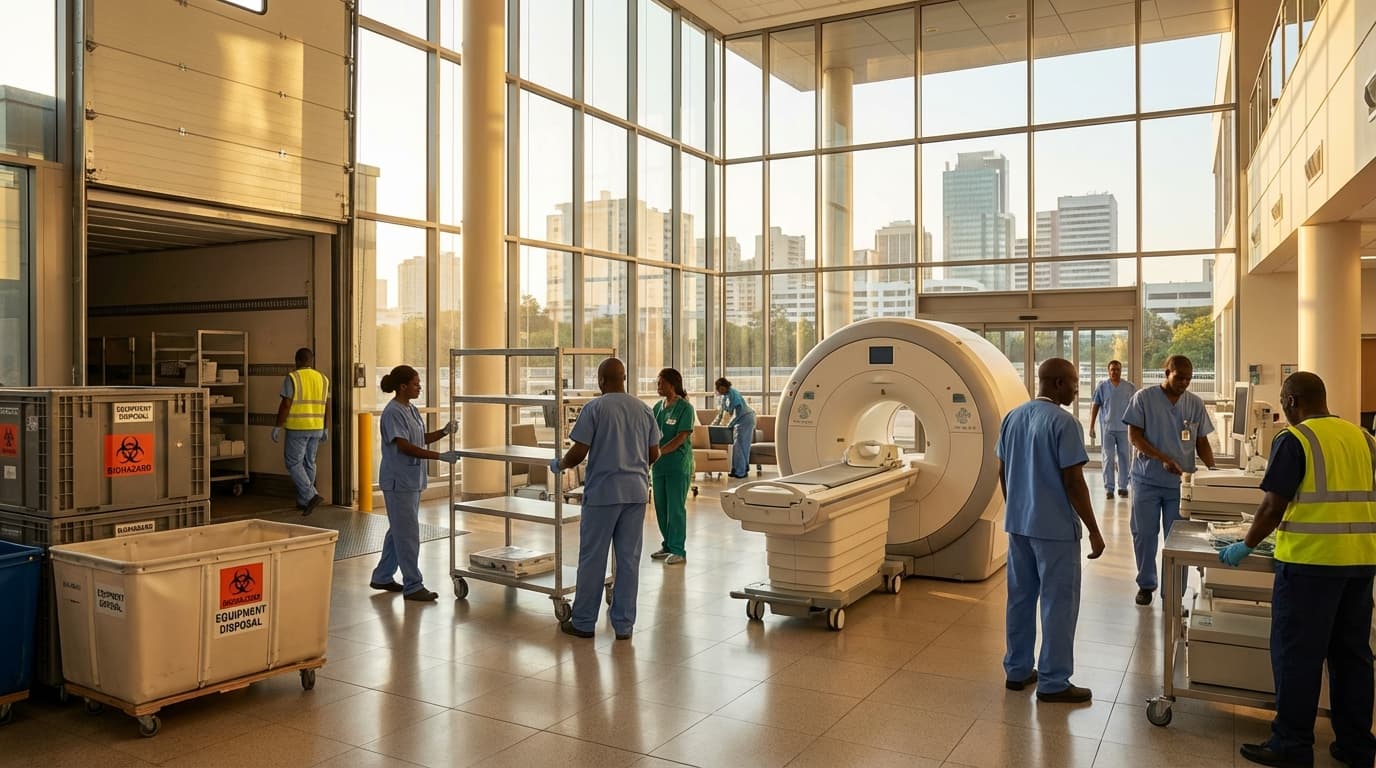
Site Restoration Service After Equipment Removal in Libya
Engineering Excellence & Technical Support
Site Restoration Service After Equipment Removal High-standard technical execution following OEM protocols and local regulatory frameworks.
Comprehensive Site Assessment & Remediation Planning
Leveraging advanced geospatial analysis and in-situ soil testing, we conduct detailed surveys to identify and quantify contaminants (hydrocarbons, heavy metals) left by equipment. This informs a tailored, multi-stage remediation strategy adhering to Libyan environmental standards and international best practices, ensuring a safe and compliant restoration.
Specialized Decontamination & Waste Management
Our trained personnel employ state-of-the-art techniques, including high-pressure washing, chemical neutralization, and containment protocols, to effectively decontaminate affected surfaces and soil. All waste streams are meticulously segregated, characterized, and disposed of through licensed Libyan waste management facilities, minimizing environmental impact.
Ecological Rehabilitation & Long-Term Monitoring
Beyond basic cleanup, we implement strategic revegetation programs utilizing native, drought-resistant flora to stabilize soil, prevent erosion, and restore biodiversity. Post-remediation, a robust monitoring plan is established to track site health and ensure the long-term success of the restoration effort.
What Is Site Restoration Service After Equipment Removal In Libya?
Site restoration after equipment removal in Libya refers to the comprehensive process of rehabilitating a site that has been impacted by the installation, operation, and subsequent decommissioning of industrial or heavy equipment. This service aims to return the land and associated infrastructure to a safe, environmentally sound, and often pre-disturbance condition, or to a state agreed upon by stakeholders. It encompasses a multi-faceted approach involving the remediation of any contamination, repair of structural damage, and the reinstatement of the site's ecological functions where applicable. The ultimate objective is to mitigate long-term environmental liabilities and ensure compliance with regulatory standards.
| Who Needs Site Restoration? | Typical Use Cases in Libya |
|---|---|
| Oil and Gas Companies (upstream, midstream, downstream operations) | Decommissioning of drilling rigs, well pads, pipelines, storage tanks, and refineries. |
| Mining and Extraction Operations | Restoration of quarry sites, processing plants, and associated infrastructure after cessation of activities. |
| Industrial Manufacturing Facilities | Removal of production machinery, chemical storage, and associated operational areas. |
| Construction and Infrastructure Projects | Sites where temporary heavy equipment was utilized and left a physical or environmental footprint. |
| Government Agencies and Municipalities | Management of abandoned industrial sites or areas impacted by past military equipment removal. |
| Power Generation Facilities | Removal of turbines, generators, fuel storage, and cooling systems. |
Key Components of Site Restoration:
- Demolition and Decommissioning:
- Hazardous Material Abatement (e.g., asbestos, lead-based paint, residual fuels/oils)
- Soil and Groundwater Remediation
- Infrastructure Removal and Disposal
- Excavation and Grading
- Landscaping and Revegetation
- Environmental Monitoring and Verification
- Waste Management and Disposal
Who Needs Site Restoration Service After Equipment Removal In Libya?
The removal of industrial equipment, particularly in sectors like oil and gas, construction, and mining, often leaves behind disturbed land, potential environmental hazards, and structures requiring decommissioning. Site restoration services are crucial to remediate these impacts, ensuring that land can be safely returned to its original state or repurposed, meeting environmental regulations and community expectations in Libya.
| Customer Type | Key Departments Involved | Specific Needs |
|---|---|---|
| Oil and Gas Companies | Operations, Environmental Health & Safety (EHS), Asset Management, Decommissioning Teams | Decommissioning of wells and facilities, soil and groundwater remediation, site grading, vegetation regrowth |
| Construction Firms | Project Management, Site Operations, Environmental Compliance | Remediation of former construction sites, removal of debris and hazardous materials, soil stabilization |
| Mining Companies | Mine Operations, Environmental Management, Reclamation Departments | Land reclamation post-mining, water management, erosion control, re-vegetation of disturbed areas |
| Government Ministries | Environmental Protection Agencies, Natural Resources Departments, Public Works Divisions | Enforcement of environmental regulations, oversight of restoration projects, management of legacy sites |
| Industrial Facility Owners | Facilities Management, EHS Departments, Real Estate/Asset Managers | Decommissioning of old plants, remediation of contaminated land, preparation for new developments |
Target Customers and Departments for Site Restoration Services in Libya
- {"items":["Upstream exploration and production companies","Midstream pipeline operators","Downstream refining and petrochemical plants","Offshore platform operators"],"title":"Oil and Gas Sector"}
- {"items":["Large-scale civil engineering firms","Road and bridge construction companies","Port and airport development authorities","Real estate developers"],"title":"Construction and Infrastructure Development"}
- {"items":["Companies involved in extracting minerals and aggregates","Surface and underground mining operators"],"title":"Mining and Quarrying Operations"}
- {"items":["Ministry of Oil and Gas","Ministry of Environment","Ministry of Construction and Public Works","Municipalities and local authorities","State-owned enterprises"],"title":"Government and Public Sector"}
- {"items":["Large manufacturing facilities","Industrial park management companies","Logistics and warehousing providers"],"title":"Industrial Manufacturing and Warehousing"}
Site Restoration Service After Equipment Removal Process In Libya
This document outlines the comprehensive workflow for site restoration services in Libya following equipment removal. Our process is designed to ensure a thorough, compliant, and efficient return of the site to its agreed-upon condition.
| Stage | Description | Key Activities | Deliverables/Outcomes |
|---|---|---|---|
| Inquiry and Initial Assessment | The client initiates contact with our service, providing details about the site, the equipment removed, and the desired restoration outcome. | Receive and review client inquiry, Request site-specific information (e.g., location, site layout, type of equipment removed, previous state), Conduct preliminary risk assessment, Discuss client's specific requirements and expectations. | Understanding of client needs, Preliminary site assessment report (if applicable), Identification of potential challenges. |
| Proposal and Agreement | Based on the initial assessment, a detailed proposal is developed, outlining the scope of work, methodology, timelines, and costs. Upon acceptance, a formal agreement is established. | Develop comprehensive restoration proposal, Detail scope of work, restoration methods, and materials, Provide cost breakdown and payment schedule, Negotiate terms and conditions, Finalize and sign service agreement. | Approved restoration proposal, Signed service agreement, Clear understanding of project scope and budget. |
| Site Mobilization and Planning | Our team and resources are mobilized to the site, and detailed project planning commences to ensure efficient and safe execution. | Assemble and mobilize project team and equipment, Conduct detailed site survey and risk assessment, Develop detailed work plan and schedule, Secure necessary permits and approvals (if required), Establish site safety protocols and procedures. | Mobilized project team and equipment, Detailed site work plan, Safety plan, Approved permits (if applicable). |
| Execution of Restoration Activities | The actual physical restoration of the site takes place according to the approved plan and methodology. | Site clearing and debris removal, Soil remediation and stabilization (if necessary), Landscaping and revegetation (if applicable), Demolition or removal of ancillary structures (if specified), Waste management and disposal, Compliance with environmental regulations. | Restored site features as per agreement, Removal of all debris and unauthorized structures, Contamination remediation (if applicable), Evidence of waste management compliance. |
| Quality Control and Verification | Throughout the execution phase and upon completion, rigorous quality control checks are performed to ensure all work meets agreed-upon standards. | Implement regular site inspections and quality checks, Document progress and adherence to specifications, Conduct independent verification of completed works, Address any non-conformities promptly. | Quality control reports, Verification certificates, Mitigation plans for any identified issues. |
| Final Reporting and Handover | A comprehensive report detailing the entire restoration process is provided, and the site is formally handed over to the client. | Compile final project report including all documentation, photographic evidence, and compliance records, Conduct final site walk-through with the client, Address any final client queries or concerns, Formal handover of the restored site, Provide as-built drawings or site condition reports. | Final project report, Signed handover document, Fully restored site meeting client expectations and regulatory requirements. |
Workflow Stages
- Inquiry and Initial Assessment
- Proposal and Agreement
- Site Mobilization and Planning
- Execution of Restoration Activities
- Quality Control and Verification
- Final Reporting and Handover
Site Restoration Service After Equipment Removal Cost In Libya
Restoring a site after equipment removal in Libya involves a range of costs influenced by several factors. These factors determine the complexity and scope of the restoration work required. Understanding these elements is crucial for obtaining accurate quotes and budgeting effectively. The local currency, the Libyan Dinar (LYD), is used for all pricing considerations.
| Restoration Scope/Complexity | Estimated Cost Range (LYD) | Notes |
|---|---|---|
| Minor Surface Restoration (e.g., filling small holes, basic grading, seeding) | 1,500 - 5,000 LYD | Suitable for minimal disturbance. Includes basic leveling and reseeding of small areas. |
| Standard Site Grading and Reinstatement (e.g., leveling larger areas, adding topsoil, basic landscaping) | 5,000 - 15,000 LYD | Covers more substantial grading, replacement of topsoil, and simple landscaping like grass seeding. |
| Moderate Restoration with Debris Removal (e.g., clearing rubble, some excavation, preparing for reuse) | 15,000 - 40,000 LYD | Includes removal of moderate amounts of debris, potential minor excavation, and preparation for a defined purpose. |
| Complex Restoration (e.g., significant excavation, specialized remediation, detailed landscaping, potential environmental concerns) | 40,000 - 100,000+ LYD | For sites with extensive damage, specialized material removal, or environmental considerations. Costs can vary greatly. |
Key Pricing Factors for Site Restoration in Libya
- Scope of Damage/Disturbance: The extent to which the site has been impacted by the equipment removal is a primary cost driver. Minor surface-level disturbances will be less expensive than deep excavations or significant land alteration.
- Type of Equipment Removed: Heavy machinery, large industrial units, or specialized equipment often leave behind more substantial groundwork or require more extensive demolition and clearing, increasing costs.
- Site Accessibility: Remote locations or sites with difficult terrain can incur higher transportation and logistical costs for personnel, materials, and machinery needed for restoration.
- Soil and Ground Conditions: The nature of the soil (e.g., rocky, sandy, contaminated) and the presence of underground utilities or structures will dictate the methods and expertise required for restoration, impacting cost.
- Restoration Objectives: The desired end-state of the site influences the cost. Simple grading and reseeding are less expensive than recreating specific landscaping, replanting native vegetation, or implementing environmental remediation measures.
- Debris Disposal: The volume and type of debris generated from equipment removal (e.g., concrete, metal, hazardous materials) and the associated disposal fees at approved Libyan sites are significant cost components.
- Materials and Reinstatement: Costs for backfill, topsoil, gravel, seeds, plants, or any other materials needed to return the site to its intended condition are factored in.
- Labor Costs: The number of workers required, their skill sets (e.g., heavy equipment operators, general laborers, environmental specialists), and their hourly wages in Libya will affect the overall price.
- Permits and Approvals: Depending on the location and the nature of the work, local permits and regulatory approvals may be necessary, adding to the administrative costs.
- Contractor's Overhead and Profit: Standard business costs, insurance, and the contractor's desired profit margin are also included in the final quotation.
Affordable Site Restoration Service After Equipment Removal Options
Removing heavy equipment from a site often leaves behind a scarred landscape, requiring careful restoration to return it to a usable or natural state. Our Affordable Site Restoration Service specializes in providing cost-effective solutions for this post-removal phase. We understand that budgets can be tight, so we focus on delivering high-quality restoration without unnecessary expenses. This includes offering flexible value bundles tailored to your specific needs and implementing smart cost-saving strategies to minimize your overall investment.
| Cost-Saving Strategy | Description | Benefit |
|---|---|---|
| Phased Restoration | Breaking down the restoration process into manageable stages, allowing for budget allocation over time. | Reduces upfront financial burden and allows for adjustments based on project progress and funding availability. |
| Native and Drought-Tolerant Planting | Prioritizing the use of local plant species that are adapted to the climate and require less water and maintenance. | Significantly lowers long-term irrigation and upkeep costs, promoting ecological sustainability. |
| Material Reuse and Recycling | Assessing and utilizing suitable on-site materials (e.g., excavated soil) for backfilling and grading, and recycling removed debris. | Reduces the cost of importing new materials and waste disposal fees. |
| DIY Complementary Services | Identifying tasks that clients can complete themselves to supplement our professional services (e.g., initial site clearing of light debris). | Lowering overall labor costs for the project. |
| Strategic Timing of Services | Scheduling certain restoration activities (e.g., seeding) during optimal weather periods to maximize success rates and minimize the need for re-work. | Ensures better plant establishment, reducing the need for costly replanting or repairs. |
| Bulk Material Procurement | Negotiating for better pricing on soil, mulch, and seed by purchasing in larger quantities for multiple projects. | Leverages economies of scale to pass on savings to clients. |
Understanding Our Value Bundles
- {"title":"Basic Restoration Package","description":"Ideal for minimal impact sites. Includes debris removal, basic grading, and initial seeding for erosion control."}
- {"title":"Standard Restoration Package","description":"A comprehensive option for moderate impact. Encompasses debris removal, expert grading for drainage, soil amendment, and a choice of seed mixes (native grasses or wildflowers)."}
- {"title":"Premium Restoration Package","description":"For significant disturbance or specific aesthetic goals. Includes all features of the Standard package, plus advanced soil remediation, specialized planting (shrubs, small trees), and long-term maintenance planning."}
- {"title":"Customizable Bundle","description":"Build your own package by selecting individual services. Perfect for unique site requirements or when you only need specific aspects of restoration addressed."}
Verified Providers In Libya
In the challenging healthcare landscape of Libya, identifying and accessing verified healthcare providers is paramount for individuals seeking reliable and safe medical services. Franance Health has emerged as a leading platform, meticulously vetting and credentialing healthcare professionals and facilities across the nation. This rigorous verification process ensures that patients are connected with qualified practitioners who adhere to high standards of care, ethical practices, and up-to-date medical knowledge. Franance Health's commitment to transparency and quality makes them an indispensable resource for navigating Libya's healthcare system.
| Credential Type | Verification Process | Benefit to Patients | Franance Health's Role |
|---|---|---|---|
| Medical Licenses & Certifications | Scrutiny of official documentation from Libyan and international medical boards. | Confirms the legal and professional qualifications of practitioners. | Automated checks and manual verification of all submitted licenses and certifications. |
| Professional Experience & Specializations | Review of work history, résumés, and peer recommendations. | Ensures practitioners have relevant experience and expertise in their chosen fields. | Gathering and verifying employment records and professional endorsements. |
| Facility Accreditation & Standards | Assessment of healthcare facilities against recognized Libyan and international accreditation standards. | Guarantees that facilities meet safety, hygiene, and equipment requirements. | Conducting site visits and reviewing accreditation documents from partner facilities. |
| Background Checks & Ethical Conduct | Due diligence on practitioners to ensure a clean disciplinary record. | Protects patients from unqualified or unethical individuals. | Implementing background checks and monitoring for any reported ethical breaches. |
Why Franance Health Credentials Matter
- Ensures access to licensed and certified medical professionals.
- Promotes adherence to international quality and safety standards.
- Provides peace of mind for patients seeking reliable healthcare.
- Facilitates a more efficient and trustworthy healthcare experience.
- Supports the development of a robust and accountable healthcare sector in Libya.
Scope Of Work For Site Restoration Service After Equipment Removal
This Scope of Work (SOW) details the requirements for site restoration services following the complete removal of industrial equipment. The objective is to return the affected site to a safe, clean, and environmentally sound condition, meeting all relevant regulatory and client-specific standards. The services include, but are not limited to, demolition of associated foundations, removal of residual materials, grading, soil remediation if necessary, and final landscaping.
| Deliverable | Description | Standard Specification / Reference |
|---|---|---|
| Detailed Site Restoration Plan | A comprehensive plan outlining the methodology, timeline, safety protocols, waste management strategy, and environmental controls for the restoration process. | Client Approval; OSHA Safety Standards; EPA Regulations |
| Demolition Report | Documentation of all demolished foundations, structures, and associated appurtenances, including quantities and disposal methods. | Client Records; Local Building Codes |
| Hazardous Material Survey Report (if applicable) | Identification and quantification of any hazardous materials encountered during demolition and removal, along with proposed remediation and disposal plans. | EPA RCRA Regulations; State Environmental Agency Guidelines |
| Waste Manifests and Disposal Certificates | Records of all waste generated and proof of proper disposal at licensed facilities. | RCRA Manifest System; Local Waste Management Regulations |
| Soil Sampling and Analysis Report | Results of soil testing to identify any contamination from previous equipment operation or spills. | EPA SW-846 Methods; ASTM Standards for Soil Analysis |
| Remediation Plan and Verification Report (if applicable) | Detailed plan for soil remediation activities and a report verifying that remediation targets have been met. | State Environmental Protection Agency (EPA) Remediation Standards; Risk Assessment Guidelines |
| Grading and Compaction Report | Documentation of site grading to achieve specified contours and compaction levels. | Client-specified grades and tolerances; ASTM D1556 (Sand Cone Method) or D6938 (Nuclear Method) for density testing. |
| Topsoil Specification and Certification | Verification of the quality and depth of topsoil replaced. | Client-specified topsoil quality (e.g., pH, organic content); USDA Soil Texture Classification |
| Landscaping and Seeding Plan/Execution | Plan and confirmation of successful implementation of landscaping and/or seeding to establish vegetation. | Client-specified plant species and seed mix; Local horticultural best practices |
| Final Restoration Report | A comprehensive report summarizing all restoration activities, including photographic documentation, test results, waste disposal records, and confirmation of compliance with the SOW. | Client Acceptance; Project Specifications |
| As-Built Drawings (if applicable) | Updated site drawings reflecting the final restored condition. | Client Requirements; CAD Standards |
Key Stages and Activities
- Site Assessment and Planning
- Demolition of Equipment Foundations and Structures
- Decontamination and Waste Removal
- Soil Remediation (if required)
- Grading and Earthwork
- Topsoil Replacement and Landscaping
- Final Inspection and Documentation
Service Level Agreement For Site Restoration Service After Equipment Removal
This Service Level Agreement (SLA) outlines the guaranteed response times and uptime commitments for the Site Restoration Service provided by [Your Company Name] following the removal of [Client Company Name]'s equipment. This SLA is an addendum to the Master Services Agreement dated [Date of MSA].
| Service Component | Uptime Guarantee | Critical Issue Response Time | Major Issue Response Time | Minor Issue Response Time |
|---|---|---|---|---|
| Site Restoration Service Availability | 99.5% Uptime (excluding Scheduled Maintenance) | 2 Business Hours | 4 Business Hours | 8 Business Hours |
| Site Operational Status Post-Restoration | 99.5% Uptime (excluding Scheduled Maintenance) | 2 Business Hours | 4 Business Hours | 8 Business Hours |
Key Definitions
- Site Restoration: The process of returning the physical site where equipment was located to its agreed-upon pre-installation or post-removal condition, as specified in the Order Form.
- Equipment Removal: The complete and verified disconnection and physical extraction of [Client Company Name]'s equipment from the designated site.
- Response Time: The maximum time allowed for [Your Company Name] to acknowledge a reported issue and commence work towards resolution. This is measured from the time the issue is officially logged by [Your Company Name]'s support system.
- Uptime Guarantee: The percentage of time the restored site is considered operational and meeting the agreed-upon post-restoration specifications, excluding scheduled maintenance and Force Majeure events.
- Downtime: Any period where the restored site fails to meet the agreed-upon post-restoration specifications, resulting in a deviation from the expected operational state.
- Critical Issue: An issue that renders the restored site completely unusable or significantly impairs its functionality, preventing [Client Company Name] from fulfilling its core operational requirements.
- Major Issue: An issue that significantly impacts the functionality of the restored site but does not render it completely unusable. Normal operations may be possible with workarounds.
- Minor Issue: An issue that has a minimal impact on the functionality of the restored site and does not impede core operational requirements. Workarounds are readily available and functional.
- Scheduled Maintenance: Planned maintenance activities communicated in advance to [Client Company Name] with sufficient notice (e.g., 7 days).
Frequently Asked Questions

Ready when you are
Let's scope your Site Restoration Service After Equipment Removal in Libya project in Libya.

Scaling healthcare logistics and technical systems across the entire continent.