
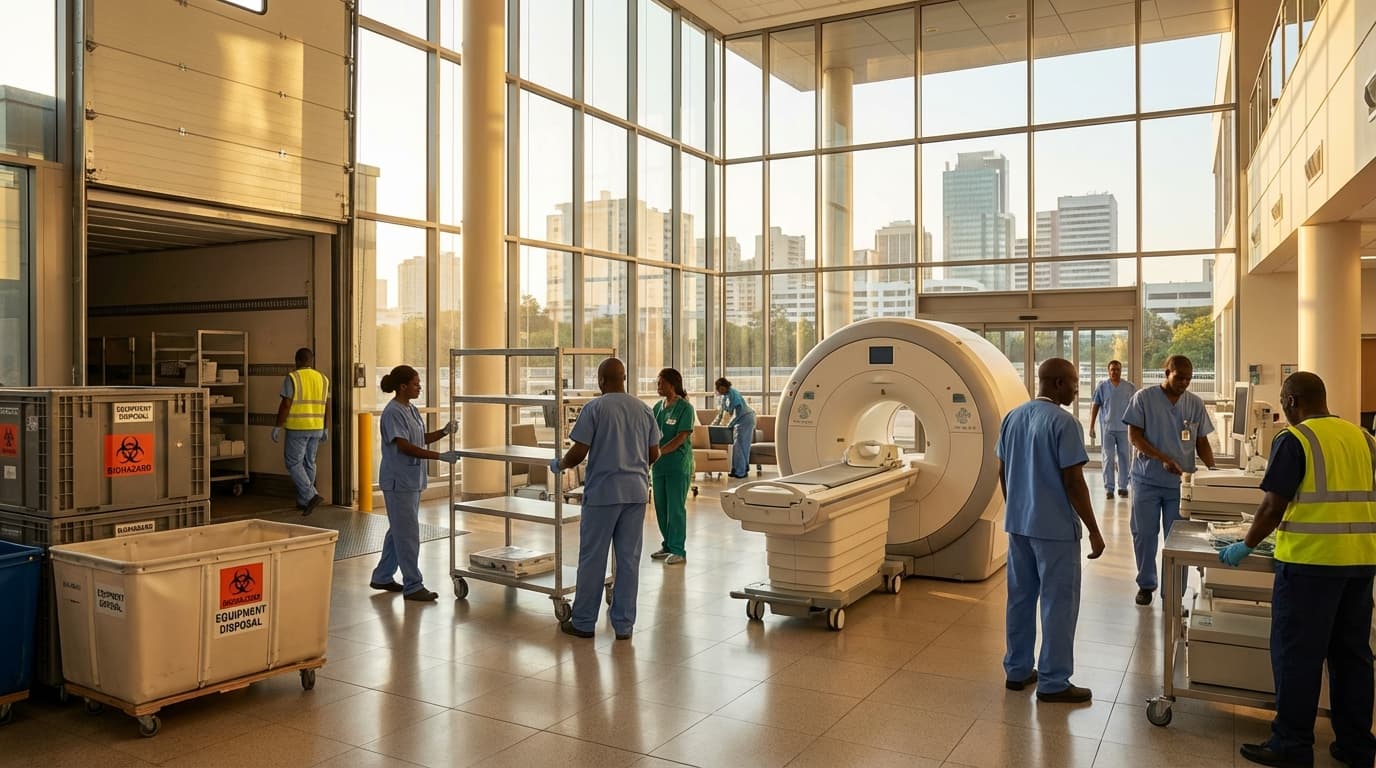
Heavy Medical Equipment De-Installation Service (MRI/CT/Cath Lab) in Libya
Engineering Excellence & Technical Support
Heavy Medical Equipment De-Installation Service (MRI/CT/Cath Lab) High-standard technical execution following OEM protocols and local regulatory frameworks.
Unrivaled Precision in Complex De-Installation
Our highly specialized team excels in the meticulous de-installation of high-value, intricate medical equipment such as MRI, CT scanners, and Cath Labs. We employ advanced techniques and state-of-the-art tools to ensure zero compromise on component integrity and future reusability, a critical factor in the Libyan healthcare landscape.
Rigorous Safety Protocols for Hazardous Environments
Operating in Libya demands an unwavering commitment to safety. We implement stringent, internationally compliant safety protocols, including specialized handling procedures for heavy components, containment measures for hazardous materials (e.g., cryogens), and comprehensive risk assessments to protect personnel and infrastructure during every phase of de-installation.
Expert Logistics & Secure Transport Solutions
Navigating complex logistical challenges in Libya is our forte. We provide end-to-end solutions, from secure on-site dismantling and packing to coordinating specialized transportation and customs clearance. Our proven track record ensures your valuable medical equipment reaches its destination safely and efficiently, ready for relocation or decommissioning.
What Is Heavy Medical Equipment De-installation Service (Mri/ct/cath Lab) In Libya?
Heavy medical equipment de-installation service in Libya, specifically for modalities such as Magnetic Resonance Imaging (MRI), Computed Tomography (CT), and Cardiac Catheterization (Cath Lab) systems, refers to the specialized process of safely and systematically dismantling, preparing, and removing these large-scale, high-value medical imaging and diagnostic devices from their operational locations within healthcare facilities. This service is critical during various stages of a healthcare facility's lifecycle, including upgrades, relocations, decommissioning, or the disposal of obsolete equipment. The process demands a high degree of technical expertise, adherence to stringent safety protocols, and specialized logistical coordination due to the size, weight, sensitivity, and often intricate interdependencies of these systems.
| Who Needs This Service? | Typical Use Cases | ||||||
|---|---|---|---|---|---|---|---|
| Hospitals and Medical Centers (Public and Private) | Equipment Upgrades: Replacing older MRI, CT, or Cath Lab systems with newer, more advanced models to improve diagnostic capabilities and patient care. | Facility Relocation: Moving a healthcare facility or a specific department to a new location, requiring the transfer of existing heavy medical equipment. | Renovations and Construction: Removing equipment temporarily or permanently to allow for structural modifications, expansion, or modernization of imaging suites. | Equipment Decommissioning: Safely removing and disposing of obsolete or non-functional equipment that is no longer in use or repairable. | Asset Management and Disposal: Facilitating the orderly sale, donation, or environmentally responsible disposal of surplus or end-of-life medical equipment. | Inter-Facility Transfers: Moving equipment from one healthcare institution to another within Libya. | Research and Development Facilities: De-installing specialized imaging equipment for upgrades, relocation, or decommissioning. |
Key Components of Heavy Medical Equipment De-Installation Service:
- Site Assessment and Planning: Comprehensive evaluation of the existing installation, including structural integrity, access routes, power requirements, cooling systems, and radiation shielding (for CT and MRI). Detailed planning for disassembly sequences, equipment rigging, and transportation.
- Disassembly and Component Segregation: Meticulous dismantling of the equipment by trained technicians, following manufacturer-specific procedures. This involves the careful separation of major components (e.g., gantry, magnet, power supplies, control consoles, patient tables) and sub-assemblies.
- Safing and De-energization: Strict adherence to safety protocols to de-energize all power sources, discharge stored energy (especially critical for MRI superconducting magnets), and neutralize any hazardous materials (e.g., refrigerants, oils).
- Cabling and Interconnect Disconnection: Systematic disconnection of all associated electrical, data, and pneumatic cabling, ensuring proper labeling and documentation for potential re-installation.
- Protective Packaging and Crating: Secure packaging of individual components using specialized materials to prevent damage during transit. This may include custom crating for sensitive parts like MRI magnets or CT detector arrays.
- Rigging and Lifting Operations: Utilization of specialized lifting equipment (cranes, hoists, gantries) and trained rigging crews to safely maneuver heavy components, especially for removal from basements or upper floors.
- Transportation and Logistics: Coordination of specialized transport vehicles (e.g., heavy-haul trucks) and logistics to ensure the secure and timely movement of de-installed equipment to its designated destination (new site, storage, or disposal facility).
- Documentation and Certification: Comprehensive record-keeping of the entire de-installation process, including photographs, checklists, and certificates of de-installation, which are often required for insurance and regulatory purposes.
- Environmental and Safety Compliance: Ensuring all activities comply with relevant Libyan environmental regulations, occupational health and safety standards, and manufacturer guidelines.
Who Needs Heavy Medical Equipment De-installation Service (Mri/ct/cath Lab) In Libya?
Specialized de-installation services for high-value, heavy medical equipment like MRI scanners, CT scanners, and Cath Labs are crucial for several key entities in Libya. These services are not for routine medical procedures but for specific scenarios involving the relocation, upgrade, or decommissioning of these advanced diagnostic and interventional systems. The need arises from hospitals, diagnostic centers, and potentially government health ministries managing these assets.
| Customer Type | Primary Need for De-Installation | Key Departments Involved |
|---|---|---|
| Public Hospitals | Equipment upgrades, relocation within facilities, decommissioning of old units, and response to damage (e.g., conflict, natural disaster). | Radiology, Cardiology, Biomedical Engineering, Facilities Management, Procurement |
| Private Hospitals & Healthcare Groups | Expansion of services, facility renovations, technology upgrades to stay competitive, and potential sale or relocation of assets. | Radiology, Cardiology, Biomedical Engineering, Facilities Management, Procurement, Operations |
| Specialized Diagnostic Imaging Centers | Replacement of outdated equipment, expansion of imaging capabilities, and facility moves. | Radiology, Biomedical Engineering, Facilities Management, Operations |
| University Teaching Hospitals | Research initiatives requiring equipment relocation, integration of new technology for training, and general asset management. | Radiology, Cardiology, Biomedical Engineering, Research Departments, Academic Staff |
| Medical Equipment Suppliers/Installers | Managing the removal of old equipment as part of a new installation contract, or performing de-installation for clients on behalf of the supplier. | Technical Service Departments, Project Management, Logistics |
| Government Health Agencies/Ministries | Centralized asset management, national equipment replacement programs, and overseeing the decommissioning of government-owned facilities. | Asset Management Units, Planning Departments, Procurement Divisions |
Target Customers & Departments for Heavy Medical Equipment De-Installation Service (MRI/CT/Cath Lab) in Libya
- {"items":["Public Hospitals (Ministry of Health managed)","Private Hospitals and Healthcare Groups","Specialized Diagnostic Imaging Centers","University Teaching Hospitals","Medical Equipment Suppliers and Installers (for removal/relocation projects)","Government Health Agencies and Ministries"],"title":"Target Customers"}
- {"items":["Radiology/Imaging Departments (MRI, CT)","Cardiology/Interventional Radiology Departments (Cath Lab)","Biomedical Engineering Departments","Facilities Management/Estates Departments","Procurement and Contracts Departments","IT/Biomedical IT Departments (for data handling and system interfaces)"],"title":"Key Departments Involved"}
Heavy Medical Equipment De-installation Service (Mri/ct/cath Lab) Process In Libya
This document outlines the workflow for a Heavy Medical Equipment De-Installation Service (MRI/CT/Cath Lab) in Libya, covering the process from initial inquiry through to the completion of the de-installation and handover. This service is critical for facility upgrades, relocations, or decommissioning, requiring specialized expertise and adherence to stringent safety and regulatory standards.
| Stage | Activities | Responsible Party | Key Deliverables | Timeframe (Estimate) |
|---|---|---|---|---|
| 1. Inquiry & Initial Consultation | Receive client request, understand basic needs, and gather preliminary information about the equipment and location. | Client, Service Provider | Confirmation of service scope, initial understanding of client requirements. | 1-3 Business Days |
| 2. Site Assessment & Survey | On-site visit by technical experts to evaluate equipment type, model, condition, access routes, power requirements, structural integrity, and any potential hazards. Detailed photographic and video documentation. | Service Provider (Technical Team) | Detailed site survey report, identification of all logistical and technical challenges, risk assessment. | 3-7 Business Days (depending on complexity and travel) |
| 3. Planning & Proposal Development | Develop a comprehensive project plan including de-installation methodology, detailed timeline, resource allocation (personnel, specialized tools, rigging equipment), safety protocols, and a cost proposal. Obtain client approval. | Service Provider (Project Management & Engineering) | Detailed project plan, risk management plan, safety plan, comprehensive quotation, agreed-upon contract. | 5-10 Business Days |
| 4. Permitting & Regulatory Compliance | Identify and acquire all necessary permits from relevant Libyan authorities (e.g., Ministry of Health, local municipalities, environmental agencies). Ensure compliance with all local safety and disposal regulations. | Service Provider (with Client Support) | All required permits and licenses, confirmation of regulatory compliance. | Variable (can be significant, 7-30+ Business Days depending on bureaucracy) |
| 5. Pre-De-Installation Preparation | Secure the de-installation area, implement safety barriers, disconnect power and essential services (under expert supervision), conduct final equipment checks, and prepare all necessary tools and equipment for the de-installation phase. | Service Provider (Technical Team) | Secured work zone, readiness of all tools and equipment, safely prepared equipment. | 1-3 Business Days prior to de-installation |
| 6. Equipment De-Installation | Execute the de-installation process according to the approved plan. This involves careful disassembly, disconnection, and controlled removal of components using specialized rigging and lifting techniques, adhering strictly to safety procedures. | Service Provider (De-Installation Crew) | De-installed equipment components, safely stored on-site or ready for loading. | Variable (1-5+ Business Days depending on equipment size and complexity) |
| 7. Logistics & Transportation | Coordinate and execute the safe packaging, loading, and transportation of the de-installed equipment from the Libyan site to the designated destination (storage, new facility, or disposal center). This includes customs clearance if applicable. | Service Provider (Logistics Team) | De-installed equipment securely loaded and in transit, shipping documents, proof of delivery (if applicable). | Variable (depending on destination and transport method) |
| 8. Final Site Handover & Documentation | Ensure the de-installation area is clean and safe, conduct a final walk-through with the client, and provide all project-related documentation, including the de-installation report, safety records, and any waste disposal certificates. | Service Provider (Project Manager) | Clean and safe site, signed handover document, comprehensive project documentation. | 1-2 Business Days |
| 9. Post-De-Installation Support (Optional) | Provide ongoing support, such as equipment storage, re-installation planning at a new site, or advice on disposal and recycling options. | Service Provider | Client satisfaction, completion of any agreed-upon follow-up services. | As per agreement |
Key Stages of the De-Installation Process
- Inquiry & Initial Consultation: The process begins when a client in Libya expresses interest in de-installing heavy medical equipment.
- Site Assessment & Survey: A thorough on-site evaluation is conducted to understand the specific equipment, facility layout, and logistical challenges.
- Planning & Proposal Development: Based on the assessment, a detailed project plan, timeline, and cost proposal are created.
- Permitting & Regulatory Compliance: Securing necessary permits and ensuring adherence to Libyan healthcare and safety regulations.
- Pre-De-Installation Preparation: This includes site preparation, equipment shutdown, and securing the work area.
- Equipment De-Installation: The meticulous physical removal of the medical equipment.
- Logistics & Transportation: Arranging for the safe transport of the de-installed equipment.
- Final Site Handover & Documentation: Completing the project with a clean site and comprehensive documentation.
- Post-De-Installation Support (Optional): Offering further services as required.
Heavy Medical Equipment De-installation Service (Mri/ct/cath Lab) Cost In Libya
The cost of de-installing heavy medical equipment such as MRI, CT scanners, and Cath Labs in Libya is a complex service influenced by several key factors. These are not straightforward 'per-item' costs but rather comprehensive project-based pricing. The price can vary significantly based on the specific equipment model, its size and weight, the complexity of the installation (e.g., structural modifications required for removal), the location within Libya (accessibility and potential logistical challenges), the required timeline, and the expertise of the de-installation team. Specialized companies with experience in medical equipment removal are crucial, as improper handling can lead to damage and costly repairs. Safety protocols and the need for specialized tools also contribute to the overall expense. While precise figures are difficult to ascertain without specific project details, a general understanding of the pricing factors can help in budgeting for such services.
| Equipment Type | Estimated Cost Range (LYD) |
|---|---|
| Small to Medium CT Scanner | 15,000 - 40,000 |
| Large CT Scanner | 25,000 - 60,000 |
| Small to Medium MRI (e.g., 0.3T - 1.5T) | 30,000 - 80,000 |
| Large MRI (e.g., 1.5T and above, including cryogen removal) | 50,000 - 150,000+ |
| Cath Lab (including X-ray system, tables, consoles) | 40,000 - 120,000 |
Key Factors Influencing De-Installation Costs in Libya (MRI/CT/Cath Lab)
- Equipment Type and Model: Different machines have varying complexities, weights, and disassembly requirements. For example, a modern MRI with a superconducting magnet will have different de-installation needs than a smaller CT scanner.
- Size and Weight: Larger and heavier equipment necessitates more robust lifting machinery, specialized rigging, and a larger crew, directly impacting labor and equipment rental costs.
- Complexity of Original Installation: If the equipment was installed with significant structural modifications (e.g., reinforced floors, specialized shielding), its removal might require reverse engineering these modifications, adding to the cost.
- Location and Accessibility: De-installation in remote or hard-to-access areas within Libya will incur higher logistical costs, including transportation of personnel and equipment. Urban centers might offer more competitive pricing due to better infrastructure.
- Required Timeline and Urgency: Rush de-installations or projects with tight deadlines often command premium pricing due to the need for expedited resource allocation and potentially overtime labor.
- De-installation Team Expertise and Certification: Hiring experienced, certified technicians who specialize in medical equipment removal is paramount. Their specialized knowledge and adherence to safety standards justify higher professional fees.
- Specialized Tools and Equipment Rental: De-installation often requires specialized lifting gear, transport vehicles, and tools that are not commonly available. Rental costs for these items are factored into the price.
- Safety and Regulatory Compliance: Adhering to Libyan safety regulations and any specific hospital protocols for equipment removal adds to the complexity and cost. This may include hazard assessments and specialized waste disposal if applicable.
- Dismantling and Packaging: The extent to which the equipment needs to be dismantled and the type of packaging required for transport will influence labor and material costs.
- Disposal or Relocation Services: Whether the de-installation is part of a relocation (requiring re-installation at another site) or complete disposal of the equipment can impact the scope and cost.
Affordable Heavy Medical Equipment De-installation Service (Mri/ct/cath Lab) Options
Relocating or decommissioning large medical equipment like MRI, CT scanners, and Cath Labs is a complex and costly undertaking. Our affordable de-installation service specializes in safely and efficiently dismantling these intricate systems, minimizing downtime and maximizing value for your healthcare facility. We understand the financial pressures healthcare providers face, which is why we offer flexible solutions and cost-saving strategies without compromising on safety or professionalism. Our expertise ensures that your valuable assets are handled with the utmost care, preserving their integrity for resale, relocation, or responsible disposal. We provide transparent pricing and a clear understanding of the de-installation process, empowering you to make informed decisions.
| Value Bundle Option | Description | Cost-Saving Features | Ideal For |
|---|---|---|---|
| Basic De-Installation | Standard safe and professional de-installation of the core equipment components. | Focus on core service, reducing overhead. Efficient process. | Facilities with tight budgets needing essential de-installation. |
| Standard De-Installation + Site Prep | Includes basic de-installation plus minor preparation of the site for removal (e.g., clearing immediate pathways). | Bundled service reduces separate vendor costs. Streamlined logistics. | Facilities needing a basic level of site readiness assistance. |
| Comprehensive De-Installation + Asset Tagging | Full de-installation, meticulous labeling and documentation of all components, and basic inventory creation. | Reduces future inventory management time. Preserves asset value for resale/reuse. | Facilities planning to resell or redeploy equipment, maximizing return on investment. |
| Full-Service De-Installation + Logistics Coordination | Includes comprehensive de-installation, asset tagging, and coordination with your chosen logistics or transportation partners. | Minimizes your project management burden. Leverages our network for potential shipping efficiencies. | Facilities seeking a turnkey solution and minimal involvement in the de-installation and removal process. |
Key Considerations for Affordable De-Installation:
- Specialized Expertise: Our team is trained on the specific requirements of MRI, CT, and Cath Lab equipment.
- Safety Protocols: Adherence to strict safety standards to protect personnel and equipment.
- Efficiency: Streamlined processes to minimize on-site time and disruption.
- Asset Preservation: Careful handling to maintain the condition of your equipment.
- Transparent Pricing: Clear quotes and no hidden fees.
- Regulatory Compliance: Understanding and adhering to all relevant regulations.
Verified Providers In Libya
Finding trusted healthcare providers in Libya can be a challenge. Franance Health stands out by offering a network of verified professionals who meet stringent credentialing standards. This verification process ensures that patients receive care from qualified and ethical practitioners, providing peace of mind and a higher level of medical service. When seeking medical attention in Libya, choosing a provider affiliated with Franance Health signifies a commitment to quality, safety, and reliable healthcare.
| Provider Type | Franance Health Verification Ensures: | Benefits for Patients |
|---|---|---|
| Doctors | Licensed and certified medical professionals with a proven track record. | Access to experienced specialists, accurate diagnoses, and effective treatment plans. |
| Hospitals & Clinics | Facilities meeting safety, hygiene, and equipment standards. | Safe and well-equipped environments for procedures and recovery, with modern medical technology. |
| Specialists (e.g., Surgeons, Cardiologists) | Extensive experience and specialized training in their respective fields. | Expert care for complex medical conditions and advanced surgical interventions. |
| Diagnostic Centers | Accredited facilities with calibrated and up-to-date equipment. | Reliable and accurate diagnostic results crucial for effective treatment. |
| Pharmacies | Licensed and reputable sources of medication. | Access to genuine and high-quality pharmaceuticals, ensuring treatment efficacy and safety. |
Why Franance Health Credentials Matter:
- Rigorous vetting process for all affiliated providers.
- Ensures adherence to international medical standards.
- Promotes patient safety and trust.
- Access to a network of specialists across various fields.
- Commitment to ethical medical practices.
Scope Of Work For Heavy Medical Equipment De-installation Service (Mri/ct/cath Lab)
This Scope of Work (SOW) outlines the requirements for the professional de-installation of heavy medical imaging and interventional equipment, specifically Magnetic Resonance Imaging (MRI), Computed Tomography (CT) scanners, and Cardiac Catheterization (Cath Lab) systems. The objective is to ensure safe, efficient, and compliant removal of these complex systems from their operational sites, preparing them for relocation or disposal. This document details the technical deliverables expected from the service provider and outlines the standard specifications to be adhered to throughout the de-installation process.
| Technical Deliverable | Description | Standard Specifications/Requirements |
|---|---|---|
| De-installation Plan | A detailed plan outlining the sequence of operations, safety procedures, resource allocation, and timeline for each equipment type. | Must be submitted for review and approval prior to commencement. Includes risk assessment and mitigation strategies. Shall identify all required tools, lifting equipment, and specialized personnel. |
| Qualified Personnel | Certified and experienced technicians with specific expertise in de-installing MRI, CT, and Cath Lab systems. | Technicians must hold relevant certifications (e.g., manufacturer-specific training, electrical safety certifications, rigging certifications). Minimum of 3 years of experience with similar de-installations. Must adhere to all site-specific safety protocols. |
| Equipment Isolation and Safety | Complete and verified isolation of power, cooling, and any other essential utilities to the equipment. | Verification of power isolation using certified test equipment. Lock-out/Tag-out (LOTO) procedures rigorously applied. Discharge of any stored energy (e.g., cryogen in MRI) by qualified personnel. |
| System Disconnection | Careful disconnection of all electrical, pneumatic, hydraulic, and data cables. | Color-coding and labeling of all disconnected cables and conduits for accurate re-installation. Use of appropriate tools to prevent damage to connectors and wiring. Verification of complete discharge of any residual fluids or gases. |
| Component Dismantling | Systematic dismantling of the equipment into manageable components for safe handling and transport. | Adherence to manufacturer's de-installation guidelines. Use of specialized tools for torque-sensitive components. Careful separation of sensitive electronic modules and heavy sub-assemblies (e.g., gantry, magnet components, patient table). |
| Heavy Lifting and Rigging | Safe and efficient lifting and maneuvering of heavy and oversized equipment components. | Use of certified and load-rated lifting equipment (e.g., cranes, forklifts, hydraulic gantries) operated by certified riggers. Detailed rigging plans for each lift. Clearance checks for pathways and egress points. |
| Packaging and Protection | Appropriate packaging of all disassembled components to prevent damage during transit. | Use of industry-standard packaging materials (e.g., custom crates, foam padding, anti-static bags). Protection against moisture, impact, and vibration. Clear labeling of all packaged components with their corresponding serial numbers and destination. |
| Site Restoration | Restoration of the de-installation site to its original or a pre-agreed condition. | Removal of all debris, tools, and equipment. Repair of any minor damage caused during de-installation (e.g., wall scuffs). Thorough cleaning of the work area. |
| De-installation Report | A comprehensive report documenting the entire de-installation process. | Includes photographs of key stages, list of all components de-installed (with serial numbers), details of any encountered issues and their resolution, confirmation of site restoration, and sign-off by the client representative. Shall also include a manifest of all packaged equipment. |
| Environmental and Regulatory Compliance | Adherence to all relevant environmental, health, and safety regulations. | Proper disposal of hazardous materials (if any) in accordance with local and national regulations. Compliance with radiation safety protocols for MRI and CT equipment. Adherence to site-specific permit-to-work systems. |
Key De-Installation Stages and Activities
- Site Assessment and Planning
- Equipment Isolation and Power Down
- System Disconnection and Component Separation
- Structural Dismantling (if required)
- Component Removal and Handling
- Packaging and Protection
- Site Restoration
- Documentation and Reporting
Service Level Agreement For Heavy Medical Equipment De-installation Service (Mri/ct/cath Lab)
This Service Level Agreement (SLA) outlines the terms and conditions for the de-installation of heavy medical equipment, specifically MRI, CT, and Cath Lab systems. It defines the expected response times and uptime guarantees related to the provided de-installation services.
| Service Type | Response Time (Acknowledgement & Initial Assessment) | Uptime Guarantee (Service Provider Availability) |
|---|---|---|
| Scheduled De-installation (MRI/CT/Cath Lab) | Within 24 business hours of receiving a confirmed request and agreed-upon schedule. | 95% availability of scheduled de-installation resources during agreed-upon service windows. |
| Emergency De-installation (MRI/CT/Cath Lab) - Critical Need | Within 8 business hours of receiving an emergency request. Initial on-site assessment within 24 business hours. | 98% availability of emergency de-installation resources to commence work within 48 business hours of validated emergency. |
| Post-De-installation Support (Troubleshooting of removal process) | Within 12 business hours for non-critical inquiries; immediate for critical operational impacts related to the de-installation. | N/A (Support is reactive to the de-installation service itself, not equipment uptime). |
Definitions
- Service Provider: The entity responsible for performing the de-installation of heavy medical equipment.
- Customer: The entity receiving the de-installation services.
- De-installation: The process of safely and completely removing the specified heavy medical equipment from its current location, including disconnection, disassembly (if applicable), and preparation for transport.
- Scheduled De-installation: De-installation services planned and agreed upon by both parties in advance.
- Emergency De-installation: De-installation required due to unforeseen circumstances or critical operational needs, necessitating immediate attention.
- Response Time: The maximum time allowed for the Service Provider to acknowledge and initiate action on a service request.
- Uptime Guarantee: Refers to the availability of the Service Provider's resources and personnel to fulfill their obligations as per this SLA. This is distinct from the operational uptime of the medical equipment itself, as de-installation is a planned or reactive service.
Frequently Asked Questions

Ready when you are
Let's scope your Heavy Medical Equipment De-Installation Service (MRI/CT/Cath Lab) in Libya project in Libya.

Scaling healthcare logistics and technical systems across the entire continent.