
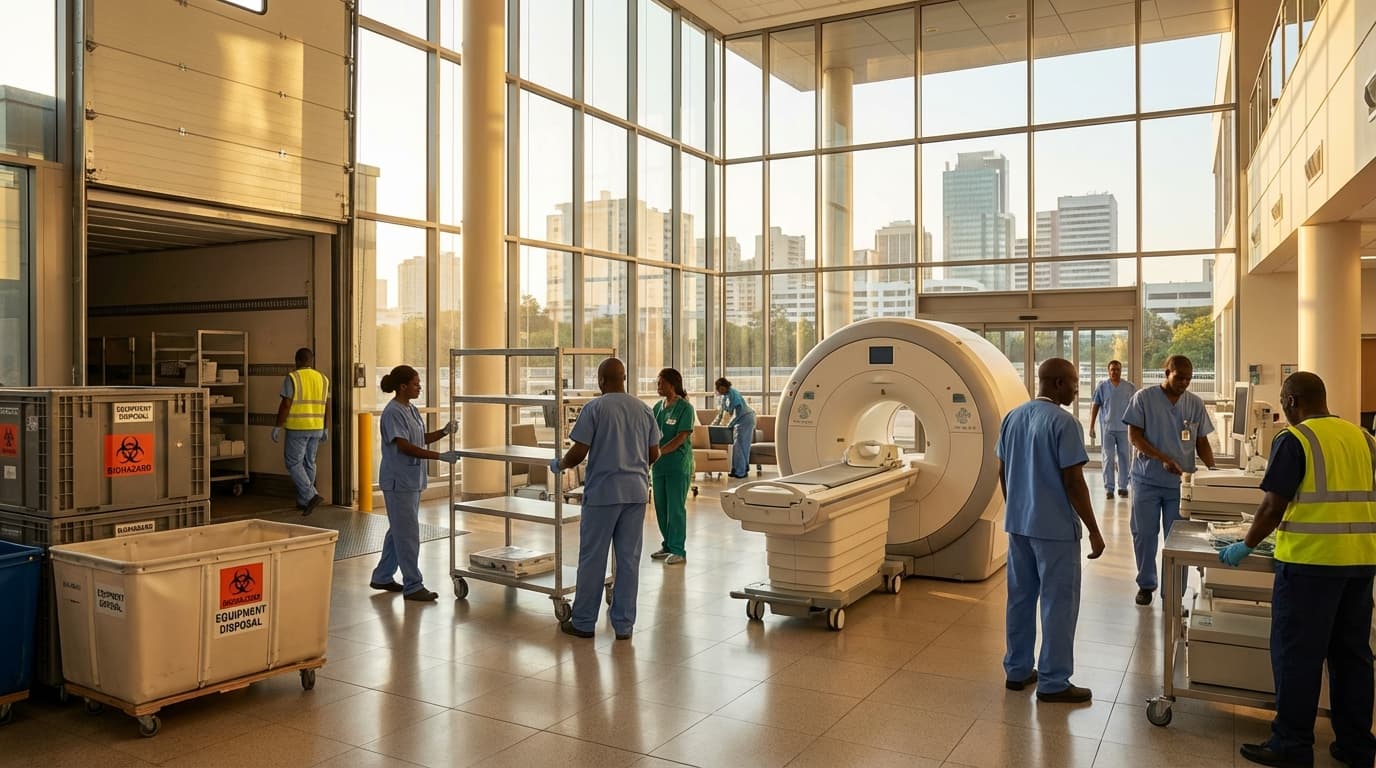
Decommissioning Service for Medical Devices in Libya
Engineering Excellence & Technical Support
Decommissioning Service for Medical Devices High-standard technical execution following OEM protocols and local regulatory frameworks.
Regulatory Compliance & Certified Disposal
Ensuring strict adherence to Libyan Ministry of Health (MOH) regulations and international best practices for safe and environmentally sound decommissioning. Our certified processes guarantee proper handling, data sanitization, and disposal of all medical devices, preventing regulatory non-compliance and potential risks.
Advanced Decommissioning Technologies
Leveraging state-of-the-art decommissioning technologies and trained personnel for efficient and secure removal of medical equipment. This includes specialized tools and methodologies for dismantling complex devices, ensuring safety and minimizing environmental impact.
End-to-End Project Management & Reporting
Providing comprehensive project management from initial assessment and planning to final asset disposition. We offer detailed documentation and transparent reporting throughout the decommissioning process, providing Libyan healthcare facilities with full visibility and assurance.
What Is Decommissioning Service For Medical Devices In Libya?
Decommissioning service for medical devices in Libya refers to the comprehensive process of safely and compliantly retiring a medical device from active use. This involves a series of technical, administrative, and logistical steps to ensure the device is no longer operational, its data is secured or erased, and it is disposed of in an environmentally responsible and legally compliant manner. The objective is to mitigate risks associated with obsolete, malfunctioning, or end-of-life medical equipment, including data breaches, biohazards, and improper waste management. This service is critical for maintaining patient safety, regulatory compliance, and efficient resource management within healthcare facilities.
| Who Needs Decommissioning Service? | Typical Use Cases |
|---|---|
| Hospitals and Clinics (Public and Private) | Retiring outdated imaging equipment (X-ray, MRI, CT scanners). |
| Diagnostic Laboratories | Disposing of analytical instruments with expired calibration or performance degradation. |
| Specialized Medical Centers (e.g., Dialysis Centers, Surgical Suites) | Phasing out older generation life-support systems or surgical robots. |
| Medical Device Manufacturers/Distributors (for leased or returned equipment) | End-of-lease returns requiring secure data erasure and disposal. |
| Government Health Ministries and Regulatory Bodies | Managing the disposal of surplus or confiscated medical equipment. |
| Research Institutions and Universities | Decommissioning obsolete research-grade medical instrumentation. |
| Any Healthcare Facility with Medical Equipment | Replacing equipment due to technological advancements or wear and tear. |
| Facilities undergoing renovations or closures | Clearing out old or unused medical devices before facility modifications or shutdown. |
Key Aspects of Medical Device Decommissioning Service
- Assessment and Planning: Initial evaluation of the device's status (operational, repairable, end-of-life), regulatory requirements, and data retention policies.
- Data Management: Secure erasure or transfer of all patient and operational data in accordance with privacy regulations (e.g., GDPR equivalents, local data protection laws). This may involve data wiping to specific standards or physical destruction of storage media.
- Functional Disablement: Rendering the device permanently inoperable. This can include physical destruction of critical components, software disabling, or removal of power sources.
- Environmental Disposal: Managing the disposal of the device and its components according to hazardous waste regulations. This includes proper segregation, packaging, and transfer to certified waste management facilities.
- Certification and Documentation: Providing comprehensive documentation of the decommissioning process, including certificates of destruction, data erasure logs, and waste disposal manifests.
- Regulatory Compliance: Ensuring adherence to all applicable Libyan healthcare regulations, environmental laws, and international standards for medical device disposal.
Who Needs Decommissioning Service For Medical Devices In Libya?
Decommissioning service for medical devices in Libya is crucial for a range of healthcare facilities and organizations. As medical technology advances, older or obsolete equipment requires proper disposal to ensure data security, environmental compliance, and efficient resource management. This service is essential for maintaining a safe and functional healthcare ecosystem.
| Target Customer Group | Key Departments Involved | Types of Devices Typically Decommissioned |
|---|---|---|
| Hospitals (Public & Private) | Biomedical Engineering Department, IT Department, Procurement Department, Radiology Department, Laboratory Services, Surgical Departments | MRI scanners, CT scanners, X-ray machines, ultrasound devices, anesthesia machines, ventilators, patient monitors, surgical robots, laboratory centrifuges, microscopes, endoscopes |
| Clinics and Medical Centers | Practice Management, Technical Staff (if any), General Administration | ECG machines, blood pressure monitors, diagnostic imaging equipment (smaller scale), dental chairs, sterilization units, laboratory testing kits |
| Government Health Ministries/Agencies | Procurement & Logistics, Public Health Department, Biomedical Asset Management | Any equipment previously supplied to public facilities, specialized public health equipment (e.g., for disease surveillance) |
| Research Institutions/Laboratories | Research & Development Department, Lab Management, IT Security | High-throughput screening systems, DNA sequencers, mass spectrometers, advanced microscopy, cell culture incubators |
| Medical Device Manufacturers/Distributors | Service Department, Sales Support, Logistics | Demo units, returned equipment, obsolete inventory |
| NGOs/Humanitarian Aid Organizations | Operations Management, Medical Coordinators, Logistics | Any medical equipment deployed in their field operations |
Target Customers and Departments Requiring Medical Device Decommissioning in Libya:
- {"title":"Hospitals (Public and Private)","description":"Large and small hospitals, including general hospitals, specialized clinics, and teaching hospitals, often have a continuous cycle of equipment upgrades and replacements. This necessitates regular decommissioning of outdated imaging equipment, surgical instruments, laboratory analyzers, and patient monitoring systems."}
- {"title":"Clinics and Medical Centers","description":"Smaller outpatient clinics, diagnostic centers, and specialized medical practices that utilize a variety of diagnostic and treatment devices require decommissioning services when their equipment reaches its end-of-life or is no longer supported."}
- {"title":"Government Health Ministries and Agencies","description":"National and regional health authorities responsible for overseeing healthcare infrastructure, managing public health programs, and ensuring regulatory compliance. They may need to decommission equipment from public health facilities or manage large-scale disposals."}
- {"title":"Research Institutions and Laboratories","description":"Medical research facilities and diagnostic laboratories that use advanced scientific equipment will require professional decommissioning as their research needs evolve or their instruments become obsolete."}
- {"title":"Medical Device Manufacturers and Distributors (Local Branches)","description":"Local representation of international manufacturers and distributors who might be involved in trade-in programs, recalls, or the disposal of demonstration or returned equipment."}
- {"title":"Non-Governmental Organizations (NGOs) and Humanitarian Aid Organizations","description":"Organizations operating medical programs or providing healthcare services in Libya, especially those receiving donated equipment, will need to decommission devices that are no longer functional or suitable for use."}
Decommissioning Service For Medical Devices Process In Libya
This document outlines the comprehensive workflow for the decommissioning of medical devices in Libya, covering the process from initial inquiry to the final execution and documentation. The process is designed to ensure safe, environmentally responsible, and legally compliant disposal of medical equipment.
| Phase | Key Activities | Responsible Party | Deliverables/Outputs |
|---|---|---|---|
| Client inquiry, Initial consultation, Site visit, Device inventory, Risk assessment. | Client & Decommissioning Service Provider | Client need identified, Device list, Preliminary risk assessment. |
| Quotation generation, Proposal submission, Contract negotiation, Contract signing. | Decommissioning Service Provider & Client | Formal proposal, Signed service contract. |
| Decommissioning plan development, Safety protocol creation, Environmental impact assessment, Logistics arrangement. | Decommissioning Service Provider | Detailed decommissioning plan, Safety guidelines, Transportation schedule. |
| Device disconnection, Decontamination, Initial segregation & categorization. | Decommissioning Service Provider (Technicians) | Disconnected devices, Decontamination records, Preliminary sorted items. |
| Secure transportation, Final segregation & categorization, Recycling, Refurbishment (if applicable), Hazardous waste disposal, Secure destruction. | Decommissioning Service Provider | Transport manifests, Disposal/recycling certificates, Refurbishment reports (if applicable). |
| Waste management tracking, Certificate issuance, Final report generation, Client review & sign-off. | Decommissioning Service Provider & Client | Complete documentation package, Final service report, Project closure confirmation. |
Decommissioning Service for Medical Devices Process in Libya
- Inquiry and Initial Consultation: The process begins with a client (e.g., a hospital, clinic, or government health facility) reaching out to a certified decommissioning service provider.
- Site Assessment and Inventory: The service provider conducts a thorough assessment of the facility and creates a detailed inventory of all medical devices requiring decommissioning.
- Quotation and Proposal: Based on the inventory and assessment, a detailed quotation and proposal outlining the scope of work, timeline, costs, and proposed methods of decommissioning are provided to the client.
- Contract Agreement: Upon acceptance of the proposal, a formal contract is signed, specifying the terms and conditions of the decommissioning service.
- Planning and Preparation: A detailed decommissioning plan is developed, including risk assessments, safety protocols, environmental considerations, and the logistics for transportation and disposal.
- Disconnection and Decontamination: Trained technicians safely disconnect the medical devices from power and other utilities. Thorough decontamination procedures are carried out to remove any biohazardous materials or residual chemicals.
- Segregation and Categorization: Devices are segregated based on their type, material composition, and potential for recycling, refurbishment, or hazardous waste disposal.
- Transportation: Decommissioned devices are securely packaged and transported to designated facilities using specialized vehicles that comply with relevant regulations for medical waste transport.
- Disposal/Recycling/Refurbishment: The devices are then processed according to the decommissioning plan. This may involve:
- Recycling: Recovering valuable materials for reuse.
- Refurbishment: Repairing and restoring functional devices for donation or resale (subject to regulations).
- Hazardous Waste Disposal: Safely disposing of items containing hazardous materials through licensed and regulated channels.
- Secure Destruction: For sensitive equipment, ensuring complete and secure destruction.
- Waste Management and Certification: All waste streams are managed in accordance with Libyan environmental regulations. Certificates of destruction or disposal are issued by the service provider.
- Documentation and Reporting: Comprehensive documentation is maintained throughout the process, including inventory lists, decontamination records, transportation manifests, and disposal certificates. A final report is provided to the client.
- Final Audit and Closure: A final review and audit of the decommissioning process and documentation ensure all contractual obligations have been met. The project is then officially closed.
Decommissioning Service For Medical Devices Cost In Libya
Decommissioning medical devices in Libya involves a range of costs influenced by several factors. The primary goal of decommissioning is to safely and responsibly retire medical equipment that is no longer in use, expired, or obsolete. This process is crucial for maintaining healthcare facility safety, complying with regulations, and protecting patient and environmental health. The cost of these services in Libya is typically quoted in Libyan Dinar (LYD).
| Device Category | Estimated Cost Range (LYD) | Notes |
|---|---|---|
| Small/Simple Devices (e.g., weighing scales, basic lab equipment, non-powered furniture) | 50 - 250 LYD | Primarily labor and basic disposal. |
| Medium Complexity Devices (e.g., older X-ray machines, ultrasound machines, basic imaging peripherals) | 300 - 1,500 LYD | May involve basic hazardous material handling (e.g., batteries, mercury). |
| High Complexity/Large Devices (e.g., MRI, CT scanners, large lab analyzers, surgical lasers) | 2,000 - 15,000+ LYD | Requires specialized technicians, significant disassembly, potential for hazardous materials (e.g., refrigerants, radioactive isotopes in older units), specialized transport, and certified disposal. |
| Devices with Significant Hazardous Materials (e.g., older CRT monitors, mercury-containing devices) | Add 200 - 1,000+ LYD per device | Cost is in addition to the base decommissioning cost, depending on the nature and quantity of hazardous material. |
| Comprehensive Service (including assessment, disassembly, removal, transportation, and certified disposal for multiple devices) | Variable, often negotiated per project | Bulk discounts may apply. Providers often offer project-based quotes. |
Key Pricing Factors for Medical Device Decommissioning in Libya:
- Type and Complexity of Medical Device: More sophisticated or larger medical devices (e.g., MRI machines, CT scanners, complex surgical robots) will incur higher decommissioning costs than simpler equipment (e.g., examination tables, basic laboratory equipment). The presence of hazardous materials or specialized components (like refrigerants, radioactive sources, or mercury) significantly increases complexity and cost.
- Condition and Age of the Device: Older or poorly maintained devices may require more labor and specialized handling to disassemble and transport. The need for specific disposal methods based on the device's materials also impacts cost.
- Volume of Devices: Decommissioning a large number of devices at once can sometimes lead to volume discounts. Conversely, decommissioning individual devices might have a higher per-unit cost.
- Hazardous Material Management: Devices containing hazardous materials such as refrigerants (freon), mercury, batteries, or radioactive isotopes require specialized handling, transportation, and disposal procedures, which are significantly more expensive. Proper certification of disposal for these materials is often mandatory.
- Disassembly and Removal Labor: The manpower required for dismantling, safely removing, and transporting the devices from the healthcare facility. This includes skilled technicians for complex equipment.
- Transportation Costs: The distance to the designated disposal or recycling facility and the size/weight of the equipment will affect transportation expenses.
- Disposal or Recycling Fees: Fees charged by licensed facilities for the secure destruction, recycling, or environmentally sound disposal of medical equipment and its components. This can vary based on material type and processing requirements.
- Environmental Regulations and Compliance: Adherence to Libyan environmental regulations for waste management and disposal is paramount. Services that guarantee full compliance and provide necessary documentation will command higher prices.
- Service Provider's Expertise and Certifications: Reputable service providers with proven expertise in medical device decommissioning, proper licensing, and relevant certifications will generally charge more due to their established processes and risk mitigation capabilities.
- Urgency of Service: Emergency or expedited decommissioning services may incur additional charges.
- Location within Libya: Costs can vary slightly depending on the specific city or region within Libya due to logistical differences and local labor rates.
Affordable Decommissioning Service For Medical Devices Options
Decommissioning medical devices is a crucial yet often overlooked aspect of healthcare facility management. Ensuring proper, secure, and environmentally responsible disposal of outdated or malfunctioning equipment is essential for patient data privacy, regulatory compliance, and sustainability. Fortunately, several affordable decommissioning service options exist, often built around value bundles and smart cost-saving strategies. Understanding these approaches can significantly reduce the financial burden associated with this process.
| Value Bundle Component | Cost-Saving Strategy | Benefit |
|---|---|---|
| On-site data wiping and sanitization | Bundled with physical removal | Reduces risk of data breaches and avoids separate vendor costs |
| Certified destruction of hard drives and storage media | Bulk processing and economies of scale | Ensures HIPAA compliance at a lower per-unit cost |
| Secure transportation of devices | Optimized routing and consolidated shipments | Minimizes mileage and fuel expenses |
| Recycling and responsible disposal of non-sensitive components | Partnerships with certified e-waste recyclers | Reduces landfill waste and potential environmental fines |
| Asset inventory and reporting | Automated tracking systems | Provides clear documentation for audits and financial reconciliation |
| Scalable service packages | Pay-as-you-go or contract options | Aligns costs with actual decommissioning needs, preventing overspending |
| Consultation and regulatory guidance | Included as part of a managed service | Avoids costly fines and legal issues due to non-compliance |
Key Components of Affordable Medical Device Decommissioning Services
- Comprehensive Service Bundles
- Tiered Service Levels
- Data Destruction Guarantees
- Environmental Responsibility
- Logistics and Transportation Management
- Asset Tracking and Reporting
- Regulatory Compliance Assistance
Verified Providers In Libya
Navigating the healthcare landscape in Libya requires a trusted partner. Franance Health stands out as a premier provider, distinguished by its rigorous credentialing process and unwavering commitment to quality. This dedication ensures that patients have access to the highest standard of care, from experienced medical professionals to state-of-the-art facilities. Choosing Franance Health means prioritizing your well-being with a provider that values integrity, expertise, and patient-centric services.
| Credentialing Aspect | Franance Health's Standard | Benefit for Patients |
|---|---|---|
| Medical Licensure Verification | Thorough checks against official Libyan medical councils and international standards. | Ensures all doctors and practitioners are legally qualified and authorized to practice. |
| Professional Experience Assessment | Verification of past roles, duration of practice, and areas of specialization. | Guarantees access to seasoned professionals with proven track records in their fields. |
| Educational Background Confirmation | Validation of medical degrees, certifications, and specialized training. | Confirms that healthcare providers have received appropriate and up-to-date education. |
| Peer Review and Performance Monitoring | Ongoing evaluation of clinical outcomes and patient feedback. | Drives continuous quality improvement and ensures high-quality patient care. |
| Ethical Conduct and Disciplinary Records | Background checks for any disciplinary actions or ethical violations. | Ensures providers maintain the highest ethical standards and patient trust. |
Key Reasons to Choose Franance Health:
- Rigorous Provider Vetting: Franance Health employs a multi-stage credentialing process to ensure all affiliated medical professionals meet stringent standards of expertise, licensure, and experience.
- Commitment to Quality: Our focus is on delivering exceptional healthcare outcomes through continuous improvement and adherence to best practices.
- Patient-Centric Approach: We prioritize patient comfort, clear communication, and personalized care plans to meet individual needs.
- Access to Specialized Care: Franance Health facilitates access to a wide range of medical specialists and advanced treatment options within Libya.
- Reliability and Trust: Our established reputation in Libya is built on consistent delivery of trustworthy and effective healthcare services.
Scope Of Work For Decommissioning Service For Medical Devices
This Scope of Work (SOW) outlines the requirements for the decommissioning of medical devices. It details the technical deliverables and standard specifications necessary to ensure safe, compliant, and environmentally responsible removal of these assets from service. The objective is to provide a comprehensive framework for service providers undertaking this critical task.
| Deliverable | Description | Standard Specification/Requirement | Acceptance Criteria |
|---|---|---|---|
| Decommissioning Plan | Detailed plan outlining the methodology, timeline, resources, and safety protocols for decommissioning all identified devices. | Must include risk assessment, contingency plans, and stakeholder communication strategy. | Plan approved by the client prior to commencement of physical work. |
| Device Inventory Report | Comprehensive list of all devices to be decommissioned, including model, serial number, location, and current status. | Data integrity and accuracy verified against client records. | Report submitted and approved by the client. |
| Data Sanitization Report | Proof of secure erasure or destruction of all sensitive patient and operational data from devices with storage capabilities. | Adherence to relevant data privacy regulations (e.g., HIPAA, GDPR) and industry standards (e.g., NIST SP 800-88). | Report detailing methods used, confirmation of successful sanitization, and chain of custody. |
| Asset Removal and Disposal Forms | Documentation for each device, confirming its removal from the facility and its disposal or transfer method. | Tracking of asset lifecycle from decommissioning to final disposition. | Signed forms for each device, with clear disposition information. |
| Waste Manifests and Certificates of Disposal | Official documentation from licensed waste disposal facilities confirming proper and compliant disposal of all generated waste materials (including hazardous waste). | Compliance with local, regional, and national environmental regulations. | Legally compliant manifests and certificates for all waste streams. |
| Certificate of Decommissioning | A formal document certifying that the specified medical devices have been safely and compliantly decommissioned. | Issued by the service provider after all other deliverables have been met. | Client signature acknowledging receipt and acceptance of all deliverables and the certificate. |
| Environmental Impact Assessment (if applicable) | Evaluation of the potential environmental impact of the decommissioning process and proposed mitigation strategies. | Compliance with environmental protection guidelines. | Report submitted and reviewed by the client. |
| Safety Compliance Records | Documentation demonstrating adherence to all relevant health and safety regulations during the decommissioning process. | OSHA, local safety regulations. | Records of safety training, incident reports (if any), and safety audits. |
Key Phases of Medical Device Decommissioning
- Site Assessment and Planning
- Device Identification and Inventory
- Data Sanitization and Destruction
- Physical Decommissioning and Removal
- Environmental Compliance and Waste Disposal
- Documentation and Certification
Service Level Agreement For Decommissioning Service For Medical Devices
This Service Level Agreement (SLA) outlines the response times and uptime guarantees for the Decommissioning Service for Medical Devices provided by [Your Company Name] to [Client Company Name]. This SLA is an appendix to the Master Services Agreement (MSA) dated [Date of MSA].
| Service Component | Severity Level | Response Time Target | Resolution Time Target | Uptime Guarantee |
|---|---|---|---|---|
| Device Data Sanitization & Verification | Critical (Service completely unavailable, data breach risk) | 1 hour | 4 hours | 99.5% |
| Device Physical Disassembly & Preparation | High (Service significantly degraded, major impact on schedule) | 2 hours | 8 hours | 99.0% |
| On-site Support & Logistics Coordination | Medium (Service partially degraded, minor impact on schedule) | 4 hours | 24 hours | 98.5% |
| Documentation & Certification Generation | Low (Minor issues, no immediate impact on operations) | 8 business hours | 48 business hours | N/A (Focus on timely delivery) |
Definitions
- Decommissioning Service: The comprehensive service of safely and compliantly rendering medical devices inoperable, data-wiped, and prepared for disposal or resale, according to regulatory requirements and client specifications.
- Incident: Any event that disrupts or degrades the availability, performance, or functionality of the Decommissioning Service, preventing the client from proceeding with their scheduled device decommissioning activities.
- Response Time: The maximum time allowed for [Your Company Name] to acknowledge and begin working on an Incident after it has been reported by the client.
- Resolution Time: The maximum time allowed for [Your Company Name] to resolve an Incident and restore the Decommissioning Service to its agreed-upon operational state.
- Downtime: The cumulative period during which the Decommissioning Service is unavailable to the client due to an Incident.
- Uptime Guarantee: The minimum percentage of time the Decommissioning Service is expected to be available to the client over a given period.
Frequently Asked Questions

Ready when you are
Let's scope your Decommissioning Service for Medical Devices in Libya project in Libya.

Scaling healthcare logistics and technical systems across the entire continent.