
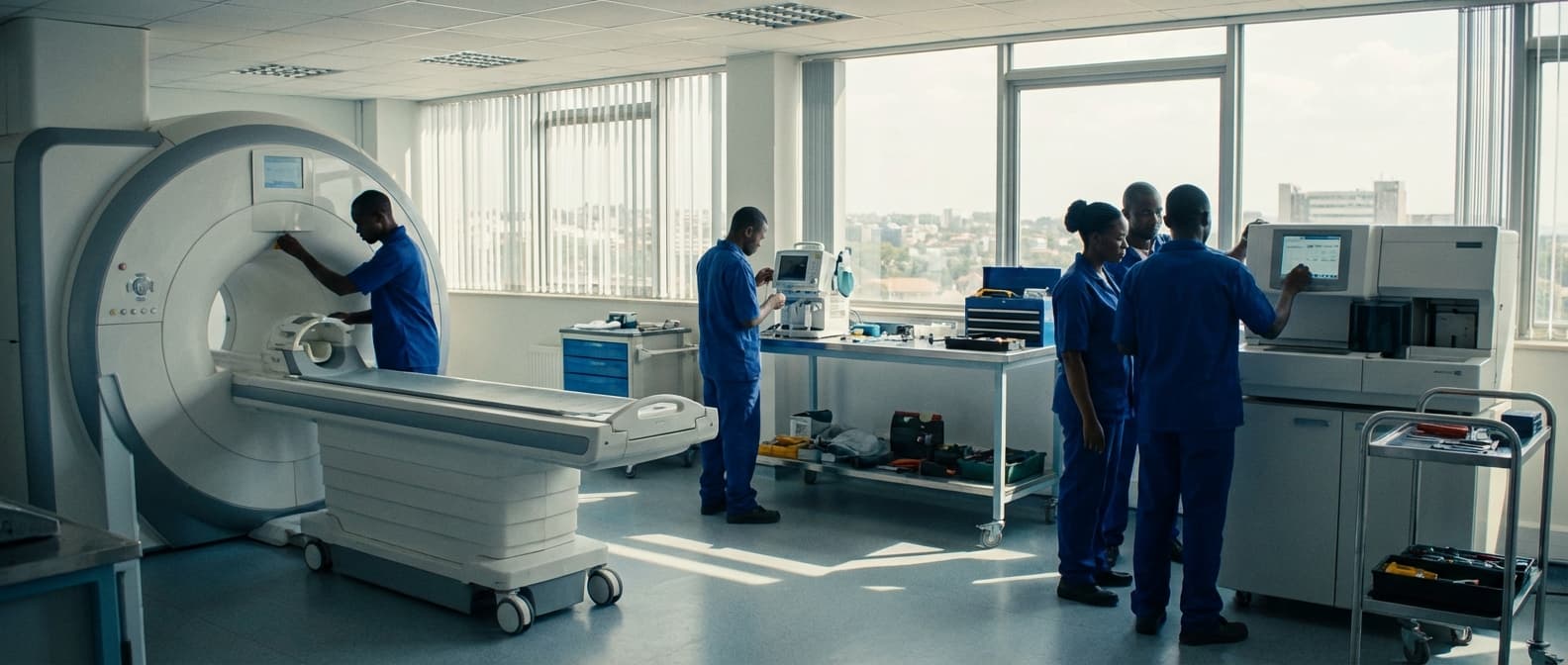
Uptime, Downtime & Root-Cause Analysis Reporting Service in Libya
Engineering Excellence & Technical Support
Uptime, Downtime & Root-Cause Analysis Reporting Service High-standard technical execution following OEM protocols and local regulatory frameworks.
Proactive Uptime Maximization
Our service continuously monitors critical Libyan infrastructure, preemptively identifying and mitigating potential disruptions before they impact service availability. Leverage our real-time dashboards to visualize uptime metrics and receive automated alerts.
Granular Downtime Tracking & Reporting
We provide precise, time-stamped data on service outages across Libya, detailing affected regions, services, and duration. Our detailed reports empower you to understand downtime impact and meet service level agreements (SLAs).
Automated Root-Cause Analysis (RCA)
Go beyond simple outage detection. Our advanced analytics engine automatically identifies the probable root cause of downtime events, correlating data from multiple sources to accelerate your incident response and prevent recurrence.
What Is Uptime, Downtime & Root-cause Analysis Reporting Service In Libya?
In the Libyan context, Uptime, Downtime & Root-Cause Analysis Reporting Service refers to a specialized offering designed to monitor, document, and investigate the operational availability and unavailability of critical IT infrastructure and business systems. Uptime denotes the period during which a system or service is operational and accessible to users. Downtime, conversely, signifies any period where a system or service is unavailable or degraded below acceptable performance thresholds. Root-Cause Analysis (RCA) is a systematic problem-solving methodology employed to identify the fundamental reasons behind a downtime event, thereby preventing recurrence. This service in Libya is crucial for organizations reliant on stable and continuous digital operations, aiming to minimize disruptions, optimize resource allocation, and enhance overall system resilience.
| Who Needs This Service? | Typical Use Cases in Libya |
|---|---|
| Telecommunications Companies: Maintaining uninterrupted voice, data, and internet services is paramount. Downtime directly impacts revenue and customer satisfaction. | Financial Institutions (Banks, Insurance): Ensuring the availability of online banking, ATM networks, trading platforms, and payment processing systems is critical for economic stability and customer trust. |
| Government Agencies & Public Services: For essential services like national registries, utility management (water, electricity), and emergency response systems, continuous operation is a matter of public safety and governance. | Oil & Gas Sector: Operations in this vital Libyan industry rely heavily on robust IT infrastructure for production monitoring, control systems, data acquisition, and logistical management. Downtime can lead to significant financial losses and safety risks. |
| Cloud Service Providers & Data Centers: Offering reliable hosting and cloud solutions requires demonstrable uptime and the ability to resolve issues rapidly. | Large Enterprises with Mission-Critical Applications: Businesses with ERP systems, CRM platforms, supply chain management software, and other core operational applications require high availability. |
| E-commerce and Online Retailers: Continuous availability is directly linked to sales volume and brand reputation in the digital marketplace. | Healthcare Providers: Maintaining access to patient records, medical imaging systems, and critical care equipment is essential for patient well-being. |
| IT Service Providers & Managed Service Providers (MSPs): Offering robust monitoring and incident management as part of their service portfolio. | Logistics and Transportation Companies: Ensuring the smooth operation of tracking systems, fleet management, and scheduling platforms. |
Key Components of the Service
- System Monitoring & Alerting: Proactive, real-time tracking of key performance indicators (KPIs) for servers, networks, applications, and cloud services. Automated alerts are triggered upon detection of anomalies or deviations from predefined service level agreements (SLAs).
- Downtime Logging & Categorization: Comprehensive recording of all service interruptions, including start/end times, affected systems, observed symptoms, and initial impact assessments. Categorization helps in identifying patterns and recurring issues.
- Incident Response Support: Facilitating swift and coordinated responses to downtime events, often involving initial diagnostics and troubleshooting steps to restore service quickly.
- Root-Cause Analysis (RCA) Execution: In-depth investigation following a downtime incident to pinpoint the originating cause. This can involve log analysis, configuration audits, performance profiling, and interviews with technical personnel.
- Reporting & Documentation: Generation of detailed reports summarizing uptime/downtime metrics, incident timelines, RCA findings, and recommended corrective and preventative actions. These reports are vital for accountability, performance review, and strategic decision-making.
- SLA Compliance Tracking: Measuring and reporting on adherence to agreed-upon service level agreements, demonstrating the reliability of IT services.
Who Needs Uptime, Downtime & Root-cause Analysis Reporting Service In Libya?
In the dynamic and often challenging operational environment of Libya, reliable infrastructure and consistent service delivery are paramount for businesses and government entities. A dedicated Uptime, Downtime & Root-Cause Analysis Reporting Service plays a critical role in ensuring operational continuity, identifying and rectifying issues promptly, and ultimately driving efficiency and resilience. This service is essential for any organization that relies on technology, networks, and critical infrastructure to function and serve its stakeholders.
| Target Customers | Relevant Departments/Roles |
|---|---|
| Telecommunications Companies | Network Operations Center (NOC), IT Operations, Service Assurance, Field Operations, Engineering |
| Oil and Gas Sector | Operations Management, IT Infrastructure Management, SCADA/Industrial Control Systems Teams, Asset Management, HSE (Health, Safety, and Environment) for operational continuity |
| Financial Institutions (Banks, Insurance) | IT Operations, Infrastructure Management, Risk Management, Compliance Department, Business Continuity Planning (BCP), Customer Support |
| Government Agencies (Energy, Utilities, Communications) | Ministry of Electricity, Ministry of Communications, Ministry of Water Resources, IT Departments, Operations Management, Public Service Delivery Units |
| Large Enterprises & Industrial Companies | IT Department, Operations Management, Facilities Management, Production Management, Supply Chain Management |
| Healthcare Providers (Hospitals, Clinics) | IT Department, Biomedical Engineering, Hospital Administration, Clinical Operations, Patient Services |
| Logistics and Transportation Companies | Operations Management, IT Infrastructure, Fleet Management, Dispatch and Scheduling, Customer Service |
Who Needs Uptime, Downtime & Root-Cause Analysis Reporting Service in Libya?
- Businesses heavily reliant on IT infrastructure for daily operations.
- Organizations managing critical infrastructure like power grids, water treatment facilities, and telecommunications networks.
- Government agencies providing essential public services.
- Companies with a significant customer base that expects continuous service availability.
- Financial institutions where downtime can lead to substantial financial losses and reputational damage.
- Telecommunications providers needing to ensure network stability and performance.
- Oil and gas companies with complex operational systems in remote locations.
- Healthcare providers where system outages can have life-threatening consequences.
- Logistics and transportation companies dependent on real-time data and communication.
- Any organization seeking to improve operational efficiency, reduce costs associated with unexpected downtime, and enhance customer satisfaction through predictable service delivery.
Uptime, Downtime & Root-cause Analysis Reporting Service Process In Libya
This document outlines the workflow for the Uptime, Downtime & Root-Cause Analysis Reporting Service provided in Libya. The service aims to help organizations understand and improve the reliability of their systems and infrastructure by systematically identifying and analyzing periods of unavailability and their underlying causes. The process begins with an initial inquiry from a client and concludes with the delivery of a comprehensive root-cause analysis report and actionable recommendations.
| Stage | Description | Key Activities | Deliverables/Outputs | Responsible Parties |
|---|---|---|---|---|
| Inquiry & Initial Consultation | The client expresses interest in the uptime, downtime, and root-cause analysis reporting service. This stage involves understanding their initial needs and the context of their operations in Libya. | Initial contact (phone, email, meeting), needs assessment, basic service overview, Q&A. | Understanding of client's challenges, preliminary service interest. | Client, Service Provider Representative |
| Service Scope Definition & Agreement | A detailed discussion to precisely define the scope of the service, including systems to be monitored, reporting frequency, specific metrics, and desired outcomes. A formal agreement is then established. | In-depth needs analysis, identification of critical assets, service level agreement (SLA) negotiation, contract finalization. | Signed Service Agreement, defined Service Level Objectives (SLOs). | Client Stakeholders, Service Provider Account Manager |
| Data Collection & Monitoring Setup | Implementing the necessary tools and processes to collect data on system uptime and downtime. This may involve deploying monitoring agents or integrating with existing monitoring solutions. | System inventory, sensor deployment, network configuration, data source integration, baseline performance establishment. | Functional monitoring system, collected baseline data. | Service Provider Technical Team, Client IT Department |
| Downtime Event Identification & Triage | Automated systems and/or manual oversight continuously monitor for any deviations from normal operating parameters, flagging potential downtime events. | Real-time monitoring, alert generation, initial event validation, classification of downtime severity. | Downtime alerts, preliminary event logs. | Service Provider Monitoring Team, Automated Systems |
| Data Analysis & Root-Cause Investigation | Once a downtime event is confirmed, a thorough investigation is launched to pinpoint the exact cause. This involves analyzing logs, system metrics, configuration changes, and potentially interviewing relevant personnel. | Log analysis, performance metric review, correlation of events, infrastructure diagnostics, impact assessment, identification of contributing factors. | Detailed event logs, performance data analysis reports, initial root cause hypotheses. | Service Provider Analysts, Client Subject Matter Experts (SMEs) |
| Report Generation & Validation | A comprehensive report is compiled detailing the downtime event, the investigation process, the identified root cause(s), and the impact on operations. This report is then reviewed for accuracy and completeness. | Report drafting (including timelines, affected systems, cause, impact), data verification, cross-referencing with incident logs, internal review. | Draft Root-Cause Analysis (RCA) Report. | Service Provider Analysts, Service Provider Quality Assurance |
| Presentation & Recommendation Delivery | The final RCA report is presented to the client. This stage includes explaining the findings, discussing the implications, and providing actionable recommendations for preventing future occurrences and improving system resilience. | Formal presentation of RCA report, discussion of findings, explanation of recommendations, Q&A session. | Final RCA Report, Presentation Deck, Actionable Recommendations List. | Service Provider Lead Analyst, Client Management & Technical Teams |
| Follow-up & Continuous Improvement | The service provider may offer ongoing support to help the client implement the recommendations. This stage also involves gathering feedback to refine the service and improve future reporting. | Assistance with recommendation implementation (optional), periodic review of system performance post-implementation, feedback collection, service improvement planning. | Implementation support (if agreed), updated performance metrics, service improvement plan. | Service Provider Account Manager, Client Stakeholders |
Service Workflow Stages
- Inquiry & Initial Consultation
- Service Scope Definition & Agreement
- Data Collection & Monitoring Setup
- Downtime Event Identification & Triage
- Data Analysis & Root-Cause Investigation
- Report Generation & Validation
- Presentation & Recommendation Delivery
- Follow-up & Continuous Improvement
Uptime, Downtime & Root-cause Analysis Reporting Service Cost In Libya
Providing robust uptime, downtime, and root-cause analysis (RCA) reporting services in Libya involves a range of pricing factors that dictate the final cost. These services are crucial for businesses to ensure operational continuity, identify and resolve issues promptly, and ultimately improve system reliability. The cost is not a fixed figure but rather a dynamic calculation based on several key elements. Libyan businesses looking to procure these services should consider these factors when budgeting and evaluating proposals. The local currency, the Libyan Dinar (LYD), will be used for all pricing discussions.
| Service Component | Typical Pricing Range (LYD per month) | Notes |
|---|---|---|
| Basic Uptime/Downtime Monitoring & Reporting (e.g., website, single server) | 500 - 2,000 | Covers essential monitoring and basic weekly/monthly reports. Limited analysis. |
| Intermediate Uptime/Downtime Monitoring & RCA (e.g., multiple servers, critical applications) | 2,000 - 7,500 | Includes more systems, deeper RCA, daily/weekly reporting, and faster alerts. |
| Advanced Uptime/Downtime Monitoring & Comprehensive RCA (e.g., complex infrastructure, cloud, database clusters) | 7,500 - 25,000+ | Full-spectrum monitoring, in-depth forensic RCA, real-time dashboards, dedicated support, and customized reporting. |
| On-site RCA Investigations (per incident/day) | 1,500 - 5,000+ | This is an additional cost for physical presence and hands-on investigation, highly dependent on complexity and location within Libya. |
| Custom Dashboard & KPI Development | 1,000 - 4,000 (one-time or recurring) | Cost varies based on complexity and integration needs. |
| Managed Service & 24/7 Support Add-on | 1,000 - 5,000+ (monthly) | Often a percentage of the base service cost or a tiered fee for dedicated support. |
Key Pricing Factors for Uptime, Downtime & Root-Cause Analysis Reporting Services in Libya
- Scope and Complexity of Services: The breadth of services required significantly impacts cost. This includes the number of systems to be monitored, the depth of analysis needed (e.g., basic reporting vs. in-depth forensic analysis), and the complexity of the infrastructure (e.g., on-premises, cloud, hybrid).
- Frequency and Granularity of Reporting: The more frequent and detailed the reports are (e.g., real-time monitoring vs. daily, weekly, or monthly reports), the higher the cost will be. The level of detail in the RCA reports also plays a role.
- Technology Stack and Integration: The existing technology infrastructure of the client and the need for integration with specific monitoring tools or platforms will influence pricing. Using proprietary or complex systems might incur additional costs.
- Data Volume and Retention: The amount of data generated by monitoring and analysis, as well as the required data retention period, can affect storage and processing costs, which are then passed on.
- Level of Customization: Standardized reporting packages are generally less expensive than highly customized solutions tailored to a company's specific needs and KPIs.
- Service Provider Expertise and Reputation: Experienced and reputable service providers with a proven track record in Libya may command higher prices due to their reliability, efficiency, and specialized knowledge.
- Support Levels and Response Times: The availability of 24/7 support, guaranteed response times for critical incidents, and the availability of on-site support will all contribute to the overall cost.
- Geographic Location and Infrastructure: While less of a direct factor for remote services, if on-site presence is required for initial setup or complex investigations, the cost of travel and local logistical arrangements within Libya will be considered.
- Number of Users/Access Levels: The number of individuals within an organization requiring access to the reporting platform and its features can influence licensing and subscription fees.
- Security and Compliance Requirements: Stricter security protocols and adherence to specific Libyan or international compliance standards may necessitate more advanced tools and processes, increasing costs.
Affordable Uptime, Downtime & Root-cause Analysis Reporting Service Options
Our service offers comprehensive uptime, downtime, and root-cause analysis reporting designed to be both effective and budget-friendly. We understand that maintaining high availability is critical for businesses of all sizes, and that's why we've structured our offerings with value and cost-efficiency in mind. By leveraging our specialized expertise and streamlined processes, we provide actionable insights to minimize disruptions and optimize your system performance without breaking the bank. We offer flexible value bundles and strategic cost-saving options to ensure you receive the best possible return on your investment.
| Value Bundle | Description | Included Services | Monthly Cost (Example) | Cost-Saving Strategies |
|---|---|---|---|---|
| Essential Monitoring | Basic uptime and downtime tracking with essential reporting. | Real-time uptime monitoring, basic downtime alerts, daily summary reports. | $49 | Annual prepayment discount (10%). Bundled with other IT services. |
| Advanced Analysis | Comprehensive monitoring with detailed root-cause analysis for identified issues. | All Essential Monitoring features + weekly incident reports, basic root-cause analysis, performance trend insights. | $99 | Quarterly prepayment discount (5%). Focus on critical systems first. |
| Enterprise Solution | Full-spectrum monitoring, deep-dive root-cause analysis, and proactive recommendations for critical infrastructure. | All Advanced Analysis features + 24/7 proactive monitoring, in-depth RCA for complex issues, monthly strategic review meetings, custom report generation. | $249+ | Customized pricing for high volume/complexity, multi-year contracts (negotiable discounts), integration with existing IT support. |
| Ad-Hoc RCA | On-demand, deep-dive root-cause analysis for specific, critical incidents. | Dedicated RCA investigation, detailed report with corrective actions, post-incident review. | Priced per incident (e.g., starting at $199 per RCA) | Pre-purchased RCA packages for discounted rates. Leverage internal IT for initial data gathering. |
Key Service Features
- Real-time uptime and downtime monitoring
- Automated alert notifications
- Detailed downtime incident reports
- In-depth root-cause analysis for recurring issues
- Proactive performance trend identification
- Customizable reporting dashboards
- 24/7 support for critical incidents
- Scalable solutions to grow with your business
Verified Providers In Libya
In the complex and often challenging landscape of healthcare in Libya, identifying trusted and accredited medical facilities and practitioners is paramount. Franance Health has emerged as a leading credentialing body, committed to upholding the highest standards of quality, safety, and ethical practice. Their rigorous verification process ensures that healthcare providers not only meet regulatory requirements but also demonstrate a consistent commitment to patient well-being and advanced medical care. Choosing a Franance Health verified provider offers patients peace of mind and confidence in the expertise and reliability of the services they receive.
| Provider Type | Franance Health Verification Benefits | Why This is the Best Choice for Patients |
|---|---|---|
| Hospitals | Adherence to international standards for patient care, infection control, and advanced surgical capabilities. Qualified medical staff and robust emergency response systems. | Access to comprehensive medical services, specialized treatments, and a safe, well-equipped environment for complex medical procedures and recovery. |
| Clinics | Stringent review of diagnostic equipment, treatment protocols, and practitioner qualifications. Emphasis on preventive care and patient education. | Reliable access to primary and specialized outpatient care, accurate diagnoses, and personalized treatment plans from competent and ethical professionals. |
| Specialty Centers (e.g., Cardiology, Oncology) | Verification of advanced technology, highly specialized medical teams, and evidence-based treatment pathways. Strong focus on research and innovation. | Receiving care from leading experts in their respective fields, utilizing cutting-edge treatments and technologies for the best possible outcomes in complex conditions. |
| Individual Medical Practitioners | Thorough vetting of educational background, professional licenses, continuous medical education, and ethical standing. Peer review and performance evaluation. | Confidence in receiving expert medical advice and treatment from highly qualified and ethical doctors and specialists. |
Why Franance Health Credentials Matter for Libyan Healthcare Providers:
- Unwavering Commitment to Quality: Franance Health's verification process scrutinizes every aspect of a provider's operations, from clinical protocols and staff qualifications to patient care outcomes and facility infrastructure.
- Enhanced Patient Safety: By adhering to stringent safety standards and best practices, verified providers significantly reduce the risk of medical errors and adverse events, prioritizing patient security.
- Demonstrated Expertise and Competence: The credentialing process validates the skills, knowledge, and experience of medical professionals, ensuring they are equipped to handle a wide range of medical needs.
- Ethical Practice and Patient Rights: Franance Health emphasizes ethical conduct, patient confidentiality, and respect for patient rights, fostering a trustworthy healthcare environment.
- Access to Advanced Medical Solutions: Verified providers are more likely to invest in and utilize state-of-the-art medical technology and treatment modalities, offering patients access to the latest advancements in healthcare.
- Improved Patient Outcomes: The comprehensive nature of Franance Health's verification contributes to better diagnostic accuracy, more effective treatment plans, and ultimately, improved health outcomes for patients.
Scope Of Work For Uptime, Downtime & Root-cause Analysis Reporting Service
This Scope of Work outlines the services provided for Uptime, Downtime, and Root-Cause Analysis (RCA) Reporting. The service aims to provide comprehensive insights into system availability, pinpointing periods of unscheduled downtime and conducting thorough investigations to identify the underlying causes. The technical deliverables and standard specifications are detailed below.
| Deliverable/Component | Description | Standard Specifications/Metrics | Format |
|---|---|---|---|
| Uptime Percentage Report | Monthly reporting on the percentage of time systems were operational and available. | Minimum 99.9% uptime target for critical systems (defined in SLA). Measured against agreed-upon system availability windows. Reporting period: Monthly. Seasonality adjustments as agreed. | PDF, CSV |
| Downtime Incident Log | Detailed record of all unscheduled downtime events, including timestamps, duration, and affected services. | Each incident logged with: Incident ID, Start Timestamp, End Timestamp, Duration (HH:MM:SS), Affected System/Service, Initial Impact Assessment, Status (Open/Closed). | CSV, JSON |
| Root-Cause Analysis (RCA) Report | In-depth analysis of significant downtime events to identify the fundamental cause. | For each RCA: Incident ID, Problem Statement, Timeline of Events, Causal Factors (Root Cause Identification), Impact Analysis, Corrective Actions Taken, Preventative Actions Recommended, Lessons Learned. RCA conducted for downtime exceeding a defined threshold (e.g., 30 minutes) or for critical incidents. | |
| Proactive Recommendations Report | Actionable recommendations to prevent recurrence of identified root causes. | Consolidated list of recommendations from multiple RCA reports, prioritized by impact and feasibility. Includes estimated effort and potential benefits. | PDF, Spreadsheet |
| Performance Metrics Dashboard (Optional) | Visual representation of uptime, downtime trends, and key performance indicators. | Key metrics displayed include: Monthly Uptime %, Downtime Incidents by Category, Mean Time Between Failures (MTBF), Mean Time To Repair (MTTR). Refresh rate: Daily/Weekly. | Web-based dashboard (URL provided) |
| Post-Incident Review Meeting | Facilitated discussion of RCA findings and proposed corrective actions. | Meeting to be scheduled within 3 business days of RCA report finalization. Attendees: Relevant stakeholders from client and service provider. Agenda: Review RCA findings, discuss corrective/preventative actions, assign responsibilities. | Virtual Meeting (e.g., Zoom, Teams) |
Key Service Components
- Uptime Monitoring and Reporting
- Downtime Incident Capture and Tracking
- Root-Cause Analysis (RCA) Investigation
- RCA Report Generation
- Proactive Recommendation Development
Service Level Agreement For Uptime, Downtime & Root-cause Analysis Reporting Service
This Service Level Agreement (SLA) outlines the commitments regarding the availability, performance, and reporting of the Root-Cause Analysis (RCA) service. It defines the responsibilities of both the service provider and the customer to ensure a high level of service delivery and transparency.
| Service Component | Uptime Guarantee | Downtime Notification | RCA Report Response Time (Critical Incidents) | RCA Report Response Time (Major Incidents) |
|---|---|---|---|---|
| RCA Service Platform Availability | 99.95% per Measurement Period | Notification within 30 minutes of detection | Not Applicable | Not Applicable |
| RCA Report Generation & Delivery | Not directly applicable (dependent on incident resolution) | Notification of significant delay within 4 hours of incident closure | Initial Draft Report within 8 business hours of incident closure | Initial Draft Report within 24 business hours of incident closure |
Key Definitions
- Uptime: The percentage of time during a Measurement Period that the RCA service is fully operational and accessible.
- Downtime: The percentage of time during a Measurement Period that the RCA service is unavailable or significantly degraded, preventing normal operation. This includes scheduled maintenance.
- Measurement Period: A calendar month.
- Service Provider: The entity responsible for providing and maintaining the RCA service.
- Customer: The entity utilizing the RCA service.
- Root-Cause Analysis (RCA) Report: A document detailing the identified root cause of an incident, contributing factors, impact, and proposed remediation steps.
- Critical Incident: An incident that causes a significant disruption to the Customer's business operations or impacts a large number of users.
Frequently Asked Questions

Ready when you are
Let's scope your Uptime, Downtime & Root-Cause Analysis Reporting Service in Libya project in Libya.

Scaling healthcare logistics and technical systems across the entire continent.