
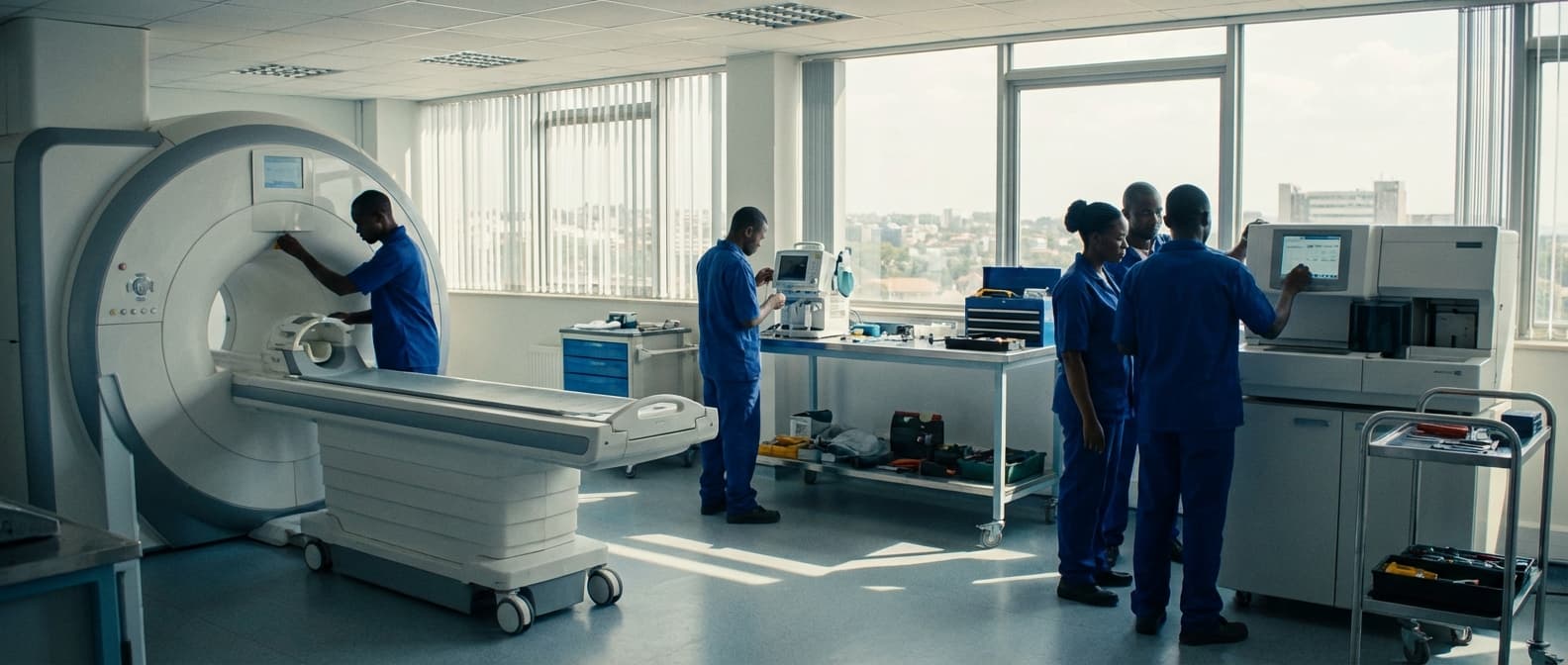
PPM Scheduling & Compliance Reporting Service in Libya
Engineering Excellence & Technical Support
PPM Scheduling & Compliance Reporting Service High-standard technical execution following OEM protocols and local regulatory frameworks.
Optimized Project Timelines & Resource Allocation
Leverage advanced PPM scheduling tools to create dynamic, realistic project timelines. Our service identifies critical path activities, predicts resource bottlenecks, and recommends optimal allocation strategies to ensure on-time project delivery and maximize resource utilization across your Libyan operations.
Real-time Compliance Monitoring & Risk Mitigation
Gain unparalleled visibility into project adherence with our automated compliance reporting. We track progress against regulatory requirements, contractual obligations, and internal standards, proactively flagging deviations and enabling swift risk mitigation to safeguard your projects in the Libyan context.
Streamlined Reporting & Stakeholder Transparency
Generate comprehensive, customizable PPM reports tailored for Libyan stakeholders. Our service automates data aggregation from various sources, providing clear insights into project performance, budget status, and compliance levels. Foster transparency and informed decision-making with accessible, data-driven narratives.
What Is Ppm Scheduling & Compliance Reporting Service In Libya?
PPM Scheduling & Compliance Reporting Service in Libya refers to a specialized set of offerings focused on managing Planned Preventive Maintenance (PPM) schedules and ensuring adherence to relevant Libyan regulations and standards. This service is crucial for asset-intensive industries and organizations operating within the Libyan economic landscape to optimize asset lifespan, minimize operational disruptions, maintain safety, and avoid penalties associated with non-compliance. The service encompasses the strategic planning, scheduling, execution, and rigorous documentation of maintenance activities designed to prevent equipment failure and ensure operational continuity. It integrates technical expertise with a deep understanding of Libyan legal frameworks, environmental regulations, and industry-specific compliance requirements.
| Who Needs This Service? | Typical Use Cases |
|---|---|
| Oil and Gas Sector: Companies involved in upstream, midstream, and downstream operations, including exploration, production, refining, and petrochemical facilities. | Ensuring the reliability and safety of critical equipment such as pumps, compressors, turbines, pipelines, and processing units. Compliance with environmental regulations and safety standards for hazardous facilities. |
| Power Generation and Utilities: Operators of power plants (thermal, renewable), water treatment facilities, and distribution networks. | Maintaining the operational integrity of generators, boilers, transformers, switchgear, and distribution infrastructure. Meeting stringent uptime requirements and environmental discharge limits. |
| Industrial Manufacturing: Facilities with heavy machinery, automated production lines, and complex process equipment. | Preventing unscheduled downtime on production lines, ensuring product quality, and maintaining the lifespan of expensive capital equipment. Adherence to occupational health and safety regulations. |
| Infrastructure and Transportation: Operators of airports, ports, railway systems, and major road networks. | Ensuring the continuous and safe operation of essential infrastructure components, including air traffic control systems, port cranes, railway signaling, and road maintenance equipment. Compliance with national safety and operational standards. |
| Public and Private Sector Organizations: Any entity with significant fixed assets requiring regular maintenance and adherence to specific regulatory frameworks. | Managing the lifecycle and operational readiness of buildings, HVAC systems, IT infrastructure, and specialized equipment within government facilities or large corporations. |
Key Components of PPM Scheduling & Compliance Reporting Service
- Asset Inventory and Risk Assessment: Comprehensive cataloging of all operational assets, coupled with a risk-based assessment to prioritize maintenance activities and identify critical equipment.
- PPM Strategy Development: Designing tailored PPM plans based on manufacturer recommendations, operating conditions, regulatory mandates, and historical performance data.
- Schedule Optimization: Developing efficient and optimized maintenance schedules, considering resource availability (labor, parts, equipment), operational downtime, and cost-effectiveness.
- Work Order Management: Generation, distribution, and tracking of PPM work orders, ensuring clarity of scope, required resources, and expected outcomes.
- Execution Oversight: Monitoring and supervising the execution of PPM tasks by in-house teams or third-party contractors, ensuring adherence to best practices and safety protocols.
- Compliance Verification: Auditing and verifying that all maintenance activities meet or exceed Libyan regulatory requirements, industry standards (e.g., ISO, API where applicable), and contractual obligations.
- Documentation and Record-Keeping: Meticulous recording of all maintenance activities, including dates, personnel involved, parts used, readings, test results, and any deviations from the plan.
- Reporting and Analytics: Generating detailed reports on PPM completion rates, asset performance, maintenance costs, compliance status, and identifying areas for improvement. This often includes periodic compliance reports submitted to regulatory bodies.
- Corrective Action Management: Establishing processes for addressing any deficiencies or non-compliance issues identified during PPM execution or audits.
- Regulatory Liaison: Facilitating communication and reporting with Libyan regulatory authorities as required.
Who Needs Ppm Scheduling & Compliance Reporting Service In Libya?
In Libya's dynamic and evolving economic landscape, ensuring the efficient management of assets, projects, and operational workflows is paramount for success. A comprehensive PPM (Project Portfolio Management) Scheduling & Compliance Reporting Service plays a crucial role in achieving this by providing structured planning, execution oversight, and adherence to regulatory and internal standards. This service is vital for organizations that need to optimize resource allocation, track progress effectively, and maintain transparency and accountability in their operations.
| Target Customer Segment | Key Departments Benefiting |
|---|---|
| Oil & Gas Sector | Project Management Offices (PMOs), Engineering Departments, Operations, Maintenance, HSE (Health, Safety, and Environment), Finance, Procurement, Compliance/Regulatory Affairs. |
| Construction & Infrastructure | Project Management Offices (PMOs), Engineering & Design, Site Operations, Procurement, Quality Control, Finance, Legal & Contracts, Government Liaison Departments. |
| Telecommunications | Network Planning & Engineering, Project Management Offices (PMOs), Operations & Maintenance, IT Departments, Regulatory Affairs, Finance, Customer Experience. |
| Energy (Renewable & Traditional) | Project Management Offices (PMOs), Engineering & Design, Operations & Maintenance, Asset Management, Finance, Procurement, Environmental Compliance, Regulatory Affairs. |
| Government & Public Sector | Planning & Development Ministries, Public Works Departments, Transportation Authorities, Energy Ministries, Finance Ministries, Procurement Agencies, Oversight & Audit Departments. |
| Manufacturing & Industrial | Production Planning, Operations Management, Engineering, Maintenance Departments, Project Management Offices (PMOs), Quality Assurance, Supply Chain, Finance. |
| Banking & Financial Services (for large-scale IT or infrastructure projects) | IT Project Management, Operations, Risk Management, Compliance Departments, Facilities Management. |
| Aviation & Transportation | Fleet Management, Operations Planning, Maintenance & Engineering, Project Management Offices (PMOs), Safety & Compliance Departments, Infrastructure Development. |
Who Needs PPM Scheduling & Compliance Reporting Service in Libya? (Target Customers & Departments)
- Organizations with significant capital expenditure projects.
- Companies operating in regulated industries.
- Government entities and public sector organizations.
- Businesses with a decentralized or geographically dispersed operational footprint.
- Entities undergoing digital transformation or major operational changes.
- Companies prioritizing risk management and operational efficiency.
Ppm Scheduling & Compliance Reporting Service Process In Libya
The PPM Scheduling & Compliance Reporting Service Process in Libya outlines the systematic workflow for ensuring compliance with Planned Preventive Maintenance (PPM) schedules and generating accurate reports. This process is crucial for asset reliability, operational efficiency, and adherence to regulatory requirements within the Libyan context. It begins with an initial inquiry and culminates in the successful execution and reporting of PPM tasks.
| Stage | Description | Key Activities | Deliverables | Libyan Context Considerations |
|---|---|---|---|---|
| Initial contact from a client seeking PPM scheduling and compliance reporting services. | Client expresses need, provides basic asset information, and requests proposal. | Service request received, initial contact established. | Leverage local contacts and established communication channels. Understand client's existing systems and potential regulatory bodies. |
| Detailed understanding of the client's assets, operational environment, and compliance needs. | Site visits (if feasible), asset inventory review, identification of critical equipment, understanding regulatory frameworks (e.g., Libyan standards, international best practices adopted locally). | Detailed scope of work, asset register, identified compliance requirements. | Logistical challenges for site visits, potential language barriers, specific Libyan regulations influencing PPM requirements. |
| Creation of a comprehensive and optimized PPM schedule based on manufacturer recommendations, operational criticality, and regulatory mandates. | Analyzing asset data, determining maintenance frequencies, defining task lists, prioritizing maintenance activities, incorporating weather/environmental factors relevant to Libya. | Master PPM schedule, individual asset maintenance plans. | Consideration of seasonal variations in Libya (e.g., heat, dust storms) that might impact maintenance schedules or require specific protective measures. |
| Assigning qualified personnel, tools, equipment, and materials to execute the PPM schedule. | Identifying skilled technicians, procuring necessary parts and consumables, planning logistics for remote sites, scheduling workforce availability. | Resource allocation plan, procurement orders, technician deployment schedule. | Availability of specialized tools and spare parts locally or through import. Potential delays in customs clearance. Securing local workforce with relevant certifications. |
| Performing scheduled preventive maintenance activities on client assets. | Conducting inspections, lubrication, adjustments, cleaning, minor repairs, calibration as per the defined schedule and procedures. | Completed PPM tasks, work orders signed off. | Ensuring technician safety in potentially challenging environments. Working around operational schedules that may differ in Libya. |
| Recording all executed PPM tasks, findings, and measurements accurately. | Completing work orders, documenting observations, taking photos/videos of findings, recording parts used, noting any deviations from the plan. | Detailed maintenance logs, inspection reports, completed work order forms. | Ensuring consistent data format and accuracy despite potential infrastructure limitations. Potential for using mobile data collection tools if connectivity allows. |
| Generating reports that demonstrate adherence to PPM schedules and regulatory requirements. | Compiling data from maintenance logs, generating summary reports, highlighting completed tasks, identifying overdue tasks, and summarizing compliance status against defined KPIs. | PPM compliance reports, performance dashboards, exception reports. | Reporting formats that meet Libyan regulatory authority expectations. Need for clear and concise reporting in Arabic or bilingual formats. |
| Analyzing reported data to identify trends, potential issues, and areas for improvement. | Reviewing maintenance effectiveness, analyzing failure patterns, identifying recurring problems, assessing cost-effectiveness of PPM activities. | Analysis reports, identified trends, performance insights. | Understanding local operational context and its impact on equipment lifespan and failure modes. Identifying common failure modes for equipment operating in Libyan conditions. |
| Implementing recommendations arising from the review and analysis phase. | Developing and executing corrective maintenance plans, updating PPM schedules, recommending equipment upgrades or replacements, refining maintenance procedures. | Action plans for improvements, updated schedules and procedures. | Sourcing and integrating approved corrective measures that are compatible with local infrastructure and supply chains. |
| Securely storing all PPM-related documentation for future reference and audits. | Organizing and filing all work orders, reports, and historical data, ensuring data integrity and accessibility, adhering to any local data retention policies. | Organized and accessible archive of PPM records. | Ensuring compliance with any Libyan data privacy and retention laws. Consideration for physical storage solutions in areas with limited digital infrastructure. |
PPM Scheduling & Compliance Reporting Service Process Workflow in Libya
- Inquiry & Service Request
- Scope Definition & Assessment
- PPM Schedule Development
- Resource Allocation & Planning
- Execution of PPM Tasks
- Data Collection & Documentation
- Compliance Reporting
- Review & Analysis
- Corrective Actions & Optimization
- Record Archiving & Management
Ppm Scheduling & Compliance Reporting Service Cost In Libya
The cost of PPM (Project Portfolio Management) Scheduling & Compliance Reporting services in Libya can vary significantly based on several key factors. These factors influence the overall investment required for organizations to effectively manage their project portfolios and ensure adherence to regulatory and internal compliance standards. The local currency in Libya is the Libyan Dinar (LYD).
| Service Component | Estimated Cost Range (LYD) | Notes |
|---|---|---|
| PPM Software Licensing (Annual Subscription - SaaS) | 2,000 - 15,000+ | Varies significantly by vendor, features, and number of users. |
| PPM Software Licensing (Perpetual - One-time) | 10,000 - 50,000+ | Less common for newer cloud-based solutions; typically includes annual maintenance fees. |
| Implementation & Configuration Services | 5,000 - 30,000+ | Depends on customization, complexity, and consultant rates. Can be a substantial one-time cost. |
| Integration with Existing Systems | 3,000 - 20,000+ | Cost is dependent on the number and complexity of systems to be integrated. |
| User Training | 500 - 5,000+ | Per user or per session, depending on the depth and scope of training. |
| Ongoing Support & Maintenance (Annual) | 1,000 - 7,000+ | Typically a percentage of the software license cost, or a separate support package. |
| Custom Reporting Development | 1,000 - 10,000+ | For highly specific or complex compliance reports. |
| Consulting for Compliance Strategy | 2,000 - 15,000+ | If specialized expertise is needed to define compliance frameworks. |
| Data Migration Services | 500 - 5,000+ | Dependent on the volume and complexity of data to be migrated. |
Key Pricing Factors for PPM Scheduling & Compliance Reporting Services in Libya
- Scope and Complexity of Projects: Larger, more complex, and numerous projects within a portfolio will inherently require more sophisticated scheduling and reporting capabilities. This includes managing interdependencies, resource allocation across multiple projects, and risk assessment.
- Customization Requirements: Off-the-shelf PPM software might not fully meet specific organizational needs. The level of customization required for workflows, reporting templates, and integrations with existing systems will impact costs.
- Software Licensing Model: PPM solutions are typically offered through various licensing models, including perpetual licenses (one-time purchase) or subscription-based models (SaaS - Software as a Service). SaaS models usually involve recurring monthly or annual fees.
- Implementation and Integration Services: The cost of deploying the PPM software, configuring it to organizational processes, and integrating it with other enterprise systems (e.g., ERP, HRIS) is a significant component. This often involves professional services from vendors or specialized consultants.
- Training and Support: The level of training provided to end-users and administrators, along with ongoing technical support and maintenance, will add to the overall cost. Support packages can range from basic to premium.
- Reporting Complexity and Automation: The demand for detailed, automated, and real-time compliance reports will influence the investment. Generating customized dashboards, compliance audits, and exception reporting can be resource-intensive.
- Vendor Expertise and Reputation: Established vendors with a proven track record in the Libyan market or with expertise in the relevant industry might command higher prices due to their reliability and understanding of local nuances.
- Number of Users: The licensing costs are often tiered based on the number of users who will access the PPM system. A larger user base will naturally incur higher licensing fees.
- Data Migration: If an organization is migrating from an existing system or manual processes, the effort and tools required for data migration will contribute to the overall cost.
- Local Regulations and Compliance Standards: Libya's specific regulatory environment and the complexity of compliance requirements will necessitate tailored reporting features and potentially specialized consulting, impacting costs.
Affordable Ppm Scheduling & Compliance Reporting Service Options
Finding an affordable service for Planned Preventative Maintenance (PPM) scheduling and compliance reporting is crucial for businesses to avoid costly breakdowns, maintain operational efficiency, and adhere to regulatory standards. This service helps organizations proactively manage their assets, ensuring they are maintained according to a predetermined schedule. This prevents unexpected failures, extends equipment lifespan, and avoids potential fines for non-compliance. Understanding value bundles and implementing cost-saving strategies can make these essential services accessible to businesses of all sizes.
| Value Bundle Option | Key Features Included | Target User/Benefit | Estimated Cost Range (Monthly) |
|---|---|---|---|
| Basic Maintenance Tracking | Core PPM scheduling, basic work order management, simple asset register, standard reporting. | Small businesses, startups, organizations with limited asset portfolios, focus on essential scheduling. | $50 - $200 |
| Standard Compliance Focus | All Basic features plus enhanced compliance monitoring (specific regulations), detailed reporting, mobile access for technicians. | SMEs, businesses in regulated industries, organizations needing to demonstrate compliance. | $150 - $500 |
| Advanced Asset Management & Integration | All Standard features plus advanced analytics, predictive maintenance capabilities (if applicable), API integration with other systems, customized reporting. | Larger enterprises, organizations with complex asset networks, businesses seeking operational optimization and integration. | $400 - $1500+ |
| Fully Managed Service | Includes software, dedicated account manager, outsourced scheduling and reporting, compliance assurance. | Organizations lacking internal resources, businesses prioritizing a hands-off approach to maintenance management. | Customized (typically higher than software-only options) |
Key Components of PPM Scheduling & Compliance Reporting Services
- PPM Scheduling Software/Platform: Digital tools to plan, track, and manage maintenance tasks.
- Work Order Management: Creation, assignment, and tracking of maintenance tasks.
- Asset Register: Comprehensive database of all maintainable assets.
- Compliance Monitoring: Tracking adherence to relevant regulations and industry standards.
- Reporting & Analytics: Generation of reports on maintenance activities, asset performance, and compliance status.
- Mobile Access: Allowing technicians to access and update work orders in the field.
- Integration Capabilities: Connecting with existing ERP, IoT, or building management systems.
Verified Providers In Libya
In Libya, ensuring access to reliable and qualified healthcare providers is paramount. When seeking medical services, especially those requiring specialized expertise, identifying verified providers is crucial for patient safety and effective treatment. This document outlines the significance of verified providers in Libya and highlights why Franance Health stands out as a leading choice due to its rigorous credentialing processes and commitment to quality care.
| Franance Health's Commitment to Verification | Key Credentials and Standards | Benefits for Patients |
|---|---|---|
| Franance Health's stringent verification process goes beyond basic licensing. | Medical Licensure & Board Certifications: All practitioners hold valid Libyan medical licenses and relevant board certifications. | Peace of Mind: Knowing your provider is rigorously vetted reduces anxiety about the quality of care. |
| We meticulously vet all healthcare professionals associated with our network. | Professional Experience: We assess the depth and breadth of a provider's clinical experience and specialization. | Access to Expertise: Connect with highly skilled and experienced doctors and specialists. |
| Our commitment ensures that only qualified and ethical practitioners are listed. | Continuous Professional Development: We encourage and monitor ongoing training and education for our providers. | Improved Health Outcomes: Benefit from the latest medical knowledge and treatment approaches. |
| This dedication to quality translates directly into superior patient care. | Ethical Practice & Patient Feedback: We uphold high ethical standards and incorporate patient feedback into our evaluation. | Trustworthy Healthcare: Franance Health is a reliable source for finding dependable medical professionals. |
| Choosing Franance Health means choosing assurance and excellence in healthcare. | Specialized Training & Sub-specialties: Verification of specific training in various medical sub-specialties. | Comprehensive Care: Find providers for your exact medical needs, from general practitioners to highly specialized surgeons. |
Why Verified Providers Matter in Libya:
- Patient Safety: Verification confirms that healthcare professionals meet established standards of education, training, and ethical conduct, minimizing risks.
- Quality of Care: Verified providers are more likely to deliver competent and effective medical services, leading to better patient outcomes.
- Trust and Confidence: Patients can have greater confidence in their healthcare decisions when they know their providers have undergone a thorough vetting process.
- Regulatory Compliance: Verification often aligns with national healthcare regulations, ensuring providers operate within legal and ethical frameworks.
- Access to Specialized Services: For complex medical needs, verified specialists offer the assurance of expertise and up-to-date knowledge.
Scope Of Work For Ppm Scheduling & Compliance Reporting Service
This Scope of Work (SOW) outlines the requirements for the PPM Scheduling & Compliance Reporting Service. The service provider will be responsible for developing, implementing, and maintaining a robust project portfolio management (PPM) scheduling system and providing comprehensive compliance reporting. This includes defining technical deliverables and adhering to standard specifications to ensure efficient project execution and regulatory adherence.
| Technical Deliverable | Description | Standard Specifications/Requirements | Acceptance Criteria |
|---|---|---|---|
| PPM Scheduling Software Platform | Configurable software for project planning, scheduling, resource management, and portfolio visualization. | Must support multi-project environments, Gantt charts, critical path analysis, dependency mapping, and customizable dashboards. Adherence to ISO 27001 for data security. Compatibility with current IT infrastructure (e.g., cloud-based, on-premise). | Successful deployment of the platform, demonstration of all core scheduling functionalities, and achievement of a 99.9% uptime SLA. |
| Real-time Project Status Dashboard | Interactive dashboard providing live updates on project progress, milestones, and key performance indicators (KPIs). | Visual representation of project health (e.g., RAG status), budget vs. actual spend, resource utilization, and upcoming deadlines. Configurable to user roles and permissions. Built on industry-standard visualization libraries. | Dashboard accurately reflects project data, updates in real-time (within 5 minutes of data entry), and meets defined KPI display requirements. |
| Resource Allocation & Management Module | Module for assigning, tracking, and forecasting resource needs across the project portfolio. | Ability to manage resource skills, availability, and allocation percentages. Support for capacity planning and identification of resource constraints. Integration with HR systems where feasible. | Accurate reflection of resource assignments, timely alerts for over-allocation, and generation of resource utilization reports. |
| Risk & Issue Management Framework | System to identify, assess, track, and manage project risks and issues. | Tools for risk scoring (probability/impact), mitigation planning, ownership assignment, and status tracking. Automated escalation for critical risks. Adherence to standard risk management methodologies (e.g., PMI). | Comprehensive risk register populated and updated regularly, clear mitigation plans documented, and successful demonstration of risk escalation workflows. |
| Automated Compliance Reporting Engine | Software component to generate predefined and ad-hoc compliance reports based on project data and regulatory requirements. | Support for various compliance frameworks (e.g., GDPR, SOX, industry-specific regulations). Customizable report templates and automated report generation schedules. Audit trail of all data modifications relevant to compliance. | Generation of accurate and auditable compliance reports within the specified timelines, meeting all requirements of the designated frameworks. |
| Data Integration APIs | Application Programming Interfaces (APIs) for seamless integration with other enterprise systems (e.g., ERP, CRM, time-tracking tools). | Well-documented RESTful APIs adhering to OpenAPI specifications. Secure authentication and authorization mechanisms. Support for data exchange in standard formats (e.g., JSON, XML). | Successful integration with at least two specified existing systems, demonstrated through bidirectional data flow and validation. |
| Security Protocols & Encryption | Implementation of robust security measures to protect project and compliance data. | End-to-end encryption (in transit and at rest) using industry-standard algorithms (e.g., AES-256). Role-based access control (RBAC). Regular security vulnerability assessments and penetration testing. | Proof of security certifications (e.g., SOC 2 Type II), successful completion of penetration tests with no critical vulnerabilities, and documented security policies. |
| User Training Materials & Documentation | Comprehensive documentation and training resources for end-users and administrators. | User manuals, administrator guides, online help, and training modules covering all system functionalities. Training sessions to be delivered as per the agreed schedule. | Availability of complete and up-to-date documentation. Successful delivery of all scheduled training sessions with positive feedback from attendees. |
Key Service Components
- PPM Scheduling System Development & Implementation
- Real-time Project Status Tracking & Updates
- Resource Allocation & Capacity Planning
- Risk Identification & Mitigation Planning
- Compliance Monitoring & Auditing
- Automated Compliance Reporting
- Data Integrity & Security Measures
- User Training & Support
- System Integration with Existing Tools
Service Level Agreement For Ppm Scheduling & Compliance Reporting Service
This Service Level Agreement (SLA) outlines the response times and uptime guarantees for the PPM Scheduling & Compliance Reporting Service provided by [Your Company Name] to [Client Company Name]. This SLA is an addendum to the Master Service Agreement (MSA) dated [Date of MSA].
| Service Component | Uptime Guarantee | Downtime Tolerance (per month) | Response Time (Critical Issues) | Response Time (Major Issues) | Response Time (Minor Issues) |
|---|---|---|---|---|---|
| Core PPM Scheduling Functionality | 99.5% | Approx. 3.6 hours | 1 hour | 4 business hours | 8 business hours |
| Compliance Report Generation | 99.0% | Approx. 7.2 hours | 2 hours | 6 business hours | 12 business hours |
| User Interface & Accessibility | 99.7% | Approx. 2.2 hours | 1 hour | 4 business hours | 8 business hours |
Definitions
- PPM Scheduling & Compliance Reporting Service: The service providing functionalities for project portfolio management (PPM) scheduling, resource allocation, task tracking, and the generation of compliance reports.
- Uptime: The percentage of time the PPM Scheduling & Compliance Reporting Service is available and operational for end-users.
- Downtime: The period during which the PPM Scheduling & Compliance Reporting Service is unavailable for end-users.
- Scheduled Maintenance: Planned downtime for system upgrades, patches, or other maintenance activities. Notice will be provided at least [Number] business days in advance.
- Emergency Maintenance: Unplanned downtime required to address critical system issues or security vulnerabilities. Advance notice may not be feasible in such situations.
- Response Time: The maximum time allowed for [Your Company Name] to acknowledge and begin addressing a reported incident.
- Resolution Time: The maximum time allowed for [Your Company Name] to fully resolve a reported incident, restoring full service functionality.
- Business Hours: [Specify Business Hours, e.g., Monday to Friday, 9:00 AM to 5:00 PM Local Time, excluding public holidays].
Frequently Asked Questions

Ready when you are
Let's scope your PPM Scheduling & Compliance Reporting Service in Libya project in Libya.

Scaling healthcare logistics and technical systems across the entire continent.