
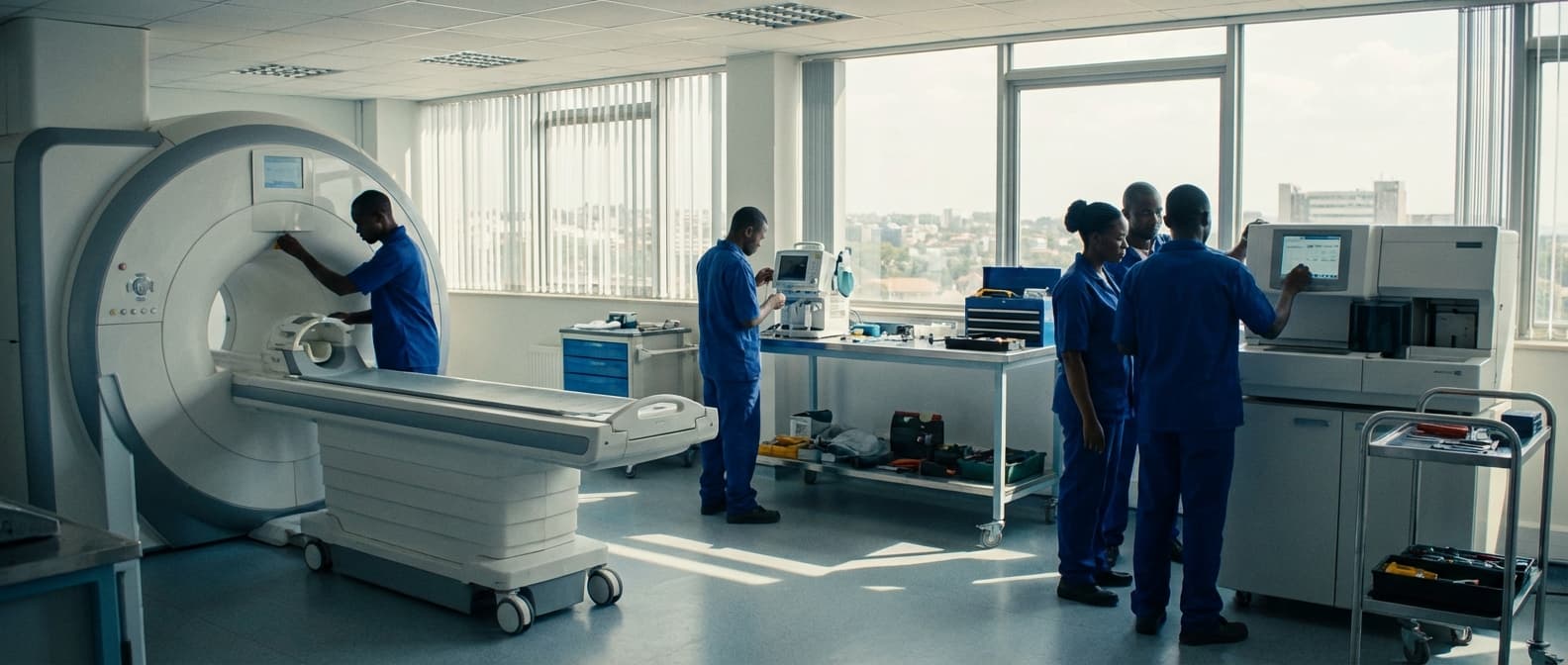
Planned Shutdown Coordination Service for Critical Equipment in Libya
Engineering Excellence & Technical Support
Planned Shutdown Coordination Service for Critical Equipment High-standard technical execution following OEM protocols and local regulatory frameworks.
Proactive Risk Mitigation & Uptime Maximization
Leveraging advanced predictive analytics and historical data, our service identifies potential equipment failures before they occur, enabling precise, planned shutdowns for preemptive maintenance. This dramatically reduces the risk of unplanned downtime, safeguarding Libya's critical infrastructure and optimizing operational uptime.
Streamlined Supply Chain & Resource Allocation
Our integrated platform meticulously plans and coordinates the sourcing of specialized parts, skilled personnel, and necessary equipment for each shutdown. This ensures timely and efficient deployment, minimizing logistical complexities and maximizing the utilization of Libya's limited resources during critical maintenance windows.
Geo-Phased Maintenance Scheduling for National Impact
We implement sophisticated geo-phased scheduling strategies, coordinating maintenance across geographically dispersed critical assets in Libya. This minimizes the collective impact on national operations by staggering shutdowns and ensuring the continued availability of essential services throughout the country during planned maintenance periods.
What Is Planned Shutdown Coordination Service For Critical Equipment In Libya?
Planned Shutdown Coordination Service for Critical Equipment in Libya refers to a specialized operational and logistical management framework designed to orchestrate the temporary deactivation, maintenance, and subsequent recommissioning of vital industrial assets within Libya's critical infrastructure. This service is essential for ensuring the integrity, reliability, and longevity of high-value, non-redundant, or strategically important equipment that underpins key sectors such as oil and gas, power generation, water treatment, and telecommunications. The core objective is to minimize disruption to operational output and service delivery while executing necessary maintenance, upgrades, or inspections that cannot be performed during live operation. It involves a multi-disciplinary approach encompassing rigorous planning, detailed scheduling, resource allocation, risk management, and stakeholder communication to achieve an efficient and safe execution of shutdown activities.
| Service Recipient (Who Needs It) | Typical Use Cases |
|---|---|
| Oil and Gas Production and Processing Facilities: Operators of upstream, midstream, and downstream facilities, including refineries, petrochemical plants, and export terminals. | Scheduled overhauls of critical rotating equipment (turbines, compressors, pumps), heat exchangers, pressure vessels, and pipeline integrity inspections. Upgrades to control systems or processing units. Routine maintenance that requires complete plant isolation. |
| Power Generation Plants: Operators of thermal (fossil fuel, nuclear), hydro, and renewable energy power stations. | Major maintenance on turbines, generators, boilers, transformers, switchgear, and cooling systems. Installation of new generation units or emission control technologies. Fuel system overhauls. |
| Water and Wastewater Treatment Facilities: Municipalities and industrial operators responsible for water supply and effluent management. | Maintenance on pumps, filtration systems, clarifiers, disinfection units, and distribution networks. Installation of new treatment technologies. Decommissioning and recommissioning of treatment basins. |
| Telecommunications Infrastructure Providers: Companies managing critical network components and data centers. | Upgrades to core network equipment, data center maintenance requiring power isolation, antenna system maintenance, and fiber optic network upgrades. |
| Heavy Industrial Manufacturing Plants: Facilities involved in large-scale production requiring continuous operation of heavy machinery. | Maintenance on large furnaces, rolling mills, conveyor systems, and specialized manufacturing equipment that necessitate extended downtime for safe and thorough servicing. |
Key Components of Planned Shutdown Coordination Service
- Scope Definition and Planning: Identifying specific equipment, defining maintenance objectives (preventive, corrective, upgrade, inspection), and establishing key performance indicators (KPIs) for the shutdown.
- Risk Assessment and Mitigation: Analyzing potential hazards associated with shutdown activities, including safety risks, environmental impacts, and operational disruptions, and developing proactive mitigation strategies.
- Detailed Scheduling and Sequencing: Developing a master schedule that outlines all tasks, their dependencies, durations, and resource requirements, often employing critical path methodology.
- Resource Management: Coordinating the mobilization and deployment of specialized personnel (engineers, technicians, safety officers), equipment (cranes, specialized tools, testing apparatus), and materials.
- Permitting and Regulatory Compliance: Securing all necessary permits, approvals, and ensuring adherence to local and international safety, health, and environmental (SHE) regulations.
- Logistics and Support: Managing site access, accommodation, transportation, catering, and security for personnel and equipment.
- Communication and Stakeholder Management: Establishing clear communication channels with all relevant parties, including operational teams, maintenance crews, vendors, regulatory bodies, and community representatives.
- Execution Oversight and Control: Supervising shutdown activities in real-time, monitoring progress against the schedule, and implementing corrective actions for deviations.
- Quality Assurance and Control: Implementing inspection and testing protocols to verify the quality of maintenance work and ensure equipment performance meets specifications.
- Recommissioning and Performance Verification: Planning and executing the safe and efficient return of equipment to operational status, including system checks, performance testing, and documentation.
- Post-Shutdown Review and Lessons Learned: Conducting a comprehensive review of the shutdown process to identify successes, challenges, and opportunities for improvement in future shutdowns.
Who Needs Planned Shutdown Coordination Service For Critical Equipment In Libya?
Planned shutdown coordination services are essential for ensuring the safety, efficiency, and longevity of critical equipment across various industries in Libya. These services are particularly crucial for organizations that rely heavily on uninterrupted operations and face significant financial or safety risks due to unexpected equipment failures or poorly managed maintenance periods. Effective coordination minimizes downtime, optimizes resource allocation, and prevents costly mistakes during scheduled maintenance, turnarounds, and overhauls of high-value assets.
| Industry Sector | Critical Equipment Examples | Key Departments Requiring Coordination |
|---|---|---|
| Oil and Gas | Refineries, offshore platforms, pipelines, gas processing plants, pumping stations | Operations, Maintenance, Engineering, HSE (Health, Safety, Environment), Project Management, Procurement |
| Petrochemicals | Reactors, distillation columns, heat exchangers, compressors, storage tanks | Operations, Maintenance, Process Engineering, Safety, Planning, Logistics |
| Power Generation | Turbines (gas, steam, hydro), generators, boilers, transformers, switchgear | Plant Operations, Mechanical Maintenance, Electrical Maintenance, Control Systems, Safety, Asset Management |
| Water and Wastewater | Pumps, treatment units, filtration systems, pipelines, control systems | Operations, Maintenance, Engineering, Environmental Compliance, Planning |
| Industrial Manufacturing | Production lines, heavy machinery, automated systems, HVAC systems, specialized processing equipment | Production Management, Maintenance (Mechanical, Electrical, Automation), Quality Control, Logistics |
| Telecommunications | Switching centers, base stations, data centers, transmission equipment | Network Operations, Field Maintenance, Infrastructure Management, Planning, Security |
| Mining and Minerals | Crushers, conveyors, mills, smelters, processing equipment | Mine Operations, Plant Maintenance, Metallurgical Engineering, Safety, Logistics |
Target Customers in Libya
- Oil and Gas Companies (Upstream, Midstream, and Downstream)
- Petrochemical Plants
- Power Generation Facilities
- Water and Wastewater Treatment Plants
- Industrial Manufacturing Plants
- Large-Scale Construction Projects
- Telecommunications Infrastructure Providers
- Mining and Mineral Processing Operations
Planned Shutdown Coordination Service For Critical Equipment Process In Libya
This document outlines the workflow for the Planned Shutdown Coordination Service for Critical Equipment in Libya, from the initial inquiry to the successful execution of the shutdown. This service aims to minimize downtime, ensure safety, and optimize resource allocation during planned maintenance activities on critical industrial equipment within Libya.
| Stage | Key Activities | Responsible Parties | Deliverables/Outcomes | Key Considerations |
|---|---|---|---|---|
| Inquiry & Initial Assessment | Client submits an inquiry regarding a planned shutdown for critical equipment. Initial consultation to understand equipment type, criticality, expected shutdown duration, and desired outcomes. Preliminary site visit to assess access, safety conditions, and existing infrastructure. | Client (Requesting Party) Coordination Service Provider (CSP) | Confirmation of service engagement. High-level understanding of shutdown requirements. Identification of potential challenges. | Urgency of the shutdown. Client's budget and resource availability. Geopolitical and security situation in Libya. |
| Scope Definition & Planning | Detailed scope of work definition, including specific maintenance tasks, inspections, and potential upgrades. Development of a comprehensive shutdown schedule, identifying key milestones and dependencies. Risk assessment and development of mitigation strategies for identified hazards. Establishment of communication protocols and reporting structure. | CSP (Lead Planner) Client (Engineering & Maintenance Teams) Third-party specialists (as needed) | Detailed Work Breakdown Structure (WBS). Approved shutdown schedule. Risk Management Plan. Communication Plan. | Accurate assessment of required skilled labor. Availability of specialized tools and equipment. Permitting and regulatory requirements. |
| Resource Mobilization & Logistics | Identification and procurement of all necessary personnel (engineers, technicians, supervisors). Sourcing and delivery of specialized tools, spare parts, and consumables. Arrangement of accommodation, transportation, and visas for personnel. Coordination with local authorities for access and security clearances. | CSP (Logistics Manager) Client (Procurement & HR) Local Service Partners | Mobilized and trained workforce. All required materials and equipment on-site. Completed logistical arrangements. Obtained necessary permits. | Lead times for procurement and import of specialized items. Local content requirements and regulations. Security escort and movement plans. |
| Execution & Monitoring | Safe isolation and lockout/tagout (LOTO) procedures for equipment. Performance of scheduled maintenance tasks according to the plan. Continuous monitoring of progress against the schedule. Regular reporting of status, issues, and deviations. On-site supervision and quality control. | CSP (Site Supervisor) Client (Operations & Maintenance) Safety Officers | Completed maintenance tasks. Regular progress reports. Identification and resolution of emergent issues. Adherence to safety procedures. | Real-time communication and decision-making. Contingency plans for unexpected equipment failures. Maintaining a safe working environment. |
| Completion & Reporting | Post-maintenance testing and commissioning of equipment. Final inspection and handover of the equipment to operations. Compilation of a comprehensive shutdown report, including work performed, parts used, time spent, and lessons learned. Documentation of any deviations from the plan and justifications. | CSP (Project Manager) Client (Operations & Engineering) | Returned critical equipment to service. Final Shutdown Report. Asset handover documentation. | Accuracy and completeness of reporting. Client's acceptance of the work performed. Timely data capture for future planning. |
| Post-Shutdown Review | Debriefing meeting with the client to discuss the overall shutdown performance. Analysis of key performance indicators (KPIs) against planned objectives. Identification of areas for improvement in future shutdown planning and execution. Updating maintenance records and asset history. | CSP (Senior Management) Client (Management & Technical Teams) | Identified lessons learned. Recommendations for future shutdowns. Improved planning processes. | Objective evaluation of success. Constructive feedback loop for continuous improvement. Knowledge sharing and dissemination. |
Workflow Stages
- Inquiry & Initial Assessment
- Scope Definition & Planning
- Resource Mobilization & Logistics
- Execution & Monitoring
- Completion & Reporting
- Post-Shutdown Review
Planned Shutdown Coordination Service For Critical Equipment Cost In Libya
Coordinating planned shutdowns for critical equipment in Libya requires meticulous planning, skilled labor, specialized tools, and adherence to stringent safety protocols. The cost of such a service is influenced by several key factors, and can vary significantly based on the complexity of the equipment, the duration of the shutdown, the level of expertise required, and prevailing economic conditions within Libya. Understanding these pricing factors is crucial for accurate budgeting and resource allocation.
The Libyan market often sees pricing influenced by the availability of specialized foreign expertise, logistical challenges in remote locations, and the fluctuating exchange rates of the Libyan Dinar (LYD). Companies offering these services will typically consider a combination of fixed fees for planning and a daily or hourly rate for execution, which can be further broken down into categories based on skill level and equipment type.
| Service Component | Estimated Range (LYD) | Notes |
|---|---|---|
| Initial Planning & Risk Assessment | 5,000 - 25,000 | Varies based on scope and complexity. |
| Skilled Technician (Local) | 200 - 700 per day | Dependent on specialization (e.g., mechanical, electrical, instrumentation). |
| Specialized Engineer (Local) | 400 - 1,200 per day | For oversight and technical problem-solving. |
| Foreign Expert/Consultant (Daily Rate) | 800 - 2,500+ per day | Includes mobilization, accommodation, and high-level expertise. Can be significantly higher for niche specialties. |
| Project Supervisor/Manager | 600 - 1,500 per day | Responsible for overall coordination and site management. |
| Safety Officer | 250 - 600 per day | Crucial for ensuring adherence to safety protocols. |
| Equipment Rental (e.g., cranes, specialized tools) - Daily | 300 - 2,000+ | Highly dependent on the type and size of equipment. |
| Logistics & Mobilization Fee (per project) | 2,000 - 15,000+ | Covers transportation, accommodation, and site access, especially for remote locations. |
| Contingency Buffer (Percentage of total) | 10% - 20% | Recommended for unforeseen issues and scope changes. |
| Full Project Coordination (Estimated) | 50,000 - 500,000+ | This is a broad estimate and depends heavily on the size and complexity of the shutdown. Large-scale industrial projects can exceed this significantly. |
Key Pricing Factors for Planned Shutdown Coordination Services in Libya
- Equipment Complexity and Criticality: Highly specialized or safety-critical equipment (e.g., gas turbines, large pumps, control systems) will command higher coordination fees due to the need for specialized knowledge, intricate procedures, and potentially higher risk.
- Shutdown Duration and Scope: Longer planned shutdowns naturally increase labor, equipment rental, and potential downtime costs. The breadth of the work involved (e.g., inspection, repair, replacement, calibration) also impacts the overall cost.
- Labor Requirements and Skill Levels: The number of technicians, engineers, supervisors, and support staff required, along with their specific skill sets and certifications, is a major cost driver. Specialized foreign expertise, often necessary for complex projects, will be priced at a premium.
- Safety and Environmental Protocols: Implementing and managing rigorous safety procedures (e.g., permits to work, confined space entry, hazardous materials handling) and environmental compliance measures adds to the coordination effort and associated costs.
- Logistics and Mobilization: Transporting personnel, specialized tools, spare parts, and equipment to and from project sites, especially in remote or challenging Libyan locations, incurs significant logistical costs.
- Geographic Location: Costs can vary depending on the accessibility and infrastructure at the specific site within Libya. Projects in major industrial hubs might have lower logistical overhead compared to those in remote desert regions.
- Material and Spare Parts: While often a separate cost from coordination, the procurement and management of necessary spare parts and consumables by the service provider can be factored into the overall project budget.
- Overtime and Emergency Work: Unforeseen circumstances or the need to expedite work can lead to overtime, which is typically billed at a higher rate.
- Regulatory Compliance and Permitting: Obtaining necessary permits and ensuring compliance with Libyan regulations for industrial shutdowns adds to the administrative and coordination overhead.
- Service Provider's Overhead and Profit Margin: Like any business, service providers will include their operational overheads, administrative costs, and a profit margin in their pricing.
Affordable Planned Shutdown Coordination Service For Critical Equipment Options
Our Affordable Planned Shutdown Coordination Service is designed to minimize downtime and maximize the efficiency of your critical equipment maintenance. We understand that unplanned outages are costly and disruptive, which is why we offer expert planning and execution for your scheduled shutdowns. Our service focuses on delivering value through carefully crafted bundles and implementing strategic cost-saving measures to ensure your operations remain smooth and profitable.
| Cost-Saving Strategy | Description | Potential Savings Impact |
|---|---|---|
| Early Bird Planning Discount | Booking shutdown coordination services more than 3-6 months in advance. | 10-20% reduction on service fees. |
| Multi-Shutdown Package | Coordinating multiple planned shutdowns for different equipment or over a longer period under a single contract. | Volume discounts, reduced administrative overhead, and optimized scheduling across multiple events. |
| Vendor Consolidation | Leveraging our established network to consolidate multiple vendor services for the shutdown under our coordination. | Reduced vendor management time, potential for bulk negotiation on parts and services, and streamlined communication. |
| Preventive Maintenance Integration | Aligning planned shutdown activities with scheduled preventive maintenance tasks to address multiple needs in one outage. | Reduced overall downtime, fewer separate mobilization costs, and optimized technician utilization. |
| On-Site Training & Knowledge Transfer | Our service includes training your internal staff on best practices for shutdown coordination and execution, enabling them to manage future shutdowns more effectively. | Reduced reliance on external services for future shutdowns, improved internal expertise, and long-term cost reduction. |
| Optimized Spare Parts Management | Proactive identification and sourcing of required spare parts well in advance of the shutdown to avoid costly rush orders or delays. | Significant reduction in material costs due to bulk purchasing and avoidance of premium pricing for emergency orders. |
| Resource Optimization | Ensuring the right personnel and equipment are available at the right time, avoiding idle time and unnecessary overtime. | Reduced labor costs and efficient utilization of specialized tools and machinery. |
Value Bundles Explained
- Basic Coordination Bundle: Ideal for smaller operations or those with established internal maintenance teams. This bundle includes essential planning, scheduling, resource allocation, and on-site supervision during the shutdown period. Focuses on ensuring all pre-shutdown checks and post-shutdown tests are completed efficiently.
- Standard Coordination Bundle: A comprehensive package for most businesses. This includes all features of the Basic Bundle, plus proactive risk assessment, detailed work package development, vendor management, and a post-shutdown performance review. Aims to optimize resource utilization and minimize potential delays.
- Premium Coordination Bundle: Our most robust offering, designed for complex operations or those requiring specialized expertise. This bundle encompasses all Standard Bundle features, along with advanced safety planning, detailed compliance management, specialized equipment sourcing, and a dedicated project manager available 24/7 during the shutdown. Provides maximum assurance and minimizes all potential disruptions.
- Customizable Bundles: We recognize that every operation is unique. Our team will work with you to tailor a bundle that precisely meets your specific needs, equipment types, and budget constraints. This ensures you only pay for the services you require.
Verified Providers In Libya
In the complex landscape of healthcare access in Libya, identifying and trusting verified providers is paramount. Franance Health stands out as a leading organization committed to ensuring quality and reliability. This document outlines why Franance Health's credentials and approach make them the best choice for your healthcare needs in Libya.
| Credential/Aspect | Franance Health's Approach | Why it Matters for Patients in Libya |
|---|---|---|
| Licensing and Certification Verification | Franance Health meticulously verifies all medical licenses and certifications of their affiliated providers with relevant Libyan and international bodies. | Ensures all practitioners are legally qualified and meet essential competency standards, safeguarding against unqualified individuals. |
| Experience and Specialization | A thorough assessment of a provider's clinical experience and specialization is conducted to match patients with the most suitable medical experts. | Guarantees patients receive care from doctors with proven expertise in their specific medical needs, leading to better outcomes. |
| Reputation and Patient Feedback | Franance Health actively monitors patient feedback and maintains a reputation-based selection process for its network. | Provides insights into the quality of care, patient satisfaction, and the overall bedside manner of healthcare professionals. |
| Commitment to Advanced Medical Practices | Preference is given to providers who demonstrate a commitment to adopting and utilizing modern medical technologies and treatment protocols. | Ensures access to the latest diagnostic tools and treatment options, crucial for effective and efficient healthcare. |
| Cultural Sensitivity and Language Proficiency | Franance Health prioritizes providers who are culturally sensitive and possess strong communication skills, including relevant language proficiency. | Facilitates clear understanding between patient and provider, reducing anxiety and improving the overall patient experience, especially important in a diverse society. |
| Adherence to Data Privacy and Confidentiality | Franance Health enforces strict protocols for patient data privacy and confidentiality among its network providers. | Protects sensitive patient information, building trust and ensuring peace of mind for individuals seeking medical attention. |
Franance Health's Commitment to Excellence
- Rigorous Vetting Process for Medical Professionals
- Adherence to International Healthcare Standards
- Focus on Patient Safety and Well-being
- Commitment to Ethical Medical Practices
- Continuous Professional Development for Staff
- Strong Partnerships with Reputable Healthcare Institutions
Scope Of Work For Planned Shutdown Coordination Service For Critical Equipment
This Scope of Work (SOW) outlines the services required for the coordination of planned shutdowns for critical equipment. The primary objective is to ensure minimal disruption to operations, maximize equipment availability, and guarantee the safety of personnel during planned maintenance activities. This SOW details the technical deliverables and standard specifications that will guide the execution of these services.
| Task/Activity | Description | Deliverables | Standard Specifications/Requirements | |||||
|---|---|---|---|---|---|---|---|---|
| Shutdown Planning & Scheduling | Develop comprehensive shutdown plans, including scope definition, task sequencing, resource identification, and detailed timelines. | Detailed Shutdown Plan (document) | Master Schedule (Gantt chart or similar) | Risk Assessment Report (RA) | Permit to Work (PTW) System Integration | Adherence to Critical Path Method (CPM) for scheduling. | Inclusion of buffer times for unforeseen issues. | Alignment with production schedules and business needs. |
| Resource Management | Identify and coordinate the availability of all necessary personnel (internal/external), specialized tools, equipment, and materials. | Resource Allocation Matrix | Procurement Support Documentation | Tool & Equipment Checklist | Material List with Specifications | Verification of contractor qualifications and certifications. | Just-in-time material delivery strategy. | |
| Safety & Environmental Coordination | Develop and implement comprehensive safety protocols, including hazard identification, risk mitigation strategies, and emergency response plans. | Site Safety Plan | Lockout/Tagout (LOTO) Procedures | Hazardous Material Handling Plan | Environmental Impact Assessment (if applicable) | Compliance with OSHA, local environmental regulations, and company HSE policies. | Pre-shutdown safety inductions for all personnel. | |
| Execution Monitoring & Control | Oversee and manage the execution of the shutdown, ensuring adherence to the plan, schedule, and safety requirements. | Daily Progress Reports | Issue Resolution Log | Safety Observations and Audits | Change Order Management Records | Real-time tracking of key milestones and critical path activities. | Prompt identification and resolution of deviations. | |
| Communication & Stakeholder Management | Establish and maintain clear communication channels with all relevant stakeholders, including operations, maintenance, engineering, safety, and management. | Communication Plan | Stakeholder Register | Meeting Minutes (regular coordination meetings) | Status Update Briefings | Defined escalation procedures for critical issues. | ||
| Post-Shutdown Review & Reporting | Conduct a thorough review of the shutdown execution, identify lessons learned, and prepare a comprehensive final report. | Post-Shutdown Performance Report | Lessons Learned Document | Root Cause Analysis (for significant deviations) | Updated Equipment Maintenance Records | Analysis of actual vs. planned costs and durations. | Recommendations for future shutdown improvements. | |
| Documentation & Record Keeping | Ensure accurate and complete documentation of all shutdown-related activities, including permits, work orders, test results, and as-built drawings. | Centralized Document Repository | Archived Shutdown Files | Maintenance History Updates | Compliance Audit Trail | Adherence to company record retention policies. | Digitalization of key documents where feasible. |
Key Objectives of Planned Shutdown Coordination Service
- Minimize downtime of critical equipment.
- Ensure safe execution of all planned maintenance activities.
- Optimize resource allocation (personnel, materials, equipment).
- Facilitate effective communication among all stakeholders.
- Maintain accurate and timely documentation of all shutdown activities.
- Adhere to all relevant safety regulations and company policies.
- Contribute to the overall reliability and lifespan of critical assets.
Service Level Agreement For Planned Shutdown Coordination Service For Critical Equipment
This Service Level Agreement (SLA) outlines the terms and conditions for the Planned Shutdown Coordination Service for Critical Equipment, focusing on response times for scheduling and execution, and uptime guarantees for the service itself.
| Service Component | Metric | Target | Measurement Period |
|---|---|---|---|
| Planned Shutdown Request Acknowledgment | Response Time to Initial Request | 2 Business Hours | During Business Hours (Mon-Fri, 9 AM - 5 PM Local Time) |
| Shutdown Schedule Proposal | Time to Provide Draft Schedule | 5 Business Days (after all necessary information is received) | N/A |
| Critical Issue Notification | Response Time to Critical Escalation | 1 Business Hour | 24x7x365 |
| Service Availability (Planned Shutdown Coordination Service) | Uptime Guarantee | 99.5% | Monthly |
| Service Availability (Monitoring Component) | Uptime Guarantee | 99.9% | Monthly |
Scope of Service
- Coordination of planned shutdown windows for critical equipment to minimize operational impact.
- Communication and notification protocols for all stakeholders.
- Resource allocation and scheduling management for shutdown activities.
- Post-shutdown reporting and analysis.
- Monitoring of the Planned Shutdown Coordination Service itself for availability.
Frequently Asked Questions

Ready when you are
Let's scope your Planned Shutdown Coordination Service for Critical Equipment in Libya project in Libya.

Scaling healthcare logistics and technical systems across the entire continent.