
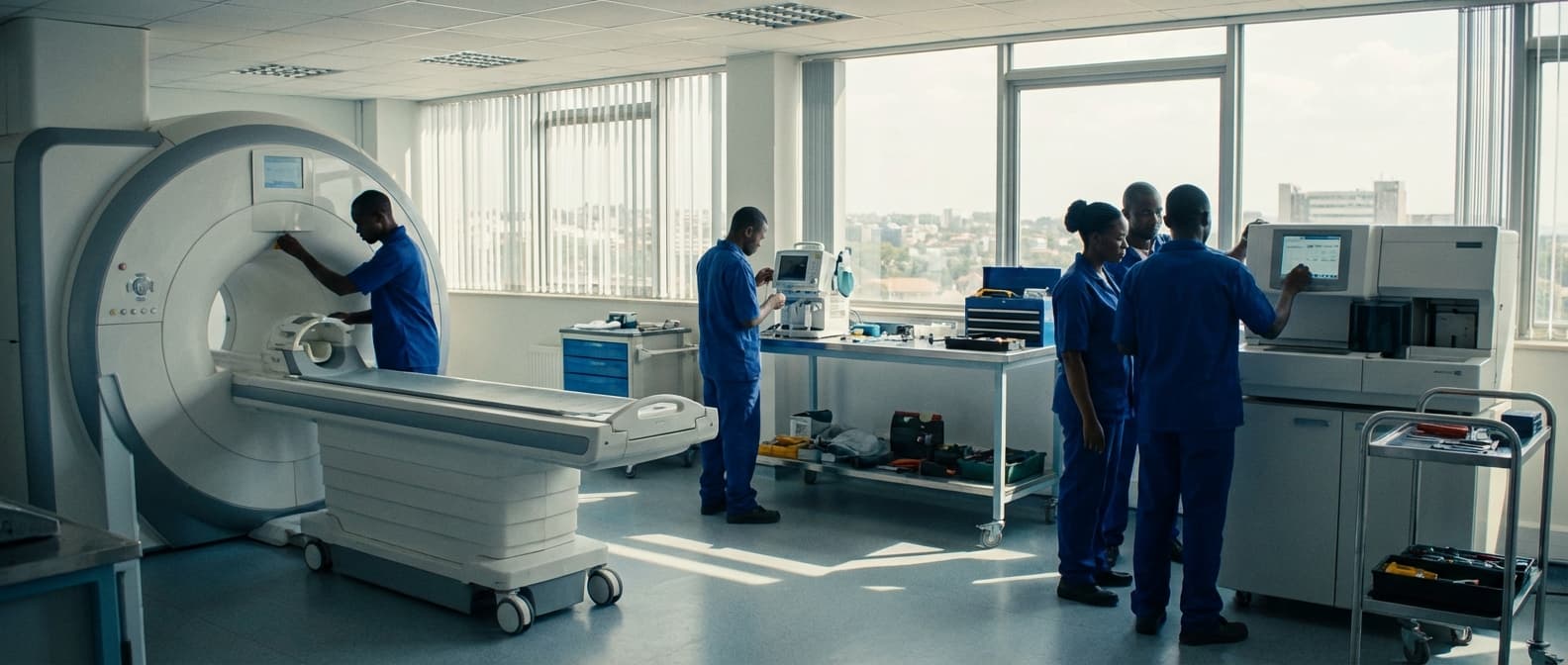
Comprehensive Maintenance Contract (CMC) Management Service (Parts & Labor) in Libya
Engineering Excellence & Technical Support
Comprehensive Maintenance Contract (CMC) Management Service (Parts & Labor) High-standard technical execution following OEM protocols and local regulatory frameworks.
Proactive Asset Health Monitoring
Leverage advanced remote monitoring and diagnostics for critical assets, enabling predictive maintenance scheduling and minimizing unforeseen downtime. Our service proactively identifies potential failures before they impact operations, ensuring continuous uptime for your essential equipment in Libya.
Rapid On-Site Response & Parts Procurement
Benefit from a dedicated network of certified technicians and a streamlined logistics chain for expedited parts delivery across Libya. Our rapid response protocols guarantee minimal disruption, with guaranteed availability of critical spare parts for all covered equipment.
Transparent Performance Tracking & Reporting
Gain comprehensive visibility into asset performance, maintenance history, and cost analysis through our intuitive digital platform. Receive regular, detailed reports empowering informed decision-making and ensuring accountability for all parts and labor expenditures within your CMC.
What Is Comprehensive Maintenance Contract (Cmc) Management Service (Parts & Labor) In Libya?
Comprehensive Maintenance Contract (CMC) Management Service (Parts & Labor) in Libya refers to a specialized offering where a third-party entity assumes responsibility for the holistic maintenance, repair, and operational upkeep of a client's assets. This encompasses both the provision of necessary spare parts and the skilled labor required for all maintenance activities. The service is designed to ensure asset reliability, optimal performance, and extended lifespan while mitigating operational risks and unpredictable expenditure for the client. This service is typically procured by organizations that rely heavily on complex machinery, equipment, or critical infrastructure and lack the in-house expertise, resources, or desire to manage these maintenance functions directly. It acts as a strategic partnership, transferring the burden of maintenance planning, execution, and financial management to a specialized service provider.
| Stakeholder/Entity | Need for CMC Management Service | Typical Use Cases |
|---|---|---|
| Industrial Manufacturing Companies | Reliance on complex production machinery (e.g., CNC machines, assembly lines, heavy-duty presses). Need to minimize downtime, maintain product quality, and manage operational costs. | Maintenance of printing presses, plastic injection molding machines, metal fabrication equipment, automated production lines. |
| Oil and Gas Sector Entities | Operation of specialized exploration, extraction, refining, and transportation equipment. High risk associated with equipment failure, requiring stringent uptime and safety standards. | Maintenance of pumps, turbines, pipelines, drilling equipment, control systems, and processing units. |
| Energy and Power Generation Companies | Operation of power plants (thermal, renewable). Critical need for uninterrupted power supply and efficient equipment operation. | Maintenance of turbines, generators, boilers, transformers, and associated control systems. |
| Healthcare Institutions | Dependence on sophisticated medical equipment (e.g., MRI scanners, CT scanners, laboratory analyzers). Essential for patient care and operational continuity. | Maintenance of diagnostic imaging equipment, laboratory instrumentation, surgical tools, and life support systems. |
| Telecommunications Providers | Operation of complex network infrastructure and transmission equipment. Requirement for high availability and minimal service interruption. | Maintenance of base stations, switching centers, fiber optic networks, and data centers. |
| Construction and Heavy Equipment Companies | Utilization of heavy machinery and specialized construction equipment. Need to ensure operational readiness and prevent costly breakdowns on project sites. | Maintenance of excavators, cranes, bulldozers, concrete mixers, and other earthmoving equipment. |
| Large-scale Facilities Management | Management of building systems (HVAC, electrical, plumbing) in large commercial, residential, or governmental complexes. Need for reliable infrastructure. | Maintenance of HVAC systems, electrical distribution networks, elevators, and building automation systems. |
Key Components of CMC Management Service (Parts & Labor) in Libya
- Asset Inventory and Condition Assessment: Detailed cataloging of all covered assets and initial evaluation of their current operational status.
- Proactive and Preventive Maintenance: Scheduled inspections, lubrication, calibration, and part replacements to avert potential failures.
- Corrective Maintenance and Repair: Prompt response to breakdowns and malfunctions, including diagnosis, repair, and component replacement.
- Spare Parts Management: Procurement, stocking, inventory control, and logistics of all required spare parts, ensuring availability when needed.
- Skilled Labor Provision: Deployment of qualified technicians, engineers, and support staff with expertise in the specific asset types.
- Technical Support and Troubleshooting: On-demand assistance for operational queries and complex problem-solving.
- Performance Monitoring and Reporting: Continuous tracking of asset performance metrics, maintenance activities, and cost analysis, with regular reporting to the client.
- Warranty Management: Oversight of manufacturer warranties for parts and labor, ensuring optimal utilization.
- Compliance and Safety Assurance: Adherence to relevant Libyan regulatory standards and safety protocols for maintenance operations.
- Contingency Planning: Development of strategies to address unforeseen events and ensure business continuity.
Who Needs Comprehensive Maintenance Contract (Cmc) Management Service (Parts & Labor) In Libya?
Comprehensive Maintenance Contract (CMC) Management Services (Parts & Labor) are crucial for organizations in Libya seeking to ensure the optimal performance, longevity, and cost-effectiveness of their critical assets. These services go beyond simple repairs by encompassing preventative maintenance, spare parts management, labor coordination, and warranty oversight. By outsourcing CMC management, businesses can reduce downtime, mitigate unexpected repair costs, extend equipment lifespan, and focus on their core operations. Libya's evolving economic landscape and the presence of complex infrastructure across various sectors create a significant demand for such specialized services.
| Target Customer Segment | Key Departments / Functions Benefiting |
|---|---|
| Oil & Gas | Production Operations, Maintenance Engineering, Asset Management, Facilities Management |
| Power Generation & Utilities | Operations & Maintenance, Asset Integrity, Grid Operations, Technical Services |
| Telecommunications | Network Operations, Field Services, Infrastructure Management, Technical Support |
| Healthcare | Biomedical Engineering, Facilities Management, Operations, IT Departments (for medical IT systems) |
| Industrial Manufacturing | Production Management, Plant Engineering, Maintenance Department, Quality Control |
| Government & Infrastructure | Public Works, Transportation Authorities, Project Management Offices, Facilities Management |
| Large Commercial Complexes | Property Management, Facilities Management, Operations, Engineering |
Target Customers for CMC Management Services in Libya
- Large-scale industrial facilities
- Oil and Gas exploration and production companies
- Power generation and distribution utilities
- Telecommunication network providers
- Healthcare institutions with advanced medical equipment
- Transportation and logistics hubs (airports, ports)
- Government infrastructure projects
- Large commercial real estate developments
- Educational institutions with specialized laboratories
- Manufacturing plants
Comprehensive Maintenance Contract (Cmc) Management Service (Parts & Labor) Process In Libya
This document outlines the Comprehensive Maintenance Contract (CMC) Management Service (Parts & Labor) process for clients in Libya. It details the workflow from the initial inquiry to the successful execution of maintenance services, ensuring timely and efficient support for equipment and machinery.
| Stage | Description | Key Activities | Responsible Party | Deliverables/Outputs | Timeframe (Indicative) |
|---|---|---|---|---|---|
| The client expresses interest in CMC services. | Receive and acknowledge inquiry, understand client's needs, equipment details, and service expectations. | Client, CMC Service Provider Sales/BD Team | Initial understanding of requirements, potential service scope. | 1-3 Business Days |
| Based on the initial consultation, a tailored proposal is prepared. | Detailed assessment of equipment, required parts, labor hours, service frequency, and associated costs. Creation of a formal proposal and quotation. | CMC Service Provider Technical & Sales Team | Comprehensive Proposal, Detailed Quotation, Service Level Agreement (SLA) outline. | 3-7 Business Days |
| Discussion and agreement on the terms and conditions of the CMC. | Review of proposal, negotiation of pricing, scope, SLAs, payment terms, and any specific client requirements. Drafting and finalization of the CMC agreement. | Client, CMC Service Provider Legal & Management Team | Signed Comprehensive Maintenance Contract (CMC). | 7-14 Business Days |
| The formal commencement of the CMC. | Issuance of Service Order/Confirmation, establishment of communication channels, introduction of dedicated service team/manager. | CMC Service Provider Management & Operations Team | Service Agreement activated, Account established, Point of Contact assigned. | 1-3 Business Days post-signing |
| Proactive maintenance activities to prevent breakdowns. | Development of a preventive maintenance schedule based on manufacturer recommendations and equipment usage. Notification to the client for site access and scheduling. | CMC Service Provider Operations & Planning Team | Preventive Maintenance Schedule, Service Visit Notifications. | Ongoing (Monthly/Quarterly/Annually as per contract) |
| Addressing unexpected equipment failures or issues. | Client reports a breakdown. Service provider dispatches technicians to diagnose and repair the issue within the agreed SLA timeframe. | Client, CMC Service Provider Technical Support & Field Team | Breakdown Report, Diagnostic Findings, Repair Action Log. | As per SLA (e.g., 2-24 hours response time) |
| Ensuring availability of necessary spare parts. | Identification of required parts for both preventive and corrective maintenance. Sourcing parts from authorized suppliers (local or international) and managing inventory. | CMC Service Provider Procurement & Logistics Team | Parts Inventory, Procurement Orders, Delivery Tracking. | Variable (depending on part availability and import regulations in Libya) |
| Skilled technicians performing maintenance tasks. | Mobilization of qualified and trained technicians to the client's site. Execution of maintenance tasks (preventive, corrective, and emergency repairs) as per the contract and industry best practices. | CMC Service Provider Field Operations Team | Completed Maintenance Work Orders, Technician Reports. | As per schedule or upon breakdown |
| Ensuring the quality of maintenance work performed. | Post-maintenance checks, adherence to quality standards, client feedback collection, and internal quality audits. | CMC Service Provider Quality Control & Management Team | Quality Inspection Reports, Customer Feedback Summaries. | Continuous, post-service |
| Maintaining detailed records of all service activities. | Generating reports on preventive maintenance performed, corrective actions taken, parts used, labor hours, and equipment performance. Maintaining a comprehensive service history for each asset. | CMC Service Provider Administration & Operations Team | Service Reports, Maintenance Logs, Performance Reports. | As per contract (e.g., Monthly, Quarterly) |
| Billing for services rendered and receiving payment. | Issuing invoices based on contractual terms (e.g., fixed periodic fees, parts, and labor for corrective maintenance). Processing payments from the client. | CMC Service Provider Finance & Administration Team | Invoices, Payment Receipts. | As per contract terms (e.g., Monthly, Quarterly) |
| Evaluating the performance of the CMC and planning for its continuation. | Periodic review of contract performance against SLAs, client satisfaction, and cost-effectiveness. Discussion on renewal terms and conditions. | CMC Service Provider Management & Client Management | Performance Review Report, Renewal Proposal. | Towards end of contract period (e.g., annually, or as per contract duration) |
Key Stages of CMC Management Service Workflow
- Inquiry & Initial Consultation
- Proposal & Quotation Generation
- Contract Negotiation & Finalization
- Service Agreement Activation
- Preventive Maintenance Planning & Scheduling
- Corrective Maintenance & Breakdown Response
- Parts Procurement & Management
- Labor Deployment & Execution
- Quality Assurance & Inspection
- Reporting & Documentation
- Invoicing & Payment
- Contract Review & Renewal
Comprehensive Maintenance Contract (Cmc) Management Service (Parts & Labor) Cost In Libya
Managing Comprehensive Maintenance Contracts (CMCs) for both parts and labor in Libya involves several pricing factors that influence the overall cost. These contracts are crucial for ensuring the continuous operation and longevity of equipment and infrastructure across various sectors. The cost is not fixed and can vary significantly based on the complexity of the equipment, the scope of services included, the vendor's expertise, and prevailing economic conditions in Libya.
Key Pricing Factors for CMC (Parts & Labor) in Libya:
- Equipment Type and Complexity: Highly specialized or complex machinery (e.g., industrial production lines, advanced medical equipment, critical IT infrastructure) will naturally incur higher CMC costs than simpler, more common equipment. The number of components, the sophistication of technology, and the required skill set for maintenance are direct drivers of cost.
- Scope of Services: The 'comprehensive' nature of the contract is a primary determinant. This includes the frequency of preventive maintenance, the extent of reactive maintenance (unplanned repairs), the inclusion of routine inspections, troubleshooting, system upgrades, and emergency response. A wider scope, including 24/7 support and rapid response times, will command higher prices.
- Parts Replacement Policy: The contract's stance on parts replacement is critical. Does it cover all parts, including wear-and-tear items? Are original manufacturer parts (OEM) mandated, or are third-party alternatives acceptable? The cost and availability of specific parts in Libya, especially for imported equipment, can significantly impact the labor component and overall price.
- Labor Costs and Expertise: The hourly rates of skilled technicians and engineers in Libya are a major component. This includes their specialized certifications, experience levels, and the availability of qualified personnel for specific equipment types. The geographical dispersion of the equipment requiring maintenance can also influence travel and accommodation costs for the service team.
- Downtime Minimization Guarantees: Contracts that include penalties for exceeding agreed-upon downtime will be priced higher, as the service provider assumes greater risk and must invest in more robust support mechanisms and spare parts inventory.
- Vendor Reputation and Experience: Established maintenance providers with a proven track record, strong financial stability, and a reputation for reliability often charge a premium. Their experience in the Libyan market, understanding of local regulations, and existing supplier relationships can translate into higher but potentially more secure service.
- Contract Duration and Volume: Longer-term contracts might offer volume discounts. Similarly, managing multiple CMCs for a large organization can lead to more favorable pricing due to economies of scale for the service provider.
- Geographic Location within Libya: Maintenance costs can vary slightly depending on the specific city or region within Libya. Access to major hubs versus remote areas might influence travel time and logistical complexities.
- Inclusions and Exclusions: Clear demarcation of what is and isn't covered is essential. For instance, damage due to misuse, natural disasters, or unauthorized modifications is typically excluded, but the clarity of these clauses impacts risk assessment and pricing.
- Inflation and Currency Fluctuations: As Libya's economy can be subject to inflation and currency fluctuations, contracts may include clauses for price adjustments to account for these factors, especially for multi-year agreements.
Estimated Cost Ranges in Libyan Dinar (LYD):
Providing precise ranges for CMC (Parts & Labor) costs in Libya is challenging due to the dynamic market and the vast array of services and equipment. However, a general estimation can be made, often calculated as a percentage of the equipment's initial purchase price or on a per-incident/per-hour basis for labor and parts.
- For standard office equipment (printers, basic IT): Annual costs might range from 5% to 15% of the equipment's replacement value.
- For specialized industrial machinery or critical infrastructure (e.g., power generation, oil & gas equipment, advanced medical scanners): Annual costs can range from 8% to 25% or even higher, depending on the complexity and criticality. Some highly specialized equipment might even exceed 30% of its value annually for comprehensive, risk-mitigating contracts.
- Labor-only contracts (excluding parts): These would be priced based on hourly rates of technicians, which can vary widely from 50 LYD to 200+ LYD per hour, depending on specialization and experience.
- Parts costs: This is highly variable, depending on the part's origin, availability, and complexity. It can range from a few hundred LYD for small components to tens of thousands of LYD for major engine parts or specialized modules. CMC contracts often include a provision for parts, either at cost plus a markup or with a pre-defined allowance.
Example Scenarios (Illustrative):
- Scenario 1: Small Office (5 Computers, 2 Printers)
* Annual CMC might be a fixed fee of **1,500 - 5,000 LYD**, covering preventive checks, basic troubleshooting, and call-out fees. Parts would likely be billed separately at a markup.
- Scenario 2: Medium-Sized Manufacturing Facility (1 Production Line)
* Annual CMC could be **50,000 - 150,000+ LYD**, covering regular preventive maintenance, planned inspections, and a certain number of emergency call-outs with parts included up to a specified value.
- Scenario 3: Hospital (5 MRI Machines)
* Annual CMC for such critical and complex equipment could be in the range of **200,000 - 800,000+ LYD per machine**, ensuring 24/7 availability, OEM parts, and highly specialized technicians.
| Equipment Category | Estimated Annual Cost Range (LYD) | Notes |
|---|---|---|
| Standard Office Equipment (e.g., Printers, Basic IT) | 1,500 - 10,000 | Typically covers preventive checks, basic repairs. Parts often billed separately. |
| Mid-Range Commercial Equipment (e.g., HVAC systems, office servers) | 15,000 - 75,000 | Includes more frequent checks, potential for minor part inclusion. |
| Specialized Industrial Machinery (e.g., manufacturing, construction) | 50,000 - 250,000+ | Varies greatly by machinery complexity, can include significant part allowances or coverage. |
| Critical Infrastructure/High-Value Assets (e.g., Power generation, Medical scanners, Oil & Gas equipment) | 200,000 - 1,000,000+ | Often includes 24/7 support, OEM parts, strict response times. Percentage of asset value is a common pricing metric. |
| Labor Only (Hourly Rate) | 50 - 200+ per hour | Dependent on technician's skill level, specialization, and demand. |
Factors Influencing CMC (Parts & Labor) Costs in Libya
- Equipment Type and Complexity
- Scope of Services Included
- Parts Replacement Policy (OEM vs. Third-Party, Wear-and-Tear)
- Labor Rates and Technician Expertise
- Downtime Minimization Guarantees and Penalties
- Vendor Reputation, Experience, and Support Infrastructure
- Contract Duration and Volume of Services
- Geographic Location of Equipment within Libya
- Clarity of Inclusions and Exclusions
- Economic Factors (Inflation, Currency Fluctuations)
Affordable Comprehensive Maintenance Contract (Cmc) Management Service (Parts & Labor) Options
Our Affordable Comprehensive Maintenance Contract (CMC) Management Service is designed to provide businesses with cost-effective, all-inclusive support for their critical equipment. We offer flexible value bundles that integrate essential parts and labor, ensuring your operations run smoothly without unexpected expenses. Our focus is on proactive maintenance, rapid response, and transparent pricing to maximize your return on investment. By leveraging our expertise and tailored service plans, you can significantly reduce downtime, extend equipment lifespan, and control operational costs.
| Value Bundle Tier | Description | Included Services | Cost-Saving Strategies | Ideal For |
|---|---|---|---|---|
| Essential Care | Our foundational CMC, covering critical components and routine checks. | Preventative maintenance, basic parts replacement (non-critical), emergency labor (within business hours). | Reduces major repair costs through regular checks; standard parts pricing. | Small to medium-sized businesses with less complex or older equipment. |
| Advanced Protection | A balanced approach offering comprehensive coverage for most equipment needs. | Enhanced preventative maintenance, replacement of common wear-and-tear parts, priority emergency labor (24/7 response). | Lower parts markup on frequently replaced items; reduced downtime cost due to priority response. | Growing businesses and those with moderate equipment complexity. |
| Premium Elite | Our most comprehensive plan, designed for mission-critical operations with high-value assets. | Full preventative maintenance, unlimited parts replacement (including critical components), dedicated support technician, 24/7 immediate response, remote monitoring capabilities. | Significant reduction in capital expenditure on unexpected part failures; minimized revenue loss from downtime; optimized performance through proactive monitoring. | Large enterprises, data centers, and businesses with zero tolerance for downtime. |
Key Features and Benefits of Our CMC Management Service
- All-Inclusive Coverage: Includes both replacement parts and skilled labor for repairs and preventative maintenance.
- Proactive Maintenance Schedules: Minimizes the risk of unexpected breakdowns through regular inspections and servicing.
- Rapid Response Times: Dedicated support teams ensure quick resolution of issues to minimize downtime.
- Expert Technicians: Highly trained professionals with specialized knowledge of your equipment.
- Predictable Budgeting: Fixed costs eliminate the unpredictability of repair expenses.
- Extended Equipment Lifespan: Regular maintenance helps prevent premature wear and tear.
- Improved Operational Efficiency: Reduced downtime translates to higher productivity and output.
- Peace of Mind: Focus on your core business while we handle your maintenance needs.
Verified Providers In Libya
In the dynamic healthcare landscape of Libya, identifying and trusting healthcare providers is paramount for individuals seeking quality care. Franance Health has emerged as a leading credentialing body, ensuring that healthcare professionals and facilities meet rigorous standards of excellence. This commitment to verification provides peace of mind for patients and elevates the overall quality of healthcare services available in Libya. Understanding the Franance Health credentialing process and what it signifies is crucial for making informed decisions about your healthcare.
| Credentialing Aspect | Franance Health's Rigor | Benefit to Patients |
|---|---|---|
| Professional Qualifications | Verification of degrees, certifications, and licenses from recognized institutions. | Assurance that providers possess the necessary education and training. |
| Clinical Experience | Thorough review of past work experience and areas of specialization. | Confidence in the provider's practical skills and expertise. |
| Ethical Conduct | Background checks and adherence to a strict code of ethics. | Protection from unethical practices and assurance of patient-centered care. |
| Facility Standards | Inspection of medical facilities for cleanliness, equipment, and safety protocols (for accredited institutions). | Access to well-equipped and safe healthcare environments. |
| Continuous Professional Development | Requirement for ongoing training and updates to maintain credentials. | Healthcare providers stay current with the latest medical advancements and techniques. |
Why Franance Health Credentials Matter in Libya
- Ensures adherence to international quality and safety standards.
- Enhances patient trust and confidence in healthcare providers.
- Promotes professional development and continuous improvement among practitioners.
- Facilitates access to reliable and competent healthcare services.
- Reduces the risk of receiving substandard or fraudulent medical care.
Scope Of Work For Comprehensive Maintenance Contract (Cmc) Management Service (Parts & Labor)
This document outlines the Scope of Work (SOW) for a Comprehensive Maintenance Contract (CMC) Management Service, encompassing both Parts and Labor. The objective is to ensure the efficient and effective management of all aspects related to maintaining the client's assets under a CMC, guaranteeing optimal performance, longevity, and cost-effectiveness.
| Technical Deliverable | Standard Specification / Description | Key Performance Indicators (KPIs) |
|---|---|---|
| CMC Contractual Framework | Development, review, and management of CMC contracts with service providers. Ensures clear terms, conditions, service levels, and pricing. | Contractual compliance rate, number of contract disputes. |
| Preventive Maintenance (PM) Plan | Creation and implementation of detailed PM schedules based on manufacturer recommendations, usage patterns, and criticality of assets. Includes task lists, frequency, and required resources. | PM completion rate (target: 98% on time), adherence to PM checklists. |
| Corrective Maintenance (CM) Response Protocol | Defined procedures for reporting, diagnosing, and resolving equipment failures. Includes escalation paths, emergency response protocols, and first-time fix rates. | Mean Time To Repair (MTTR), Mean Time Between Failures (MTBF), first-time fix rate (target: >90%). |
| Spare Parts Management Strategy | Establishment of a strategic approach to spare parts, including inventory levels, stocking policies, lead time management, kitting, and obsolescence tracking. Ensures availability of critical parts while minimizing holding costs. | Inventory accuracy, stock-out incidents (target: <2% for critical parts), inventory turnover ratio. |
| Vendor Performance Management | Ongoing monitoring and evaluation of service providers against agreed-upon KPIs and SLAs. Includes regular performance reviews, feedback mechanisms, and corrective action plans. | Vendor performance score, SLA adherence rate, customer satisfaction with vendor services. |
| Maintenance Reporting & Analytics | Regular generation of comprehensive reports detailing maintenance activities, costs, asset performance, trends, and recommendations. Utilizes data analytics for proactive decision-making. | Timeliness of report delivery, actionable insights identified, reduction in unscheduled downtime based on reports. |
| Asset Condition Monitoring | Implementation of techniques (e.g., vibration analysis, thermal imaging) to monitor asset health and predict potential failures. Supports proactive maintenance interventions. | Number of predicted failures averted, reduction in catastrophic failures. |
| Root Cause Analysis (RCA) | Systematic investigation of recurring equipment failures to identify underlying causes and implement permanent solutions to prevent recurrence. | Reduction in recurring issues after RCA implementation, number of RCAs completed per quarter. |
| Technical Documentation Management | Ensuring all technical documentation, including manuals, schematics, service records, and warranty information, is current, accessible, and organized. | Availability of required documentation for service calls, accuracy of technical drawings. |
| Safety & Environmental Compliance | Ensuring all maintenance activities adhere to relevant safety regulations (e.g., OSHA) and environmental standards. Includes training and certification of technicians. | Number of safety incidents, compliance with environmental regulations. |
| Budget Tracking & Forecasting | Detailed tracking of maintenance expenditures against budget. Development of accurate forecasts for future maintenance costs, including parts and labor. | Budget variance, accuracy of cost forecasts. |
| Service Level Agreement (SLA) Monitoring | Continuous monitoring of service provider adherence to all defined SLAs, including response times, resolution times, and quality of service. | SLA achievement rate (target: >95%). |
Key Service Components
- CMC Contract Administration
- Preventive Maintenance (PM) Scheduling & Oversight
- Corrective Maintenance (CM) Management & Response
- Spare Parts Inventory Management
- Vendor Management & Performance Monitoring
- Reporting & Performance Analysis
- Asset Life Cycle Management Support
- Budgeting & Cost Control
- Risk Management & Compliance
- Technical Documentation Management
Service Level Agreement For Comprehensive Maintenance Contract (Cmc) Management Service (Parts & Labor)
This Service Level Agreement (SLA) outlines the response times and uptime guarantees for the Comprehensive Maintenance Contract (CMC) Management Service, covering both Parts and Labor.
| Service Level | Response Time (Business Hours) | Resolution Target (Business Hours) | Uptime Guarantee (%) |
|---|---|---|---|
| Critical Equipment Failure (e.g., Production Downtime) | 1 hour | 4 business hours | 99.8% |
| Major Equipment Malfunction (e.g., Significant Performance Degradation) | 2 business hours | 8 business hours | 99.5% |
| Minor Equipment Issue (e.g., Non-critical function failure) | 4 business hours | 24 business hours | 99.0% |
| Preventative Maintenance | Scheduled as per agreement | N/A | N/A |
Scope of Service
- Proactive monitoring and scheduled maintenance of covered equipment.
- Unscheduled maintenance and repair services for equipment failures.
- Procurement and replacement of necessary parts.
- On-site technician dispatch for diagnosis and repair.
- Remote diagnostic support.
- Regular reporting on equipment status and maintenance activities.
Frequently Asked Questions

Ready when you are
Let's scope your Comprehensive Maintenance Contract (CMC) Management Service (Parts & Labor) in Libya project in Libya.

Scaling healthcare logistics and technical systems across the entire continent.