
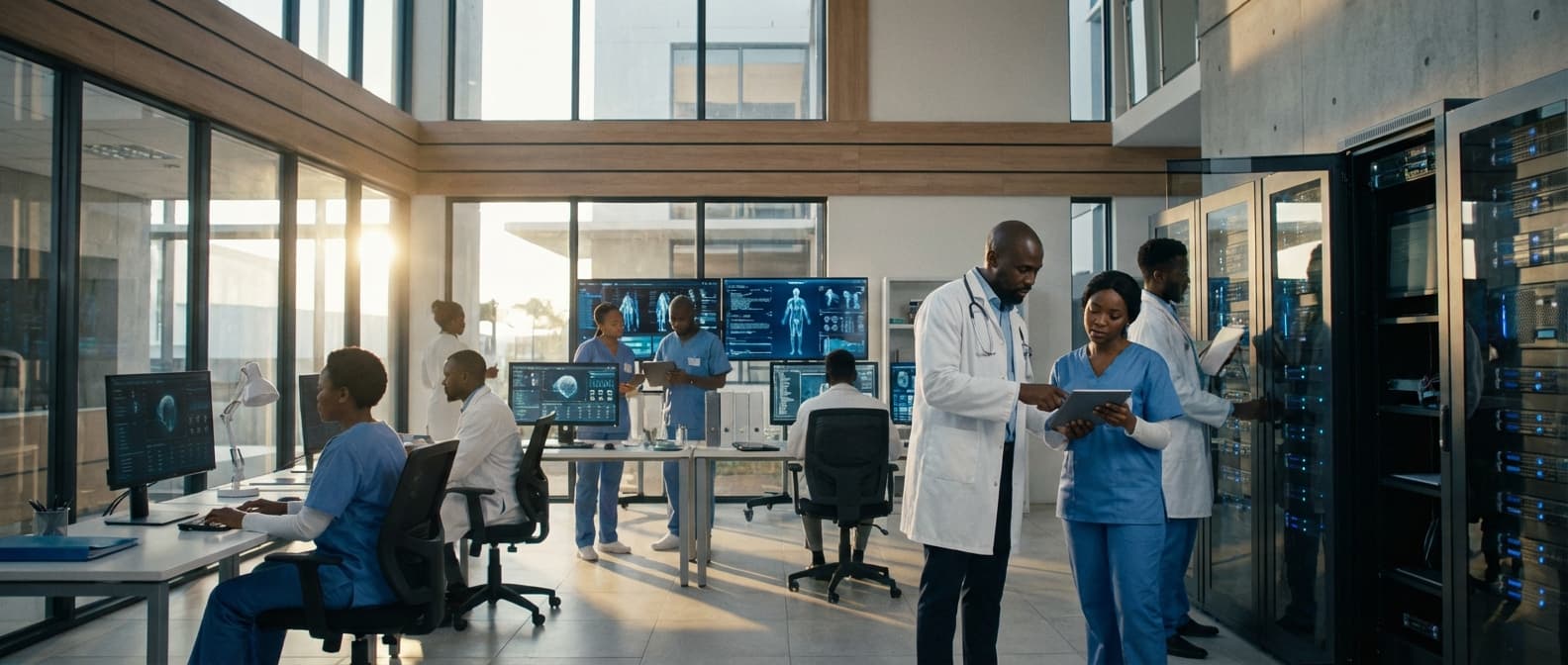
Tele-Radiology in Libya
Engineering Excellence & Technical Support
24/7 access to certified radiologists providing rapid, accurate remote interpretation of diagnostic imaging studies. High-standard technical execution following OEM protocols and local regulatory frameworks.
Bridging Geographic Gaps in Healthcare Access
Tele-radiology solutions enable expert diagnostic imaging interpretations for remote clinics and underserved regions across Libya, significantly reducing patient travel time and ensuring timely access to critical diagnoses, especially in areas with limited on-site radiology specialists.
Leveraging AI for Enhanced Diagnostic Accuracy and Efficiency
Implementation of AI-powered image analysis tools assists Libyan radiologists in identifying subtle abnormalities, prioritizing urgent cases, and improving overall diagnostic throughput, leading to faster and more accurate patient care.
Secure and Interoperable PACS for Seamless Data Management
Establishing a robust, cloud-based Picture Archiving and Communication System (PACS) infrastructure ensures secure storage, retrieval, and sharing of medical images across Libyan healthcare facilities, promoting interdisciplinary collaboration and efficient workflow management.
What Is Tele-radiology In Libya?
Tele-radiology in Libya refers to the practice of interpreting medical images (such as X-rays, CT scans, MRIs, and ultrasounds) remotely, by a radiologist who is not physically present at the location where the image was acquired. This service leverages telecommunications technology to transmit radiological images and data from one location to another for the purpose of interpretation and consultation. It addresses geographical barriers, improves access to specialized radiological expertise, and enhances diagnostic turnaround times, particularly in areas with limited availability of qualified radiologists or advanced imaging equipment. The core components of a tele-radiology service involve image acquisition, secure digital transmission of these images and associated patient data, remote interpretation by a radiologist, and the delivery of a diagnostic report back to the referring physician.
| Who Needs Tele-Radiology in Libya? | Typical Use Cases | |||||
|---|---|---|---|---|---|---|
| Hospitals and clinics in remote or underserved regions lacking in-house radiologists. | Emergency departments requiring rapid interpretation of trauma imaging (e.g., CT head, chest X-rays) outside of regular working hours. | Smaller healthcare facilities with limited access to subspecialty radiologists (e.g., neuro-radiology, pediatric radiology). | Diagnostic imaging centers seeking to expand their service offerings without necessarily hiring additional on-site specialists. | Post-conflict or disaster-affected areas where infrastructure may be compromised, necessitating remote access to diagnostics. | Tertiary care centers that experience high volumes of imaging studies and can benefit from outsourced interpretation to reduce backlog and improve efficiency. | Medical institutions aiming to improve the quality of care by providing access to a wider pool of expert interpretation, potentially across different geographical locations within Libya or even internationally. |
| Interpretation of routine diagnostic imaging studies (e.g., plain radiographs, ultrasounds) for primary diagnosis. | 24/7 coverage for critical care imaging, including stroke detection, acute abdomen, and trauma. | Subspecialty interpretations for complex cases, such as oncological imaging, musculoskeletal radiology, and neuroradiology. | Second opinion consultations on challenging diagnostic cases. | Follow-up imaging interpretations for chronic conditions requiring ongoing monitoring. | Screening programs (e.g., mammography screening) where large volumes of images need efficient and expert review. | Training and educational purposes, allowing junior radiologists to learn from experienced remote interpreters. |
Key Components and Stakeholders of Tele-Radiology in Libya:
- Image Acquisition: DICOM-compliant imaging modalities (X-ray, CT, MRI, Ultrasound) producing digital image files.
- Data Transmission Infrastructure: Secure and reliable network connectivity (e.g., VPN, secure internet protocols) for transferring large image files.
- Picture Archiving and Communication System (PACS) / Vendor Neutral Archive (VNA): Software for storing, retrieving, managing, and distributing medical images.
- Teleradiology Workstation: Dedicated computer systems with high-resolution monitors and specialized software for image viewing and interpretation.
- Radiologists: Licensed medical doctors specialized in interpreting radiological images, performing remote reads.
- Referring Physicians/Clinicians: Healthcare professionals who order radiological examinations and receive diagnostic reports.
- Healthcare Facilities: Hospitals, clinics, and diagnostic centers requiring remote radiological interpretation services.
- IT Support Personnel: For maintaining the hardware, software, and network infrastructure.
Who Needs Tele-radiology In Libya?
Tele-radiology services in Libya are crucial for bridging the gap in diagnostic imaging access, particularly in remote or underserved areas. The demand for these services is driven by a need to improve patient care, optimize resource utilization, and enhance the skills of local medical professionals. The primary beneficiaries of tele-radiology in Libya are healthcare facilities and medical professionals seeking to overcome geographical limitations and specialized expertise shortages. This technology offers a lifeline for accurate and timely diagnoses, impacting patient outcomes significantly.
| Customer Type | Primary Needs | Key Departments Benefiting |
|---|---|---|
| Hospitals (Public/Private) | Access to sub-specialist reads, reduced turnaround times, managing workload, overcoming radiologist shortages. | Radiology, Emergency, Neurology, Cardiology, Oncology, Orthopedics, Pediatrics, Internal Medicine. |
| Specialized Clinics | Expert interpretation for complex cases, timely diagnosis for treatment planning. | Cardiology, Neurology, Oncology, Gastroenterology, Pulmonary Medicine. |
| Primary Healthcare Centers | Basic diagnostic imaging interpretation for referrals and initial assessment, improving local decision-making. | General Practice, Internal Medicine, Pediatrics, Emergency Triage. |
| Emergency Departments | Rapid interpretation of critical imaging studies (trauma, stroke, etc.) to expedite patient management. | Emergency Medicine, Trauma Surgery, Neurology. |
| Maternity and Pediatric Units | Specialized interpretation of obstetric ultrasounds, pediatric imaging. | Obstetrics & Gynecology, Pediatrics, Neonatology. |
| Radiology Departments (for overflow/second opinion) | Support during high-volume periods, access to sub-specialty expertise for challenging cases, peer review. | General Radiology, Neuroradiology, Musculoskeletal Radiology, Abdominal Radiology, Thoracic Radiology. |
| Military and Security Healthcare Facilities | Consistent access to expert interpretation for personnel, often in diverse locations. | All departments, with a focus on trauma, orthopedics, and general diagnostics. |
| Remote and Rural Healthcare Outposts | Essential diagnostic capabilities where local expertise is scarce or non-existent, enabling basic screening and referral. | General Practice, Emergency Triage, Internal Medicine. |
Target Customers and Departments for Tele-Radiology in Libya
- Hospitals (both public and private)
- Specialized Clinics (e.g., cardiology, neurology, oncology)
- Primary Healthcare Centers
- Emergency Departments
- Maternity and Pediatric Units
- Radiology Departments (for overflow or second opinions)
- Military and Security Healthcare Facilities
- Remote and Rural Healthcare Outposts
Tele-radiology Process In Libya
Tele-radiology in Libya involves a multi-step process to extend diagnostic imaging services to areas with limited or no on-site radiologists. This workflow typically begins with a patient encounter at a referring healthcare facility, leading to an imaging study. The images are then securely transmitted to a tele-radiology service provider, where a radiologist reviews them and generates a report. This report is then sent back to the referring physician for patient management. Challenges in Libya include infrastructure limitations (internet connectivity, power), regulatory frameworks, and the need for robust data security.
| Stage | Description | Key Participants | Technology Involved | Potential Challenges in Libya |
|---|---|---|---|---|
| Inquiry & Request | A patient requires a diagnostic imaging study. | Referring Physician, Patient | Electronic Health Record (EHR) systems (if available), Paper-based referral forms | Lack of standardized referral processes, limited access to specialists for initial consultation. |
| Image Acquisition | The imaging study is performed at a local healthcare facility. | Radiographer/Technician, Patient | X-ray machines, CT scanners, MRI scanners, Ultrasound machines | Outdated equipment, inconsistent image quality, power outages, lack of trained technicians. |
| Data Transmission | Images and relevant clinical data are sent to the tele-radiology service. | Radiographer/Technician, Tele-radiology Platform Administrator | Picture Archiving and Communication System (PACS), Health Level Seven (HL7) standards, Secure VPNs, Encrypted channels | Unreliable internet connectivity, insufficient bandwidth, cybersecurity threats, data privacy concerns. |
| Image Interpretation | A qualified radiologist reviews the images and provides a diagnosis. | Remote Radiologist, Tele-radiology Platform | Advanced workstations with high-resolution monitors, DICOM viewers, AI-powered diagnostic tools (emerging) | Shortage of sub-specialty radiologists, language barriers (in some cases), potential for misinterpretation due to limited clinical context. |
| Report Generation & Delivery | A detailed report is created and sent back to the referring physician. | Remote Radiologist, Tele-radiology Platform | Radiology Information System (RIS), Secure reporting templates, Email/Secure messaging platforms | Delays in report turnaround time, issues with secure delivery, lack of standardized reporting formats. |
| Clinical Integration | The referring physician uses the report to inform patient care. | Referring Physician, Patient | EHR systems, Communication channels with the radiologist | Lack of integration between tele-radiology reports and local EHRs, physician buy-in and training for interpreting remote reports. |
Tele-Radiology Workflow in Libya
- Patient presentation at a primary healthcare center or hospital.
- Ordering of diagnostic imaging studies (X-ray, CT, MRI, Ultrasound).
- Image acquisition at the referring facility using local equipment.
- Data anonymization and preparation for transmission.
- Secure transmission of DICOM images and patient data to the tele-radiology platform.
- Assignment of the case to a radiologist based on sub-specialty and availability.
- Remote interpretation of images by the assigned radiologist.
- Generation of a diagnostic report, including findings and recommendations.
- Secure transmission of the finalized report back to the referring facility.
- Review of the report by the referring physician.
- Patient management based on the tele-radiology report.
- Billing and administrative processes.
Tele-radiology Cost In Libya
Tele-radiology services in Libya are still in a nascent stage of development, and consequently, there isn't a widely standardized pricing structure or readily available published data on specific cost ranges. However, we can discuss the likely pricing factors and hypothesize potential cost ranges in Libyan Dinar (LYD), considering the country's economic realities and the global tele-radiology market.
Several factors influence the cost of tele-radiology, and these are particularly relevant in the Libyan context:
Key Pricing Factors:
| Imaging Modality | Estimated Range (LYD) - Standard Reporting | Estimated Range (LYD) - Urgent Reporting | Notes |
|---|---|---|---|
| X-ray | 150 - 400 LYD | 250 - 600 LYD | Based on number of views and complexity. |
| Ultrasound | 200 - 500 LYD | 350 - 750 LYD | Can vary for specialized ultrasounds (e.g., obstetric, vascular). |
| CT Scan | 400 - 1000 LYD | 700 - 1500 LYD | Depends on the number of slices and anatomical region scanned. |
| MRI | 600 - 1500 LYD | 1000 - 2000 LYD | Highest cost due to complexity and specialized equipment. |
Factors Influencing Tele-Radiology Costs in Libya
- {"title":"Complexity of the Imaging Modality","description":"The type of imaging study (e.g., X-ray, CT scan, MRI, ultrasound) significantly impacts cost. More complex modalities like MRI and CT scans require more specialized expertise and often higher reimbursement rates."}
- {"title":"Urgency of the Report","description":"Standard reporting times are generally cheaper than urgent or STAT (immediate) reporting, which requires immediate allocation of a radiologist's time."}
- {"title":"Radiologist's Expertise and Sub-specialization","description":"Highly specialized radiologists (e.g., neuroradiologists, pediatric radiologists) may command higher fees due to their niche expertise and limited availability."}
- {"title":"Volume of Cases","description":"Healthcare providers or institutions that can commit to a higher volume of tele-radiology services might be able to negotiate bulk discounts."}
- {"title":"Technology Infrastructure and Software","description":"The cost of the tele-radiology platform, including PACS (Picture Archiving and Communication System) and reporting software, can be factored into the pricing, either as a one-time setup fee or a recurring subscription."}
- {"title":"Data Security and Compliance","description":"Ensuring robust data security and compliance with any emerging local or international health data regulations will add to operational costs."}
- {"title":"Geographical Location of the Radiologist","description":"While tele-radiology allows for remote work, the radiologist's location (and associated cost of living/practice) can indirectly influence pricing, especially if dealing with international providers."}
- {"title":"Exchange Rates and Economic Stability","description":"As of late 2023/early 2024, Libya has a complex economic landscape with multiple exchange rates. The official rate may differ significantly from the parallel market rate, which can impact the cost of imported technology or services billed in foreign currency, and therefore, the effective LYD cost."}
- {"title":"Provider's Business Model","description":"Whether the tele-radiology service is offered by a local Libyan company, an international provider operating in Libya, or a partnership will affect pricing strategies."}
Affordable Tele-radiology Options
Tele-radiology offers a flexible and often cost-effective solution for medical imaging interpretation. Beyond per-study fees, "value bundles" are becoming increasingly popular. These are pre-negotiated packages that often include a set volume of studies, specific types of interpretations (e.g., X-rays, CTs, MRIs), or a combination of services over a defined period. The core idea is to provide predictable costs and often a discounted rate for consistent, high-volume partnerships.
To achieve further cost savings with tele-radiology, consider these strategies:
- Volume Commitments: Negotiate lower per-study rates by committing to a certain volume of interpretations annually or monthly.
- Tiered Pricing: Explore providers who offer tiered pricing based on study complexity or turnaround time requirements. Faster turnaround times may come at a premium, while standard turnaround can be more economical.
- Extended Hours/Nights/Weekends: While essential for 24/7 coverage, consider if your needs genuinely require continuous coverage. Opting for coverage during specific peak hours or only for emergent cases can reduce costs.
- Managed Services: Some tele-radiology providers offer managed services that go beyond just interpretation. This can include IT integration, workflow optimization, and quality assurance, which can streamline operations and reduce internal overhead.
- Specialty Focus: If you require interpretations for highly specialized modalities (e.g., neuroimaging, cardiac imaging), working with providers who focus on these areas can lead to better quality and potentially more competitive pricing due to their expertise and efficiency.
- Technology Integration: Investigate how well the tele-radiology vendor integrates with your existing PACS and EMR systems. Seamless integration reduces manual work and potential errors, saving time and money.
- Long-Term Contracts: Committing to longer-term contracts can often secure more favorable pricing due to the provider's ability to forecast and allocate resources more effectively.
| Value Bundle Component | Description | Potential Cost-Saving Benefit |
|---|---|---|
| Volume-Based Packages | Pre-negotiated rates for a set number of studies over a period (e.g., monthly, quarterly, annually). | Discounted per-study cost for consistent volume, predictability in budgeting. |
| All-Inclusive Pricing | Bundles that include interpretation, preliminary reports, and sometimes even quality control or peer review. | Simplifies billing, reduces administrative overhead, ensures comprehensive service. |
| Specialty-Specific Bundles | Packages tailored for specific imaging modalities or subspecialties (e.g., neuroradiology, musculoskeletal imaging). | Potentially lower costs due to specialized expertise and efficient workflows for those modalities. |
| On-Demand vs. Dedicated Capacity | Bundles offering a certain level of dedicated radiologist availability for urgent cases, or flexible on-demand services. | Matches cost to actual demand; paying only for the necessary level of immediate access. |
Key Cost-Saving Strategies in Tele-Radiology
- Volume Commitments
- Tiered Pricing Based on Complexity/Turnaround Time
- Optimizing Coverage Hours
- Leveraging Managed Services
- Engaging Specialty-Focused Providers
- Ensuring Seamless Technology Integration
- Securing Favorable Pricing with Long-Term Contracts
Verified Providers In Libya
In the current landscape of healthcare services in Libya, discerning reliable and qualified providers is paramount. Franance Health has emerged as a distinguished entity, built on a foundation of stringent credentialing processes and a commitment to ethical practice. This section explores Franance Health's credentials and outlines why they represent the optimal choice for individuals seeking dependable healthcare solutions in Libya.
| Provider Feature | Franance Health's Offering | Why it Matters for You |
|---|---|---|
| Medical Professional Qualification | All affiliated doctors and specialists undergo thorough verification of their academic degrees, licenses, and professional certifications from reputable institutions. | Ensures you are treated by genuinely qualified and licensed medical experts, minimizing risks associated with unqualified practitioners. |
| Facility Standards | Partnered clinics and hospitals are assessed for their adherence to international standards in terms of equipment, hygiene, and operational protocols. | Guarantees a safe, clean, and technologically advanced environment for your treatment, promoting better health outcomes. |
| Ethical Practice & Transparency | Franance Health enforces a strict code of ethics for all providers, emphasizing patient-centered care and transparent communication regarding treatment plans and costs. | Fosters trust and allows you to make informed decisions about your healthcare with full understanding and confidence. |
| Continuity of Care | A network of verified providers ensures seamless referrals and follow-ups, whether within Libya or for international consultations. | Provides peace of mind knowing your healthcare journey is supported and coordinated, even if specialized care is required beyond your initial consultation. |
| Patient Feedback Mechanism | Actively collects and analyzes patient feedback to ensure ongoing quality improvement and accountability among its network. | Demonstrates a commitment to continuously enhancing the patient experience and upholding the highest standards of service. |
Franance Health's Key Credentials
- Accreditation with recognized international healthcare bodies.
- Partnerships with globally acclaimed medical institutions.
- Rigorous vetting process for all affiliated medical professionals.
- Adherence to international quality and safety standards.
- Commitment to patient data privacy and security.
Scope Of Work For Tele-radiology
This Scope of Work (SOW) outlines the requirements for a Tele-radiology service provider. It details the technical deliverables and standard specifications necessary to ensure high-quality, efficient, and secure remote diagnostic imaging interpretation.
| Deliverable Category | Specific Deliverable | Standard Specifications / Requirements | Key Performance Indicators (KPIs) |
|---|---|---|---|
| Image Acquisition & Transmission | Secure Image Upload Mechanism | DICOM (Digital Imaging and Communications in Medicine) compliance; encrypted transmission protocols (e.g., TLS 1.2+); minimum bandwidth requirements; support for various imaging modalities (X-ray, CT, MRI, Ultrasound, etc.). | Average upload time per study; success rate of image transmission. |
| Image Interpretation | Radiological Reports | Statutory qualification of interpreting radiologists; comprehensive reports including findings, impression, and recommendations; adherence to client-specific reporting templates; reporting turnaround times (TATs) for routine and STAT cases. | TAT for STAT reports (e.g., < 30 minutes); TAT for routine reports (e.g., < 24 hours); radiologist error rate. |
| Technology & Infrastructure | Tele-radiology Platform | Web-based or dedicated client software; robust PACS viewer with advanced measurement and annotation tools; integration capabilities (API, HL7); audit trails for all access and actions; high availability and disaster recovery. | Platform uptime; system responsiveness; successful integration with client systems. |
| Technology & Infrastructure | Data Security & Privacy | HIPAA/GDPR compliance; access control and user authentication; data encryption at rest and in transit; regular security audits and vulnerability assessments; data retention policies. | Number of security incidents; compliance audit pass rate. |
| Communication & Support | Communication Channels | Secure messaging within the platform; dedicated technical support contact; clear escalation procedures for critical findings or technical issues. | Response time for technical support; resolution rate of support tickets. |
| Communication & Support | Radiologist Availability | 24/7/365 coverage for STAT reads; defined hours of operation for routine reads; availability of subspecialty radiologists. | Percentage of coverage for requested services; availability of specific subspecialties. |
| Reporting & Analytics | Reporting Dashboards | Access to real-time dashboards for tracking study volume, TAT, and radiologist performance; customizable reporting features. | Availability of requested reports; accuracy of reported metrics. |
| Reporting & Analytics | Quality Assurance (QA) Program | Formal QA program for ongoing monitoring and improvement of interpretation quality; peer review process; feedback mechanisms for referring physicians. | QA review scores; number of feedback instances from referring physicians. |
Key Objectives of the Tele-radiology Service
- To provide timely and accurate radiological interpretations of medical images.
- To enhance access to specialized radiology expertise, particularly in underserved areas.
- To improve patient care through prompt diagnosis and consultation.
- To ensure data security, privacy, and compliance with all relevant regulations (e.g., HIPAA, GDPR).
- To integrate seamlessly with the client's existing Picture Archiving and Communication System (PACS) and Electronic Health Record (EHR) systems.
Service Level Agreement For Tele-radiology
This Service Level Agreement (SLA) outlines the performance standards, response times, and uptime guarantees for the tele-radiology services provided by [Your Company Name] to [Client Company Name]. This SLA is an integral part of the Master Services Agreement (MSA) between the parties.
| Service Metric | Target Performance | Measurement Method | Remedy for Failure |
|---|---|---|---|
| Platform Uptime | 99.9% Uptime (excluding scheduled maintenance) | Calculated as (Total minutes in month - Downtime minutes) / Total minutes in month * 100 | Service credits as defined in Appendix A |
| Routine Read Turnaround Time (TAT) | Within 24 hours of study assignment | Time from study assignment in PACS to report generation and transmission | Service credits as defined in Appendix A |
| STAT Read Turnaround Time (TAT) | Within 1 hour of study assignment | Time from STAT study assignment in PACS to report generation and transmission | Service credits as defined in Appendix A |
| Critical Finding Notification | Immediate notification to referring physician within 15 minutes of identification | Timestamp of critical finding identification and confirmed delivery to referring physician | Service credits as defined in Appendix A |
| Image Availability | 100% availability of images associated with reported studies | Verification of image access within the PACS/VNA | Service credits as defined in Appendix A |
| Report Availability | 100% availability of generated reports within the reporting system | Verification of report access within the reporting system | Service credits as defined in Appendix A |
Key Service Metrics
- Service Availability: The tele-radiology platform and associated services shall be available to the Client 24 hours a day, 7 days a week, 365 days a year, excluding scheduled maintenance windows.
- Response Time: Refers to the time elapsed from when a study is assigned to a radiologist for interpretation until the final report is generated and transmitted.
- Uptime Guarantee: The percentage of time the tele-radiology service is operational and accessible to the Client.
- Reporting Standards: All radiology reports will adhere to established clinical guidelines and will be generated in a clear, concise, and clinically relevant manner.
Frequently Asked Questions

Ready when you are
Let's scope your Tele-Radiology in Libya project in Libya.

Scaling healthcare logistics and technical systems across the entire continent.