
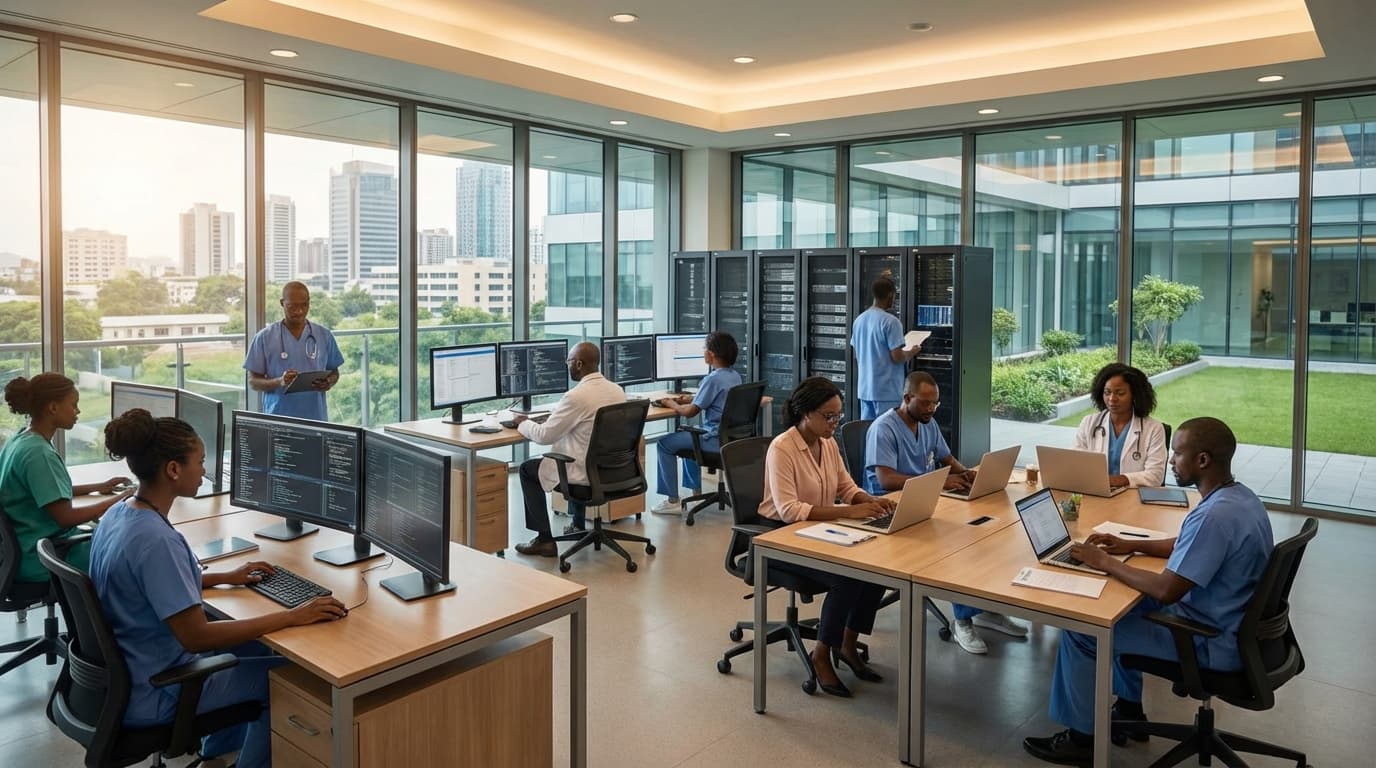
Radiology Reader & Reporting Support in Libya
Engineering Excellence & Technical Support
Remote radiology reading and reporting services High-standard technical execution following OEM protocols and local regulatory frameworks.
AI-Powered Diagnostic Assistance
Leverage advanced AI algorithms to provide real-time suggestions, abnormality detection, and differential diagnoses to radiologists, enhancing accuracy and speed for critical cases across Libya.
Secure Cloud-Based Reporting Hub
Establish a centralized, secure, and compliant cloud platform for storing, sharing, and collaboratively reviewing radiology reports, facilitating remote access and expertise sharing for healthcare providers nationwide.
Streamlined Reporting Workflow Automation
Implement intelligent workflow automation tools that reduce manual data entry, pre-populate report templates, and integrate with existing PACS/RIS systems, significantly increasing reporting efficiency and turnaround times for Libyan facilities.
What Is Radiology Reader & Reporting Support In Libya?
Radiology Reader & Reporting Support in Libya refers to a specialized service providing expert interpretation of medical imaging studies and the generation of comprehensive diagnostic reports. This service leverages the expertise of qualified radiologists, either on-site or remotely, to assist healthcare facilities in enhancing their diagnostic capabilities and ensuring timely, accurate patient care. The core function involves the thorough review of various imaging modalities (e.g., X-ray, CT, MRI, Ultrasound) and the subsequent production of detailed, structured reports that communicate findings, impressions, and recommendations to referring clinicians. This service is crucial for institutions that may face challenges in maintaining a full complement of subspecialty radiologists, experience high caseloads, or require specialized expertise not readily available locally. It aims to augment existing radiological departments, improve turnaround times for reports, and ensure a consistent standard of diagnostic quality across the Libyan healthcare landscape.
| Who Needs Radiology Reader & Reporting Support? | Typical Use Cases | |||||||
|---|---|---|---|---|---|---|---|---|
| Hospitals and Clinics (Public and Private): Particularly those in remote areas or with limited radiological staff. This includes general hospitals, specialized medical centers, and outpatient clinics. | Emergency Departments: For rapid interpretation of critical imaging studies (e.g., trauma, stroke, acute abdomen) to expedite patient management. | Surgical Departments: To provide pre-operative assessment and post-operative follow-up imaging interpretations. | Oncology Centers: For staging, treatment response assessment, and follow-up imaging of cancer patients. | Primary Healthcare Providers: To gain access to expert interpretations of routine and complex imaging studies without direct access to on-site radiologists. | Research Institutions: For specialized image analysis and interpretation in clinical trials and research projects. | Organizations with Limited Subspecialty Coverage: To address specific diagnostic needs that require niche expertise not available locally. | Facilities Experiencing High Imaging Volumes: To manage workload and reduce report turnaround times. | Start-up Healthcare Facilities: To establish robust diagnostic imaging services from inception. |
Key Components of Radiology Reader & Reporting Support:
- Image Interpretation: Expert analysis of all standard radiological imaging modalities.
- Subspecialty Expertise: Access to radiologists with specialized training in areas such as neuroradiology, musculoskeletal radiology, abdominal imaging, breast imaging, and interventional radiology.
- Report Generation: Production of clear, concise, and structured diagnostic reports following established guidelines (e.g., ACR, European guidelines).
- Quality Assurance: Implementation of peer review processes and continuous professional development for reporting radiologists.
- Turnaround Time (TAT) Optimization: Timely delivery of reports to facilitate prompt clinical decision-making.
- Technology Integration: Utilization of PACS (Picture Archiving and Communication System) and RIS (Radiology Information System) for seamless workflow and secure data transfer, often involving teleradiology platforms.
- Consultation and Collaboration: Provision of direct consultation with referring physicians when complex cases require further discussion.
- Education and Training Support: Potential for knowledge transfer and training of local medical staff on imaging protocols and interpretation techniques.
Who Needs Radiology Reader & Reporting Support In Libya?
Radiology reader and reporting support services are essential for a wide range of healthcare providers and institutions in Libya. These services offer critical assistance in interpreting medical images and generating comprehensive, accurate reports, thereby improving diagnostic capabilities, patient care, and operational efficiency. The demand for such support stems from various challenges faced by Libyan healthcare facilities, including a shortage of highly specialized radiologists, an increasing volume of imaging studies, and the need for peer review and quality assurance.
| Department | Specific Needs & Benefits of Support |
|---|---|
| Radiology Department | • Overcoming radiologist shortages • Reducing report turnaround times • Providing subspecialty expertise (e.g., neuroradiology, musculoskeletal, pediatric) • Quality assurance and second opinions • Assistance with complex cases • 24/7 coverage for urgent reads |
| Emergency Medicine | • Expedited interpretation of critical imaging • Support during high-volume periods • Ensuring prompt treatment decisions |
| Oncology | • Specialized interpretation of CT, MRI, PET scans for tumor staging, treatment response, and follow-up • Consistent and accurate reporting for treatment planning |
| Cardiology | • Interpretation of cardiac MRI, CT angiography, and other advanced cardiac imaging studies • Detailed reporting for interventional procedures and diagnosis |
| Neurology/Neurosurgery | • Expert reads for MRI/CT of the brain and spine • Identification of strokes, tumors, trauma, and degenerative conditions • Support for complex neurovascular and spine procedures |
| Orthopedics | • Detailed interpretation of musculoskeletal X-rays, CTs, and MRIs • Assessment of fractures, joint pathology, sports injuries, and degenerative diseases |
| Pediatrics | • Specialized interpretation of imaging in children, requiring specific knowledge of pediatric conditions and radiation dose considerations. • Support for neonatal and pediatric intensive care units. |
| Internal Medicine/General Practice | • Access to expert radiology interpretations for a broad range of diagnostic needs. • Improved diagnostic confidence and patient management. |
| Quality Improvement & Training | • Peer review and case discussions for radiologist training • Standardizing reporting practices • Enhancing overall diagnostic quality |
Target Customers & Departments in Libya for Radiology Reader & Reporting Support:
- {"item":"Public Hospitals","description":"These are the backbone of the Libyan healthcare system and often face the greatest resource constraints. They require support to manage high patient loads and ensure timely, accurate diagnoses across various specialties."}
- {"item":"Private Hospitals & Clinics","description":"While often better equipped than public institutions, private facilities also benefit from specialized reading and reporting services to enhance their diagnostic accuracy, offer advanced interpretations, and reduce turnaround times for their patients."}
- {"item":"Diagnostic Imaging Centers","description":"Dedicated imaging centers, whether independent or affiliated with larger institutions, can leverage external expertise to augment their in-house radiologist capacity, handle overflow, or access subspecialty interpretations."}
- {"item":"Specialty Medical Centers (e.g., Oncology, Cardiology, Neurology)","description":"Centers focusing on specific medical fields often require highly specialized radiology interpretations (e.g., oncologic imaging, cardiac MRI, neuroimaging). Support services can provide this niche expertise."}
- {"item":"Emergency Departments","description":"Rapid and accurate interpretation of emergency imaging is crucial. Reader support can help expedite these urgent reads, especially during off-hours or peak times."}
- {"item":"Rural and Remote Healthcare Facilities","description":"Facilities in underserved areas may have limited or no on-site radiology expertise. Tele-radiology reporting support can bridge this gap, providing essential diagnostic services."}
- {"item":"Medical Schools & Research Institutions","description":"These institutions can utilize reporting support for training purposes, educational initiatives, and to assist in the interpretation of images for research projects."}
Radiology Reader & Reporting Support Process In Libya
This document outlines the workflow for the Radiology Reader & Reporting Support Process in Libya, from the initial inquiry to the final execution of the service. This process ensures that referring physicians receive timely and accurate radiological interpretations and reports.
| Stage | Description | Responsible Party | Key Activities | Output | Potential Challenges/Considerations |
|---|---|---|---|---|---|
| Inquiry Initiation | The process begins when a referring physician or healthcare facility requires a radiological interpretation for a patient. | Referring Physician/Healthcare Facility | Submitting an inquiry, often through a direct request or via a dedicated portal/system. | Formal request for radiological services. | Clarity of the request, availability of information, communication channels. |
| Patient Data & Image Acquisition | Gathering all necessary patient information and ensuring the radiological images are accessible. | Referring Healthcare Facility/Radiology Department | Collecting patient history, clinical information, lab results, and obtaining/transferring DICOM images. | Complete patient record and DICOM images accessible to the reader. | Image quality, data integrity, secure transfer protocols, PACS availability. |
| Workload Prioritization & Assignment | Organizing incoming requests and assigning them to appropriate radiologists based on expertise and availability. | Radiology Department/Teleradiology Coordinator | Reviewing incoming studies, prioritizing urgent cases (e.g., trauma, critical findings), and assigning studies to readers. | Prioritized worklist for radiologists. | Workload balancing, reader specialization, urgency criteria definition, system efficiency. |
| Radiological Interpretation (Reading) | The qualified radiologist meticulously analyzes the radiological images to identify any abnormalities or significant findings. | Radiologist (Reader) | Examining images (X-ray, CT, MRI, Ultrasound, etc.), comparing with prior studies, and formulating a diagnostic impression. | Diagnostic findings and preliminary assessment. | Reader fatigue, image artifacts, complex cases requiring multidisciplinary input, varying levels of radiologist experience. |
| Report Generation | The radiologist dictates or types a comprehensive report detailing the findings, impressions, and recommendations. | Radiologist (Reader) | Drafting the report using standardized templates, incorporating findings, impressions, and clinical correlation. | Draft radiological report. | Dictation accuracy, report completeness, adherence to reporting standards, turnaround time pressure. |
| Report Review & Quality Assurance | A secondary review of the report by another radiologist (if applicable) or automated checks to ensure accuracy and quality. | Senior Radiologist/Quality Assurance Personnel | Reviewing the draft report for accuracy, clarity, consistency, and adherence to guidelines. May involve peer review. | Finalized radiological report. | Subjectivity in interpretation, time constraints for review, maintaining consistent QA standards. |
| Report Dissemination | Transmitting the finalized report to the referring physician or healthcare facility. | Radiology Department/Teleradiology System | Sending the report via secure electronic means (e.g., EHR, secure email, fax), or through a dedicated portal. | Finalized report delivered to the referring physician. | Secure transmission, report accessibility by the referring physician, timely delivery. |
| Billing & Archiving | Processing billing for the service and securely storing the images and reports for future reference. | Administration/IT Department/Radiology Department | Generating invoices, processing payments, and archiving images and reports in PACS/RIS for specified retention periods. | Billed services, archived medical records. | Accuracy of billing, data security, compliance with data retention laws, efficient archiving systems. |
Key Stages in the Radiology Reader & Reporting Support Process
- Inquiry Initiation
- Patient Data & Image Acquisition
- Workload Prioritization & Assignment
- Radiological Interpretation (Reading)
- Report Generation
- Report Review & Quality Assurance
- Report Dissemination
- Billing & Archiving
Radiology Reader & Reporting Support Cost In Libya
The cost of radiology reader and reporting support in Libya is influenced by several factors. These include the complexity of the imaging studies, the radiologist's specialization and experience, the urgency of the report, and the provider's overhead. The pricing is typically discussed and agreed upon in Libyan Dinar (LYD).
| Imaging Modality | Estimated Range (LYD) | Notes |
|---|---|---|
| X-Ray (per view) | 50 - 150 | Basic interpretation |
| Ultrasound (e.g., Abdomen, Pelvis) | 100 - 300 | Standard diagnostic ultrasound |
| CT Scan (e.g., Head, Chest) | 200 - 600 | Depending on the number of slices and contrast usage |
| MRI (e.g., Brain, Knee) | 300 - 900 | Depending on the sequence and contrast usage |
| Specialized Procedures (e.g., Angiography Reporting) | 500 - 1500+ | Requires highly specialized radiologists |
| Teleradiology Services (per study, remote reporting) | 100 - 500 | Variable based on service provider and turnaround time |
Key Pricing Factors:
- Type of Imaging Modality: CT scans, MRIs, ultrasounds, and X-rays will have different base costs due to varying equipment and interpretation complexity.
- Body Part/Region: Reporting on complex areas like the brain or spine generally commands higher fees than simpler examinations.
- Report Urgency: Emergency or STAT reports often incur a surcharge due to the expedited turnaround time required.
- Radiologist's Expertise: Highly specialized radiologists (e.g., neuroradiologists, interventional radiologists) may charge more for their expertise.
- Volume of Work: Long-term contracts or high-volume service agreements might lead to discounted rates.
- Provider Overhead: The operational costs of the radiology practice or teleradiology service (staff, technology, facility) are factored into pricing.
- Geographic Location (within Libya): While less significant than other factors, slight variations might exist between major cities and more remote areas due to local market dynamics.
Affordable Radiology Reader & Reporting Support Options
Radiology practices and healthcare providers are increasingly seeking cost-effective solutions for radiology reading and reporting. This can include leveraging outsourced services, utilizing AI-powered tools, or a combination of both. Identifying the right approach often involves understanding different value bundles and implementing smart cost-saving strategies to maintain high-quality patient care while managing operational expenses.
| Cost-Saving Strategy | Description | Potential Impact |
|---|---|---|
| Leverage Outsourced Reading Services | Partner with teleradiology providers for overflow, after-hours, or specialized reads. This can reduce the need for in-house staffing for non-core hours or niche subspecialties. | Reduced labor costs, improved coverage, access to wider subspecialty expertise. |
| Implement AI-Powered Pre-Reads | Utilize AI tools to flag potential abnormalities or prioritize urgent cases for radiologists. This can enhance radiologist efficiency and accuracy. | Increased radiologist throughput, potentially lower cost per read, improved detection rates. |
| Optimize PACS/RIS Workflows | Ensure seamless integration between Picture Archiving and Communication Systems (PACS) and Radiology Information Systems (RIS) with reporting platforms. Automation of tasks like image retrieval and report population saves time. | Reduced administrative overhead, faster turnaround times, fewer manual errors. |
| Negotiate Volume-Based Pricing | For outsourced services or AI solutions, negotiate pricing tiers based on projected or actual study volumes. Higher volumes often come with lower per-study rates. | Direct cost reduction on services, predictable budgeting. |
| Focus on Standardized Reporting | Utilize structured reporting templates to ensure consistency and completeness, which can also streamline downstream data analysis and reduce radiologist dictation time. | Improved report quality and consistency, potential for faster reporting. |
| Consider Remote Radiologist Models | Employing remote radiologists can sometimes offer cost savings compared to on-site staff, especially for practices with distributed locations or variable workload. | Potentially lower overhead (office space, benefits), access to a wider talent pool. |
| Strategic Use of Subspecialty Consultation | Instead of hiring full-time subspecialists for every niche, use on-demand remote subspecialty consultation services for complex or infrequent cases. | Avoids the high cost of full-time subspecialist employment, ensures expert opinion when needed. |
Value Bundles for Radiology Reader & Reporting Support
- {"title":"Tiered Reading Services","description":"This bundle offers different levels of subspecialty expertise and turnaround times. Basic tiers might cover common studies with standard turnaround, while premium tiers provide urgent reads by highly specialized radiologists, often at a higher per-study cost but with a defined value proposition for complex cases or critical findings."}
- {"title":"AI-Assisted Workflow Bundles","description":"Combines AI-powered image analysis (e.g., for nodule detection, fracture identification) with human radiologist oversight. The AI acts as a preliminary reader or a second pair of eyes, potentially reducing radiologist time per study and improving detection rates. This bundle can be priced based on AI usage, per-study integration, or a subscription model."}
- {"title":"Comprehensive Reporting Solutions","description":"This includes not just image interpretation but also advanced reporting features like structured reporting templates, integration with EHR/PACS, and even patient-friendly report summaries. The value lies in streamlining the entire reporting process, reducing administrative burden and improving communication."}
- {"title":"On-Demand Subspecialty Support","description":"For practices that don't have in-house subspecialists for all modalities or complex areas, this bundle provides access to a network of remote subspecialists on an as-needed basis. This avoids the cost of full-time subspecialist hires and ensures expert opinions are available when required."}
- {"title":"Hybrid Model Packages","description":"A flexible approach combining in-house reading capabilities with outsourced support for peak times, after-hours coverage, or specific subspecialty needs. These packages are tailored to a practice's volume and specific requirements."}
Verified Providers In Libya
In the complex and evolving healthcare landscape of Libya, access to verified and trustworthy medical providers is paramount. Franance Health has emerged as a leading organization dedicated to ensuring the highest standards of care and patient safety. Their commitment to rigorous credentialing and continuous evaluation makes them a cornerstone of reliable healthcare services in the region. This document outlines Franance Health's credentials and the compelling reasons why they represent the best choice for individuals and organizations seeking quality medical support in Libya.
| Why Franance Health is the Best Choice | Key Differentiators | Benefits for Patients and Organizations |
|---|---|---|
| Uncompromising Quality Assurance | Franance Health's comprehensive credentialing process significantly reduces the risk of engaging with unqualified or substandard medical providers. | Peace of mind and confidence in receiving safe and effective medical care. |
| Access to a Trusted Network | They have curated a network of reputable and vetted healthcare professionals and institutions across Libya. | Easier and more reliable access to specialized medical expertise and facilities. |
| Enhanced Patient Safety | Their commitment to international standards and continuous monitoring directly contributes to improved patient safety outcomes. | Reduced risk of medical errors and improved overall patient experience. |
| Efficient Healthcare Navigation | Franance Health streamlines the process of finding and accessing appropriate medical services, saving valuable time and effort. | Simplified healthcare journey, especially for individuals unfamiliar with the local medical landscape. |
| Ethical and Professional Care | By upholding high ethical standards, Franance Health ensures that all affiliated providers practice with integrity and professionalism. | Trustworthy medical interactions and respectful patient treatment. |
| Comprehensive Care Solutions | Their diverse network caters to a wide range of medical needs, from general consultations to complex specializations. | A single point of contact for a broad spectrum of healthcare requirements. |
Franance Health's Key Credentials and Commitments
- Rigorous Provider Vetting: Franance Health employs a multi-stage vetting process for all medical professionals and facilities it partners with. This includes verification of licenses, certifications, educational background, and professional experience.
- International Standards Adherence: The organization aligns its credentialing processes with internationally recognized healthcare standards and best practices, ensuring a high level of quality and safety.
- Continuous Quality Improvement: Franance Health doesn't stop at initial verification. They implement ongoing monitoring and evaluation mechanisms to ensure providers consistently meet and exceed expected standards.
- Specialized Network Development: They focus on building a network of providers across various medical specialties, ensuring comprehensive care options are available to meet diverse patient needs.
- Patient-Centric Approach: A core tenet of Franance Health is prioritizing patient well-being, safety, and satisfaction. This influences their provider selection and service delivery protocols.
- Ethical Practice Enforcement: Franance Health maintains strict adherence to ethical medical practices and professional conduct for all its affiliated providers.
- Technological Integration: Leveraging technology for efficient patient management, record keeping, and communication is a key aspect of their operational excellence.
Scope Of Work For Radiology Reader & Reporting Support
This Scope of Work (SOW) outlines the requirements for Radiology Reader & Reporting Support services. The objective is to provide qualified radiologists to interpret medical imaging studies and generate comprehensive, accurate, and timely reports, thereby supporting healthcare providers in diagnostic decision-making and patient care. This document details the technical deliverables and standard specifications expected from the service provider.
| Deliverable | Description | Standard Specification/Requirement | Format | Turnaround Time (TAT) |
|---|---|---|---|---|
| Radiology Image Interpretation | Expert analysis of submitted medical images. | Radiologist must be board-certified or eligible in relevant specialties (e.g., diagnostic radiology). Proficiency in interpreting various modalities and anatomical regions. | Digital images (DICOM format) accessed via secure PACS connection or cloud platform. | Routine: 24-48 hours; STAT: < 1 hour (defined by urgency level). |
| Radiology Report Generation | Creation of detailed, accurate, and clinically relevant reports. | Reports must include: patient demographics, clinical indication, comparison studies, technique, findings, impression, and recommendations (if applicable). Adherence to ACR appropriateness criteria and other relevant guidelines. | Structured reporting templates preferred. Standard text-based reporting acceptable. Output in PDF or integrated into client's EMR/RIS system. | Concurrent with interpretation turnaround times. Critical findings communicated verbally within 30 minutes of identification. |
| Quality Assurance | Processes to ensure accuracy and consistency. | Regular peer review of reports, participation in internal quality improvement programs. Adherence to established quality metrics (e.g., accuracy rates, error rates). | Internal QA reports provided monthly. Ad-hoc reviews as requested. | Ongoing |
| Communication of Critical Findings | Immediate notification of urgent or life-threatening findings. | Established protocol for identifying and communicating critical findings (e.g., stroke, hemorrhage, pulmonary embolism) via secure phone call or encrypted messaging to the ordering physician or designated contact. | Verbal communication log maintained. | Within 30 minutes of identification |
| Data Security and Compliance | Protection of patient data. | Full compliance with HIPAA, HITECH, and other relevant data privacy regulations. Secure data transmission, storage, and access protocols. Business Associate Agreement (BAA) required. | Secure VPN, encrypted data transfer (e.g., SFTP, HTTPS), access controls, audit trails. | Ongoing |
| Technical Integration | Seamless integration with client's IT systems. | Ability to integrate with existing Picture Archiving and Communication Systems (PACS), Radiology Information Systems (RIS), and Electronic Medical Records (EMR) via HL7, DICOM, or other agreed-upon protocols. | Successful integration test and ongoing system monitoring. | To be defined during onboarding |
Key Responsibilities and Deliverables
- Interpretation of various radiological imaging modalities (e.g., X-ray, CT, MRI, Ultrasound, Nuclear Medicine).
- Generation of structured and unstructured radiology reports.
- Adherence to established reporting guidelines and protocols.
- Maintenance of high diagnostic accuracy and quality standards.
- Timely delivery of interpreted reports.
- Communication of critical findings to referring physicians.
- Participation in quality assurance and peer review processes.
- Secure and compliant handling of Protected Health Information (PHI).
Service Level Agreement For Radiology Reader & Reporting Support
This Service Level Agreement (SLA) outlines the commitment of the Radiology Reader & Reporting Support provider to its client regarding response times for critical issues and guaranteed uptime for the reporting platform. This agreement is designed to ensure efficient and reliable service delivery, minimizing disruptions to diagnostic workflows.
| Service Component | Severity Level | Response Time Target | Resolution Time Target | Platform Uptime Guarantee |
|---|---|---|---|---|
| Radiology Reader & Reporting Platform | Critical (System Down/Unusable) | 15 minutes | 2 business hours | 99.9% |
| Radiology Reader & Reporting Platform | High (Major Functionality Impaired, e.g., inability to create reports, significant performance degradation) | 30 minutes | 4 business hours | 99.9% |
| Radiology Reader & Reporting Platform | Medium (Minor Functionality Impaired, e.g., intermittent errors, slow loading of non-critical features) | 1 hour | 8 business hours | 99.5% |
| Radiology Reader & Reporting Platform | Low (Informational Requests, Feature Enhancements, general queries) | 4 business hours | 3 business days | N/A (Not applicable to general inquiries) |
Key Performance Indicators (KPIs)
- Response Time: The time taken for the support team to acknowledge and begin active work on a reported issue.
- Resolution Time: The time taken to fully resolve a reported issue.
- Platform Uptime: The percentage of time the radiology reporting platform is available and operational for use.
- Data Integrity: Assurance that all reported data is accurately captured and maintained.
Frequently Asked Questions

Ready when you are
Let's scope your Radiology Reader & Reporting Support in Libya project in Libya.

Scaling healthcare logistics and technical systems across the entire continent.