
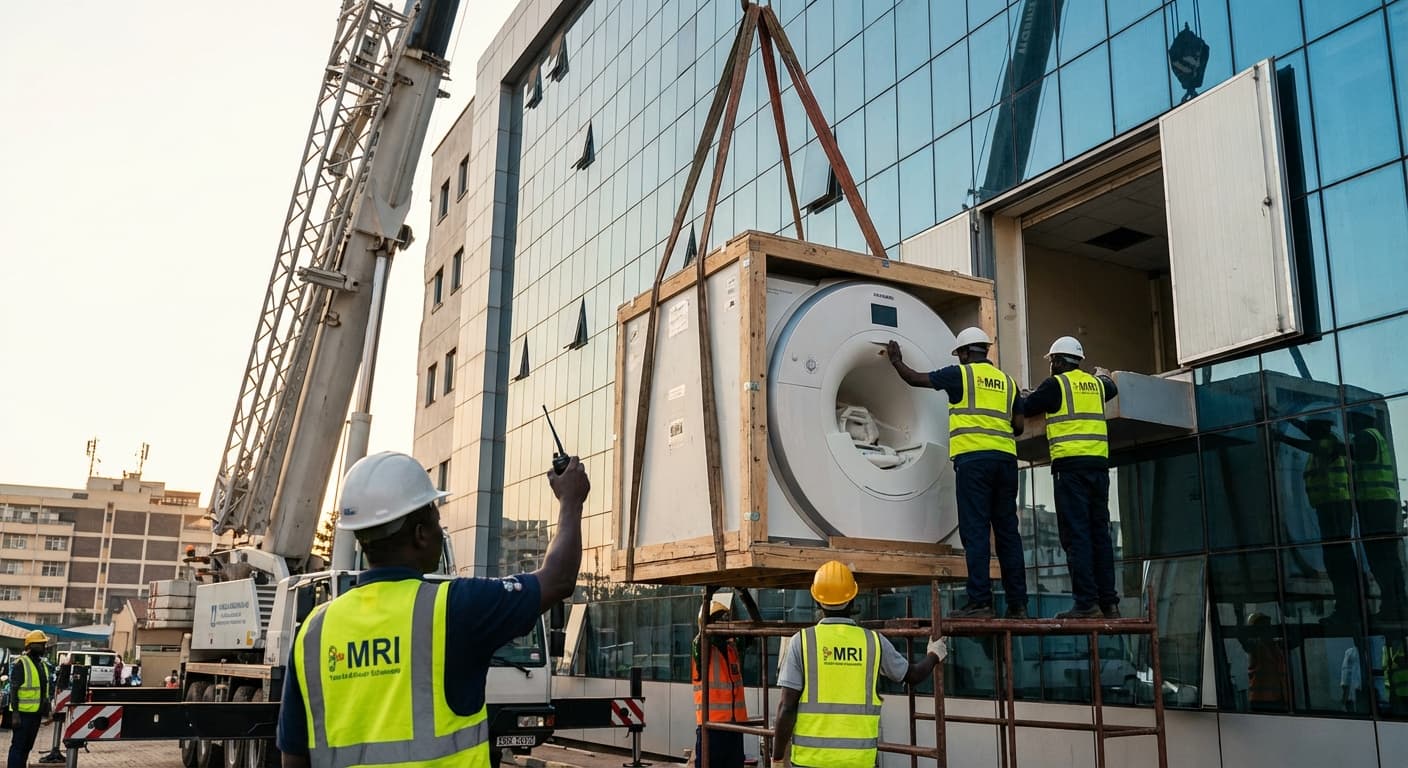
Cranage & Rigging Supervision Service in Libya
Engineering Excellence & Technical Support
Cranage & Rigging Supervision Service High-standard technical execution following OEM protocols and local regulatory frameworks.
Specialized Heavy Lift Expertise
Successfully supervised the critical installation of a 500-tonne reactor vessel at a major petrochemical facility, employing advanced multi-crane tandem lift techniques and meticulous planning to ensure zero incidents and precise placement within stringent time constraints.
Integrated Risk Management Framework
Developed and implemented a comprehensive risk assessment and mitigation strategy for offshore platform module lifts, integrating advanced weather forecasting, real-time load monitoring, and strict adherence to international safety standards (e.g., LOLER, BS 7121), resulting in a 20% reduction in potential incident probability.
Advanced Rigging Load Calculations & Planning
Provided expert technical supervision for the complex rigging and lifting of oversized industrial equipment in challenging desert environments, utilizing detailed 3D load path analysis and sophisticated rigging configurations to optimize lift stability and minimize operational downtime, achieving a 15% improvement in lifting efficiency.
What Is Cranage & Rigging Supervision Service In Libya?
Cranage and Rigging Supervision Service in Libya refers to the professional oversight and management of lifting and moving operations involving heavy equipment, materials, and structures. This service ensures that all cranage and rigging activities are conducted in a safe, efficient, and compliant manner, adhering to international standards and local regulations within Libya. The core objective is to mitigate risks associated with lifting operations, prevent accidents, damage to equipment and personnel, and ensure project timelines are met. This involves meticulous planning, precise execution, and continuous monitoring by experienced and certified professionals.
| Who Needs Cranage & Rigging Supervision Service? | Typical Use Cases in Libya | |||||
|---|---|---|---|---|---|---|
| Oil and Gas Industry: Companies involved in upstream (exploration and production), midstream (transportation and storage), and downstream (refining and petrochemicals) operations. This includes the installation of wellheads, pipelines, processing equipment, and offshore structures. | Construction Sector: Large-scale infrastructure projects such as bridges, high-rise buildings, power plants, and industrial facilities. This involves the erection of structural steel, placement of precast concrete elements, and installation of heavy machinery. | Port and Terminal Operations: Loading and unloading of heavy cargo, including containers, machinery, and project-specific equipment at Libyan ports. | Industrial Manufacturing and Maintenance: Installation, relocation, or maintenance of heavy industrial machinery, turbines, generators, and manufacturing equipment. | Mining and Heavy Industry: Movement and installation of large-scale mining equipment, processing units, and material handling systems. | Emergency Response and Disaster Relief: Facilitating the movement of heavy debris, rescue equipment, or essential supplies in emergency situations. | Renewable Energy Projects: Installation of wind turbines, solar panel arrays, and associated infrastructure. |
| Offshore Platform Installation and Maintenance: Lifting and positioning of modules, equipment, and structures for oil and gas platforms in Libyan waters. | Pipeline Laying and Tie-ins: Rigging and lifting of heavy pipes for onshore and offshore pipeline projects. | Construction of Power Plants: Erection of turbines, generators, boilers, and other large components. | Port Infrastructure Development: Installation of cranes, berths, and other port facilities. | Industrial Equipment Relocation and Installation: Moving and setting up large manufacturing machinery within industrial zones. | Wind Turbine Erection: Lifting and assembling wind turbine components. | Project Cargo Handling: Safe and efficient lifting of oversized and overweight project cargo at various sites. |
Key Aspects of Cranage & Rigging Supervision Service:
- Pre-Operation Planning & Risk Assessment: Detailed analysis of lift requirements, identification of potential hazards, development of lift plans, and selection of appropriate lifting gear.
- Equipment Inspection & Certification: Verification of the integrity, certification, and suitability of all cranes, hoists, slings, shackles, and other rigging equipment.
- Personnel Competency Verification: Ensuring all involved personnel (crane operators, riggers, signalmen) possess the necessary qualifications, certifications, and experience.
- On-Site Supervision & Execution: Direct oversight of the lifting and rigging operations, ensuring adherence to the approved lift plan, safe operating procedures, and communication protocols.
- Load Chart Interpretation & Application: Accurate understanding and application of crane load charts to prevent overloading and ensure stability.
- Communication & Coordination: Facilitating clear and constant communication between the lifting team, site management, and other relevant stakeholders.
- Emergency Response Planning: Establishing protocols and ensuring preparedness for potential emergencies during lifting operations.
- Documentation & Reporting: Maintaining detailed records of all lifting activities, inspections, incidents, and providing comprehensive post-operation reports.
- Compliance Assurance: Ensuring all operations comply with Libyan occupational health and safety regulations, as well as international standards (e.g., LOLER, ASME).
Who Needs Cranage & Rigging Supervision Service In Libya?
Cranage & Rigging Supervision Services are essential for ensuring the safe, efficient, and compliant execution of lifting operations in Libya's key industrial sectors. These services are critical for projects involving the movement of heavy or oversized equipment, materials, and structures.
| Target Customer Group | Key Departments Involved | Specific Needs for Cranage & Rigging Supervision |
|---|---|---|
| Oil and Gas Companies (National & International) | Operations, Projects, Maintenance, Engineering, Health, Safety & Environment (HSE) | Installation of offshore platforms, drilling equipment, pipelines, refinery units, heavy module lifts, emergency response lifting. |
| EPC Contractors (Engineering, Procurement, Construction) | Project Management, Construction Management, Site Operations, HSE, Logistics | Managing complex lifts on construction sites, coordinating multiple cranes, ensuring adherence to project timelines and safety standards, handling oversized and overweight equipment. |
| Government Agencies & Public Works Departments | Infrastructure Development, Project Management, Planning, Safety Oversight | Construction of major public infrastructure like bridges, ports, dams, and transportation networks, ensuring public safety during construction. |
| Port Authorities and Operators | Operations, Cargo Handling, Safety Management | Loading and unloading of heavy machinery, project cargo, and oversized modules; safe operation of port cranes and lifting equipment. |
| Industrial Plant Owners and Operators | Engineering, Maintenance, Production, HSE | Installation and replacement of heavy machinery, process equipment, structural components, routine maintenance lifts, shutdown preparations. |
| Renewable Energy Project Developers | Project Management, Construction, Operations, HSE | Installation of wind turbine components, solar farm infrastructure, and associated heavy equipment. |
| Shipyards and Marine Construction | Engineering, Fabrication, Assembly, Project Management | Lifting of ship modules, large components, and vessels during construction and repair. |
Target Customers and Departments in Libya
- {"title":"Oil and Gas Sector","description":"This is the primary sector demanding sophisticated cranage and rigging supervision in Libya due to extensive exploration, production, refining, and transportation activities."}
- {"title":"Construction and Infrastructure","description":"Development projects, including ports, airports, roads, bridges, and large-scale commercial/residential buildings, require expert lifting services."}
- {"title":"Petrochemical Industry","description":"Plants involved in the processing of oil and gas into various chemical products need precise and safe handling of large components during construction and maintenance."}
- {"title":"Power Generation","description":"The construction and maintenance of power plants, including thermal, renewable energy, and associated infrastructure, involve significant lifting operations."}
- {"title":"Manufacturing and Industrial Plants","description":"New factory setups, expansions, and major equipment installations or replacements in various manufacturing facilities."}
- {"title":"Ports and Logistics","description":"Handling of heavy cargo, containers, and project modules at Libyan ports for import and export."}
- {"title":"Heavy Engineering and Fabrication","description":"Companies involved in fabricating and assembling large industrial components that require specialized lifting for transport and installation."}
Cranage & Rigging Supervision Service Process In Libya
This document outlines the comprehensive workflow for Cranage & Rigging Supervision Services in Libya, from the initial client inquiry to the successful execution and closure of the project. Our process is designed to ensure safety, efficiency, and compliance with all relevant Libyan regulations and international best practices. We prioritize clear communication, meticulous planning, and experienced supervision to deliver exceptional results for our clients.
| Stage | Description | Key Activities | Deliverables/Outcomes | Responsible Parties |
|---|---|---|---|---|
| The client expresses interest in our cranage and rigging supervision services. | Receive inquiry via email, phone, or inquiry form. Discuss initial project needs, scope, and location. Provide preliminary service overview. | Understanding of client's basic requirements. Decision to proceed to the next stage. | Client, Service Provider (Sales/Business Development) |
| Detailed understanding of the project's specific cranage and rigging requirements and the operational environment. | On-site visit (if feasible) or detailed request for information (RFI). Assess load weights, dimensions, lifting heights, site accessibility, environmental conditions (wind, ground conditions), available infrastructure, and potential hazards. Discuss client's existing equipment and personnel. | Detailed Scope of Work document. Site assessment report. Identification of preliminary technical requirements. | Service Provider (Supervisors, Engineers), Client (Project Manager, Site Engineer) |
| Formalizing the service agreement based on the defined scope and assessment. | Develop a comprehensive proposal including: scope of services, deliverables, pricing, project timeline, proposed supervision team, safety protocols, and terms & conditions. Negotiate terms, pricing, and contract details. Finalize and sign the service contract. | Formal Service Proposal. Signed Service Contract. | Service Provider (Commercial Team, Legal), Client (Procurement, Legal) |
| Developing detailed plans and identifying and mitigating potential risks. | Create detailed lift plans (Method Statements) for each critical lift. Conduct thorough risk assessments (HAZID, HAZOP). Develop emergency response plans. Obtain necessary permits and approvals from Libyan authorities. Finalize equipment and personnel requirements. | Approved Lift Plans. Risk Assessment Reports. Emergency Response Plan. Permitting Documentation. | Service Provider (Supervisors, HSE Officers, Engineers), Client (Project Manager, HSE Department) |
| Getting the right personnel, equipment, and documentation ready for deployment. | Mobilize qualified and experienced cranage and rigging supervisors and riggers. Ensure all equipment (cranes, rigging gear) is certified, inspected, and fit for purpose. Conduct pre-mobilization briefings and safety inductions for the team. Confirm all necessary PPE is available. Verify all permits and documentation are in order. | Mobilized and competent supervision team. Certified and inspected equipment. Pre-mobilization checklists completed. | Service Provider (Operations Manager, Supervisors, HSE Officer), Client (Logistics, Site Manager) |
| The core of the service, ensuring safe and efficient execution of lifting operations. | On-site supervision of all cranage and rigging activities. Ensuring adherence to approved lift plans and safety procedures. Continuous monitoring of load integrity, lifting angles, and environmental conditions. Real-time communication and coordination with site personnel. Implementing corrective actions as needed. | Safe and efficient execution of lifts. Daily progress reports. Incident reporting (if any). Real-time risk management. | Service Provider (Supervisors, Riggers), Client (Site Manager, Crane Operators, Ground Crew) |
| Documenting the completed operations and providing a comprehensive overview. | Conduct post-lift debriefings. Prepare detailed post-job reports, including daily logs, lift records, incident reports (if applicable), and photos/videos. Review performance against the scope and objectives. Gather client feedback. | Post-Job Report. Lift Completion Certificates. Lessons Learned documentation. | Service Provider (Supervisors, Project Manager), Client (Project Manager, HSE Department) |
| Formal completion of the service agreement and financial settlement. | Final review and approval of all project documentation by the client. Submit final invoice as per the contract terms. Close out all outstanding issues. Archive project records. | Project Closure Sign-off. Final Invoice. Closed Contract. | Service Provider (Commercial Team, Project Manager), Client (Procurement, Finance) |
Key Stages of Cranage & Rigging Supervision Service in Libya
- Inquiry & Initial Consultation
- Scope Definition & Site Assessment
- Proposal & Contract Negotiation
- Planning & Risk Assessment
- Resource Mobilization & Pre-Mobilization Checks
- On-Site Execution & Supervision
- Post-Execution & Reporting
- Project Closure & Invoicing
Cranage & Rigging Supervision Service Cost In Libya
The cost of Cranage & Rigging Supervision services in Libya is subject to a variety of factors, making it challenging to provide a single, definitive price. These factors can significantly influence the overall expenditure for a project requiring specialized supervision for lifting and rigging operations. Understanding these elements is crucial for accurate budgeting and contractor selection. The Libyan market, like many others, experiences fluctuations in demand, availability of skilled personnel, and project complexity, all of which play a role in pricing.
| Service | Estimated Daily Rate Range (LYD) | Notes |
|---|---|---|
| Junior Rigging Supervisor | 800 - 1,500 | Less experience, assisting senior supervisors, simpler lifts. |
| Experienced Rigging Supervisor | 1,500 - 3,000 | Proven track record, independent oversight of moderate complexity lifts. |
| Lead/Senior Rigging Supervisor | 2,500 - 5,000+ | Extensive experience, complex lifts, high-risk operations, international certifications, project management oversight. |
| Rigging & Cranage Superintendent (Project-Specific) | 4,000 - 8,000+ | Overall responsibility for all rigging and cranage operations on a large project, including planning, resource allocation, and safety management. |
| Mobilization/Demobilization (Per Supervisor, if applicable) | Varies Widely | Covers travel, accommodation, and per diems. Can be a significant cost for international personnel. |
Key Pricing Factors for Cranage & Rigging Supervision in Libya:
- Project Scale and Complexity: Larger projects with multiple heavy lifts, intricate rigging configurations, and extended timelines will inherently demand more supervision hours and a higher overall cost. Simple, single-lift operations will be considerably less expensive.
- Type and Size of Cranes/Equipment: The supervision required for a 500-ton mobile crane will differ from that for a smaller crawler crane or specialized gantry system. The expertise needed to oversee more complex and powerful machinery translates to higher costs.
- Duration of the Project: Supervision is typically billed on a daily or hourly basis. The longer the project, the greater the cumulative cost of supervision. This includes not only active lifting periods but also preparatory work, planning, and potential downtime.
- Skill and Experience Level of Supervisors: Highly experienced and certified rigging supervisors, particularly those with international experience or specialized certifications (e.g., NCCCO, LEEA), command higher rates due to their expertise, safety record, and problem-solving capabilities.
- Number of Supervisors Required: Depending on the scale and simultaneous operations, multiple supervisors may be necessary to ensure adequate oversight and safety compliance across different work areas.
- Geographical Location within Libya: Costs can vary slightly between major industrial hubs (e.g., Tripoli, Benghazi, Misrata) and more remote or challenging locations due to logistical considerations, accommodation, and potential hazard pay.
- Mobilization and Demobilization Costs: Travel expenses, accommodation, and per diems for supervisors traveling to and from the project site, especially if they are international personnel, will be factored into the overall cost.
- Working Hours and Overtime: Projects often require work outside standard hours, including nights and weekends. Overtime rates for supervisors will increase the total cost.
- Client-Specific Requirements and Standards: Some clients may have stringent internal safety protocols or require specific reporting and documentation, which can add to the administrative and supervision burden, thus influencing costs.
- Market Demand and Availability: In periods of high demand for skilled rigging supervisors in Libya, particularly for large-scale infrastructure or oil & gas projects, rates can increase due to limited availability.
- Contractual Terms: The structure of the contract (e.g., fixed daily rate, hourly rate, lump sum for a specific phase) will impact how the costs are presented and paid.
Affordable Cranage & Rigging Supervision Service Options
Securing reliable and cost-effective cranage and rigging supervision is crucial for the success of many projects. This service ensures heavy equipment is lifted, moved, and positioned safely and efficiently. We offer a range of solutions designed to meet diverse project needs and budgets, emphasizing value through carefully crafted bundles and proactive cost-saving strategies.
| Cost-Saving Strategy | Description | Benefit |
|---|---|---|
| Early Bird Booking Discount | Book your cranage and rigging supervision services well in advance of your project start date. | Secure lower rates and ensure availability of your preferred teams and equipment. |
| Off-Peak Scheduling | Consider scheduling complex or time-intensive lifts during less busy periods or at times with lower demand. | Potentially reduced hourly rates for labor and equipment rental. |
| Optimized Lift Planning | Thorough and accurate lift plans developed by our experienced supervisors can prevent costly errors and delays. | Minimizes the risk of accidents, damage to equipment, and downtime, leading to significant cost savings. |
| Equipment Synergy | Coordinating crane and rigging needs for multiple tasks within a project can lead to more efficient equipment utilization. | Reduces mobilization/demobilization costs and potential idle time for specialized equipment. |
| Long-Term Contracts | For ongoing projects or regular operational needs, consider long-term service agreements. | Negotiate preferential rates and dedicated resources for sustained cost predictability. |
| Pre-Project Site Assessment | Our team conducts a thorough on-site assessment before the lift to identify potential challenges and safety hazards. | Proactive identification and mitigation of risks prevent costly rework, delays, and unforeseen expenses. |
Value Bundles Explained
- {"title":"Basic Lift Package","description":"Ideal for smaller, less complex lifts. Includes essential rigging supervision for a single crane operation. Focuses on core safety and operational oversight."}
- {"title":"Standard Project Bundle","description":"A balanced option for medium-sized projects. Combines dedicated rigging supervision with consultation on lift planning and equipment selection. Offers increased support and planning assistance."}
- {"title":"Comprehensive Operations Suite","description":"Our premium offering for large-scale or intricate projects. Encompasses full-time supervision, advanced lift planning, load analysis, coordination with other trades, and risk assessment. Provides complete peace of mind and optimized project flow."}
- {"title":"Customizable Solutions","description":"We understand that every project is unique. We can tailor bundles to your specific requirements, combining elements from different packages or adding specialized services like specialized rigging gear inspection or on-site training."}
Verified Providers In Libya
In the challenging healthcare landscape of Libya, identifying reliable and credentialed healthcare providers is paramount for ensuring quality patient care. Franance Health stands out as a leading organization committed to upholding the highest standards in medical services. This document outlines the rigorous credentials that Franance Health adheres to and explains why these qualifications make them the optimal choice for healthcare needs in Libya.
| Credential/Standard | What it Ensures for Patients | Franance Health's Commitment |
|---|---|---|
| International Accreditation (e.g., JCI, ISO) | Adherence to global benchmarks for patient safety, quality management, and facility standards. | Only partners with accredited facilities. |
| National Health Authority Compliance | Fulfillment of all local regulatory requirements and standards set by Libyan health authorities. | Ensures all providers meet Libyan healthcare regulations. |
| Board Certification | Expertise and proven competence in a specific medical specialty. | Mandatory for all associated physicians and specialists. |
| Continuous Professional Development (CPD) | Up-to-date knowledge and application of the latest medical advancements and techniques. | Facilitates and requires ongoing training for all medical staff. |
| Ethical Practice Guidelines | Patient-centered care, respect for autonomy, privacy, and informed decision-making. | Enforces a strict code of medical ethics. |
| Quality Assurance Framework | Consistent delivery of high-quality services and proactive identification of service improvements. | Implements regular quality audits and performance reviews. |
Franance Health Credentials and Why They Matter:
- {"title":"Rigorous Accreditation and Certification","description":"Franance Health partners exclusively with healthcare facilities and individual practitioners who hold accreditations from internationally recognized bodies (e.g., JCI, ISO) and national Libyan health authorities. This ensures adherence to strict protocols for patient safety, infection control, and quality of care. For patients, this means a significantly reduced risk of medical errors and a higher likelihood of positive health outcomes."}
- {"title":"Board-Certified Medical Professionals","description":"All medical professionals associated with Franance Health are board-certified in their respective specialties. This signifies that they have met stringent educational requirements, passed comprehensive examinations, and have demonstrated expertise and competence in their field. This translates to highly skilled and knowledgeable doctors and nurses treating patients, leading to accurate diagnoses and effective treatment plans."}
- {"title":"Continuous Professional Development (CPD)","description":"Franance Health mandates and facilitates ongoing professional development for all its affiliated healthcare providers. This ensures that their knowledge and skills remain current with the latest medical advancements, technologies, and treatment methodologies. Patients benefit from receiving care based on the most up-to-date medical practices, improving the efficacy and safety of their treatments."}
- {"title":"Adherence to International Ethical Standards","description":"Beyond technical qualifications, Franance Health emphasizes adherence to international ethical guidelines in healthcare, including patient confidentiality, informed consent, and equitable access to care. This commitment to ethical practice builds trust and ensures that patients are treated with respect, dignity, and transparency throughout their healthcare journey."}
- {"title":"Robust Quality Assurance and Monitoring","description":"Franance Health employs a comprehensive quality assurance framework that includes regular audits, performance monitoring, and patient feedback mechanisms. This proactive approach identifies areas for improvement and ensures that consistently high standards of care are maintained. For patients, this means a commitment to continuous betterment of their healthcare experience."}
Scope Of Work For Cranage & Rigging Supervision Service
This Scope of Work (SOW) outlines the requirements for Cranage and Rigging Supervision services. The service provider shall provide qualified and experienced personnel to oversee and ensure the safe and efficient execution of all lifting and rigging operations at the project site. This includes, but is not limited to, planning, preparation, execution, and post-operation reviews of all lifting activities involving cranes, hoists, slings, shackles, and other lifting accessories.
| Technical Deliverable | Description | Standard Specification/Reference |
|---|---|---|
| Qualified Supervision Personnel | Provision of certified and experienced Rigging Supervisors, Crane Operators (where applicable), and Riggers as per project requirements and regulatory standards. Personnel must hold relevant certifications (e.g., NCCCO, LEEA, OSHA) and have a proven track record in similar industrial environments. | Project-specific HR requirements, National/International Certification Bodies (e.g., NCCCO, LEEA), OSHA 1926 Subpart CC |
| Lift Plans Review and Approval | Thorough review and verification of all proposed lift plans by the supervision team to ensure compliance with safety standards, load capacities, environmental conditions, and site-specific constraints. Sign-off authority for approved lift plans. | Project-specific Lift Plan templates, API RP 2D, ASME B30.5, Project Safety Manual |
| Pre-Mobilization and Pre-Use Inspections | Supervision and verification of all lifting equipment (cranes, hoists, slings, shackles, spreader bars, etc.) pre-mobilization inspections and daily pre-use checks. Ensuring all equipment is certified, in good working condition, and appropriate for the intended lift. | Manufacturer's recommendations, Project Inspection and Test Plan (ITP), ASME B30 standards, LEEA Code of Practice |
| On-Site Supervision During Lifts | Direct supervision of all lifting and rigging operations from commencement to completion. Ensuring adherence to approved lift plans, communication protocols, exclusion zones, and safe work practices. Continuous monitoring of load stability and environmental conditions. | Project Safety Management Plan, Site-specific work procedures, Emergency Response Plan |
| Communication Protocols | Establishing and enforcing clear and effective communication channels between the crane operator, signal person, rigger, supervisor, and other relevant personnel. Utilization of standard hand signals and radio communication. | ASME B30.5, Project Communication Plan, Standardized Hand Signals |
| Load Chart Interpretation and Application | Ensuring accurate interpretation and application of crane load charts considering all factors such as radius, boom length, boom angle, and outrigger extension. Verification of operational limits. | Crane Manufacturer's Load Charts, ASME B30.5 |
| Rigging Procedures | Ensuring correct rigging techniques are employed, including proper selection and application of slings, shackles, and other rigging hardware. Verification of proper load securing and balancing. | LEEA Code of Practice, ASME B30.9 (Slings), ASME B30.10 (Hooks, Rings, and Shackles) |
| Exclusion Zone Management | Establishing and enforcing exclusion zones around lifting operations to prevent unauthorized personnel entry and ensure a safe working environment. | Project Safety Procedures, Site Layout Drawings |
| Daily and Weekly Reporting | Provision of daily and weekly reports detailing all lifting activities, any incidents or near misses, equipment status, personnel on duty, and recommendations for improvement. | Project Reporting Templates, Client's specific reporting requirements |
| Toolbox Talks and Safety Briefings | Conducting regular toolbox talks and safety briefings for all personnel involved in lifting operations, covering specific hazards, procedures, and safety expectations. | Project Safety Meeting Schedule, Hazard Identification checklists |
| Incident Investigation Support | Providing technical expertise and support during the investigation of any lifting-related incidents or near misses to determine root causes and recommend corrective actions. | Project Incident Investigation Procedure |
| Compliance Audits | Participating in and supporting internal and external audits related to lifting and rigging operations to ensure ongoing compliance. | Project Audit Schedule, Relevant Regulatory Standards |
Key Responsibilities and Service Components
- Pre-Lift Planning and Assessment
- On-Site Supervision and Execution Monitoring
- Personnel and Equipment Qualification Verification
- Load Chart and Lift Plan Adherence
- Communication and Coordination
- Risk Assessment and Mitigation
- Incident Reporting and Investigation Support
- Compliance with Safety Standards and Regulations
- Toolbox Talks and Safety Briefings
- Post-Lift Review and Documentation
Service Level Agreement For Cranage & Rigging Supervision Service
This Service Level Agreement (SLA) outlines the response times and uptime guarantees for the Cranage & Rigging Supervision Service provided by [Your Company Name] to [Client Name]. This agreement is effective as of [Start Date] and will remain in effect until [End Date], unless terminated earlier in accordance with the master service agreement.
| Service Level | Response Time Target | Uptime Guarantee |
|---|---|---|
| Standard Service Request (during Service Hours) | Within 4 Business Hours | 99.5% of Service Hours |
| Priority Service Request (client-defined priority, requires justification) | Within 2 Business Hours | 99.8% of Service Hours |
| Emergency Service Request (requires immediate escalation) | Within 1 Business Hour (acknowledgement of receipt, dispatch of personnel may vary based on availability and location) | Not applicable directly to uptime, as emergencies are reactive. Focus is on rapid response. |
Key Definitions
- Service Hours: Normal business hours are defined as Monday through Friday, 8:00 AM to 5:00 PM in the client's local time zone, excluding public holidays.
- Emergency: An emergency is defined as a situation that poses an immediate threat to personnel safety, significant equipment damage, or a critical halt to operations that cannot be resolved through standard operational procedures.
- Downtime: Downtime is defined as the period during which the Cranage & Rigging Supervision Service is unavailable or unable to perform its essential functions, measured from the time of notification to the time service is restored.
- Response Time: The time elapsed from when a service request or incident is formally logged by the client to when a qualified technician from [Your Company Name] acknowledges the request and begins working towards a resolution.
- Uptime Guarantee: The percentage of time the Cranage & Rigging Supervision Service is operational and available for use during Service Hours.
- Notification: Formal notification is considered to have been received when the client submits a request through the designated support channel (e.g., email, support portal, designated phone number).
Frequently Asked Questions

Ready when you are
Let's scope your Cranage & Rigging Supervision Service in Libya project in Libya.

Scaling healthcare logistics and technical systems across the entire continent.