
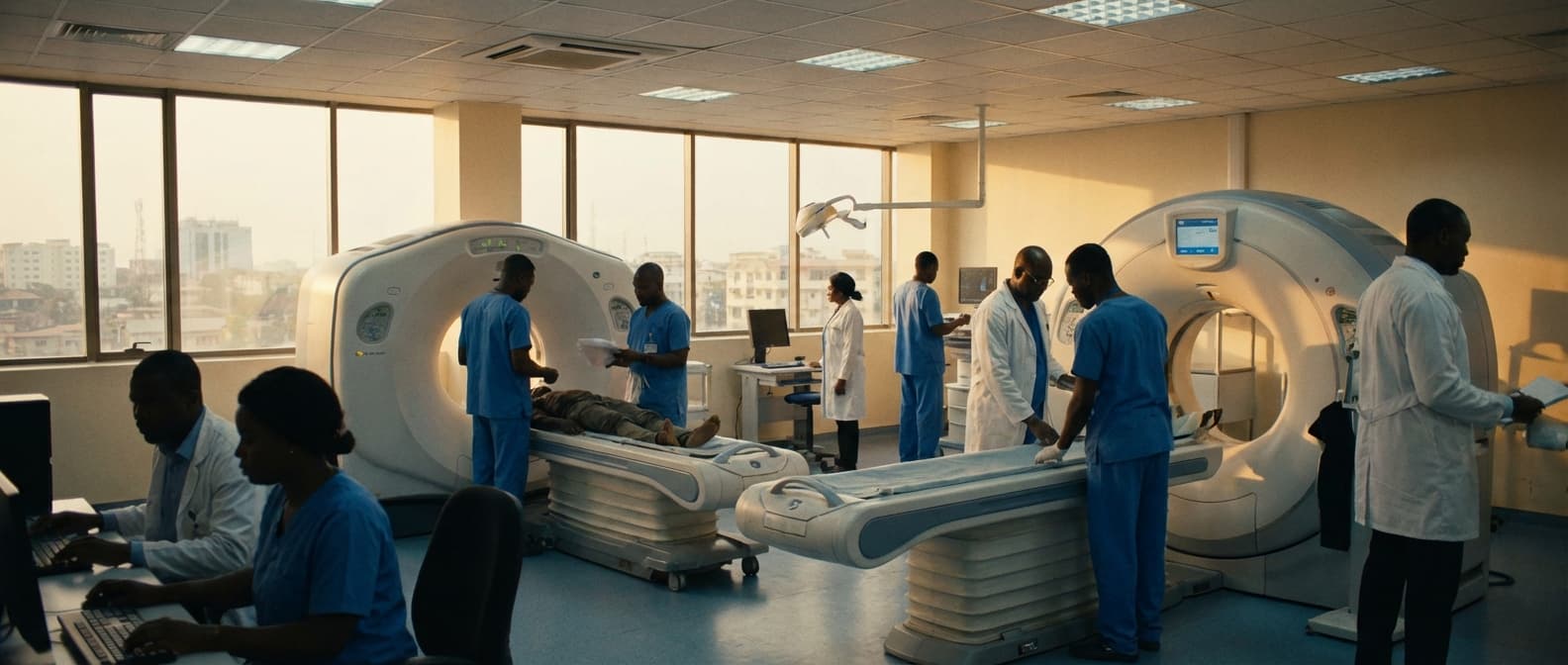
Radiology Room Design & Shielding Calculation in Libya
Engineering Excellence & Technical Support
Turnkey room planning, shielding drawings and approvals for imaging suites. High-standard technical execution following OEM protocols and local regulatory frameworks.
Advanced Radiology Room Layout Optimization
Leveraging state-of-the-art CAD software and adherence to international best practices (e.g., IEC standards), we engineer optimal radiology room layouts in Libya. This includes precise placement of equipment, patient workflow analysis, and consideration of future technological upgrades to maximize efficiency and safety in diagnostic imaging suites.
Precise Radiation Shielding Calculations (MLD)
Our expert team performs meticulous radiation shielding calculations for diagnostic and therapeutic radiology facilities across Libya, utilizing specialized software. We ensure compliance with Libyan regulatory standards and international guidelines (e.g., NCRP, ICRP) by determining optimal shielding materials and thicknesses for walls, doors, and windows, guaranteeing staff and patient safety.
Shielding Validation & Quality Assurance
We provide comprehensive post-construction radiation shielding validation and quality assurance services for radiology rooms in Libya. Through on-site radiation surveys and dose rate measurements, we confirm the integrity of the installed shielding and provide certification, ensuring the facility meets all safety requirements for operational readiness.
What Is Radiology Room Design & Shielding Calculation In Libya?
Radiology room design and shielding calculation is a specialized engineering and architectural service focused on creating safe, compliant, and functional environments for medical imaging procedures. This involves meticulously planning the physical layout of radiology suites and precisely calculating the necessary radiation shielding to protect patients, staff, and the public from ionizing radiation. The service is critical for ensuring adherence to national and international radiation safety standards and regulations, thereby minimizing radiation exposure to As Low As Reasonably Achievable (ALARA) levels.
| Service Component | Description | Applicability in Libya |
|---|---|---|
| Radiology Room Design | Involves architectural planning for space utilization, equipment placement, workflow optimization, and environmental factors within imaging suites. | Essential for any new or renovated facility housing diagnostic imaging equipment in Libya, to ensure efficient operations and safety. |
| Shielding Calculation | Quantitative determination of protective materials and thicknesses required to limit radiation exposure to personnel and the public. | Mandatory for all diagnostic and therapeutic radiation facilities in Libya to comply with national radiation safety laws and prevent occupational and public overexposure. |
| Regulatory Compliance Review | Ensuring the design and shielding calculations adhere to the specific regulations and licensing requirements of Libyan authorities. | Crucial for obtaining operational permits and licenses from relevant Libyan regulatory bodies. |
| ALARA Principle Implementation | Designing and calculating shielding with the goal of reducing radiation exposure to the lowest reasonably achievable levels, considering economic and social factors. | A fundamental requirement embedded within Libyan radiation protection legislation for all radiation practices. |
Key Components of Radiology Room Design & Shielding Calculation
- Room Layout and Workflow Analysis: Optimizing the spatial arrangement of imaging equipment, control areas, patient waiting zones, changing rooms, and support facilities to ensure efficient patient throughput and staff movement while maintaining radiation safety.
- Equipment Specification Integration: Incorporating the specific radiation output characteristics, operational parameters, and spatial requirements of diagnostic imaging modalities (e.g., X-ray, CT scanners, fluoroscopy, mammography, angiography, nuclear medicine).
- Radiation Shielding Design: Determining the appropriate materials (lead, concrete, barytes concrete, etc.) and thicknesses required for walls, floors, ceilings, doors, and windows to attenuate primary and secondary radiation to acceptable dose limits.
- Shielding Calculation Methodology: Employing established physics principles and industry-standard software tools to perform detailed calculations for various radiation types (X-rays, gamma rays, neutrons) and exposure scenarios.
- Compliance with Regulations: Ensuring the design meets the specific requirements set forth by the Libyan regulatory authorities governing radiation protection and nuclear safety, such as the National Centre for Nuclear Research and Technology (NCRNT) or equivalent bodies.
- Quality Assurance and Verification: Implementing procedures for post-construction verification of shielding effectiveness through radiation surveys to confirm compliance and safety.
- Ergonomic and Environmental Considerations: Designing for optimal staff ergonomics, patient comfort, and infection control within the radiology suite.
Who Needs Radiology Room Design & Shielding Calculation In Libya?
Radiology room design and shielding calculations are crucial for ensuring the safety of both patients and medical staff from ionizing radiation, as well as for optimizing the functionality and efficiency of diagnostic imaging procedures. In Libya, like any country with a developing or established healthcare infrastructure, there is a significant and ongoing need for these specialized services. This need is driven by several factors, including the installation of new radiology equipment, upgrades to existing facilities, the establishment of new medical centers, and the consistent adherence to international safety standards for radiation protection.
| Department | Specific Needs for Radiology Room Design & Shielding | Examples of Equipment |
|---|---|---|
| Radiology/Medical Imaging Department | Designing optimal room layouts for workflow efficiency, ensuring adequate shielding for X-ray rooms, CT scan suites, MRI rooms, and fluoroscopy rooms. Calculating precise shielding thickness for walls, doors, and viewing windows to minimize radiation exposure to staff and adjacent areas. | X-ray Machines, CT Scanners, MRI Scanners, Fluoroscopy Units, Mammography Machines, Ultrasound Machines (though ultrasound doesn't require radiation shielding) |
| Radiation Oncology Department | Designing linear accelerator (LINAC) vaults, brachytherapy suites, and CT simulator rooms. These areas require substantial and complex shielding calculations due to high-energy radiation sources. | Linear Accelerators (LINACs), Brachytherapy units, CT Simulators |
| Interventional Radiology/Cardiology | Designing specialized procedure rooms for interventional suites, which often involve prolonged fluoroscopy times. Shielding for C-arm systems and associated equipment is critical. | C-arm Fluoroscopy Systems, Angiography Suites |
| Nuclear Medicine Department | Designing hot labs for handling radioactive isotopes, PET/CT scanner rooms, and SPECT/CT scanner rooms. Shielding requirements focus on gamma radiation emitted by radiopharmaceuticals. | PET/CT Scanners, SPECT/CT Scanners, Gamma Cameras, Hot Lab equipment |
| Emergency Department | Ensuring rapid access to imaging services with appropriately shielded X-ray rooms and potentially portable C-arms for immediate bedside imaging. | Portable X-ray Machines, Fixed X-ray Rooms |
| Surgical Departments | For intraoperative imaging needs, often utilizing mobile C-arms in operating rooms, requiring consideration for scatter radiation during procedures. | Mobile C-arms |
| Pediatric Departments | While the equipment is the same, specific room design might focus on patient comfort and minimizing anxiety, with shielding still paramount for young patients and staff. | Pediatric X-ray, CT, MRI suites |
| Administration & Support Areas | Ensuring that administrative offices, waiting areas, and corridors adjacent to imaging rooms are adequately protected from stray radiation. | N/A (Indirect requirement) |
Target Customers & Departments in Libya Requiring Radiology Room Design & Shielding Calculation
- Hospitals (Public & Private)
- Specialty Clinics (e.g., Cardiology, Oncology, Neurology)
- Diagnostic Imaging Centers
- Medical Research Institutions
- Emergency & Trauma Centers
- Veterinary Clinics (for advanced imaging)
- Government Health Ministries & Regulatory Bodies
Radiology Room Design & Shielding Calculation Process In Libya
Designing and calculating shielding for radiology rooms in Libya involves a structured workflow, ensuring compliance with national regulations and international best practices for radiation safety. This process typically begins with a client inquiry and culminates in the fully commissioned and shielded radiology facility. Key stages include understanding client needs, site assessment, regulatory review, dose calculation, material selection, installation, and final verification.
| Stage | Description | Key Activities | Responsible Parties | Deliverables | Libyan Context/Considerations |
|---|---|---|---|---|---|
| Inquiry & Initial Consultation | The client expresses a need for a new or upgraded radiology facility. This stage defines the project scope and preliminary requirements. | Discuss equipment type and specifications (e.g., X-ray, CT, MRI, PET), intended usage, patient throughput, room layout preferences, budget, and timeline. | Client (Hospital/Clinic Management), Project Manager, Radiation Protection Officer (RPO) representative. | Project brief, preliminary scope of work, initial site visit schedule. | Understanding local healthcare infrastructure, existing facility limitations, and specific medical needs of the region. |
| Site Assessment & Room Requirements Gathering | Detailed evaluation of the proposed site to determine feasibility and specific design constraints. This involves understanding existing structures and utilities. | On-site visit, room dimensions measurement, structural integrity assessment, existing electrical, ventilation, and plumbing checks, accessibility for construction. | Architectural Designer, Structural Engineer, MEP Engineer, Radiation Physicist/Shielding Specialist, RPO. | Site survey report, detailed room measurements, preliminary layout options, identification of potential structural challenges. | Availability of suitable spaces, adherence to building codes, access to necessary utilities, consideration of seismic activity (if applicable). |
| Regulatory Compliance Review | Ensuring all design and shielding calculations comply with Libyan national radiation protection regulations and relevant international guidelines. | Reviewing Libyan Ministry of Health regulations, IAEA safety standards, and any specific local directives for medical facilities. | Radiation Protection Officer (RPO), Radiation Physicist/Shielding Specialist, Regulatory Affairs Consultant. | Report on applicable regulations, identified compliance requirements, risk assessment for non-compliance. | Familiarity with the Libyan Radiation Protection Authority (LRPA) or equivalent body's specific requirements, licensing procedures, and inspection protocols. |
| Radiation Dose Assessment & Shielding Requirement Calculation | This is the core technical stage where the amount of radiation shielding required is determined based on international standards and Libyan regulations. | Determine workload (W), use factor (U), occupancy factor (T), and distance (d). Calculate primary and secondary barrier transmission factors. Utilize radiation shielding software (e.g., RadProCalculator, Shielding.info). | Radiation Physicist/Shielding Specialist. | Detailed shielding calculations for all barriers (walls, doors, windows, floors, ceilings), specification of shielding thickness and materials. | Workload and usage factors might be adjusted based on local practices and expected patient volumes. Data availability for specific equipment models in Libya. |
| Shielding Material Selection & Design | Choosing appropriate materials (lead, concrete, etc.) and designing the shielding components to meet calculated requirements. | Selecting lead thickness, concrete density and thickness, specialized shielding blocks, lead-lined doors, and observation windows. Integrating shielding into architectural plans. | Radiation Physicist/Shielding Specialist, Architectural Designer, Materials Engineer. | Material specifications, detailed drawings of shielding placement and integration, Bill of Quantities (BOQ) for shielding materials. | Availability and cost of lead and specialized shielding materials in Libya. Local availability of skilled labor for installation. |
| Detailed Room Design & Drawings | Developing comprehensive architectural, structural, and MEP (Mechanical, Electrical, Plumbing) drawings incorporating shielding designs. | Creating floor plans, elevations, cross-sections, electrical layouts, ventilation systems, and structural details, all showing the integrated shielding. | Architectural Designer, Structural Engineer, MEP Engineer. | Complete set of construction drawings and specifications. | Ensuring drawings are clear and interpretable by local construction teams, considering standard construction practices in Libya. |
| Procurement & Fabrication | Sourcing and purchasing the specified shielding materials and any specialized components. | Ordering lead sheets, concrete aggregates, lead-lined doors, and preparing any custom-fabricated shielding elements. | Procurement Department, Project Manager, Suppliers. | Procured materials, fabricated components. | Import/export regulations for lead and specialized materials, reliable local or international suppliers, customs clearance procedures. |
| On-site Installation & Construction | The actual construction and installation of the shielding and the radiology room itself. | Erecting walls, installing lead lining, pouring concrete, fitting doors and windows, installing medical equipment infrastructure. | Construction Contractor, Specialized Shielding Installers, MEP Technicians. | Constructed radiology room, installed shielding. | Availability of skilled construction labor, adherence to quality control during installation, site supervision by the design team. |
| Quality Assurance & Testing | Verifying that the installed shielding meets the design specifications and regulatory requirements. | Visual inspection of lead installation, concrete density checks, radiation surveys (e.g., with Geiger counters, ionization chambers) to confirm dose rates are within limits. | Radiation Physicist/Shielding Specialist, RPO, Quality Control Inspector. | QA/QC reports, initial radiation survey results. | Calibration of testing equipment according to Libyan standards, trained personnel for conducting surveys. |
| Final Inspection & Commissioning | A comprehensive review and testing of the entire facility before it is handed over for operational use. | Final radiation surveys with the installed medical equipment operating, verification of all systems (electrical, ventilation), final walkthrough with client and regulatory bodies. | RPO, Radiation Physicist/Shielding Specialist, Client Representative, Regulatory Inspector (if required). | Final commissioning report, operational permit (if applicable). | Coordination with Libyan regulatory bodies for final inspection and approval. Understanding the specific commissioning requirements of the LRPA. |
| Documentation & Handover | Providing all relevant documentation to the client for future reference and ongoing safety management. | Handover of all design drawings, shielding calculation reports, QA/QC records, material certifications, operation and maintenance manuals, and safety training materials. | Project Manager, Radiation Physicist/Shielding Specialist, RPO. | Complete project documentation package, signed handover certificate. | Ensuring documentation is provided in a format that is easily accessible and understandable by the client's staff, and compliant with any Libyan archival requirements. |
Radiology Room Design & Shielding Calculation Process Workflow in Libya
- Inquiry & Initial Consultation
- Site Assessment & Room Requirements Gathering
- Regulatory Compliance Review
- Radiation Dose Assessment & Shielding Requirement Calculation
- Shielding Material Selection & Design
- Detailed Room Design & Drawings
- Procurement & Fabrication
- On-site Installation & Construction
- Quality Assurance & Testing
- Final Inspection & Commissioning
- Documentation & Handover
Radiology Room Design & Shielding Calculation Cost In Libya
Designing a radiology room in Libya involves several critical factors that influence the overall cost, particularly regarding shielding calculations. These costs are influenced by local material availability, labor rates, regulatory requirements, and the complexity of the chosen imaging equipment. The final price will be a combination of design consultancy fees, the cost of radiation shielding materials (lead, concrete, etc.), installation labor, and potentially specialized equipment for precise shielding measurements. It's important to note that pricing in Libya can be subject to fluctuations due to economic conditions and import duties on specialized materials.
| Service/Item | Estimated Price Range (LYD) | Notes |
|---|---|---|
| Radiology Room Design Consultancy (per sq meter) | 500 - 1,500 LYD | Varies by firm experience and project complexity. |
| Lead Shielding Material (per kg/mm thickness) | 50 - 150 LYD | Highly variable depending on global lead prices and import costs. This is a very rough estimate. |
| Concrete Shielding (per cubic meter, including reinforcement) | 300 - 700 LYD | Depends on concrete strength and required thickness. |
| Shielding Installation Labor (per day for skilled technician) | 200 - 400 LYD | Specialized lead installers may command higher rates. |
| Radiation Survey & Testing | 1,000 - 5,000 LYD | For a single room, can be higher for multiple modalities or complex designs. |
| Regulatory Approval & Documentation Fees | 500 - 2,000 LYD | Varies by authority and specific requirements. |
| Total Estimated Cost for Basic Shielding (e.g., X-ray room, excluding main structure) | 15,000 - 50,000 LYD | This is a very broad estimate. A 20-30 sq meter room with standard X-ray shielding. |
| Total Estimated Cost for Advanced Shielding (e.g., CT/PET-CT room, excluding main structure) | 40,000 - 150,000+ LYD | Significantly higher due to increased shielding requirements and potential for specialized materials. |
Key Pricing Factors for Radiology Room Design & Shielding Calculation in Libya:
- Design Consultancy Fees: This covers the architectural and engineering services for space planning, workflow optimization, and adherence to international safety standards. Fees can vary based on the reputation and experience of the firm.
- Radiation Shielding Material Costs: The primary driver of shielding cost is the material used. Lead is highly effective but can be expensive and subject to import costs. Thick concrete walls are also a common solution. The required thickness is determined by the type and energy of radiation emitted by the imaging equipment.
- Area and Volume of Shielding Required: Larger rooms or those with more walls requiring shielding will naturally incur higher material and labor costs.
- Complexity of the Imaging Equipment: Different modalities (X-ray, CT, MRI, PET-CT) have varying radiation outputs and require specific shielding considerations. Higher energy equipment demands more robust shielding.
- Labor Costs: The cost of skilled labor for construction and installation of shielding materials is a significant component. This includes specialized technicians for lead installation.
- Regulatory Compliance & Approvals: Obtaining necessary permits and certifications from Libyan health authorities can involve fees and may require specific testing and verification, adding to the overall cost.
- Specialized Measurement & Testing: Post-installation radiation surveys and measurements to ensure shielding effectiveness may require specialized equipment and certified personnel, incurring additional expenses.
- Import Duties & Logistics: For imported shielding materials like lead, customs duties, taxes, and transportation costs within Libya will impact the final price.
- Project Management: Overseeing the entire design and construction process, including procurement and quality control, can add to the cost.
Affordable Radiology Room Design & Shielding Calculation Options
Designing and outfitting a radiology room requires careful consideration of both functionality and radiation safety. This involves architectural layout, specialized equipment, and crucial radiation shielding. Finding cost-effective solutions without compromising safety is paramount, especially for smaller practices or budget-conscious institutions. This document explores affordable radiology room design principles, essential shielding calculations, and introduces value bundles and cost-saving strategies to optimize your investment.
| Value Bundle | Description | Cost-Saving Strategies Included | Typical Inclusions | Target Audience |
|---|---|---|---|---|
| Radiology Room Starter Pack | A comprehensive package designed for basic diagnostic imaging needs, prioritizing essential safety and functionality. | Standardized shielding calculations, streamlined material sourcing, modular design elements. | Pre-calculated shielding plans, recommended material lists, basic room layout templates, a guide to compliance. | New imaging centers, small clinics, practices with limited initial budgets. |
| Shielding Optimization Bundle | Focuses on precise and cost-effective radiation shielding design and material selection. | Advanced shielding calculation software utilization, alternative shielding material research, lead-time reduction strategies. | Detailed shielding reports, material comparison charts, vendor negotiation support, pre-fabricated shielding components (where applicable). | Practices looking to upgrade existing rooms, those facing specific shielding challenges, or seeking to reduce material costs. |
| Integrated Design & Build Solution | A holistic approach encompassing room design, shielding, and potentially construction management. | Bulk purchasing of materials, streamlined project timelines, experienced design-build partners, energy-efficient fixture integration. | Full room design blueprints, optimized shielding plans, material procurement services, project management support, basic equipment placement consultation. | Larger clinics, hospitals seeking to expand or renovate, practices prioritizing a turn-key solution. |
| Consultation & Calculation Services | On-demand expert advice for specific design and shielding calculation needs. | Flexible engagement models, focus on specific problem areas, identification of non-obvious cost-saving opportunities. | Radiation shielding calculations (e.g., NCRP 147, ICRP 60), room layout consultation, material specification advice, compliance review. | Any practice needing specialized expertise or a second opinion on their design and shielding plans. |
Key Considerations for Affordable Radiology Room Design & Shielding
- Space Optimization: Efficient layouts minimize wasted space, reducing overall construction costs. Consider workflow and patient/staff traffic patterns.
- Material Selection: Choosing cost-effective yet durable materials for walls, flooring, and finishes is essential. Explore options that meet infection control standards.
- Shielding Essentials: Understanding the types and thickness of shielding materials needed (e.g., lead, concrete, gypsum board) is critical for safety and compliance. This is a non-negotiable area for cost-saving.
- Lighting & Ventilation: Standard, energy-efficient lighting and ventilation systems can contribute to cost savings without impacting functionality.
- Acoustic Control: Utilizing sound-dampening materials can improve the patient experience and staff comfort, often achievable with cost-effective solutions.
- Future-Proofing: Design with potential future upgrades or changes in mind to avoid costly renovations later.
Verified Providers In Libya
Navigating the healthcare landscape in Libya requires a commitment to quality, safety, and ethical practice. Franance Health stands out as a beacon of these principles, offering a network of meticulously vetted healthcare providers. This verification process is not merely a formality; it's a rigorous examination designed to ensure patients receive exceptional care from qualified professionals. When seeking medical assistance in Libya, understanding the credentials and the advantages of choosing verified providers like those associated with Franance Health is paramount.
| Verification Aspect | Franance Health's Standard | Benefit to Patients |
|---|---|---|
| Educational Background | Verification of degrees, diplomas, and specialized training from accredited institutions. | Ensures foundational medical knowledge and competence. |
| Professional Licenses & Certifications | Confirmation of valid and current medical licenses and relevant professional certifications. | Guarantees legal and ethical practice within their scope. |
| Clinical Experience | Assessment of practical experience and track record in patient care. | Indicates practical application of knowledge and skill. |
| Continuing Medical Education (CME) | Confirmation of active participation in ongoing professional development. | Ensures providers are up-to-date with the latest medical advancements and techniques. |
| Reputation & Disciplinary History | Thorough background checks and inquiries into any professional misconduct or disciplinary actions. | Safeguards against providers with a history of negligence or unethical behavior. |
| Specialty Validation | Confirmation of specific qualifications and experience within their declared medical specialty. | Ensures accurate diagnosis and treatment for specialized medical needs. |
Why Franance Health's Verified Providers Are the Best Choice:
- Rigorous Credentialing: Franance Health employs a multi-faceted verification process that goes beyond basic licensing. It includes thorough background checks, verification of educational qualifications, professional certifications, and continuous professional development records.
- Commitment to Quality Care: Our verified providers are committed to upholding the highest standards of medical practice, adhering to international best practices and ethical guidelines.
- Patient Safety First: Patient safety is our utmost priority. The verification process ensures that providers have a clean disciplinary record and a proven track record of safe patient care.
- Access to Specialized Expertise: Franance Health connects you with a diverse range of specialists, all of whom have undergone our stringent verification, guaranteeing expertise in their respective fields.
- Trust and Reliability: By choosing a Franance Health verified provider, you gain peace of mind knowing you are engaging with professionals who have met stringent quality and ethical benchmarks.
- Enhanced Patient Experience: Verified providers are more likely to offer a patient-centric approach, focusing on clear communication, empathy, and individualized treatment plans.
Scope Of Work For Radiology Room Design & Shielding Calculation
This Scope of Work (SOW) outlines the design and shielding calculation requirements for a new radiology room. It details the technical deliverables, standard specifications, and project phases necessary to ensure a safe, functional, and compliant radiology suite. The project aims to provide a detailed design package that can be used for construction and regulatory approval.
| Deliverable | Description | Standard Specification/Reference | Format |
|---|---|---|---|
| Radiology Room Layout Drawings | Detailed floor plans showing room dimensions, equipment placement, patient access, control areas, and necessary clearances. Includes electrical, plumbing, and HVAC considerations. | Architectural and Engineering Standards (e.g., AIA, ASHRAE); Local Building Codes; Healthcare Facility Guidelines (e.g., FGI Guidelines). | CAD Drawings (e.g., DWG, PDF) |
| Equipment Specifications & Placement Plan | List of all radiology equipment to be installed (e.g., X-ray, CT, Fluoroscopy, MRI), including power requirements, ventilation needs, and physical footprint. Detailed plan for equipment positioning within the room. | Manufacturer's Specifications; Healthcare Equipment Standards. | Word Document; CAD Drawings |
| Shielding Calculation Report | Comprehensive report detailing the radiation shielding calculations for walls, doors, windows, floors, and ceilings. Includes justification for material selection and thickness based on anticipated workload and equipment type. | NCRP Report No. 147 (or latest), NCRP Report No. 151; IEC 60601-2-33; ACR Guidelines; State Radiation Control Regulations. | PDF Report |
| Shielding Material Specifications | Detailed specifications for all shielding materials required, including lead, concrete, drywall types, and their respective thicknesses and densities. Includes requirements for lead-lined doors and frames. | ASTM Standards; Manufacturer Data Sheets; Industry Best Practices. | Word Document; CAD Details |
| Door and Window Schedule | Specifications for all doors and windows within the radiology suite, including their shielding properties (e.g., lead equivalency), frame types, hardware, and operational requirements. | Door and Hardware Manufacturers' Specifications; Radiation Safety Standards. | Word Document; CAD Details |
| Electrical & HVAC Requirements | Detailed specifications for power supply, emergency power, lighting, ventilation, and air changes per hour (ACH) for the radiology room, control room, and adjacent areas, ensuring compliance with infection control and equipment needs. | NEC (National Electrical Code); ASHRAE Standards; Healthcare Facility Guidelines. | Electrical Schematics; HVAC Plans; Word Document |
| Infection Control & Material Specifications | Details on finishes, flooring, and wall materials to facilitate easy cleaning and disinfection, meeting healthcare infection control standards. | Healthcare Facility Guidelines; CDC Guidelines. | Word Document |
| Compliance & Regulatory Checklist | A checklist confirming that all design elements and specifications meet relevant national, state, and local codes, as well as accreditation requirements. | CMS (Centers for Medicare & Medicaid Services); Joint Commission; State Health Department Regulations; Local Building Codes. | Word Document/Excel Spreadsheet |
| 3D Model (Optional but Recommended) | A 3D representation of the radiology room, aiding in visualization of equipment placement, workflow, and shielding integration. | BIM (Building Information Modeling) Standards. | Revit or similar BIM software files; IFC (Industry Foundation Classes) |
Project Phases and Deliverables
- Phase 1: Requirements Gathering & Conceptual Design
- Phase 2: Detailed Design & Engineering
- Phase 3: Shielding Calculation & Verification
- Phase 4: Documentation & Finalization
Service Level Agreement For Radiology Room Design & Shielding Calculation
This Service Level Agreement (SLA) outlines the terms and conditions for the design and calculation of radiology room shielding, including response times for inquiries and uptime guarantees for related services. This SLA is intended to ensure timely and reliable service delivery for all clients requiring radiology room design and shielding expertise.
| Service Component | Response Time Guarantee | Uptime Guarantee (Applicable Services) |
|---|---|---|
| Initial Inquiry & Consultation Scheduling | Within 2 business hours | N/A (Service Initiation) |
| Preliminary Design & Shielding Assessment | Within 3 business days of receiving necessary project details | N/A (Project Specific) |
| Detailed Design & Shielding Calculation Report | Within 10 business days of approving preliminary assessment | N/A (Project Specific) |
| Technical Support for Design Implementation | Within 4 business hours | 99.5% during standard business hours (9 AM - 5 PM, Mon-Fri) |
| Software/Platform Access (if applicable for design review) | N/A (if not applicable) | 99.8% availability (excluding scheduled maintenance) |
Key Service Components
- Radiology Room Design Consultation
- Shielding Material Specification
- Radiation Dose Calculation
- Compliance with Regulatory Standards
- Post-Design Support
Frequently Asked Questions

Ready when you are
Let's scope your Radiology Room Design & Shielding Calculation in Libya project in Libya.

Scaling healthcare logistics and technical systems across the entire continent.