
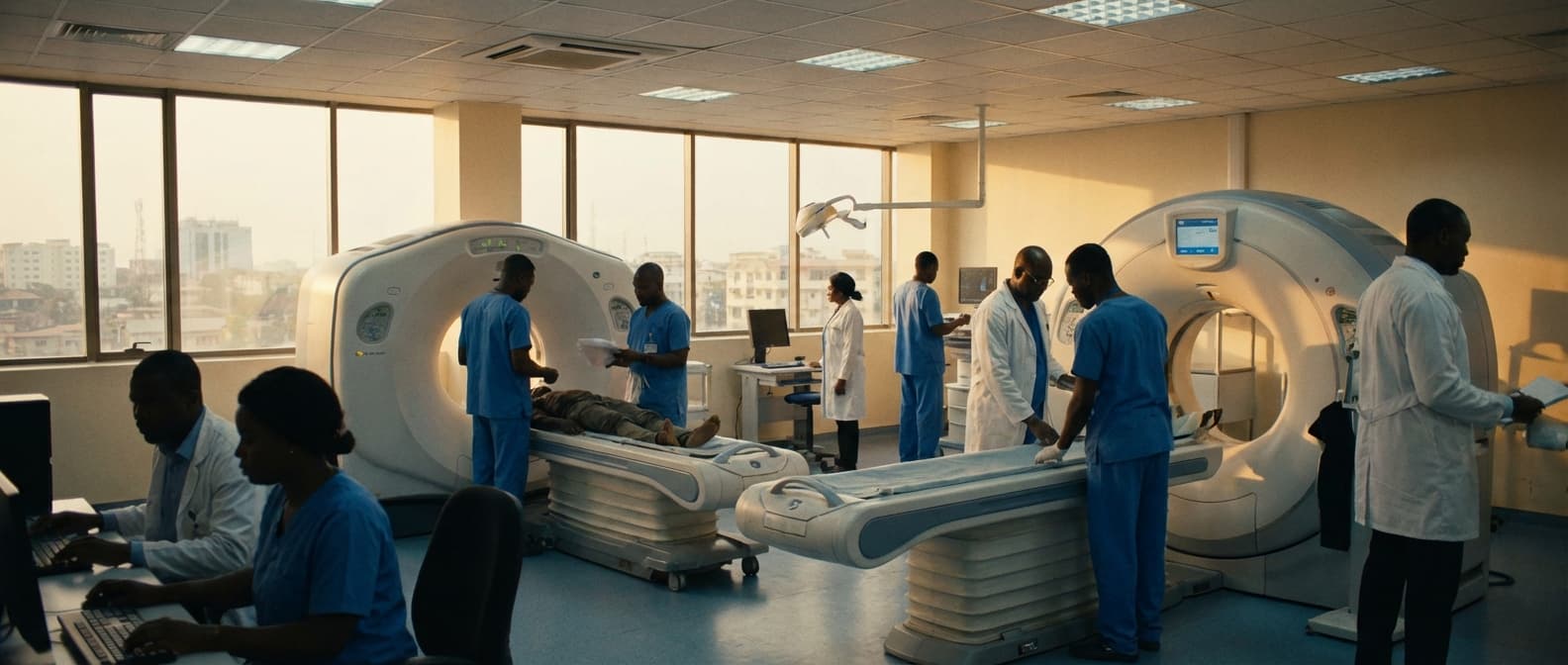
Imaging Acceptance Testing & QA in Libya
Engineering Excellence & Technical Support
Commissioning and periodic QA for CT/MRI/X‑ray/US/Mammo. High-standard technical execution following OEM protocols and local regulatory frameworks.
Advanced DICOM Conformance Testing
Ensuring seamless interoperability and data integrity for medical imaging devices across Libyan healthcare facilities by rigorously validating adherence to DICOM standards through automated and manual testing protocols.
Image Quality & Performance Benchmarking
Establishing standardized image quality assessment metrics and performance benchmarks for X-ray, CT, MRI, and Ultrasound systems, enabling objective evaluation and optimization of diagnostic accuracy in the Libyan context.
Cybersecurity & Data Privacy Assurance
Implementing comprehensive security testing to safeguard sensitive patient imaging data against unauthorized access and breaches, ensuring compliance with Libyan data protection regulations and maintaining patient confidentiality.
What Is Imaging Acceptance Testing & Qa In Libya?
Imaging Acceptance Testing (IAT) and Quality Assurance (QA) in Libya refers to the systematic verification and validation processes applied to medical imaging systems and their associated workflows. This encompasses ensuring that imaging equipment (e.g., X-ray, CT, MRI, Ultrasound, PET/CT) and the software responsible for image acquisition, processing, storage, and retrieval (PACS, RIS, EMR integrations) meet predefined performance standards, regulatory requirements, and user expectations. The primary objective is to guarantee the integrity, accuracy, and diagnostic reliability of medical images, thereby supporting effective clinical decision-making and patient care within the Libyan healthcare landscape.
| Service Component | Description | Typical Use Cases |
|---|---|---|
| New System Installation & Acceptance (IA&T) | Initial verification and validation of newly installed imaging equipment and/or PACS/RIS systems before clinical deployment. This ensures the system meets tender specifications and is ready for clinical use. | Procurement of new CT scanners, MRI machines, or PACS/RIS platforms; upgrades to existing imaging infrastructure. |
| Routine Performance Monitoring & QA | Ongoing scheduled testing to ensure systems maintain their performance characteristics and image quality over time. This includes phantom studies, dose audits, and system checks. | Regular quality control of X-ray units, daily checks on MRI safety systems, weekly image quality assessments for ultrasound probes. |
| Software Upgrade & Patch Testing | Verification of the functionality and integrity of imaging software after updates, patches, or significant configuration changes. This prevents regression errors and ensures compatibility. | Applying new versions of PACS software, upgrading firmware on an MRI console, implementing new image processing algorithms. |
| Interoperability Testing | Validation of the seamless exchange of data and images between different systems, such as imaging modalities, PACS, RIS, and EMR/EHR systems. Essential for integrated healthcare information systems. | Testing HL7 messaging between RIS and EMR; verifying DICOM connectivity between a new CT scanner and the existing PACS. |
| Troubleshooting & Root Cause Analysis | Investigating and resolving issues related to image quality degradation, system malfunctions, or workflow disruptions. This involves detailed technical analysis to identify the underlying cause. | Investigating persistent artifacts on ultrasound images; diagnosing frequent system crashes of the PACS viewer. |
| Pre-Implementation Audits | Assessment of existing imaging infrastructure and IT environment prior to the implementation of new systems or major upgrades, to identify potential challenges and plan for successful integration. | Evaluating network bandwidth and storage capacity before a PACS migration; assessing existing DICOM conformance of modalities before a system-wide upgrade. |
What Imaging Acceptance Testing & QA in Libya Involves:
- Equipment Performance Verification: Rigorous testing of imaging modality performance characteristics, including image resolution, contrast, signal-to-noise ratio (SNR), artifact levels, dose calibration, and geometric accuracy, against manufacturer specifications and international standards (e.g., IEC, ACR).
- Image Quality Assessment: Evaluation of image quality at various stages of the imaging chain, from initial acquisition to post-processing and display, ensuring that diagnostic information is clearly and accurately represented.
- Software Functionality Testing: Verification of the operational integrity of all software components, including image acquisition protocols, reconstruction algorithms, post-processing tools, image archiving (PACS), retrieval, and reporting functionalities (RIS/EMR integration).
- Data Integrity and Security: Assurance that patient data and images are accurately stored, retrieved, and protected from unauthorized access or corruption, adhering to Libyan data privacy regulations and international best practices.
- Workflow Validation: End-to-end testing of the imaging workflow, from patient scheduling and registration through image acquisition, interpretation, reporting, and archiving, identifying and rectifying bottlenecks or inefficiencies.
- Regulatory Compliance: Ensuring adherence to relevant Libyan healthcare regulations, licensing requirements, and international imaging standards.
- User Training and Competency: Assessment of the proficiency of radiographers, radiologists, and IT personnel in operating the equipment and associated software.
- Calibration and Artifact Management: Regular calibration of imaging equipment and systematic identification, analysis, and mitigation of image artifacts.
- Disaster Recovery and Business Continuity: Testing of backup and recovery procedures for imaging data and systems.
Who Needs Imaging Acceptance Testing & Qa In Libya?
Acceptance Testing and Quality Assurance (QA) for imaging systems are crucial for ensuring that medical imaging devices function accurately, reliably, and safely. In Libya, where the healthcare sector is undergoing continuous development and modernization, these processes are vital for several reasons. They guarantee that diagnostic equipment meets international standards, that patient data is handled securely, and that healthcare professionals can trust the images produced for accurate diagnoses. Investing in rigorous imaging acceptance testing and QA not only improves patient outcomes but also builds confidence in the Libyan healthcare system's capabilities.
| Customer Type | Key Departments Benefiting from Imaging Acceptance Testing & QA |
|---|---|
| Hospitals (Public and Private) | Radiology Department (X-ray, CT, MRI, Ultrasound), Cardiology Department (Echocardiography, Angiography), Oncology Department (PET-CT, Radiation Therapy Planning), Neurology Department (MRI, EEG), Emergency Department, Surgical Departments (Intraoperative Imaging) |
| Specialized Diagnostic Centers | Radiology and Imaging Centers (all modalities), Cardiology Diagnostic Clinics, Neurology Diagnostic Centers |
| Polyclinics and Clinics with Imaging Services | General Radiology Units, Specialized Imaging Clinics (e.g., musculoskeletal, women's imaging) |
| Research Institutions | Medical Research Labs utilizing imaging for studies, Clinical Trials Departments |
| Government Health Agencies | Ministry of Health (for procurement standards, oversight), Public Health Surveillance Units, Regional Health Directorates |
Who Needs Imaging Acceptance Testing & QA in Libya? Target Customers and Departments
- Hospitals (Public and Private)
- Specialized Diagnostic Centers
- Polyclinics and Clinics with Imaging Services
- Research Institutions
- Government Health Agencies
Imaging Acceptance Testing & Qa Process In Libya
This document outlines the Imaging Acceptance Testing and Quality Assurance (QA) process in Libya, detailing the workflow from the initial inquiry to the final execution and sign-off. This structured approach ensures that imaging solutions meet specified requirements, are robust, and perform reliably within the Libyan context.
| Stage | Description | Key Activities | Responsible Parties | Deliverables/Outcomes |
|---|---|---|---|---|
| Initiating the process by identifying the need for an imaging solution and clearly defining its functional, technical, and operational requirements. | Define business needs, document technical specifications, identify compliance standards (e.g., healthcare, governmental), determine budget, establish key performance indicators (KPIs). | Client (e.g., Hospital, Government Agency), IT Department, End-Users. | Detailed Requirements Document, Budget Allocation, Project Scope. |
| Identifying potential vendors, issuing a Request for Proposal (RFP), and evaluating submitted proposals against defined criteria. | Market research for vendors, RFP creation and distribution, technical evaluation of proposals, commercial evaluation, vendor presentations/demonstrations, reference checks. | Procurement Department, Technical Committee, Client Stakeholders. | Shortlisted Vendors, Evaluation Report, Preferred Vendor Recommendation. |
| Finalizing terms and conditions, pricing, service level agreements (SLAs), and other contractual obligations with the selected vendor. | Negotiate pricing, scope of work, payment terms, warranty, support, data security, intellectual property, legal review. | Legal Department, Procurement Department, Client Management. | Signed Contract, Statement of Work (SOW). |
| Collaborating with the vendor to finalize the system design and ensuring it aligns with the agreed-upon specifications and requirements. | Review vendor's detailed system design, validate technical architecture, confirm hardware/software compatibility, ensure adherence to Libyan regulations. | Client Technical Team, Vendor Technical Team, QA Team. | Approved System Design Document, Finalized Specifications. |
| Assessing the physical site where the imaging system will be installed to ensure readiness and identify any potential challenges. | Evaluate power supply, network infrastructure, physical space, environmental conditions (temperature, humidity), security measures. | Vendor Installation Team, Client IT/Facilities Team. | Site Readiness Report, Any Required Infrastructure Upgrades. |
| The physical installation of hardware and software components, followed by their configuration according to the approved design. | Hardware setup, software installation, network integration, system configuration, initial data loading (if applicable). | Vendor Installation Team, Client IT Support. | Installed and Configured Imaging System. |
| Internal testing conducted by the vendor and client technical team to verify that the system functions as designed before user involvement. | Unit testing, integration testing, system testing, verification of core functionalities, initial data integrity checks. | Vendor Technical Team, Client Technical Team, QA Team. | PAT Report, Defect Log, Resolved Issues. |
| End-users test the system to confirm it meets their operational needs and is user-friendly in real-world scenarios. | Develop UAT test cases based on user workflows, execute test cases, record results, identify and report defects, re-test fixes. | End-Users, Client QA Team, Vendor Support Team. | UAT Test Cases, UAT Report, Defect Log, User Feedback. |
| Assessing the system's performance under various load conditions and verifying its security posture against potential threats. | Load testing, stress testing, response time measurement, vulnerability scanning, penetration testing, data encryption verification. | Client IT Security Team, Independent Security Testers (if applicable), QA Team. | Performance Test Report, Security Audit Report. |
| Reviewing all provided documentation, including user manuals, technical guides, and training materials, for accuracy and completeness. | Verify clarity, accuracy, and completeness of user guides, administrator manuals, troubleshooting guides, installation procedures. | Client Technical Team, End-Users, QA Team. | Reviewed and Approved Documentation Set. |
| Providing comprehensive training to end-users and administrators on how to operate and maintain the imaging system. | Develop training materials, conduct training sessions (on-site/remote), provide hands-on practice, assess user comprehension. | Vendor Trainers, Client IT/Training Department. | Trained Users and Administrators, Training Material. |
| Formal acceptance of the system by the client after all testing phases and requirements have been successfully met. | Review of all test reports, resolution of outstanding issues, client sign-off on the acceptance certificate, formal handover. | Client Management, Project Manager, Key Stakeholders. | Acceptance Certificate, Project Closure Document. |
| Ongoing support and maintenance to ensure the system continues to operate optimally and address any future issues. | Bug fixes, system updates, performance monitoring, technical support, hardware maintenance, warranty claims. | Vendor Support Team, Client IT Operations Team. | Service Level Agreements (SLAs) adherence, System Uptime, Maintenance Records. |
Key Stages of Imaging Acceptance Testing & QA Process in Libya
- Inquiry & Requirements Gathering
- Vendor Selection & Proposal Evaluation
- Contract Negotiation & Agreement
- System Design & Specification Review
- Pre-Installation Site Assessment
- Installation & Configuration
- Pre-Acceptance Testing (PAT)
- User Acceptance Testing (UAT)
- Performance & Security Testing
- Documentation Review
- Training
- Final Acceptance & Sign-off
- Post-Implementation Support & Maintenance
Imaging Acceptance Testing & Qa Cost In Libya
Imaging Acceptance Testing & Quality Assurance (QA) costs in Libya are influenced by a range of factors, making a precise universal pricing difficult. These costs are typically negotiated on a project-by-project basis, considering the complexity, scope, and specific requirements of the imaging and associated QA processes. Factors impacting these costs include the type of imaging technology used (e.g., medical imaging, industrial inspection, satellite imagery), the volume of data to be processed and tested, the required level of accuracy and detail, the expertise of the testing team, and the software/hardware infrastructure involved. The Libyan Dinar (LYD) is the local currency, and pricing will be quoted and settled in this denomination. Given the economic landscape, it's crucial for clients to obtain detailed quotes from service providers.
| Service Component | Factors Influencing Cost | Estimated Range (LYD per Unit/Project) |
|---|---|---|
| Basic Image Verification | Simple checks for image presence, format correctness. Low data volume. | 100 - 500 LYD |
| Image Quality Assessment | Evaluating resolution, clarity, noise, color accuracy. Moderate data volume. | 300 - 1,500 LYD |
| Feature Extraction & Validation | Testing accuracy of automated or manual feature identification. Complex imaging. | 800 - 4,000 LYD |
| Data Integrity & Consistency Testing | Verifying metadata, file structure, and cross-image consistency. Large datasets. | 1,000 - 7,000 LYD |
| Performance Testing of Imaging Systems | Assessing processing speed, throughput, and stability under load. | 1,500 - 10,000 LYD (per system/module) |
| Specialized Medical Imaging QA | High precision, adherence to medical standards, specific modality expertise. | 2,000 - 15,000+ LYD (per modality/project) |
| Industrial Imaging QA | Defect detection, dimensional verification, specific industry standards. | 1,200 - 9,000 LYD (per application) |
| Comprehensive QA Suite | Combination of multiple QA aspects, extensive test case execution, detailed reporting. | 5,000 - 30,000+ LYD (per project) |
| Hourly Rate for QA Engineers | Varies based on experience and specialization. | 70 - 250 LYD per hour |
Key Pricing Factors for Imaging Acceptance Testing & QA in Libya
- Type of Imaging Technology
- Volume of Imaging Data
- Required Accuracy and Detail Level
- Complexity of Imaging Analysis
- Scope of QA Procedures (e.g., functional, performance, security)
- Expertise and Experience of Testing Personnel
- Software and Hardware Requirements
- Project Timeline and Urgency
- Geographical Location within Libya (for on-site testing)
- Reporting and Documentation Standards
Affordable Imaging Acceptance Testing & Qa Options
Acceptance Testing (AT) and Quality Assurance (QA) are critical for ensuring the reliability, performance, and compliance of imaging systems. However, the costs associated with comprehensive AT/QA can be a significant barrier, especially for smaller organizations or those with budget constraints. This document explores affordable imaging AT/QA options, focusing on value bundles and cost-saving strategies.
| Strategy | Description | Cost-Saving Benefit | Considerations |
|---|---|---|---|
| Phased Testing Approach | Break down AT/QA into smaller, manageable phases. Focus on core functionalities first, then progressively test advanced features and integrations. | Reduces upfront investment. Allows for payment based on completed milestones. Prioritizes critical functions early. | Requires clear definition of phases and deliverables. May extend overall project timeline if not managed efficiently. |
| Leverage Vendor-Provided Tools/Services | Many vendors offer basic AT/QA tools or limited support as part of their package. Inquire about what's included and if it meets your core needs. | Reduces the need for purchasing third-party tools or hiring external consultants for basic testing. | Vendor tools may be limited in scope or depth. May require additional resources to interpret or expand upon vendor-provided results. |
| Standardized Test Protocols | Develop and utilize standardized test protocols based on industry best practices (e.g., ACR guidelines) and your specific use cases. | Improves efficiency and consistency. Reduces the need for custom test script development. Easier to compare results over time. | Requires initial investment in developing or adapting protocols. Needs rigorous adherence to ensure comparability. |
| Internal Resource Training & Empowerment | Train existing IT staff or super-users on basic AT/QA procedures and tools. | Minimizes reliance on expensive external consultants for routine testing. Builds in-house expertise. | Requires investment in training time and resources. May not be suitable for highly specialized or complex testing scenarios. |
| Cloud-Based AT/QA Platforms | Utilize Software-as-a-Service (SaaS) AT/QA platforms that offer flexible subscription models. | Pay-as-you-go pricing reduces upfront capital expenditure. Scalable to project needs. Access to advanced features without large license fees. | Requires reliable internet connectivity. Data security and privacy need careful consideration. May have recurring operational costs. |
| Value Bundles: Combining Services | Look for vendors or service providers that offer bundled AT/QA packages, potentially including initial setup, training, core testing, and basic reporting. | Often provides a cost discount compared to purchasing individual services. Streamlines procurement and management. Ensures a holistic approach. | Carefully scrutinize the inclusions of each bundle to ensure they align with your specific requirements. May include services you don't fully need. |
| Risk-Based Testing Prioritization | Focus AT/QA efforts on the most critical functionalities and high-risk areas of the imaging system. | Optimizes resource allocation by concentrating on what matters most. Prevents over-testing less critical components. | Requires a thorough understanding of system risks and potential failure points. May miss minor issues in lower-priority areas. |
Understanding AT/QA Needs
- System Functionality: Does the system perform all intended functions correctly (e.g., image acquisition, display, processing, storage, retrieval)?
- Performance Metrics: Does the system meet required speed, throughput, and response time expectations?
- Image Quality: Are images of diagnostic quality, free from artifacts, and meeting specific resolution and contrast requirements?
- Interoperability: Can the system seamlessly integrate with other healthcare IT systems (e.g., RIS, PACS, EMR) using standards like DICOM and HL7?
- Security & Compliance: Does the system adhere to data privacy regulations (e.g., HIPAA) and security protocols?
- User Experience: Is the system intuitive and efficient for end-users (radiologists, technologists, etc.)?
Verified Providers In Libya
Ensuring the quality and trustworthiness of healthcare providers is paramount, especially in regions where establishing such standards can be challenging. In Libya, navigating the healthcare landscape to find verified and reputable institutions requires careful consideration. Franance Health has emerged as a leading force in this domain, not only by meticulously vetting providers but also by adhering to stringent credentialing processes. This commitment to quality assurance makes Franance Health a pivotal player in connecting patients with the best possible care in Libya. Their rigorous evaluation framework goes beyond surface-level checks, delving into operational standards, medical expertise, patient safety protocols, and ethical practices of the healthcare facilities they partner with.
| Verification Criterion | Franance Health's Approach | Benefit to Patients |
|---|---|---|
| Medical Expertise & Staff Qualifications | Rigorous review of physician certifications, specialist credentials, and ongoing professional development programs. | Ensures patients receive care from highly qualified and experienced medical professionals. |
| Patient Safety Protocols | Assessment of infection control measures, emergency preparedness, medication management, and patient rights adherence. | Minimizes risks and ensures a safe healing environment for all patients. |
| Facility Standards & Infrastructure | Evaluation of cleanliness, equipment maintenance, technological integration, and accessibility. | Provides access to modern, well-equipped, and comfortable healthcare facilities. |
| Ethical Practices & Patient Care | Review of patient satisfaction surveys, complaint resolution mechanisms, and adherence to medical ethics. | Guarantees respectful, compassionate, and patient-centered care. |
| Accreditation & Regulatory Compliance | Verification of adherence to relevant national and international healthcare standards and regulations. | Confirms that providers meet established benchmarks for quality and safety. |
Why Franance Health is the Best Choice for Verified Providers in Libya
- Unwavering Commitment to Verification: Franance Health employs a multi-faceted verification process that includes site inspections, review of accreditations, assessment of staff qualifications, and examination of patient feedback mechanisms.
- Focus on Patient Safety and Quality: The core of Franance Health's mission is to ensure that all partnered providers meet the highest standards of patient safety, clinical outcomes, and overall healthcare quality.
- Expert Credentialing Panel: Franance Health assembles a panel of experienced medical professionals and healthcare administrators to conduct thorough credentialing evaluations, ensuring objectivity and expertise.
- Transparency and Accountability: Franance Health promotes transparency by clearly outlining their verification criteria and holding their partner providers accountable for maintaining these standards.
- Comprehensive Network of Trusted Providers: Through their diligent efforts, Franance Health has cultivated a robust network of healthcare facilities and practitioners across Libya that consistently demonstrate excellence.
Scope Of Work For Imaging Acceptance Testing & Qa
This document outlines the Scope of Work for Imaging Acceptance Testing & Quality Assurance (QA), focusing on technical deliverables and standard specifications. The objective is to ensure that all imaging systems and related software meet the defined functional, performance, and quality requirements before final acceptance and deployment. This includes verification of image acquisition, processing, storage, retrieval, and display functionalities against established standards and project-specific criteria.
| Category | Description | Standard Specification/Reference | Testing Method |
|---|---|---|---|
| Image Acquisition | Verification of image capture parameters, resolution, noise levels, and artifact reduction. | DICOM Part 3 (Information Object Definitions), Modality-specific standards (e.g., IHE PCD, ACR) | Functional Testing, Performance Testing, Image Quality Analysis |
| Image Display & Visualization | Validation of image display fidelity, windowing/leveling controls, zoom/pan functionality, and multi-planar reconstruction (MPR) capabilities. | DICOM Part 14 (Grayscale Standard Display Function), IHE Display | Functional Testing, Usability Testing, Visual Inspection |
| Image Archiving & Retrieval | Confirmation of proper image storage, retrieval speed, query functionality, and compliance with archival policies. | DICOM Part 10 (Media Storage and File Format), IHE Scheduled Workflow, IHE Basic Archiving | Functional Testing, Performance Testing, Load Testing |
| Image Processing | Verification of image enhancement algorithms, segmentation, registration, and measurement tools. | Application-specific requirements, Research/Clinical validation studies | Functional Testing, Validation Testing, Comparative Analysis |
| Data Integrity | Ensuring that image data and associated metadata are not corrupted or lost during any stage of the workflow. | DICOM Part 10, HIPAA Security Rule | Data Integrity Checks, Stress Testing |
| Interoperability | Testing integration with other hospital systems (PACS, RIS, EMR) using standard protocols. | DICOM Part 8 (Network Communication), HL7, IHE profiles (e.g., XDS, PDQ) | Integration Testing, End-to-End Workflow Testing |
| Performance & Scalability | Assessing system responsiveness under expected and peak loads, including image loading times and query efficiency. | Project-specific performance requirements, Industry benchmarks | Performance Testing, Load Testing, Stress Testing |
| Security | Verification of access controls, data encryption, audit trails, and compliance with privacy regulations. | HIPAA, GDPR, DICOM Part 15 (Security and System Management) | Security Audit, Penetration Testing, Vulnerability Assessment |
Key Technical Deliverables
- Image Acquisition Performance Report
- Image Quality Assessment Report (including DICOM conformance)
- Image Processing Workflow Validation Report
- Data Integrity and Storage Compliance Report
- System Uptime and Reliability Metrics
- User Interface (UI) and User Experience (UX) Testing Report
- Integration Testing Report (with PACS, RIS, EMR, etc.)
- Security Audit and Compliance Report
- Performance Benchmarking Report (e.g., image loading times, query response times)
- Test Case Execution and Defect Tracking Log
Service Level Agreement For Imaging Acceptance Testing & Qa
This Service Level Agreement (SLA) outlines the performance expectations for Imaging Acceptance Testing and Quality Assurance (QA) services, specifically focusing on response times for reported issues and guaranteed uptime for the testing environment and associated tools. This SLA is intended to ensure timely and efficient resolution of defects and to minimize disruption to the testing process.
| Metric | Definition | Service Level Objective (SLO) | Measurement Period |
|---|---|---|---|
| Response Time for Critical Issues | Time taken to acknowledge and begin investigation of a reported critical defect (e.g., blocking further testing, data corruption). | Within 1 business hour | 24x7 |
| Response Time for High Priority Issues | Time taken to acknowledge and begin investigation of a reported high priority defect (e.g., significant functional impact, affecting multiple test cases). | Within 2 business hours | Business Hours (Monday-Friday, 9 AM - 5 PM Local Time) |
| Response Time for Medium Priority Issues | Time taken to acknowledge and begin investigation of a reported medium priority defect (e.g., moderate functional impact, affecting a limited set of test cases). | Within 4 business hours | Business Hours (Monday-Friday, 9 AM - 5 PM Local Time) |
| Response Time for Low Priority Issues | Time taken to acknowledge and begin investigation of a reported low priority defect (e.g., cosmetic issue, minor functional impact). | Within 1 business day | Business Hours (Monday-Friday, 9 AM - 5 PM Local Time) |
| Environment & Tool Uptime Guarantee | The percentage of time the imaging acceptance testing environment (including any required servers, databases, and testing tools) is available and operational for use. | 99.5% | Monthly |
| Definition of 'Downtime' | Any period during which the imaging acceptance testing environment or critical testing tools are unavailable or inaccessible, preventing the execution of planned testing activities. Scheduled maintenance is excluded. | ||
| Exclusions from Downtime | Downtime resulting from factors beyond the reasonable control of the service provider, including but not limited to: force majeure events (e.g., natural disasters, acts of war), client-side network failures, client-provided hardware malfunctions, or scheduled maintenance windows communicated in advance. |
Key Service Metrics & Guarantees
- Response Time for Critical Issues
- Response Time for High Priority Issues
- Response Time for Medium Priority Issues
- Response Time for Low Priority Issues
- Environment & Tool Uptime Guarantee
- Definition of 'Downtime'
- Exclusions from Downtime
Frequently Asked Questions

Ready when you are
Let's scope your Imaging Acceptance Testing & QA in Libya project in Libya.

Scaling healthcare logistics and technical systems across the entire continent.