
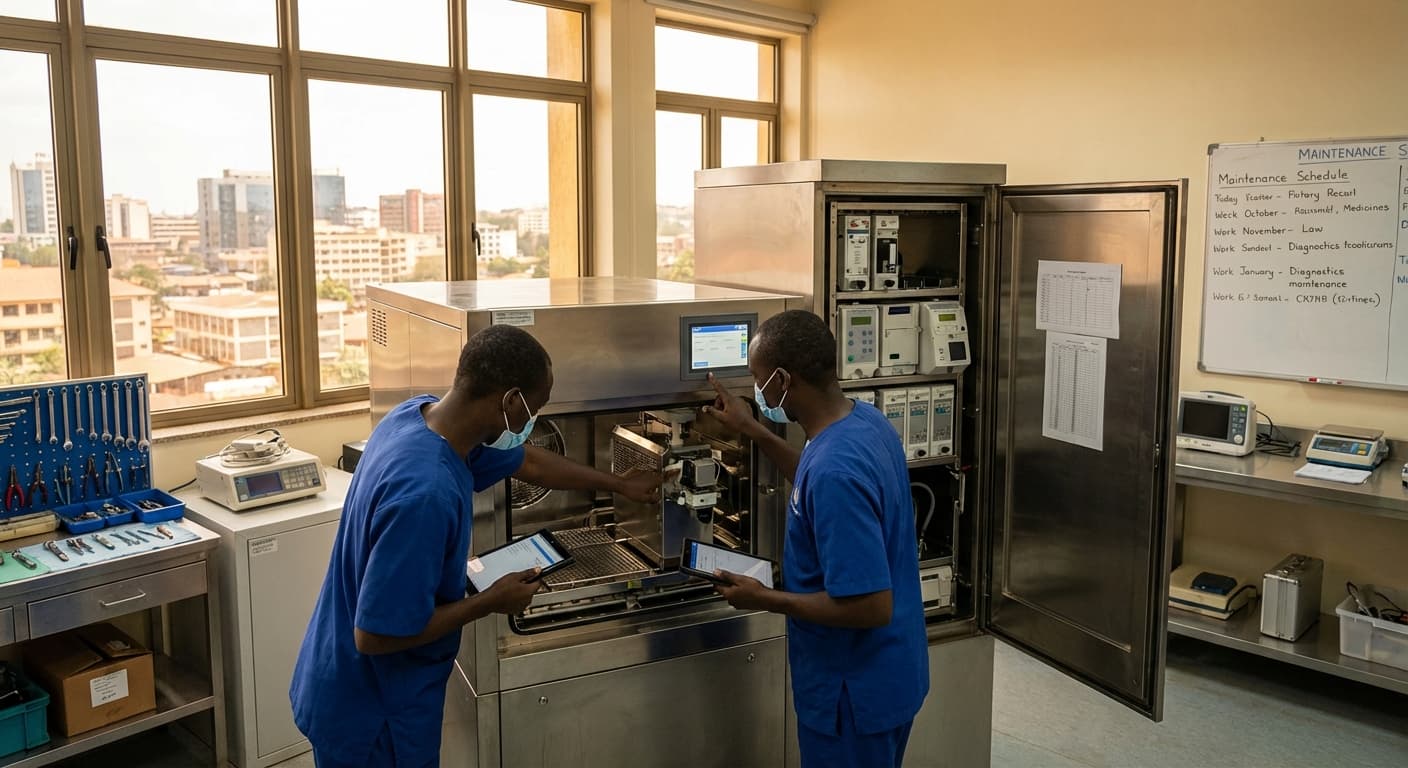
Total Cost of Ownership (TCO) & Lifecycle Budgeting Service in Libya
Engineering Excellence & Technical Support
Total Cost of Ownership (TCO) & Lifecycle Budgeting Service High-standard technical execution following OEM protocols and local regulatory frameworks.
Optimized Asset Lifecycle Costing
Leverage our advanced TCO models to accurately forecast and manage acquisition, operation, maintenance, and disposal costs for your critical assets in Libya. Maximize ROI through data-driven investment decisions.
Predictive Maintenance Budgeting
Our TCO service incorporates predictive analytics to anticipate maintenance needs, minimize unexpected downtime, and optimize spare parts inventory, reducing lifecycle operational expenses for your infrastructure and equipment in Libya.
Libyan Market-Specific Cost Insights
Benefit from our deep understanding of the Libyan economic landscape, supply chain nuances, and regulatory environment to refine your lifecycle budgeting and achieve true cost efficiencies for your projects and operations.
What Is Total Cost Of Ownership (Tco) & Lifecycle Budgeting Service In Libya?
Total Cost of Ownership (TCO) and Lifecycle Budgeting is a comprehensive financial management methodology focused on accurately quantifying all direct and indirect costs associated with an asset, system, or project throughout its entire lifespan. In the Libyan context, this service is particularly relevant for organizations operating in a dynamic economic environment characterized by evolving regulatory frameworks, fluctuating material costs, and the need for robust long-term planning to mitigate risks and optimize resource allocation. It moves beyond initial acquisition costs to encompass operational expenditures, maintenance, support, upgrades, and eventual decommissioning or disposal. Lifecycle Budgeting integrates TCO principles into strategic financial planning, ensuring that all future costs and benefits are considered during investment decisions.
| Who Needs TCO & Lifecycle Budgeting in Libya? | Typical Use Cases in Libya | |||||||||||||
|---|---|---|---|---|---|---|---|---|---|---|---|---|---|---|
| Government Agencies and Public Sector Entities: For infrastructure projects (e.g., power generation, water treatment, transportation), public IT systems, and building management. | Large-scale Infrastructure Projects: Evaluating long-term financial viability of national projects, considering maintenance, operational efficiency, and lifespan of critical components. | Telecommunications Companies: Assessing the TCO of network infrastructure upgrades, spectrum licenses, and service delivery platforms. | Energy Sector (Oil & Gas, Renewables): Analyzing the lifecycle costs of exploration equipment, production facilities, refining processes, and renewable energy installations. | Financial Institutions: Evaluating the TCO of IT systems, banking software, data centers, and security infrastructure. | Manufacturing and Industrial Enterprises: Optimizing the lifecycle costs of production machinery, automation systems, and supply chain logistics. | Real Estate Developers and Facility Managers: For commercial, residential, and industrial building projects, accounting for construction, operational, and maintenance expenses. | Transportation and Logistics Companies: Assessing the TCO of fleet vehicles, cargo handling equipment, and warehousing solutions. | Technology Providers and System Integrators: To offer clients comprehensive lifecycle cost analysis as part of their solution proposals. | Technology Procurement and Implementation: Determining the true cost of acquiring and deploying new IT systems, software solutions, or hardware over their projected useful life. | Asset Management and Depreciation Planning: Informing long-term asset replacement strategies and accurate financial reporting. | Investment Appraisal and Due Diligence: Providing a thorough financial assessment for mergers, acquisitions, and capital expenditure decisions. | Operational Efficiency and Cost Optimization: Identifying areas for cost reduction throughout the asset lifecycle, such as energy consumption or maintenance protocols. | Risk Management and Business Continuity Planning: Quantifying the financial impact of potential disruptions and investing in appropriate mitigation strategies. | Strategic Planning and Budget Allocation: Ensuring that long-term financial commitments are adequately planned for and budgeted. |
Key Components of TCO & Lifecycle Budgeting Service:
- Acquisition Costs: Initial purchase price, installation, configuration, and related professional services.
- Operational Costs: Energy consumption, consumables, licensing fees, software subscriptions, and outsourced services.
- Maintenance & Support Costs: Scheduled maintenance, unscheduled repairs, spare parts, technical support contracts, and warranty management.
- Upgrade & Enhancement Costs: Necessary hardware or software upgrades, system enhancements, and capacity expansions.
- Training Costs: End-user and IT support personnel training.
- Downtime & Risk Mitigation Costs: Costs associated with system failures, data loss, and security breaches, including business interruption and recovery efforts.
- Decommissioning & Disposal Costs: Costs related to asset retirement, data sanitization, environmental disposal, and site remediation.
Who Needs Total Cost Of Ownership (Tco) & Lifecycle Budgeting Service In Libya?
In Libya's evolving economic landscape, a robust understanding of Total Cost of Ownership (TCO) and Lifecycle Budgeting (LCB) is no longer a luxury but a strategic imperative. These financial frameworks empower organizations to make informed decisions about asset acquisition, utilization, and disposal, leading to significant cost savings, improved operational efficiency, and enhanced long-term financial health. This service is crucial for organizations seeking to optimize their investments, mitigate risks, and achieve sustainable growth.
| Target Customer Group | Key Departments Benefiting | Primary Need for TCO/LCB |
|---|---|---|
| Government & Public Sector Entities | Procurement, Finance, Infrastructure Planning, Asset Management, Public Works | Optimizing public spending, ensuring long-term service delivery, justifying capital investments, managing lifecycle costs of public assets. |
| Oil & Gas Companies | Engineering, Operations, Maintenance, Finance, Procurement, Project Management | Maximizing asset lifespan, minimizing operational expenditures, accurate budgeting for maintenance and decommissioning, strategic investment decisions. |
| Construction & Infrastructure Development Firms | Project Management, Cost Estimation, Finance, Engineering, Asset Management | Accurate long-term project cost forecasting, competitive bidding, managing the costs of asset operation and maintenance for clients, strategic planning for asset lifecycle. |
| Telecommunications Providers | Network Operations, Engineering, Finance, Procurement, IT Management | Efficient network upgrades, optimizing infrastructure investments, managing the total cost of ownership for communication equipment, strategic technology deployment. |
| Manufacturing & Industrial Enterprises | Operations, Maintenance, Engineering, Finance, Procurement, Supply Chain Management | Reducing production costs, optimizing equipment utilization, accurate budgeting for machinery replacement, improving operational efficiency and profitability. |
| Financial Institutions | Risk Management, Investment Analysis, Portfolio Management, Corporate Finance | Accurate valuation of assets for financing, comprehensive risk assessment for investments, ensuring long-term financial viability of financed projects. |
| Large Corporations | Finance, Procurement, IT, Facilities Management, Operations, Asset Management | Informed purchasing decisions, optimizing asset utilization, strategic replacement planning, reducing overall operational costs, improving financial forecasting. |
Who Needs TCO & Lifecycle Budgeting Service in Libya? (Target Customers & Departments)
- {"description":"Ministries, municipalities, state-owned enterprises, and public service providers responsible for managing large-scale infrastructure projects, public assets, and essential services. They often deal with significant capital expenditures and long-term operational costs.","customerType":"Government & Public Sector Entities"}
- {"description":"Operators and service companies involved in exploration, production, refining, and distribution. These entities manage high-value, complex assets with extensive operational lifecycles and significant maintenance and decommissioning costs.","customerType":"Oil & Gas Companies"}
- {"description":"Companies involved in building and maintaining roads, bridges, airports, power plants, and other critical infrastructure. They need to understand the long-term costs associated with their projects beyond initial construction.","customerType":"Construction & Infrastructure Development Firms"}
- {"description":"Companies managing vast networks of equipment, infrastructure, and technology. TCO and LCB are vital for managing the costs of network upgrades, maintenance, and eventual decommissioning of aging technology.","customerType":"Telecommunications Providers"}
- {"description":"Businesses operating factories, production lines, and industrial equipment. Understanding the full cost of machinery, including maintenance, energy consumption, and eventual replacement, is critical for profitability.","customerType":"Manufacturing & Industrial Enterprises"}
- {"description":"Organizations that invest in or finance capital-intensive projects and assets. They require TCO and LCB analysis to accurately assess the risk and return on investment for their portfolios.","customerType":"Financial Institutions (Banks & Investment Funds)"}
- {"description":"Any large enterprise that owns and manages a variety of assets, from IT infrastructure and vehicles to buildings and specialized equipment, across different operational departments.","customerType":"Large Corporations with Diverse Asset Portfolios"}
Total Cost Of Ownership (Tco) & Lifecycle Budgeting Service Process In Libya
This document outlines the typical workflow for providing Total Cost of Ownership (TCO) and Lifecycle Budgeting services within the Libyan context. The process is designed to ensure a comprehensive understanding of all costs associated with an asset or project throughout its entire lifespan, from initial acquisition to disposal. This allows for more informed financial planning, risk mitigation, and strategic decision-making for Libyan businesses and organizations.
| Phase | Key Activities | Deliverables | Libyan Context Considerations |
|---|---|---|---|
| Client expresses interest in TCO/Lifecycle Budgeting services. Initial discussions to understand client needs, objectives, and the nature of the asset/project. | Understanding of client requirements, preliminary assessment of service applicability. | Language barriers (Arabic/English), cultural nuances in business communication, establishing trust with local stakeholders. |
| Detailed discussions to define the specific scope of work, including the assets/projects to be analyzed, time horizon, and required level of detail. Development of a formal proposal outlining services, methodology, timeline, and fees. | Signed Statement of Work (SOW), formal proposal document. | Understanding local regulatory requirements impacting asset lifecycle, availability of skilled local personnel for data collection. |
| Gathering comprehensive data related to all cost components (acquisition, operation, maintenance, disposal, etc.) from various sources. This may involve site visits, interviews with relevant personnel, and review of existing documentation. | Raw data sets, initial analysis reports, identification of data gaps. | Accessibility to facilities and personnel, potential for data security concerns, reliance on local knowledge for accurate cost estimations (e.g., local labor rates, import duties). |
| Applying established methodologies and tools to calculate TCO and develop detailed lifecycle budgets. This involves forecasting future costs, considering inflation, depreciation, and potential risks. | Comprehensive TCO report, detailed lifecycle budget spreadsheet, risk assessment matrix. | Understanding of local economic conditions and their impact on cost projections, availability of reliable historical cost data, impact of geopolitical stability on future cost forecasts. |
| Presenting the TCO analysis and lifecycle budget to the client. This includes explaining the findings, highlighting key cost drivers, and providing actionable recommendations. | Final TCO report, presentation slides, executive summary. | Tailoring the presentation style to local preferences, ensuring clarity and conciseness, facilitating Q&A sessions with Libyan stakeholders. |
| Assisting the client in implementing the recommendations derived from the TCO analysis. This could involve developing new budgeting processes, procurement strategies, or maintenance plans. Ongoing monitoring of actual costs against the budget. | Implementation plans, updated budgets, monitoring reports. | Navigating local procurement regulations and procedures, working with local suppliers and service providers, establishing effective communication channels for ongoing support. |
| Periodic reviews of the TCO and lifecycle budget to account for changes in the operating environment, asset performance, or strategic objectives. Refinement of the budget and recommendations as needed. | Revised TCO analysis, updated lifecycle budgets, post-implementation review reports. | Adapting to evolving economic and regulatory landscapes in Libya, incorporating feedback from local operational teams. |
Total Cost of Ownership (TCO) & Lifecycle Budgeting Service Process in Libya
- Inquiry & Initial Consultation
- Scope Definition & Proposal Development
- Data Collection & Analysis
- TCO & Lifecycle Budget Development
- Reporting & Presentation
- Implementation Support & Monitoring
- Review & Refinement
Total Cost Of Ownership (Tco) & Lifecycle Budgeting Service Cost In Libya
The Total Cost of Ownership (TCO) and Lifecycle Budgeting service cost in Libya is influenced by a multitude of factors, making it challenging to provide a single, definitive price. Understanding these elements is crucial for accurate budgeting and procurement. This service is particularly vital in Libya's evolving economic landscape, where long-term asset management and strategic financial planning are paramount for businesses and organizations. The cost is generally assessed on a project-by-project basis, taking into account the complexity, scope, and duration of the TCO analysis and lifecycle budgeting engagement.
| Service Component | Estimated Cost Range (LYD - Libyan Dinar) | Notes |
|---|---|---|
| Initial TCO Assessment (Small to Medium Asset Portfolio) | 5,000 - 15,000 LYD | Covers basic TCO calculations for a limited number of assets, with moderate data availability. |
| Comprehensive TCO Analysis (Large Asset Portfolio/Complex Systems) | 15,000 - 50,000+ LYD | Includes in-depth analysis of multiple asset types, complex operational costs, and rigorous data validation. Can extend significantly for very large-scale projects. |
| Lifecycle Budgeting (Annual/Project-Specific) | 3,000 - 10,000 LYD per cycle/project | Focuses on forecasting costs for specific asset lifecycles or annual budget planning, dependent on the scope of assets. |
| TCO Model Development & Implementation | 10,000 - 30,000 LYD | Setting up a robust TCO framework, including data collection protocols and analytical templates. |
| Ongoing TCO Monitoring & Reporting | 2,000 - 7,000 LYD per quarter/annually | Regular updates and reviews of TCO data, often as part of a managed service agreement. |
| Specialized TCO Consulting (e.g., for large infrastructure projects) | 50,000 - 150,000+ LYD | Requires highly specialized expertise, extensive data analysis, and often involves international consultants, leading to higher costs. |
Key Pricing Factors for TCO & Lifecycle Budgeting Services in Libya
- Scope of Assets Analyzed: The number, type, and complexity of assets (e.g., machinery, IT infrastructure, buildings, vehicles) to be included in the TCO analysis significantly impact costs. A broader scope requires more data collection and analysis.
- Depth of Analysis: The level of detail in the TCO model (e.g., including maintenance, operational, disposal, and indirect costs) will affect the time and expertise required.
- Data Availability and Quality: The ease of accessing reliable historical data for asset acquisition, operation, maintenance, and disposal is a major determinant. Poor data quality necessitates more effort in data cleansing and validation.
- Complexity of Lifecycle Stages: Analyzing all lifecycle stages, from procurement and operation to maintenance, upgrades, and eventual disposal, adds to the complexity and cost.
- Consultant Expertise and Reputation: The experience, specialization, and reputation of the consulting firm or individual providing the TCO and lifecycle budgeting services will influence their rates.
- Geographic Location within Libya: While a general Libyan market applies, there might be minor variations in costs based on the specific city or region where the service is delivered, considering local operational expenses.
- Duration of the Engagement: Longer-term engagements or ongoing lifecycle management services will naturally incur higher overall costs.
- Technology and Tools Used: The sophistication of the TCO software or analytical tools employed by the service provider can affect efficiency and thus cost.
- Reporting and Deliverable Requirements: The format, detail, and frequency of reports and presentations required by the client will influence the effort involved.
- Market Demand and Competition: The current demand for TCO services in Libya and the level of competition among service providers can also play a role in pricing.
Affordable Total Cost Of Ownership (Tco) & Lifecycle Budgeting Service Options
Our Affordable Total Cost of Ownership (TCO) & Lifecycle Budgeting Service helps organizations optimize their spending by providing comprehensive insights into all costs associated with an asset or service from acquisition to disposal. We offer flexible value bundles and implement proven cost-saving strategies to ensure maximum financial efficiency throughout the entire lifecycle.
| Value Bundle Tier | Included Services | Target Audience | Pricing Structure |
|---|---|---|---|
| Essential Insights | Basic TCO analysis, lifecycle cost forecasting (3-5 years), standard reporting. | Small businesses, individual project assessments. | Fixed monthly retainer, project-based fee. |
| Strategic Optimization | Comprehensive TCO modeling, extended lifecycle forecasting (5-10 years), procurement strategy review, maintenance & operations budgeting, risk assessment, advanced dashboards. | Mid-sized businesses, departments, strategic initiatives. | Tiered monthly retainer based on complexity, hybrid project/retainer. |
| Enterprise Transformation | Full lifecycle budgeting (10+ years), custom TCO model development, in-depth procurement optimization, full operational cost management, disposal planning, scenario analysis, executive-level strategy integration. | Large enterprises, government agencies, organizations with complex asset portfolios. | Custom negotiated retainer, outcome-based pricing available. |
Key Service Components
- TCO Analysis & Modeling
- Lifecycle Cost Forecasting
- Procurement Strategy Optimization
- Maintenance & Operations Budgeting
- Disposal & Decommissioning Planning
- Risk Assessment & Mitigation
- Performance Benchmarking
- Customized Reporting & Dashboards
Verified Providers In Libya
In the complex landscape of healthcare access in Libya, identifying reliable and credentialed providers is paramount. Franance Health stands out as a leading entity committed to ensuring that individuals receive safe, effective, and ethical medical services. This commitment is underpinned by a rigorous credentialing process that scrutinizes medical professionals, facilities, and their adherence to international standards. Choosing Franance Health's verified providers offers a distinct advantage, guaranteeing a higher level of quality, transparency, and patient safety. Their dedication to upholding these standards makes them the best choice for navigating healthcare needs in Libya.
| Franance Health Verification Criteria | Significance for Patients |
|---|---|
| Professional License Verification | Ensures practitioners are legally qualified and licensed to practice. |
| Education and Training Accreditation | Confirms that qualifications are from recognized and reputable institutions. |
| Work Experience and Competency Assessment | Validates practical skills and proven ability in specific medical fields. |
| Background Checks and Criminal Record Review | Guarantees patient safety and trust in providers. |
| Facility Accreditation and Quality Control | Confirms that healthcare facilities meet stringent safety and operational standards. |
| Adherence to Ethical Guidelines | Ensures providers practice with integrity and prioritize patient welfare. |
| Continuous Professional Development Monitoring | Ensures providers remain up-to-date with the latest medical advancements and techniques. |
Why Choose Franance Health Verified Providers?
- Rigorous Credentialing Process: Each provider undergoes a comprehensive vetting procedure.
- International Standards Adherence: Compliance with global best practices in healthcare.
- Enhanced Patient Safety: Minimized risks through qualified and trustworthy professionals.
- Improved Health Outcomes: Access to skilled specialists and state-of-the-art facilities.
- Transparency and Trust: Clear understanding of provider qualifications and services.
- Ethical Practice Assurance: Commitment to patient well-being and medical integrity.
Scope Of Work For Total Cost Of Ownership (Tco) & Lifecycle Budgeting Service
This Scope of Work (SOW) outlines the services to be provided for conducting a Total Cost of Ownership (TCO) and Lifecycle Budgeting analysis. The objective is to establish a comprehensive understanding of all costs associated with an asset or service over its entire lifespan, from acquisition to disposal. This analysis will inform strategic decision-making, optimize resource allocation, and enhance financial planning.
| Deliverable Name | Description | Standard Specification / Format | Key Performance Indicators (KPIs) |
|---|---|---|---|
| TCO Framework Document | Detailed document outlining the methodology, cost categories, assumptions, and data sources for TCO calculation. | PDF or Word document. Clearly defined cost categories (e.g., acquisition, operation, maintenance, disposal). Documented assumptions and data sources. | Completeness of cost categories, clarity of methodology, stakeholder agreement on framework. |
| Data Collection Plan | A systematic plan for gathering all required financial and operational data. | Excel spreadsheet or structured document. Identification of data owners, collection methods, timelines, and validation procedures. | Completeness of data requirements, efficiency of collection methods, data accuracy achieved. |
| Lifecycle Cost Model(s) | Spreadsheet-based or specialized software models projecting costs over the asset's lifecycle. | Microsoft Excel, Google Sheets, or industry-standard TCO software. Inclusion of all identified cost categories, relevant time periods, and unit costs. Clearly defined formulas and assumptions. | Accuracy of cost projections, comprehensiveness of cost components, robustness of model logic, sensitivity analysis outputs. |
| Risk Assessment Report | Identification and quantification of potential risks affecting lifecycle costs, along with mitigation strategies. | PDF or Word document. List of identified risks, probability and impact assessment, proposed mitigation actions, and their estimated cost implications. | Thoroughness of risk identification, realism of impact assessment, feasibility of mitigation strategies. |
| Scenario Analysis Report | Presentation of different lifecycle budget scenarios based on key variables and assumptions. | PDF or Word document. Description of each scenario (e.g., best case, worst case, most likely), including associated costs, benefits, and risks. Visualizations (charts, graphs) to illustrate differences. | Clarity of scenario definitions, validity of assumptions, meaningful comparison of outcomes. |
| Final TCO & Lifecycle Budgeting Report | Comprehensive report summarizing the TCO analysis, lifecycle budget findings, and strategic recommendations. | PDF or executive summary format. Executive summary, detailed methodology, data sources, TCO calculation breakdown, lifecycle cost projections, risk and scenario analysis, strategic recommendations for cost optimization and budgeting. | Clarity and conciseness of executive summary, comprehensiveness of analysis, actionability of recommendations, stakeholder satisfaction. |
| Presentation of Findings | A presentation to key stakeholders summarizing the TCO and lifecycle budgeting results and recommendations. | Microsoft PowerPoint or similar presentation software. Visual aids, key takeaways, and a platform for Q&A. | Clarity of presentation, understanding of findings by stakeholders, engagement during Q&A. |
Services Provided
- TCO Framework Development: Define a robust framework for calculating TCO, including all relevant cost categories.
- Data Collection & Validation: Gather and verify all necessary financial and operational data from various sources.
- Lifecycle Cost Modeling: Develop detailed models to forecast costs across the asset's lifecycle.
- Risk & Sensitivity Analysis: Identify and quantify potential risks and their impact on lifecycle costs.
- Scenario Planning: Develop multiple lifecycle budget scenarios based on varying assumptions.
- Reporting & Recommendations: Generate comprehensive reports detailing findings, insights, and actionable recommendations.
Service Level Agreement For Total Cost Of Ownership (Tco) & Lifecycle Budgeting Service
This Service Level Agreement (SLA) outlines the performance standards, response times, and uptime guarantees for the Total Cost of Ownership (TCO) & Lifecycle Budgeting Service (the "Service"). This SLA is incorporated by reference into the Master Service Agreement (MSA) between [Your Company Name] ("Provider") and [Client Company Name] ("Client").
| Service Component | Uptime Guarantee | Response Time (Standard Support) | Response Time (Critical Support) | Resolution Target (Standard) |
|---|---|---|---|---|
| TCO Calculation & Reporting Platform | 99.5% Uptime | 4 Business Hours | 1 Business Hour | 24 Business Hours |
| Lifecycle Budgeting Tools & Templates | 99.5% Uptime | 4 Business Hours | 1 Business Hour | 24 Business Hours |
| Data Integration & Synchronization (if applicable) | 99.0% Uptime | 8 Business Hours | 4 Business Hours | 48 Business Hours |
| Expert Consultation & Analysis | N/A (Service Delivery dependent on Client input) | 2 Business Days (for scheduled consultations) | 1 Business Day (for urgent requests) | N/A (Service Delivery dependent on Client input) |
| Dedicated Support Team (Technical Queries) | N/A (Not applicable to platform uptime) | 4 Business Hours | 2 Business Hours | 24 Business Hours |
Service Scope
- The Service includes the provision of tools, methodologies, and expert consultation for the accurate calculation and forecasting of Total Cost of Ownership (TCO) for assets and projects.
- The Service encompasses the development and management of lifecycle budgets, including initial acquisition, operation, maintenance, and disposal costs.
- The Service provides regular reporting and analysis of TCO and lifecycle budget performance.
- The Service includes access to a dedicated support team for technical queries and assistance related to the Service's functionalities and outputs.
Frequently Asked Questions

Ready when you are
Let's scope your Total Cost of Ownership (TCO) & Lifecycle Budgeting Service in Libya project in Libya.

Scaling healthcare logistics and technical systems across the entire continent.