
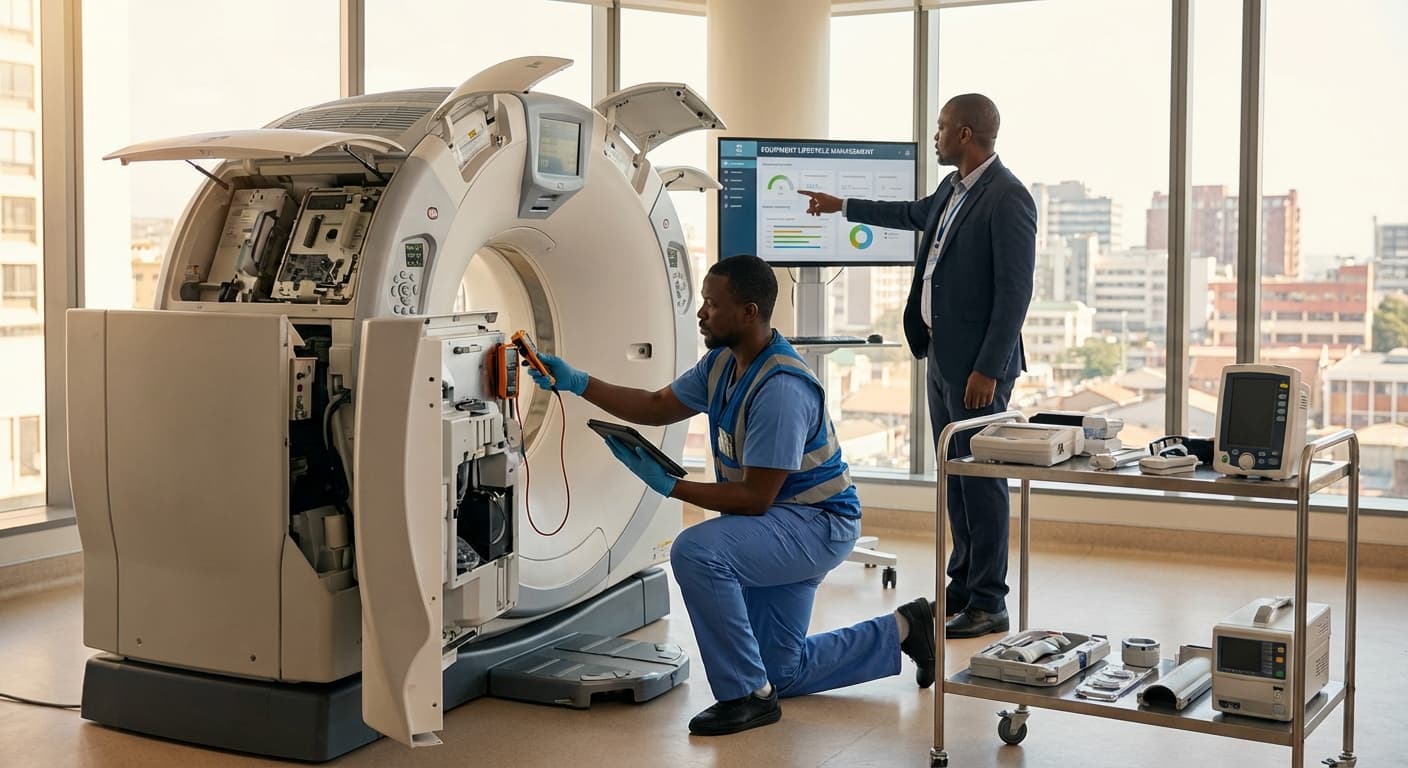
Equipment Replacement Planning & Obsolescence Strategy Service in Libya
Engineering Excellence & Technical Support
Equipment Replacement Planning & Obsolescence Strategy Service High-standard technical execution following OEM protocols and local regulatory frameworks.
Proactive Obsolescence Mitigation
Leverage our advanced analytics to identify critical equipment at risk of obsolescence, enabling proactive replacement planning and minimizing costly production downtime in Libya's dynamic energy sector.
Lifecycle Cost Optimization
Implement data-driven strategies to optimize equipment lifecycle costs, balancing capital expenditure with operational efficiency to ensure sustainable asset management and maximize ROI for Libyan industries.
Strategic Asset Reinvestment Framework
Develop tailored replacement roadmaps and reinvestment strategies based on performance data and future demand projections, ensuring Libya's industrial infrastructure remains modern, reliable, and competitive.
What Is Equipment Replacement Planning & Obsolescence Strategy Service In Libya?
Equipment Replacement Planning & Obsolescence Strategy Service in Libya refers to a specialized consultancy offering designed to assist organizations in Libya in proactively managing the lifecycle of their physical assets, particularly focusing on the strategic replacement of aging or obsolete equipment. This service aims to optimize operational efficiency, mitigate risks associated with equipment failure and technological obsolescence, and ensure long-term cost-effectiveness. It involves a comprehensive assessment of the current asset base, analysis of operational requirements, forecasting of future needs, and the development of detailed plans for equipment acquisition, maintenance, and eventual decommissioning. The core objective is to shift from reactive, emergency-driven replacements to a proactive, strategically aligned approach.
| Who Needs This Service? | Typical Use Cases | ||||||||
|---|---|---|---|---|---|---|---|---|---|
| Industries with significant capital-intensive equipment (e.g., Oil & Gas, Petrochemicals, Manufacturing, Power Generation, Telecommunications, Construction). | Oil and Gas: Planning for the replacement of aging drilling rigs, refinery components, and pipeline infrastructure to maintain production capacity and safety standards. | Manufacturing: Strategizing the upgrade of production lines, CNC machines, and robotics to enhance efficiency, product quality, and automation capabilities. | Power Generation: Developing plans for the replacement of turbines, generators, and control systems to ensure grid reliability and compliance with evolving environmental regulations. | Telecommunications: Managing the lifecycle of network infrastructure, including base stations, switching equipment, and fiber optic cabling, to keep pace with technological advancements. | Construction: Planning for the systematic replacement of heavy machinery and equipment to minimize downtime and ensure project completion timelines. | Organizations facing increased operational costs due to frequent equipment breakdowns and high maintenance expenditure. | Companies operating in sectors with rapid technological evolution where current equipment is becoming outdated and less competitive. | Entities seeking to comply with new safety, environmental, or performance standards that necessitate equipment upgrades. | Businesses aiming to improve their capital allocation by optimizing investment in new equipment versus maintaining old assets. |
Key Components of the Service
- Asset Inventory & Condition Assessment
- Performance Benchmarking & Gap Analysis
- Obsolescence Risk Assessment (Technological, Commercial, Supportability)
- Total Cost of Ownership (TCO) Analysis
- Development of Replacement Roadmaps & Schedules
- Budgetary Planning & Funding Strategies
- Vendor Selection & Procurement Strategy
- Disposal & Decommissioning Planning
- Risk Mitigation Strategies (e.g., spare parts management, alternative suppliers)
- Integration with Maintenance & Reliability Programs
Who Needs Equipment Replacement Planning & Obsolescence Strategy Service In Libya?
In Libya's evolving economic landscape, especially within sectors reliant on specialized machinery and technology, robust equipment replacement planning and obsolescence strategies are paramount. This proactive approach ensures operational continuity, cost efficiency, and a competitive edge. Organizations that critically depend on the performance and reliability of their physical assets, and face the risk of technological stagnation or component unavailability, are the primary beneficiaries.
| Customer Segment | Key Equipment/Technology Reliance | Obsolescence/Replacement Drivers | Departmental Involvement |
|---|---|---|---|
| Oil and Gas | Drilling rigs, pumps, turbines, control systems, pipelines | Component unavailability, safety regulations, efficiency improvements | O&M, Engineering, Procurement, Asset Management |
| Power Generation | Turbines, generators, transformers, control systems | Energy efficiency standards, reliability, spare parts scarcity | O&M, Engineering, Finance, Planning |
| Telecommunications | Network infrastructure (switches, routers), transmission equipment, base stations | Technological advancements, network capacity demands, security vulnerabilities | Engineering, IT, Procurement, Operations |
| Manufacturing | Production lines, specialized machinery, automation systems | Wear and tear, outdated technology, production quality, cost of repairs | Operations, Maintenance, Engineering, Procurement |
| Construction | Heavy machinery (excavators, cranes), specialized tools, site equipment | Downtime, maintenance costs, project timelines, safety | Operations, Fleet Management, Procurement |
Target Customers and Departments in Libya
- {"items":["Oil and Gas Companies (Upstream, Midstream, Downstream)","Power Generation and Distribution Utilities","Telecommunications Providers","Manufacturing Industries (e.g., cement, petrochemicals, food processing)","Heavy Construction and Infrastructure Companies","Transportation and Logistics Providers (e.g., airlines, shipping companies)","Healthcare Institutions (hospitals with complex medical equipment)","Government Agencies overseeing critical infrastructure"],"title":"Target Customers"}
- {"items":["Operations & Maintenance (O&M)","Engineering & Technical Services","Procurement & Supply Chain Management","Asset Management","Finance & Budgeting","Planning & Strategy","IT (for systems and infrastructure relying on hardware)"],"title":"Key Departments Within Target Organizations"}
Equipment Replacement Planning & Obsolescence Strategy Service Process In Libya
This document outlines the Equipment Replacement Planning & Obsolescence Strategy Service process, specifically tailored for the operational context in Libya. It details the workflow from initial client inquiry to the successful execution of the service, ensuring a structured and efficient approach.
| Phase | Stage | Key Activities (Libya Context) | Deliverables/Outcomes | Responsible Party | Timeline (Indicative) |
|---|---|---|---|---|---|
| 1 | Initial Inquiry | Client expresses interest in equipment replacement planning and obsolescence strategy. Initial discussions to understand scope, key assets, and business objectives. Consideration of Libyan regulatory requirements and security considerations. | Understanding of client needs, preliminary scope definition. | Client, Service Provider | 1-3 Days |
| 1 | Information Gathering & Site Survey (if applicable) | Gathering of existing equipment inventory, maintenance records, operational data, and strategic future plans. On-site assessment may involve navigating logistical challenges and security protocols in Libya. Review of import/export regulations for spare parts and new equipment. | Comprehensive data on current equipment status, usage, and maintenance history. Site-specific insights. | Client, Service Provider (Site Team) | 1-4 Weeks (depending on asset complexity and accessibility) |
| 2 | Obsolescence Analysis | Detailed analysis of equipment age, performance, maintenance costs, availability of spare parts (especially critical in Libya due to supply chain complexities), vendor support status, and alignment with future technology trends. Assessment of risks associated with continued use of obsolete equipment (e.g., safety, production downtime, regulatory non-compliance). | Obsolescence risk assessment report, identification of critical obsolete assets. | Service Provider (Technical Analysts, Obsolescence Specialists) | 1-3 Weeks |
| 2 | Replacement & Strategy Development | Development of a multi-year replacement plan based on obsolescence analysis, criticality, budget, and operational priorities. Formulation of an obsolescence mitigation strategy (e.g., extended support, part re-engineering, standardization). Consideration of local content requirements and training for Libyan personnel. | Equipment replacement roadmap, obsolescence mitigation strategy, budgetary estimates. | Service Provider (Strategy Consultants, Technical Experts) | 2-4 Weeks |
| 2 | Proposal & Review | Presentation of the developed strategy and plan to the client. Discussion of findings, recommendations, implementation phases, costs, and expected ROI. Address any client queries or concerns regarding the Libyan operational environment. | Formal proposal document, client approval for the strategy. | Service Provider, Client | 1-2 Weeks |
| 3 | Procurement & Sourcing | Facilitation of procurement processes for new equipment and spare parts. Navigating Libyan import/export procedures, customs clearance, and logistics. Securing reliable vendors with established supply chains to Libya. Emphasis on quality assurance for procured items. | Procured equipment and spare parts, completed customs documentation. | Service Provider (Procurement Specialists), Client (for approvals) | Variable (depends on lead times, shipping, and customs clearance in Libya) |
| 3 | Installation & Commissioning | Supervision or execution of equipment installation and commissioning by qualified personnel. Coordination with local teams, adherence to safety protocols. Ensuring compatibility with existing infrastructure and systems. On-the-job training for Libyan technicians. | Installed and commissioned equipment, operational acceptance certificates. | Service Provider (Installation Team, Engineers), Client (Operations Team) | Variable (depends on equipment complexity and site readiness) |
| 3 | Decommissioning & Disposal (if applicable) | Planning and execution of safe and environmentally compliant decommissioning of old equipment. Adherence to Libyan waste management regulations. Identification of any salvageable parts or materials. | Decommissioned and disposed equipment, relevant disposal documentation. | Service Provider (Specialized Teams), Client | Variable |
| 4 | Performance Monitoring | Tracking the performance of new equipment against key metrics. Monitoring the effectiveness of the obsolescence mitigation strategies. Regular reporting on equipment uptime, maintenance costs, and operational efficiency. | Performance reports, trend analysis. | Service Provider (Asset Management Team) | Ongoing |
| 4 | Strategy Review & Optimization | Periodic review of the equipment replacement plan and obsolescence strategy. Adjustments based on changing operational needs, technological advancements, and lessons learned. Continuous improvement cycle. | Updated equipment replacement plan and obsolescence strategy, recommendations for further optimization. | Service Provider, Client | Annually or Bi-annually |
Equipment Replacement Planning & Obsolescence Strategy Service Workflow - Libya
- Phase 1: Inquiry & Initial Assessment
- Phase 2: Strategy Development & Proposal
- Phase 3: Execution & Implementation
- Phase 4: Monitoring & Review
Equipment Replacement Planning & Obsolescence Strategy Service Cost In Libya
Planning for equipment replacement and developing an obsolescence strategy are critical for businesses in Libya to maintain operational efficiency, avoid costly breakdowns, and ensure compliance with evolving technological standards. The cost of these specialized services can vary significantly due to a number of localized and industry-specific factors.
Key Pricing Factors in Libya:
| Service Component | Estimated Cost Range (LYD) | Notes |
|---|---|---|
| Initial Equipment Assessment & Data Gathering | 1,500 - 7,500 | Covers inventory, condition checks, and initial data collection for a moderate-sized asset base. |
| Obsolescence Risk Analysis (per equipment type) | 800 - 3,000 | Focuses on identifying components or systems nearing end-of-life support or availability. |
| Replacement Strategy Development (Basic) | 3,000 - 10,000 | Outlines general replacement timelines and budget considerations for a defined set of assets. |
| Comprehensive Replacement Planning & Budgeting | 8,000 - 25,000+ | Detailed multi-year plans, TCO analysis, vendor selection criteria, and financial modeling. |
| Integration of Predictive Maintenance Solutions | 5,000 - 15,000+ | Consulting on software selection, implementation strategy, and initial configuration. |
| Full-Service Contract (Annual Retainer) | 15,000 - 50,000+ | Includes ongoing monitoring, strategy adjustments, and regular reporting for a larger organization. |
| Specialized Industry Expertise (e.g., Oil & Gas) | Additional 20% - 50% | Due to niche knowledge and regulatory requirements. |
Key Pricing Factors in Libya
- {"title":"Scope and Complexity of the Project","description":"The number and types of equipment to be assessed, the age and condition of existing assets, and the desired level of detail in the replacement plan (e.g., simple replacement vs. comprehensive lifecycle management) directly influence the service cost."}
- {"title":"Industry Sector","description":"Industries with highly specialized or regulated equipment (e.g., oil & gas, manufacturing, healthcare) often incur higher costs due to the need for expert knowledge and specific industry standards."}
- {"title":"Vendor Expertise and Reputation","description":"Consulting firms or individual experts with a proven track record, specialized certifications, and extensive experience in asset management and obsolescence planning will command higher fees."}
- {"title":"Data Availability and Quality","description":"The ease of accessing accurate and comprehensive data on equipment specifications, maintenance history, and operational costs impacts the time and resources required, thus affecting the price."}
- {"title":"Geographic Location within Libya","description":"While less of a primary driver for pure consulting, if site visits are extensive or involve travel to remote operational areas, logistical costs might be factored in."}
- {"title":"Inclusion of Advanced Technologies","description":"Services that incorporate advanced analytics, predictive maintenance software integration, or digital twin technology for asset management will typically be priced higher."}
- {"title":"Contract Duration and Deliverables","description":"Short-term, ad-hoc assessments will differ in price from long-term strategic partnerships that include ongoing monitoring and strategy updates."}
- {"title":"Market Demand and Competition","description":"The number of service providers available in Libya for these niche services and the overall demand from businesses can influence pricing dynamics."}
Affordable Equipment Replacement Planning & Obsolescence Strategy Service Options
Our Affordable Equipment Replacement Planning & Obsolescence Strategy Service helps organizations proactively manage their asset lifecycle, minimizing costly breakdowns and ensuring operational continuity. We provide tailored solutions that optimize replacement schedules and mitigate risks associated with aging and obsolete equipment. By understanding your unique operational needs and budget constraints, we deliver cost-effective strategies that maximize return on investment and prevent unexpected expenditures.
| Strategy Component | Description | Cost-Saving Benefit | Typical Investment Range |
|---|---|---|---|
| Proactive Replacement Scheduling | Replacing equipment before failure minimizes downtime, emergency repair costs, and productivity losses. | Reduced emergency repair bills, minimized production stoppages, extended operational uptime. | Low to Medium |
| Obsolescence Risk Mitigation | Identifying and planning for equipment that is no longer supported by manufacturers or lacks spare parts. | Avoids costly workarounds, ensures access to critical components, prevents forced upgrades at unfavorable times. | Medium |
| Negotiation Support & Vendor Management | Leveraging our expertise to secure better pricing and terms for new equipment and maintenance contracts. | Lower acquisition costs, reduced service fees, favorable warranty terms. | Medium to High |
| Total Cost of Ownership (TCO) Analysis | Evaluating the long-term costs associated with different replacement options, including purchase price, maintenance, energy consumption, and disposal. | Informed purchasing decisions leading to lower overall expenditure over the asset's lifespan. | Medium |
| Phased Replacement Roadmaps | Strategically planning equipment upgrades over time to align with budget cycles and minimize disruption. | Smoother cash flow, predictable capital expenditure, optimized resource allocation. | Low to Medium |
Our Value-Added Service Options:
- Tier 1: Basic Replacement Planning: Ideal for smaller businesses or those with less complex equipment portfolios. Includes a foundational assessment of current assets, identification of critical equipment nearing end-of-life, and a prioritized list of potential replacements.
- Tier 2: Standard Obsolescence Strategy: Builds upon the basic plan by incorporating a more detailed obsolescence risk analysis. This tier includes development of a staggered replacement roadmap, vendor research for alternative suppliers, and preliminary budget projections.
- Tier 3: Comprehensive Lifecycle Management: Our premium offering, providing in-depth analysis and strategic planning for the entire equipment lifecycle. This includes predictive maintenance integration, advanced obsolescence forecasting, total cost of ownership (TCO) analysis for replacements, and negotiation support with vendors. Customized risk mitigation plans are also a core component.
- Add-on Module: Technology Refresh Consulting: Focuses on identifying opportunities to upgrade to more efficient, modern equipment that offers long-term cost savings and performance improvements.
Verified Providers In Libya
In Libya's evolving healthcare landscape, identifying trustworthy and capable healthcare providers is paramount. Franance Health has established itself as a beacon of reliability, offering a comprehensive range of medical services backed by stringent credentialing processes. This dedication to quality assurance ensures that patients receive the highest standard of care, making Franance Health the premier choice for medical needs in Libya.
| Service Category | Franance Health Verified Providers Offer | Benefits to Patients |
|---|---|---|
| Specialist Consultations | Access to board-certified specialists in cardiology, neurology, oncology, pediatrics, and more. | Expert diagnosis and treatment for complex medical conditions. |
| Surgical Services | Highly skilled surgeons performing a range of procedures, from minimally invasive to complex operations. | Safe and effective surgical interventions with a focus on recovery. |
| Diagnostic Imaging | Advanced imaging centers offering X-rays, CT scans, MRIs, and ultrasounds. | Accurate and timely identification of medical issues. |
| Emergency Care | Accredited emergency departments staffed by experienced medical teams. | Rapid and efficient response to critical medical situations. |
| Rehabilitation Services | Physical therapists and rehabilitation specialists providing personalized recovery programs. | Restoration of function and improvement of quality of life post-injury or illness. |
Why Franance Health is the Best Choice for Verified Providers in Libya:
- Unwavering Commitment to Credentialing: Franance Health rigorously vets all its affiliated healthcare professionals and facilities, ensuring they meet and exceed national and international standards. This process includes verification of medical licenses, certifications, professional experience, and ethical conduct.
- Access to Leading Medical Expertise: Our network comprises highly qualified and experienced doctors, specialists, and allied health professionals across a wide spectrum of medical disciplines. This ensures patients have access to the best possible medical minds for their specific needs.
- State-of-the-Art Facilities and Technology: Franance Health partners with healthcare institutions equipped with modern diagnostic and treatment technologies, facilitating accurate diagnoses and effective medical interventions.
- Patient-Centric Approach: We prioritize patient well-being and satisfaction. Our verified providers are committed to delivering compassionate care, clear communication, and personalized treatment plans.
- Comprehensive Service Offerings: From primary care to complex surgical procedures and specialized treatments, Franance Health offers a holistic approach to healthcare, covering a broad range of medical services.
- Enhanced Trust and Transparency: The rigorous verification process instills confidence in patients, knowing they are receiving care from accredited and reputable professionals and institutions.
Scope Of Work For Equipment Replacement Planning & Obsolescence Strategy Service
This Scope of Work (SOW) outlines the services to be provided for Equipment Replacement Planning and Obsolescence Strategy. The objective is to develop a comprehensive and actionable strategy that minimizes operational disruptions, optimizes capital expenditure, and ensures the long-term viability of critical equipment assets. This includes a thorough assessment of the current equipment inventory, identification of obsolescence risks, and the development of a phased replacement and modernization plan. The service will also encompass the development of robust maintenance and support strategies for legacy equipment where replacement is not immediately feasible.
| Deliverable | Description | Format | Standard Specification/Key Features |
|---|---|---|---|
| Current State Equipment Assessment Report | Comprehensive inventory of all critical equipment, including age, condition, maintenance history, vendor support status, and operational criticality. | Digital Report (PDF) | Equipment ID, Manufacturer, Model, Serial Number, Installation Date, Last Maintenance Date, Next Scheduled Maintenance, Failure History (last 5 years), Current Condition Rating (e.g., Excellent, Good, Fair, Poor), Vendor Support Status (e.g., Active, End-of-Life, Limited), Operational Criticality Rating (e.g., High, Medium, Low), Estimated Remaining Useful Life (RUL). |
| Obsolescence Risk Analysis & Prioritization Report | Identification and quantification of obsolescence risks for each equipment item, with a clear prioritization based on impact on operations and cost of replacement. | Digital Report (PDF) | Equipment ID, Obsolescence Category (e.g., Component, Software, End-of-Support), Risk Score (e.g., 1-10), Justification for Risk Score, Potential Impact of Obsolescence (e.g., Safety, Production, Compliance), Recommended Mitigation Strategy (e.g., Immediate Replacement, Stockpiling Spares, Alternative Sourcing). |
| Equipment Replacement & Modernization Roadmap | A multi-year, phased plan detailing recommended equipment replacements, upgrades, and modernization initiatives, including timelines, cost estimates, and resource requirements. | Digital Report (PDF) & Interactive Spreadsheet | Phase Number, Year, Equipment Group/System, Specific Equipment ID(s), Recommended Action (e.g., Replace, Upgrade, Refurbish), Justification for Action, Estimated Capital Cost, Estimated Installation/Implementation Cost, Required Skills/Resources, Key Dependencies, Success Metrics. |
| Procurement & Implementation Strategy Guidelines | Recommendations for best practices in procuring and implementing new equipment, including vendor selection criteria, contract negotiation, and project management approaches. | Digital Report (PDF) | Key considerations for RFx documents, Vendor Evaluation Criteria (e.g., Technical Capability, Financial Stability, Service & Support), Contractual Terms and Conditions, Risk Management Framework for Implementation Projects, Change Management Plan Template. |
| Legacy Equipment Management Plan | Strategies for maintaining and supporting equipment that is nearing or has reached end-of-life but cannot be immediately replaced, including spare parts management and alternative sourcing options. | Digital Report (PDF) | Equipment ID, End-of-Support Date, Available Spare Parts Inventory, Recommended Stockpile Levels, Identification of Potential Alternative Suppliers, Recommended Maintenance Strategies (e.g., Predictive Maintenance, Extended Service Contracts), Risk Mitigation Strategies for Continued Operation. |
| Budgetary Recommendations & Financial Analysis | Projections for capital expenditure related to equipment replacement over the defined roadmap period, including sensitivity analysis and potential ROI calculations. | Digital Report (PDF) & Interactive Spreadsheet | Annual Capital Expenditure Forecast by Equipment Category/Project, Funding Source Recommendations, Potential Cost Savings from Replacement (e.g., reduced maintenance, increased efficiency), Return on Investment (ROI) Calculations for key replacement projects, Payback Period Analysis. |
| Executive Summary & Presentation | A high-level overview of the findings, recommendations, and strategic roadmap, suitable for presentation to senior management. | Digital Presentation (PPTX) & Executive Summary Document (PDF) | Key findings from assessments, summary of prioritized risks, overview of the replacement roadmap, critical recommendations, high-level financial implications, call to action. |
Key Objectives
- Establish a clear understanding of the current equipment lifecycle and condition.
- Proactively identify and quantify equipment obsolescence risks.
- Develop a prioritized, phased equipment replacement and modernization roadmap.
- Define optimal procurement and implementation strategies for new equipment.
- Formulate strategies for managing legacy equipment and mitigating associated risks.
- Provide actionable recommendations for budget allocation and resource planning.
- Enhance operational reliability and minimize downtime due to equipment failure.
- Support informed decision-making for capital investment in equipment.
Service Level Agreement For Equipment Replacement Planning & Obsolescence Strategy Service
This Service Level Agreement (SLA) outlines the performance standards and guarantees for the Equipment Replacement Planning & Obsolescence Strategy Service (hereinafter referred to as the "Service"). It defines the expected response times for support requests and the uptime guarantees for the provided tools, platforms, and consulting expertise. This SLA aims to ensure the effective and reliable delivery of the Service, enabling clients to proactively manage their equipment lifecycles and mitigate risks associated with obsolescence.
| Service Component/Request Type | Uptime Guarantee (Monthly) | Response Time Target (During Business Hours) | Resolution Time Target (During Business Hours) | ||
|---|---|---|---|---|---|
| Equipment Replacement Planning Platform Access | 99.5% | 2 Business Hours | 8 Business Hours (Minor Issue) | 24 Business Hours (Major Issue) | 48 Business Hours (Critical Issue - initial workaround attempt) |
| Obsolescence Strategy Analytics Tools | 99.5% | 2 Business Hours | 8 Business Hours (Minor Issue) | 24 Business Hours (Major Issue) | 48 Business Hours (Critical Issue - initial workaround attempt) |
| Consultant Availability (Scheduled Meetings/Support) | N/A (Service is delivered based on agreed-upon schedules and availability) | 4 Business Hours (for ad-hoc support requests) | 2 Business Days (for non-critical requests requiring consultant action beyond immediate advice) | 1 Business Day (for critical ad-hoc support requests) | |
| Report Generation & Data Export | 99.5% | 4 Business Hours | 12 Business Hours (Minor Issue) | 24 Business Hours (Major Issue) | |
| General Inquiries & Service Information Requests | N/A | 8 Business Hours | N/A (Information provided as promptly as possible) |
Key Definitions
- Service Availability: The percentage of time the Service's core functionalities (e.g., access to planning tools, consultant availability for scheduled meetings) are operational and accessible to the Client.
- Downtime: Any period during which the Service's core functionalities are unavailable to the Client due to planned maintenance or unplanned outages.
- Response Time: The maximum time within which the Service Provider will acknowledge and begin addressing a Client-reported issue or request.
- Resolution Time: The maximum time within which the Service Provider aims to resolve a reported issue, measured from the time of acknowledgment.
- Scheduled Maintenance: Planned periods where the Service may be temporarily unavailable for upgrades, patches, or other necessary maintenance activities. Notice will be provided in advance.
- Critical Issue: A problem that renders a core functionality of the Service completely unusable, significantly impacting the Client's ability to perform essential equipment replacement planning or obsolescence strategy tasks.
- Major Issue: A problem that impairs a core functionality of the Service but allows for partial workaround or degraded performance. The Client's ability to perform essential tasks is significantly hindered.
- Minor Issue: A problem that does not significantly impair core functionalities, or an enhancement request, or a question regarding Service usage.
- Business Hours: 9:00 AM to 5:00 PM (Client's local time zone), Monday through Friday, excluding public holidays.
Frequently Asked Questions

Ready when you are
Let's scope your Equipment Replacement Planning & Obsolescence Strategy Service in Libya project in Libya.

Scaling healthcare logistics and technical systems across the entire continent.