
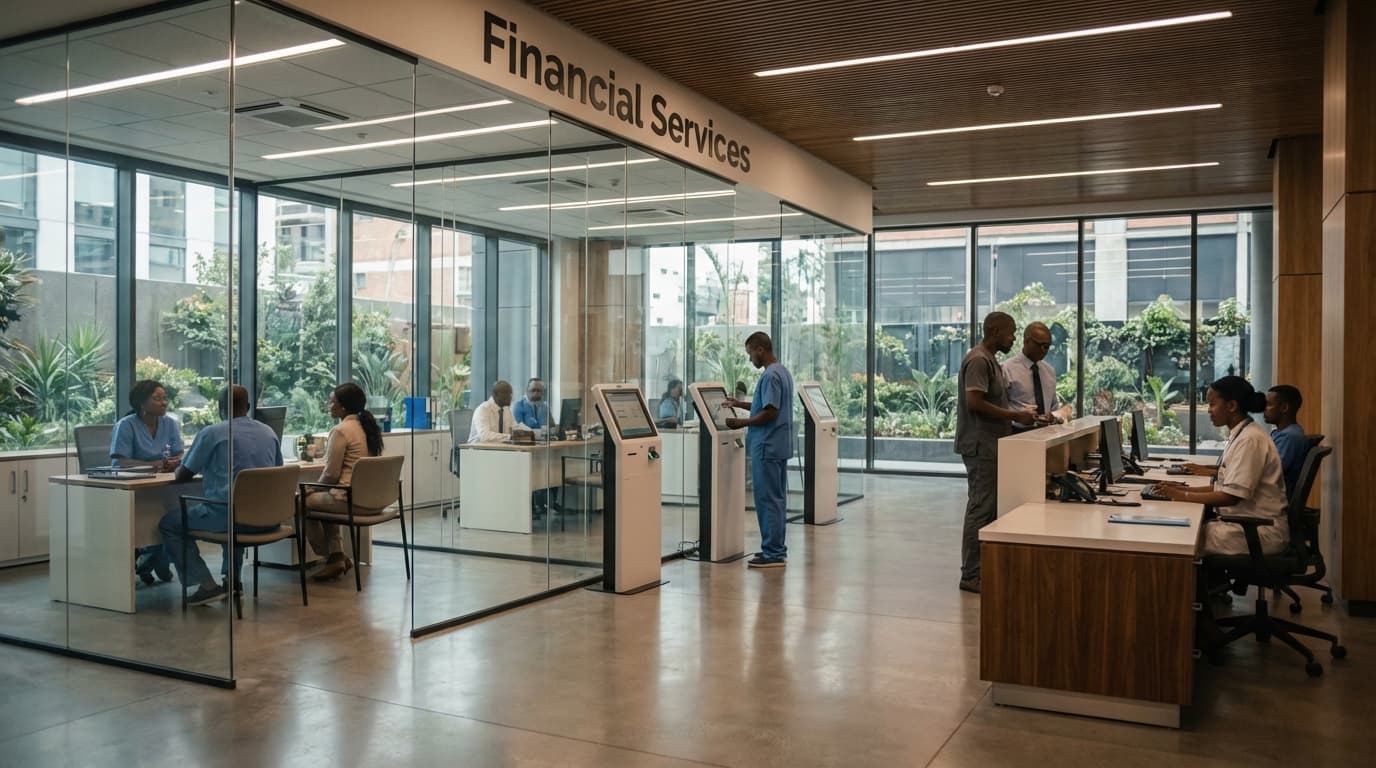
Medical Equipment Financing in Libya
Engineering Excellence & Technical Support
Leasing and financing solutions for medical equipment High-standard technical execution following OEM protocols and local regulatory frameworks.
Tailored Financing for Healthcare Infrastructure
We offer specialized financial solutions for the acquisition of critical medical equipment in Libya, understanding the unique regulatory and logistical landscape. Our financing plans are designed to accommodate the evolving needs of hospitals, clinics, and diagnostic centers, ensuring access to cutting-edge technology that enhances patient care and operational efficiency.
Flexible Repayment Structures for Sustainable Growth
Recognizing the budgetary constraints and revenue cycles of Libyan healthcare providers, we provide flexible repayment schedules. Our financing options can be customized to align with cash flow, including deferred payments or phased acquisitions, empowering institutions to invest in essential medical equipment without compromising immediate financial stability or future development.
Risk Mitigation and Compliance in Medical Equipment Procurement
We partner with Libyan healthcare entities to navigate the complexities of medical equipment financing, including compliance with local regulations and international standards. Our services extend to advising on equipment selection, supplier vetting, and insurance, ensuring a secure and transparent procurement process that minimizes risk and maximizes return on investment for your healthcare facility.
What Is Medical Equipment Financing In Libya?
Medical equipment financing in Libya refers to the provision of capital by financial institutions to healthcare providers for the acquisition of medical devices, machinery, and related technologies. This service is structured to mitigate the upfront capital expenditure associated with purchasing high-cost medical assets, thereby enabling healthcare organizations to expand their capacity, upgrade existing infrastructure, and adopt advanced diagnostic and therapeutic capabilities. The financing typically involves a loan or lease agreement, where the healthcare provider makes periodic payments over an agreed-upon term, with the equipment serving as collateral. Key considerations include interest rates, repayment schedules, and residual values in the case of leases. The Libyan healthcare sector, like many developing economies, faces challenges in securing sufficient funding for modern medical infrastructure. Therefore, specialized financing mechanisms are crucial for ensuring equitable access to quality healthcare services and enhancing the overall efficiency and effectiveness of medical care delivery.
| User Group | Needs Addressed | Typical Use Cases |
|---|---|---|
| Public Hospitals & Clinics | Modernization of diagnostic and therapeutic equipment, increasing patient throughput, compliance with international standards. | Acquisition of MRI scanners, CT scanners, advanced surgical suites, intensive care unit (ICU) equipment, laboratory automation systems. |
| Private Hospitals & Diagnostic Centers | Competitive advantage through advanced technology, expansion of service offerings, meeting growing patient demand, specialized treatment capabilities. | Purchase of specialized cardiology equipment (e.g., angiography machines), advanced ophthalmology lasers, high-resolution ultrasound machines, robotic surgical systems. |
| Research & Academic Medical Institutions | Facilitating cutting-edge research, training medical professionals with state-of-the-art technology, developing new treatment protocols. | Financing of advanced microscopy, genetic sequencers, flow cytometers, sophisticated imaging equipment for research purposes. |
| Specialized Medical Facilities (e.g., Dialysis Centers, Oncology Centers) | Ensuring sufficient capacity for critical patient populations, access to specialized treatment modalities, maintaining operational efficiency. | Procurement of dialysis machines, linear accelerators, brachytherapy units, specialized chemotherapy infusion pumps. |
Key Aspects of Medical Equipment Financing in Libya
- Nature of the Service: Structured financial arrangements (loans, leases) to acquire medical assets.
- Purpose: Mitigate upfront capital expenditure, expand capacity, upgrade infrastructure, adopt advanced technologies.
- Mechanism: Periodic payments over a defined term, often with equipment as collateral.
- Financial Instruments: Loans, capital leases, operating leases.
- Key Terms: Interest rates, repayment schedules, collateral, residual value (for leases).
- Objective: Facilitate access to quality healthcare, improve service delivery efficiency.
- Target Market: Healthcare providers in Libya.
- Challenges Addressed: Capital scarcity, need for technological advancement in healthcare.
Who Needs Medical Equipment Financing In Libya?
Medical equipment financing in Libya is crucial for a wide range of healthcare providers and institutions seeking to acquire or upgrade essential medical technology. The demand is driven by the need to improve patient care, expand service offerings, and maintain compliance with modern healthcare standards. Access to advanced medical equipment can significantly enhance diagnostic accuracy, treatment efficacy, and overall patient outcomes.
| Customer Type | Typical Departments Requiring Financing | Reasons for Financing Need |
|---|---|---|
| Public Hospitals | Radiology (MRI, CT Scanners), Cardiology (Echocardiography, Angiography), Surgery (Laparoscopic, Robotic), Intensive Care Units (Ventilators, Monitors), Emergency Departments (Defibrillators, Trauma Equipment), Laboratories (Automated Analyzers) | Replacing aging equipment, expanding capacity to meet growing patient demand, adopting new technologies for advanced diagnostics and treatments, addressing budget constraints through structured payment plans. |
| Private Hospitals | All major departments including those in public hospitals, plus Aesthetics/Cosmetic Surgery (Laser machines), Fertility Clinics (Incubators, IVF equipment), Sleep Labs (Polysomnography units) | Maintaining a competitive edge, offering specialized services, enhancing patient comfort and experience, upgrading to state-of-the-art technology for higher-value treatments, responding to market demand for advanced procedures. |
| Specialty Clinics | Cardiology (ECG, Holter monitors), Oncology (Linear accelerators, PET scanners), Radiology (Ultrasound machines, X-ray units), Neurology (EEG, EMG equipment), Gastroenterology (Endoscopes, Colonoscopes) | Focusing on specific medical fields, acquiring highly specialized diagnostic and treatment tools, enabling niche medical practices, staying at the forefront of their specialty. |
| Diagnostic Centers | Radiology (MRI, CT, X-ray, Mammography), Pathology Laboratories (Microscopes, Hematology analyzers), Cardiology (Stress test equipment, ECG) | Increasing throughput, improving diagnostic accuracy, offering a wider range of tests, responding to referrals from other healthcare providers, replacing older, less efficient equipment. |
| Primary Healthcare Centers | Basic diagnostic equipment (e.g., portable ultrasound, digital stethoscopes, basic laboratory analyzers), minor surgical equipment, physiotherapy equipment | Enhancing primary care capabilities, reducing the need for patient referrals to higher-level facilities, improving early detection and management of common conditions, upgrading from manual to semi-automated processes. |
Target Customers and Departments for Medical Equipment Financing in Libya
- Public Hospitals
- Private Hospitals
- Specialty Clinics (e.g., Cardiology, Oncology, Radiology)
- Diagnostic Centers
- Primary Healthcare Centers
- Medical Research Institutions
- Government Health Ministries and Agencies
- Ambulatory Surgery Centers
- Rehabilitation Centers
- Dental Clinics
Medical Equipment Financing Process In Libya
The process of financing medical equipment in Libya involves a structured workflow that begins with an initial inquiry and culminates in the successful execution of the financing agreement. This workflow is crucial for healthcare providers seeking to acquire essential medical technology to enhance patient care and operational efficiency. The Libyan financial landscape for such specialized financing is influenced by local regulations, banking practices, and the specific needs of healthcare institutions.
| Stage | Description | Key Stakeholders | Typical Timeline |
|---|---|---|---|
| Inquiry & Initial Consultation | The healthcare provider (e.g., hospital, clinic) contacts a financing institution (bank, specialized leasing company) to express interest in financing medical equipment. This involves understanding the institution's requirements and the financing options available. | Healthcare Provider, Financing Institution | 1-2 Weeks |
| Needs Assessment & Equipment Selection | The healthcare provider clearly defines the specific medical equipment required, including specifications, models, and intended use. This stage may involve consultations with equipment suppliers. | Healthcare Provider, Equipment Suppliers | 2-4 Weeks |
| Financial Proposal & Documentation | The healthcare provider submits a detailed financial proposal, including financial statements, business plans, and pro forma income statements. The financing institution requests necessary documentation to evaluate the request. | Healthcare Provider, Financing Institution | 2-4 Weeks |
| Credit Assessment & Due Diligence | The financing institution conducts a thorough credit assessment of the healthcare provider. This includes analyzing financial health, operational capacity, and the feasibility of repayment. Due diligence may involve site visits and verification of existing assets. | Financing Institution, (Potentially external valuers/auditors) | 3-6 Weeks |
| Approval & Offer Letter | Upon successful credit assessment, the financing institution approves the loan or lease proposal. An offer letter detailing the terms and conditions, including interest rates, repayment schedules, and collateral requirements, is issued. | Financing Institution, Healthcare Provider | 1-2 Weeks |
| Contract Negotiation & Signing | The healthcare provider reviews the offer letter, and negotiations may occur regarding specific terms. Once agreed upon, formal financing agreements and contracts are drafted and signed by both parties. | Healthcare Provider, Financing Institution, Legal Counsel | 2-4 Weeks |
| Disbursement & Equipment Acquisition | The financing institution disburses the funds directly to the equipment supplier or to the healthcare provider, depending on the agreement. The healthcare provider then proceeds with the purchase of the medical equipment. | Financing Institution, Healthcare Provider, Equipment Suppliers | Variable (depends on equipment lead time) |
| Installation & Commissioning | The acquired medical equipment is installed at the healthcare facility and commissioned by trained technicians. The financing institution may require proof of successful installation and operational readiness. | Healthcare Provider, Equipment Suppliers, Technicians | 1-3 Weeks |
| Repayment & Ongoing Support | The healthcare provider begins making regular repayments according to the agreed-upon schedule. The financing institution monitors the account, and ongoing support or communication may be provided as needed. | Healthcare Provider, Financing Institution | Duration of Financing Agreement |
Medical Equipment Financing Workflow in Libya
- Inquiry & Initial Consultation
- Needs Assessment & Equipment Selection
- Financial Proposal & Documentation
- Credit Assessment & Due Diligence
- Approval & Offer Letter
- Contract Negotiation & Signing
- Disbursement & Equipment Acquisition
- Installation & Commissioning
- Repayment & Ongoing Support
Medical Equipment Financing Cost In Libya
Financing medical equipment in Libya involves a complex interplay of economic factors, currency fluctuations, and the specific nature of the equipment. While precise, universally applicable pricing ranges are difficult to pinpoint due to the volatile economic climate and the diverse nature of medical equipment, understanding the key pricing factors is crucial for any organization seeking financing. The local currency, the Libyan Dinar (LYD), is subject to significant exchange rate variations and inflationary pressures, which directly impact the cost of imported goods and thus financing. Interest rates on loans, administrative fees, and the repayment term all contribute to the overall cost of financing. The perceived risk associated with financing in Libya, due to political and economic instability, can also lead to higher interest rates and stricter financing terms from local financial institutions.
| Equipment Category | Estimated Financing Cost Range (Percentage of Equipment Value per Year, LYD) | Notes |
|---|---|---|
| Basic Diagnostic Equipment (e.g., Blood Pressure Monitors, Stethoscopes) | 15% - 25% | Lower equipment value, potentially less complex financing. |
| Mid-Range Imaging & Laboratory Equipment (e.g., X-ray Machines, Basic Ultrasound, Hematology Analyzers) | 18% - 30% | Moderate value and complexity. |
| Advanced Imaging & Surgical Equipment (e.g., MRI, CT Scanners, Advanced Anesthesia Machines, Robotic Surgery Systems) | 20% - 35%+ | High equipment value, longer financing terms, and higher inherent risk often associated with importation and maintenance. |
| Specialized Medical Devices (e.g., Dialysis Machines, Ventilators) | 18% - 30% | Dependant on complexity and specific supplier agreements. |
Key Pricing Factors for Medical Equipment Financing in Libya
- Equipment Type and Value: The inherent cost of the medical equipment itself is the primary driver. High-value, specialized equipment like MRI machines or advanced surgical robots will naturally command higher financing costs than basic diagnostic tools.
- Supplier and Manufacturer: The origin of the equipment (imported vs. locally sourced, if available) and the reputation/negotiating power of the supplier significantly influence the purchase price, which then translates to financing costs.
- Financing Institution: Different banks and financial institutions in Libya will have varying interest rates, loan application fees, and assessment criteria, leading to diverse financing costs.
- Loan Term and Repayment Schedule: Longer loan terms generally result in higher total interest paid, while shorter terms increase the monthly or periodic repayment burden. The chosen repayment schedule (e.g., monthly, quarterly) also impacts cash flow.
- Collateral and Guarantees: The availability and value of collateral offered by the borrower can influence the lender's risk assessment and, consequently, the interest rate. Stronger collateral typically leads to more favorable financing terms.
- Economic Conditions and Currency Stability: The fluctuating Libyan Dinar (LYD) exchange rate against major currencies (USD, EUR) is a critical factor. Increases in the exchange rate directly inflate the cost of imported medical equipment, leading to higher financing needs and costs.
- Inflationary Pressures: High inflation in Libya erodes the purchasing power of the Dinar and can lead to increased costs for both the equipment and the financing itself.
- Administrative and Processing Fees: Lenders typically charge various fees for loan processing, appraisal, and other administrative services, which add to the overall cost of financing.
- Insurance Costs: Insurance premiums for the financed equipment are often factored into the total cost of financing, especially for high-value assets.
- Risk Premium: Lenders may apply a risk premium to financing costs due to the perceived political and economic instability in Libya, leading to higher interest rates.
Affordable Medical Equipment Financing Options
Acquiring essential medical equipment can be a significant investment for healthcare providers. Fortunately, a range of affordable financing options exists to help manage these costs. Understanding value bundles and implementing cost-saving strategies are crucial for maximizing the return on investment and ensuring financial sustainability.
| Cost-Saving Strategy | Description | Example Application |
|---|---|---|
| Leasing vs. Purchasing | Leasing allows for the use of equipment for a fixed period without outright ownership, often with lower upfront costs and predictable monthly payments. This can be beneficial for rapidly evolving technologies. | Leasing high-end imaging equipment, where technology advances quickly, to avoid obsolescence and high capital outlay. |
| Refurbished Equipment | Purchasing certified, pre-owned medical equipment can offer substantial savings compared to new models. These devices are typically inspected, repaired, and warrantied. | Acquiring a refurbished ultrasound machine for a smaller clinic or a secondary department. |
| Negotiate Vendor Contracts | Actively negotiate pricing, payment terms, and included services with equipment vendors. Leverage competitive bids from multiple suppliers. | Requesting quotes from at least three different suppliers for a new surgical suite and negotiating service level agreements. |
| Bundle Discounts | Seek out vendors offering discounts for purchasing multiple pieces of equipment or for bundling equipment with maintenance and service plans. | Purchasing a new patient monitoring system that includes installation, initial training, and a 3-year service contract at a bundled price. |
| Financing Terms Optimization | Explore various financing options, including loans, lines of credit, and equipment financing. Compare interest rates, repayment periods, and any associated fees. | Comparing a 5-year equipment loan with a 0% financing offer from the manufacturer, considering total interest paid over the life of the loan. |
| Group Purchasing Organizations (GPOs) | Join a GPO to gain access to aggregated purchasing power, leading to better pricing and contract terms on equipment and supplies. | A network of independent practices pooling their purchasing power through a GPO to acquire new EKG machines at a significantly reduced rate. |
| Preventative Maintenance Programs | Invest in robust preventative maintenance to reduce the likelihood of costly breakdowns and extend the lifespan of equipment. This is often included in value bundles. | Implementing a comprehensive preventative maintenance schedule for all critical laboratory equipment, reducing emergency repair calls. |
| Technology Assessment | Regularly assess the actual need and utilization of existing equipment. Avoid over-equipping and consider if upgrades are truly necessary based on clinical demand. | Reviewing the usage statistics of an MRI machine to determine if upgrading to a newer model is justified by patient volume and diagnostic needs. |
Value Bundles Explained
- Definition: Value bundles combine multiple products or services into a single package, often at a discounted price compared to purchasing them individually. In the context of medical equipment, this could include the equipment itself, installation, training, maintenance contracts, and even consumables.
- Benefits:
- Cost Savings: The primary advantage is the reduced overall cost.
- Streamlined Procurement: Simplifies the purchasing process by dealing with one vendor for multiple needs.
- Integrated Solutions: Ensures compatibility and seamless operation of different components.
- Predictable Expenses: Bundled maintenance and service contracts can lead to more predictable operational costs.
- Enhanced Training and Support: Often includes comprehensive training and ongoing support, improving user proficiency and reducing downtime.
Verified Providers In Libya
In the complex and often challenging healthcare landscape of Libya, identifying reliable and high-quality medical providers is paramount. Franance Health has emerged as a trusted name, distinguished by its rigorous credentialing process and unwavering commitment to patient well-being. This dedication ensures that their network comprises only the most competent and ethical medical professionals, offering Libyans access to superior healthcare services.
| Franance Health Provider Benefits | Description |
|---|---|
| Enhanced Patient Safety | Access to highly vetted medical professionals reduces the risk of errors and ensures adherence to safety protocols. |
| Improved Diagnostic Accuracy | Credentialed specialists offer a higher likelihood of accurate diagnoses due to their proven expertise and experience. |
| Personalized Treatment Plans | Providers with verified qualifications are better equipped to develop tailored and effective treatment strategies. |
| Trust and Reliability | Knowing your healthcare provider has undergone Franance Health's stringent vetting process offers significant peace of mind. |
| Access to Specialized Care | Franance Health facilitates access to a wide range of specialists, ensuring that complex medical conditions can be effectively managed. |
| Efficient Healthcare Navigation | Franance Health streamlines the process of finding and accessing qualified medical professionals. |
Why Franance Health Credentials Matter:
- Rigorous Vetting: Franance Health employs a multi-faceted vetting process for all its providers. This includes thorough background checks, verification of medical licenses, and an assessment of professional experience and ongoing training.
- Specialized Expertise: The credentialing process specifically evaluates a provider's area of specialization, ensuring patients are matched with doctors possessing the precise skills and knowledge for their specific medical needs.
- Adherence to International Standards: Franance Health aligns its credentialing protocols with recognized international healthcare standards, guaranteeing a high level of medical practice and patient care.
- Continuous Performance Monitoring: Beyond initial credentialing, Franance Health maintains a system for ongoing performance review and patient feedback, ensuring that their providers consistently meet the highest standards of care and professionalism.
- Ethical Conduct Assurance: A critical component of their vetting includes an assessment of ethical conduct and patient interaction, ensuring that all Franance Health affiliated providers operate with integrity and respect.
- Access to Advanced Facilities: Franance Health's network often includes providers affiliated with well-equipped and technologically advanced healthcare facilities, further enhancing the quality of care available.
Scope Of Work For Medical Equipment Financing
This Scope of Work (SOW) outlines the requirements for securing financing for the acquisition of various medical equipment. It details the technical deliverables expected from the financing provider, including reporting, asset tracking, and compliance documentation, as well as standard specifications for the financed equipment to ensure it meets clinical and operational needs.
| Equipment Category | Key Technical Specifications | Standard Requirements | Minimum Performance Criteria |
|---|---|---|---|
| Diagnostic Imaging Systems (e.g., MRI, CT Scanner) | Spatial resolution, contrast ratio, imaging speed, radiation dose management systems, DICOM compatibility. | Compliance with FDA/CE marking, current industry standards, robust service and maintenance agreements, energy efficiency. | Image quality meeting current clinical diagnostic standards, uptime of 98% or higher, adherence to radiation safety protocols. |
| Surgical Robots | Degrees of freedom, instrument articulation, visual feedback systems (3D/HD), tremor filtration, haptic feedback. | Sterilization compatibility, user-friendly interface, integrated safety features, comprehensive training programs for surgical staff. | Precision and dexterity comparable to or exceeding manual surgery, minimal latency in control, successful completion of simulated procedures with high accuracy. |
| Patient Monitoring Systems | Parameter accuracy (ECG, SpO2, NIBP, EtCO2), waveform display, alarm functionality, data logging and trending, connectivity (HL7). | Biocompatible materials, cybersecurity measures, integration capabilities with EMR/HIS, ease of use in critical care settings. | Accuracy within +/- 5% of gold standard, reliable alarm notification with configurable thresholds, seamless data transmission to central monitoring stations. |
| Laboratory Analyzers | Throughput (tests per hour), assay range, precision (CV%), linearity, sample volume, auto-sampler capabilities. | Regulatory approvals (e.g., CLIA, CAP), reagent compatibility, quality control management system, waste disposal management. | Reproducibility and accuracy meeting CAP/CLIA guidelines, minimal downtime for calibration and maintenance, ability to process a defined daily workload. |
| Anesthesia Machines | Ventilator modes, gas delivery precision, vaporizer accuracy, integrated monitoring, breathing circuit design. | Safety interlocks, leak testing capabilities, ease of cleaning and disinfection, compliance with relevant anesthesia standards. | Accurate delivery of anesthetic agents and gases, reliable ventilation support, comprehensive patient safety features. |
Technical Deliverables from Financing Provider
- Regular financing status reports (monthly/quarterly).
- Detailed equipment inventory and asset tracking system access.
- Amortization schedules and payment breakdowns.
- Proof of insurance on financed assets.
- Lien release documentation upon full payment.
- Compliance documentation with relevant financial regulations.
- Access to loan portal for managing financing agreements.
Service Level Agreement For Medical Equipment Financing
This Service Level Agreement (SLA) outlines the response times and uptime guarantees for medical equipment financed through [Financing Company Name] (hereinafter referred to as "Provider"). This SLA applies to all financed medical equipment serviced by authorized third-party service providers contracted by the Provider.
| Service Level | Definition | Target Time / Guarantee | Escalation Path |
|---|---|---|---|
| Emergency Equipment Failure (Critical Downtime) | Complete operational failure of a vital piece of medical equipment, posing an immediate threat to patient care or safety. | Response Time: 2 hours (from verified report).<br>Resolution Time: 8 business hours (target, subject to parts availability).<br>Uptime Guarantee: 98% annually. | Tier 1 Support -> On-site Technician -> Senior Technical Specialist |
| Urgent Equipment Malfunction (Significant Impact) | Equipment malfunction that significantly impairs its intended use or requires immediate attention to prevent patient care disruption. | Response Time: 4 business hours (from verified report).<br>Resolution Time: 24 business hours (target, subject to parts availability).<br>Uptime Guarantee: 98% annually. | Tier 1 Support -> On-site Technician |
| Routine Equipment Issue (Minor Impact) | Minor operational issues, performance degradation, or non-critical malfunctions that do not immediately affect patient care. | Response Time: 8 business hours (from verified report).<br>Resolution Time: 3 business days (target, subject to scheduling and parts).<br>Uptime Guarantee: 98% annually. | Tier 1 Support -> Remote Diagnostics -> Scheduled On-site Visit |
Key Service Metrics
- Response Time: The maximum time allowed for the Provider or its designated service partner to acknowledge and begin addressing a reported equipment issue.
- Resolution Time: The maximum time allowed to restore the equipment to its operational state, following the initial response.
- Uptime Guarantee: The minimum percentage of time the financed medical equipment is expected to be operational and available for use, excluding scheduled maintenance and unavoidable downtime.
- Exclusions: Conditions and events for which response times and uptime guarantees may not apply.
Frequently Asked Questions

Ready when you are
Let's scope your Medical Equipment Financing in Libya project in Libya.

Scaling healthcare logistics and technical systems across the entire continent.