
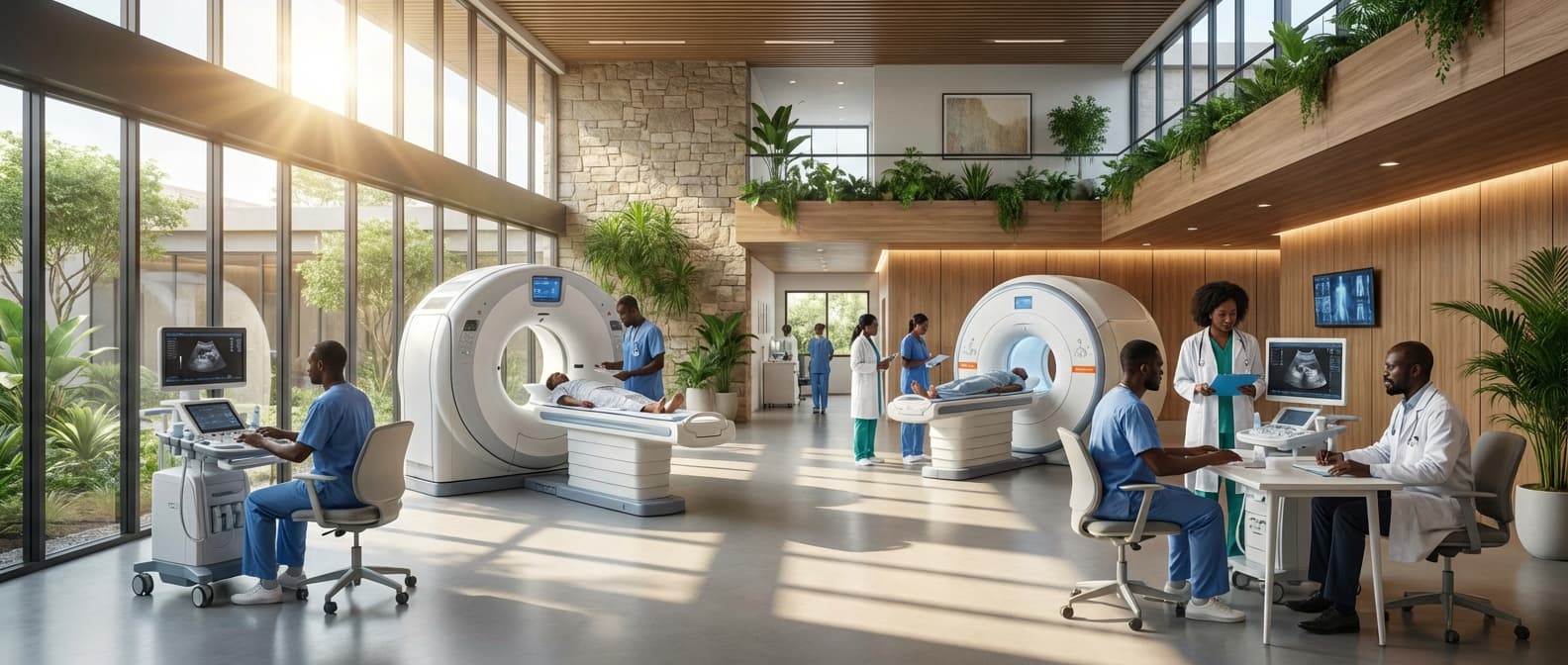
Diagnostic Imaging in Libya
Engineering Excellence & Technical Support
High-resolution imaging systems including CT scanners, MRI, X-ray, and ultrasound technology for accurate clinical diagnosis. High-standard technical execution following OEM protocols and local regulatory frameworks.
Advanced Imaging Modalities Deployed
Libya's diagnostic imaging centers are increasingly equipped with state-of-the-art technologies, including MRI, CT scans, and digital X-ray systems, enabling more precise and detailed diagnostic capabilities for a wider range of medical conditions.
AI-Powered Image Analysis Pilots
Several leading Libyan hospitals are piloting the integration of Artificial Intelligence (AI) algorithms for image analysis. These AI tools assist radiologists in faster and more accurate detection of anomalies, improving diagnostic efficiency and patient outcomes.
Tele-Radiology Network Expansion
To address geographical disparities in access to expert radiologists, Libya is investing in the expansion of its tele-radiology networks. This initiative allows remote interpretation of medical images, connecting specialized expertise to underserved regions and enhancing diagnostic accessibility across the country.
What Is Diagnostic Imaging In Libya?
Diagnostic imaging in Libya refers to the medical specialty and technological application used to create visual representations of the interior of a body for clinical analysis and medical intervention. This field encompasses a range of non-invasive and minimally invasive techniques that utilize different forms of energy to generate images, aiding in the diagnosis, treatment planning, and monitoring of diseases and injuries. The primary objective is to visualize anatomical structures and physiological processes at a macroscopic and sometimes microscopic level, providing objective data for medical professionals. The demand for diagnostic imaging services in Libya is driven by a diverse patient population, encompassing acute trauma, chronic disease management, and routine health screenings. The availability and sophistication of these services are crucial for modern healthcare delivery, impacting diagnostic accuracy, treatment efficacy, and patient outcomes.
| Who Needs Diagnostic Imaging? | Typical Use Cases | ||
|---|---|---|---|
| Patients with Trauma: Individuals experiencing fractures, internal bleeding, or organ damage following accidents or injuries. | Fracture Detection: Identifying bone breaks and dislocations using X-ray or CT scans. | Internal Hemorrhage Evaluation: Locating and quantifying bleeding in organs or body cavities via CT or ultrasound. | Soft Tissue Injury Assessment: Visualizing ligament, tendon, and muscle damage with MRI or ultrasound. |
| Patients with Suspected or Diagnosed Cancer: Individuals undergoing screening, diagnosis, staging, or follow-up for oncological conditions. | Tumor Detection and Characterization: Identifying the presence, size, location, and nature of tumors using CT, MRI, or ultrasound. | Cancer Staging: Determining the extent of cancer spread (metastasis) to other parts of the body. | Treatment Response Monitoring: Assessing the effectiveness of chemotherapy, radiation therapy, or surgery. |
| Patients with Chronic Diseases: Individuals managing conditions such as cardiovascular disease, neurological disorders, or gastrointestinal issues. | Cardiovascular Assessment: Evaluating heart function, blood vessel blockages (atherosclerosis), and aneurysms using CT angiography, MRI, or echocardiography (ultrasound). | Neurological Evaluation: Diagnosing strokes, brain tumors, multiple sclerosis, and degenerative brain diseases with MRI or CT. | Gastrointestinal and Genitourinary Investigation: Identifying issues like gallstones, kidney stones, appendicitis, and inflammatory bowel disease through ultrasound, CT, or specialized X-ray techniques. |
| Patients Undergoing Pre-operative or Post-operative Assessment: Individuals requiring imaging before or after surgical procedures. | Surgical Planning: Visualizing anatomical relationships and guiding surgical approaches. | Post-surgical Complication Detection: Identifying issues like infection, hematoma, or hardware complications. | |
| Patients Requiring Interventional Procedures: Individuals for whom imaging guides minimally invasive treatments. | Biopsy Guidance: Using ultrasound or CT to precisely target and obtain tissue samples for diagnosis. | Drainage Procedures: Guiding the placement of drains for abscesses or fluid collections. | Angioplasty and Stenting: Visualizing blood vessels during procedures to open blockages. |
| General Population for Screening: Individuals undergoing routine health checks or specific screening programs. | Mammography: Screening for breast cancer. | Low-Dose CT: Screening for lung cancer in high-risk individuals. | Bone Density Scans (DEXA): Assessing for osteoporosis. |
Key Aspects of Diagnostic Imaging in Libya
- Definition: The use of advanced technologies to generate visual representations of internal bodily structures and functions for medical purposes.
- Scope: Encompasses modalities such as X-ray radiography, computed tomography (CT), magnetic resonance imaging (MRI), ultrasound, and nuclear medicine.
- Purpose: To detect, diagnose, stage, and monitor diseases and injuries, as well as guide medical procedures.
- Providers: Typically performed by radiographers and radiologists, with interpretations made by specialized physicians.
- Infrastructure: Requires specialized equipment, dedicated facilities, and trained personnel.
Who Needs Diagnostic Imaging In Libya?
Diagnostic imaging plays a crucial role in modern healthcare by providing non-invasive visualization of internal body structures. In Libya, the demand for these services is driven by a range of medical needs across various patient demographics and healthcare settings. Understanding who requires diagnostic imaging and within which departments it is most utilized is essential for resource allocation, service planning, and ensuring quality patient care.
| Customer Group | Common Imaging Needs | Primary Departments Involved |
|---|---|---|
| Trauma Patients | X-rays (fractures), CT scans (head, chest, abdomen) | Emergency Department, Orthopedics, Radiology |
| Chronic Disease Patients (e.g., Cancer) | CT scans, MRI, PET scans, Ultrasounds | Oncology, Radiology, Specialty Clinics |
| Pregnant Women | Ultrasound (prenatal screening) | OB/GYN, Radiology |
| Neurological Patients | MRI, CT scans, Angiography | Neurology, Radiology |
| Orthopedic Patients | X-rays, MRI, CT scans | Orthopedics, Radiology |
| Cardiac Patients | Echocardiography, CT Angiography, MRI | Cardiology, Radiology |
Target Customers & Departments for Diagnostic Imaging in Libya
- {"items":["General Population: Individuals experiencing symptoms that require internal investigation, from minor injuries to chronic conditions.","Trauma Patients: Individuals involved in accidents, falls, or other traumatic events requiring rapid assessment of fractures, internal bleeding, or organ damage.","Patients with Chronic Diseases: Individuals managing conditions like cancer, heart disease, diabetes-related complications, or neurological disorders that often require regular imaging for monitoring and treatment adjustment.","Pregnant Women: For prenatal screening, monitoring fetal development, and diagnosing potential complications.","Pediatric Patients: Children requiring imaging for congenital anomalies, infections, injuries, or growth-related issues.","Surgical Candidates: Patients undergoing pre-operative assessment to plan surgical procedures and post-operative evaluation to check for complications.","Rehabilitation Patients: Individuals recovering from injuries or surgery who may require imaging to track healing progress.","Specialty Care Patients: Individuals referred by specialists for specific diagnostic needs (e.g., neurological assessments, orthopedic evaluations, oncological staging)."],"title":"Target Customers"}
- {"items":["Emergency Departments (ED): Crucial for rapid diagnosis of acute conditions, trauma, and life-threatening illnesses.","Radiology/Imaging Departments: The central hub for all diagnostic imaging procedures, staffed by radiologists and radiographers.","Orthopedic Departments: Essential for diagnosing fractures, dislocations, arthritis, and other musculoskeletal conditions.","Neurology Departments: Utilizes imaging for diagnosing strokes, brain tumors, epilepsy, multiple sclerosis, and other neurological disorders.","Oncology Departments: Critical for cancer diagnosis, staging, treatment monitoring, and detecting recurrence.","Cardiology Departments: Employs imaging for assessing heart structure, function, and blood flow, diagnosing conditions like heart attacks and valve disease.","General Surgery Departments: Used for pre-operative planning, diagnosis of abdominal conditions (e.g., appendicitis, gallstones), and post-operative assessment.","Internal Medicine Departments: Broadly utilized for diagnosing a wide array of conditions affecting internal organs.","Pediatric Departments: For diagnosing and monitoring various childhood illnesses and developmental issues.","Obstetrics and Gynecology (OB/GYN) Departments: Primarily for prenatal ultrasounds and diagnosing gynecological conditions."],"title":"Key Departments Utilizing Diagnostic Imaging"}
Diagnostic Imaging Process In Libya
The diagnostic imaging process in Libya typically follows a structured workflow, beginning with a patient's medical need and culminating in the interpretation and reporting of imaging results. This process involves multiple stages and stakeholders, from initial physician referral to the final diagnostic report. The specific steps and technologies employed can vary based on the healthcare facility, resource availability, and the type of imaging modality required. However, a general framework outlines the journey of a diagnostic imaging request within the Libyan healthcare system.
| Stage | Description | Key Stakeholders | Potential Challenges in Libya |
|---|---|---|---|
| Patient Referral and Inquiry | A physician identifies a need for diagnostic imaging based on a patient's symptoms or medical condition. A referral request is initiated, specifying the type of imaging required. | Referring Physician, Patient | Limited access to specialists in remote areas, patient awareness of imaging options. |
| Appointment Scheduling | The referral is sent to the diagnostic imaging department. An appointment is scheduled, considering patient availability, urgency, and the availability of imaging equipment and radiologists. | Administrative Staff, Imaging Department, Patient | Long waiting times due to high demand and limited equipment, inefficient scheduling systems. |
| Patient Preparation | Depending on the imaging modality, patients may receive specific instructions regarding diet, medication, or the removal of certain items (e.g., jewelry). This ensures optimal image quality and patient safety. | Radiology Technologist, Patient | Inconsistent adherence to preparation protocols, lack of patient education materials in Arabic. |
| Image Acquisition (Execution) | The patient undergoes the imaging procedure using the specified modality (e.g., X-ray, CT scan, MRI, Ultrasound). A radiology technologist operates the equipment and acquires the images. | Radiology Technologist, Patient | Equipment maintenance and reliability issues, shortage of trained technologists, power outages affecting equipment operation. |
| Image Processing and Enhancement | Acquired images are processed and enhanced using specialized software to improve clarity, contrast, and visualization of anatomical structures. This may involve digital manipulation. | Radiology Technologist, PACS Administrator (if available) | Lack of advanced PACS (Picture Archiving and Communication System) or image processing software, limited IT infrastructure. |
| Radiologist Interpretation | A qualified radiologist reviews the processed images, analyzes the findings, and formulates a diagnosis or differential diagnoses. | Radiologist | Shortage of specialized radiologists, workload pressures, limited access to subspecialty expertise. |
| Report Generation and Transmission | The radiologist dictates or writes a detailed report outlining the findings, interpretation, and recommendations. The report is then transmitted to the referring physician. | Radiologist, Medical Secretary (if available) | Delays in report generation, reliance on manual transcription, potential communication breakdowns with referring physicians. |
| Follow-up and Clinical Integration | The referring physician receives the imaging report and integrates the findings into the patient's overall care plan, potentially leading to further treatment or investigations. | Referring Physician, Patient | Challenges in effective communication and collaboration between imaging departments and other clinical services. |
Diagnostic Imaging Workflow in Libya
- Patient Referral and Inquiry
- Appointment Scheduling
- Patient Preparation
- Image Acquisition (Execution)
- Image Processing and Enhancement
- Radiologist Interpretation
- Report Generation and Transmission
- Follow-up and Clinical Integration
Diagnostic Imaging Cost In Libya
Diagnostic imaging costs in Libya are influenced by a variety of factors, making it challenging to provide definitive fixed prices. These factors include the specific type and complexity of the imaging procedure, the facility's location (major cities versus more remote areas), the reputation and technological advancement of the clinic or hospital, the availability of specialized equipment, and the qualifications of the medical professionals performing the scans. Furthermore, fluctuating exchange rates and the general economic climate within Libya can impact the cost of imported supplies and equipment, indirectly affecting service prices. While official price lists are not readily available and can vary significantly, a general overview of potential cost ranges in Libyan Dinar (LYD) can be provided for common diagnostic imaging services.
| Imaging Modality | Estimated Cost Range (LYD) | Notes |
|---|---|---|
| X-ray (e.g., Chest, Limb) | 100 - 300 | Basic X-rays are generally the most affordable. |
| Ultrasound (e.g., Abdominal, Pelvic, Obstetric) | 150 - 400 | Costs can vary based on the specific organs or area being examined. |
| CT Scan (e.g., Head, Abdomen, Chest) | 500 - 1500+ | More complex scans or those involving contrast agents will be at the higher end. |
| MRI Scan (e.g., Brain, Spine, Joints) | 800 - 3000+ | MRI is typically the most expensive modality due to equipment and operational costs. Higher field strength MRIs will be more costly. |
| Mammography | 200 - 500 | Screening mammograms may be on the lower end, while diagnostic mammograms could be higher. |
| Doppler Ultrasound | 200 - 500 | Used to assess blood flow, often for specific vascular conditions. |
Factors Influencing Diagnostic Imaging Costs in Libya
- Type and complexity of the imaging procedure (e.g., X-ray, Ultrasound, CT scan, MRI)
- Location of the healthcare facility (urban vs. rural)
- Reputation and technological capabilities of the clinic/hospital
- Availability of specialized imaging equipment
- Qualifications and expertise of medical staff
- Cost of imported supplies and equipment
- Fluctuations in currency exchange rates
- Overall economic conditions in Libya
Affordable Diagnostic Imaging Options
Diagnostic imaging plays a crucial role in diagnosing and monitoring various medical conditions. However, the cost of these services can be a significant concern for many individuals. Fortunately, several affordable diagnostic imaging options and cost-saving strategies are available. Understanding value bundles and exploring alternatives can lead to substantial savings without compromising the quality of care.
| Cost-Saving Strategy | Description | Potential Savings |
|---|---|---|
| Value Bundles | Combining multiple imaging procedures into a single, discounted package. | Up to 10-25% off individual test costs. |
| Outpatient Imaging Centers | Utilizing independent centers instead of hospital-based facilities. | Often 20-50% lower than hospital prices. |
| Price Negotiation/Cash Pay | Directly asking for discounts or utilizing self-pay rates. | Variable, but can be significant for uninsured or underinsured patients. |
| Price Comparison | Shopping around at different imaging providers before booking. | Can vary greatly depending on location and provider, potentially hundreds of dollars. |
| Telemedicine Interpretation | Using remote radiologists for interpretation of certain scans. | Can reduce overhead costs passed on to the patient. |
Affordable Diagnostic Imaging Options & Cost-Saving Strategies
- Value Bundles: Many imaging centers and healthcare providers offer "value bundles" or "package deals" for common diagnostic tests. These bundles often combine multiple imaging procedures for a single, discounted price. This can be particularly beneficial if you anticipate needing several scans as part of your treatment plan.
- Outpatient Imaging Centers: Hospitals often have higher overhead costs, which can translate to higher prices for imaging services. Outpatient imaging centers, on the other hand, typically offer more competitive pricing for the same procedures. Ensure these centers are accredited and their equipment is up-to-date.
- Negotiate Prices: Don't hesitate to ask about pricing upfront and inquire about potential discounts. Some facilities may offer self-pay discounts or cash prices that are lower than those billed to insurance.
- Compare Prices: Before scheduling any procedure, call around to different imaging providers in your area and compare their prices for the specific scan you need. Even small variations can add up significantly.
- Telemedicine and Remote Interpretation: For certain types of imaging, such as some X-rays or ultrasounds, remote interpretation by a radiologist through telemedicine can be a more cost-effective option than having the scan done at a facility with on-site specialists.
- Generic or Preferred Providers: If your insurance plan has a network of preferred providers for imaging, utilizing these facilities will generally result in lower out-of-pocket costs. Inquire if your insurance has a list of "imaging centers of excellence" that offer better pricing.
- Second Opinions and Unnecessary Scans: Discuss with your doctor whether a particular imaging scan is truly necessary. Sometimes, a detailed physical examination or other less expensive tests can provide sufficient information. If you're concerned about the cost, you can also seek a second opinion on the need for the scan.
- High-Deductible Health Plans (HDHPs) and Health Savings Accounts (HSAs): If you have an HDHP, you'll likely be paying a significant portion of your healthcare costs out-of-pocket. HSAs allow you to save pre-tax money specifically for qualified medical expenses, including diagnostic imaging, which can reduce your overall cost.
- Understand Your Insurance Coverage: Thoroughly review your health insurance policy to understand your deductible, co-pays, co-insurance, and out-of-network benefits for diagnostic imaging. Knowing your coverage will help you anticipate costs and make informed decisions.
Verified Providers In Libya
In the complex landscape of healthcare access in Libya, identifying reliable and trustworthy medical providers is paramount. Franance Health stands out as a leading organization committed to ensuring quality healthcare delivery. This document outlines the credentials of Franance Health and explains why they represent the best choice for individuals seeking verified medical services in Libya.
| Key Aspect | Franance Health Offering | Benefit for Patients |
|---|---|---|
| Provider Verification | Extensive background checks, license validation, experience verification. | Assurance of qualified and competent medical professionals. |
| Quality Standards | Adherence to international accreditation guidelines and best practices. | Access to healthcare services that meet global benchmarks. |
| Medical Specialization | Network of specialists across diverse fields (e.g., cardiology, neurology, pediatrics). | Comprehensive care for all medical needs, from routine to complex conditions. |
| Patient Support | Assistance with appointments, logistics, and communication barriers. | A smoother and less stressful healthcare journey. |
| Cost Transparency | Clear disclosure of treatment costs and procedures. | Informed financial planning and avoidance of hidden fees. |
| Accessibility | Facilitates access to both local and international medical expertise. | Broader options for treatment and second opinions. |
Franance Health Credentials and Advantages
- Accreditation and Partnerships: Franance Health collaborates with internationally recognized healthcare institutions and adheres to stringent quality standards. This includes partnerships with accredited hospitals, clinics, and specialized medical centers within Libya and abroad.
- Rigorous Provider Vetting: All medical professionals and facilities affiliated with Franance Health undergo a comprehensive vetting process. This involves verifying medical licenses, board certifications, professional experience, and patient feedback.
- Specialized Medical Networks: Franance Health has cultivated a robust network of specialists across various medical disciplines. This ensures access to the right expertise for a wide range of health needs, from primary care to complex surgical procedures.
- Patient-Centric Approach: The organization prioritizes patient well-being, offering personalized care plans, clear communication, and accessible support services. This includes assistance with appointment scheduling, translation services, and post-treatment follow-up.
- Transparency and Ethical Practices: Franance Health is committed to ethical medical practices and transparent pricing. Patients can expect clear explanations of treatment options, costs, and outcomes, fostering trust and informed decision-making.
- Technological Integration: Leveraging modern technology, Franance Health facilitates seamless communication between patients and providers, and aids in efficient record management, enhancing the overall healthcare experience.
- Emergency and Urgent Care Access: The organization provides a reliable pathway to urgent and emergency medical services, ensuring prompt attention when it is most critical.
- Continuous Quality Improvement: Franance Health actively monitors and evaluates the performance of its affiliated providers and services, implementing continuous improvement measures to maintain the highest standards of care.
Scope Of Work For Diagnostic Imaging
This document outlines the Scope of Work (SOW) for Diagnostic Imaging services, detailing the technical deliverables and standard specifications required for effective and accurate patient care. The scope encompasses the provision of imaging equipment, software, consumables, and associated support services necessary for a comprehensive diagnostic imaging department.
| Imaging Modality | Key Technical Deliverables | Standard Specifications (Examples) | Required Support Level |
|---|---|---|---|
| X-Ray (Digital Radiography) | DR Detector, Generator, Workstation, PACS integration | Detector resolution: 3.5-5 lp/mm; Generator power: 30-60 kW; DICOM 3.0 compliance | 24/7 remote monitoring, 4-hour on-site response for critical failures, annual preventative maintenance |
| CT Scanner | Gantry, X-ray tube, Detector array, Console, PACS integration | Slice count: 16-128 slices; Gantry rotation time: < 0.5s; Spatial resolution: < 0.5 mm | 24/7 remote monitoring, 4-hour on-site response for critical failures, quarterly preventative maintenance, tube replacement warranty |
| MRI Scanner | Magnet, Gradient coils, RF coils, Console, PACS integration | Field strength: 1.5T or 3.0T; Gradient strength: > 40 mT/m; Slew rate: > 200 T/m/s | 24/7 remote monitoring, 8-hour on-site response for critical failures, semi-annual preventative maintenance, helium refilling service |
| Ultrasound System | Transducer probes (various types), Console, Workstation, PACS integration | Doppler capabilities (PW, CW, Color); Harmonic imaging; Advanced speckle reduction; Portable options | Next business day on-site response, annual calibration, software updates |
| PACS/RIS | Image archiving, retrieval, display, reporting workflow | Scalable storage capacity (e.g., 100+ TB); DICOM 3.0 and HL7 compliance; HIPAA compliant; User-friendly interface | 24/7 technical support, scheduled software updates, data integrity checks |
Key Areas Covered by the Scope of Work
- Procurement and installation of state-of-the-art diagnostic imaging equipment.
- Integration of Picture Archiving and Communication Systems (PACS) and Radiology Information Systems (RIS).
- Provision of necessary consumables and accessories for equipment operation.
- Comprehensive training for medical and technical staff.
- Ongoing maintenance, repair, and technical support for all imaging equipment.
- Adherence to all relevant regulatory and safety standards.
- Data management, security, and backup protocols.
- Disaster recovery and business continuity planning related to imaging services.
Service Level Agreement For Diagnostic Imaging
This Service Level Agreement (SLA) outlines the performance standards for diagnostic imaging services provided by [Your Company Name] to [Client Company Name]. It defines the agreed-upon response times for critical and non-critical requests, as well as uptime guarantees for the imaging equipment and associated IT infrastructure.
| Service Element | Service Level Target (Response Time) | Service Level Target (Uptime Guarantee) | Remedy for Failure |
|---|---|---|---|
| Critical Imaging Request Availability | 15 minutes (from notification to initiation of imaging procedure) | 99.9% | Service Credit: 5% of monthly service fee for each 30-minute increment of delay beyond the target, capped at 20% of monthly service fee. |
| Non-Critical Imaging Request Scheduling | 24 business hours (from request to scheduled appointment) | 99.5% | Service Credit: 2.5% of monthly service fee for each 12-hour increment of delay beyond the target, capped at 10% of monthly service fee. |
| Diagnostic Imaging Equipment Uptime | N/A (covered by uptime guarantee) | 99.8% (averaged monthly) | Service Credit: 5% of monthly service fee for every 0.1% decrease in uptime below the target, capped at 25% of monthly service fee. |
| PACS/RIS System Uptime | N/A (covered by uptime guarantee) | 99.9% (averaged monthly) | Service Credit: 10% of monthly service fee for every 0.1% decrease in uptime below the target, capped at 30% of monthly service fee. |
Key Definitions
- Critical Request: An imaging request that requires immediate attention due to patient safety concerns or potential for significant clinical deterioration. Examples include emergent CT scans for trauma, acute stroke imaging, or stat MRI for suspected spinal cord compression.
- Non-Critical Request: An imaging request that can be scheduled within a reasonable timeframe without posing an immediate threat to patient well-being. Examples include routine X-rays, scheduled ultrasounds, or elective MRI appointments.
- Uptime: The percentage of time the diagnostic imaging equipment and its associated IT infrastructure (PACS, RIS) are operational and available for use.
- Downtime: The percentage of time the diagnostic imaging equipment and its associated IT infrastructure are unavailable for use.
- Response Time: The time elapsed from when a request is logged in the system or communicated to the imaging department until the initial action (e.g., patient being brought to the imaging room, imaging study initiation) begins.
Frequently Asked Questions

Ready when you are
Let's scope your Diagnostic Imaging in Libya project in Libya.

Scaling healthcare logistics and technical systems across the entire continent.