
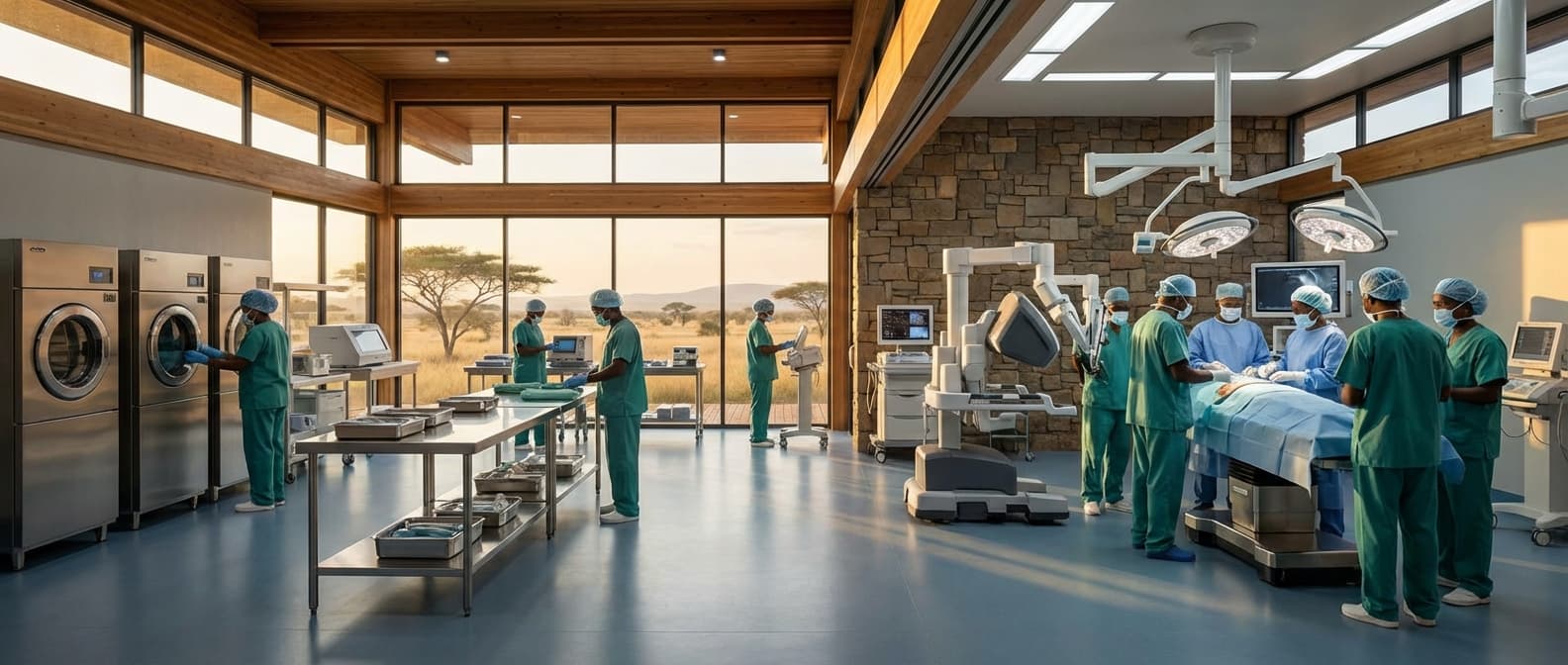
Medical Gas System Design & Installation in Libya
Engineering Excellence & Technical Support
Medical gas pipeline systems: O2, N2O, air, vacuum High-standard technical execution following OEM protocols and local regulatory frameworks.
Robust Medical Gas Pipeline Systems
Design and installation of NFPA 99 compliant medical gas pipeline systems, ensuring reliable and safe delivery of essential gases like oxygen, medical air, and vacuum to critical care areas. Emphasis on high-purity materials and leak-proof connections for patient safety and system integrity in Libyan healthcare facilities.
Advanced Alarm & Monitoring Solutions
Implementation of state-of-the-art medical gas alarm systems with remote monitoring capabilities, crucial for early detection of pressure fluctuations or supply interruptions. Designed to meet stringent Libyan healthcare standards and enhance operational awareness and emergency response in hospitals across the region.
Tailored Installation & Commissioning
Expert installation and rigorous commissioning of medical gas systems, adhering to Libyan construction codes and international best practices. Includes comprehensive system testing, validation, and staff training to ensure optimal performance, safety, and longevity, contributing to improved patient care in diverse Libyan medical environments.
What Is Medical Gas System Design & Installation In Libya?
Medical gas system design and installation in Libya refers to the comprehensive process of planning, engineering, and physically implementing specialized piping networks and associated equipment for the safe and reliable delivery of medical gases to healthcare facilities. This encompasses the meticulous selection, sizing, and integration of gas sources (e.g., cylinders, liquid cryogenic vessels, on-site generators), pressure regulation, distribution manifolds, alarm systems, terminal units (e.g., outlets, probes), and ventilation/exhaust systems for scavenging gases. The primary objective is to ensure the purity, appropriate pressure, and continuous availability of essential medical gases for patient care, while adhering to Libyan and international safety standards and regulations.
| Who Needs Medical Gas System Design & Installation? | Typical Use Cases | ||||||||
|---|---|---|---|---|---|---|---|---|---|
| Hospitals (Public and Private): All departments, from general wards to critical care units and operating theaters. | Operating Rooms: Anesthesia delivery, ventilation, and instrument operation (pneumatic tools). | Intensive Care Units (ICUs) & Critical Care Units (CCUs): Mechanical ventilation, oxygen therapy, and resuscitation. | Emergency Departments (EDs): Oxygen therapy, resuscitation, and airway management. | General Wards: Oxygen therapy and medical air for respiratory support. | Specialized Clinics & Diagnostic Centers: Imaging equipment (e.g., MRI with helium), laboratories (e.g., nitrogen, helium for gas chromatography). | Rehabilitation Centers: Oxygen therapy and specialized respiratory treatments. | Ambulance Services & Medical Transport: Onboard oxygen supply. | Veterinary Clinics (specialized): Anesthesia delivery and oxygen therapy for animals. | Research & Development Laboratories: Inert gases for experiments, gas mixtures for analytical equipment. |
| Oxygen (O2): Essential for respiratory support, cardiopulmonary resuscitation, and metabolic processes. | Medical Air (Med Air): Used for mechanical ventilation, pneumatic devices, and as a diluent for oxygen. | Nitrous Oxide (N2O): Primarily used as an anesthetic agent and analgesic. | Medical Vacuum (Med Vac): For aspiration of bodily fluids, surgical suction, and wound drainage. | Nitrogen (N2): Used for powering pneumatic surgical tools, cryosurgery, and in certain laboratory applications. | Helium (He): Employed in MRI scanners for cooling superconducting magnets and in specific respiratory therapies for reducing airway resistance. | Carbon Dioxide (CO2): Used in insufflation during laparoscopic surgery and in some respiratory stimulation applications. |
Key Components and Processes of Medical Gas System Design & Installation
- Needs Assessment & System Design: Detailed analysis of a healthcare facility's requirements, including patient population, bed count, specialized departments (e.g., ICU, OR), and anticipated gas usage. This informs the selection of gas types, flow rates, pressure requirements, and system configuration.
- Piping Network Design: Engineering of the distribution network, including material selection (e.g., copper, stainless steel), pipe sizing, routing, welding/brazing techniques, and pressure testing to prevent leaks and contamination.
- Gas Source Selection & Integration: Determining the most appropriate and reliable method for supplying medical gases, considering factors like cost-effectiveness, sustainability, and regulatory compliance.
- Pressure Regulation & Control: Implementation of pressure reducing valves, regulators, and bypass systems to maintain consistent and safe delivery pressures to end-user points.
- Alarm Systems & Monitoring: Installation of comprehensive alarm systems to detect pressure deviations, gas depletion, and system malfunctions, providing critical alerts to clinical and technical staff.
- Terminal Unit Installation: Provision and installation of gas outlets, probes, and associated accessories at patient care locations, ensuring proper gas identification and secure connections.
- Scavenging Systems (for anesthetic gases): Design and installation of systems to safely remove and vent waste anesthetic gases from operating rooms and other relevant areas.
- Purging & Commissioning: Thorough flushing of the entire system with inert gas to remove contaminants, followed by rigorous testing and commissioning to verify performance and safety.
- Compliance & Documentation: Ensuring adherence to Libyan Ministry of Health regulations, international standards (e.g., NFPA 99, ISO 7396), and providing comprehensive documentation, including design drawings, as-built records, and testing reports.
Who Needs Medical Gas System Design & Installation In Libya?
In Libya, the demand for professional medical gas system design and installation is driven by the critical need for reliable and safe medical gas supplies across a range of healthcare facilities. These systems are fundamental to patient care, supporting life-sustaining equipment and various medical procedures. Ensuring the integrity and efficiency of these systems is paramount for hospitals and clinics to operate effectively and deliver high-quality healthcare services. Factors such as the aging of existing infrastructure, the expansion of healthcare services, and the ongoing commitment to improving healthcare standards all contribute to a consistent need for these specialized services.
| Customer Type | Key Departments/Areas of Need | Specific Requirements |
|---|---|---|
| Hospitals (Government & Private) | Operating Theaters, Intensive Care Units (ICU), Coronary Care Units (CCU), Emergency Rooms, Patient Wards (General & Specialized), Anesthesia Departments, Respiratory Therapy Departments, Post-Anesthesia Care Units (PACU), Dialysis Units, Neonatal Intensive Care Units (NICU) | Centralized medical gas supply (Oxygen, Nitrous Oxide, Medical Air, Vacuum, etc.), pipeline distribution systems, alarm systems, terminal units, gas outlets, manifold systems, bulk storage, gas generators, compliance with international standards (HTM, NFPA, ISO). |
| Specialized Clinics | Surgical suites, recovery rooms, patient treatment areas, diagnostic imaging suites (for specific gases) | Tailored systems for specific gas needs, efficient space utilization, robust safety features, regulatory compliance for specialized procedures. |
| Emergency Medical Services (EMS) | Ambulance bays, dispatch centers, training facilities | On-site oxygen supply for mobile units, secure storage, reliable backup systems, training equipment for paramedics. |
| Rehabilitation Centers | Therapy rooms, patient rooms | Oxygen supply for respiratory support during rehabilitation, potentially specialized gas mixtures for certain therapies. |
| Medical Training & Research Institutions | Laboratories, simulation centers, lecture halls | Gas supply for scientific experiments, simulation equipment, practical training demonstrations, safety protocols for handling hazardous gases. |
| Remote Healthcare Facilities | Primary care units, small clinics | Compact and reliable systems, alternative energy solutions (e.g., medical air compressors, oxygen concentrators), durable and low-maintenance designs. |
| Military Healthcare Units | Field hospitals, medical evacuation centers, permanent medical facilities | Robust and portable systems, rapid deployment capabilities, redundancy in supply, compliance with military specifications. |
| NGO Healthcare Projects | New clinic constructions, mobile health units, humanitarian aid facilities | Cost-effective solutions, adaptable designs for diverse environments, training for local staff on system operation and maintenance, adherence to donor requirements. |
Target Customers and Departments for Medical Gas System Design & Installation in Libya
- Hospitals (Government and Private)
- Specialized Clinics (e.g., Surgical Centers, Dialysis Centers, ICU/CCU Units)
- Emergency Medical Services (EMS) Bases
- Rehabilitation Centers
- Medical Training and Research Institutions
- Remote Healthcare Facilities
- Military Healthcare Units
- Non-Governmental Organization (NGO) Healthcare Projects
Medical Gas System Design & Installation Process In Libya
The design and installation of medical gas systems in Libya is a multi-stage process requiring meticulous planning, adherence to standards, and execution by qualified professionals. The workflow generally begins with an initial inquiry from a healthcare facility and culminates in a fully operational and validated system.
| Phase | Key Activities | Responsible Parties | Libyan Context Considerations |
|---|---|---|---|
| Healthcare facility expresses interest, defines basic requirements (e.g., gases needed, number of outlets). | Healthcare Facility, Potential Supplier/Installer | Building trust and understanding specific hospital needs. Initial discussions might involve understanding the existing infrastructure and any past experiences with medical gas systems. |
| Detailed evaluation of the facility's current and future needs, including patient capacity, medical specialties, and space availability. Site survey to assess existing infrastructure, building layout, and access points. | Design Engineer, Project Manager, Facility Representatives | Thorough understanding of local building codes and regulations. Assessing the availability of reliable power and ventilation for compressor and vacuum systems. |
| Development of detailed technical drawings, schematics, and specifications based on the needs assessment and international/local standards (e.g., HTM 02-01, NFPA 99, relevant Libyan standards). Selection of appropriate equipment (compressors, vacuum pumps, manifolds, regulators, alarms, outlets). | Design Engineer, Project Manager, Specialist Consultants | Prioritizing designs that are robust and easy to maintain in the local environment. Ensuring compliance with any specific Libyan Ministry of Health guidelines or approvals required. |
| Ordering and sourcing of all necessary materials, including medical-grade piping, fittings, valves, control panels, and medical gas sources (cylinders, bulk tanks, on-site generation). | Procurement Department, Project Manager, Installer | Navigating import regulations and customs procedures for specialized medical equipment. Identifying reliable local suppliers for consumables and potential backup parts. |
| Off-site fabrication of certain components or assemblies. Preparing the installation site, including making necessary openings, ensuring structural support, and preliminary routing of pipes. | Installation Team, Project Manager | Ensuring safety protocols are strictly followed on-site, especially in active hospital areas. Minimizing disruption to hospital operations during preparation. |
| Installation of the medical gas pipeline network (pressure piping, outlets, terminal units). Installation of central supply equipment (compressors, vacuum pumps, manifolds, alarms). | Qualified Medical Gas Installers, Supervisors | Emphasis on meticulous welding and jointing techniques for medical-grade piping to prevent leaks. Strict adherence to cleanroom standards during installation to maintain gas purity. |
| Rigorous testing of the system, including pressure testing, leak detection, purity analysis of gases, flow rate checks, and alarm system verification. Comprehensive commissioning and validation to ensure the system meets all design specifications and safety standards. | Commissioning Engineer, Validation Specialist, Independent Third Party (if required) | Thorough documentation of all test results for regulatory submission. Ensuring local technicians are involved in the testing process for knowledge transfer. |
| Training of hospital staff (nurses, technicians, engineers) on the operation, maintenance, and safety procedures of the medical gas system. Formal handover of the system with all documentation, including as-built drawings and test reports. | Training Specialist, Project Manager, Facility Maintenance Staff | Providing training materials in Arabic or with translation. Ensuring the training is practical and addresses common issues encountered in the local context. |
| Provision of warranty support, scheduled maintenance services, and emergency repair assistance. | Service Department, Installer/Supplier | Establishing a clear and responsive maintenance schedule. Availability of spare parts and qualified service personnel in Libya for timely support. |
Medical Gas System Design & Installation Process in Libya: Workflow
- Inquiry and Initial Consultation
- Needs Assessment and Site Survey
- System Design and Specification
- Material Procurement and Sourcing
- Pre-fabrication and Site Preparation
- Installation of Piping and Equipment
- Testing, Commissioning, and Validation
- Training and Handover
- Post-Installation Support and Maintenance
Medical Gas System Design & Installation Cost In Libya
Designing and installing a medical gas system in Libya involves a complex interplay of factors that influence the overall cost. These systems are critical for healthcare facilities, supplying essential gases like oxygen, medical air, vacuum, and nitrous oxide. Several key elements contribute to the final price, ranging from the initial design phase through to the operational setup. Understanding these pricing factors is crucial for accurate budgeting and project planning within the Libyan healthcare sector. Local currency, the Libyan Dinar (LYD), is the basis for all cost estimations, though international component pricing can introduce fluctuations due to import duties, currency exchange rates, and global supply chain dynamics. The complexity of the system, the size and type of healthcare facility, the quality and brand of equipment, and the labor involved are all significant determinants of the final expenditure.
| Component/Service | Estimated Cost Range (LYD) |
|---|---|
| Design & Engineering Fees | 15,000 - 75,000+ |
| Medical Gas Cylinders/Storage (per system) | 20,000 - 150,000+ |
| Manifolds & Regulators (per gas) | 8,000 - 30,000+ |
| Piping (materials & installation, per meter) | 80 - 300 |
| Outlets & Alarm Systems (per outlet) | 200 - 1,000 |
| Central Compressors/Vacuum Pumps | 30,000 - 200,000+ |
| Installation Labor (skilled, per day) | 150 - 400 |
| Testing, Commissioning & Certification | 10,000 - 50,000+ |
| Project Management | 10% - 20% of total project cost |
Key Pricing Factors for Medical Gas System Design & Installation in Libya
- System Complexity and Scope: The number of gases required, the volume of each gas, the number of outlets, and the integration of advanced monitoring and alarm systems will directly impact the cost. Larger, more specialized facilities will naturally incur higher expenses.
- Equipment and Material Quality: The choice of manufacturers for cylinders, manifolds, regulators, piping, valves, and outlets plays a significant role. Reputable, high-quality brands often come with a higher price tag but offer greater reliability and longevity.
- Piping Infrastructure: The length and diameter of medical gas pipelines, the complexity of routing within the facility, and the type of materials used (e.g., copper, stainless steel) are major cost drivers. Compliance with national and international standards for medical gas piping is mandatory and influences material selection.
- Installation Labor and Expertise: The cost of skilled technicians, engineers, and project managers experienced in medical gas system installation is a substantial component. The availability of qualified local labor and the need for specialized international expertise can affect pricing.
- Regulatory Compliance and Certification: Meeting Libyan health and safety regulations, as well as international standards (e.g., NFPA, ISO), requires rigorous testing, commissioning, and certification processes. These add to the overall project cost.
- Ancillary Equipment: This includes alarm systems, gas purification units, pressure monitoring devices, flow meters, and emergency backup systems. The more advanced and comprehensive these are, the higher the cost.
- Geographical Location within Libya: Accessibility of the installation site, transportation costs for materials and personnel, and potential logistical challenges in remote areas can influence the final price.
- Project Management and Design Fees: Professional fees for system design, engineering, project management, and supervision are essential and vary based on the complexity and duration of the project.
- Import Duties and Taxes: For imported medical gas system components, customs duties, taxes, and import-related fees will add to the overall expenditure.
- Contingency and Unforeseen Expenses: It is standard practice to include a contingency buffer in project budgets to account for unexpected issues or design modifications during the installation process.
Affordable Medical Gas System Design & Installation Options
Designing and installing a medical gas system is a critical undertaking for any healthcare facility, demanding precision and adherence to stringent regulations. However, the associated costs can be a significant concern. This guide explores affordable medical gas system design and installation options, focusing on value bundles and practical cost-saving strategies without compromising safety or compliance. We'll delve into how strategic planning, vendor selection, and modular approaches can lead to substantial savings.
| Strategy/Bundle | Description | Potential Cost Savings | Key Benefits |
|---|---|---|---|
| Value Bundle: Design & Install Package | A single contract with one qualified vendor to handle both the design and installation phases. Often includes system layout, equipment selection, material procurement, and on-site installation. | 10-20% (reduced coordination, streamlined communication, potential bulk purchasing discounts) | Improved project timeline, single point of accountability, reduced risk of design-build conflicts. |
| Value Bundle: Modular System Design | Designing the system in modular components that can be installed sequentially or phased in. Allows for gradual investment and scalability. | Varies (depends on phasing, can defer significant capital expenditure) | Flexibility in budgeting, ability to adapt to changing facility needs, reduced initial capital outlay. |
| Cost-Saving Strategy: Early Stage Value Engineering | Involving experienced engineers and contractors early in the design process to identify cost-effective alternatives for materials, equipment, and system configurations without sacrificing performance or safety. | 5-15% | Optimized material usage, selection of more efficient equipment, avoidance of over-engineering. |
| Cost-Saving Strategy: Phased Installation | For renovations or expansions, breaking down the installation into manageable phases, aligning with construction schedules and budget availability. | Varies (spreads capital expenditure, minimizes disruption) | Reduced impact on ongoing facility operations, better cash flow management. |
| Cost-Saving Strategy: Strategic Vendor Selection & Negotiation | Thoroughly vetting multiple vendors, obtaining competitive bids, and negotiating favorable terms for equipment, materials, and labor. Consider long-term service agreements. | 5-10% | Lower upfront purchase costs, potentially better warranty terms, established service relationship. |
| Cost-Saving Strategy: Standardized Components | Utilizing standardized medical gas outlets, piping, and equipment that are readily available and commonly stocked by suppliers, leading to faster delivery and potentially lower prices. | 3-7% | Reduced lead times, easier maintenance and repairs, wider availability of spare parts. |
Key Considerations for Affordable Medical Gas Systems
- Understanding regulatory requirements (NFPA 99, CSA Z7396 series, etc.) is paramount to avoid costly rework and ensure patient safety.
- The scope of the project – new construction, renovation, or expansion – significantly impacts design and installation costs.
- Choosing the right materials and equipment balances initial investment with long-term durability and maintenance.
- The expertise and experience of the design and installation team are crucial for efficiency and avoiding costly errors.
- Future scalability and adaptability of the system should be considered to minimize future upgrade expenses.
Verified Providers In Libya
Finding verified healthcare providers in Libya can be a challenging but crucial task for individuals seeking quality medical care. This is where Franance Health distinguishes itself. Their rigorous credentialing process ensures that all listed providers meet stringent standards, offering peace of mind and confidence to patients. Franance Health's commitment to verification encompasses a deep dive into medical licenses, certifications, educational backgrounds, and professional experience, making them a trusted gateway to reliable healthcare in Libya. This meticulous approach sets them apart as the premier choice for accessing safe and effective medical services.
| Verification Aspect | Franance Health's Standard | Benefit to Patients |
|---|---|---|
| Medical Licenses & Certifications | Thoroughly checked for validity and current standing. | Guarantees that providers are legally qualified and authorized to practice. |
| Educational Background | Verified against accredited institutions and recognized degrees. | Ensures providers have received foundational medical training from reputable sources. |
| Professional Experience & Specialization | Assessed for relevant practical experience and documented expertise in specific fields. | Helps patients find specialists best suited to their medical needs. |
| Reputation & Disciplinary Records | Inquiries into professional conduct and absence of significant complaints. | Minimizes the risk of encountering providers with a history of malpractice or poor patient care. |
| Continuing Medical Education (CME) | Confirms ongoing engagement in professional development and learning. | Indicates that providers stay updated with the latest medical advancements and best practices. |
Why Franance Health is the Best Choice for Verified Providers in Libya:
- Rigorous Credentialing Process: Franance Health employs a comprehensive vetting system that scrutinizes each provider's qualifications.
- Emphasis on Safety and Quality: Their verification ensures adherence to high standards of medical practice.
- Trust and Reliability: Patients can depend on Franance Health for accurate and verified provider information.
- Comprehensive Provider Information: Access to detailed profiles including specializations, experience, and affiliations.
- Streamlined Access to Care: Facilitates easier connection to reputable healthcare professionals.
- Commitment to Patient Well-being: Prioritizes patient safety and positive health outcomes.
Scope Of Work For Medical Gas System Design & Installation
This document outlines the Scope of Work (SOW) for the design and installation of a Medical Gas System. It details the required technical deliverables and references standard specifications to ensure a compliant, safe, and functional system.
| Category | Description | Applicable Standards/Specifications |
|---|---|---|
| Design & Engineering | Development of complete system design, including piping, distribution, and control systems, adhering to healthcare facility requirements and patient safety. | NFPA 99, HTM 02-01 (UK), CSA Z7396.1 (Canada), local building codes, ASHRAE standards for ventilation related to medical gas areas. |
| Materials & Components | Procurement and installation of all medical gas piping, fittings, valves, outlets, alarms, regulators, manifolds, and gas sources (e.g., compressors, vacuum pumps, medical air plants, oxygen concentrators). All materials to be certified for medical gas service. | ASTM B88 (Copper Tubing), ASTM B819 (Copper Tubing for Medical Gas), ASSE 6010 (Medical Gas Systems Personnel), MSS SP-93 (Leakage Testing of Components and Assemblies), manufacturer specifications. |
| Installation | Professional installation of the medical gas system by certified personnel, ensuring proper brazing techniques, pipe support, segregation of gases, and adherence to design drawings. | ASSE 6010 (Medical Gas Systems Personnel), NFPA 99, manufacturer installation guidelines. |
| Testing & Commissioning | Comprehensive testing of all system components and piping to verify integrity, performance, and safety. This includes pressure testing, purging, leak testing, gas purity and dew point analysis, and alarm system verification. | NFPA 99, ASSE 6040 (Medical Gas Systems Inspection, Cleaning, and Maintenance), ASSE 6030 (Medical Gas Systems Bulk Medical Gas Systems), ASSE 6050 (Medical Gas Systems Bulk Medical Gas Systems). |
| Quality Assurance/Quality Control (QA/QC) | Implementation of a robust QA/QC program throughout the design and installation phases to ensure compliance with all specifications, codes, and standards. | NFPA 99, ASSE 6010, project-specific QA/QC plan. |
| Documentation | Provision of all required technical documentation, including design drawings, O&M manuals, testing reports, and as-built drawings. | NFPA 99, project specifications, client requirements. |
Technical Deliverables
- Detailed Design Drawings (CAD format): Including piping layouts, schematics, equipment locations, and alarm systems.
- Bill of Materials (BOM): Comprehensive list of all components, materials, and equipment.
- Equipment Specifications Sheets: Detailed technical data for all major components (e.g., compressors, vacuum pumps, manifolds, regulators, alarms, outlets).
- Installation Manuals/Procedures: Step-by-step guides for the installation process.
- Testing and Commissioning Plan: Outlining all required tests, acceptance criteria, and commissioning procedures.
- As-Built Drawings: Final drawings reflecting the installed system, including any deviations from the design.
- Operations and Maintenance (O&M) Manuals: Providing guidance on system operation, maintenance, and troubleshooting.
- Training Materials: For facility staff on system operation and basic maintenance.
- Pressure Testing Reports: Documenting successful pressure testing of all piping.
- Purity and Dew Point Testing Reports: Verifying the quality of medical gases supplied.
- Alarm System Verification Report: Confirming the proper functioning of all alarm points.
- System Certification: Documentation from a qualified third party confirming compliance with all applicable codes and standards.
- Project Schedule: Detailed timeline for design, procurement, installation, testing, and commissioning.
Service Level Agreement For Medical Gas System Design & Installation
This Service Level Agreement (SLA) outlines the response times and uptime guarantees for the design and installation of medical gas systems provided by [Your Company Name] to [Client Name]. This SLA is effective from the date of signing and will remain in effect for the duration of the project as defined in the associated contract. It is crucial for the proper functioning and safety of healthcare facilities that medical gas systems are designed and installed to the highest standards, with minimal disruption.
| Service Category | Response Time Target (During Business Hours) | Response Time Target (Outside Business Hours/Emergency) | Uptime Guarantee (Design Phase - if applicable, e.g., access to design documents) | Uptime Guarantee (Installation Phase - e.g., access to site, equipment availability) |
|---|---|---|---|---|
| Design Consultation & Review | 4 Business Hours | Next Business Day | 99.5% Availability of Design Documents/Platforms | N/A |
| Design Document Submission (for approval) | As per Project Schedule | As per Project Schedule | N/A | N/A |
| Critical System Failure (Installation Phase - e.g., major equipment failure hindering installation) | 1 Hour | 2 Hours | N/A | 98% Availability of Scheduled Installation Resources/Equipment |
| Significant System Interruption (Installation Phase - e.g., partial equipment failure) | 2 Business Hours | 4 Business Hours | N/A | 99% Availability of Scheduled Installation Resources/Equipment |
| General Inquiry/Support Request (Installation Phase) | 8 Business Hours | Next Business Day | N/A | N/A |
| Post-Installation Support (within warranty period) | 4 Business Hours for Critical Failures, 8 Business Hours for Non-Critical | Next Business Day for Critical Failures, Next Business Day for Non-Critical | N/A | N/A |
Key Definitions
- Medical Gas System: A system for the supply of medical gases to healthcare facilities, including but not limited to oxygen, medical air, vacuum, nitrous oxide, and carbon dioxide systems.
- Design Phase: The period during which detailed engineering drawings, specifications, and calculations are created for the medical gas system.
- Installation Phase: The period during which the physical components of the medical gas system are installed and commissioned in the facility.
- Critical System Failure: A complete loss of function for a medical gas service that poses an immediate and severe risk to patient care or safety.
- Significant System Interruption: A partial loss of function or a degradation of performance for a medical gas service that impacts patient care but does not pose an immediate severe risk.
- Routine Maintenance: Scheduled activities performed to ensure the optimal performance and longevity of the medical gas system.
- Emergency Response: Immediate action taken to address system failures or significant interruptions.
- Business Hours: Monday to Friday, 9:00 AM to 5:00 PM [Client's Time Zone], excluding public holidays.
Frequently Asked Questions

Ready when you are
Let's scope your Medical Gas System Design & Installation in Libya project in Libya.

Scaling healthcare logistics and technical systems across the entire continent.