
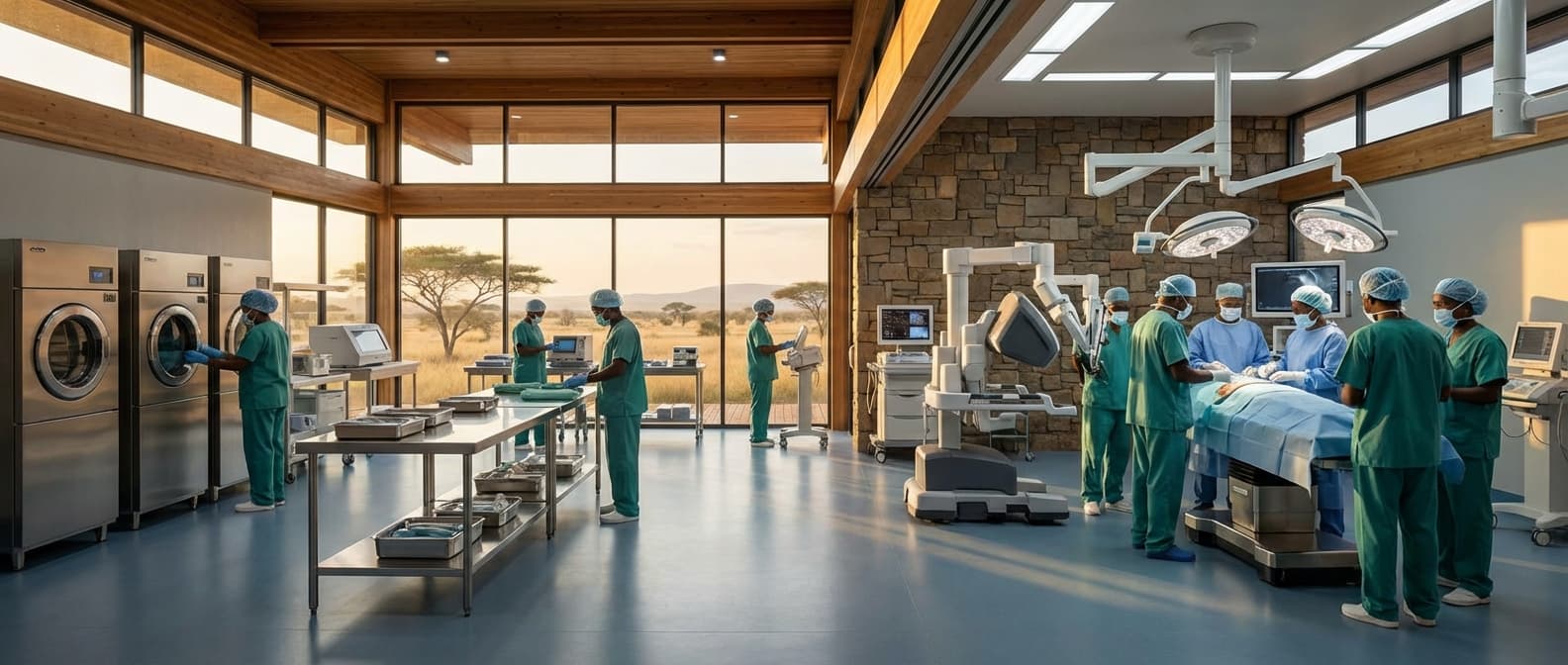
Endoscopy Reprocessing Validation in Libya
Engineering Excellence & Technical Support
AER validation, SOP development and compliance High-standard technical execution following OEM protocols and local regulatory frameworks.
Validated Endoscope Sterilization Protocols
Successfully validated and implemented rigorous sterilization protocols for flexible endoscopes across key Libyan healthcare facilities, ensuring patient safety and infection control adherence to international standards.
Automated Cleaning Cycle Verification
Deployed and validated automated cleaning systems for endoscopes, incorporating advanced data logging and verification mechanisms to ensure consistent and effective decontamination, reducing human error and enhancing traceability.
Microbiological Testing & Compliance
Conducted comprehensive microbiological testing of reprocessed endoscopes, demonstrating compliance with Libyan regulatory requirements and international guidelines, thereby mitigating risks of cross-contamination and healthcare-associated infections.
What Is Endoscopy Reprocessing Validation In Libya?
Endoscopy reprocessing validation in Libya refers to the systematic verification and documentation process that ensures flexible and semi-rigid endoscopes and their accessories are cleaned and disinfected to a level that prevents patient-to-patient transmission of infectious agents. This involves a multi-faceted approach encompassing the validation of manual cleaning procedures, automated washer-disinfector cycles, high-level disinfection efficacy, and terminal sterilization, where applicable. The objective is to provide objective evidence that the reprocessing procedures consistently achieve the required microbial reduction targets, adhering to national and international guidelines.
| Who Needs Endoscopy Reprocessing Validation? | Typical Use Cases | ||||
|---|---|---|---|---|---|
| Healthcare facilities in Libya that perform endoscopic procedures, including hospitals, specialized clinics, and diagnostic centers. | Ensuring compliance with Libyan Ministry of Health regulations and international standards for infection prevention and control. | Minimizing the risk of Healthcare-Associated Infections (HAIs) transmitted through inadequately reprocessed endoscopes. | Maintaining patient safety and confidence in the quality of care provided. | Supporting accreditation processes and quality assurance programs. | Responding to outbreaks or suspected cases of infection linked to endoscopic procedures. |
| Introduction of new reprocessing equipment or disinfectants: Validating that new technologies meet established efficacy requirements before routine use. | Changes in reprocessing protocols or workflows: Ensuring that any modifications to the existing procedures do not compromise the effectiveness of cleaning and disinfection. | Routine quality assurance audits: Periodically verifying the ongoing effectiveness of the reprocessing system. | Post-maintenance or repair of reprocessing equipment: Confirming that the equipment functions optimally after service. | Troubleshooting of reprocessing failures or adverse events: Investigating and resolving issues that may lead to inadequate reprocessing. |
Key Components of Endoscopy Reprocessing Validation:
- Cleaning Validation: Verifying the efficacy of manual and automated cleaning processes in removing gross soil, organic matter, and biofilm from the internal and external surfaces of the endoscope. This often involves the use of surrogate soil or chemical indicators.
- Disinfection/Sterilization Validation: Confirming that the chosen high-level disinfectant or sterilization method effectively eliminates or inactivates viable microorganisms, including high-risk pathogens. This may involve microbial challenge studies and the verification of disinfectant concentration and contact time.
- Washer-Disinfector Performance Testing: Evaluating the operational parameters and cleaning/disinfection efficacy of automated washer-disinfectors, including spray coverage, water temperature, detergent efficacy, and rinse cycles.
- Chemical Indicator Testing: Utilizing chemical indicators to verify critical parameters of the disinfection or sterilization process, such as temperature, time, and chemical concentration.
- Biological Indicator Testing: Employing biological indicators (spore strips) containing highly resistant microorganisms to demonstrate the lethality of the disinfection or sterilization process.
- Documentation and Record-Keeping: Establishing a robust system for recording all validation activities, test results, maintenance logs, and staff training records.
- Environmental Monitoring: Assessing the microbial load in the reprocessing environment to identify potential sources of contamination.
Who Needs Endoscopy Reprocessing Validation In Libya?
Endoscopy reprocessing validation is crucial for ensuring patient safety and preventing the transmission of infections within healthcare facilities. In Libya, as in any country with active healthcare services, the need for robust and validated reprocessing procedures for endoscopic equipment is paramount. This validation process confirms that cleaning and disinfection/sterilization methods effectively eliminate or reduce microbial contamination to safe levels.
| Department/Service | Endoscopic Procedures Performed | Key Concerns Addressed by Validation |
|---|---|---|
| Gastroenterology | Upper Endoscopy (EGD), Colonoscopy, Sigmoidoscopy, ERCP | Preventing transmission of H. pylori, Hepatitis B/C, bacterial infections, and biofilm formation. |
| Pulmonology/Respiratory Medicine | Bronchoscopy | Reducing risk of ventilator-associated pneumonia (VAP), tuberculosis (TB), and other respiratory pathogens. |
| Urology | Cystoscopy, Ureteroscopy | Minimizing the spread of urinary tract infections (UTIs) and sexually transmitted infections (STIs). |
| Gynecology | Hysteroscopy | Ensuring sterility to prevent uterine infections and post-procedural complications. |
| Ear, Nose, and Throat (ENT) | Laryngoscopy, Otoscopy (though typically less complex reprocessing) | Maintaining hygiene for delicate tissues and preventing cross-contamination. |
| Surgery (General, Laparoscopic, etc.) | Laparoscopy (though often not considered 'endoscopy' in the same reprocessing category, there are overlapping principles) | Ensuring sterile instruments for minimally invasive procedures. |
| Infection Control Department | All departments performing endoscopy | Overall patient safety, compliance with national and international guidelines, outbreak prevention. |
| Central Sterile Supply Department (CSSD) / Operating Room Support | All departments performing endoscopy | Ensuring standardized, validated, and documented reprocessing protocols. |
Target Customers and Departments Requiring Endoscopy Reprocessing Validation in Libya
- Hospitals (Public and Private): All hospitals, regardless of ownership or size, that perform endoscopic procedures are primary targets. This includes major tertiary care centers, general hospitals, and specialized clinics.
- Specialized Endoscopy Clinics: Facilities solely dedicated to diagnostic and therapeutic endoscopic procedures will have the highest volume and therefore the most critical need.
- Surgical Centers: Any facility offering endoscopic-assisted surgery.
- Diagnostic Centers: Centers that conduct diagnostic endoscopic examinations for various medical specialties.
- Government Health Ministries and Regulatory Bodies: Responsible for setting standards, overseeing healthcare quality, and ensuring patient safety across the nation.
- Medical Equipment Suppliers and Servicing Companies: Those involved in the sale, installation, and maintenance of endoscopic equipment and reprocessing systems.
- Training and Educational Institutions: Medical schools, nursing colleges, and professional development organizations that train healthcare workers in endoscopy and infection control.
- International Health Organizations and NGOs: Organizations involved in healthcare improvement initiatives and capacity building within Libya.
Endoscopy Reprocessing Validation Process In Libya
This document outlines the workflow for the Endoscopy Reprocessing Validation Process in Libya, from the initial inquiry to the final execution and reporting. This process is crucial for ensuring the safety and efficacy of reusable endoscopic equipment, minimizing the risk of healthcare-associated infections.
| Phase | Key Activities | Responsible Parties | Deliverables/Outcomes | Notes/Considerations |
|---|---|---|---|---|
| Healthcare facility expresses interest in endoscopy reprocessing validation. Initial discussions regarding needs and objectives. | Healthcare Facility (e.g., Infection Control Department, Endoscopy Unit), Potential Validation Service Provider. | Understanding of facility's requirements, preliminary scope of service. | Early engagement with facility stakeholders is vital. |
| Detailed discussion to define the specific endoscopes, reprocessing methods, and validation parameters required. Identification of applicable national/international standards. | Healthcare Facility, Validation Service Provider. | Documented Scope of Work (SOW), list of equipment to be validated, defined validation parameters. | Clear definition of what constitutes successful validation. |
| Validation service provider prepares a comprehensive proposal detailing methodology, timeline, resources, costs, and deliverables. | Validation Service Provider. | Formal proposal document. | Tailor proposal to specific facility needs and Libyan regulatory context. |
| Review and negotiation of the proposal terms, leading to a formal service agreement. | Healthcare Facility, Validation Service Provider. | Signed Service Agreement/Contract. | Ensure clarity on responsibilities, payment terms, and dispute resolution. |
| On-site visit to assess the current reprocessing environment, equipment functionality, workflow, and available resources. Identify potential challenges. | Validation Service Provider. | Pre-validation assessment report, identification of gaps. | Crucial for tailoring the validation protocol. |
| Creation of a detailed protocol outlining the step-by-step procedures for validation, including testing methods, acceptance criteria, and sampling plans. | Validation Service Provider (with input from facility). | Draft Validation Protocol. | Must adhere to relevant standards (e.g., ISO, national guidelines). |
| The validation protocol is reviewed by the healthcare facility's relevant departments (e.g., Infection Control, Quality Assurance) and potentially regulatory bodies for approval. | Healthcare Facility, Validation Service Provider, potentially Ministry of Health representatives. | Approved Validation Protocol. | Ensures all stakeholders agree on the validation approach. |
| Ensuring all necessary equipment for testing (e.g., biological indicators, chemical indicators, ATP meters) and validated reagents are available and properly calibrated/certified. | Validation Service Provider, Healthcare Facility. | Verified and calibrated test equipment, certified reagents. | Quality of consumables directly impacts validation results. |
| Training of the facility's endoscopy reprocessing staff on the validated procedures and conducting competency assessments to ensure adherence. | Validation Service Provider, Healthcare Facility Staff. | Trained personnel, competency assessment records. | Sustainable reprocessing relies on skilled staff. |
| Performing the validation procedures as outlined in the approved protocol, including simulated patient use, cleaning efficacy tests, disinfection/sterilization efficacy tests. | Validation Service Provider (lead), Healthcare Facility Staff (support). | Raw data from validation tests. | Strict adherence to the protocol is paramount. Document all deviations. |
| Collecting all generated data and performing rigorous analysis to determine if the reprocessing methods meet the defined acceptance criteria. | Validation Service Provider. | Analyzed data, preliminary findings. | Statistical analysis may be required for certain parameters. |
| Compiling a comprehensive report detailing the validation process, methodology, results, analysis, and conclusions. | Validation Service Provider. | Draft Validation Report. | Must be clear, concise, and supported by evidence. |
| The validation report is reviewed by the healthcare facility's stakeholders and approved. | Healthcare Facility, Validation Service Provider. | Approved Validation Report. | Formal acceptance of the validation outcome. |
| If the validation fails to meet acceptance criteria, corrective actions are identified and implemented, followed by re-validation of the affected steps or processes. | Healthcare Facility, Validation Service Provider. | Implemented corrective actions, re-validation plan, successful re-validation results. | Iterative process until compliance is achieved. |
| Upon successful validation, a formal certificate is issued, attesting to the efficacy of the endoscopy reprocessing procedures. | Validation Service Provider. | Final Validation Certificate. | Serves as official documentation of compliance. |
| Ongoing support, periodic audits, or re-validation may be recommended to ensure continued compliance and to adapt to changes in guidelines or equipment. | Validation Service Provider, Healthcare Facility. | Recommendations for ongoing monitoring, periodic audit reports. | Ensures long-term effectiveness of the reprocessing system. |
Endoscopy Reprocessing Validation Process Workflow in Libya
- Inquiry & Initial Contact
- Scope of Work & Requirements Definition
- Proposal Development & Submission
- Contract Negotiation & Agreement
- Pre-Validation Site Assessment
- Development of Validation Protocol
- Protocol Review & Approval
- Equipment & Reagent Procurement/Verification
- Personnel Training & Competency Assessment
- Protocol Execution (On-site Validation)
- Data Collection & Analysis
- Validation Report Generation
- Report Review & Approval
- Corrective Actions & Re-validation (if necessary)
- Final Validation Certificate Issuance
- Post-Validation Support & Monitoring
Endoscopy Reprocessing Validation Cost In Libya
Endoscopy reprocessing validation is a critical step in ensuring patient safety and preventing the transmission of infections within healthcare facilities. This process confirms that reusable endoscopes have been effectively cleaned and disinfected according to established protocols and manufacturer guidelines. In Libya, the cost associated with validating these reprocessing procedures can fluctuate due to several factors, making it challenging to provide a single, definitive price. However, we can explore the typical pricing factors and offer estimated ranges in Libyan Dinars (LYD).
| Validation Component/Service | Estimated Price Range (LYD) |
|---|---|
| Basic Visual Inspection and Lumen Flushing (Manual) | 50 - 150 per endoscope |
| Microbiological Swab Testing (per sample) | 100 - 300 |
| ATP Bioluminescence Testing (per test) | 150 - 400 |
| Specialized Disinfectant Efficacy Testing (per test) | 200 - 500 |
| Monthly Validation Service (comprehensive, for a small clinic) | 1,000 - 3,000 |
| Quarterly Validation Service (comprehensive, for a medium-sized hospital) | 3,000 - 8,000 |
| Annual Validation Contract (for a large hospital, including regular testing and audits) | 10,000 - 30,000+ |
| Cost of Validation Kits (bulk purchase, per kit) | 50 - 200 |
| Personnel Training (per technician, initial) | 200 - 600 |
Factors Influencing Endoscopy Reprocessing Validation Costs in Libya
- Type and Complexity of Endoscope: Different types of endoscopes (e.g., gastroscopes, colonoscopes, bronchoscopes, duodenoscopes) and their complexity (e.g., presence of channels, movable parts) can impact the validation process. More complex endoscopes may require more specialized testing and consumables.
- Validation Method/Kit: The specific validation method or kit used plays a significant role. These can range from simple visual inspection and lumen flushing to more advanced microbiological testing (e.g., using culture swabs or rapid test kits) to detect residual contamination.
- Number of Validation Points: The scope of validation can vary. Some facilities might opt for validation at critical points in the reprocessing cycle, while others may choose a more comprehensive approach covering multiple stages.
- Frequency of Validation: The frequency at which validation is performed (e.g., daily, weekly, monthly, or after specific events) directly affects the overall annual or recurring cost.
- Third-Party Service Providers vs. In-House Capabilities: Whether a hospital or clinic utilizes an external specialized laboratory or performs validation in-house using trained staff and internal resources will influence costs. External services often include their profit margins.
- Consumables and Reagents: The cost of specialized cleaning agents, disinfectants, sterile water, culture media, test kits, and other consumables used during validation is a direct cost component.
- Personnel Training and Labor: The time and expertise of trained technicians or microbiologists involved in performing the validation tests, interpreting results, and documenting the process contribute to the overall cost. This includes initial training and ongoing professional development.
- Quality Control and Assurance: Implementing robust quality control measures and maintaining documentation for audit purposes adds to the validation expenses.
- Geographic Location and Supply Chain: While less pronounced within Libya, the availability and cost of imported validation kits and reagents can be influenced by import duties, shipping costs, and currency exchange rates, potentially leading to regional variations.
- Regulatory Requirements and Standards: Adherence to national and international standards (e.g., those set by the Libyan Ministry of Health or relevant professional bodies) can dictate the level of validation required, thus impacting costs.
Affordable Endoscopy Reprocessing Validation Options
Ensuring the safety and efficacy of reusable medical devices, particularly endoscopes, hinges on rigorous reprocessing validation. This validation confirms that cleaning and disinfection processes effectively eliminate microbial contamination. While comprehensive validation can be a significant investment, several affordable options and cost-saving strategies exist for healthcare facilities. Understanding "value bundles" and implementing smart cost-saving measures can make this crucial process more accessible.
| Strategy | Description | Potential Cost Savings |
|---|---|---|
| Value Bundles (Reprocessing & Validation Services) | Purchasing reprocessing supplies, equipment maintenance, and validation services as a package deal from a single vendor. This can lead to negotiated discounts and streamlined procurement. | Reduced unit costs for supplies, potential discounts on bundled services, simplified budgeting. |
| Tiered Validation Service Packages | External laboratories offering different levels of validation. Basic packages might cover essential efficacy tests, while premium packages include more comprehensive environmental monitoring or specialized tests. | Lower initial investment by selecting essential validation components, allowing for phased expansion as budget permits. |
| Joint Purchasing Agreements | Collaborating with other healthcare facilities to purchase reprocessing chemicals, equipment, or validation services in bulk. This leverages collective bargaining power. | Significant discounts on bulk purchases of supplies and potentially shared costs for validation services or software. |
| Integrated Reprocessing Software Solutions | Software that tracks reprocessing cycles, maintenance, staff training, and can integrate with validation data. While an upfront investment, it streamlines workflows and provides data for validation. | Reduced manual data entry, improved compliance tracking, potential for proactive identification of issues before costly validation failures. |
| Internal Training & "Train the Trainer" Programs | Investing in comprehensive training for in-house sterile processing staff to perform certain validation monitoring tasks and quality control checks. | Reduced reliance on external consultants for routine validation checks, increased staff expertise and efficiency. |
| Risk-Based Prioritization of Validation | Focusing validation efforts on the highest-risk procedures and endoscope types first, and gradually expanding to lower-risk areas. | Optimized allocation of limited validation budgets, ensuring critical areas are validated without overspending on less critical aspects. |
Affordable Endoscopy Reprocessing Validation Options
- Phased Validation Approach: Instead of a single, all-encompassing validation, break down the process into phases. Start with the most critical steps and essential validation parameters. As budget allows, expand to other parameters.
- Leveraging Manufacturer Data and Recommendations: Often, endoscope manufacturers provide validated reprocessing guidelines. While these might not always be a direct substitute for independent validation in all regulatory environments, they can serve as a strong foundation and reduce the scope of independent testing needed.
- Collaborative Validation Efforts: Partner with other healthcare facilities in your region or within a larger health system. Sharing the costs of external validation services or internal expertise can significantly reduce the per-facility expense.
- Utilizing Accredited Third-Party Laboratories with Tiered Services: Many accredited labs offer different levels of validation services. Opt for their more basic or essential packages initially, and upgrade if and when necessary.
- Focusing on Critical Parameters First: Prioritize validation of the most critical steps: high-level disinfection efficacy (e.g., using biological indicators) and cleaning efficacy (e.g., using simulated soil or protein testing). Other parameters can be validated in subsequent phases.
- Internal Staff Training and Skill Development: Investing in training for your current sterile processing staff can empower them to conduct certain validation aspects internally, reducing reliance on expensive external consultants for routine checks and monitoring.
- Risk-Based Validation Strategies: Focus validation efforts on endoscopes and reprocessing cycles that pose the highest risk to patients. This targeted approach can optimize resource allocation.
- Leveraging Existing Equipment and Technologies: Ensure your current reprocessing equipment (e.g., automated endoscope reprocessors, washer-disinfectors) is functioning optimally. Regular maintenance and calibration are cost-effective preventative measures that support validation.
- Seeking Grants and Funding Opportunities: Explore available grants or funding programs from regulatory bodies, professional organizations, or foundations that support healthcare quality and patient safety initiatives, including reprocessing validation.
Verified Providers In Libya
Navigating the healthcare landscape in Libya can be challenging. However, ensuring access to quality medical services is paramount. This is where verified healthcare providers become essential. Franance Health stands out as a leading example of a credentialed and trustworthy healthcare partner in Libya, offering a range of benefits that make them the superior choice for individuals and organizations seeking reliable medical solutions. Their commitment to stringent verification processes, adherence to international standards, and patient-centric approach set them apart.
| Service Area | Franance Health Advantage | Why it Matters for Libya |
|---|---|---|
| Medical Consultations | Access to verified specialists with proven expertise. | Ensures accurate diagnoses and effective treatment plans in a challenging environment. |
| Surgical Procedures | Partnership with accredited surgical centers and experienced surgeons. | Guarantees safe and successful outcomes, minimizing risks associated with less regulated facilities. |
| Diagnostic Services | Utilization of advanced and certified laboratory and imaging facilities. | Provides reliable test results for informed medical decisions. |
| Emergency Care | Connections to well-equipped and responsive emergency medical services. | Crucial for timely intervention and life-saving treatment in critical situations. |
| Specialized Treatments | Facilitates access to niche medical expertise and cutting-edge therapies. | Offers solutions for complex health conditions that might otherwise be inaccessible. |
Why Franance Health is the Best Choice for Verified Healthcare in Libya:
- Rigorous Verification Process: Franance Health employs a comprehensive vetting system for all its partner providers, ensuring they meet the highest standards of medical expertise, ethical practice, and operational integrity.
- Credentialing and Accreditation: They prioritize working with healthcare facilities and professionals who hold recognized national and international accreditations and certifications, guaranteeing a baseline of quality and safety.
- Extensive Network of Specialists: Franance Health boasts a diverse network of highly qualified doctors, surgeons, and medical practitioners across various specialties, offering a wide spectrum of medical services.
- Patient-Centric Approach: Their focus is on providing personalized care, ensuring patient comfort, and facilitating seamless access to necessary treatments and consultations.
- Commitment to International Standards: Franance Health aligns its practices with global best practices in healthcare delivery, promoting transparency, accountability, and superior patient outcomes.
- Streamlined Access and Support: They offer comprehensive support services, from appointment scheduling to logistical arrangements, simplifying the healthcare journey for their clients.
- Trust and Reliability: Through their consistent delivery of high-quality services and unwavering commitment to ethical conduct, Franance Health has established itself as a trusted name in Libyan healthcare.
Scope Of Work For Endoscopy Reprocessing Validation
This Scope of Work outlines the validation requirements for the reprocessing of flexible endoscopic devices. The objective is to ensure that all validated reprocessing procedures effectively reduce the bioburden on endoscopes to acceptable levels, thereby minimizing the risk of patient-to-patient cross-contamination and healthcare-associated infections. This validation will encompass manual cleaning, automated cleaning and disinfection, high-level disinfection (HLD), and sterilization processes (where applicable). Technical deliverables include validation protocols, test reports, and a final validation summary report. Standard specifications will be based on relevant regulatory guidelines and industry best practices, including but not limited to, AAMI ST91, FDA guidance, and CDC recommendations.
| Process Step | Standard Specification/Guideline | Key Parameters to Validate | Acceptance Criteria (Examples) |
|---|---|---|---|
| Pre-cleaning & Manual Cleaning | AAMI ST91, Manufacturer's Instructions for Use (IFU) | Detergent effectiveness, cleaning time, rinsing effectiveness, removal of visible soil, microbial reduction | No visible soil remaining, reduction in microbial load by ≥ 3-log (for initial validation) |
| Automated Washer-Disinfection | AAMI ST91, Manufacturer's IFU, IEC 62353 | Water temperature, detergent concentration, wash/rinse cycles, drying effectiveness, microbial reduction, residual chemical levels | Demonstrated microbial inactivation, residual chemical levels below defined limits (e.g., for specific disinfectants/sterilants) |
| High-Level Disinfection (HLD) | AAMI ST91, Manufacturer's IFU, FDA Guidance | Disinfectant concentration, contact time, temperature, water quality, microbial inactivation | Complete inactivation of target microorganisms (e.g., Mycobacterium tuberculosis, non-enveloped viruses) |
| Sterilization (if applicable) | AAMI ST40, AAMI ST67, Manufacturer's IFU | Sterilant concentration, exposure time, temperature/pressure (for steam), humidity, bioburden reduction, sterility assurance level (SAL) | SAL of 10⁻⁶ for product |
| Drying & Storage | AAMI ST91, Manufacturer's IFU | Effectiveness of drying, storage conditions (temperature, humidity, air quality), handling procedures | Endoscope channels fully dry, storage environment meets specifications |
| Microbiological Testing Methods | Validated laboratory protocols, relevant ISO standards | Sensitivity, specificity, accuracy, precision of assays (e.g., for microbial enumeration, detection of organic residues) | Assays demonstrate required performance characteristics for the intended purpose |
Technical Deliverables
- Detailed Validation Protocol (including scope, methodology, acceptance criteria, and test procedures)
- Raw Data from all validation testing (e.g., microbial challenge data, cleaning agent residue analysis, disinfection efficacy results)
- Validation Test Reports for each stage of the reprocessing cycle (e.g., Manual Cleaning Validation Report, Automated Washer-Disinfector Validation Report, HLD Efficacy Report, Sterilization Validation Report)
- Equipment Performance Qualification (IQ/OQ/PQ) Reports for all automated equipment used in reprocessing
- Assay validation reports for all microbiological testing methods
- Final Endoscopy Reprocessing Validation Summary Report, including an overall assessment of the validation and recommendations for ongoing monitoring.
Service Level Agreement For Endoscopy Reprocessing Validation
This Service Level Agreement (SLA) outlines the response times and uptime guarantees for the Endoscopy Reprocessing Validation service. This service is critical for ensuring the safety and effectiveness of reprocessed endoscopic equipment. Adherence to these metrics is paramount to maintaining patient safety and operational efficiency within healthcare facilities.
| Service Component | Response Time Guarantee (Critical) | Response Time Guarantee (High) | Response Time Guarantee (Medium) | Uptime Guarantee |
|---|---|---|---|---|
| ERV System Monitoring | 15 minutes | 30 minutes | 2 hours | 99.9% |
| Data Analysis and Reporting | 1 hour | 4 hours | 8 hours | 99.9% |
| Troubleshooting and Issue Resolution | 1 hour (initiation) | 4 hours (resolution target) | 8 hours (resolution target) | 99.9% |
| System Updates and Maintenance | N/A (Scheduled) | N/A (Scheduled) | N/A (Scheduled) | N/A (Scheduled) |
Key Service Components
- Endoscopy Reprocessing Validation (ERV) System Monitoring
- Data Analysis and Reporting
- Troubleshooting and Issue Resolution
- System Updates and Maintenance
Frequently Asked Questions

Ready when you are
Let's scope your Endoscopy Reprocessing Validation in Libya project in Libya.

Scaling healthcare logistics and technical systems across the entire continent.