
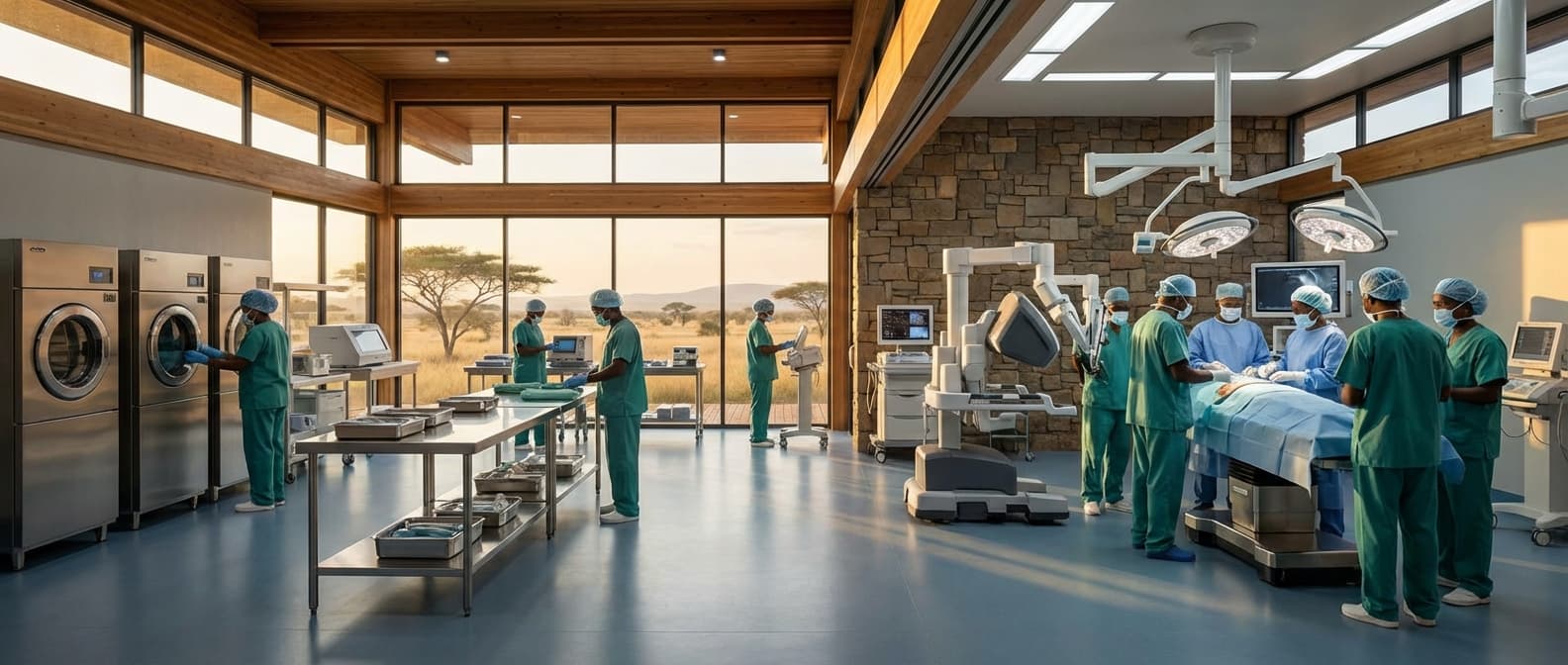
CSSD Design & Validation in Libya
Engineering Excellence & Technical Support
CSSD workflow design, validation and process development High-standard technical execution following OEM protocols and local regulatory frameworks.
Advanced Sterilization Validation Protocols
Implementing rigorous, evidence-based validation protocols for sterilization cycles, including biological indicator testing, chemical indicator monitoring, and D-value/Z-value calculations, ensuring the highest standards of microbial inactivation for CSSD operations in Libya.
Risk-Based CSSD Process Design
Developing comprehensive CSSD designs that incorporate robust risk assessment methodologies (e.g., FMEA) to identify and mitigate potential hazards, optimizing workflow, instrument traceability, and infection control practices within Libyan healthcare facilities.
Performance Monitoring & Continuous Improvement
Establishing key performance indicators (KPIs) and implementing data-driven monitoring systems for CSSD equipment and processes. This enables continuous improvement, proactive maintenance, and ensures ongoing compliance with international standards for sterile processing in Libya.
What Is Cssd Design & Validation In Libya?
Central Sterile Services Department (CSSD) design and validation in Libya encompasses the meticulous planning, engineering, and verification of facilities and processes dedicated to the decontamination and sterilization of medical devices. This service ensures that healthcare institutions adhere to stringent international standards for infection prevention and control, safeguarding patient safety and operational efficiency. The design phase involves architectural layout, equipment selection, workflow optimization, and compliance with relevant Libyan healthcare regulations and international best practices (e.g., ISO 13485, AAMI ST). Validation, a critical subsequent step, provides documented evidence that the designed CSSD operates as intended and consistently produces sterile products, typically through process qualification (IQ/OQ/PQ) and performance monitoring.
| Service Component | Description | Relevance to Libya |
|---|---|---|
| Design Consultation | Initial assessment of existing infrastructure or greenfield requirements, needs analysis, and conceptualization of the CSSD. | Crucial for establishing modern, compliant healthcare facilities in Libya, addressing potential infrastructure gaps and ensuring future-proofing. |
| Architectural & Engineering Design | Detailed blueprints, equipment placement, utilities integration, and compliance with building codes and safety standards. | Ensures that new or renovated CSSDs in Libya meet international design principles and local building regulations, optimizing functionality and infection control. |
| Equipment Procurement Support | Assisting in the specification, tendering, and selection of validated sterilization and cleaning equipment. | Facilitates acquisition of reliable and compliant equipment for Libyan healthcare providers, often navigating import regulations and local availability. |
| Process Validation | Systematic testing and documentation to confirm that cleaning, disinfection, and sterilization processes consistently achieve the intended results. | Essential for Libyan hospitals and clinics to demonstrate the efficacy of their infection control practices to regulatory bodies and patients. |
| Environmental Monitoring | Regular testing of air quality, water, and surfaces to ensure optimal conditions for sterile processing. | Supports the maintenance of a safe and sterile environment within CSSDs in Libya, mitigating risks of microbial contamination. |
Key Components of CSSD Design & Validation Services
- Facility Planning and Layout Design: Optimizing space utilization, workflow, and segregation of clean and dirty areas.
- Equipment Specification and Selection: Identifying appropriate sterilization, cleaning, and ancillary equipment based on facility needs and volume.
- Workflow Analysis and Process Engineering: Designing efficient and safe material flow from soiled receiving to sterile storage.
- Ventilation and Environmental Control Design: Specifying HVAC systems to maintain appropriate air quality, temperature, and humidity.
- Utility Requirements Definition: Detailing requirements for water, electricity, steam, and compressed air.
- Compliance Review and Gap Analysis: Ensuring adherence to Libyan Ministry of Health regulations and international standards.
- Installation Qualification (IQ): Documented verification that equipment is installed and configured according to manufacturer's specifications.
- Operational Qualification (OQ): Documented verification that equipment operates within predefined parameters.
- Performance Qualification (PQ): Documented verification that the entire CSSD process consistently achieves the desired sterile output under simulated or actual operating conditions.
- Documentation and Record-Keeping Systems: Establishing robust protocols for traceability and quality assurance.
- Training Program Development: Creating comprehensive training modules for CSSD personnel.
Who Needs Cssd Design & Validation In Libya?
CSSD (Central Sterile Services Department) design and validation are crucial for ensuring patient safety and operational efficiency within healthcare facilities. In Libya, where the healthcare sector is undergoing development and modernization, investing in proper CSSD infrastructure is paramount. This includes designing facilities that meet international standards for sterilization, disinfection, and sterile storage, as well as validating the efficacy of the processes and equipment used. This ensures that medical instruments are properly decontaminated and sterilized, minimizing the risk of healthcare-associated infections (HAIs) for patients undergoing surgical procedures and other medical interventions. Furthermore, well-designed CSSD departments contribute to better workflow, reduced turnaround times for instruments, and optimized resource utilization.
| Target Customer/Facility Type | Key Departments Requiring CSSD Support | Specific Needs Addressed by CSSD Design & Validation |
|---|---|---|
| Public Hospitals | Operating Theatres, Emergency Departments, Intensive Care Units (ICUs), Outpatient Clinics, Maternity Wards, Surgical Wards | Ensuring sufficient sterile instrument availability for high patient volume, infection control compliance, standardized sterilization processes, space optimization for efficient workflow, equipment selection for bulk processing. |
| Private Hospitals | Operating Theatres, Day Surgery Units, Fertility Clinics, Cardiology Units | Achieving high standards of patient care and safety to attract patients, efficient turnaround for specialized instruments, adherence to international accreditation standards, advanced sterilization technologies, minimizing the risk of surgical site infections. |
| Specialized Surgical Clinics (e.g., Ophthalmology, Orthopedics) | Operating Rooms, Procedure Rooms | Sterilization of highly specialized and delicate instruments, ensuring sterility of single-use items for critical procedures, validation of low-temperature sterilization methods, traceability of instruments. |
| Dental Clinics | Treatment Rooms, Sterilization Area | Effective sterilization of dental instruments (handpieces, mirrors, probes), compliance with dental hygiene regulations, space-efficient design for smaller facilities, user-friendly sterilization equipment. |
| Diagnostic Laboratories | Microbiology Labs, Pathology Labs | Sterilization of glassware and equipment, decontamination of biohazardous waste, ensuring sterile media preparation, adherence to biosafety level requirements. |
| Emergency Medical Services | Ambulances, Base Stations | Decontamination and sterilization of portable medical equipment used in pre-hospital care, ensuring readiness for emergency response, proper storage of sterile supplies. |
| Rehabilitation Centers | Physiotherapy Units, Occupational Therapy Units | Disinfection and sterilization of therapeutic equipment (e.g., massage tools, exercise equipment), maintaining a hygienic environment for patient recovery. |
Target Customers & Departments for CSSD Design & Validation in Libya
- Hospitals (Public and Private)
- Specialized Clinics (Surgical Centers, Dental Clinics, Ophthalmology Centers)
- Diagnostic Laboratories
- Emergency Medical Services
- Rehabilitation Centers
Cssd Design & Validation Process In Libya
The CSSD (Central Sterile Supply Department) Design & Validation Process in Libya encompasses a comprehensive workflow, ensuring that sterile processing facilities meet international standards and local regulations. This process is crucial for preventing healthcare-associated infections and maintaining patient safety. The workflow typically begins with an initial inquiry from a healthcare facility and culminates in the full validation and handover of a functional CSSD. Key stages involve detailed planning, equipment selection, installation, testing, and ongoing verification.
| Phase | Description | Key Activities | Deliverables |
|---|---|---|---|
| Inquiry & Initial Consultation | The process begins with a healthcare facility expressing interest in designing or upgrading a CSSD. This involves initial discussions to understand their needs and the scope of the project. | Site visit, preliminary needs assessment, discussion of project goals and budget. | Project scope document, preliminary proposal. |
| Needs Assessment & Site Survey | A thorough evaluation of the facility's current and future needs, including instrument processing volumes, types of procedures, and existing infrastructure. A detailed site survey is conducted to assess space, utilities, and workflow constraints. | Gathering data on instrument trays, sterilization requirements, staff numbers, existing infrastructure (power, water, ventilation, drainage), space limitations. | Detailed needs assessment report, site survey report with recommendations. |
| Conceptual Design & Space Planning | Developing the overall layout and flow of the CSSD based on the needs assessment. This includes defining different functional areas such as decontamination, packaging, sterilization, sterile storage, and administration. | Creating floor plans, defining workflow paths, allocating space for equipment, considering infection control principles and ergonomic design. | Conceptual layout drawings, preliminary equipment list. |
| Detailed Design & Technical Specifications | Translating the conceptual design into detailed architectural, mechanical, electrical, and plumbing (MEP) drawings. This phase also involves creating precise technical specifications for all equipment and materials. | Developing detailed drawings (floor plans, elevations, sections), specifying materials, finishes, ventilation systems, water quality, electrical requirements, and communication systems. | Full set of detailed design drawings, comprehensive technical specifications document. |
| Procurement & Equipment Selection | Selecting and procuring all necessary equipment, including washers, disinfectors, sterilizers (steam, low-temperature), drying cabinets, sealing machines, incubators, and monitoring devices. This involves tendering and supplier evaluation. | Developing tender documents, evaluating supplier proposals, selecting appropriate equipment based on specifications, capacity, and compliance with standards. | Purchase orders, equipment specifications sheets, supplier contracts. |
| Installation & Commissioning | The physical installation of all equipment and systems within the designed CSSD. Commissioning involves initial testing to ensure all components are functioning as per manufacturer specifications. | Supervising equipment installation, connecting utilities, initial functional testing of all equipment and systems. | Installation reports, preliminary test results, equipment user manuals. |
| Validation & Qualification (IQ, OQ, PQ) | A critical phase to ensure the CSSD operates consistently and produces sterile products. This follows a structured approach:
| Developing validation protocols, executing IQ, OQ, and PQ tests, documenting all results, identifying and rectifying any deviations. | IQ, OQ, and PQ reports, validation certificates, deviation reports (if any). |
| Training & Handover | Comprehensive training for CSSD staff on the operation, maintenance, and quality control procedures for all equipment and the overall workflow. Upon successful validation and training, the CSSD is formally handed over to the facility. | Developing training materials, conducting hands-on training sessions, providing operational manuals and SOPs, formal handover meeting. | Training records, Standard Operating Procedures (SOPs), handover certificate. |
| Ongoing Monitoring & Maintenance | Establishing a robust system for routine monitoring, calibration, and preventive maintenance of all CSSD equipment to ensure continued optimal performance and compliance with regulatory requirements. | Implementing daily, weekly, and monthly monitoring schedules, performing regular equipment calibration, scheduling preventive maintenance, maintaining logbooks. | Maintenance logs, calibration certificates, performance monitoring reports. |
CSSD Design & Validation Workflow in Libya
- Inquiry & Initial Consultation
- Needs Assessment & Site Survey
- Conceptual Design & Space Planning
- Detailed Design & Technical Specifications
- Procurement & Equipment Selection
- Installation & Commissioning
- Validation & Qualification (IQ, OQ, PQ)
- Training & Handover
- Ongoing Monitoring & Maintenance
Cssd Design & Validation Cost In Libya
Designing and validating a Central Sterile Supply Department (CSSD) in Libya involves several key cost components. The pricing is highly influenced by factors such as the complexity of the facility, the level of technology adopted, the size of the hospital, the specific services offered by the CSSD, and the current economic conditions and currency exchange rates in Libya. These costs can vary significantly, and it's crucial to obtain detailed quotes from specialized suppliers and consultants.
Pricing Factors:
- Facility Size and Scope: The larger the hospital and the more extensive the sterilization needs (e.g., multiple operating rooms, intensive care units), the greater the space, equipment, and infrastructure required, leading to higher costs.
- Equipment Selection: The choice of sterilization equipment (autoclaves, washer-disinfectors, sterile storage cabinets, packaging systems, testing equipment) is a major cost driver. High-end, automated systems are more expensive than basic or semi-automated ones.
- Technology and Automation: Implementing advanced tracking systems, automated workflows, and IoT integration for monitoring will increase initial investment but can improve efficiency and reduce long-term operational costs.
- Infrastructure and Utilities: Costs associated with building or renovating the CSSD space, including ventilation, water supply, drainage, electrical systems, and medical gas connections, are significant.
- Design and Consultancy Fees: Engaging experienced CSSD designers and consultants for planning, layout, workflow optimization, and regulatory compliance is a necessary expense.
- Validation and Commissioning: Professional validation of all equipment and processes to meet international standards (e.g., ISO, HTM) is mandatory and incurs fees for testing, calibration, and documentation.
- Training: Comprehensive training for CSSD staff on equipment operation, safety protocols, and infection control practices is essential.
- Local Economic Conditions: Fluctuations in the Libyan Dinar (LYD), import duties, taxes, and the availability of specialized services and parts can impact overall pricing.
- Supplier and Manufacturer: Different manufacturers offer varying price points for similar equipment. The reputation and after-sales service of the supplier also play a role.
- Project Management: Costs related to overseeing the entire design, procurement, installation, and validation process.
| Cost Component | Estimated Range (LYD) |
|---|---|
| CSSD Design & Consultancy (per square meter or project-based) | 2,000 - 10,000+ LYD |
| Basic Sterilization Equipment (e.g., 1-2 autoclaves, washer-disinfector) | 100,000 - 500,000 LYD |
| Intermediate Sterilization Equipment (e.g., larger autoclaves, automated washer-disinfectors, wrapping machines) | 500,000 - 1,500,000 LYD |
| Advanced/High-Volume Sterilization Equipment (e.g., multiple large capacity units, integrated tracking systems) | 1,500,000 - 5,000,000+ LYD |
| Installation and Setup | 50,000 - 200,000 LYD |
| Validation & Commissioning (per equipment/process) | 10,000 - 50,000 LYD |
| Infrastructure & Renovation (highly variable based on existing space) | 50,000 - 500,000+ LYD |
| Staff Training | 10,000 - 30,000 LYD |
| Consumables & Initial Supplies (filters, packaging, detergents) | 20,000 - 100,000 LYD |
Estimated Cost Ranges for CSSD Design & Validation in Libya (in Libyan Dinar - LYD)
- The following ranges are highly approximate and subject to significant variation.
- It is essential to consult with multiple vendors and specialists for accurate, project-specific quotations.
- Exchange rates for imported goods can heavily influence the final cost.
Affordable Cssd Design & Validation Options
Designing and validating a Central Sterile Services Department (CSSD) is crucial for infection control and patient safety, but can often be a significant investment. This guide explores affordable options for CSSD design and validation, focusing on value bundles and cost-saving strategies to help facilities achieve compliance and operational excellence without breaking the bank. We'll break down common approaches and highlight areas where smart choices can lead to substantial savings.
| Value Bundle/Cost-Saving Strategy | Description | Potential Cost Savings |
|---|---|---|
| Basic Design & Workflow Consultation Package | A focused consultation on optimizing layout, workflow, and material flow for essential sterilization processes. This bundle typically includes site assessment, recommendations for space utilization, and initial workflow mapping. | Reduces the need for extensive architectural fees for initial planning. Avoids costly redesigns due to inefficient layouts. |
| Standard Validation Protocol Development | Development of a comprehensive yet standardized validation protocol covering routine steam, low-temperature sterilization, and washer-disinfector cycles. This package focuses on efficiency and regulatory compliance. | Reduces external validation costs by providing a clear, repeatable framework. Minimizes time spent by internal staff developing protocols from scratch. |
| Equipment Assessment & Sourcing Support | Guidance on selecting appropriate, reliable, and cost-effective sterilization and decontamination equipment. May include a review of potential vendors, equipment specifications, and comparative costing. | Prevents overspending on unnecessary features or less reliable brands. Identifies opportunities for bulk purchasing or bundled discounts. |
| Phased Validation Implementation | A strategy for conducting validation in stages, focusing on critical equipment and processes first, with a plan for subsequent validation phases. This is often coupled with initial design phases. | Spreads validation costs over time. Allows for adjustments based on initial validation results without incurring full validation costs for all systems at once. |
| In-House Training for Routine Monitoring | Training programs for CSSD technicians on performing routine monitoring, biological indicator testing, and basic equipment checks. This is distinct from full validation expertise. | Reduces ongoing costs for external service providers for routine tasks. Empowers staff and improves operational efficiency. |
| Refurbished Equipment Sourcing & Integration | Assistance in identifying and integrating high-quality, certified refurbished sterilization and decontamination equipment. This includes advice on warranty and service agreements. | Significant reduction in capital expenditure compared to purchasing new equipment. Often provides a similar level of performance and reliability. |
| Lean Process Improvement Workshop | A workshop focused on identifying and eliminating waste in CSSD workflows, leading to increased efficiency and reduced resource utilization. This can be applied to both existing and newly designed departments. | Reduces operational costs through improved efficiency, less instrument reprocessing, and optimized staff time. Contributes to a smoother, less error-prone workflow. |
Key Areas for Affordable CSSD Design & Validation
- Phased Design & Implementation: Instead of a complete overhaul, consider a phased approach to upgrade or build your CSSD. This allows for strategic investments over time, spreading the cost and minimizing disruption.
- Modular & Flexible Design: Opt for modular CSSD layouts and equipment that can be adapted or expanded in the future. This prevents costly retrofits as needs change.
- Prioritize Essential Services: Focus on core sterilization processes and essential equipment first. Non-critical or future-expansion areas can be addressed later.
- Standardized Processes & Workflows: Implementing efficient, standardized workflows can reduce the need for overly complex or expensive automation, focusing on well-trained staff and optimized layouts.
- Technology Integration: Leverage existing IT infrastructure where possible. Integrated systems for tracking, monitoring, and data management can be more cost-effective than standalone solutions.
- Consultant Expertise: Engage consultants strategically for specific, high-impact phases like initial design concept, validation protocol development, or complex validation procedures. Avoid engaging them for every minor detail.
- Validation Protocol Optimization: Develop robust yet efficient validation protocols that meet regulatory requirements without unnecessary complexity or repetitive testing.
- In-House Validation Capabilities: Invest in training staff for routine validation tasks and preventative maintenance where feasible. This reduces reliance on external validation services for day-to-day operations.
- Equipment Leasing & Refurbished Options: Explore leasing arrangements for high-cost equipment or consider purchasing certified refurbished equipment from reputable vendors to reduce capital expenditure.
Verified Providers In Libya
In the complex and often challenging healthcare landscape of Libya, identifying reliable and high-quality healthcare providers is paramount. Franance Health has emerged as a leading entity, distinguished by its rigorous credentialing process and unwavering commitment to patient well-being. This dedication ensures that their network of providers not only meets but exceeds international standards, offering Libyans access to exceptional medical care. The "Verified Provider" designation by Franance Health signifies a thorough vetting of medical professionals and facilities, encompassing qualifications, experience, ethical standing, and adherence to best practices. This meticulous approach builds trust and provides a critical layer of assurance for patients navigating their healthcare journey.
| Credentialing Aspect | Franance Health's Standard | Patient Benefit |
|---|---|---|
| Medical Licenses & Certifications | Up-to-date, valid, and recognized by Libyan and international bodies. | Ensures providers are legally qualified and possess recognized expertise. |
| Professional Experience | Thorough review of past roles, specializations, and duration of practice. | Connects patients with experienced professionals suited to their specific needs. |
| Clinical Competence & Training | Verification of ongoing education, specialized training, and demonstrated skill. | Guarantees access to up-to-date medical knowledge and advanced procedures. |
| Ethical Conduct & Reputation | Background checks and assessment of professional conduct and peer reviews. | Protects patients from malpractice and unethical practices. |
| Facility Standards (where applicable) | Inspection of infrastructure, equipment, and hygiene protocols. | Ensures a safe, clean, and well-equipped environment for treatment. |
Why Franance Health Credentials Represent the Best Choice:
- Rigorous Verification Process: Franance Health employs a multi-faceted credentialing system that scrutinizes every aspect of a provider's qualifications, licenses, and practice history.
- Commitment to Quality and Safety: Our verification ensures that providers adhere to the highest standards of medical care, patient safety protocols, and ethical conduct.
- Access to Expert Medical Professionals: We partner with highly skilled and experienced doctors, specialists, and healthcare facilities dedicated to delivering optimal health outcomes.
- Enhanced Patient Confidence: The Franance Health "Verified Provider" badge offers peace of mind, assuring patients they are receiving care from trusted and competent professionals.
- Streamlined Healthcare Navigation: By providing a curated list of verified providers, Franance Health simplifies the process of finding appropriate medical services in Libya.
- Adherence to International Standards: Our credentialing benchmarks align with globally recognized healthcare quality and safety principles.
Scope Of Work For Cssd Design & Validation
This document outlines the Scope of Work (SOW) for the Design and Validation of a Central Sterile Supply Department (CSSD). It details the technical deliverables and the standard specifications that will be adhered to throughout the project. The objective is to ensure the CSSD is designed and validated to meet current best practices, regulatory requirements, and operational efficiency for sterilization and instrument reprocessing.
| Specification Area | Relevant Standards/Guidelines | Key Considerations |
|---|---|---|
| Facility Design & Layout | HTM 01-01 (UK), AAMI ST79 (USA), local building codes | Segregation of clean and dirty areas, workflow optimization, infection control principles, ergonomic design. |
| Equipment Selection | AAMI standards, CE marking, manufacturer's specifications | Appropriate capacity, sterilization modality (steam, low temp), efficiency, maintenance access, safety features. |
| Sterilization Processes | ISO 17665 (Steam), ISO 11135 (EO), ISO 14937 (General), AAMI ST79 | Validated cycles, monitoring of parameters (time, temp, pressure, humidity), load configuration, biological and chemical indicators. |
| Decontamination | HTM 01-01, AAMI ST79 | Effective removal of organic matter, appropriate cleaning agents and processes, worker safety. |
| Water Quality | ISO 13485, manufacturer's requirements for sterilization equipment | Filtered, deionized, or purified water as per equipment specifications for optimal sterilization and to prevent staining/corrosion. |
| Air Quality & HVAC | ASHRAE standards, local health regulations | Adequate air changes per hour (ACPH), positive/negative pressure differentials between zones, HEPA filtration where required, temperature and humidity control. |
| Validation | GHTF/IMDRF guidance, AAMI ST55, FDA General Principles of Software Validation | Documented evidence that processes, equipment, and systems consistently perform as intended and meet predetermined specifications. |
| Documentation & Record Keeping | ISO 13485, regulatory requirements | Traceability of instruments, sterilization records, validation reports, maintenance logs, staff training records. |
| Safety | OSHA (USA), HSE (UK), local safety regulations | Chemical handling, biological hazards, sharps handling, radiation safety (if applicable), emergency procedures. |
| Environmental Monitoring | HTM 01-01, AAMI ST79 | Regular monitoring of air quality, surface cleanliness, and water quality to ensure a controlled environment. |
Key Technical Deliverables
- Detailed CSSD Layout and Equipment Placement Drawings
- Equipment Specifications and Procurement List
- Process Flow Diagrams (Decontamination, Sterilization, Storage)
- HVAC System Design for CSSD (Air Changes, Pressure Differentials, Filtration)
- Water Treatment System Design for CSSD
- Electrical and Plumbing Schematics for CSSD Equipment
- Validation Master Plan (VMP) for CSSD
- Installation Qualification (IQ) Protocols and Reports
- Operational Qualification (OQ) Protocols and Reports
- Performance Qualification (PQ) Protocols and Reports
- Standard Operating Procedures (SOPs) for CSSD Operations
- Staff Training Material and Records
- Risk Assessment Report for CSSD Processes
- Commissioning Plan and Report
Service Level Agreement For Cssd Design & Validation
This Service Level Agreement (SLA) outlines the performance standards for the design and validation of Central Sterile Supply Department (CSSD) facilities. It defines the response times for critical issues and the guaranteed uptime of crucial CSSD operational systems during the validation phase and post-validation support.
| Issue Severity Level | Description | Impact on CSSD Operations | Target Response Time | Target Resolution Time (Examples) | Escalation Trigger |
|---|---|---|---|---|---|
| Level 1 (Critical) | Complete system failure or major malfunction of a critical system rendering a significant portion of CSSD operations impossible. | Immediate and severe disruption to sterile processing, inability to sterilize critical instruments, potential patient safety risk. | 1 Hour (24/7) | 4-8 Hours (for critical systems, may involve on-site intervention) | If resolution not achieved within 4 hours |
| Level 2 (High) | Partial system failure or significant malfunction of a critical system impacting a specific process or a moderate portion of operations. | Reduced throughput, potential delays in reprocessing, minor impact on patient care if alternative methods exist. | 2 Hours (Business Hours) | 8-16 Business Hours | If resolution not achieved within 8 business hours |
| Level 3 (Medium) | Minor malfunction of a critical system or non-critical system issue that causes inconvenience but does not halt operations. | Operational inconvenience, potential for minor delays, does not directly impact patient safety. | 4 Business Hours | 24-48 Business Hours | If resolution not achieved within 24 business hours |
| Level 4 (Low) | Non-critical system issue, cosmetic defect, or question regarding system functionality. | Minimal to no impact on operations. Information request or minor adjustment needed. | 8 Business Hours | 3-5 Business Days | N/A |
Key Definitions
- CSSD: Central Sterile Supply Department.
- Design & Validation: Encompasses the architectural, engineering, and equipment design, as well as the testing and commissioning processes to ensure the CSSD meets all regulatory, functional, and operational requirements.
- Critical Systems: Refers to essential equipment and infrastructure that directly impact sterile processing operations, including but not limited to sterilization equipment (autoclaves, low-temperature sterilizers), washer-disinfectors, cleanroom HVAC systems, and validation software.
- Issue Severity Levels: Categorization of problems based on their impact on CSSD operations. (See Table 1: Issue Severity Levels).
- Response Time: The maximum time allowed for the service provider to acknowledge an issue and begin working towards a resolution after receiving a valid support request.
- Resolution Time: The maximum time allowed for the service provider to permanently fix or provide a workaround for a reported issue, depending on its severity.
- Uptime Guarantee: The percentage of time that critical CSSD systems are expected to be operational and available for use.
Frequently Asked Questions

Ready when you are
Let's scope your CSSD Design & Validation in Libya project in Libya.

Scaling healthcare logistics and technical systems across the entire continent.