
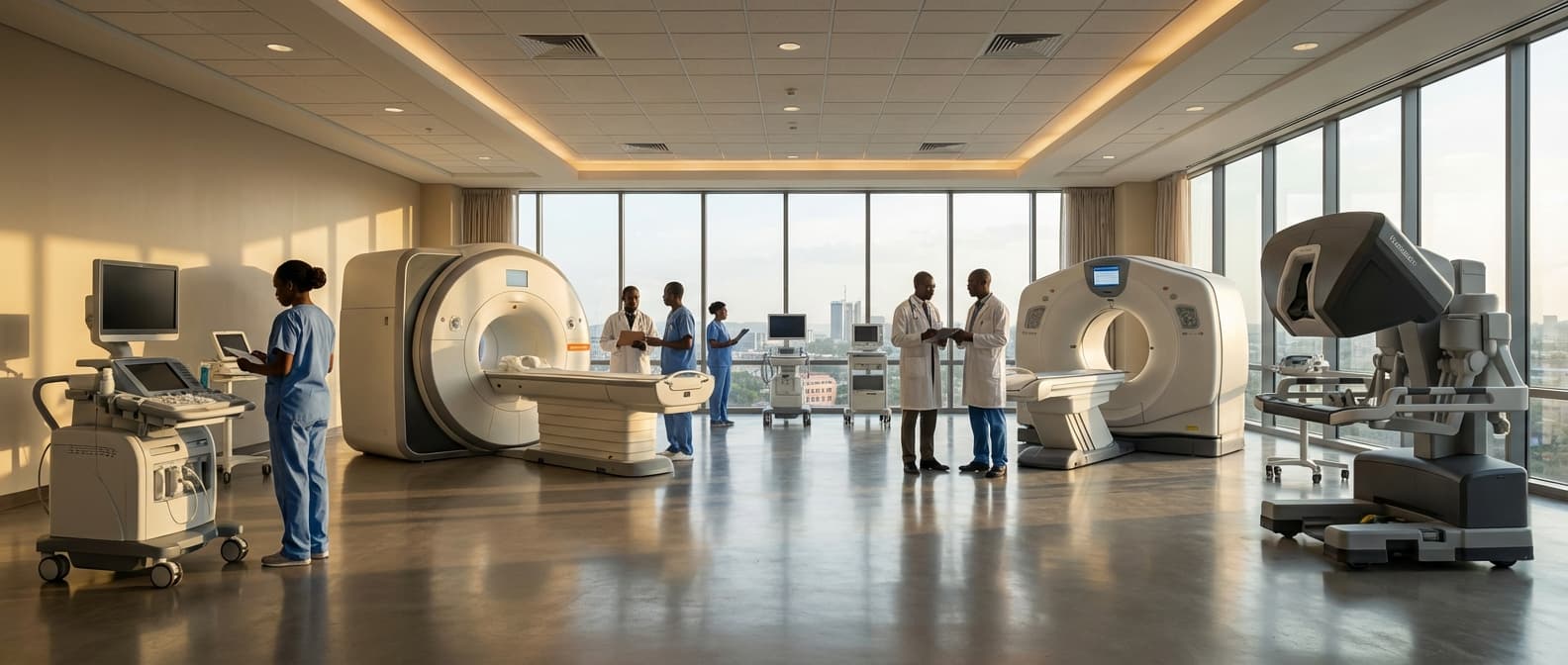
Life Support & Consumables in Libya
Engineering Excellence & Technical Support
Reliable supply of essential medical consumables and life support equipment ensuring uninterrupted, quality patient care delivery. High-standard technical execution following OEM protocols and local regulatory frameworks.
Mobile Oxygen Generation Units Deployed to Remote Areas
Successfully deployed and operationalized mobile oxygen generation units across remote and underserved regions of Libya, significantly increasing access to critical respiratory support for patients in areas with limited infrastructure.
Strategic Stockpiling and Distribution of Essential Medicines
Implemented a robust pharmaceutical supply chain management system, including strategic stockpiling and efficient distribution networks for essential medicines and medical consumables, ensuring uninterrupted availability for healthcare facilities nationwide.
Water Purification and Safe Drinking Water Initiative
Led a comprehensive initiative to provide and maintain access to safe drinking water through the deployment of portable water purification units and the distribution of essential water treatment consumables in areas facing water scarcity and contamination.
What Is Life Support & Consumables In Libya?
Life Support & Consumables in Libya refers to a critical logistical and operational service category that ensures the provision of essential resources and personnel support to organizations and individuals operating in the Libyan environment. This encompasses a wide range of items and services necessary for the sustained functioning and well-being of personnel, equipment, and facilities, particularly in contexts where local infrastructure may be limited or compromised, or where operational demands are high and remote. The service is designed to mitigate risks, enhance operational efficiency, and maintain the safety and health of deployed assets.
| Who Needs Life Support & Consumables? | Typical Use Cases in Libya | |||||
|---|---|---|---|---|---|---|
| International Organizations & NGOs: Operating humanitarian aid programs, development projects, and disaster relief efforts in remote or underserved areas. | Energy Sector Companies: Oil and gas exploration, production, and maintenance operations, often in remote or challenging terrains requiring extensive personnel and equipment support. | Government & Diplomatic Missions: Maintaining embassies, consulates, and operational detachments requiring secure and sustained resupply. | Security Companies & Private Military Contractors: Providing security services for critical infrastructure, personnel, and high-value assets. | Construction & Engineering Firms: Undertaking infrastructure development projects, often in areas with limited local capacity. | Media & Journalism Crews: Operating in potentially hazardous environments requiring logistical and safety support. | Research & Scientific Expeditions: Conducting fieldwork in remote or specialized locations. |
| Remote Site Operations: Establishing and maintaining self-sufficient bases for personnel engaged in prolonged operations far from established infrastructure. | Emergency Response & Disaster Relief: Rapid deployment and sustainment of teams in the aftermath of natural disasters or conflict, requiring immediate provision of essentials. | High-Risk Environment Operations: Ensuring the safety, health, and continued operational capacity of personnel in areas with security concerns or limited public services. | Project-Based Deployments: Supporting temporary workforces for specific projects, requiring comprehensive logistical and personnel management. | Critical Infrastructure Maintenance: Ensuring the continuous operation of essential facilities like power plants, water treatment facilities, and communication hubs. | Logistical Hub Management: Establishing and operating supply chain nodes for the efficient distribution of resources across different operational zones. | Medical Evacuation & Treatment: Facilitating the medical care and repatriation of individuals requiring specialized treatment or emergency medical services. |
Key Components of Life Support & Consumables in Libya
- Personnel Support: Provision of accommodation, catering (food and beverages), laundry, recreational facilities, and welfare services.
- Medical Support: Access to medical personnel, clinics, emergency medical equipment, pharmaceuticals, and evacuation services.
- Logistics & Supply Chain Management: Procurement, warehousing, transportation, and distribution of a wide array of consumables, including fuel, water, spare parts, office supplies, and personal protective equipment (PPE).
- Security Support: Integration of security personnel, risk assessments, secure transportation, and site security measures.
- Communication Systems: Provision and maintenance of reliable communication infrastructure, including satellite phones, internet services, and radio equipment.
- Waste Management: Safe and compliant disposal of solid, liquid, and hazardous waste.
- Power Generation & Distribution: Supply and maintenance of generators, fuel, and electrical distribution systems.
- Specialized Consumables: Depending on the operational context, this can include laboratory reagents, industrial gases, specialized chemicals, and construction materials.
Who Needs Life Support & Consumables In Libya?
Libya, a nation grappling with rebuilding infrastructure and a complex geopolitical landscape, presents a unique market for life support and consumables. The demand for these essential supplies is driven by several key sectors and entities involved in the country's recovery and ongoing operations. Understanding the specific needs and procurement processes of these target customers is crucial for any supplier.
| Customer Type | Key Departments/Units | Typical Consumables Needed | Procurement Considerations |
|---|---|---|---|
| Government Ministries | Ministry of Health, Ministry of Defense, Ministry of Interior, Ministry of Reconstruction, Ministry of Social Affairs | Medical supplies, PPE, pharmaceuticals, office supplies, fuel, maintenance parts, food rations, water purification tablets, shelter materials | Tenders, government contracts, bureaucratic processes, potential for long lead times, adherence to national regulations. |
| International Aid & NGOs | Logistics, Procurement, Field Operations, Medical Teams | Medical kits, vaccines, hygiene kits, food aid, shelter supplies, water, sanitation materials, fuel, vehicle parts | Grant-funded procurement, urgency, often international procurement standards, collaboration with local partners. |
| Energy Sector | Operations, Maintenance, Health & Safety, Logistics | Drilling fluids, lubricants, PPE (respirators, gloves, safety boots), welding supplies, cleaning agents, safety signage, first-aid supplies, fuel | Specialized requirements, strict safety protocols, long-term contracts, high value procurement, international standards. |
| Construction Companies | Site Management, Procurement, Operations | Cement, rebar, electrical components, safety harnesses, work gloves, tools, cleaning supplies, temporary shelter materials, fuel | Project-based procurement, volume orders, negotiation, on-site delivery requirements. |
| Healthcare Facilities | Pharmacy, Laboratory, Nursing, Administration, Maintenance | Syringes, bandages, IV fluids, disinfectants, lab reagents, diagnostic kits, surgical instruments, pharmaceuticals, cleaning chemicals | Regular replenishment, specialized quality control, cold chain logistics, regulatory compliance. |
| Security Forces | Logistics, Medical Units, Operations | Food rations, bottled water, medical supplies, fuel, vehicle maintenance supplies, ammunition (depending on scope), personal hygiene items | Security clearances, direct government contracts, immediate supply needs, bulk orders. |
Target Customers and Departments for Life Support & Consumables in Libya
- {"title":"Government Ministries and Agencies","description":"These are primary consumers, responsible for public services, infrastructure projects, and national security. Their needs span a wide range, from medical supplies for public health initiatives to operational consumables for security forces."}
- {"title":"International Aid Organizations & NGOs","description":"Operating on the front lines of humanitarian efforts, these organizations require significant quantities of medical consumables, food supplies, shelter materials, and hygiene products to support affected populations and displaced persons."}
- {"title":"Energy Sector (Oil & Gas)","description":"Libya's vital oil and gas industry requires a constant supply of specialized consumables for operational maintenance, safety equipment, and personnel support in remote and often challenging environments. This includes everything from drilling fluids to personal protective equipment (PPE)."}
- {"title":"Construction and Infrastructure Companies","description":"With ongoing reconstruction efforts, these companies need a steady stream of consumables for building materials, tools, safety gear, and site management. This can also extend to consumables for temporary housing and facilities."}
- {"title":"Healthcare Facilities (Hospitals & Clinics)","description":"Public and private healthcare providers are in perpetual need of a vast array of medical consumables, pharmaceuticals, laboratory supplies, and equipment maintenance materials to deliver essential healthcare services."}
- {"title":"Security Forces (Military & Police)","description":"National security forces require consumables for their operations, including food, water, medical supplies for field medics, ammunition (where applicable), and maintenance supplies for vehicles and equipment."}
- {"title":"Logistics and Transportation Companies","description":"These companies, essential for moving goods within Libya, require consumables for their fleets (fuel, oil, parts), as well as for their operational bases and personnel."}
- {"title":"Research and Educational Institutions","description":"While perhaps a smaller segment, these institutions may require laboratory consumables, office supplies, and general operational materials for their functions."}
Life Support & Consumables Process In Libya
This document outlines the typical workflow for Life Support and Consumables procurement and execution in Libya, encompassing the process from initial inquiry to the final delivery and utilization of goods and services. The Libyan operational environment often presents unique logistical challenges, requiring a robust and well-defined process to ensure timely and efficient support for personnel and operations.
| Stage | Description | Key Activities | Responsible Parties | Potential Challenges/Considerations (Libya) |
|---|---|---|---|---|
| Inquiry & Needs Assessment | Identifying the specific life support and consumable requirements. | Detailed specification of items (food, water, medical supplies, fuel, maintenance parts, accommodation, etc.), quantity, quality standards, delivery timelines. | Requester (Operations/Project Team), Procurement Department | Accurate forecasting, understanding of local availability, budget constraints. |
| Vendor Identification & Qualification | Finding and vetting potential suppliers capable of meeting the requirements. | Market research, pre-qualification questionnaires, financial checks, past performance review, site visits (if feasible). | Procurement Department, Legal Department | Limited number of qualified local vendors, vetting through established networks, political stability impacting vendor reliability. |
| Quotation & Proposal Submission | Receiving detailed offers from qualified vendors. | Issuing Request for Quotation (RFQ) or Request for Proposal (RFP), vendors submitting pricing, lead times, technical specifications, terms and conditions. | Procurement Department, Vendors | Currency fluctuations, ensuring all required documentation is provided, language barriers. |
| Technical & Commercial Evaluation | Assessing the submitted offers against predefined criteria. | Comparing prices, quality, delivery schedules, vendor capacity, compliance with specifications. Conducting site visits or factory inspections if necessary. | Technical Team, Procurement Department, Finance Department | Objective evaluation in a complex market, potential for inflated pricing, ensuring quality standards are met. |
| Contract Negotiation & Award | Finalizing terms and conditions and selecting the preferred vendor. | Negotiating price, payment terms, delivery, warranties, liquidated damages. Drafting and signing the contract/Purchase Order. | Procurement Department, Legal Department, Finance Department, Selected Vendor | Enforcing contract terms, dispute resolution, understanding local contract law. |
| Order Placement & Proforma Invoice | Formalizing the purchase and receiving initial financial documentation. | Issuing a Purchase Order (PO) or signing a contract. Vendor issues a Proforma Invoice for advance payment or letter of credit. | Procurement Department, Finance Department, Selected Vendor | Securing financing, bank transfer complexities, ensuring correct details on the Proforma Invoice. |
| Pre-Shipment Inspection & Documentation | Verifying the goods before shipment to ensure compliance. | Inspection by a third-party agency or client representative, checking quality, quantity, packaging. Gathering all necessary shipping documents (commercial invoice, packing list, certificate of origin, Bill of Lading/Air Waybill). | Quality Assurance Team, Logistics Department, Vendor | Accessibility of inspection points, ensuring authenticity of documentation, potential for delays in obtaining certificates. |
| Logistics & Transportation (Inbound) | Moving the goods from the vendor's location to Libya. | Arranging sea freight, air freight, or land transportation. Tracking shipments, coordinating with freight forwarders. | Logistics Department, Freight Forwarders, Vendor | Limited transportation infrastructure, security concerns impacting routes, availability of suitable carriers, port congestion. |
| Customs Clearance & Importation | Navigating Libyan customs regulations to import the goods. | Submitting import declarations, paying duties and taxes, obtaining import permits, working with customs brokers. | Logistics Department, Customs Brokers, Relevant Libyan Authorities | Complex and often changing customs procedures, potential for arbitrary fees or delays, corruption risks, need for local expertise. |
| Receiving & Inventory Management | Accepting the goods and recording them in the inventory system. | Unloading, inspecting upon arrival, quantity verification, damage assessment, entering into inventory management software. | Warehouse Management, Logistics Department, Requester | Inadequate storage facilities, inventory discrepancies, potential for pilferage, temperature-controlled storage requirements. |
| Distribution & Issuance | Delivering consumables and providing life support services to end-users. | Issuing items from the warehouse, managing requests, coordinating delivery to remote sites, facilitating services (e.g., catering, accommodation). | Warehouse Management, Site Logistics Teams, End-Users | Last-mile delivery challenges, security for distribution routes, ensuring fair allocation of resources. |
| Usage Monitoring & Reporting | Tracking the consumption of goods and the delivery of services. | Collecting usage data, generating reports on stock levels, consumption rates, service delivery status. Identifying any discrepancies or needs for replenishment. | Inventory Management, Operations Management, Requester | Accuracy of data collection, ensuring accountability for usage, managing wastage. |
| Payment & Closeout | Finalizing payments to vendors and closing out contracts. | Processing invoices, verifying delivery and service completion, making final payments, conducting contract closeout procedures. | Finance Department, Procurement Department, Vendors | Timely payment processing, ensuring all contractual obligations are met, managing currency conversion for international payments. |
Key Stages in the Life Support & Consumables Process:
- Inquiry & Needs Assessment
- Vendor Identification & Qualification
- Quotation & Proposal Submission
- Technical & Commercial Evaluation
- Contract Negotiation & Award
- Order Placement & Proforma Invoice
- Pre-Shipment Inspection & Documentation
- Logistics & Transportation (Inbound)
- Customs Clearance & Importation
- Receiving & Inventory Management
- Distribution & Issuance
- Usage Monitoring & Reporting
- Payment & Closeout
Life Support & Consumables Cost In Libya
Libya's economy, heavily reliant on oil revenue, significantly impacts the cost of life support and consumables. Fluctuations in global oil prices, currency exchange rates (primarily the Libyan Dinar - LYD), and import/export policies all play a crucial role in determining the pricing of essential goods. Internal factors such as security, distribution networks, and regional market dynamics also contribute to the price variations observed across the country. While official government subsidies on certain staples aim to keep prices affordable, black market activities and logistical challenges can lead to higher costs, especially outside major urban centers like Tripoli and Benghazi. The availability of foreign currency is a key determinant for importers, influencing the landed cost of goods and subsequently the retail price. Local production capacity for certain consumables also affects pricing, with domestically produced goods generally being more affordable than imported ones.
| Consumable Category | Typical Price Range (LYD) - Low | Typical Price Range (LYD) - High | Notes |
|---|---|---|---|
| Bread (Basic Loaf) | 0.50 | 2.00 | Price can vary by size and type. Heavily subsidized in many areas. |
| Rice (1kg) | 3.00 | 8.00 | Imported rice can be more expensive. Availability can fluctuate. |
| Cooking Oil (1L) | 4.00 | 10.00 | Depends on brand and origin (imported vs. local). |
| Milk (1L - UHT) | 3.00 | 7.00 | Imported brands are often pricier. Fresh milk availability is regional. |
| Eggs (1 Dozen) | 5.00 | 12.00 | Domestic production is common, but costs can rise with feed prices. |
| Bottled Water (1.5L) | 1.00 | 3.00 | Widely available, price often linked to brand and location. |
| Basic Medicines (e.g., Pain Relievers) | 2.00 | 15.00 | Varies greatly by type and brand. Imported pharmaceuticals can be expensive. |
| Diapers (Pack of 20-30) | 20.00 | 50.00 | Largely imported, price sensitive to exchange rates and tariffs. |
| Canned Goods (e.g., Tuna, Beans - per can) | 2.00 | 6.00 | Imported variety, prices depend on brand and type. |
| Fresh Vegetables (e.g., Tomatoes - 1kg) | 2.00 | 7.00 | Seasonal and regional, influenced by local farming and transport costs. |
| Fresh Fruit (e.g., Bananas - 1kg) | 3.00 | 8.00 | Seasonal and regional, import costs can be significant. |
| Fuel (Gasoline - per liter) | 0.20 | 0.50 | Highly subsidized by the government, prices are very low. |
| Kerosene (per liter) | 0.25 | 0.60 | Also subsidized, primarily used for cooking and heating. |
| Propane Gas Cylinder (for cooking) | 10.00 | 25.00 | Price can vary based on location and availability of regulated supply. |
Key Pricing Factors for Life Support & Consumables in Libya
- Global Oil Price Fluctuations
- Libyan Dinar (LYD) Exchange Rate
- Import/Export Policies and Tariffs
- Government Subsidies on Essential Goods
- Security Situation and Logistics
- Distribution Network Efficiency
- Regional Market Dynamics and Competition
- Availability of Foreign Currency for Imports
- Domestic Production Capacity
- Black Market Activities and Smuggling
Affordable Life Support & Consumables Options
Navigating the landscape of life support and consumables can be daunting, especially when managing budgets. Fortunately, there are numerous avenues to explore for affordable options and strategic cost savings. Understanding value bundles, prioritizing essential items, and leveraging bulk purchasing or subscription models can significantly reduce expenses without compromising on quality or availability. This guide explores these strategies, providing actionable insights for individuals and organizations alike.
| Strategy | Description | Potential Savings | Considerations |
|---|---|---|---|
| Value Bundles | Purchasing a collection of related items (e.g., oxygen concentrator with filters, tubing, and masks) at a reduced price compared to individual purchases. | 10-25% on average, depending on the bundle. | Ensure all included items are necessary and of good quality. Compare bundle price to individual item costs. |
| Bulk Purchasing | Buying consumables (e.g., sterile wipes, gloves, syringes) in larger quantities, often from wholesale distributors. | 5-15% per unit, increasing with volume. | Requires adequate storage space and consideration for shelf life. Risk of obsolescence if demand fluctuates. |
| Subscription Services | Setting up automatic, recurring deliveries of frequently used consumables or rental agreements for equipment. | Can range from 5-20% discount on recurring orders. Predictable budgeting. | Commitment to a specific supplier. Ensure flexibility for changing needs. Evaluate cancellation policies. |
| Generic/House Brands | Opting for store-brand or less-established manufacturer alternatives to premium-priced name brands. | 15-40% savings on individual items. | Verify quality and regulatory compliance. Read reviews and seek professional recommendations. May not be suitable for all critical applications. |
| Rental vs. Purchase (Equipment) | Renting high-cost, infrequently used equipment (e.g., specialized monitors, mobility aids) instead of purchasing outright. | Significant upfront savings. Avoids depreciation and maintenance costs for rented items. | Long-term rentals can become more expensive than purchasing. Ensure availability and timely delivery of rented equipment. |
Key Cost-Saving Strategies
- Value Bundling: Acquiring multiple related items as a package deal.
- Bulk Purchasing: Buying larger quantities to leverage lower per-unit costs.
- Subscription Services: Setting up recurring deliveries for regular needs.
- Generic vs. Brand Name: Comparing the cost-effectiveness of less-known brands.
- Inventory Management: Minimizing waste and avoiding overstocking.
- Supplier Negotiation: Exploring discounts and favorable payment terms.
- Refurbished/Reconditioned Equipment: Considering pre-owned, certified options for durable goods.
- Smart Ordering: Ordering just enough to prevent spoilage or obsolescence.
- Preventative Maintenance: Extending the life of equipment to delay replacement costs.
Verified Providers In Libya
Navigating the healthcare landscape in Libya can be challenging. Ensuring you are receiving care from verified and reputable providers is paramount for your well-being. Franance Health stands out as a leading organization dedicated to connecting individuals with the highest quality, credentialed healthcare professionals across Libya. Our rigorous vetting process ensures that every provider listed on our platform meets stringent standards, offering you peace of mind and access to exceptional medical services.
| Provider Type | Key Credentials Verified | Franance Health Assurance |
|---|---|---|
| General Practitioners | Medical Degree, Libyan Medical License, Registration with Ministry of Health | Verified licensure, continuous professional development review |
| Specialist Physicians (e.g., Cardiologists, Oncologists) | Medical Degree, Specialty Board Certification, Libyan Medical License, Hospital Affiliation | Verification of specialty training, peer review of practice history |
| Surgeons | Medical Degree, Surgical Residency Completion, Specialty Board Certification, Libyan Medical License, Operating Privileges | Confirmation of surgical expertise, review of surgical outcomes (where available) |
| Diagnostic Centers (Laboratories, Imaging) | Accreditation by relevant Libyan health authorities, qualified technical staff | Ensured adherence to international diagnostic standards, regular quality control checks |
| Hospitals & Clinics | Licensing from Ministry of Health, adherence to safety and hygiene standards, qualified medical staff | Facility inspection, verification of medical equipment and protocols |
Why Franance Health Credentials Matter:
- Uncompromising Quality: We meticulously verify the qualifications, licenses, and certifications of all our healthcare providers. This commitment to quality assurance means you can trust that you are in capable hands.
- Specialized Expertise: Our network encompasses a wide range of medical specialties, from general practitioners to highly specialized surgeons and diagnosticians. We help you find the right expert for your specific needs.
- Patient-Centric Approach: Franance Health prioritizes your experience. We facilitate seamless appointment booking, clear communication, and access to providers who are dedicated to your care and recovery.
- Trust and Transparency: Our transparent credentialing process builds trust. We provide you with the information you need to make informed decisions about your healthcare choices.
- Accessibility: We aim to make quality healthcare accessible throughout Libya, breaking down barriers and connecting you with the best available medical talent.
Scope Of Work For Life Support & Consumables
This Scope of Work (SOW) outlines the requirements for the provision of Life Support and Consumables for [Project Name/Location]. It details the technical deliverables, standard specifications, and operational requirements to ensure the health, safety, and well-being of personnel and the operational continuity of the project.
| Category | Technical Deliverable | Standard Specification/Requirement | Quantity/Frequency | Acceptance Criteria |
|---|---|---|---|---|
| Water Supply | Potable Water | Meets WHO/local drinking water standards (e.g., tested monthly, free from contaminants). | Minimum 5 liters per person per day. | Water quality reports submitted weekly. Visual inspection for clarity and odor. |
| Water Supply | Sanitation Facilities | Adequate number of functional toilets and showers, maintained to hygienic standards. Regular disinfection and waste removal. | 1 toilet per 10 persons, 1 shower per 15 persons. Daily cleaning and waste removal. | Daily inspection logs for cleanliness. No offensive odors. |
| Food & Catering | Catering Services | Nutritious, varied, and culturally appropriate meals. Compliance with food safety and hygiene standards (HACCP). | 3 meals per day per person, with provision for special dietary needs (allergies, religious). | Monthly menu review. Regular food safety audits. Complaint log management. |
| Waste Management | General Waste Disposal | Collection and disposal of non-hazardous waste at designated sanitary landfill sites. | Daily collection from designated points. Segregation of recyclables. | Proof of disposal from authorized waste management facility. Reduced landfill volume through recycling. |
| Waste Management | Hazardous Waste Management | Safe collection, storage, transport, and disposal of hazardous materials (medical waste, chemicals) according to local and international regulations. | As generated. Proper labeling and containment. | Manifests for hazardous waste transport. Certification of disposal by licensed facility. |
| Medical Services | Medical Supplies | Comprehensive stock of first-aid and emergency medical supplies, meeting international standards for field operations. | Stock levels reviewed quarterly. Expiry date management. | Inventory reports submitted quarterly. All supplies within expiry dates. |
| Medical Services | Emergency Response | Availability of trained first responders and communication protocols for medical emergencies. | Minimum 1 certified first responder per 20 personnel on site at all times. | Proof of certification for responders. Documented emergency contact procedures. |
| Consumables | General Consumables | Supply of essential consumables including cleaning supplies, office supplies, personal hygiene items, and basic maintenance materials. | Based on site-specific consumption rates, with a buffer stock of 20%. | Inventory management system. Stock takes conducted monthly. |
| Consumables | PPE | Provision and maintenance of appropriate Personal Protective Equipment (PPE) as per site risk assessments. | As required by job function and risk assessment. Regular inspection for damage. | PPE inventory. Safety officer sign-off on suitability and condition. |
Key Areas Covered
- Provision of potable water and sanitation facilities.
- Supply of food and catering services.
- Management of waste disposal and hazardous materials.
- Provision of medical supplies and emergency response capabilities.
- Supply of general consumables and maintenance materials.
- Ensuring compliance with all relevant health, safety, and environmental regulations.
Service Level Agreement For Life Support & Consumables
This Service Level Agreement (SLA) outlines the agreed-upon service levels for the provision of Life Support & Consumables, including response times for critical issues and uptime guarantees for essential services. This SLA is an addendum to the Master Service Agreement (MSA) between [Your Company Name] and [Client Company Name].
| Service Component | Uptime Guarantee | Critical Issue Response Time (within business hours) | Critical Issue Response Time (outside business hours) | Notification Period for Scheduled Maintenance |
|---|---|---|---|---|
| Life Support Device Functionality (e.g., ventilators, infusion pumps) | 99.9% | 15 minutes | 30 minutes | 48 hours |
| Essential Consumables Availability (e.g., sterile dressings, IV fluids for immediate use) | 99.5% | 30 minutes | 60 minutes | 24 hours |
| Monitoring & Alarm Systems for Life Support | 99.9% | 10 minutes | 20 minutes | 48 hours |
Key Definitions
- Critical Issue: Any malfunction or interruption of Life Support & Consumables that directly impacts patient safety or the ability to provide essential life support functions. This includes, but is not limited to, complete failure of a life-sustaining device or a critical shortage of essential consumables required for immediate patient care.
- Downtime: Any period during which the Life Support & Consumables service is unavailable or not functioning as intended, rendering it unusable for its intended purpose.
- Response Time: The maximum time allowed from the initial reporting of an issue to the commencement of troubleshooting or resolution efforts by [Your Company Name]'s technical support team.
- Uptime Guarantee: The percentage of time the Life Support & Consumables service is available and functioning as intended.
- Scheduled Maintenance: Pre-announced periods of planned downtime for system updates, upgrades, or preventative maintenance, which will be communicated in advance.
Frequently Asked Questions

Ready when you are
Let's scope your Life Support & Consumables in Libya project in Libya.

Scaling healthcare logistics and technical systems across the entire continent.