
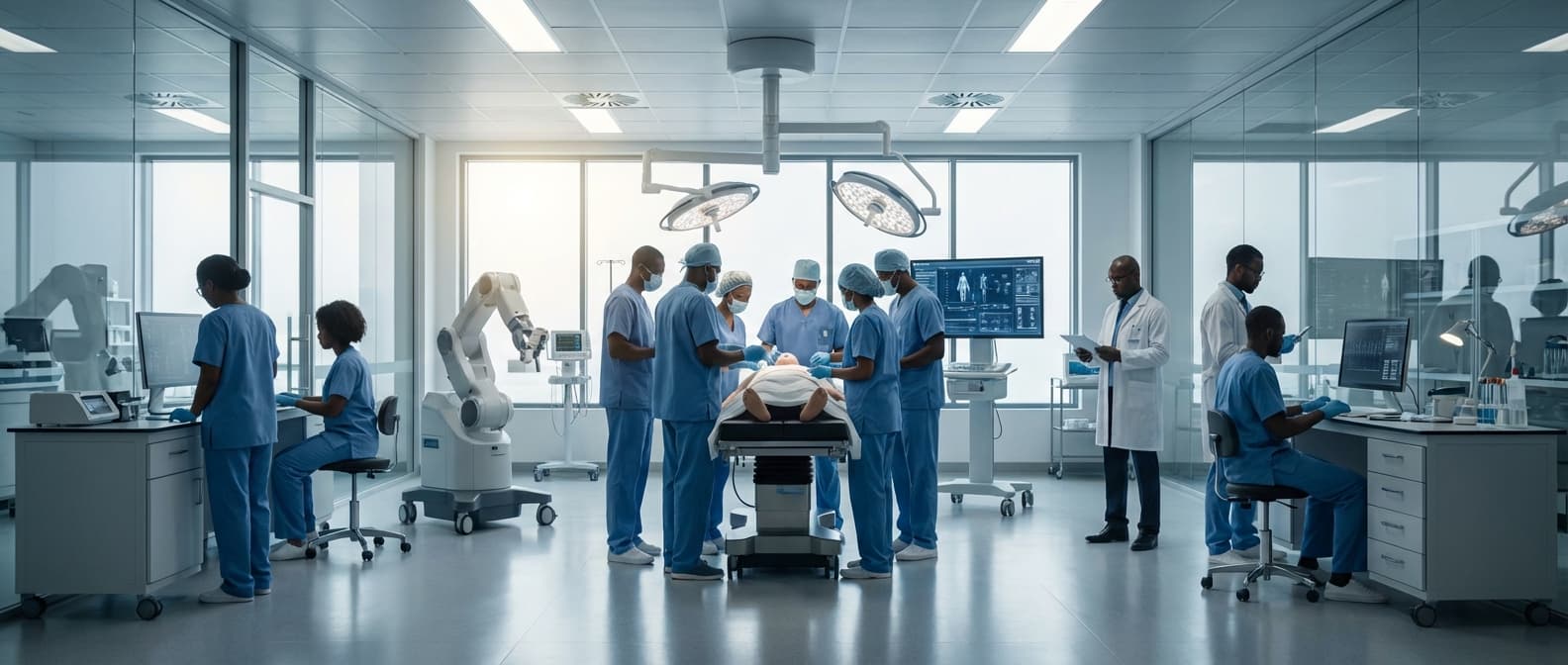
Managed Equipment Service (MES) in Libya
Engineering Excellence & Technical Support
Long‑term equipment provision with uptime SLAs and lifecycle management. High-standard technical execution following OEM protocols and local regulatory frameworks.
Remote Diagnostics & Predictive Maintenance
Leveraging advanced IoT sensors and AI-driven analytics, our MES provides real-time performance monitoring and predictive maintenance for critical equipment in Libya. This proactive approach minimizes unplanned downtime, optimizes operational efficiency, and reduces costly emergency repairs across diverse industries like oil & gas and power generation.
Streamlined Spare Parts Management & Logistics
Our MES in Libya implements a robust, digitized spare parts inventory system coupled with optimized logistics. This ensures timely availability of genuine parts, reduces carrying costs for clients, and mitigates supply chain disruptions often encountered in the region, guaranteeing continuous equipment operation and faster response times.
Technical Expertise & Localized Support Network
We provide Libyan-based certified technicians equipped with specialized training and local market knowledge. Our MES ensures on-site technical support, rapid fault diagnosis, and efficient repair services, fostering a strong local presence and understanding of the unique operational challenges and environmental conditions faced by our clients in Libya.
What Is Managed Equipment Service (Mes) In Libya?
Managed Equipment Service (MES) in Libya refers to a comprehensive outsourced service model where a third-party provider assumes responsibility for the procurement, installation, maintenance, operation, and eventual disposal of specialized equipment for an organization. This service is particularly relevant in sectors requiring significant capital investment in complex machinery, such as oil and gas, healthcare, and industrial manufacturing. MES shifts the burden of capital expenditure (CapEx) to operational expenditure (OpEx), allowing clients to focus on their core competencies while leveraging expert management of their essential asset base. The service contract typically includes defining Service Level Agreements (SLAs) that specify performance metrics, uptime guarantees, and response times for maintenance and repairs.
| Who Needs MES in Libya? | Typical Use Cases | ||||||
|---|---|---|---|---|---|---|---|
| Oil and Gas Sector: Companies involved in exploration, production, refining, and petrochemicals requiring specialized drilling rigs, pumps, compressors, processing units, and laboratory equipment. | Healthcare Sector: Hospitals and clinics needing advanced medical imaging devices (MRI, CT scanners), surgical equipment, laboratory analyzers, and patient monitoring systems. | Industrial Manufacturing: Factories and production facilities requiring heavy machinery, automated production lines, specialized tools, and quality control equipment. | Infrastructure Development: Organizations involved in construction and maintenance projects requiring heavy construction equipment (cranes, excavators) and specialized testing apparatus. | Energy Sector: Power generation plants (thermal, renewable) requiring turbines, generators, control systems, and maintenance equipment. | Telecommunications: Companies needing network infrastructure, transmission equipment, and specialized testing tools. | Research and Development Institutions: Facilities requiring sophisticated scientific instruments and experimental apparatus. | |
| Long-Term Rental of Critical Equipment: Providing access to specialized machinery without the large upfront capital investment. | Ensuring High Equipment Uptime and Reliability: Guaranteeing that essential operational assets are consistently available and performing at peak capacity. | Access to Specialized Expertise: Leveraging the knowledge and experience of third-party technicians for complex equipment maintenance and repair. | Cost Predictability and Control: Shifting variable maintenance costs to a fixed operational expenditure, improving budgeting accuracy. | Focus on Core Business Operations: Freeing up internal resources and management attention to concentrate on strategic objectives rather than equipment management. | Compliance and Regulatory Adherence: Ensuring that equipment meets industry standards and environmental regulations throughout its lifecycle. | Technology Modernization: Facilitating the adoption of newer, more efficient technologies without significant CapEx hurdles. | Risk Mitigation: Transferring the operational and maintenance risks associated with specialized equipment to the service provider. |
Key Components of Managed Equipment Service (MES) in Libya
- Equipment Acquisition and Procurement: Sourcing and purchasing of the necessary equipment, often including negotiation of favorable terms and financing.
- Installation and Commissioning: Expert setup, calibration, and testing of equipment to ensure optimal performance and integration with existing infrastructure.
- Preventive and Corrective Maintenance: Proactive scheduled maintenance to minimize downtime, and rapid response to unscheduled equipment failures.
- Technical Support and Troubleshooting: Provision of skilled technicians for on-site or remote support and issue resolution.
- Inventory Management: Management of spare parts and consumables to ensure availability and reduce lead times.
- Performance Monitoring and Optimization: Continuous tracking of equipment performance against defined KPIs and implementation of strategies for efficiency improvements.
- Technology Upgrades and Obsolescence Management: Planning and execution of technology refreshes and managing the end-of-life of equipment.
- Training and Skill Development: Providing training to client personnel on equipment operation and basic maintenance.
- Reporting and Analytics: Regular reporting on equipment status, maintenance activities, costs, and performance metrics.
- Asset Lifecycle Management: Overseeing the entire lifecycle of the equipment, from acquisition to disposal, including compliance with environmental regulations.
Who Needs Managed Equipment Service (Mes) In Libya?
Managed Equipment Service (MES) offers a comprehensive solution for organizations in Libya to effectively manage, maintain, and optimize their critical equipment. This service is particularly beneficial for entities that rely heavily on specialized machinery, diagnostics, or imaging technologies but may lack the in-house expertise, resources, or desire to handle the full lifecycle of these assets. MES providers take on the responsibility of procurement, installation, maintenance, repair, training, and eventual replacement of equipment, allowing clients to focus on their core operations. This approach can lead to significant cost savings, improved equipment uptime, access to the latest technology, and reduced operational burden.
| Sector/Industry | Target Customers | Key Departments/Areas of Need | Examples of Equipment |
|---|---|---|---|
| Healthcare Sector | Hospitals (public and private), Specialized Clinics, Diagnostic Centers | Radiology, Cardiology, Pathology, Operating Theatres, Intensive Care Units (ICUs), Emergency Departments | MRI machines, CT scanners, X-ray machines, Ultrasound devices, Endoscopy equipment, Laboratory analyzers, Ventilators, Anesthesia machines |
| Industrial and Manufacturing | Factories, Production Facilities, Construction Companies | Production Lines, Quality Control, Maintenance Departments, Engineering Workshops | CNC machines, Industrial robots, Heavy machinery (e.g., cranes, excavators), Specialized assembly equipment, Testing and measurement instruments |
| Oil and Gas | Exploration and Production Companies, Refineries, Petrochemical Plants | Drilling Operations, Production Facilities, Maintenance and Inspection, Laboratory Services | Drilling rigs, seismic equipment, processing units, analytical instruments, safety equipment |
| Research and Development Institutions | Universities, Scientific Research Centers, Pharmaceutical Labs | Laboratories, Testing Facilities, Scientific Equipment Management | Spectrometers, Microscopes, Chromatographs, Gene sequencers, Specialized laboratory equipment |
| Telecommunications | Telecommunication Providers, Network Infrastructure Companies | Network Operations Centers (NOCs), Field Maintenance, Technical Support | Base station equipment, testing and measurement tools for network infrastructure, specialized diagnostic equipment |
Target Customers and Departments in Libya for Managed Equipment Service (MES)
- Healthcare Sector
- Industrial and Manufacturing
- Oil and Gas
- Research and Development Institutions
- Telecommunications
Managed Equipment Service (Mes) Process In Libya
The Managed Equipment Service (MES) process in Libya outlines the comprehensive workflow for procuring, installing, maintaining, and ultimately managing specialized medical equipment within healthcare facilities. This process is designed to ensure optimal equipment utilization, cost-effectiveness, and the delivery of high-quality patient care through reliable and advanced technology. It typically involves multiple stakeholders, including healthcare providers, the MES provider, and potentially government regulatory bodies.
| Key Stakeholders | Primary Responsibilities | Potential Challenges in Libya |
|---|---|---|
| Healthcare Facility (Hospital/Clinic) | Identify needs, provide access for installation & maintenance, utilize equipment, provide feedback. | Bureaucratic hurdles, access to remote areas, limited local technical expertise, budget constraints. |
| MES Provider | Propose, procure, install, train, maintain, monitor, upgrade, and manage equipment lifecycle. | Import/customs complexities, logistical challenges, currency fluctuations, political instability, security concerns. |
| Government/Regulatory Bodies | Approve import licenses, ensure compliance with health standards, facilitate customs clearance. | Lengthy approval processes, changing regulations, potential for corruption. |
| Patients | Benefit from improved healthcare services due to reliable and advanced equipment. | Indirect impact: improved access to diagnostics and treatment. |
Managed Equipment Service (MES) Process Workflow in Libya
- {"step":1,"title":"Inquiry & Needs Assessment","description":"Initial contact from a healthcare facility (hospital, clinic) expressing interest in MES. This involves understanding their current equipment status, identifying gaps, and assessing future needs based on service lines and patient demographics."}
- {"step":2,"title":"Proposal Development & Submission","description":"The MES provider analyzes the needs assessment and develops a customized proposal. This includes equipment specifications, service level agreements (SLAs), pricing models (e.g., per-procedure, fixed fee), training plans, and project timelines."}
- {"step":3,"title":"Negotiation & Contract Finalization","description":"Discussions between the healthcare facility and the MES provider to refine the proposal, negotiate terms, and finalize the contract. This stage is crucial for ensuring mutual understanding and commitment."}
- {"step":4,"title":"Equipment Procurement & Logistics","description":"Once the contract is signed, the MES provider procures the specified equipment. This includes managing import regulations, customs clearance, and transportation to the designated healthcare facility in Libya."}
- {"step":5,"title":"Installation & Commissioning","description":"Skilled technicians from the MES provider install and commission the equipment. This involves setting up, calibrating, and testing the equipment to ensure it meets manufacturer specifications and operational readiness."}
- {"step":6,"title":"Staff Training & Capacity Building","description":"Comprehensive training programs are delivered to the healthcare facility's clinical and technical staff. This ensures they can operate the equipment safely and effectively, perform basic maintenance, and understand troubleshooting procedures."}
- {"step":7,"title":"Ongoing Maintenance & Support","description":"The MES provider is responsible for scheduled preventive maintenance, unscheduled repairs, and providing technical support 24/7. This includes prompt response times as per the SLA."}
- {"step":8,"title":"Performance Monitoring & Reporting","description":"Regular monitoring of equipment performance, utilization rates, and service response times. The MES provider submits periodic reports to the healthcare facility, detailing key performance indicators (KPIs) and any service interventions."}
- {"step":9,"title":"Equipment Upgrades & Replacements","description":"As technology evolves or equipment reaches the end of its lifecycle, the MES provider plans and executes upgrades or replacements to ensure the facility maintains access to state-of-the-art technology. This is often a contractual obligation within the MES agreement."}
- {"step":10,"title":"Contract Review & Renewal","description":"Towards the end of the contract term, a comprehensive review is conducted to assess the success of the MES partnership, discuss potential renewals, or explore new service requirements."}
Managed Equipment Service (Mes) Cost In Libya
Managed Equipment Service (MES) in Libya, while still an emerging concept in many sectors, involves outsourcing the management and maintenance of specialized equipment. The cost of MES in Libya is subject to a range of influencing factors, making it difficult to provide precise figures without a detailed scope of work. However, we can outline the key pricing determinants and offer estimated ranges in Libyan Dinar (LYD).
| Equipment Category (Examples) | Estimated Monthly MES Cost Range (LYD) | Notes |
|---|---|---|
| Medical Equipment (e.g., X-ray, MRI, CT Scanners) | 15,000 - 50,000+ | Highly specialized, requires expert technicians and critical uptime. Costs vary greatly based on the complexity and number of machines. |
| Industrial Machinery (e.g., manufacturing, construction equipment) | 8,000 - 30,000+ | Depends on the type of machinery, operational hours, and the scope of preventive and corrective maintenance required. |
| IT Infrastructure (e.g., servers, network devices, workstations) | 5,000 - 20,000+ | Covers hardware maintenance, software updates, network monitoring, and potentially helpdesk support. |
| Laboratory Equipment (e.g., analytical instruments, testing devices) | 7,000 - 25,000+ | Precision equipment requires calibration and specialized maintenance. Costs increase with the sophistication and volume of instruments. |
| Fleet Management (e.g., vehicles, heavy-duty trucks) | Negotiable per vehicle/unit | Often a per-unit cost for maintenance, repairs, and potentially telematics. Can range from a few hundred to a few thousand LYD per vehicle per month depending on usage and type. |
Key Pricing Factors for MES in Libya
- Type and Volume of Equipment: The complexity, age, and quantity of the equipment are primary cost drivers. High-value, specialized, or a large number of units will naturally increase the MES cost.
- Scope of Services: This includes the level of maintenance (preventive, corrective, predictive), the availability of spare parts, on-site versus off-site support, and the inclusion of training and upgrades.
- Service Level Agreements (SLAs): The guaranteed uptime, response times for breakdowns, and reporting requirements directly impact the cost. More stringent SLAs command higher prices.
- Location and Accessibility: Remote or difficult-to-access locations in Libya can lead to increased logistical costs for technicians and parts, thus affecting the overall MES pricing.
- Vendor Expertise and Reputation: Established MES providers with a proven track record and specialized knowledge in specific equipment categories may charge a premium.
- Contract Duration: Longer-term contracts often come with discounted rates as they offer stability and predictability for the service provider.
- Spare Parts Management: Whether spare parts are included in the MES contract, and the agreed-upon inventory levels, significantly influence costs.
- Technology and Software: If the MES involves advanced monitoring software, IoT integration, or specialized diagnostic tools, this will add to the overall expense.
- Risk Mitigation and Insurance: The provider's approach to risk management and the insurance they carry can be factored into the pricing.
- Economic and Political Stability: Libya's economic conditions, currency fluctuations, and political landscape can introduce volatility and influence pricing strategies for service providers looking to mitigate perceived risks.
Affordable Managed Equipment Service (Mes) Options
Navigating the landscape of Managed Equipment Service (MES) can seem daunting, especially when budget is a primary concern. However, numerous affordable options exist that can significantly reduce operational costs and improve equipment uptime. Understanding value bundles and implementing strategic cost-saving measures are key to maximizing your MES investment.
| Bundle Type | Key Features | Cost-Saving Benefit | Ideal For |
|---|---|---|---|
| Basic PM & Repair | Scheduled preventive maintenance, on-demand corrective maintenance. | Reduces emergency repair costs, extends equipment life. | Organizations with predictable usage and moderate equipment complexity. |
| Comprehensive Support | Includes PM, repair, parts management, remote monitoring. | Minimizes downtime, optimizes parts inventory, proactive issue resolution. | Critical operations requiring high uptime and advanced support. |
| Performance-Based | Service linked to equipment uptime or specific performance metrics. | Directly ties service cost to operational efficiency and reliability. | Organizations focused on measurable outcomes and ROI. |
| Customized Solutions | Tailored to specific equipment types, usage patterns, and facility needs. | Ensures you only pay for the services you truly need, avoiding unnecessary costs. | Unique or specialized equipment needs, or diverse operational environments. |
Key MES Value Bundles & Cost-Saving Strategies
- {"title":"Understanding MES Value Bundles","description":"Value bundles are pre-packaged service offerings designed to provide comprehensive support at a predictable cost. They often combine essential services, offering a more integrated and cost-effective solution than procuring individual services separately."}
- {"title":"Common MES Value Bundle Components","description":"These bundles typically include a mix of the following, tailored to your specific needs:"}
- {"title":"Preventive Maintenance Programs","description":"Regularly scheduled maintenance to identify and address potential issues before they lead to costly breakdowns. This is foundational to extending equipment lifespan and minimizing unexpected repair expenses."}
- {"title":"Corrective Maintenance & Repair","description":"On-demand repair services when equipment failures occur. Bundles often include guaranteed response times and labor coverage."}
- {"title":"Parts Management & Inventory","description":"Strategic management of spare parts, ensuring availability of critical components while minimizing overstocking and associated carrying costs. Some bundles include guaranteed part availability."}
- {"title":"Remote Monitoring & Diagnostics","description":"Utilizing technology to monitor equipment performance remotely, enabling early detection of anomalies and proactive interventions. This reduces the need for on-site visits for minor issues."}
- {"title":"Training & Skill Development","description":"Providing training for your in-house technicians on specific equipment, empowering them to handle routine tasks and basic troubleshooting, thereby reducing reliance on external service calls."}
- {"title":"Software Updates & Upgrades","description":"Ensuring equipment software is up-to-date to maintain optimal performance, security, and access to new features. Bundles may include management of these updates."}
- {"title":"Cost-Saving Strategies for MES","description":"Beyond choosing the right bundle, several strategies can further reduce your MES expenditure:"}
- {"title":"Tiered Service Level Agreements (SLAs)","description":"Negotiate SLAs based on the criticality of your equipment. Essential equipment may require premium response times, while less critical assets can have longer response windows, leading to cost savings."}
- {"title":"Consolidated Vendor Relationships","description":"Partnering with a single MES provider for multiple equipment types or facilities can often unlock volume discounts and simplify contract management."}
- {"title":"Performance-Based Contracts","description":"Explore contracts where a portion of the service provider's payment is tied to achieving specific performance metrics, such as uptime or reduction in failure rates. This aligns incentives for cost-efficiency."}
- {"title":"Leverage Technology for Efficiency","description":"Actively utilize remote monitoring and diagnostic tools provided within your bundle to preempt issues and reduce unnecessary on-site visits."}
- {"title":"Internal Skill Augmentation","description":"Invest in training your internal team for common maintenance tasks. This can significantly reduce the number of billable hours from external technicians."}
- {"title":"Data Analytics for Optimization","description":"Work with your MES provider to analyze equipment performance data. This can identify trends, predict future failures, and inform more efficient maintenance schedules and parts stocking."}
- {"title":"Standardization of Equipment","description":"Where possible, standardizing on a limited range of equipment models can simplify maintenance, reduce spare parts inventory, and streamline technician training."}
- {"title":"Regular Contract Review & Negotiation","description":"Don't treat MES contracts as static. Periodically review your needs and market offerings to renegotiate terms or explore alternative providers if better value becomes available."}
Verified Providers In Libya
Navigating healthcare in a region like Libya can be challenging, and ensuring the quality and legitimacy of medical providers is paramount. Franance Health has established itself as a trusted name, offering a network of verified healthcare professionals and facilities. This verification process is rigorous, encompassing checks on credentials, experience, accreditations, and adherence to international medical standards. Choosing Franance Health means prioritizing patient safety, access to expert care, and peace of mind.
| Provider Type | Franance Health Verification Criteria | Benefits for Patients |
|---|---|---|
| Hospitals & Clinics | Accreditation status, Staff qualifications, Equipment standards, Hygiene protocols | Access to well-equipped facilities, qualified medical teams, and safe environments. |
| Specialist Doctors | Medical licenses, Board certifications, Years of experience, Professional references | Consultation with highly trained and experienced specialists in various fields. |
| Diagnostic Centers | Technology and equipment calibration, Staff expertise, Quality control measures, Data security | Reliable and accurate diagnostic results from advanced centers. |
| Emergency Services | Response times, Ambulance certifications, Medical staff training, Equipment readiness | Prompt and effective emergency medical care when it matters most. |
Why Franance Health is the Best Choice:
- Rigorous Verification Process
- Access to Expert Medical Professionals
- Commitment to International Standards
- Enhanced Patient Safety and Trust
- Streamlined Healthcare Navigation
Scope Of Work For Managed Equipment Service (Mes)
This document outlines the Scope of Work (SOW) for a Managed Equipment Service (MES) agreement, detailing the technical deliverables and standard specifications expected from the service provider. The MES aims to ensure the optimal performance, availability, and lifecycle management of critical medical equipment within the healthcare facility. This includes preventative maintenance, corrective maintenance, calibration, software updates, training, and inventory management. The goal is to minimize downtime, reduce operational costs, and ensure patient safety through a proactive and comprehensive equipment management strategy.
| Deliverable/Specification | Description | Standard Specification/Requirement | Frequency/Timing | Key Performance Indicator (KPI) |
|---|---|---|---|---|
| Preventative Maintenance (PM) Program | Scheduled maintenance to prevent equipment failure and ensure optimal performance. | Adherence to manufacturer's PM recommendations, internal risk-based schedules, documented procedures, use of certified parts. | As per manufacturer's recommendations, or at least annually for critical equipment. Site-specific schedule to be jointly developed. | PM completion rate (%), PM backlog reduction (%), Equipment downtime due to PM (hours). |
| Corrective Maintenance (CM) and Repair Services | Timely and effective repair of equipment failures. | Response times (e.g., < 4 hours for critical, < 8 hours for non-critical), first-time fix rate (%), use of OEM or equivalent parts, documented repair reports. | On-demand, 24/7/365 availability for critical equipment. | Mean Time to Repair (MTTR) (hours), Availability rate (%), Number of repeat repairs. |
| Calibration and Performance Verification | Ensuring equipment accuracy and reliability through periodic calibration. | Traceable to national/international standards, use of calibrated test equipment, documented calibration certificates, adherence to manufacturer specifications. | As per manufacturer's recommendations and regulatory requirements (e.g., annually, biannually). | Calibration success rate (%), Out-of-tolerance rate (%), Number of devices requiring recalibration due to failure. |
| Software Updates and Upgrades | Installation and management of equipment software to ensure functionality and security. | Testing of software before deployment, documented installation procedures, rollback plans, cybersecurity patching. | As per manufacturer releases and facility IT policy. Scheduled during low-usage periods. | Successful software update rate (%), Number of security vulnerabilities addressed, Downtime during updates. |
| Asset Management and Inventory Control | Maintaining a comprehensive and accurate inventory of all managed equipment. | Unique asset tagging, real-time inventory database, regular physical audits, inclusion of equipment lifecycle status (purchase, service, retirement). | Continuous, with quarterly reconciliation and annual full audit. | Inventory accuracy (%), Asset data completeness (%), Equipment utilization tracking (if applicable). |
| Training for Facility Staff | Providing training on the safe and effective operation and basic troubleshooting of medical equipment. | Competency-based training modules, certified trainers, documented training records, customized to specific equipment and user roles. | Onboarding for new staff, refresher training annually or as needed. | User competency assessment scores (%), Reduction in user-induced equipment issues (%), Staff satisfaction with training. |
| Reporting and Performance Metrics | Providing regular reports on equipment status, service activities, and performance metrics. | Monthly/Quarterly reports including PM status, CM response/resolution times, calibration status, costs, asset depreciation, compliance status. Customizable dashboard available. | Monthly and Quarterly, with ad-hoc reports as requested. | Report timeliness (%), Data accuracy (%), Trend analysis effectiveness. |
| Compliance and Regulatory Adherence | Ensuring all managed equipment complies with relevant local, national, and international regulations and standards. | Adherence to FDA, JCAHO, ISO, and other relevant standards. Maintenance of compliance documentation and audit trails. | Continuous, with specific checks during PM and calibration. | Number of regulatory findings related to equipment, Audit compliance score. |
| Technology Refresh and Lifecycle Management | Proactive planning and execution of equipment replacement and upgrades. | Analysis of equipment age, performance, obsolescence risk, and total cost of ownership. Development of a long-term capital equipment plan. | Ongoing review, with annual strategic planning sessions. | Percentage of equipment within expected lifecycle, Cost savings from proactive replacement, Reduction in unplanned obsolescence. |
| Emergency Response and On-Call Services | Providing immediate support for critical equipment failures during off-hours. | Defined escalation procedures, availability of on-call technicians with appropriate skills and parts, rapid response protocols. | 24/7/365 for critical equipment failures. | Emergency response time (minutes/hours), Successful resolution of emergency calls. |
Technical Deliverables
- Preventative Maintenance (PM) Program
- Corrective Maintenance (CM) and Repair Services
- Calibration and Performance Verification
- Software Updates and Upgrades
- Asset Management and Inventory Control
- Training for Facility Staff
- Reporting and Performance Metrics
- Compliance and Regulatory Adherence
- Technology Refresh and Lifecycle Management
- Emergency Response and On-Call Services
Service Level Agreement For Managed Equipment Service (Mes)
This Service Level Agreement (SLA) outlines the guaranteed response times and uptime for the Managed Equipment Service (MES) provided by [Your Company Name] to [Client Company Name]. This SLA is an integral part of the Master Services Agreement (MSA) between the parties.
| Service Component | Uptime Guarantee | Response Time (Critical Incident) | Response Time (Major Incident) | Response Time (Minor Incident) |
|---|---|---|---|---|
| Core MES Platform & Monitoring | 99.9% monthly | 15 minutes | 1 hour | 4 hours |
| Remote Support for Managed Devices | 99.5% monthly | 30 minutes | 2 hours | 8 business hours |
| On-site Technical Support (as per SOW) | N/A (Service Request Based) | 4 business hours (for critical, on-site dispatch) | 8 business hours (for major, on-site dispatch) | 24-48 business hours (for minor, on-site dispatch) |
Key Definitions
- Managed Equipment Service (MES): Refers to the comprehensive management, maintenance, monitoring, and support of specified equipment as detailed in the accompanying Statement of Work (SOW).
- Service Availability: The percentage of time during a defined measurement period that the MES is operational and accessible to the Client.
- Response Time: The maximum time allowed from the initiation of a support request (through agreed-upon channels) to the point where [Your Company Name] begins active investigation and remediation efforts.
- Resolution Time: The maximum time allowed from the initiation of a support request to the point where the issue is resolved and normal operations are restored.
- Downtime: Any period during which the MES is unavailable or non-operational, impacting the Client's ability to utilize the managed equipment.
Frequently Asked Questions

Ready when you are
Let's scope your Managed Equipment Service (MES) in Libya project in Libya.

Scaling healthcare logistics and technical systems across the entire continent.