
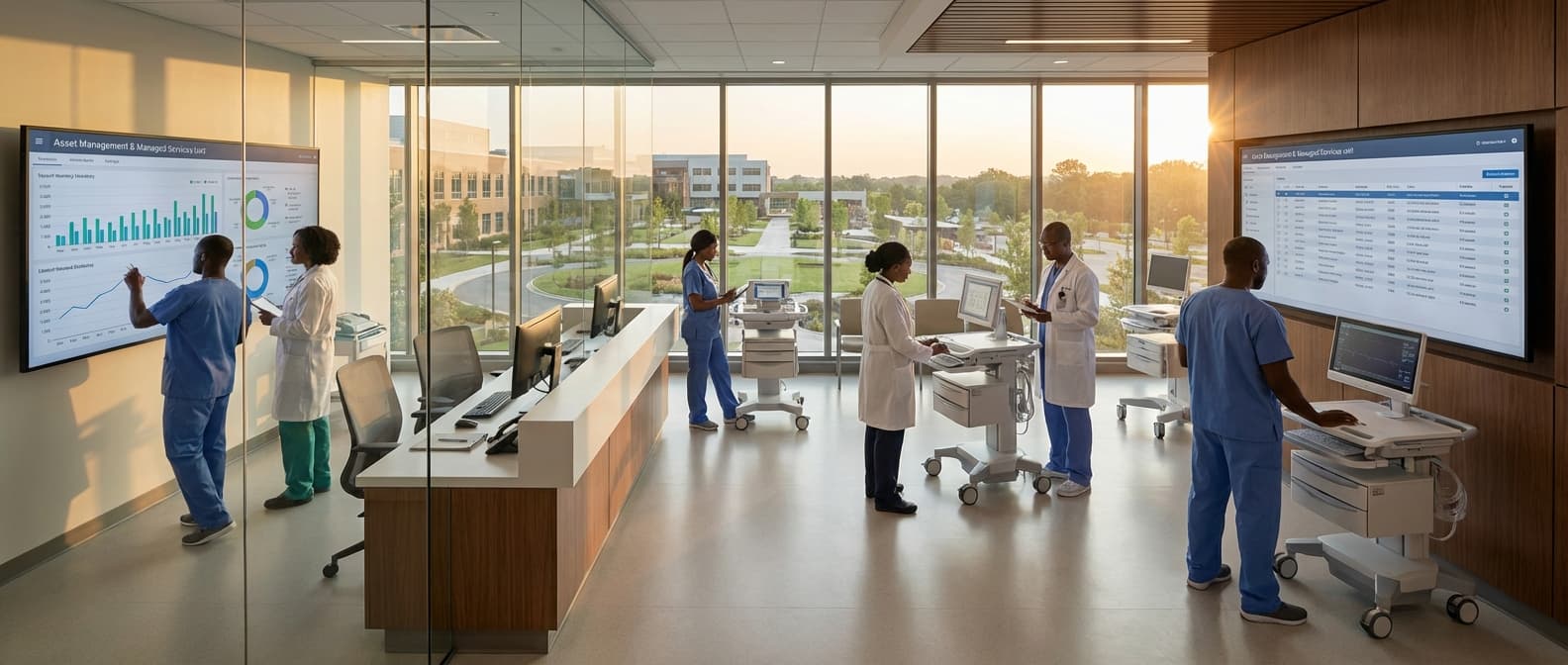
Maintenance KPI Reporting Service (Uptime/MTBF/MTTR) in Libya
Engineering Excellence & Technical Support
Maintenance KPI Reporting Service (Uptime/MTBF/MTTR) High-standard technical execution following OEM protocols and local regulatory frameworks.
Libya's Asset Uptime Surge
Our service delivers real-time Uptime reporting, enabling Libyan energy and industrial sectors to pinpoint and resolve downtime causes, maximizing operational availability and production output across critical assets.
Enhanced Reliability with MTBF Insights
Leveraging advanced analytics, we provide Libyan maintenance teams with detailed Mean Time Between Failures (MTBF) reports, identifying failure patterns and proactive intervention opportunities to significantly extend equipment lifespan and reduce unexpected breakdowns.
Optimized Response Times - MTTR Reduction
Through precise Mean Time To Repair (MTTR) tracking and analysis, our Libyan clients can streamline repair workflows, optimize spare parts management, and empower field technicians with the data needed to minimize repair durations and restore operations faster.
What Is Maintenance Kpi Reporting Service (Uptime/mtbf/mttr) In Libya?
Maintenance KPI Reporting Service (Uptime/MTBF/MTTR) in Libya refers to the structured collection, analysis, and presentation of key performance indicators (KPIs) related to the operational availability and reliability of industrial assets and systems within the Libyan context. This service focuses on quantifiable metrics essential for evaluating maintenance effectiveness, identifying areas for improvement, and optimizing operational efficiency. Key performance indicators commonly included are:
- Uptime: The percentage of time an asset or system is operational and available for its intended function. It's a direct measure of reliability and the success of preventative and corrective maintenance strategies.
- Mean Time Between Failures (MTBF): The average time an asset or system operates successfully between one failure and the next. A higher MTBF indicates greater reliability and robust maintenance practices.
- Mean Time To Repair (MTTR): The average time it takes to repair a failed asset or system and restore it to operational status. A lower MTTR signifies efficient fault diagnosis, effective repair procedures, and readily available resources (parts, personnel, tools).
This service is typically delivered by specialized maintenance management consultancies or internal data analytics teams equipped with the necessary expertise in industrial maintenance, data science, and reporting tools.
| Use Case | Description | Impact of KPI Reporting |
|---|---|---|
| Predictive Maintenance Implementation | Utilizing sensor data and historical failure patterns to predict potential equipment failures before they occur. | Enables proactive part procurement, optimized scheduling of maintenance activities, and significant reduction in unplanned downtime, directly improving MTBF and reducing MTTR. |
| Optimizing Spare Parts Inventory | Analyzing failure rates and MTTR for different components to determine optimal stock levels for critical spares. | Reduces holding costs while ensuring the availability of necessary parts to minimize repair times, contributing to improved MTTR and potentially lower maintenance costs. |
| Evaluating Maintenance Contractor Performance | Benchmarking the performance of internal maintenance teams or external contractors against agreed-upon KPIs like uptime and MTTR. | Facilitates performance-based contracts, identifies areas where contractors may be underperforming, and drives continuous improvement in service delivery. |
| Asset Lifecycle Management | Tracking the performance and reliability of assets over their lifespan to inform procurement decisions, refurbishment strategies, and eventual decommissioning. | Provides data-driven insights into asset reliability trends, allowing for informed decisions on when to repair, replace, or upgrade, ultimately impacting long-term uptime and operational costs. |
| Root Cause Analysis (RCA) Enhancement | Using consistent KPI data to identify recurring failure modes and prioritize investigations for their root causes. | Directly supports more effective and targeted RCA efforts, leading to permanent solutions for common issues and a sustained increase in MTBF and system uptime. |
| Resource Allocation and Budgeting | Forecasting maintenance needs and associated costs based on historical performance data and projected failure rates. | Enables more accurate budgeting for maintenance operations, optimized allocation of skilled technicians and specialized tools, and justification for capital expenditure on more reliable equipment. |
| Operational Risk Management | Assessing the risk associated with equipment failures and their impact on production, safety, and environmental compliance. | Provides quantifiable data to support risk assessments, enabling the implementation of mitigation strategies to improve overall operational resilience and minimize the likelihood of catastrophic failures. |
Who Needs Maintenance KPI Reporting Service (Uptime/MTBF/MTTR) in Libya?
- Oil and Gas Sector: Critical for offshore platforms, refineries, pipelines, and exploration equipment where continuous operation and minimal downtime are paramount for production and revenue.
- Power Generation and Distribution: Essential for ensuring grid stability and reliable electricity supply, necessitating optimal performance of turbines, transformers, and transmission infrastructure.
- Industrial Manufacturing Facilities: Key for optimizing production lines, machinery uptime, and overall equipment effectiveness (OEE) to meet market demands and maintain competitiveness.
- Telecommunications Infrastructure: Vital for maintaining uninterrupted network services, including cell towers, data centers, and fiber optic networks, where availability is a core service offering.
- Transportation and Logistics: Applicable to fleets of vehicles, shipping, and rail systems to ensure timely delivery and minimize operational disruptions.
- Water and Wastewater Treatment Plants: Crucial for public health and environmental protection, requiring high availability of pumping stations, filtration systems, and chemical treatment units.
- Facility Management and Real Estate: For large commercial buildings, hospitals, and airports to ensure the continuous operation of HVAC, elevators, and safety systems.
- Government and Public Utilities: Agencies responsible for critical infrastructure and public services requiring high reliability and efficient resource allocation.
- Mining and Heavy Industry: For the continuous operation of heavy machinery, processing plants, and conveyor systems in demanding environments.
Who Needs Maintenance Kpi Reporting Service (Uptime/mtbf/mttr) In Libya?
In Libya's evolving industrial and infrastructure landscape, maintaining operational continuity and efficiency is paramount. Organizations heavily reliant on machinery, equipment, and complex systems require robust maintenance strategies to minimize downtime and optimize performance. A dedicated Maintenance KPI Reporting Service focused on Uptime, Mean Time Between Failures (MTBF), and Mean Time To Repair (MTTR) becomes indispensable for achieving these goals. Such a service provides critical data-driven insights, enabling proactive decision-making, resource allocation, and ultimately, enhanced profitability.
| Customer Segment/Industry | Key Departments | Why they need Uptime/MTBF/MTTR Reporting |
|---|---|---|
| Oil & Gas Exploration and Production | Production Engineering, Maintenance Department, Operations Management, Asset Integrity | Maximizing production uptime, minimizing unplanned shutdowns of critical extraction and processing equipment, optimizing maintenance schedules to prevent costly failures in remote and harsh environments. |
| Petrochemicals and Refining | Plant Operations, Maintenance Engineering, Reliability Engineering, Turnaround Planning | Ensuring continuous operation of complex process units, reducing downtime for scheduled and unscheduled maintenance, improving safety by preventing equipment failures, and optimizing turnaround effectiveness. |
| Power Generation and Utilities | Operations and Maintenance (O&M), Plant Management, Transmission and Distribution | Guaranteeing consistent power supply, minimizing outages for generation facilities (e.g., gas turbines, hydro plants), and improving the reliability of the grid infrastructure. |
| Manufacturing (Heavy Industry, Automotive, Food & Beverage) | Production Management, Plant Engineering, Maintenance Department, Quality Control | Maintaining high production output, reducing machine downtime on assembly lines, optimizing the performance of critical machinery, and ensuring product quality through reliable equipment. |
| Telecommunications | Network Operations Center (NOC), Field Operations, Infrastructure Management | Ensuring high network availability and uptime for mobile and internet services, minimizing service disruptions, and optimizing response times for technical issues at cell towers and data centers. |
| Construction and Heavy Equipment Rental | Fleet Management, Operations, Maintenance Workshop | Maximizing the availability of expensive construction machinery on-site, reducing idle time due to breakdowns, and optimizing repair and servicing schedules. |
| Transportation and Logistics (e.g., Shipping, Airlines - if applicable in Libya) | Fleet Maintenance, Operations Management, Engineering | Ensuring the reliability and uptime of transport fleets to meet delivery schedules, reducing costly delays caused by mechanical failures. |
| Water and Wastewater Treatment Facilities | Operations and Maintenance, Plant Management, Engineering | Ensuring uninterrupted service for water supply and wastewater processing, minimizing downtime of pumps, filters, and treatment systems. |
| Public Infrastructure Management (Roads, Ports, Airports) | Engineering Departments, Operations Management, Maintenance Teams | Ensuring the operational readiness and safety of critical public infrastructure, minimizing disruptions to traffic flow, cargo handling, and passenger movement. |
Target Customers and Departments in Libya Requiring Maintenance KPI Reporting Service
- Industries with significant asset dependency
- Organizations focused on operational excellence and cost reduction
- Businesses operating in sectors with stringent uptime requirements
- Companies aiming to improve maintenance strategy and efficiency
- Government and public sector entities responsible for critical infrastructure
Maintenance Kpi Reporting Service (Uptime/mtbf/mttr) Process In Libya
This document outlines the workflow for the Maintenance KPI Reporting Service (Uptime/MTBF/MTTR) specifically within the Libyan context. The service focuses on collecting, analyzing, and reporting on key maintenance performance indicators (KPIs) that are crucial for optimizing operational efficiency and reliability in Libyan industries. The process begins with an initial inquiry from a client and culminates in the delivery of comprehensive KPI reports.
| Phase | Key Activities | Deliverables/Outcomes | Libyan Context Considerations |
|---|---|---|---|
| Inquiry & Initial Consultation | Client contact, needs assessment, scope discussion | Understanding of client requirements, preliminary scope | Navigating communication channels and business customs in Libya; understanding specific industry challenges (e.g., infrastructure, local regulations). |
| Scope Definition & Proposal | Detailed scope formulation, proposal creation | Formal proposal, Service Level Agreement (SLA) draft | Ensuring clarity on data access and security protocols within Libyan legal framework; aligning service offerings with common Libyan industry practices. |
| Contractual Agreement | Negotiation and signing of service contract | Signed contract | Understanding of Libyan contract law and dispute resolution mechanisms; ensuring contract language is clear and unambiguous. |
| Data Collection Strategy & Setup | System integration, tool deployment, training | Data collection plan, installed/configured systems, trained personnel | Assessing existing IT infrastructure in Libya; addressing potential connectivity issues; providing culturally appropriate training materials and methods. |
| Data Collection Execution | Gathering operational and maintenance data | Raw maintenance data | Ensuring data accuracy and completeness amidst potential logistical challenges; establishing reliable data transfer mechanisms. |
| Data Analysis & Calculation | Processing data, calculating KPIs | Calculated Uptime, MTBF, MTTR values | Utilizing analytical tools that can handle potential data gaps or inconsistencies; ensuring data privacy and security as per Libyan standards. |
| Report Generation | Creating performance reports | KPI reports (dashboards, summaries, detailed analysis) | Tailoring report language and visuals for Libyan stakeholders; emphasizing actionable insights relevant to local operational environments. |
| Report Delivery & Presentation | Distributing reports, conducting review meetings | Delivered reports, presentation slides, meeting minutes | Choosing effective and reliable communication methods for delivery; accommodating time zone differences and scheduling flexibility. |
| Feedback & Continuous Improvement | Gathering client feedback, refining processes | Actionable insights for service enhancement | Building trust and long-term relationships through responsive communication and demonstrable value; adapting to evolving client needs in Libya. |
| Ongoing Monitoring & Support | Continuous data collection, ad-hoc support | Regular KPI updates, resolved issues | Maintaining consistent service delivery despite potential geopolitical or economic fluctuations in Libya; fostering a proactive approach to maintenance challenges. |
Maintenance KPI Reporting Service Workflow in Libya
- Inquiry & Initial Consultation: Potential clients in Libya, often in sectors like oil & gas, manufacturing, or utilities, reach out to the service provider. This stage involves understanding the client's specific needs, existing maintenance practices, asset portfolio, and desired reporting frequency and format.
- Scope Definition & Proposal: Based on the initial consultation, a detailed scope of work is defined. This includes identifying the specific assets to be monitored, the KPIs to be reported (Uptime, MTBF, MTTR), data collection methods, reporting templates, and service level agreements (SLAs). A formal proposal is then presented to the client, outlining costs, timelines, and deliverables.
- Contractual Agreement: Upon acceptance of the proposal, a formal contract is established, detailing the terms and conditions of the service. This includes confidentiality clauses, data ownership, and payment schedules.
- Data Collection Strategy & Setup: The service provider works with the client to establish a robust data collection strategy. This might involve integrating with existing client systems (e.g., CMMS, SCADA), deploying new monitoring tools, or implementing manual data entry protocols tailored to the Libyan operational environment. Training of client personnel on data input may be required.
- Data Collection Execution: This is the ongoing phase where maintenance data is systematically collected from the client's assets. This includes details on equipment operational status (uptime), failure events (for MTBF calculation), and repair times (for MTTR calculation). Data validation and quality checks are performed at this stage.
- Data Analysis & Calculation: Collected data is processed and analyzed to calculate the defined KPIs: Uptime (percentage of time operational), Mean Time Between Failures (MTBF - average time between breakdowns), and Mean Time To Repair (MTTR - average time taken for repairs). Sophisticated analytical tools are often employed.
- Report Generation: Based on the analyzed data, comprehensive KPI reports are generated. These reports are designed to be clear, concise, and actionable, often including trend analysis, benchmarking, and recommendations for improvement. Custom report formats can be developed to meet specific client requirements.
- Report Delivery & Presentation: The generated reports are delivered to the client through agreed-upon channels (e.g., secure online portal, email, in-person presentation). If requested, a presentation of the findings and recommendations is provided, facilitating discussion and decision-making.
- Feedback & Continuous Improvement: The service provider actively seeks feedback from the client on the reports and the overall service. This feedback is used to refine data collection methods, analysis techniques, and reporting formats, ensuring continuous improvement of the service offerings.
- Ongoing Monitoring & Support: The service typically operates on an ongoing basis, providing regular KPI reporting and support to the client. This includes addressing any ad-hoc queries, assisting with root cause analysis of failures, and adapting to changes in the client's operational landscape in Libya.
Maintenance Kpi Reporting Service (Uptime/mtbf/mttr) Cost In Libya
The cost of a Maintenance KPI Reporting Service, specifically focusing on Uptime, Mean Time Between Failures (MTBF), and Mean Time To Repair (MTTR), in Libya can vary significantly. This variability is influenced by several key pricing factors. These services are crucial for optimizing operational efficiency, minimizing downtime, and improving the overall reliability of assets and machinery within Libyan businesses. The pricing will generally be presented in Libyan Dinar (LYD).
| Service Level/Scope | Estimated Cost Range (LYD/Month) | Notes |
|---|---|---|
| Basic Uptime, MTBF, MTTR Reporting (Standard Dashboards, Limited Assets) | 2,000 - 7,000 | Suitable for small businesses with straightforward reporting needs. May include standard pre-configured reports. |
| Intermediate Reporting (Customizable Dashboards, Moderate Assets, Basic Analysis) | 7,000 - 20,000 | Offers more flexibility in visualization and basic trend analysis for a growing number of assets. |
| Advanced Reporting & Analytics (Real-time Data, Predictive Insights, Root Cause Analysis, Extensive Assets) | 20,000 - 75,000+ | Comprehensive solution for large enterprises requiring deep insights, predictive capabilities, and integration with multiple systems. |
| Enterprise-Level Solutions (Bespoke Development, Dedicated Support, Large-Scale Integrations) | Negotiable (Likely 75,000 LYD+) | Tailored solutions for major industrial players with unique requirements and large operational footprints. |
| Consulting & Implementation Fees (One-time) | 5,000 - 30,000+ | Applicable for initial setup, complex data integration, or custom solution development. Varies greatly based on complexity. |
Key Pricing Factors for Maintenance KPI Reporting Services in Libya:
- {"title":"Scope of Services and Complexity","description":"The breadth of reporting required is a primary driver. Do you need real-time dashboards, historical trend analysis, predictive analytics, or root cause analysis? More complex reporting and analytical capabilities will command higher costs."}
- {"title":"Number of Assets/Equipment Monitored","description":"The more assets or equipment that need to be tracked and analyzed for Uptime, MTBF, and MTTR, the higher the operational overhead for the service provider, leading to increased costs."}
- {"title":"Data Integration Requirements","description":"The ease or difficulty of integrating with existing maintenance management systems (CMMS), SCADA systems, or other data sources will impact cost. Complex integrations requiring custom development will be more expensive."}
- {"title":"Data Volume and Granularity","description":"The amount of data being processed and the level of detail required for reporting (e.g., minute-by-minute vs. daily summaries) will affect processing and storage costs."}
- {"title":"Customization and Configuration","description":"The need for bespoke dashboards, specific KPI calculations, or tailored reporting formats will add to the project's complexity and therefore its cost."}
- {"title":"Service Provider Expertise and Reputation","description":"Established providers with a proven track record and specialized expertise in industrial maintenance analytics may charge more than newer or less experienced firms."}
- {"title":"Level of Support and Training","description":"The availability and quality of technical support, user training, and ongoing consultation can influence the overall price. On-site support will generally be more expensive than remote support."}
- {"title":"Technology Stack and Software Licensing","description":"The underlying software and technology used by the reporting service provider can have licensing costs that are passed on to the client."}
- {"title":"Contract Duration and Commitment","description":"Longer-term contracts or commitments may offer discounted rates compared to short-term or ad-hoc services."}
- {"title":"Location within Libya and Operational Overhead","description":"While not as significant as other factors, the operational costs for the service provider within specific regions of Libya (e.g., infrastructure, local talent) could subtly influence pricing."}
Affordable Maintenance Kpi Reporting Service (Uptime/mtbf/mttr) Options
This document outlines affordable options for Uptime, Mean Time Between Failures (MTBF), and Mean Time To Repair (MTTR) KPI reporting services. We focus on delivering actionable insights without breaking the bank. We'll explore value bundles and cost-saving strategies to ensure you get the most out of your maintenance data.
| Cost-Saving Strategy | Description | Benefit |
|---|---|---|
| Tiered Service Levels | Start with a basic package and scale up as your needs and budget allow. | Avoids upfront over-investment and ensures you pay for what you use. |
| Data Automation Focus | Leveraging existing data sources and automating reporting where possible. | Reduces manual data entry time and associated labor costs. |
| Cloud-Based Solutions | Utilizing scalable and often more cost-effective cloud infrastructure. | Lower IT overhead and hardware maintenance expenses. |
| Focus on Actionable Insights | Prioritizing reporting that directly leads to maintenance improvements and cost reductions. | Ensures ROI by driving tangible improvements, not just data generation. |
| Flexible Subscription Models | Offering monthly or annual payment options with potential discounts for longer commitments. | Improves cash flow and provides predictability in budgeting. |
| Self-Service Training & Resources | Providing documentation and training to empower your team to interpret reports. | Reduces reliance on constant external support. |
Key Service Components & Value Bundles
- {"title":"Core KPI Reporting","description":"Automated collection and visualization of Uptime, MTBF, and MTTR data. Provides essential insights into asset reliability and maintenance efficiency. This is the foundation of our offering."}
- {"title":"Historical Data Analysis","description":"Beyond current metrics, we analyze trends over time. This helps identify recurring issues, predict future failures, and optimize preventative maintenance schedules."}
- {"title":"Root Cause Analysis (RCA) Integration","description":"Linking KPI data with incident reports to identify underlying causes of failures. This moves beyond simply measuring downtime to actively preventing it."}
- {"title":"Customizable Dashboards & Alerts","description":"Tailored reporting interfaces to focus on your specific needs. Proactive alerts notify you of deviations from expected performance, enabling swift action."}
- {"title":"Preventative Maintenance (PM) Optimization Module","description":"Leveraging KPI data to refine PM schedules, ensuring maintenance is performed when truly needed, not just on a fixed calendar."}
- {"title":"Value Bundle 1: 'Essential Insights'","description":"Includes Core KPI Reporting and Customizable Dashboards. Ideal for organizations new to KPI tracking or with simpler maintenance needs."}
- {"title":"Value Bundle 2: 'Performance Pro'","description":"Includes Core KPI Reporting, Historical Data Analysis, and Customizable Dashboards. Offers deeper understanding of trends and performance drivers."}
- {"title":"Value Bundle 3: 'Reliability Champion'","description":"Includes all features: Core KPI Reporting, Historical Data Analysis, RCA Integration, Customizable Dashboards & Alerts, and PM Optimization Module. For organizations committed to maximizing uptime and minimizing maintenance costs."}
Verified Providers In Libya
In the complex and evolving healthcare landscape of Libya, identifying reliable and credentialed medical providers is paramount for ensuring quality care. Franance Health stands out as a leading organization that rigorously vets and accredits healthcare facilities and professionals, offering a crucial layer of assurance to patients. This commitment to verification not only enhances patient safety but also drives up standards across the Libyan healthcare sector. Understanding Franance Health's credentials and the rigorous processes they employ highlights why they represent the best choice for patients seeking trusted medical services in Libya.
| Franance Health Verified Provider | Key Services Offered | Accreditation Focus Areas | Patient Benefits |
|---|---|---|---|
| General Hospitals & Clinics | Primary care, diagnostics, specialist consultations, emergency services. | Clinical governance, medical equipment maintenance, infection control, staff training. | Access to a broad range of medical expertise, assurance of standardized care protocols. |
| Specialized Medical Centers (e.g., Cardiology, Oncology, Neurology) | Advanced diagnostics, specialized treatments, surgical procedures, rehabilitation. | Cutting-edge technology, physician specialization and experience, treatment protocol adherence. | Access to highly specialized care, confidence in advanced treatment methodologies. |
| Diagnostic Laboratories | Blood tests, imaging (X-ray, MRI, CT), pathology, genetic testing. | Quality control, equipment calibration, accurate and timely results, data security. | Reliable diagnostic information, crucial for accurate treatment planning. |
| Individual Medical Practitioners (Doctors, Surgeons, Dentists) | Personalized consultations, treatment plans, surgical interventions. | Medical licensing, board certifications, continuing medical education, ethical practice. | Trustworthy and competent medical professionals, personalized patient care. |
| Rehabilitation Centers | Physical therapy, occupational therapy, speech therapy, post-operative recovery. | Qualified therapists, evidence-based treatment modalities, patient progress tracking. | Effective recovery pathways, improved quality of life post-illness or injury. |
What Makes Franance Health Credentials Stand Out?
- Rigorous Accreditation Standards: Franance Health implements internationally recognized standards for healthcare facility and provider accreditation, covering areas like patient safety, clinical competence, and operational efficiency.
- Independent Verification: Their accreditation process is independent, ensuring objectivity and a thorough assessment of each provider's qualifications and practices.
- Continuous Quality Improvement: Franance Health's accreditation is not a one-time event; it involves ongoing monitoring and re-evaluation to ensure providers maintain high standards over time.
- Focus on Patient Outcomes: The accreditation criteria are designed to prioritize patient well-being and positive health outcomes, reflecting a commitment to effective and compassionate care.
- Transparency and Information: Franance Health provides clear information about the credentials of verified providers, empowering patients to make informed decisions about their healthcare.
Scope Of Work For Maintenance Kpi Reporting Service (Uptime/mtbf/mttr)
This Scope of Work (SOW) outlines the requirements for a Maintenance KPI Reporting Service, specifically focusing on Uptime, Mean Time Between Failures (MTBF), and Mean Time To Repair (MTTR). The service will involve the collection, analysis, and reporting of these key performance indicators to enhance operational efficiency and inform maintenance strategies. The technical deliverables are designed to provide actionable insights into asset reliability and maintenance effectiveness.
| Deliverable Name | Description | Format | Frequency | Standard Specifications | |||
|---|---|---|---|---|---|---|---|
| Raw Data Ingestion & Validation Report | Confirms successful ingestion of maintenance and operational data. Includes validation checks and any identified data anomalies. | PDF Report / CSV Log | Daily/Weekly (configurable) | Data completeness check (>=98%), Data accuracy check (e.g., valid timestamps, numerical values), Anomaly detection report. | Data sources (e.g., CMMS, SCADA, IoT sensors) clearly identified. | Timestamp for each data point. | |
| Uptime Calculation Report | Presents the calculated Uptime percentage for defined asset groups or individual assets over specified periods. | PDF Report with graphical visualizations / Interactive Dashboard | Weekly/Monthly (configurable) | Uptime calculation formula adherence (as defined in Appendix A). | Granularity: Daily, Weekly, Monthly. | Trend analysis and comparison against targets. | Data source for operational status (e.g., operational/down flags). |
| MTBF Calculation Report | Details the calculated MTBF for defined asset groups or individual assets, highlighting trends and contributing factors to failures. | PDF Report with graphical visualizations / Interactive Dashboard | Weekly/Monthly (configurable) | MTBF calculation formula adherence (as defined in Appendix B). | Identification of top N (configurable) recurring failure modes. | Analysis of time between failures, including outliers. | Categorization of failures (e.g., planned, unplanned). |
| MTTR Calculation Report | Provides the calculated MTTR for defined asset groups or individual assets, with insights into repair durations and contributing factors. | PDF Report with graphical visualizations / Interactive Dashboard | Weekly/Monthly (configurable) | MTTR calculation formula adherence (as defined in Appendix C). | Analysis of repair times, including diagnostic, repair, and testing phases. | Identification of top N (configurable) longest repair durations and their causes. | Comparison of MTTR across different repair teams or types of repairs. |
| Consolidated KPI Dashboard | An interactive dashboard providing a holistic view of Uptime, MTBF, and MTTR across all reported assets, allowing for drill-down analysis. | Web-based Interactive Dashboard (e.g., Power BI, Tableau) | Real-time / Daily refresh | User-friendly interface with customizable views and filters. | Drill-down capabilities from aggregated metrics to individual asset data. | Export functionality for reports and data visualizations. | Secure user access and role-based permissions. |
| Root Cause Analysis (RCA) Support Data | Provides data sets and preliminary analysis to support root cause investigations for recurring failures or prolonged downtime. | CSV / Excel Export / Integrated within Dashboard | On-demand / Triggered by high failure rates or prolonged downtime | Detailed event logs associated with failures and repairs. | Failure mode categorization and frequency counts. | Correlation analysis between operational parameters and failure events. | |
| Performance Trend & Forecasting Report | Analyzes historical KPI trends and provides preliminary forecasts for future performance, aiding in proactive maintenance planning. | PDF Report / Integrated within Dashboard | Monthly/Quarterly (configurable) | Statistical analysis of historical KPI trends (e.g., moving averages, regression analysis). | Identification of potential future performance deviations. | Recommendations for proactive maintenance interventions based on forecasts. |
Key Performance Indicators (KPIs) to be Reported
- Uptime: Percentage of time an asset or system is operational and available for use.
- Mean Time Between Failures (MTBF): Average time elapsed between inherent failures of a repairable system during normal system operation.
- Mean Time To Repair (MTTR): Average time required to repair a failed component or system and return it to operational status.
Service Level Agreement For Maintenance Kpi Reporting Service (Uptime/mtbf/mttr)
This Service Level Agreement (SLA) outlines the performance expectations and guarantees for the Maintenance KPI Reporting Service, specifically focusing on Uptime, Mean Time Between Failures (MTBF), and Mean Time To Repair (MTTR). It defines the response times for critical incidents and the uptime commitment for the reporting platform itself.
| Service Component | Uptime Guarantee | MTBF Target | MTTR Target | Response Time (Critical Incident) | Resolution Time (Critical Incident) |
|---|---|---|---|---|---|
| Maintenance KPI Reporting Platform | 99.9% (Monthly) | Not Applicable (Platform is designed for continuous availability) | Not Applicable (Platform is designed for continuous availability) | 15 Minutes | 4 Hours |
| Data Ingestion & Processing | 99.95% (Monthly) | Not Applicable (Automated processes) | Not Applicable (Automated processes) | 30 Minutes | 6 Hours |
| Report Generation & Delivery | 99.9% (Monthly) | Not Applicable (Automated processes) | Not Applicable (Automated processes) | 1 Hour | 8 Hours |
Key Performance Indicators (KPIs) Covered
- Uptime: The percentage of time the Maintenance KPI Reporting Service is accessible and operational.
- Mean Time Between Failures (MTBF): The average time elapsed between inherent failures of a repairable system during normal system operation.
- Mean Time To Repair (MTTR): The average time required to repair a failed component or system and restore it to operational status.
Frequently Asked Questions

Ready when you are
Let's scope your Maintenance KPI Reporting Service (Uptime/MTBF/MTTR) in Libya project in Libya.

Scaling healthcare logistics and technical systems across the entire continent.