
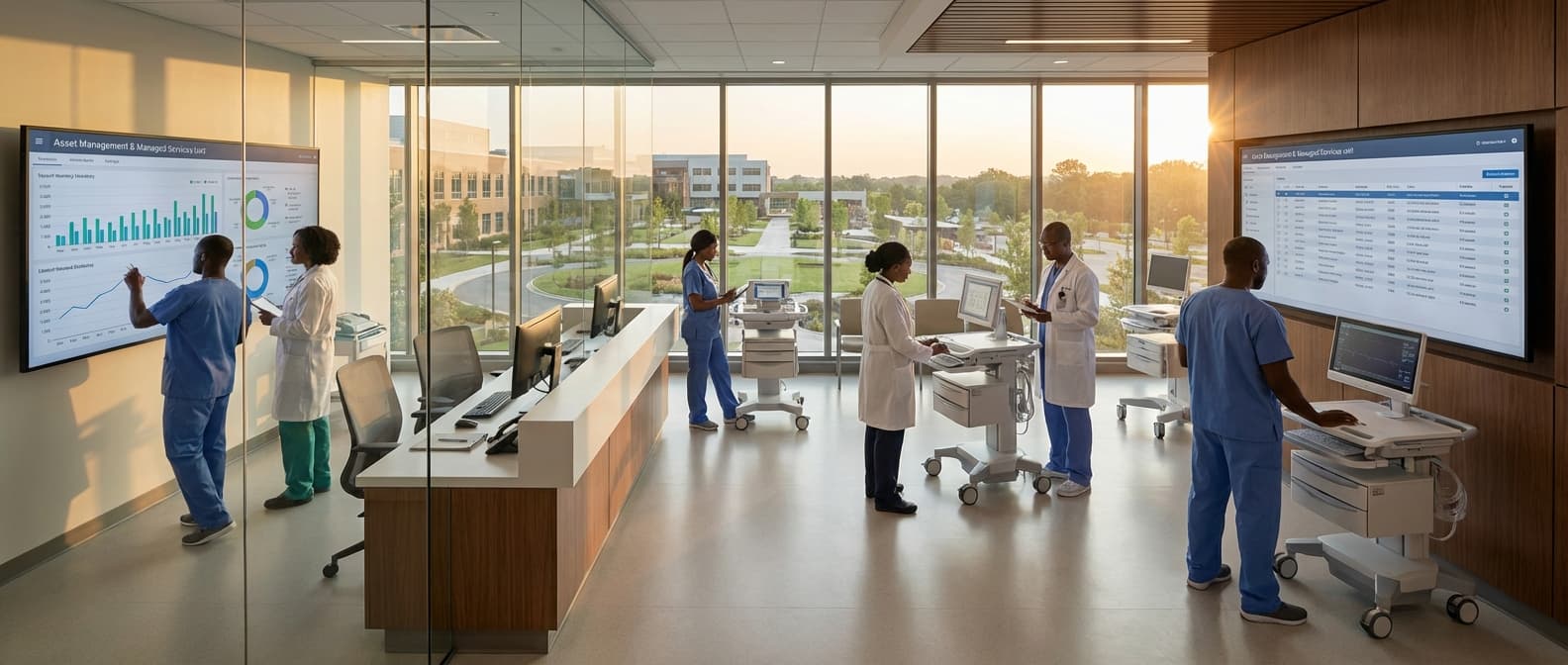
CMMS Setup & Configuration Service in Libya
Engineering Excellence & Technical Support
CMMS Setup & Configuration Service High-standard technical execution following OEM protocols and local regulatory frameworks.
Customized CMMS Deployment
We tailor your CMMS to Libya's unique industrial landscape, ensuring seamless integration with existing workflows and infrastructure for optimal operational efficiency.
On-Premise & Cloud Solutions
Leverage our expertise in deploying robust CMMS solutions, offering both on-premise control and flexible cloud-based options to meet Libya's diverse IT requirements and security standards.
Localized Training & Support
Empower your Libyan workforce with comprehensive, context-specific CMMS training and ongoing support, fostering user adoption and maximizing your investment's return.
What Is Cmms Setup & Configuration Service In Libya?
CMMS (Computerized Maintenance Management System) Setup & Configuration Service in Libya refers to the professional implementation and customization of CMMS software to meet the specific operational requirements of organizations within Libya. This service encompasses the end-to-end process of deploying a CMMS, ensuring it is precisely tailored to manage assets, maintenance schedules, work orders, inventory, and reporting functionalities according to the client's unique business context and regulatory landscape in Libya.
| Who Needs CMMS Setup & Configuration Service? | Typical Use Cases in Libya | ||||||||
|---|---|---|---|---|---|---|---|---|---|
| Industrial Manufacturing Plants: Companies involved in oil and gas extraction, refining, petrochemicals, cement production, and other heavy industries. | Oil & Gas Sector: Managing maintenance for upstream (exploration, drilling), midstream (pipelines, storage), and downstream (refineries) assets. Optimizing preventive maintenance schedules for critical equipment. | Utilities: Water treatment plants, power generation facilities (thermal, renewable), and distribution networks requiring efficient asset management and outage planning. | Infrastructure Management: Organizations responsible for managing large-scale infrastructure like airports, ports, transportation networks, and public buildings. | Facility Management: Businesses and institutions managing multiple facilities, including commercial buildings, hospitals, educational institutions, and government offices. | Mining and Aggregates: Maintaining heavy machinery, processing plants, and mobile equipment to ensure operational continuity. | Transportation and Logistics: Managing fleets of vehicles, rolling stock, and related maintenance operations. | Pharmaceutical and Chemical Industries: Ensuring compliance with stringent regulatory requirements for asset maintenance and operational integrity. | Construction and Project Management: Tracking and managing maintenance for construction equipment and project-specific assets. | Any organization with a significant asset base and a need to improve maintenance efficiency, reduce downtime, control costs, and enhance asset lifespan. |
Key Components of CMMS Setup & Configuration Service:
- System Requirements Analysis: Thorough assessment of client's existing maintenance processes, asset registry, and operational objectives.
- Software Installation and Deployment: Installation of the chosen CMMS software on client's infrastructure (on-premise) or cloud-based setup.
- Database Configuration: Structuring and populating the CMMS database with asset hierarchies, locations, and critical maintenance data.
- User and Role Management: Defining user accounts, permissions, and access levels based on organizational roles and responsibilities.
- Module Customization: Configuring specific modules such as Work Order Management, Preventive Maintenance, Asset Management, Inventory Control, and Purchasing.
- Workflow Design and Automation: Establishing and automating maintenance workflows, approval processes, and notification triggers.
- Data Migration: Transferring existing maintenance data (asset details, historical records, spare parts) into the new CMMS.
- Integration Services: Connecting the CMMS with other relevant enterprise systems (e.g., ERP, SCADA) where applicable.
- Training and Documentation: Providing comprehensive training to end-users and administrators, along with detailed system documentation.
- Testing and Validation: Rigorous testing of configured functionalities to ensure accuracy, performance, and reliability.
- Post-Implementation Support: Offering ongoing technical assistance and troubleshooting after the system goes live.
Who Needs Cmms Setup & Configuration Service In Libya?
In Libya's evolving industrial landscape, businesses of all sizes are increasingly recognizing the strategic advantage of robust maintenance management. Implementing a Computerized Maintenance Management System (CMMS) is no longer a luxury but a necessity for operational efficiency, cost control, and regulatory compliance. CMMS Setup & Configuration Service in Libya is crucial for organizations that want to leverage this powerful software effectively. This service ensures the CMMS is tailored to the unique needs of Libyan businesses, from initial installation and data migration to process integration and user training. The primary beneficiaries are those seeking to move away from manual, paper-based systems, reduce equipment downtime, optimize spare parts inventory, improve labor allocation, and gain valuable insights into maintenance performance. Without proper setup and configuration, a CMMS can become an underutilized tool, failing to deliver its full potential.
| Department | Key Needs Addressed by CMMS Setup & Configuration | Benefits of a Well-Configured CMMS |
|---|---|---|
| Maintenance Department | Work order management, preventive maintenance scheduling, asset history tracking, technician assignment, spare parts inventory management. | Reduced downtime, improved technician productivity, proactive maintenance, accurate cost tracking. |
| Operations Department | Minimizing equipment failures, ensuring production continuity, optimizing asset utilization, compliance with operational standards. | Increased production output, improved overall equipment effectiveness (OEE), enhanced operational reliability. |
| Engineering Department | Asset lifecycle management, maintenance strategy development, failure analysis, technical documentation management, spare parts forecasting. | Optimized asset performance, data-driven decision-making for upgrades and replacements, reduced engineering workload. |
| Procurement & Inventory Management | Real-time inventory tracking, reorder point management, spare parts usage analysis, vendor management. | Reduced inventory holding costs, minimized stockouts, improved purchasing efficiency. |
| Finance & Accounting | Accurate maintenance cost allocation, budget forecasting, ROI analysis of maintenance activities, audit trails. | Improved financial control, better budget management, verifiable maintenance expenditures. |
| Health, Safety, and Environment (HSE) | Safety inspection scheduling, incident reporting and tracking, compliance with environmental regulations, risk assessment related to equipment. | Enhanced workplace safety, improved environmental compliance, reduced risk of accidents. |
Target Customers for CMMS Setup & Configuration Service in Libya
- Manufacturing Plants (e.g., food & beverage, textiles, cement, petrochemicals)
- Oil & Gas Exploration and Production Companies
- Power Generation and Distribution Utilities
- Water Treatment and Desalination Plants
- Transportation and Logistics Companies (fleet maintenance)
- Hospitals and Healthcare Facilities (equipment maintenance)
- Large Commercial Property Management Firms
- Government and Public Sector Organizations (infrastructure maintenance)
- Any organization with significant physical assets and a need for structured maintenance operations.
Cmms Setup & Configuration Service Process In Libya
This document outlines the standard workflow for CMMS (Computerized Maintenance Management System) setup and configuration services offered in Libya, covering the entire process from initial inquiry to successful execution and handover. Our aim is to provide a clear, efficient, and transparent service to ensure our clients in Libya can leverage the full benefits of their CMMS.
| Stage | Description | Key Activities | Deliverables | Typical Duration (Libya) |
|---|---|---|---|---|
| Inquiry & Initial Consultation | The client expresses interest in CMMS setup and configuration services. This stage focuses on understanding the client's basic needs and providing an overview of our services. | Initial contact (phone, email, web form), brief discussion of client's maintenance challenges, introduction to our CMMS solutions, explanation of service offering. | Acknowledgement of inquiry, preliminary understanding of client needs. | 1-3 Business Days |
| Needs Assessment & Scope Definition | A detailed understanding of the client's specific operational requirements, existing systems, and desired CMMS functionalities is established. | On-site or remote meetings, interviews with key stakeholders (maintenance managers, technicians, IT), analysis of current processes, identification of pain points, definition of system objectives and scope. | Detailed Needs Assessment Report, agreed-upon scope of work, list of required functionalities. | 3-7 Business Days |
| Proposal & Agreement | A comprehensive proposal outlining the solution, timeline, costs, and terms of service is presented and finalized. | Development of a tailored proposal based on the needs assessment, presentation of proposal to the client, negotiation of terms, contract signing. | Formal Proposal Document, Service Level Agreement (SLA), Signed Contract. | 5-10 Business Days |
| Data Collection & Preparation | Gathering and organizing all necessary data for the CMMS, including asset information, spare parts inventory, and historical maintenance records. | Data extraction from existing systems, manual data entry and validation, data cleansing and standardization, categorization of assets and parts. | Cleaned and structured data for import, asset registry, spare parts catalog. | 7-21 Business Days (highly dependent on data volume and quality) |
| System Installation & Configuration | The CMMS software is installed (if on-premise) and configured according to the agreed-upon scope and client-specific workflows. | Software installation (cloud or on-premise), user role and permission setup, configuration of modules (work orders, preventive maintenance, inventory, etc.), customization of forms and fields, integration with other systems (if applicable). | Installed and configured CMMS environment, initial system settings documentation. | 10-20 Business Days |
| User Training | Empowering end-users with the knowledge and skills to effectively operate the CMMS. | Development of training materials, delivery of tailored training sessions (on-site or remote) for different user groups, hands-on exercises, Q&A sessions. | Trained user base, training manuals and guides, user competence assessment (optional). | 5-10 Business Days (staggered or in batches) |
| Testing & Validation | Ensuring the CMMS functions as expected and meets all defined requirements before full deployment. | User Acceptance Testing (UAT), scenario-based testing, bug identification and resolution, performance testing, validation of data integrity. | UAT Sign-off document, resolved issues log, validated system functionality. | 7-14 Business Days |
| Go-Live & Deployment | The CMMS is officially launched and made available for daily operations. | Final system checks, data migration completion, user access provisioning, official system launch announcement, initial system monitoring. | Live CMMS system, go-live announcement, initial operational readiness. | 1-3 Business Days |
| Post-Implementation Support & Review | Providing ongoing assistance and evaluating the system's performance after deployment. | Helpdesk support, troubleshooting of any emerging issues, system performance monitoring, post-implementation review meetings, identification of further optimization opportunities, knowledge transfer to client's internal support team. | Resolved support tickets, Post-Implementation Review Report, recommendations for optimization, knowledge transfer documentation. | Ongoing (initial 30-60 days intensive support, then defined support period) |
Key Stages of CMMS Setup & Configuration Service in Libya
- Inquiry & Initial Consultation
- Needs Assessment & Scope Definition
- Proposal & Agreement
- Data Collection & Preparation
- System Installation & Configuration
- User Training
- Testing & Validation
- Go-Live & Deployment
- Post-Implementation Support & Review
Cmms Setup & Configuration Service Cost In Libya
Setting up and configuring a Computerized Maintenance Management System (CMMS) in Libya involves several factors that influence the overall cost. These costs are typically quoted in Libyan Dinar (LYD). The complexity of the chosen CMMS, the size and specific needs of the organization, the required level of customization, data migration efforts, and ongoing support and training all play a significant role in determining the final price.
| Service Component | Estimated Cost Range (LYD) | Notes |
|---|---|---|
| Basic CMMS Setup & Configuration (Small to Medium Businesses) | 5,000 - 20,000 LYD | Covers standard module setup, initial user configuration, and basic data import for simpler operations. |
| Standard CMMS Setup & Configuration (Medium to Large Enterprises) | 20,000 - 75,000 LYD | Includes more modules, moderate customization, data migration for a significant asset base, and standard training. |
| Advanced CMMS Setup & Configuration (Large Enterprises/Complex Operations) | 75,000 - 200,000+ LYD | Involves extensive customization, complex data migration, integration with other enterprise systems, specialized training, and dedicated project management. |
| Per Module/Feature Add-on | 2,000 - 10,000+ LYD (per module) | Cost for implementing additional functionalities beyond the core setup. |
| Customization & Integration | 500 - 2,500 LYD (per hour) | Hourly rates for developers and consultants undertaking bespoke development and system integrations. |
| Data Migration Services | Negotiable (based on volume and complexity) | Often priced based on the effort involved in cleaning, transforming, and importing data. |
| User Training | 1,000 - 5,000 LYD (per session/group) | Cost for on-site or remote training sessions for different user groups. |
| Ongoing Support & Maintenance (Annual Contract) | 10-20% of initial software/setup cost | Typically an annual fee covering technical support, software updates, and bug fixes. |
Key Pricing Factors for CMMS Setup & Configuration in Libya
- CMMS Software Licensing Model: Whether it's a one-time purchase (perpetual license) or a subscription-based model (SaaS), and the number of user licenses required.
- Scope of Implementation: The number of modules to be implemented (e.g., asset management, work order management, preventive maintenance, inventory management, reporting).
- Customization Needs: The extent to which the CMMS needs to be tailored to specific workflows, integrate with existing systems, or develop custom reports.
- Data Migration: The volume and complexity of existing maintenance data (asset registers, work history, spare parts lists) that needs to be imported into the new system.
- On-site vs. Remote Implementation: Travel and accommodation costs for on-site consultants if required, compared to the potentially lower cost of remote setup.
- Training and Support: The duration and depth of training required for end-users and administrators, as well as the level of ongoing technical support.
- Vendor Experience and Reputation: More established and reputable vendors may command higher prices due to their proven track record and expertise.
- Infrastructure Requirements: Any necessary upgrades or setup of hardware and network infrastructure to support the CMMS.
Affordable Cmms Setup & Configuration Service Options
Our affordable CMMS (Computerized Maintenance Management System) setup and configuration services are designed to help organizations of all sizes implement powerful maintenance management solutions without breaking the bank. We understand that each business has unique needs, so we offer flexible service options and value bundles to maximize your return on investment. Our focus is on delivering a customized CMMS that streamlines your operations, reduces downtime, and enhances overall efficiency through cost-effective strategies and transparent pricing.
| Feature/Service | Value Bundle 1 (Basic) | Value Bundle 2 (Standard) | Value Bundle 3 (Premium) | Cost-Saving Strategies |
|---|---|---|---|---|
| Initial CMMS Software Selection Assistance | ✓ | ✓ | ✓ | We help you choose the most cost-effective CMMS software based on your needs, avoiding unnecessary features. |
| Core Module Configuration (Assets, Work Orders) | ✓ | ✓ | ✓ | Focus on essential modules first, expanding as your needs evolve and budget allows. |
| Preventive Maintenance (PM) Scheduling | X | ✓ | ✓ | Proper PM setup significantly reduces costly reactive maintenance and equipment failures. |
| Inventory Management Integration | X | ✓ | ✓ | Optimize spare parts inventory to reduce holding costs and prevent stockouts. |
| Custom Reporting & Dashboards | X | ✓ | ✓ | Gain actionable insights to identify inefficiencies and areas for cost reduction. |
| User Training (Core Functions) | ✓ | ✓ | ✓ | Empowering users reduces errors and reliance on external support. |
| User Training (Advanced Functions) | X | ✓ | ✓ | Maximize CMMS utilization by training on relevant advanced features. |
| Mobile CMMS Deployment | X | X | ✓ | Streamline field operations and reduce data entry errors, saving technician time. |
| API Integrations | X | X | ✓ | Leverage existing IT investments and automate data flow, reducing manual effort. |
| Dedicated Project Management | X | ✓ | ✓ | Ensures efficient project execution and on-time delivery, minimizing prolonged setup costs. |
| Post-Implementation Support (Tiered) | ✓ (Limited) | ✓ (Standard) | ✓ (Premium) | Access to support when needed prevents small issues from becoming costly problems. |
| Phased Implementation Approach | ✓ | ✓ | ✓ | Break down the project into manageable phases to spread costs and demonstrate ROI early. |
| Leveraging Open-Source or SaaS CMMS Options | ✓ | ✓ | ✓ | Explore Software-as-a-Service (SaaS) or well-supported open-source CMMS for lower upfront costs. |
| Automating Routine Tasks | X | ✓ | ✓ | Reduce manual labor costs and free up staff for higher-value activities. |
Our CMMS Setup & Configuration Service Tiers
- Basic Setup: Ideal for small businesses or those new to CMMS. Includes essential configuration, user training on core functions, and initial data import for assets and work orders.
- Standard Configuration: Our most popular option, suitable for growing businesses. Builds upon the Basic Setup with advanced module integration (e.g., inventory management, preventive maintenance scheduling), custom reporting dashboards, and enhanced user roles and permissions.
- Premium Implementation: For organizations with complex maintenance needs or a desire for a fully integrated solution. Includes all Standard features plus API integrations with existing systems (e.g., ERP, SCADA), advanced automation workflows, mobile CMMS deployment optimization, and dedicated post-implementation support.
- Custom Solutions: Tailored services for unique requirements. We work closely with you to design a bespoke CMMS setup that addresses your specific challenges and strategic goals.
Verified Providers In Libya
Navigating the healthcare landscape in Libya can be challenging, particularly when seeking reliable and accredited medical services. In this context, identifying verified providers is paramount for ensuring quality care and patient safety. Franance Health has emerged as a leading entity, distinguished by its rigorous credentialing process and commitment to upholding the highest standards in healthcare delivery. This focus on verification not only builds trust but also significantly enhances the quality of care available to individuals and families within Libya.
| Franance Health Credentialing Aspect | Benefit to Patients in Libya | Key Indicator of Quality |
|---|---|---|
| Thorough Verification of Medical Licenses and Certifications | Ensures providers possess the legal and academic qualifications to practice. | Valid and up-to-date professional licenses. |
| Rigorous Review of Clinical Experience and Specializations | Guarantees that practitioners have the practical skills and specific knowledge required for various medical conditions. | Documented history of successful patient outcomes and specialized training. |
| Assessment of Facility Infrastructure and Equipment Standards | Confirms that healthcare facilities are equipped with modern technology and maintain a sterile, safe environment. | Compliance with health and safety regulations, presence of advanced medical equipment. |
| Evaluation of Ethical Conduct and Professional Reputation | Ensures providers adhere to high ethical standards and have a positive track record within the medical community. | Positive peer reviews, absence of disciplinary actions, strong patient feedback. |
| Ongoing Monitoring and Quality Assurance | Maintains a commitment to continuous improvement and adherence to evolving healthcare best practices. | Regular audits, performance reviews, and adherence to updated medical protocols. |
Why Franance Health Credentials Matter:
- Unwavering Commitment to Quality: Franance Health's credentialing process goes beyond surface-level checks. It involves a deep dive into the qualifications, experience, and ethical standing of healthcare professionals and facilities.
- Enhanced Patient Safety: By partnering exclusively with verified providers, Franance Health significantly reduces the risk of encountering substandard or unqualified medical services, prioritizing patient well-being above all else.
- Access to Specialized Expertise: Franance Health's network comprises a diverse range of highly skilled medical professionals and specialized facilities, ensuring access to the best possible care for a wide spectrum of health needs.
- Streamlined Healthcare Experience: Patients can have confidence that any provider recommended or facilitated by Franance Health has met stringent criteria, leading to a more secure and reliable healthcare journey.
- Upholding International Standards: Franance Health's credentialing often aligns with international benchmarks for healthcare quality and safety, providing a level of assurance often sought but difficult to find in less regulated environments.
Scope Of Work For Cmms Setup & Configuration Service
This Scope of Work (SOW) outlines the services to be provided for the setup and configuration of a Computerized Maintenance Management System (CMMS). The objective is to ensure a robust, user-friendly, and fully functional CMMS that meets the organization's maintenance and asset management needs.
| Phase | Activities | Technical Deliverables | Standard Specifications |
|---|---|---|---|
| Conduct workshops with stakeholders to define functional and non-functional requirements. Document existing maintenance processes. Define data migration strategy. Finalize CMMS software selection (if not already done). | Requirements Document, Process Flow Diagrams, Data Migration Plan, Software Selection Report (if applicable). | Requirements documented and signed off by stakeholders. Processes mapped accurately. Data migration plan clearly defines scope, methodology, and validation steps. Software aligns with defined requirements. |
| Install CMMS software on designated servers/cloud environment. Configure core system settings (company details, user roles, permissions). Set up basic asset hierarchy and location structure. | Installed CMMS Instance, Core System Configuration Document, Initial Asset Hierarchy Structure. | Software installed successfully according to vendor specifications. User roles and permissions defined and applied. Asset hierarchy accurately reflects organizational structure. |
| Cleanse and prepare existing asset data, inventory data, and maintenance history. Import cleansed data into the CMMS. Validate migrated data for accuracy and completeness. | Cleaned Data Sets, Imported Data into CMMS, Data Migration Validation Report. | Data migration adheres to the approved Data Migration Plan. Validation process includes reconciliation and error correction. Data integrity maintained. |
| Configure modules (e.g., Work Orders, Preventative Maintenance, Inventory, Purchasing, Assets). Define custom fields, forms, and workflows as per requirements. Set up user-defined parameters and notifications. | Configured CMMS Modules, Custom Fields & Forms, Workflow Diagrams, Notification Templates. | All configured modules function as per documented requirements. Customizations are documented and tested. Workflows are logical and efficient. Notifications are timely and relevant. |
| Define PM schedules based on asset type, usage, or time intervals. Create PM task lists and associate them with assets. Configure PM triggers and reminders. | PM Schedules, PM Task Lists, PM Trigger Configurations. | PM schedules are accurate and comprehensive. Task lists are detailed and actionable. Triggers and reminders are set up to ensure timely execution of PMs. |
| Develop training materials for different user roles. Conduct hands-on training sessions. Provide post-training support. | Training Materials (User Manuals, Guides), Training Session Schedule, Training Attendance Records, Post-Training Support Plan. | Training materials are clear, concise, and role-specific. Users demonstrate proficiency in system usage. Support is available for immediate queries. |
| Conduct User Acceptance Testing (UAT) with key stakeholders. Perform system integration testing. Resolve any identified bugs or issues. | UAT Test Cases, UAT Sign-off Document, Bug/Issue Log, Test Summary Report. | UAT is comprehensive and covers all critical functionalities. All identified issues are resolved and re-tested. System performs reliably under expected load. |
| Deploy the configured CMMS into the production environment. Provide initial post-go-live support. Handover system documentation and knowledge transfer. | Live CMMS Instance, Go-Live Checklist, Post-Go-Live Support Plan, Final System Documentation. | System is stable and operational in the production environment. Critical issues are addressed promptly. Knowledge transfer is effective for ongoing system administration. |
Objectives of CMMS Setup & Configuration
- To implement a comprehensive CMMS solution.
- To streamline maintenance operations and improve efficiency.
- To enhance asset tracking, maintenance scheduling, and work order management.
- To provide accurate data for reporting and decision-making.
- To ensure user adoption and proficiency through effective training.
Service Level Agreement For Cmms Setup & Configuration Service
This Service Level Agreement (SLA) outlines the response times and uptime guarantees for the CMMS Setup & Configuration Service provided by [Your Company Name] to [Client Company Name]. This SLA is an addendum to the Master Service Agreement (MSA) between the parties, dated [MSA Date].
| Service Component | Response Time (Business Hours) | Resolution Target (Business Hours) | Uptime Guarantee |
|---|---|---|---|
| Critical Incident (System Unavailable, Core Functionality Severely Impaired) | 1 Business Hour | 4 Business Hours | N/A (Focus on immediate resolution) |
| High Priority Incident (Significant Functionality Impaired, Workaround Available) | 2 Business Hours | 8 Business Hours | N/A (Focus on timely resolution) |
| Medium Priority Incident (Minor Functionality Impaired, User inconvenience) | 4 Business Hours | 2 Business Days | N/A (Focus on scheduled resolution) |
| Low Priority Incident (Informational Request, Minor UI Issue) | 8 Business Hours | 5 Business Days | N/A (Focus on efficient resolution) |
| Scheduled Maintenance Notifications | N/A | N/A | Advance notice of at least 48 hours (for planned downtime) |
| CMMS System Uptime (Post-Configuration and Go-Live) | N/A | N/A | 99.5% (Excluding scheduled maintenance) |
Scope of Service
- Initial CMMS software installation and deployment.
- Configuration of core CMMS modules (e.g., asset management, work order management, preventive maintenance, inventory).
- User role and permission setup.
- Data migration of existing asset and maintenance data (as defined in the project scope).
- Basic system testing and validation.
- End-user training session(s) (as defined in the project scope).
Frequently Asked Questions

Ready when you are
Let's scope your CMMS Setup & Configuration Service in Libya project in Libya.

Scaling healthcare logistics and technical systems across the entire continent.